
Beyond Strikes: The Use of Kicks (Keri Waza) in Select Jujutsu Traditions

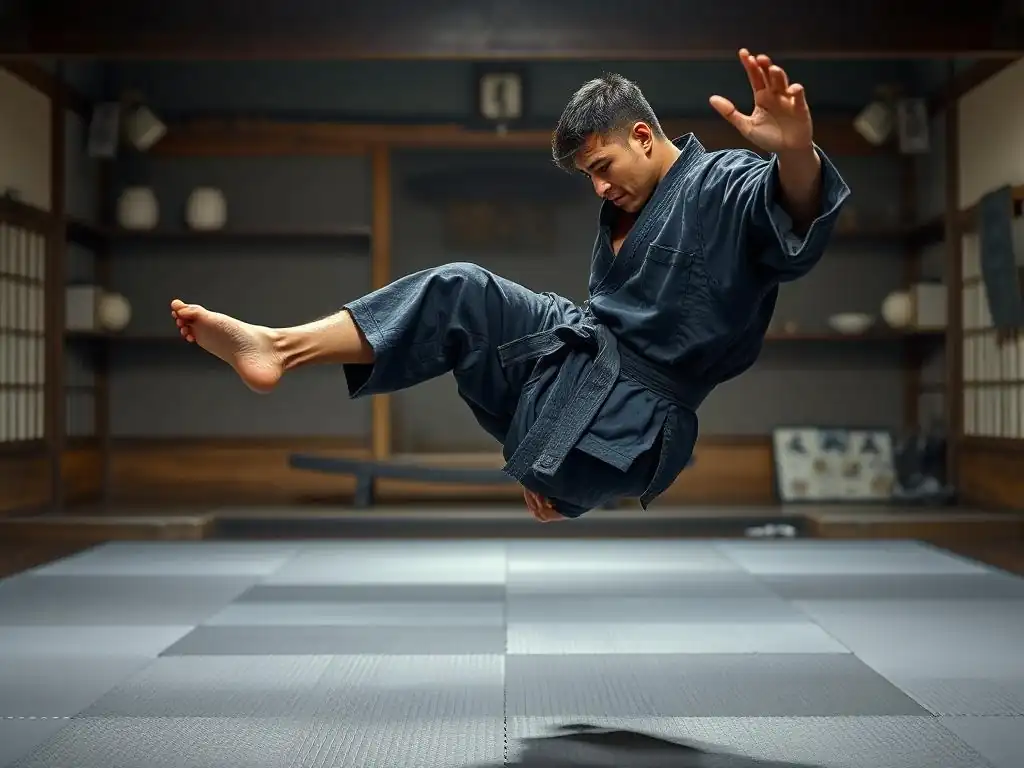
Welcome to Martial Arts Mastery, your gateway to understanding the profound depth and diverse applications of martial arts!
Delve into the intricate world where tradition meets technique. In this article, we explore how Jujutsu kick techniques training extends beyond simple strikes, revealing surprising applications and strategic advantages within select schools. Discover how these often-overlooked keri waza can revolutionize your understanding of Jujutsu. Are you ready to unlock a new dimension of combat proficiency?
- Beyond Throws: Exploring Striking (Uchi Waza) in Yoshin Ryu Jujutsu
- Introduction to Yoshin Ryu Striking: A Holistic Approach
- Historical Context of Striking Techniques in Yoshin Ryu
- Key Yoshin Ryu Striking Techniques (Uchi Waza)
- Training Methodology for Yoshin Ryu Striking Techniques
- Yoshin Ryu Striking for Self-Defense Applications
- Case Studies: Notable Yoshin Ryu Practitioners and Their Striking Prowess
- Common Misconceptions About Striking in Yoshin Ryu
- Conclusion: The Value of Striking in a Comprehensive Yoshin Ryu Practice
-
Frequently Asked Questions
- What is Keri Waza and how does it relate to Jujutsu?
- Why are kicks seemingly less emphasized in Jujutsu compared to other martial arts like Taekwondo or Karate?
- What are some examples of keri waza commonly found in Jujutsu?
- How does Jujutsu kick training differ from kickboxing or other striking-focused martial arts?
- Can learning Jujutsu kicks improve my overall self-defense capabilities?
- Final Reflection: The Enduring Legacy of Jujutsu Kicks
- Unleash Your Inner Kicker!
Beyond Throws: Exploring Striking (Uchi Waza) in Yoshin Ryu Jujutsu
Introduction to Yoshin Ryu Striking: A Holistic Approach
Yoshin Ryu: Blending Grappling, Throws, and Strikes
Yoshin Ryu, a classical Japanese martial art, is often characterized by its sophisticated throwing techniques (Nage Waza) and intricate joint manipulation (Kansetsu Waza). However, a comprehensive understanding of Yoshin Ryu reveals it to be a far more complete combat system, seamlessly integrating striking techniques, known collectively as Uchi Waza (打ち技), alongside its grappling core. This blend reflects the art's origins as a battlefield or self-defense system where encounters were unpredictable and required proficiency across multiple ranges and tactical approaches.
This holistic approach ensures that practitioners are not limited to a single phase of combat. While skilled in controlling and submitting an opponent through close-quarters grappling, a Yoshin Ryu practitioner is also trained to disrupt an opponent at a distance, create openings, or finish an encounter using powerful and precise strikes. This integration acknowledges that a real confrontation rarely stays in one range and that the ability to transition effectively between striking, throwing, and grappling is paramount for survival.
The Purposeful Integration of Striking (Uchi Waza) in Yoshin Ryu
The inclusion of Uchi Waza in the Yoshin Ryu curriculum is highly strategic, serving specific purposes that complement its grappling and throwing techniques. Strikes are not merely standalone attacks but are often employed to set up throws, break an opponent's balance (kuzushi), create momentary distractions, or inflict pain to gain compliance or an opening. This differs from arts where striking is the primary method of engagement; in Yoshin Ryu, strikes are tools within a larger system of control and neutralization.
Furthermore, striking techniques provide essential defensive capabilities, allowing practitioners to manage distance and counter incoming attacks before closing for a throw or joint lock. Training in Uchi Waza also develops crucial attributes like timing, distance management (ma'ai), and explosive power, which directly benefit the execution of grappling techniques. For example, a sharp strike to the head or body can momentarily stun an opponent, providing the critical fraction of a second needed to execute a complex throw or apply a lock effectively.
Historical Context of Striking Techniques in Yoshin Ryu
Minamoto no Yoshitsune and the Origins of Yoshin Ryu Striking
While the direct lineage and specific techniques attributed to legendary figures are often debated among classical Ryu, some traditions of Yoshin Ryu trace their roots or inspiration back to figures like Minamoto no Yoshitsune (源義経), a famed general of the late Heian and early Kamakura periods (12th century). Legends describe Yoshitsune as a master strategist and warrior known for his unconventional and agile combat methods, including striking and dodging techniques that allowed him to defeat larger, more heavily armed opponents.
These historical narratives, whether strictly factual or part of the art's mythological foundation, underscore the early understanding that effective combat required more than just one set of skills. The concept of using strikes to disrupt an opponent's posture or create openings for grappling aligns with the practical realities of ancient battlefield combat, where armor and weapons necessitated versatile approaches. Thus, the inclusion of striking from the art's formative period reflects a pragmatic approach to combat effectiveness.
Evolution of Striking Styles Within the Yoshin Ryu Curriculum
Over centuries, as Yoshin Ryu lineages developed and adapted, the specific Uchi Waza techniques and their emphasis within the curriculum evolved. During the Edo period (1603-1868), a time of relative peace, many martial arts shifted focus towards self-defense and spiritual discipline, often refining techniques for unarmored combat. This period saw the standardization of many striking forms and their integration into kata (pre-arranged forms) that preserved technical details and strategic principles.
Different branches of Yoshin Ryu might show variations in their striking repertoire, influenced by the specific needs or interpretations of headmasters. Some lineages might emphasize short, powerful strikes aimed at vital points (kyusho), while others might incorporate broader, more disruptive movements. However, the core principle of using strikes to facilitate throws and grappling has remained a constant, demonstrating the art's enduring strategic framework despite stylistic evolution.
The Relationship Between Yoshin Ryu Strikes and Other Martial Disciplines
Yoshin Ryu's striking techniques share common roots and principles with striking found in other classical Japanese martial arts (koryu). Many hand strikes and body mechanics mirror those found in arts like Kenjutsu (swordsmanship) or Bojutsu (staff fighting), adapted for unarmed application. This cross-pollination reflects the integrated nature of martial training in historical Japan, where warriors often studied multiple disciplines.
The focus on generating power through body mechanics, targeting vulnerable areas, and using strikes to manage distance or create openings aligns with principles found in various Japanese combat systems. While modern striking arts might emphasize continuous exchanges or knockout blows, Yoshin Ryu Uchi Waza remains firmly rooted in its role as a complementary element to grappling, aiming to control the opponent rather than simply overpower them through striking alone.
Key Yoshin Ryu Striking Techniques (Uchi Waza)
Tsuki (Punches) in Yoshin Ryu: Applications and Variations
Tsuki, or punches, in Yoshin Ryu are typically delivered with a focus on penetration and targeting rather than broad, sweeping power aimed at immediate knockout. They are often short, direct, and explosive, using the rotation of the hips and core to generate force. Common variations include the straight punch (Choku Tsuki) and the rising punch (Age Tsuki), often delivered from close range.
These punches are frequently used to disrupt an opponent's structure, create a flinch response, or momentarily incapacitate them before initiating a throw or joint lock. A sharp Tsuki to the solar plexus, for instance, can momentarily steal an opponent's breath, making them vulnerable to being pulled off balance for a throw like O Goshi (major hip throw). The emphasis is on precision and timing within the context of a grappling engagement.
Targeting Kyusho (Vital Points) with Precise Tsuki
A key application of Tsuki in Yoshin Ryu is targeting Kyusho (vital points). These strikes are not intended for brute force but for affecting the opponent's nervous system, circulation, or respiratory function. Striking points like the temple (Kasumi), jaw hinge (Agoshi), solar plexus (Suigetsu), or floating ribs (Jinchu) can cause momentary paralysis, pain, or disorientation.
Training involves learning the anatomy of these points and developing the precision and focus (kime) necessary to deliver a concentrated force to a small area. For example, a sudden, sharp Tsuki to the Suigetsu delivered from clinch range can instantly buckle an opponent, dropping their center of gravity and making them easy to manipulate for a takedown or sweep. Precise targeting is paramount.
Uchi (Strikes) Adaptation for Yoshin Ryu
Uchi refers to a broader category of strikes using various parts of the hand or arm, often delivered with a more circular or whipping motion compared to the linear Tsuki. These include open-hand strikes, hammer fists, and knife-hand strikes, adapted for the close-quarters nature of Jujutsu. They are effective for striking at angles or when a straight punch is not feasible.
These strikes are versatile, used for defense (parrying), offense (creating openings), and control (striking nerve points). For instance, a Uchi to the side of the neck can disrupt balance, while an open-hand strike to the face can create a strong flinch, allowing the practitioner to close distance or initiate a technique. Their adaptability makes them valuable tools in dynamic exchanges.
Shuto Uchi (Knife Hand Strike) for Close-Range Control
The Shuto Uchi, a strike delivered with the edge of the open hand, is a prominent example of Uchi in Yoshin Ryu. It is particularly effective in close range or when an opponent is attempting to grab. Shuto Uchi can target areas like the side of the neck, temple, collarbone, or wrist.
When used against the neck or temple, Shuto Uchi can cause disorientation or momentary stunning. Against the collarbone or wrist, it can disrupt grip attempts or break posture. In a typical scenario, a practitioner might use a quick Shuto Uchi to the side of an opponent's neck while simultaneously moving offline to create an angle for a throw like Seoi Nage (shoulder throw). It's a sharp, precise tool for gaining an advantage in tight quarters.
Ate (Strikes) for Distance Management in Yoshin Ryu
Ate generally refers to body strikes, often delivered with significant force to disrupt the opponent's structure or advance. While Tsuki and Uchi are often precise, Ate can be more forceful and used to break through defenses or create space. This category includes strikes like elbow strikes (Empi Uchi) and knee strikes (Hiza Geri).
Ate techniques are crucial for managing the distance between practitioners, particularly when transitioning from striking range to grappling range. They can be used to intercept an opponent's advance, punish them for closing distance improperly, or create enough space to execute a throw or escape a hold. They emphasize the use of the entire body's weight and momentum.
Empi Uchi (Elbow Strike) for Interception and Disruption
Empi Uchi, the elbow strike, is a powerful Ate technique utilized in Yoshin Ryu, particularly effective in extremely close range, such as within a clinch or grappling exchange. Elbows are hard and can deliver significant force over short distances. They can target the head, ribs, spine, or limbs.
Empi Uchi is often used for interception – striking an opponent as they attempt to close distance – or for disruption within a grapple. A sharp upward Empi Uchi to the chin can momentarily lift an opponent's head, breaking their posture and making them susceptible to a throw. Similarly, a downward Empi Uchi to the collarbone can collapse an opponent's structure, facilitating a takedown. They are high-impact strikes designed for immediate effect in tight spaces.
Keri (Kicks) as a Supplementary Attack in Yoshin Ryu
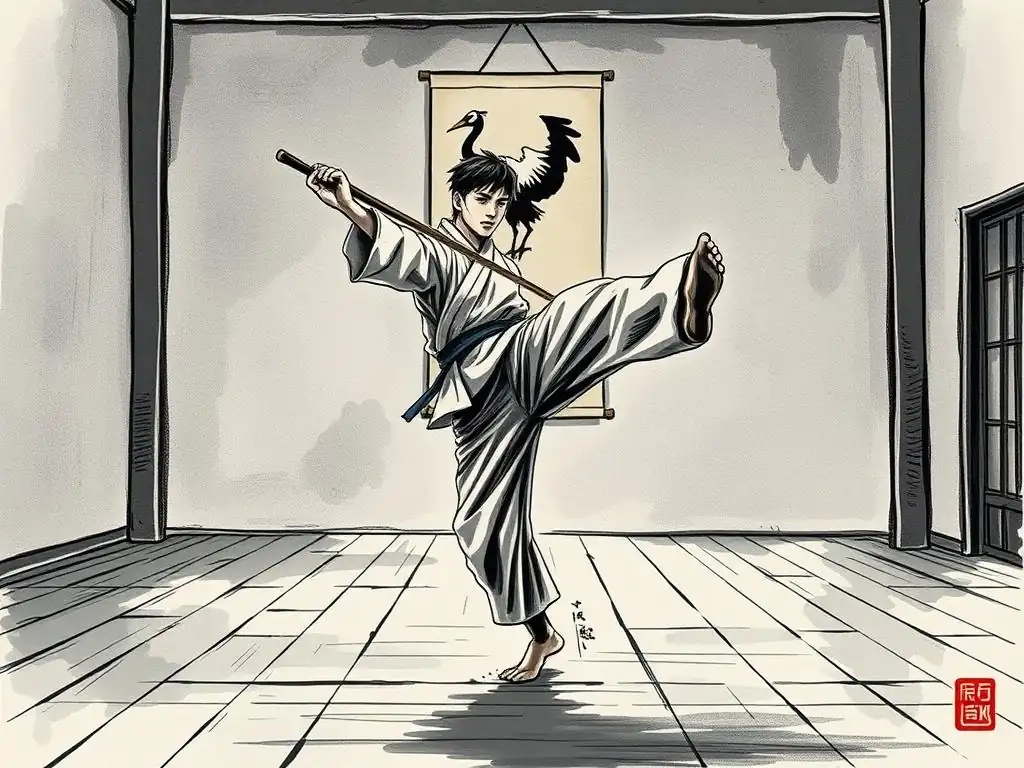
Keri, or kicks, are present in Yoshin Ryu but typically play a supplementary role compared to hand strikes and grappling techniques. Unlike arts where kicking is a primary offensive weapon, Yoshin Ryu Keri Waza is often focused on low-line attacks, targeting the legs or groin, or quick disruptive kicks to create openings. High or complex acrobatic kicks are generally not part of the core curriculum.
The presence of Keri Waza, including basic Jujutsu kick techniques training, underscores the art's practical self-defense focus. While throws and grappling are central, the ability to use the legs for a quick, unexpected attack adds another layer to the practitioner's toolkit. Effective Jujutsu kick techniques training in Yoshin Ryu focuses on speed and placement rather than sheer power or height.
Kin Geri (Groin Kick) for Creating Openings
The Kin Geri, a direct kick to the groin area, is perhaps the most commonly emphasized Keri technique in many Yoshin Ryu lineages. Its effectiveness lies in its ability to cause immediate, debilitating pain, regardless of the opponent's size or strength. It is delivered quickly and often without telegraphing.
The primary purpose of Kin Geri in Yoshin Ryu is not necessarily to end the fight with a single blow but to create a significant opening. A successful Kin Geri will cause an opponent to double over or momentarily freeze, providing the Yoshin Ryu practitioner the critical opportunity to close distance, secure a grip, and execute a throw or joint lock while the opponent is vulnerable and distracted by pain. It is a strategic setup tool.
Atemi (Strikes) as a Setup for Grappling in Yoshin Ryu
Atemi (当て身) is a broader term that often refers to striking vital points, but in the context of Jujutsu, it frequently describes strikes specifically used as a setup for subsequent grappling or throwing techniques. Atemi is the application of Uchi Waza, Tsuki, Uchi, or Ate with the explicit intention of breaking the opponent's balance (kuzushi) or posture, or creating a distraction that allows for the seamless transition into a throw, lock, or control technique.
This principle is fundamental to Yoshin Ryu's combat strategy. Instead of meeting force with force, Atemi is used to disrupt the opponent's structure or mental focus, making them easier to manipulate according to the principles of yielding (Ju). A seemingly simple strike might be delivered not for its damaging potential alone, but because it forces the opponent to shift their weight or react in a way that makes them unstable for a throw.
Combining Atemi with Kuzushi (Breaking Balance)
The true power of Atemi in Yoshin Ryu lies in its combination with Kuzushi. Kuzushi is the art of breaking an opponent's balance, making them light on their feet or forcing their weight onto a weak point. Atemi is a primary method for achieving this state of imbalance.
For example, a sharp strike to the head might cause the opponent to recoil backward, shifting their weight onto their heels (Ushiro Kuzushi - rear imbalance). A strike to the leg might cause them to shift weight to the other leg (laterally). By using Atemi to induce a specific type of Kuzushi, the Yoshin Ryu practitioner can then apply the appropriate throw or control technique with significantly less effort. This synergy is a hallmark of effective Yoshin Ryu technique.
Training Methodology for Yoshin Ryu Striking Techniques
Solo Drills (Kata) for Developing Form and Power in Strikes
Training in Yoshin Ryu striking techniques begins with solo practice, primarily through Kata (pre-arranged forms). Kata are sequences of movements performed alone, simulating combat scenarios. While often emphasizing throws and grappling transitions, many Kata incorporate Uchi Waza, allowing students to practice the proper body mechanics, footwork, and power generation for strikes in isolation.
Practicing striking within Kata helps students internalize the correct angles, distances, and timing without the unpredictable resistance of a partner. Repetition is key; a student might perform a specific striking sequence within a Kata 50-100 times in a single training session to build muscle memory and refine technique. This foundational solo work ensures that strikes are delivered with maximum efficiency and power before being integrated into partner drills.
Partner Drills (Kumite) for Integrating Striking into Yoshin Ryu
Once basic form is established through solo practice, striking techniques are integrated into partner drills, often referred to broadly as Kumite (組手) or specific application drills (Oyo Waza). These drills start with pre-arranged scenarios (Yakusoku Kumite) where partners practice specific attack-and-defense sequences involving strikes, blocks, and subsequent grappling.
More advanced training involves freer forms of practice (Jiyu Kumite, though less like sport sparring and more focused on realistic self-defense scenarios) where students react to unpredictable attacks, using strikes to create openings for throws or to defend against incoming attacks. This partner work is crucial for developing timing, distance judgment, and the ability to transition smoothly between striking and grappling under pressure. Students learn to apply their Jujutsu kick techniques training as part of this integrated system.
Body Conditioning Exercises (Hojo Undo) for Yoshin Ryu Striking
Effective striking requires physical conditioning to generate power, maintain posture, and withstand impact. Yoshin Ryu training often incorporates Hojo Undo (補助運動), supplementary exercises designed to build strength, endurance, and body control relevant to the art's techniques.
For striking, this includes exercises that develop core strength, hip rotation, and explosive power in the arms and shoulders. Examples might include striking targets like Makiwara (巻藁 - straw striking post) to condition fists and develop penetrating power, or using traditional weights (like Chi Ishi - 鎚石) to strengthen wrists and forearms for powerful strikes and grips. Conditioning ensures that strikes are not only technically correct but also delivered with significant force and resilience.
Yoshin Ryu Striking for Self-Defense Applications
Utilizing Strikes to Create Space and Control an Encounter
In a real-world self-defense situation, creating space or gaining control of the situation is often the immediate priority. Yoshin Ryu striking techniques are highly effective tools for this purpose. A quick, sharp strike can momentarily deter an aggressor, disrupt their attack, or create the necessary distance to assess the situation or plan the next move.
For example, if grabbed from the front, a powerful Empi Uchi to the attacker's head or body can break their grip or force them to recoil, creating a crucial second to escape or transition to a different technique. Similarly, a low Kin Geri can immediately neutralize an aggressive forward movement, giving the defender time to regain control or disengage. Strikes act as vital points of interruption and control.
Combining Strikes with Throws and Joint Locks for Effective Self-Defense
The true power of Yoshin Ryu in self-defense lies in the seamless combination of its techniques. Strikes are rarely used in isolation but are integrated into sequences that flow into throws, joint locks, or control techniques. This multi-faceted approach makes the system incredibly versatile and difficult for an attacker to defend against.
Consider a scenario where an attacker throws a punch. A Yoshin Ryu practitioner might block or evade (striking defense), immediately follow with a sharp Atemi strike to the attacker's head or body (striking offense/setup), and then use the resulting imbalance or reaction to execute a throw or apply a joint lock. This rapid transition between ranges and techniques is a core principle taught in Yoshin Ryu self-defense training. A typical self-defense drill might involve reacting to an aggressive move, delivering one or two strikes, and following up with a throw within approximately 3-5 seconds.
Adapting Striking Techniques for Real-World Environments
Yoshin Ryu self-defense training emphasizes adapting techniques to various real-world environments, which often involve uneven surfaces, limited space, or obstacles. Striking techniques are particularly adaptable as they require less space than many throws.
Practitioners learn to deliver strikes effectively while standing on different surfaces, in confined areas like hallways, or while dealing with external factors. For example, a powerful Empi Uchi is highly effective in close quarters where there isn't room for a full punch. Similarly, low-line Keri techniques are less likely to be hindered by obstacles or loss of balance compared to high kicks. The focus remains on practical, efficient movements applicable outside the controlled environment of the dojo.
Case Studies: Notable Yoshin Ryu Practitioners and Their Striking Prowess
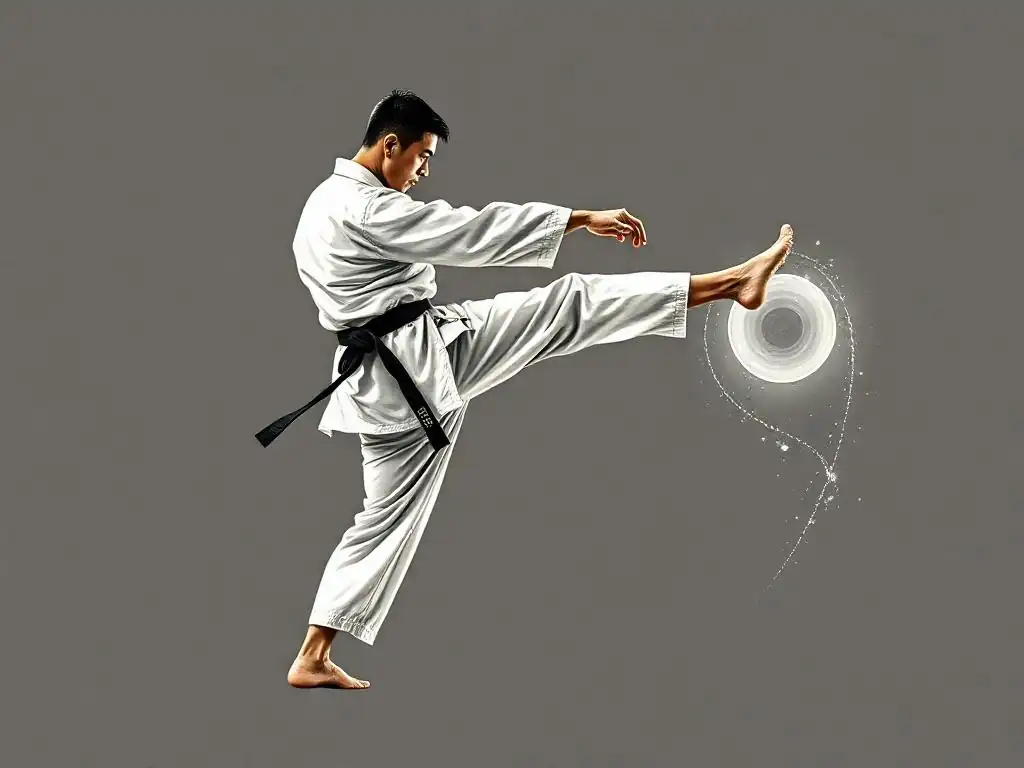
Profile of a Yoshin Ryu Instructor Emphasizing Effective Striking
Consider the approach of a seasoned Yoshin Ryu instructor, Sensei Tanaka (a representative example). While highly skilled in throws and ground techniques, Sensei Tanaka places significant emphasis on Uchi Waza within his curriculum, dedicating perhaps 25-30% of class time to striking drills and applications. He stresses that striking is not just about hitting but about creating opportunities for grappling.
In his lessons, Sensei Tanaka often demonstrates how a seemingly light strike to a vital point can instantly change an opponent's posture, making a throw dramatically easier. He incorporates specific Jujutsu kick techniques training, particularly focusing on low kicks and Kin Geri, teaching students to use them as unexpected disruptors rather than primary weapons. His students are known for their smooth transitions between striking and grappling, highlighting the effectiveness of his integrated teaching approach.
Analyzing Striking Techniques in Yoshin Ryu Demonstrations
Observing demonstrations by established Yoshin Ryu schools reveals the strategic role of striking. While the highlight might often be a spectacular throw (like Seoi Nage or Ippon Seoi Nage) or a complex joint lock (like Kote Gaeshi), careful analysis shows that these techniques are frequently preceded by Atemi.
For instance, a demonstration of a defense against a grab might involve a sharp Shuto Uchi to the wrist or side of the neck just before the joint lock is applied. A throw might be initiated after a quick Tsuki to the chest or a low Kin Geri creates the initial imbalance. These demonstrations, often showcasing sequences lasting just 2-5 seconds from initial contact to resolution, illustrate how strikes are integral components of larger, flowing techniques, used precisely to facilitate the subsequent control or throw.
Common Misconceptions About Striking in Yoshin Ryu
Myth: Yoshin Ryu Is Primarily a Gentle Art Focused on Yielding
A common misconception, perhaps arising from the translation of "Ju" (柔) as "gentle" or "yielding," is that arts like Yoshin Ryu are solely focused on passive defense, redirection, and throws, with little to no emphasis on direct offense or striking. This view overlooks the practical combat origins of Jujutsu.
While yielding and using an opponent's force are fundamental principles, "Ju" also implies flexibility and adaptability – being able to use whatever method is necessary. Relying solely on throws or joint locks would be impractical against certain attacks or in specific situations. The art's historical context and comprehensive curriculum clearly show that "gentleness" in Jujutsu is about efficiency and leverage, not an absence of forceful techniques.
Reality: Strikes Provide a Crucial Element of Offense and Control
The reality is that striking (Uchi Waza, Atemi, including basic Jujutsu kick techniques training) is a vital, functional component of Yoshin Ryu. Strikes are not an afterthought but are deeply integrated into the art's strategy for offense, defense, and control. They provide the necessary tools to manage distance, disrupt an opponent's structure, create openings, and inflict pain or disorientation when required.
Without effective striking, a Yoshin Ryu practitioner would be at a significant disadvantage against an opponent who relies on punches and kicks. The ability to use Atemi to set up throws, or strikes to break grips and create space, makes the art a far more robust and realistic self-defense system. Strikes empower the practitioner to engage effectively across all combat ranges.
Conclusion: The Value of Striking in a Comprehensive Yoshin Ryu Practice
Embracing the Full Spectrum of Yoshin Ryu Combat Principles
Yoshin Ryu is a rich and multi-layered martial art that offers practitioners a comprehensive system of combat. While its reputation often rests on its formidable throwing and grappling techniques, a complete understanding and mastery require embracing the full spectrum of its principles, including the often-underappreciated role of striking (Uchi Waza, Atemi).
Effective Jujutsu kick techniques training, alongside proficiency in punches, hand strikes, and elbow strikes, provides Yoshin Ryu practitioners with the tools necessary to manage dynamic encounters, transition smoothly between ranges, and apply techniques with maximum efficiency. Striking is not secondary; it is an integral part of the art's strategic depth, essential for creating openings, controlling opponents, and ensuring realistic self-defense capability. To truly understand and excel in Yoshin Ryu is to appreciate and train diligently in its integrated striking methods, recognizing them as crucial components of a holistic combat system.
Frequently Asked Questions
What is Keri Waza and how does it relate to Jujutsu?
Keri Waza is the Japanese term for kicking techniques. While Jujutsu is primarily known for grappling and joint locks, certain traditions incorporate kicking techniques to complement their overall strategy.
Why are kicks seemingly less emphasized in Jujutsu compared to other martial arts like Taekwondo or Karate?
Jujutsu's core focus is on close-quarters combat and grappling. While keri waza exists, it's often employed to create openings or disrupt an opponent's balance before transitioning to grappling.
What are some examples of keri waza commonly found in Jujutsu?
Examples include mae geri (front kick), mawashi geri (roundhouse kick), and hiza geri (knee strike). These kicks are often modified for close-range application and focused on targets like the groin or legs.
How does Jujutsu kick training differ from kickboxing or other striking-focused martial arts?
Jujutsu kick training places less emphasis on power generation and more on precision and control. The goal is to unbalance or disrupt the opponent, not necessarily to knock them out with a single blow.
Can learning Jujutsu kicks improve my overall self-defense capabilities?
Yes, incorporating keri waza into your Jujutsu training can provide a more well-rounded self-defense skillset. It allows you to maintain distance, create opportunities for grappling, and respond to a wider range of attacks.
Final Reflection: The Enduring Legacy of Jujutsu Kicks
The exploration of Keri Waza in Jujutsu traditions reveals more than just a collection of fighting techniques; it unveils a philosophy of adaptability and resourcefulness that remains profoundly relevant today. In a world increasingly characterized by complexity and unexpected challenges, the ability to leverage diverse tools and strategies, as demonstrated by the Jujutsu masters of old, is a skill of paramount importance. The study of these techniques, therefore, is not merely an academic exercise, but a pathway to cultivating a more resilient and versatile mindset.
The subtle power of Jujutsu kicks, often overshadowed by grappling and throws, underscores the importance of hidden strengths and unexpected approaches. This understanding has deeply resonated with me, reminding me that true mastery lies not just in visible power, but in the strategic application of often-overlooked resources. The ultimate aim of martial arts is not to win battles, but to avoid them entirely.
This quote, often attributed to various martial arts masters, encapsulates the essence of Keri Waza – a tool to create space, disrupt balance, and ultimately, de-escalate conflict through skillful application.
Now, as you close this article, I invite you to consider how the principles of adaptability and strategic thinking, embodied by the Jujutsu kick techniques, can be applied to your own life. Whether in your personal relationships, professional endeavors, or even your own martial arts training, embrace the power of the unexpected, cultivate your hidden strengths, and strive for a more nuanced and resourceful approach to all that you do. The legacy of Jujutsu kicks extends far beyond the dojo; it offers a timeless lesson in resilience, adaptability, and the art of overcoming adversity.
Unleash Your Inner Kicker!
Thank you for exploring the diverse world of Keri Waza in Jujutsu with us. We hope you've gained a deeper appreciation for these often-overlooked techniques and their potential. Now, it's time to put that knowledge into action!
- Immediately experiment with a mae geri variation in your next solo practice session, focusing on form over power.
- Discuss the ethical considerations of using kicks in self-defense scenarios with your training partners.
- Dive deeper: Research historical texts to uncover other hidden kicking techniques within your specific Jujutsu lineage.
What's one unexpected benefit you can foresee gaining by mastering Jujutsu kicks?