
From Peasant Scythes to Knightly Daggers: The Evolution of Close Combat Tools in HEMA

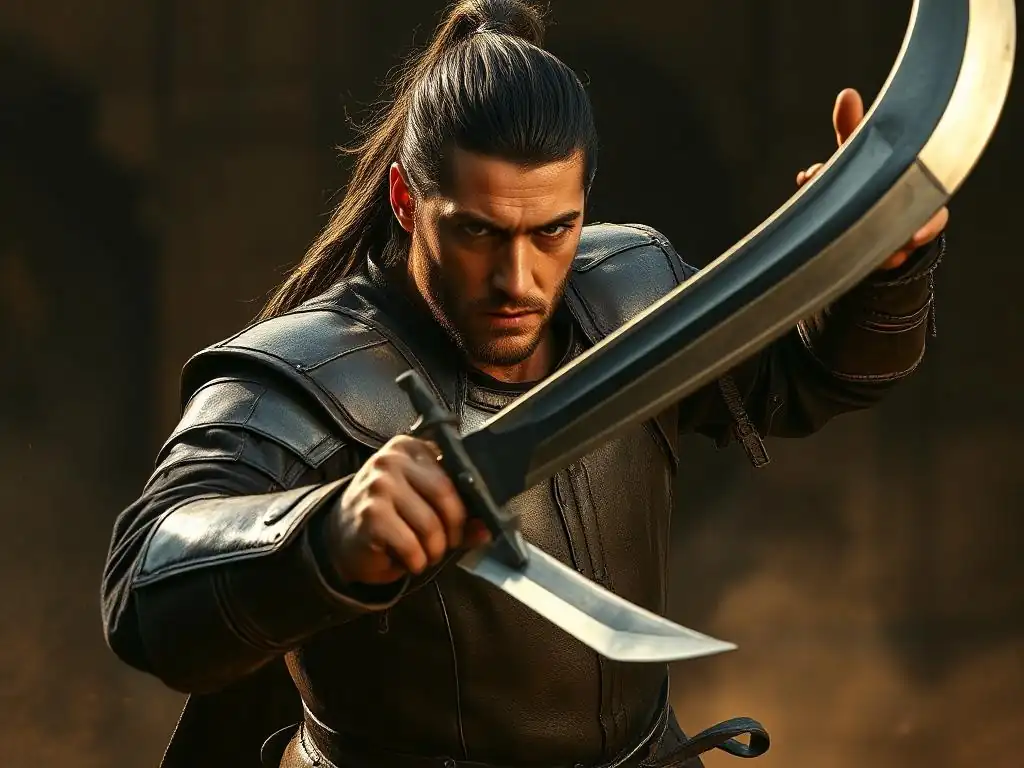
Welcome to Martial Arts Mastery, where the history and practice of combat intertwine! Ever wondered how a simple farm tool could transform into a deadly weapon of war? Dive into our exploration of HEMA weapon evolution history and uncover the fascinating journey of close combat tools, from their humble beginnings to their refined forms in historical European martial arts. This is just the beginning – prepare to be captivated by the ingenuity and artistry behind the weapons that shaped history.
- Introduction: Tracing the Roots of HEMA Weapon Evolution
- Early Agricultural Tools as Improvised Weapons: The Peasant's Arsenal
- The Rise of Dedicated Melee Weapons in HEMA: Swords and Polearms
- Daggers and Short Blades in HEMA: Close-Quarters Combat Mastery
- Knightly Weapons and Armor: The Zenith of Medieval Combat Technology
- The Transition to Renaissance Weaponry: Rapier and Beyond
- Examining HEMA Weaponry across Different Schools and Masters
- Modern HEMA Practice: Reconstructing Historical Combat Techniques
- Conclusion: Appreciating the Rich History of HEMA Weapon Evolution
-
Frequently Asked Questions
- What exactly does "HEMA" stand for, and what does it encompass in the context of Martial Arts Mastery?
- How does the article "From Peasant Scythes to Knightly Daggers" relate to the broader scope of Martial Arts Mastery?
- What are some of the key weapons that evolved in European close combat, as highlighted in the article?
- What are the philosophical underpinnings that might explain the evolution of weaponry discussed in the article?
- What practical self-defense strategies can be derived from understanding the HEMA weapon evolution history?
- Final Reflection: Embracing the Legacy of Steel
- Ignite Your HEMA Journey Now!
Introduction: Tracing the Roots of HEMA Weapon Evolution
Defining Historical European Martial Arts (HEMA) and its Scope
Historical European Martial Arts (HEMA) encompasses the study and practice of historical fighting systems from Europe. This includes a vast array of combative techniques, ranging from unarmed grappling and dagger fighting to the use of swords, polearms, and even early firearms. The historical period covered is extensive, generally spanning from the late medieval era (roughly 13th century) through the Renaissance and into the early modern period (around the 18th century). The scope of HEMA is defined by surviving historical sources, primarily manuscripts written by martial arts masters of the time, which detail the methods they taught.
These manuscripts, such as the I.33 treatise on sword and buckler from the early 14th century or the comprehensive works of Joachim Meyer from the 16th century, provide invaluable insight into the techniques, principles, and, critically, the weapons used. Understanding the context of the time – the legal system, social structure, and military technology – is paramount to accurately interpreting these sources.
HEMA practitioners today reconstruct these arts, often using historical replicas, to understand not just the physical techniques but also the underlying tactical and strategic thinking that shaped European combat over centuries, which is central to appreciating HEMA weapon evolution history.
The Importance of Understanding Weaponry in HEMA Practice
Comprehending the characteristics and intended use of historical weapons is fundamental to the effective practice of HEMA. A weapon is not merely an object; it dictates stance, movement, tactical options, and even philosophical approaches to combat. For instance, the techniques described for a heavy, cutting-focused longsword differ significantly from those for a light, thrusting rapier. The balance, weight, length, and edge geometry of a weapon directly influence how it can be wielded and what defenses are effective against it.
Moreover, the evolution of HEMA weaponry often went hand-in-hand with the evolution of armor and fighting styles. As armor became more protective, weapons adapted to find vulnerabilities or deliver concussive force. Conversely, new weapon designs sometimes necessitated changes in defensive gear or techniques. A deep understanding of the specific weapon being studied – its historical design, limitations, and strengths – allows practitioners to interpret historical manuals accurately and apply techniques with historical fidelity, providing crucial context for the broader HEMA weapon evolution history.
HEMA Weapon Evolution History: A Journey Through Time
The history of European martial arts is inextricably linked to the development and adaptation of the tools used for combat, tracing a fascinating HEMA weapon evolution history. This journey begins not with purpose-built military arms but often with adapted tools of daily life, reflecting the need for self-defense among all strata of society. Over centuries, as warfare and social structures changed, so too did the primary instruments of combat, leading to specialized weapons designed for specific roles, whether on the battlefield, in judicial duels, or for civilian self-defense.
From the crude effectiveness of a sharpened agricultural tool in the hands of a peasant to the sophisticated engineering of a knight's war hammer or a Renaissance gentleman's rapier, the evolution of HEMA weaponry reflects technological progress, changing tactical needs, and shifting social norms. Studying this progression provides a unique lens through which to view European history and the ingenuity of its people in developing complex and effective fighting systems. This historical trajectory forms the backbone of HEMA weapon evolution history, offering a rich field of study for practitioners and historians alike.
Early Agricultural Tools as Improvised Weapons: The Peasant's Arsenal
The Scythe: From Harvesting Grain to Cutting Foes
The scythe, a long, curved blade attached to a wooden pole, was primarily an indispensable tool for harvesting crops throughout medieval Europe. Its widespread availability and inherent potential for delivering devastating cuts made it a natural, albeit crude, weapon in times of conflict, particularly for peasant levies or during uprisings when dedicated military arms were scarce. While lacking the balance and handling characteristics of a purpose-built polearm, a scythe could be wielded with surprising effectiveness against unarmored or lightly armored opponents.
In combat, the scythe's primary strength lay in its reach and cutting power. A sweeping motion could inflict severe wounds, particularly to limbs or heads. Historical accounts, such as those from the Hussite Wars in the 15th century, mention peasants utilizing adapted agricultural tools, including scythes (often straightened into war scythes), as part of their improvised arsenals. This demonstrates a key aspect of early HEMA weapon evolution history: the adaptation of everyday objects for defense when specialized weapons were inaccessible.
The Flail: Adapting Agricultural Tools for Combat
Another common agricultural tool adapted for combat was the flail. Originally used for threshing grain, the flail consists of a handle connected to a shorter, heavy piece (often wood, sometimes reinforced) by a chain or rope. This design proved unexpectedly effective in combat, particularly against armored opponents, as the flexible joint allowed the striking head to bypass shields or deliver blows from unexpected angles, even potentially wrapping around limbs or weapons.
Combat flails evolved from their agricultural counterparts, sometimes featuring multiple heads or metal spikes, becoming purpose-built weapons. However, the basic principle of a weighted head on a flexible connection remained. While potentially unwieldy and dangerous to the wielder themselves, a skilled individual could generate significant force and unpredictability with a flail. Its appearance in some historical illustrations and its effectiveness against certain types of defense highlight the ingenuity in adapting common tools, contributing another fascinating chapter to HEMA weapon evolution history.
The prevalence and adaptation of agricultural and other civilian tools as weapons in historical European contexts provide a stark reflection of the social structure and realities of the time. Access to high-quality, purpose-built military weapons like swords or plate armor was often restricted to the nobility and professional soldiers due to cost and social status. Peasants, townspeople, and other commoners typically did not possess such arms unless serving in a militia or levied force.
Therefore, in situations requiring self-defense, riot control, or low-level conflict, individuals relied on what was readily available. Tools like axes, pitchforks, knives, and even simple staves became instruments of combat. Studying the documented or inferred use of these improvised weapons offers insight into the fighting techniques that might have existed outside the formal schools of the knightly class, broadening our understanding of the full spectrum of HEMA weapon evolution history and the diverse martial practices across different social strata.
The Rise of Dedicated Melee Weapons in HEMA: Swords and Polearms
The Longsword: A Quintessential HEMA Weapon
The longsword, also known as the great sword or hand-and-a-half sword, is perhaps the most iconic weapon associated with medieval European martial arts and a central figure in HEMA weapon evolution history. Popular from roughly the mid-13th century through the 16th century, it was a versatile two-handed sword (though sometimes wielded with one hand in specific contexts) typically ranging from 100 to 130 cm in length, weighing between 1.2 and 1.8 kg. Its design allowed for powerful cuts, effective thrusts, and sophisticated hilt defenses.
Numerous surviving manuscripts, most famously those from the German school of fencing masters like Johannes Liechtenauer (circa late 14th century/early 15th century) and his followers, detail comprehensive fighting systems centered around the longsword. These treatises describe complex footwork, guards, strikes, thrusts, and grappling techniques performed with the weapon, often involving 'half-swording' (gripping the blade itself for greater control in close quarters, particularly against armor). The longsword's prominence in these detailed manuals solidifies its importance in the study and practice of HEMA weapon evolution history.
The Arming Sword: A Versatile Sidearm for Knights
Preceding and coexisting with the longsword was the arming sword (or knightly sword), a single-handed sword typically paired with a shield or buckler. Common from the Viking Age through the Renaissance, this sword usually measured between 70 and 90 cm in length and weighed around 1 to 1.3 kg. It was the primary sword of a knight or soldier when wearing armor, as it could be easily wielded alongside a shield, and its techniques were often integrated into mounted combat.
The arming sword was designed for both cutting and thrusting, making it adaptable to various battlefield situations or personal defense scenarios. Manuscripts like the I.33 (circa 1300) specifically detail techniques for the sword and buckler combination, showcasing sophisticated parries, thrusts, and disarms. The widespread use and long operational history of the arming sword underscore its significance as a foundational element in the broader narrative of HEMA weapon evolution history, representing the standard personal sidearm for centuries.
Polearms in HEMA: Halberds, Spears, and Their Tactical Applications
Polearms constitute a diverse and incredibly important category of weapons in HEMA, representing some of the most effective tools on the medieval and Renaissance battlefield. Ranging from simple spears and quarterstaves to complex halberds, poleaxes, and bills, these weapons varied greatly in design but shared the common feature of a striking head mounted on a long shaft, typically 1.5 to 3 meters or even longer. Their primary advantages were reach, leverage, and the ability to incorporate multiple functions (cutting, thrusting, hooking, smashing) into a single weapon head.
Spears, in various forms, are perhaps the oldest and most ubiquitous polearm, used for thrusting and keeping opponents at bay. The halberd, popular from the 14th century onwards, combined an axe blade, a spear point, and a hook on a long shaft, making it exceptionally versatile against both armored and unarmored opponents, as well as mounted riders.
Polearms were essential for infantry formations, providing a defensive hedge against cavalry charges and enabling powerful offensive capabilities. Studying polearm techniques from masters like Paulus Hector Mair (16th century) reveals complex guards, strikes, and leverage-based maneuvers, highlighting their critical role in HEMA weapon evolution history and battlefield tactics.
Daggers and Short Blades in HEMA: Close-Quarters Combat Mastery

The Dagger: A Deadly Tool for Thrusting and Parrying
The dagger was an indispensable personal weapon throughout the medieval and Renaissance periods, serving as a backup weapon, a tool for finishing disabled opponents, and a primary instrument in civilian self-defense and duels. Unlike larger swords, daggers were easily concealed or carried openly as part of everyday attire. HEMA manuscripts demonstrate sophisticated systems for fighting with the dagger, emphasizing close-quarters techniques, including grappling, voiding, and precise thrusts aimed at vulnerable points.
Daggers varied in design, from the rondel dagger with its circular guards designed for thrusting through gaps in armor, to the ballock dagger, and the kidney dagger. Regardless of form, the techniques often involved controlling the opponent's weapon or body with one hand while delivering a thrust with the other. Fiore dei Liberi's Flos Duellatorum (early 15th century) provides one of the most detailed sections on dagger fighting, showcasing intricate grappling exchanges integrated with dagger use, illustrating the critical role of these short blades in the continuum of HEMA weapon evolution history.
The Messer: A Single-Edged Sword for Civilian Self-Defense
The messer (German for "knife") was a type of single-edged sword popular primarily in German-speaking lands from the 14th to 16th centuries. It is notable for often having a knife-like hilt construction (a slab tang with scales riveted on), distinguishing it from swords with a full tang and pommel nut. Messers ranged in size from the langes messer (long messer), comparable in length to a longsword and often used with two hands, to the kriegsmesser (war messer), a larger battlefield weapon, and the kurtzes messer (short messer) or dussack, shorter, single-handed versions.
The single edge meant techniques could differ slightly from double-edged swords, sometimes incorporating cutting methods more akin to large knives or sabers. The messer was often considered a civilian weapon, potentially bypassing restrictions on carrying swords. Masters like Johannes Lecküchner (late 15th century) dedicated extensive treatises to the messer, outlining detailed guards, cuts, thrusts, and disarms, highlighting its importance in civilian self-defense systems and contributing a unique branch to HEMA weapon evolution history.
Understanding Dagger Fighting Techniques in HEMA Manuscripts
HEMA manuscripts provide a rich source for reconstructing historical dagger fighting. Masters like Fiore dei Liberi and Paulus Hector Mair detail comprehensive systems that go far beyond simple stabbing. These techniques often begin at very close range, sometimes even from a grapple, emphasizing control of the opponent's body and weapon. The goal was often to create an opening or restrain the adversary to deliver a decisive thrust to a vulnerable area, such as the throat, armpit, or groin.
Key elements found in these treatises include using the non-dagger hand to parry, grab, or manipulate the opponent; leveraging body weight and structure for throws or takedowns; and employing voiding steps to evade attacks while closing distance. The sophisticated interplay between unarmed grappling and dagger techniques demonstrates that historical combat was rarely about using a single weapon in isolation. Studying these detailed sequences offers deep insight into the practical application of short blades and their place in the complex tapestry of HEMA weapon evolution history and close-quarters combat.
Knightly Weapons and Armor: The Zenith of Medieval Combat Technology
The Evolution of Armor: From Chainmail to Plate
The development of knightly weapons was intrinsically linked to the evolution of defensive armor. Early medieval knights primarily wore maille (chainmail), which offered excellent protection against cuts but was vulnerable to strong thrusts and blunt force. This led to weapons like the simple sword and spear being effective, alongside crushing weapons like maces. As the threat of thrusting weapons and heavier blows increased, supplementary plate pieces began to appear in the 13th and 14th centuries, protecting knees, elbows, and shoulders.
By the 15th century, full plate armor became the dominant form of protection for knights and wealthy soldiers. A well-made suit of Gothic or Italian plate armor was remarkably effective against most cuts and even many thrusts from standard swords. This defensive advancement necessitated changes in offensive weaponry and techniques. Weapons evolved to focus on delivering concussive force or finding the few remaining gaps or weaker points in the plate, marking a significant phase in HEMA weapon evolution history.
The Knightly Sword: A Symbol of Status and Martial Prowess
While various swords were used by knights, the term "knightly sword" often refers to the arming sword (single-handed) or, later, the longsword (hand-and-a-half or two-handed). Beyond their practical function as weapons, these swords held significant cultural and symbolic importance for the knightly class. They were symbols of status, justice, and martial prowess, often bearing names and intricate decorations. The training required to wield these weapons effectively was extensive, starting from a young age for squires.
In combat against armored opponents, the techniques for using the knightly sword shifted. Simple cuts were often ineffective against plate. Instead, techniques focused on thrusting into weak points (like the visor, armpits, or groin), using the sword in 'half-sword' grip to manipulate the blade like a short spear or pry at armor joints, or employing the pommel or crossguard as blunt instruments in close-quarters grappling. This adaptation of the sword to counter evolving armor is a clear example of the dynamic process in HEMA weapon evolution history.
Specialized Knightly Weapons: The War Hammer
As plate armor became widespread and highly effective against bladed weapons, specialized tools designed specifically to defeat it rose in prominence. The war hammer is a prime example. These weapons typically featured a hammerhead on one side for delivering powerful concussive blows capable of denting or even breaking plate and injuring the wearer through the force of impact. The other side often had a fluke or spike designed to punch through armor plates or rings, or to hook limbs.
The war hammer, poleaxe (a more versatile polearm combining axe, hammer/fluke, and spear point), and mace were favored by knights and men-at-arms for fighting heavily armored opponents in the 14th and 15th centuries. Their design prioritized concentrated force over cutting ability. Treatises like Fiore dei Liberi's include sections on fighting in armor with weapons like the poleaxe, demonstrating sophisticated techniques for leverage, grappling, and targeting vulnerable points. These specialized tools represent a direct response to defensive technology, illustrating a critical phase in HEMA weapon evolution history.
The Transition to Renaissance Weaponry: Rapier and Beyond
The Rapier: A Thrusting Sword for Duels and Self-Defense
The Renaissance saw a significant shift in civilian swordsmanship, with the emergence and dominance of the rapier from the late 15th through the 17th centuries. Originating in Spain, the rapier was primarily a civilian sidearm designed for dueling and self-defense in urban environments. Characterized by a long, slender blade optimized for thrusting and a complex hilt offering extensive hand protection, the rapier marked a departure from the cut-and-thrust swords of the medieval period.
Rapier fencing focused on precision, timing, and footwork, emphasizing the deadly effectiveness of the thrust. Masters like Salvator Fabris (early 17th century Italian) and George Silver (late 16th century English) wrote detailed treatises outlining sophisticated systems of attack and defense. While often romanticized as purely dueling weapons, rapiers were also used in military contexts, particularly by officers. Their development reflects changing social customs, legal restrictions on carrying weapons, and a preference for speed and agility over brute force, making the rapier a key element in the later stages of HEMA weapon evolution history.
The Side Sword: A Versatile Weapon for Civilian and Military Use
Coexisting with and sometimes preceding the rapier was the side sword (also known as the spada da lato in Italian). Popular from the late 15th to the early 17th centuries, the side sword represented a transitional form between the arming sword and the rapier. It typically had a blade wider and more capable of cutting than a dedicated rapier, while featuring a more developed hilt than earlier arming swords, often including finger rings and bars for increased hand protection.
The side sword was highly versatile, effective for both cutting and thrusting. It could be used alone, with a buckler, a dagger (forming the sword and dagger system popular in many manuals), or even a second sword. Masters like Achille Marozzo (mid-16th century Italian) detailed comprehensive systems for the side sword and its various accompaniments. This adaptability made the side sword popular among soldiers and civilians alike, bridging the gap between medieval battlefield practicality and Renaissance urban self-defense, showcasing an important phase in HEMA weapon evolution history.
Firearms and Their Impact on Melee Combat in HEMA
While HEMA primarily focuses on melee weapons, the increasing presence and effectiveness of firearms from the late medieval period onwards had a profound impact on the evolution of hand-to-hand combat and the weapons used. Early firearms like the arquebus and later the musket changed battlefield tactics fundamentally, reducing the dominance of heavily armored knights and cavalry. As firearms became more reliable, they influenced the design and use of traditional melee weapons.
The need for armor that could stop musket balls proved prohibitively heavy, leading to a decline in full plate armor's use in favor of lighter, more flexible protection. This, in turn, influenced sword design, making purely thrusting weapons like the rapier more viable as opponents wore less protective gear. Melee weapons remained essential for close-quarters fighting, as firearms were slow to reload.
Bayonets eventually turned the musket itself into a type of spear. The rise of firearms didn't eliminate melee combat but reshaped it, pushing the evolution of HEMA weaponry towards lighter, faster civilian arms while specialized military melee weapons adapted to new battlefield realities.
Examining HEMA Weaponry across Different Schools and Masters

Liechtenauer's Tradition: The Longsword and its Techniques
The tradition of Johannes Liechtenauer is one of the most influential schools in HEMA, primarily focusing on the longsword. Active around the late 14th century, Liechtenauer's teachings are preserved through various glosses and interpretations by his followers, such as Sigmund Ringeck (early 15th century) and Peter von Danzig (mid-15th century). His system is characterized by five 'master cuts' ( Meisterhau), strategic principles of timing and distance ( Indes), and a strong emphasis on fighting from the bind.
Liechtenauer's longsword system is comprehensive, covering techniques for unarmored combat, fighting in armor, and even mounted combat. The core of his teachings revolves around taking and maintaining the initiative ( Vor) and forcing the opponent into a defensive or reactive state ( Nach). The detailed instructions on specific plays ( Stücke) provide a deep understanding of how the longsword was used as a versatile tool for cutting, thrusting, and grappling, making this tradition a cornerstone for studying HEMA weapon evolution history, particularly for the late medieval period.
Fiore dei Liberi's System: Focus on Armed and Unarmed Combat
Fiore dei Liberi, an Italian master active in the early 15th century, presented a highly structured and comprehensive martial arts system in his treatise Flos Duellatorum (The Flower of Battle). Unlike some masters who focused on a single weapon, Fiore covered a wide range of combat forms, including unarmed grappling ( Abrazare), dagger ( Daga), sword in one hand ( Spada a un mano), sword in two hands ( Spada a dui mani - similar to the longsword), spear ( Lanza), poleaxe ( Azza), and mounted combat.
Fiore's system is notable for its consistent principles applied across different weapons and contexts. He emphasized leverage, joint locks, throws, and striking vulnerable points, integrating armed and unarmed techniques seamlessly. His manuscript is richly illustrated, providing clear visual examples of guards, techniques, and counter-techniques. The breadth of weaponry covered in Flos Duellatorum offers invaluable insight into the martial landscape of early 15th-century Italy and provides a holistic view of HEMA weapon evolution history across various combat disciplines.
Other Notable HEMA Masters and Their Weapon Preferences
Beyond Liechtenauer and Fiore, numerous other masters and schools contributed significantly to the rich history of HEMA weapon evolution. Paulus Hector Mair (16th century Augsburg) compiled a lavish and extensive work covering a vast array of weapons, including the longsword, dussack, rapier, dagger, staff, polearms, and even wrestling. His manuscripts are known for their detailed illustrations and comprehensive techniques, although the sheer volume suggests it might have been more of a compendium than a practical training manual for a single individual.
Joachim Meyer (late 16th century) provided a sophisticated system for the longsword, rapier, dussack, and polearm, building upon the German tradition. His work is highly valued for its detailed explanations and systematic approach. In England, masters like George Silver (late 16th century) debated the merits of traditional English weapons like the backsword and short sword against the newly popular rapier, offering insights into regional preferences and the transition in weaponry. Studying these diverse masters reveals the regional variations and chronological development inherent in HEMA weapon evolution history.
Modern HEMA Practice: Reconstructing Historical Combat Techniques
Sources and Interpretation: Deciphering HEMA Manuscripts
The foundation of modern HEMA practice lies in the meticulous study and interpretation of surviving historical manuscripts, often referred to as 'fechtbücher' (fight books) in German or equivalent terms in other languages. These primary sources, dating from the late medieval period to the early modern era, contain the instructions, diagrams, and sometimes even philosophical insights of historical martial arts masters. Deciphering these texts is a complex process, requiring knowledge of historical languages (like Middle High German, Italian, or Latin), understanding historical context, and practical experimentation.
Interpreting a manuscript involves not just translating the text but also understanding the terminology, the sequence of movements, and the underlying principles. Diagrams often accompany the text, providing visual cues, but can also be stylized or ambiguous. Practitioners use iterative research, solo practice, and partner drills with training weapons to test interpretations against the realities of physics and combat effectiveness. This ongoing process of source analysis and practical application is central to the reconstruction of HEMA weapon evolution history and techniques.
The Role of Replicas and Training Weapons in HEMA
Practicing HEMA requires appropriate equipment, primarily training weapons that safely replicate the handling characteristics of historical arms. While historical artifacts are preserved in museums, they are too fragile (and often sharp) for sparring. Modern HEMA practitioners use blunt steel replicas, synthetic swords (like those made from durable plastic), and padded weapons. These training tools are designed to mimic the weight, balance, and feel of their historical counterparts while minimizing the risk of serious injury during practice and sparring.
For instance, a steel longsword federschwert ("feder") is specifically designed for training, with a flexible blade that absorbs impact and a blunted edge and tip. Synthetic wasters or aluminum trainers are often used for drills or lighter sparring. The quality and historical accuracy of training weapons have improved significantly over time, allowing practitioners to engage with the techniques described in manuscripts with tools that behave much like the originals. This equipment is essential for the practical exploration of HEMA weapon evolution history through physical reconstruction.
The Future of HEMA: Preserving and Evolving Martial Traditions
HEMA is a rapidly growing global community dedicated to researching, reconstructing, and practicing historical European martial arts. The future of HEMA involves continued scholarly research into existing and newly discovered manuscripts, refining interpretations through practical application, and fostering a community of practitioners. There is an ongoing effort to make historical sources more accessible through translation and digitization, facilitating wider study.
Furthermore, the practice itself continues to evolve. While historical fidelity is paramount, modern training methodologies, safety protocols, and sports science insights are increasingly being integrated to improve learning and performance. Competitive sparring events provide a venue for testing skills under pressure, driving further refinement of techniques and tactics. The goal remains to preserve the rich legacy of European martial traditions while ensuring their vibrant continuation into the future, guaranteeing that the study and practice of HEMA weapon evolution history remains a dynamic field.
Conclusion: Appreciating the Rich History of HEMA Weapon Evolution
The Enduring Legacy of European Martial Arts
The study and practice of Historical European Martial Arts reveal a rich and sophisticated legacy of combat systems that evolved over centuries. Far from being simple or crude, these arts involved intricate footwork, precise timing, leverage, and a deep understanding of biomechanics, weapon dynamics, and psychology. The surviving manuscripts are testaments to the skill and knowledge of historical masters who codified these systems for instruction.
The enduring legacy lies not just in the techniques themselves but in the adaptability and ingenuity demonstrated in the development of weapons and fighting styles in response to changing technology, social structures, and battlefield needs. From the improvised tools of necessity to the highly specialized arms of the knight and the refined blades of the Renaissance duelist, the HEMA weapon evolution history reflects a continuous process of innovation and refinement. Appreciating this history provides valuable insight into European culture, warfare, and the universal human pursuit of mastery in conflict.
Further Exploration: Resources for Learning More about HEMA Weaponry
For those interested in delving deeper into the fascinating world of HEMA weapon evolution history, numerous resources are available. Many historical manuscripts have been translated into English and are available online or in print, offering direct access to the teachings of historical masters. Websites and forums dedicated to HEMA provide platforms for discussing interpretations, research findings, and training methodologies.
Organizations and schools around the world offer practical instruction in various HEMA disciplines, allowing individuals to experience handling and training with replicas of historical weapons firsthand. Books and academic papers explore specific weapons, periods, and masters in detail. Engaging with these resources provides a comprehensive understanding of the historical context, technical details, and practical application of the diverse array of tools that shaped HEMA weapon evolution history.
Frequently Asked Questions
What exactly does "HEMA" stand for, and what does it encompass in the context of Martial Arts Mastery?
HEMA stands for Historical European Martial Arts. Our content explores the historical techniques and weapon systems of Europe.
How does the article "From Peasant Scythes to Knightly Daggers" relate to the broader scope of Martial Arts Mastery?
The article fits perfectly by examining the evolution of close combat tools within a European historical context. It aligns with our focus on martial arts history and practical self-defense strategies.
What are some of the key weapons that evolved in European close combat, as highlighted in the article?
The article traces the evolution from agricultural tools like scythes to more refined weapons such as daggers used by knights. It explores the adaptation of everyday items for combat.
What are the philosophical underpinnings that might explain the evolution of weaponry discussed in the article?
The need for effective self-defense in various social classes drove weapon development. It reflects a constant search for advantage and adaptation to changing combat scenarios.
What practical self-defense strategies can be derived from understanding the HEMA weapon evolution history?
Understanding weapon evolution helps you anticipate potential threats and develop counter-strategies. Knowing the strengths and weaknesses of historical weapons improves your overall martial arts understanding.
Final Reflection: Embracing the Legacy of Steel
The journey through the evolution of close combat tools, from the humble peasant scythe to the knightly dagger, reveals more than just a progression of weaponry; it showcases the enduring human spirit of adaptation and innovation. This historical tapestry, woven with threads of necessity and ingenuity, continues to resonate deeply within the modern HEMA community. We see echoes of these ancient tools in the techniques and philosophies we practice today, reminding us that our art is built upon a rich and complex foundation.
The study of HEMA weapon evolution history not only enriches our understanding of historical martial arts but also fosters a profound appreciation for the cultural and social contexts that shaped these weapons. It's a humbling experience to connect with the past through the weight and balance of a replicated weapon, to feel the echoes of those who wielded them in earnest. Study the past if you would define the future.
- Confucius. This quote encapsulates the essence of HEMA; by understanding the evolution of these weapons, we gain a deeper insight into the strategies, tactics, and even the mindset of those who came before us.
As you delve deeper into the world of HEMA, remember that you are not just practicing techniques; you are connecting with a lineage that stretches back centuries. Take a moment to consider the hands that crafted these weapons, the battles they were used in, and the lessons they can teach us. Let the history of these close combat tools inspire you to not only master the art but also to appreciate the enduring legacy of steel and the human spirit it represents.
Ignite Your HEMA Journey Now!
Thank you for diving into the fascinating evolution of close combat tools! We hope you've gained valuable insights into the history and techniques that shape HEMA today. Now, it's time to translate knowledge into action.
Here are a few ways to continue your exploration:
- Find a local HEMA club and experience the thrill of historical fencing firsthand. This is the most direct path to applying what you've learned!
- Delve deeper by researching specific weapons mentioned in the article, focusing on primary sources and historical manuals. Uncover the nuances of each weapon's use and significance.
- Share this article with fellow martial arts enthusiasts and start a discussion. Perhaps you can organize a viewing party and compare historical combat styles from different cultures!
Which weapon's evolution intrigues you the most, and what modern adaptation would you like to see explored next?