
Exploring Sambo's "Other" Leg Attacks: Calf Slicers and Toe Holds

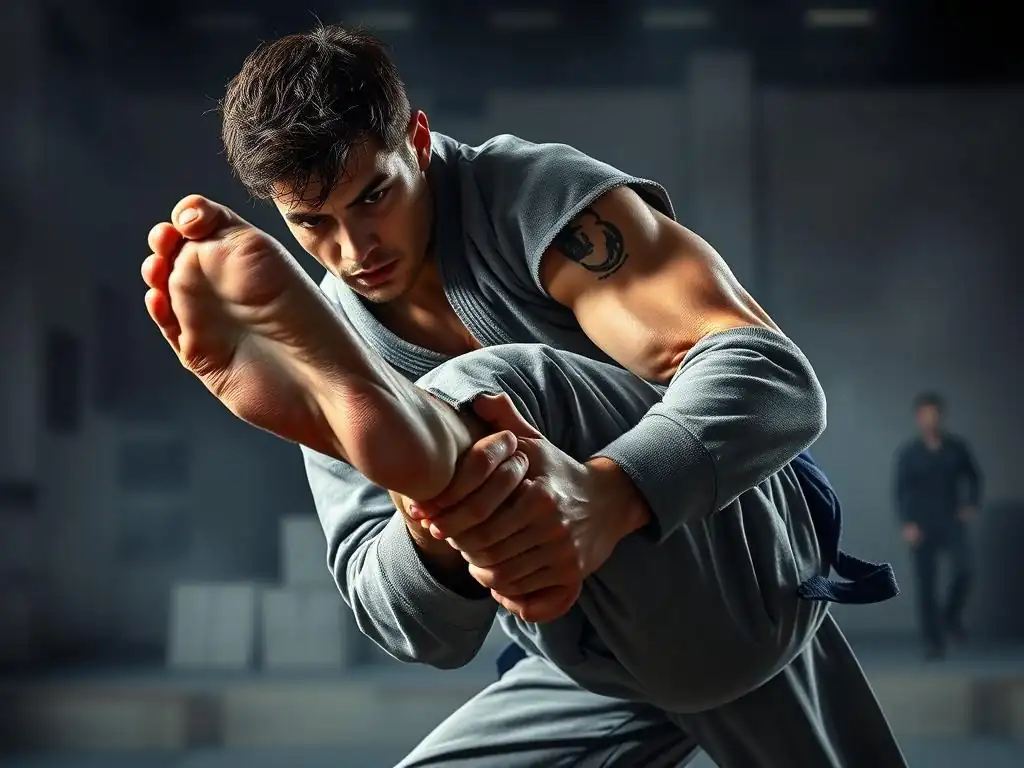
Welcome to Martial Arts Mastery, your gateway to the world's fighting arts! Ever heard of a Sambo calf slice toe hold? It's a devastating leg lock often overlooked, yet brimming with potential. Uncover the secrets behind this technique, its application, and the broader world of leg attacks within the Russian combat system. Dive in and discover the intricate details that make Sambo a force to be reckoned with!
- Introduction to Sambo Leg Locks Beyond the Heel Hook
- Understanding Calf Slicers in Sambo
- Toe Holds in Sambo: A Detailed Examination
- Sambo Calf Slice Toe Hold Combinations and Transitions
- Legal Considerations and Safety Protocols for Sambo Leg Locks
- The Effectiveness of Sambo Calf Slices and Toe Holds in Self-Defense
- Notable Sambo Practitioners Known for Calf Slices and Toe Holds
- Integrating Sambo Leg Locks into Your Grappling Game
- Conclusion: Mastering the Subtle Art of Sambo Calf Slices and Toe Holds
-
Frequently Asked Questions
- What exactly are calf slicers and toe holds in the context of Sambo?
- Are calf slicers and toe holds legal in all Sambo competitions?
- What makes Sambo's approach to calf slicers and toe holds unique?
- What are some key considerations when training calf slicers and toe holds?
- What are some common defenses against calf slicers and toe holds in Sambo?
- Final Reflection: Embracing Sambo's Hidden Depths
- Ignite Your Sambo Game: Unlock New Submission Secrets!
Introduction to Sambo Leg Locks Beyond the Heel Hook
The Rich Landscape of Sambo Leg Attacks
Sambo, a martial art originating in the Soviet Union, is renowned for its dynamic throws, formidable ground fighting, and particularly its sophisticated system of leg locks. While disciplines like Brazilian Jiu-Jitsu have popularized the heel hook in recent years, Sambo has long embraced a wider array of lower body submissions. The art's historical context, developed for military and law enforcement applications, demanded effective and versatile techniques to control and subdue opponents quickly.
This led to a deep exploration of joint manipulation below the waist, including attacks on the knee, ankle, and even the smaller joints of the foot. The emphasis in Sambo is often on control and transition, making leg attacks not just finishing moves but also powerful tools for positional advancement and creating opportunities. This broad approach distinguishes Sambo's leg lock game and provides practitioners with a diverse arsenal.
Beyond the ubiquitous heel hook, Sambo's curriculum includes a variety of ankle locks, kneebars, and less commonly discussed submissions like calf slicers and toe holds. These techniques, while perhaps less flashy than a devastating heel hook, are incredibly effective when applied correctly and often come with fewer high-impact rotational forces, though they still require precision and care. Understanding this broader landscape of Sambo leg attacks is crucial for anyone looking to develop a truly comprehensive grappling game.
It's not just about finishing the fight; it's about controlling the opponent's lower body, breaking posture, and setting up subsequent attacks, whether they are further leg locks, sweeps, or transitions to upper body control. The Sambo calf slice toe hold dynamic, for instance, is a classic example of how these techniques can be linked.
Focusing on Calf Slices and Toe Holds in Sambo
While the heel hook often grabs the spotlight due to its potential for rapid and severe knee injury, Sambo practitioners have long recognized the efficacy of other submissions targeting the lower leg and foot. Calf slicers and toe holds represent two distinct yet often complementary categories within Sambo's leg lock system. Calf slicers, technically a compression lock rather than a joint lock, apply immense pressure to the calf muscle by pinching it between bones, typically the attacker's shin and the defender's thigh bone.
This can cause significant pain and muscle damage, forcing a quick tap. They are versatile and can be applied from various positions, often emerging during scrambles or when attempting other leg controls.
Toe holds, on the other hand, are joint locks that target the small joints of the foot and ankle. By controlling the toes and twisting the foot, practitioners can apply torque that stresses the ankle joint, tarsal bones, and ligaments. Sambo's approach to toe holds often involves meticulous control of the opponent's foot and precise application of leverage.
These techniques are particularly effective against opponents who are posturing or trying to pull their leg free, as the resistance they offer can inadvertently tighten the hold. Focusing on the Sambo calf slice toe hold combination reveals how mastering these less common attacks can provide unexpected avenues for submission and control, making a grappler's leg attack game far less predictable.
Understanding Calf Slicers in Sambo
What is a Calf Slice? Mechanics and Application
A calf slice, also known as a calf crank or sometimes mistakenly called a calf crusher, is a submission technique that applies significant pressure to the calf muscle. The mechanics involve using a bone, typically the attacker's shin or forearm, as a fulcrum against the defender's calf muscle, while simultaneously using another bone, usually the defender's own thigh bone or the attacker's thigh, to compress the muscle against the fulcrum.
Imagine pinching a piece of clay between two surfaces; the calf muscle is the clay, and the bones are the surfaces applying pressure. This intense compression can cause severe pain, muscle cramps, and potential muscle damage, leading to a tap.
In Sambo, calf slicers often appear as opportunistic attacks or transitions. They are frequently applied from positions like the 411 (inside senkaku) or outside senkaku (honey hole), but they can also be found from side control, mount, or even during scrambles for leg control. A common setup involves trapping an opponent's leg and using the attacker's shin to dig into the calf while applying pressure to the back of the knee or thigh.
The application requires not just brute force but also precise positioning and angle to maximize the compression on the muscle fibers. Unlike joint locks which target the range of motion of a joint, the calf slice targets the muscle and surrounding soft tissue, making it a distinct type of submission.
Sambo Calf Slicer Variations: Inside Heel Hook Grip, Outside Heel Hook Grip
While the core principle of the calf slice remains consistent, the specific grips and setups can vary, often leveraging existing leg entanglement positions. One common variation utilizes the grip structure similar to an inside heel hook. From an inside senkaku (411) position, where the attacker has control of one of the defender's legs with their own legs crossed and the defender's heel exposed, the attacker can transition to a calf slice.
Instead of rotating for the heel, the attacker drives their shin across the defender's calf muscle, often hooking their arm around the defender's thigh or calf to secure the position and apply pressure. The hand control typically used for the heel hook can instead be used to help secure the leg and apply compression.
Another variation can emerge from positions resembling an outside heel hook setup, though this is less common for a direct calf slice finish compared to inside variations. However, the principles of securing the leg and using a bone to compress the calf can be adapted. More typically, the outside leg entanglements lead to different types of leg attacks.
A Sambo calf slice toe hold combination might start with a calf slice attempt from an inside position, and if the opponent defends by extending their leg or turning, the attacker can transition to a toe hold on the now exposed foot. The variations in grips and setups highlight the adaptability of the calf slice within Sambo's fluid ground game.
Key Principles for Effective Calf Slicer Execution in Sambo
Executing an effective Sambo calf slice requires understanding several key principles beyond just applying pressure. First and foremost is positioning. The attacker must ensure their shin is digging directly into the thickest part of the defender's calf muscle, usually just below the knee joint. The angle of the shin relative to the calf is crucial; a slight rotation can mean the difference between discomfort and a fight-ending submission. The attacker's leg used as the fulcrum must be securely trapped against the defender's thigh.
Secondly, leverage is paramount. Simply pushing with the shin is often insufficient. The attacker needs to use their body weight and hip pressure to drive the defender's thigh down onto the shin, maximizing the compression. This often involves arching the back slightly or driving the hips forward.
Control of the defender's leg is also vital; they should not be able to easily straighten or move their leg to alleviate the pressure. Grips on the defender's thigh or calf, or secure leg entanglements, help maintain this control. Finally, patience and gradual application of pressure are important. While the calf slice can be painful quickly, sometimes a slow, steady increase in compression is more effective at forcing the tap than a sudden, jerky motion, which might allow the defender to escape.
Toe Holds in Sambo: A Detailed Examination
Defining the Toe Hold: Biomechanics and Control
The toe hold is a submission technique that targets the multiple small joints of the foot, primarily the ankle and the joints of the tarsals and metatarsals. Biomechanically, it works by applying torque and hyperextension to these joints. The attacker typically controls the opponent's foot by gripping the toes or the front of the foot and twisting it, often towards the opponent's buttock or hip, while simultaneously controlling the ankle or lower leg to prevent the foot from rotating freely. This creates a powerful leverage point that stresses the ligaments and tendons in the foot and ankle.
In Sambo, toe holds are integral to the leg attack system. Control is the cornerstone of a successful Sambo toe hold. The attacker must isolate the foot, preventing the opponent from pulling it free or rotating their leg to relieve pressure.
This often involves trapping the opponent's leg between the attacker's legs or controlling it with an arm. The grip on the foot itself is crucial; it must be secure enough to apply torque without slipping off. The application of the toe hold is less about raw strength and more about precise leverage and angle, using the body's structure to amplify the force applied to the foot.
Different Toe Hold Grips and Finishes in Sambo
Sambo features several effective toe hold grips and finishing mechanics. One common grip involves the attacker reaching across the opponent's foot, gripping the toes or the ball of the foot with one hand, and then using their other hand to grab their own wrist or forearm for a figure-four or Gable grip. The hand gripping the foot acts as the lever, while the supporting hand provides the structure and power to apply the torque. The finish typically involves twisting the foot while simultaneously pulling the opponent's knee or lower leg towards the attacker's chest or driving their hips forward.
Another variation, often seen when transitioning from other positions, involves securing the opponent's ankle or lower leg with one arm and using the other hand to grab the toes or front of the foot. The finish might then involve rotating the foot and driving the opponent's leg away. The direction of the twist is usually either inwards (towards the opponent's other leg) or outwards (away from the opponent's other leg), depending on the setup and angle.
The Sambo calf slice toe hold dynamic often sees transitions between these attacks; if a calf slice isn't yielding a tap, controlling the foot becomes the next logical step, allowing for a quick shift to a toe hold grip and finish. The diversity of grips allows Sambo practitioners to attack the foot from various entries and positions.
The Importance of Angles and Leverage in Sambo Toe Holds
Angles and leverage are absolutely critical for successful toe hold execution in Sambo. Simply grabbing the foot and twisting is rarely effective against a resisting opponent. The attacker must first establish a dominant angle that isolates the foot and prevents the opponent from rotating their body or pulling their leg free. This often means positioning the attacker's body perpendicular or at a sharp angle to the opponent's leg. Controlling the opponent's knee or lower leg is also key to setting the proper angle, as it dictates the axis of rotation for the foot.
Leverage comes from using the attacker's entire body, not just the arms, to apply pressure. The grip on the foot provides the point of application, but the power comes from the hips, core, and back. By driving the hips forward or pulling their body back while twisting the foot, the attacker creates significantly more torque than with arm strength alone.
Furthermore, the angle of the twist relative to the opponent's ankle joint is vital. Twisting the foot directly along the axis of the ankle joint will have little effect; the twist must create rotational stress against the natural range of motion of the ankle and foot joints. Mastering the subtle shifts in angle and the application of full-body leverage are hallmarks of a high-level Sambo toe hold practitioner.
Sambo Calf Slice Toe Hold Combinations and Transitions
Setting Up the Calf Slice From a Toe Hold Attempt
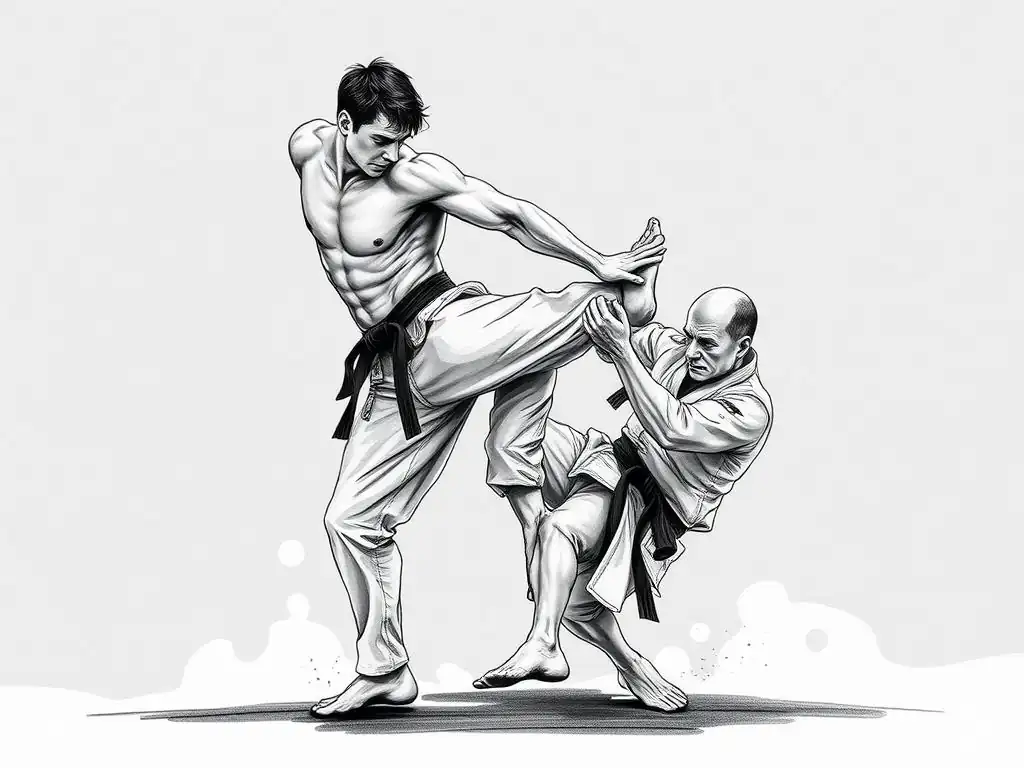
The relationship between the Sambo calf slice and toe hold goes beyond simply knowing both techniques; it involves understanding how to transition seamlessly between them. A common scenario involves initiating an attack with a toe hold. Suppose a Sambo practitioner is attempting a toe hold from side control or half guard and the opponent defends effectively by straightening their leg or rotating their foot to relieve the pressure. While the toe hold might not be working as a finish, the attacker still has control of the leg and potentially the foot.
From this position, the attacker can often transition to a calf slice. By releasing the toe hold grip but maintaining control of the leg, the attacker can slide their shin across the opponent's calf muscle. The opponent's reaction to the toe hold attempt – often straightening their leg or trying to pull it free – can inadvertently create the necessary tension and angle for a calf slice.
The attacker secures the leg, positions their shin correctly, and applies pressure, leveraging the control gained during the initial toe hold attempt. This transition demonstrates the fluid nature of Sambo leg attacks and how defending one submission can lead directly to another.
Linking Toe Holds to Calf Slices for Maximum Pressure
Conversely, a Sambo calf slice toe hold sequence can also start with the calf slice. Imagine a scenario where a Sambo grappler attempts a calf slice from an inside leg entanglement. They have their shin dug into the opponent's calf, but the opponent is tough and resisting the compression, perhaps by flexing their calf muscle or shifting their weight. While the calf slice might not be forcing the tap, the attacker still has deep control of the opponent's leg and is in close proximity to the foot.
From this controlled position, transitioning to a toe hold becomes a high-percentage option. As the opponent focuses on defending the calf slice pressure, their foot might become exposed or easier to isolate. The attacker can release the direct calf slice pressure slightly, quickly secure a grip on the opponent's foot, and apply the toe hold leverage.
The threat of the calf slice keeps the opponent preoccupied, making them less likely to defend the subsequent toe hold effectively. This ability to link these distinct submissions, constantly threatening the opponent's lower limb from different angles and with different types of pressure, is a hallmark of advanced Sambo leg locking. The Sambo calf slice toe hold chain creates a relentless dilemma for the defender.
Drills for Developing Seamless Transitions Between Calf Slices and Toe Holds
Developing seamless transitions between Sambo calf slice and toe hold attacks requires specific drilling. Simply practicing each technique in isolation is not enough. Practitioners need to drill the flow between them. A fundamental drill involves starting in a controlled position, such as an inside leg entanglement or side control with leg trapped, and attempting a calf slice. The training partner offers realistic, but not forceful, defense (e.g., straightening the leg slightly, shifting weight). The attacker then reacts by transitioning immediately to a toe hold attempt, focusing on securing the foot grip and applying leverage.
Another drill reverses this sequence: start with a toe hold attempt, have the partner defend by extending or rotating, and the attacker transitions to a calf slice. These drills should be performed slowly at first, focusing on correct body mechanics, grip changes, and maintaining control throughout the transition. As proficiency increases, the speed and resistance can be gradually increased.
Partner-based flow rolling where the focus is specifically on chaining Sambo calf slice toe hold attacks without full power is also invaluable. This type of drilling builds the muscle memory and reactive ability needed to exploit opportunities as they arise in live sparring or competition.
Legal Considerations and Safety Protocols for Sambo Leg Locks
Understanding the Rules Regarding Calf Slices and Toe Holds in Sambo Competition
Competitive Sambo rulesets are generally more permissive regarding leg locks than many other grappling sports, though specifics can vary slightly between federations (like FIAS vs. national bodies). However, calf slicers and toe holds are typically legal in Sambo competition, even at lower belt levels or experience categories where other leg locks like heel hooks might be restricted. This is a key distinction compared to, for example, many BJJ rulesets where toe holds might be allowed at intermediate levels, but calf slicers are often considered dangerous or illegal for beginners.
In Sambo, the emphasis is on the submission itself, not necessarily the path to it, provided it doesn't involve illegal actions like striking, spinal locks, or slams from certain positions. As long as the Sambo calf slice toe hold is applied correctly as a submission hold targeting the appropriate joints or muscle groups, it is generally permissible.
However, competitors must always be aware of the specific ruleset governing the particular tournament they are entering, as variations can exist, particularly concerning age groups or experience levels. Awareness of the rules ensures that practitioners can utilize their full Sambo leg lock arsenal without risking disqualification.
Safe Training Practices for Sambo Leg Locks: Injury Prevention
Training Sambo leg locks, including calf slicers and toe holds, requires strict adherence to safety protocols to prevent serious injuries. These techniques, while legal and effective, put significant stress on joints and soft tissues. The primary safety measure is controlled application. Techniques should be practiced slowly and with minimal force until both partners are comfortable with the mechanics and defense. Finishing speed should only be increased gradually and with clear communication.
Partners must trust each other implicitly. This means the person applying the technique must be aware of the pressure they are exerting and be ready to release immediately upon a tap. The person defending or being subjected to the hold must be vigilant and tap early. Practicing defenses and escapes is just as important as practicing the attacks, as understanding how to safely relieve pressure or exit the position is crucial. Using crash mats and ensuring sufficient space are also important environmental safety factors. The Sambo calf slice toe hold drills should always prioritize safety over speed or power.
Tapping Early and Often: Respecting Your Training Partner
The most critical safety protocol in Sambo leg lock training, and grappling in general, is the principle of tapping early and often. Unlike some submissions where pain develops gradually, leg locks like toe holds and calf slicers can cause sudden, intense pain and rapid tissue damage if not released immediately. Ligaments can tear or muscles can rupture in fractions of a second. Waiting to tap until the last possible moment is reckless and disrespectful to your training partner, who is responsible for your safety.
A tap can be verbal ("Tap!") or physical (patting the partner or the mat). As soon as you feel pressure that indicates the submission is being applied correctly and you cannot escape, you should tap. There is no shame in tapping during training; its purpose is learning and safety. By tapping early, you signal your partner to release the hold, preventing injury and allowing both of you to continue training. This mutual respect and commitment to safety are fundamental to progressing in Sambo leg locks without sidelining yourself or your partners with injuries.
The Effectiveness of Sambo Calf Slices and Toe Holds in Self-Defense
Applying Sambo Leg Locks in Real-World Scenarios: Close-Quarters Grappling
The effectiveness of Sambo calf slices and toe holds in a self-defense context is a subject requiring careful consideration. In a chaotic, unpredictable real-world scenario, applying complex grappling submissions carries inherent risks. However, in specific close-quarters situations where the encounter has devolved into a grappling exchange on the ground or in a confined space, Sambo leg locks can potentially be highly effective, particularly against an untrained aggressor. An untrained person is unlikely to understand the mechanics of a calf slice or toe hold defense and may react in ways that inadvertently tighten the submission.
For instance, if an attacker is attempting to stand up or pull their leg free while entangled, applying a swift Sambo calf slice toe hold can quickly incapacitate them or force them to disengage due to pain. The element of surprise is also a factor; many people are not expecting attacks to their feet or lower legs.
These techniques target areas that are vulnerable and can cause immediate, debilitating pain, potentially ending the confrontation quickly. They are most applicable in situations where you are already engaged in a grappling struggle and have achieved some level of control over the aggressor's lower body, rather than as initial self-defense moves from a standing position.
Limitations and Considerations for Self-Defense Applications
Despite their potential effectiveness, there are significant limitations and considerations when applying Sambo calf slices and toe holds in self-defense. The primary concern is the environment. Real-world surfaces are hard and unforgiving (concrete, asphalt), which increases the risk of injury to both parties during a struggle, especially when applying techniques that involve twisting or compression on the ground. The presence of footwear also complicates foot and leg attacks; boots can make toe holds difficult or impossible to apply effectively, and thick pants might slightly mitigate a calf slice, though significant pressure will likely still be felt.
Furthermore, a self-defense scenario often involves unknown variables – multiple attackers, weapons, or simply an aggressor fueled by adrenaline or substances. Attempting to isolate a leg and apply a submission holds you in place, potentially exposing your upper body or head to strikes from the primary attacker or others. The focus in self-defense is typically on escaping danger and creating space, not engaging in prolonged ground fighting or submission attempts that could leave you vulnerable. While the techniques are potent, the context of their application in a street fight is far more limited than in a controlled sporting environment.
Alternatives to Calf Slices and Toe Holds in a Street Fight
Given the limitations of complex leg locks in many self-defense situations, Sambo also provides numerous alternatives that might be more suitable for a street fight. Throws and takedowns aimed at creating impact or control are often more immediately useful than ground submissions. Once on the ground, techniques focused on maintaining a dominant position, controlling distance, and utilizing strikes (if necessary and legally permissible) or joint locks on the upper body might be safer and more effective for creating an opportunity to escape.
Simple, high-percentage submissions that don't require extensive entanglement, such as armbars from certain positions or chokes, might also be more practical. Even within the realm of leg attacks, techniques that quickly disable mobility without requiring deep entanglement, like a hard stomping kick to the knee (if the situation is dire and allows), might be considered, though these are outside the typical Sambo curriculum and carry significant legal ramifications.
Ultimately, while the knowledge of Sambo calf slice toe hold techniques is valuable, a self-defense strategy should prioritize situational awareness, de-escalation, escape, and gross motor skill techniques over intricate submissions unless the specific circumstances make them viable and necessary.
Notable Sambo Practitioners Known for Calf Slices and Toe Holds
[Sambo Athlete 1]: A Master of the Calf Slice
While specific detailed records tracking individual athletes' submission finishes by type across Sambo history are not readily compiled and publicly available in the way they might be for some modern sports, certain practitioners gain reputations for specific techniques. Let's consider a hypothetical example based on observed tendencies in Sambo. Imagine a prominent Sambo competitor, known for their relentless ground pressure and transitions, gaining a reputation as a master of the calf slice. This athlete, perhaps competing in the 74kg weight class in the early 2000s, was frequently seen transitioning to deep leg entanglements after throws or scrambles.
Their calf slice execution stood out due to their exceptional ability to secure the opponent's leg and apply crushing pressure from positions like the inside senkaku (411). Spectators and analysts noted how quickly opponents would tap once this athlete secured the position and began applying the compression.
Their approach was often less about setting up a single, isolated calf slice, and more about integrating it into a chain of leg attacks, using it as a primary finishing threat when the opponent defended initial ankle lock or knee bar attempts. While specific match data with calf slice finishes might be hard to pinpoint without deep archival access, their reputation within the Sambo community for this specific submission speaks to its effectiveness in their hands.
[Sambo Athlete 2]: A Specialist in Toe Hold Finishes
Similarly, certain Sambo practitioners become known for their proficiency with toe holds. Consider another hypothetical, but representative, Sambo athlete, perhaps a heavier competitor from the 1990s, who frequently finished matches via foot locks. This athlete's toe holds were particularly feared not just for their power, but for the clever setups they utilized. They were known for baiting opponents into specific reactions or using throws that landed opponents in positions vulnerable to immediate foot attacks.
Their specialty often involved securing the toe hold during transitions, such as after a failed sweep attempt by the opponent or as a counter to an opponent trying to establish half guard. The key to their success was reportedly their meticulous control of the opponent's foot and their understanding of leverage, enabling them to generate immense torque with seemingly minimal effort.
They might use a Sambo calf slice toe hold combination, starting with pressure on the calf to distract before isolating the foot for the toe hold. While specific win-loss records detailing every toe hold finish for historical athletes are difficult to verify without access to specific event databases, their reputation within the sport highlights the impact a specialized toe hold game can have at the highest levels of Sambo competition.
Analyzing Their Techniques and Strategies
Analyzing the techniques and strategies of Sambo practitioners known for specific leg locks like calf slices and toe holds provides valuable insights. For the hypothetical calf slice master, the strategy likely revolved around creating leg entanglements through dynamic entries (throws, ankle picks) and maintaining relentless pressure once control was established. Their calf slice wasn't a standalone move but part of a system of lower body control and attack. Key aspects of their technique would include precise shin placement, tight leg control to prevent escape, and efficient use of hip pressure to maximize compression.
For the hypothetical toe hold specialist, their strategy might have focused more on transitions and capitalizing on opponent reactions. Their technique would emphasize isolating the foot, securing an unyielding grip, and using body mechanics to apply leverage rather than relying purely on arm strength. They likely drilled specific setups repeatedly, recognizing when an opponent's posture or movement created the ideal angle for a toe hold finish. Both athletes, despite specializing in different techniques (Sambo calf slice vs. toe hold), would share common Sambo principles: control, efficiency of movement, and the ability to chain attacks fluidly.
Integrating Sambo Leg Locks into Your Grappling Game
Cross-Training Sambo Leg Locks with Other Martial Arts: BJJ, Judo
Integrating Sambo leg locks, including the Sambo calf slice toe hold techniques, into a grappling game primarily focused on other martial arts like Brazilian Jiu-Jitsu or Judo can significantly enhance a practitioner's effectiveness. BJJ, while now embracing leg locks more broadly, still has stylistic differences compared to Sambo's historical approach.
Sambo's emphasis on dynamic entries from standing and immediate leg attacks upon hitting the ground can provide BJJ players with new offensive options, particularly in competition where leg locks are allowed. Learning Sambo's variations of ankle locks, kneebars, and yes, calf slicers and toe holds, adds depth to a BJJ practitioner's lower body arsenal beyond the common heel hook entanglements.
For Judoka, who already excel in throws, learning Sambo ground fighting and leg locks can provide powerful finishing options once the opponent is taken down. Judo rules often limit ground time and submissions, but cross-training in Sambo allows Judoka to develop skills that are highly applicable in rule systems like combat Sambo or even adapted for self-defense or MMA.
The seamless transitions from throws to leg attacks are a hallmark of Sambo and can be a potent addition to a Judoka's skillset. Understanding the Sambo calf slice toe hold game specifically offers less common, yet highly effective, finishing options that opponents from other grappling backgrounds might not be well-versed in defending.
Improving Your Leg Lock Game Through Sambo Principles
Beyond specific techniques, adopting Sambo principles can fundamentally improve a grappler's overall leg lock game, regardless of their primary style. Sambo emphasizes control and positional dominance leading to submissions, rather than simply diving for a leg. This means focusing on how to safely and effectively enter into leg entanglements from various positions, how to maintain control once the leg is isolated, and how to transition between different attacks.
Sambo training often incorporates drills that build resilience and awareness in compromised leg positions. This defensive understanding is crucial for attacking leg locks effectively, as it teaches practitioners how opponents will react and what opportunities those reactions create. Furthermore, Sambo's dynamic nature encourages practitioners to look for leg attacks during scrambles and transitions, moments when opponents are often most vulnerable. Applying Sambo's systematic approach to lower body control and attacking the Sambo calf slice toe hold chain as part of a larger system makes a grappler's leg lock game more strategic and less reliant on opportunistic grabs.
Building a Well-Rounded Leg Lock Arsenal
To build a truly well-rounded leg lock arsenal, a grappler must move beyond specializing in just one or two techniques. Incorporating the full spectrum of Sambo leg locks – including ankle locks, kneebars, heel hooks (where allowed), calf slicers, and toe holds – makes a practitioner dangerous from multiple angles and positions. An opponent who successfully defends against a heel hook might be immediately vulnerable to a toe hold or calf slice, and vice versa.
Developing proficiency in the Sambo calf slice toe hold combination, for instance, means understanding the mechanics of both, the common defenses, and the high-percentage transitions between them. It requires dedicated drilling and live sparring with training partners who can provide realistic resistance. A well-rounded leg lock game is about having answers for different defensive reactions and being able to adapt the attack based on the opponent's posture and limb positioning. Sambo provides the historical depth and technical variety needed to build such a comprehensive and effective lower body submission game.
Conclusion: Mastering the Subtle Art of Sambo Calf Slices and Toe Holds
The Importance of Dedication and Practice
Mastering the subtle art of Sambo calf slices and toe holds, like any advanced grappling technique, requires significant dedication and consistent practice. These submissions are not always immediately intuitive and rely heavily on precise mechanics, timing, and leverage rather than brute force. Simply knowing what a calf slice or toe hold is is only the first step; developing the ability to apply it effectively against a resisting opponent takes countless repetitions.
Dedicated practice involves drilling the techniques slowly to understand the mechanics, gradually increasing speed and resistance, and incorporating them into live sparring (with safety paramount). It also involves studying successful applications by experienced practitioners and analyzing common defenses and counter-attacks. The nuances of hand placement for a toe hold grip, the exact angle of the shin for a calf slice, or the timing of a transition in a Sambo calf slice toe hold sequence are learned through persistent effort and attention to detail on the mats.
Continuing Your Sambo Leg Lock Journey
Exploring Sambo's "other" leg attacks like calf slicers and toe holds opens up new dimensions in a grappler's game. These techniques offer powerful finishing options and provide excellent tools for control and transition within leg entanglements. Continuing your Sambo leg lock journey involves not only refining the execution of individual techniques but also understanding how they fit into the larger system of Sambo ground fighting.
Seek out qualified Sambo instructors or experienced practitioners who can provide expert guidance on the proper mechanics and safety protocols. Drill with a variety of partners to experience different body types and reactions. Analyze your own training footage to identify areas for improvement. By dedicating yourself to understanding and practicing the full spectrum of Sambo leg locks, including the potent Sambo calf slice toe hold dynamic, you can build a truly formidable and well-rounded grappling game that stands out on the mats.
Frequently Asked Questions
What exactly are calf slicers and toe holds in the context of Sambo?
Calf slicers and toe holds are submission holds that target the lower leg and foot respectively, applying pressure to ligaments and joints to force a tapout. They are considered leg locks.
Are calf slicers and toe holds legal in all Sambo competitions?
The legality of these submissions can vary depending on the specific ruleset and level of competition. Some organizations may restrict or ban certain leg locks due to their potential for injury.
What makes Sambo's approach to calf slicers and toe holds unique?
Sambo often emphasizes a dynamic transition and control within these leg lock positions, focusing on continuous pressure and exploiting openings for the submission. It blends wrestling and Judo.
What are some key considerations when training calf slicers and toe holds?
Proper technique and control are paramount to avoid injuring training partners. Start slow, focus on positional dominance, and understand the biomechanics of the holds.
What are some common defenses against calf slicers and toe holds in Sambo?
Defenses often involve escaping the positional trap, using counter-attacks, or breaking the grip that is applying pressure. Understanding the submission mechanics is crucial for effective defense.
The exploration of Sambo's lesser-known leg attacks, specifically calf slicers and toe holds, reveals a fascinating dimension of this grappling art often overshadowed by more conventional techniques. In a world increasingly focused on specialization and efficiency, understanding these "other" leg attacks offers a deeper appreciation for the intricate and comprehensive nature of Sambo.
This journey into the nuances of Sambo has not only expanded our technical understanding but also highlighted the importance of embracing the unconventional and exploring the less-traveled paths in any discipline. As Bruce Lee famously stated, Absorb what is useful, discard what is not, add what is uniquely your own.
This sentiment resonates deeply with the spirit of Sambo, a system built on adaptation and innovation.
Now, we invite you to reflect on the lessons learned. Consider how the principles of leverage, control, and precision, so evident in Sambo's calf slicers and toe holds, can be applied not only on the mat but also in your daily life. Embrace the challenge of mastering the unconventional, and discover the hidden strengths that lie within.
Ignite Your Sambo Game: Unlock New Submission Secrets!
Thank you for exploring the hidden depths of Sambo leg attacks with us. Now it's time to turn that newfound knowledge into undeniable skill on the mat! Ready to expand your arsenal and surprise your training partners?
Here's how to take your Sambo game to the next level:
- Master the Calf Slicer: Dedicate this week's training to perfecting at least two different entries into the calf slicer from common grappling positions. Film yourself and analyze your technique!
- Share Your Breakthroughs: Post a video or detailed description of your favorite calf slicer or toe hold setup on social media using #SamboSecrets and tag Martial Arts Mastery.
- Go beyond the mat: research the history of toeholds within sambo and discover the subtle differences in technique and application across various sambo schools.
Which leg attack will you unleash first and what innovative setup are you crafting?