
The Interplay of Speed and Power in Shotokan Kihon

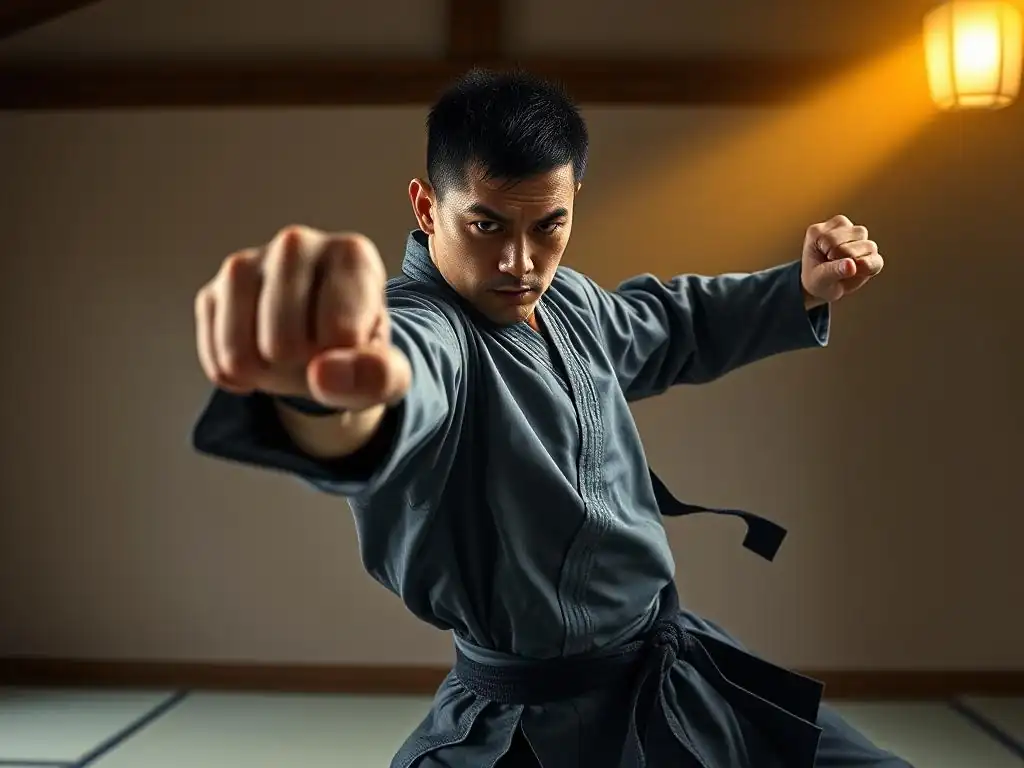
Welcome to Martial Arts Mastery, your gateway to unlocking the secrets of combat wisdom! Delve into the fascinating world where tradition meets technique, and discipline forges strength. Today, we're exploring a cornerstone of Shotokan Karate: kihon. But we're not just going through the motions. We're dissecting the interplay of speed and power in Shotokan kihon, revealing the training methods that transform fundamental movements into devastatingly effective techniques. Are you ready to discover how to harness explosive energy and lightning-fast precision?
- Understanding Shotokan Kihon: The Foundation of Effective Technique
- The Role of Speed in Shotokan Kihon Training
- Mastering Power Generation in Shotokan Kihon
- Synthesizing Speed and Power: Achieving Technical Mastery in Shotokan
- Advanced Kihon Applications: Bridging the Gap to Kumite and Kata
- Optimizing Your Shotokan Kihon Training
- Conclusion: Maximizing Potential Through Dedicated Kihon Training
-
Frequently Asked Questions
- What exactly is Kihon in the context of Shotokan karate, and why is it considered fundamental?
- How does speed contribute to the effectiveness of Shotokan kihon techniques?
- What role does power play in Shotokan kihon, and how is it developed through consistent practice?
- What are some specific Shotokan kihon exercises that focus on developing both speed and power simultaneously?
- How does understanding the philosophical underpinnings of Shotokan, as discussed on MartialArtsMastery.org, enhance the effectiveness of speed and power training in kihon?
- Final Reflection: Mastering the Essence of Shotokan
- Ignite Your Shotokan: Master the Kihon Connection!
Understanding Shotokan Kihon: The Foundation of Effective Technique
Kihon: The Building Blocks of Shotokan Karate
Kihon, meaning "fundamentals" or "basics," forms the bedrock of Shotokan karate training. It encompasses the practice of core techniques in isolation, such as various punches (tsuki), blocks (uke), kicks (geri), and stances (dachi). These foundational movements are practiced repeatedly, often in linear sequences or from static positions, to instill correct form, body mechanics, and muscle memory. Mastery of kihon is considered essential before progressing to the more dynamic applications found in kata (pre-arranged forms) and kumite (sparring).
Dedicated Shotokan practitioners spend a significant portion of their training time on kihon. This isn't merely repetitive motion; it's a deliberate process aimed at refining alignment, balance, coordination, and the efficient generation and application of force. For instance, practicing gedan barai (downward block) repeatedly helps develop stability in the stance and the correct rotational power from the hips, crucial elements for both speed and power in defensive and offensive techniques. The consistent focus on precise movements in kihon lays the necessary groundwork for developing effective Shotokan kihon speed power training.
The Importance of Kihon for Developing Fundamental Skills
The rigorous practice of kihon is paramount for cultivating the fundamental physical and mental attributes required in Shotokan karate. It builds essential physical conditioning, including leg strength for stable stances, core strength for power transfer, and flexibility. More importantly, kihon develops proprioception – the body's awareness of its position in space – which is critical for executing techniques accurately and powerfully. It also hones timing and coordination, teaching the body to move as a cohesive unit.
Beyond the physical, kihon instills discipline, focus, and perseverance. The repetitive nature demands mental fortitude and attention to detail. Learning to execute a basic zenkutsu dachi (front stance) correctly, with proper weight distribution and knee bend, might seem simple, but achieving consistent, stable depth and length underpins all forward-moving techniques and power generation. Without this solid base developed through persistent kihon practice, attempts to increase speed or power in more complex applications will be fundamentally flawed. The quality of one's kihon directly dictates the potential for effective Shotokan kihon speed power training.
The Role of Speed in Shotokan Kihon Training
Defining Speed in Karate: Velocity and Reaction Time
In the context of Shotokan karate and particularly Shotokan kihon speed power training, speed is multifaceted. It's not solely about the maximal velocity of a limb extension, though that is a component. Speed also includes the reaction time – how quickly a practitioner perceives a stimulus and initiates a movement – and the transition speed – the rate at which a practitioner can shift weight, change direction, or move from one technique/stance to the next. A fast technique is one that is initiated quickly, travels rapidly, and is executed with minimal wasted motion.
Consider a simple mae-geri (front kick). Its speed isn't just how quickly the leg extends and retracts. It involves the speed of the initial hip flexor contraction, the speed of the knee chambering, the velocity of the extension, and critically, the speed of the retraction. A slow retraction leaves the practitioner vulnerable. Similarly, in a sequence of kihon movements, the speed at which one transitions from one stance or block to the next is vital for maintaining momentum and defensive readiness. Developing this comprehensive understanding of speed is key to effective Shotokan kihon speed power training.
Speed Drills in Kihon: Enhancing Reflexes and Mobility
Integrating specific speed drills into regular kihon practice is essential for enhancing both reflexes and overall mobility. These drills often involve executing techniques rapidly on command or in quick succession, focusing on the snap and immediate retraction rather than sustained power. The goal is to train the nervous system to fire muscles more quickly and efficiently, reducing the time between intention and execution. While initial focus might sacrifice some power for speed, the aim is eventually to integrate both.
Speed drills also improve dynamic balance and agility. Practicing rapid changes in direction or quick step-ins and step-outs while maintaining form helps develop the mobility needed for effective application. For example, quick-fire combinations of basic blocks and punches practiced in place or moving slightly can significantly improve the speed of upper body reactions and coordination. These drills are a direct approach to improving the velocity and reaction time aspects of Shotokan kihon speed power training.
Oi-Tsuki (Lunge Punch) Speed Drills for Kihon
- Rapid Repetition: Practice performing Oi-Tsuki forward in a line, focusing on executing each punch and subsequent step as quickly as possible while maintaining the basic mechanical principles of hip rotation and stance transition. Aim for a high frequency of punches per unit of time, such as 10 punches in 15 seconds over a measured distance.
- On Command: Have a partner or instructor call out "Tsuki!" at irregular intervals. From a ready stance, execute a single, fast Oi-Tsuki forward. This drill emphasizes reaction time and explosive initiation from a static start.
- Pulse Training: Stand in a forward stance and rapidly extend and retract the punching arm multiple times (e.g., 5-10 rapid snaps) without stepping. This focuses purely on arm extension/retraction velocity and shoulder/triceps speed.
Mae-Geri (Front Kick) Speed Drills for Kihon
- Chamber Speed: From a fighting stance or ready stance, practice rapidly chambering the knee for Mae-Geri without fully extending the kick. Focus purely on the speed of lifting the knee and hip. Repeat this rapid chambering motion multiple times.
- Snap Kick Repetition: Execute multiple Mae-Geri kicks rapidly on the spot or with a small step forward, focusing on the speed of extension and immediate, fast retraction. Aim for the 'snap' rather than driving through the target. A common drill is 10 rapid kicks per leg.
- Target Reaction: Use a hanging target or focus mitt held by a partner. Practice reacting to the target appearing by executing a fast Mae-Geri. The partner varies the timing to train reaction speed.
Generating Speed Through Optimal Body Mechanics in Kihon
While dedicated speed drills are important, true speed in Shotokan kihon is inextricably linked to optimal body mechanics. Efficient movement eliminates wasted energy and motion, allowing the technique to be executed faster. This involves understanding how different parts of the body contribute to the overall velocity of the strike or block. Proper alignment, balance, and sequential body movement are fundamental.
For example, in a simple gyaku-tsuki (reverse punch) from zenkutsu dachi, speed isn't just about arm extension. It involves the timing of the hip rotation, the anchoring of the rear leg, and the snap of the trunk. If any of these components are slow or out of sync, the overall speed of the punch is reduced. Mastering the intricate coordination of the body through consistent kihon practice is the most sustainable way to build inherent speed, complementing specific Shotokan kihon speed power training methods.
Hip Rotation and Power Transfer for Increased Speed
- Hip rotation is a primary engine for both speed and power in many Shotokan techniques, particularly punches and blocks. A rapid, sharp rotation of the hips allows for faster acceleration of the upper body and limbs. This rotation transfers energy from the lower body and core into the technique.
- Training focuses on making this hip rotation as explosive and quick as possible, synchronized precisely with the extension of the technique. For example, practicing turning techniques like mawashi-tsuki (roundhouse punch) or blocks like soto-uke (outside block) with an emphasis on the speed of the hip turn directly enhances the velocity potential of the movement.
Relaxation, Snap, and Acceleration
- Counter-intuitively, initial relaxation is crucial for speed. A tense muscle is slow to contract. Learning to keep muscles relaxed until the moment of impact or execution allows for rapid acceleration. The concept of 'snap' ( kime applied rapidly) relies on this transition from relaxation to sudden, explosive tension.
- Training involves focusing on accelerating the limb or body part through the trajectory of the technique, reaching peak velocity just before impact (or at the point of blocking/checking). This principle is evident in the whip-like action of a well-executed ura-ken (backfist) or the sharp snap of a mae-geri. Practicing techniques with a focus on this relaxed acceleration and sudden snap is vital for maximizing speed in Shotokan kihon speed power training.
Mastering Power Generation in Shotokan Kihon
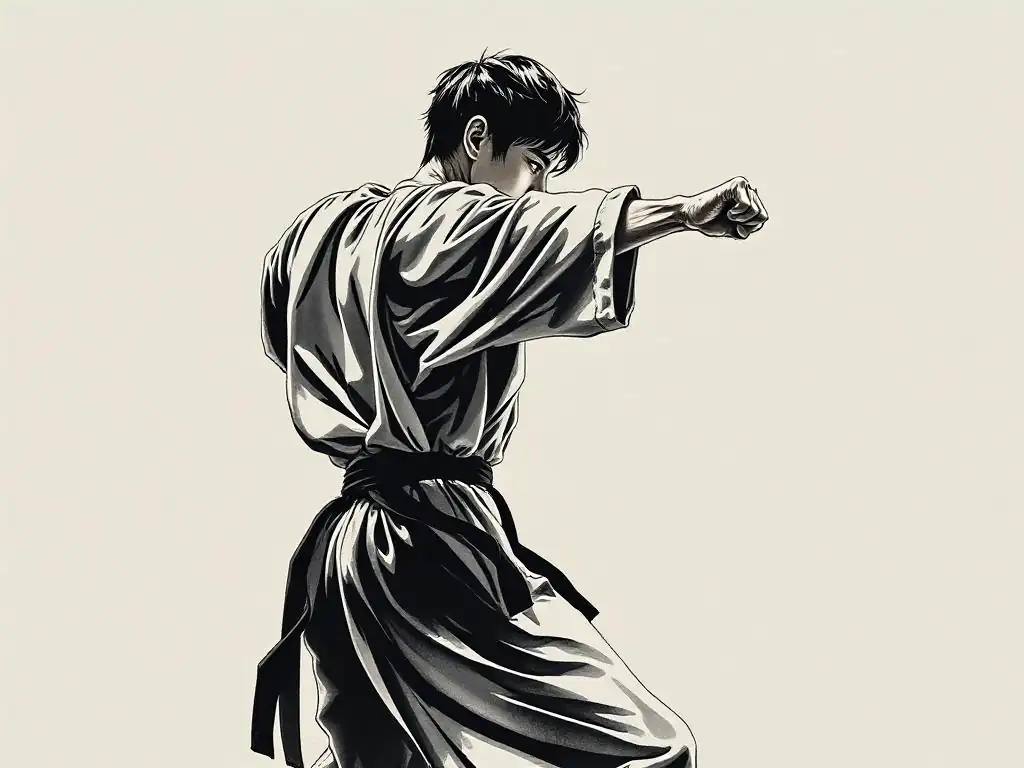
Understanding Power Generation: Ground Reaction Force and Kinetic Linking
Power in Shotokan karate is the ability to generate force quickly and efficiently. It's not just about muscle strength, but about leveraging the entire body. A fundamental principle is the use of ground reaction force. When a practitioner pushes down into the ground through their stances, the ground pushes back with an equal and opposite force. This force is the starting point for generating power.
This ground reaction force is then transferred upwards through the body via a sequence of connected segments – the legs, hips, core, shoulders, and ultimately the striking or blocking limb. This sequence is known as the kinetic chain. Efficient power generation relies on this chain being strong, stable, and coordinated, allowing energy to flow smoothly and explosively from the ground through to the technique.
A weak link in the chain, such as an unstable stance or a weak core, will significantly diminish the power output, regardless of limb speed. This understanding is central to effective Shotokan kihon speed power training.
Power Training Methods in Kihon: Cultivating Stability and Strength
While external strength training can supplement, significant power development in Shotokan is achieved through specific kihon training methods that cultivate stability and the ability to generate force from the ground up. This involves focusing on deep, stable stances and executing techniques with full, committed body engagement. Repetitive practice in strong stances like kiba dachi (horse riding stance) or fudo dachi (immovable stance) builds leg strength and stability crucial for anchoring the kinetic chain.
Technique practice itself is a form of power training. Executing powerful gyaku-tsuki or oi-tsuki with maximum hip rotation and body mass behind the strike, focusing on driving force from the ground, directly trains the muscles and coordination needed for power generation. Similarly, practicing strong blocks like age-uke (rising block) or shuto-uke (knife hand block) with full body commitment builds the ability to absorb and redirect force, which is another aspect of power application. This dedicated focus on generating force from the core mechanics is key to mastering power in Shotokan kihon speed power training.
Developing Strong Stance Transition for Power Generation
- Powerful techniques often require movement and transition between stances. The ability to transition smoothly, quickly, and with controlled weight transfer is essential for carrying momentum and ground reaction force from one position to the next.
- Training involves practicing stepping techniques like oi-tsuki or combinations like sanbon kumite basics with a strong emphasis on the lower body drive. The push-off from the rear leg and the solid landing into the front stance must be powerful and stable to ensure the force generated from the ground is effectively transferred into the subsequent technique.
Core Engagement and Stability for Powerful Techniques
- The core (abdominal, oblique, and lower back muscles) acts as the crucial link transferring power from the lower body to the upper body. A strong, stable core prevents energy leakage in the kinetic chain.
- Kihon inherently trains core stability through the maintenance of posture in various stances and the rotational movements involved in most techniques. Specific focus on engaging the core during execution, such as tightening the abdomen during hip rotation for a punch or stabilizing the trunk during a kick, significantly enhances power output. Practicing techniques slowly with maximum tension and engagement can also help build awareness and strength in the core and stabilizing muscles.
Kime: The Culmination of Power in Kihon
Kime (pronounced kee-meh) is a critical concept in Shotokan, representing the instantaneous tensing of the body's muscles at the moment of impact or completion of a technique. It is the focused, explosive culmination of speed and power, channeling all generated energy into a single point or action. Kime provides the 'shockwave' effect of a powerful technique, maximizing its effectiveness.
Achieving strong Kime requires precise timing and coordination. It's not about sustained tension throughout the movement, which would actually hinder speed. Instead, it's a sudden, brief burst of tension, typically lasting just milliseconds, synchronized perfectly with the end point of the technique. Mastering Kime through dedicated kihon practice is arguably the most challenging, yet rewarding, aspect of Shotokan kihon speed power training.
Achieving Kime: Focusing Energy for Maximum Impact
- Achieving Kime involves simultaneously engaging multiple muscle groups throughout the body – from the gripping of the feet on the floor, through the tensing of the legs and core, to the final snap of the striking or blocking limb.
- Training for Kime in kihon focuses on this sudden, full-body contraction at the end of each technique. Practitioners are often instructed to visualize driving through the target and to make a sharp, audible exhalation ( kiai) which helps coordinate the muscular tension. Practicing techniques slowly initially to understand the feeling of this coordinated tension, then gradually increasing speed while maintaining the quality of the Kime, is a common approach.
Synthesizing Speed and Power: Achieving Technical Mastery in Shotokan
Integrating Speed and Power in Kihon Training Regimens
True technical mastery in Shotokan kihon lies not in developing speed or power in isolation, but in the ability to synthesize both seamlessly. Effective techniques require both rapid execution and significant force generation. Shotokan kihon speed power training regimens must therefore include drills that challenge practitioners to combine these elements. This often involves executing techniques with increasing intensity, moving from slow, controlled power practice to faster, more explosive application while striving to maintain the quality of force.
One common approach is to practice techniques in sets, varying the focus. For example, a set of mae-geri might start with 5 repetitions focused purely on chambering speed, followed by 5 repetitions focused on powerful extension and Kime, and finally 5 repetitions attempting to combine maximal speed and power. This iterative process helps the body and mind learn to integrate the necessary physical components. Ultimately, the goal is for speed and power to become inseparable aspects of every technique performed in kihon, kata, and kumite.
The Role of Timing and Distance in Effective Technique
While speed and power are crucial physical attributes, their effectiveness in real-world application is heavily dependent on timing and distance. A fast, powerful technique delivered at the wrong moment or from the incorrect range will be ineffective. Kihon practice, though often linear or static, helps develop an innate sense of timing and distance through repetition and focusing on the optimal point of impact or completion for each technique.
For instance, practicing oi-tsuki with a full step develops the timing required to synchronize the punch with the forward movement and the landing of the front foot, ensuring maximum reach and power delivery at the correct distance. Similarly, practicing blocks requires precise timing to intercept an imaginary attack. While live sparring (kumite) refines this in a dynamic setting, the foundational timing and distance calibration begin in the structured environment of Shotokan kihon speed power training.
Common Errors in Speed and Power Training in Kihon
Several common errors can hinder effective Shotokan kihon speed power training. One is the tendency to sacrifice form for speed, resulting in sloppy techniques that lack structure and power. Another is training with excessive, constant tension, which inhibits relaxation and thus limits acceleration and speed. Conversely, focusing only on speed without developing proper body mechanics and Kime results in 'slappy' techniques that lack impact.
A significant error is neglecting the lower body and core, relying solely on upper body strength for power. This breaks the kinetic chain and severely limits potential. Forgetting the importance of retraction is also common; a technique is not complete until the limb is safely returned, and a slow retraction negates the benefit of a fast extension. Addressing these issues through mindful, corrected practice is essential for maximizing the benefits of Shotokan kihon speed power training.
Advanced Kihon Applications: Bridging the Gap to Kumite and Kata
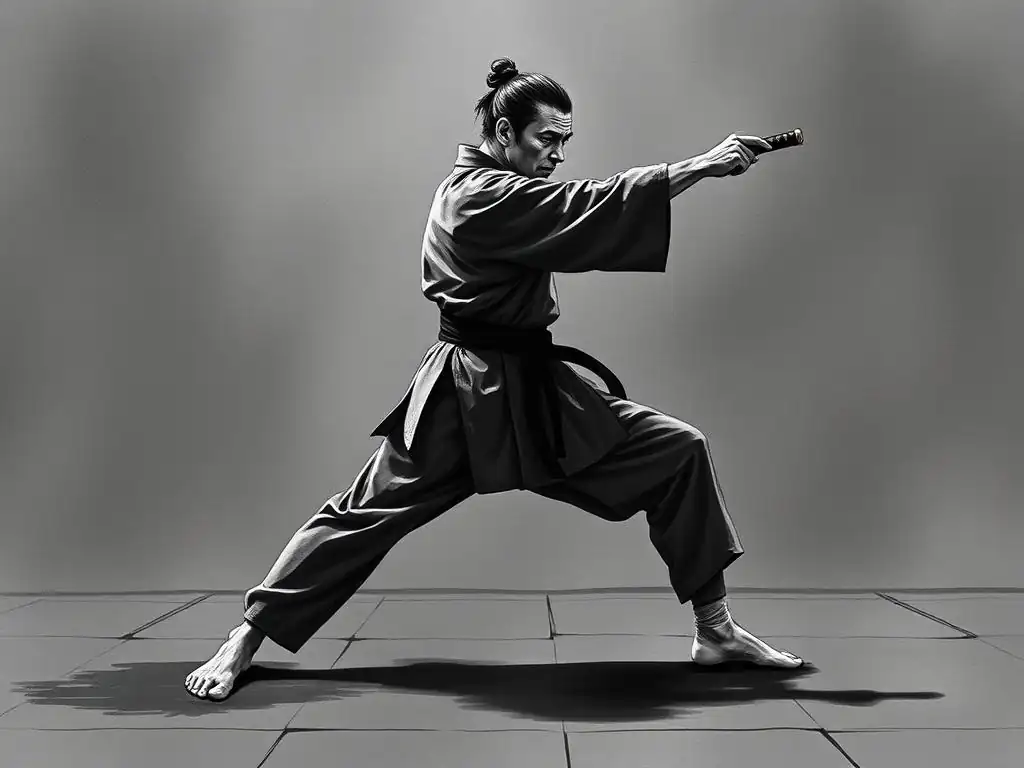
Applying Speed and Power to Kumite (Sparring) Strategies
The speed and power developed through dedicated Shotokan kihon speed power training are directly applicable to kumite. In sparring, the ability to execute techniques rapidly allows a practitioner to exploit openings and land strikes before an opponent can react or defend. A fast kizami-tsuki (lead jab) can score points or set up a more powerful follow-up.
Simultaneously, the power generated through proper mechanics in kihon translates into effective blocking, enabling a practitioner to absorb or deflect incoming attacks, and into impactful counter-attacks. A powerful gyaku-tsuki delivered with proper hip rotation and Kime can be decisive. The ability to quickly transition between defensive blocks and offensive techniques, leveraging both speed and power, is a hallmark of effective Shotokan kumite. This synthesis, honed in kihon, is vital for success in dynamic sparring situations.
Incorporating Speed and Power for Dynamic Kata Performance
Kata performance in Shotokan is not merely a sequence of movements; it is a demonstration of understanding and application of technique, requiring dynamic variation in speed and power. The principles of Shotokan kihon speed power training are crucial for bringing kata to life. Techniques must be executed with appropriate speed – some sharp and fast, others slower and deliberate – and with varying degrees of power, culminating in strong, focused Kime at key points.
The transitions between techniques in kata often require rapid, powerful movements, such as explosive stance changes or quick combinations. The ability to shift weight powerfully and quickly, developed through kihon drills, is essential for dynamic kata performance. A kata performed without variations in speed and power, lacking strong Kime, appears flat and lacks conviction. Mastery of these elements in kihon provides the technical foundation for expressing the full depth and dynamism of Shotokan kata.
The Ongoing Development of Speed and Power in Shotokan
The journey to mastering speed and power in Shotokan is a continuous one, extending far beyond the initial stages of kihon. Even experienced practitioners constantly refine their body mechanics, timing, and coordination to shave milliseconds off reaction times or generate fractions more force. This ongoing development is fueled by persistent, mindful practice of kihon, coupled with application in kata and kumite.
Advanced training might involve more complex drills, resistance training tailored to explosive movements, or detailed video analysis to identify subtle inefficiencies in technique. The pursuit of greater speed and power becomes intertwined with a deeper understanding of biomechanics and the principles of force generation and transfer. This lifelong dedication to refining fundamental attributes through continued Shotokan kihon speed power training is a core tenet of the Shotokan path.
Optimizing Your Shotokan Kihon Training
The Significance of Warm-up, Cool-down, and Flexibility
Optimizing Shotokan kihon speed power training requires attention to the physical preparation and recovery of the body. A proper warm-up is non-negotiable. It increases blood flow to muscles, raises core body temperature, improves joint mobility, and activates the nervous system, preparing the body for the explosive movements required for speed and power. A warm-up might include light cardio, dynamic stretching, and basic movement patterns.
Equally important are cool-down and flexibility exercises. Stretching after training helps improve range of motion, which is essential for executing techniques with full extension and minimal restriction, thus enhancing both speed and power potential. Flexibility also plays a significant role in injury prevention, allowing the body to handle the stresses of rigorous training. Dedicating adequate time to these elements is crucial for sustained progress and injury-free Shotokan kihon speed power training.
Nutrition and Recovery for Performance Enhancement
Intense Shotokan kihon speed power training places significant demands on the body. Proper nutrition provides the energy needed for training sessions and the building blocks for muscle repair and growth. Adequate protein intake is necessary for muscle recovery, while carbohydrates fuel high-intensity efforts. Hydration is also critical for optimal muscle function and preventing fatigue.
Recovery, including sufficient sleep, is where the body adapts and becomes stronger and faster. Muscles repair themselves during rest, and the nervous system consolidates learning. Overtraining without adequate recovery leads to diminishing returns, increased risk of injury, and burnout. Prioritizing nutrition and recovery is as vital as the training itself for maximizing improvements in speed and power within Shotokan kihon.
Adapting Kihon to Individual Needs and Goals
While the core principles of Shotokan kihon are universal, the specific focus and intensity of speed and power training should be adapted to individual needs, physical condition, experience level, and goals. A beginner might focus on basic form and stability before emphasizing speed, while an advanced competitor might incorporate plyometrics or resistance bands into their kihon drills to enhance explosive power.
Age and physical limitations must also be considered. Older practitioners might prioritize maintaining flexibility and efficient mechanics over maximal speed, while younger athletes could incorporate more high-intensity interval training within their kihon practice. A good instructor will help tailor the approach to Shotokan kihon speed power training, ensuring it is challenging yet safe and aligned with the practitioner's overall development path.
Conclusion: Maximizing Potential Through Dedicated Kihon Training
Mastering speed and power in Shotokan karate is an ongoing endeavor that begins and is continuously refined through dedicated kihon training. Kihon provides the essential foundation of correct body mechanics, stability, and coordination necessary to generate force effectively and execute techniques with velocity. While speed and power are distinct attributes, they are interdependent; optimal performance is achieved when they are synthesized through precise timing and efficient movement, culminating in focused Kime.
Effective Shotokan kihon speed power training involves specific drills, a deep understanding of biomechanics, and consistent practice. By addressing common errors and incorporating essential elements like proper warm-up, flexibility, nutrition, and recovery, practitioners can significantly enhance their physical capabilities. Ultimately, the commitment to refining these fundamental aspects in kihon unlocks the full potential of a Shotokan practitioner, translating into more effective techniques in kata, dynamic performance in kumite, and a deeper understanding of the art itself.
Frequently Asked Questions
What exactly is Kihon in the context of Shotokan karate, and why is it considered fundamental?
Kihon refers to the basic techniques of Shotokan. It's fundamental because it builds the foundation for all other aspects of karate, including kata and kumite.
How does speed contribute to the effectiveness of Shotokan kihon techniques?
Speed is crucial for delivering techniques before an opponent can react, maximizing their impact. It's also essential for generating power through kinetic energy transfer.
What role does power play in Shotokan kihon, and how is it developed through consistent practice?
Power is the magnitude of force behind a technique. Consistent kihon practice develops power through muscle memory, proper body mechanics, and efficient energy transfer.
What are some specific Shotokan kihon exercises that focus on developing both speed and power simultaneously?
Exercises like Oi-zuki (straight punch) and Geri-waza (kicking techniques) can be performed with a focus on accelerating the technique and maximizing impact at the target.
How does understanding the philosophical underpinnings of Shotokan, as discussed on MartialArtsMastery.org, enhance the effectiveness of speed and power training in kihon?
Understanding Shotokan's philosophy fosters mental discipline and focus, which are vital for achieving optimal speed and power. It also promotes mind-body connection, leading to more efficient technique execution.
Okay, here's a final reflection designed to close your article, "The Interplay of Speed and Power in Shotokan Kihon," optimized for the keyword "Shotokan kihon speed power training" and following the structure you provided:
Final Reflection: Mastering the Essence of Shotokan
The journey through Shotokan kihon reveals a profound truth: speed and power are not disparate elements, but rather intertwined facets of a unified whole. Understanding this interplay is not merely academic; it's the key to unlocking the true potential of each technique, transforming basic movements into expressions of focused energy and devastating effectiveness, a principle that remains as relevant today as it was in the dojo's earliest days.
The pursuit of speed and power in Shotokan kihon has shaped not only the physical techniques but also the mental discipline required to execute them effectively. This constant striving for improvement, this dedication to refining the fundamental movements, is what elevates Shotokan beyond mere physical exercise and transforms it into a path of self-discovery and personal growth. The ultimate aim of Karate lies not in victory nor defeat, but in the perfection of the character of its participants.
- Gichin Funakoshi. This quote encapsulates the essence of Shotokan training, reminding us that the true reward lies in the journey of self-improvement, fueled by the pursuit of speed and power with unwavering focus.
As you continue your Shotokan journey, remember the lessons learned about the delicate balance between speed and power. Let this knowledge inform your training, pushing you to refine your technique, hone your focus, and unlock the full potential within yourself. Embrace the challenge, persevere through the difficulties, and allow the principles of Shotokan kihon to guide you not only in the dojo, but also in all aspects of your life.
Ignite Your Shotokan: Master the Kihon Connection!
Thank you for exploring the vital relationship between speed and power in Shotokan kihon. We hope you've gained valuable insights to elevate your training. Now, it's time to put that knowledge into action.
Here's how you can take your kihon to the next level:
- Prioritize explosive speed in your next kihon session. Focus on initiating each technique with lightning-fast precision, letting power build from that initial burst.
- Experiment with different breathing techniques during your kihon practice. Notice how controlled breathing can enhance both speed and power generation.
- Share your personal insights or challenges on applying these principles in the comments below!
What specific drill will you implement this week to bridge the gap between speed and power in your kihon?