
The Significance of the Hyakunin Kumite in Kyokushin's Legacy


Welcome to Martial Arts Mastery, where we delve into the profound world of combat traditions. Beyond the strikes and stances, lies a rich tapestry of history, philosophy, and unwavering dedication. Today, we explore the awe-inspiring test of endurance and spirit that defines Kyokushin Karate: the Hyakunin Kumite. What does it truly mean to face 100 opponents consecutively, and how does this grueling challenge shape the very essence of Kyokushin's legacy? Prepare to uncover the significance of the Kyokushin Hyakunin Kumite, a journey into the heart of martial arts discipline and its enduring impact.
- Understanding the Kyokushin Hyakunin Kumite: A Deep Dive
- The Historical Context of the 100-Man Kumite in Kyokushin
- The Rigorous Preparation for the Hyakunin Kumite
- The Rules and Regulations of the Kyokushin Hyakunin Kumite
- The Significance of the Hyakunin Kumite in Kyokushin's Legacy: Beyond Physical Endurance
- Notable Kyokushin Practitioners Who Completed the Hyakunin Kumite
- The Hyakunin Kumite and its Impact on Kyokushin's Global Influence
- The Hyakunin Kumite: A Controversial Yet Respected Challenge
-
Frequently Asked Questions
- What is the Hyakunin Kumite in Kyokushin Karate?
- Why is the Hyakunin Kumite considered so significant?
- How does the Hyakunin Kumite contribute to Kyokushin's legacy?
- What are the key physical and mental requirements for attempting the Hyakunin Kumite?
- How many people have successfully completed the Hyakunin Kumite?
- Final Reflection: The Enduring Spirit of Kyokushin
- Unleash Your Inner Strength!
Understanding the Kyokushin Hyakunin Kumite: A Deep Dive
What is the Hyakunin Kumite? The 100-Man Fight Explained
The Hyakunin Kumite, translating literally to "100-person fight," is an ultimate test of physical, mental, and spiritual endurance within the Kyokushin Karate discipline. It involves a single practitioner fighting 100 opponents, one after another, in full-contact bouts. Each fight typically lasts around one to two minutes, with minimal rest between opponents – often just enough time for the next opponent to step forward.
The challenge demands that the participant win at least 50% of the fights and continue fighting even if knocked down, as long as they can stand within five seconds. Failure to complete the challenge within the allotted time (usually a single day) or inability to continue renders the attempt unsuccessful.
This grueling trial is far more than just a physical contest; it is designed to push the practitioner beyond perceived limits, embodying the Kyokushin philosophy of "Osu no Seishin" – the spirit of perseverance under pressure. The sheer volume of opponents, the cumulative fatigue, and the constant impact require an almost superhuman level of conditioning and unwavering mental resolve. Successfully completing the Hyakunin Kumite is one of the highest achievements in Kyokushin, signifying not just martial prowess but profound inner strength and dedication to the Kyokushin way of life.
Kyokushin Karate: The Foundation of the Hyakunin Kumite Challenge
Kyokushin Karate, founded by Sosai Masutatsu Oyama, is renowned for its full-contact approach and rigorous training methods. Unlike many other karate styles that emphasize kata or point sparring, Kyokushin places a strong emphasis on kumite, or sparring, as a means to forge indomushin – the immovable mind. This focus on realistic combat and physical toughness is the bedrock upon which the Hyakunin Kumite is built. The daily training in Kyokushin dojos, involving intense conditioning, bag work, sparring drills, and body conditioning, prepares practitioners for the harsh realities of full-contact exchange.
The philosophy embedded in Kyokushin training instills resilience, discipline, and a willingness to endure hardship. Students learn to push through pain, overcome fear, and maintain composure under duress. This mental and physical hardening is directly applicable to the challenge of the Hyakunin Kumite, making it a natural, albeit extreme, extension of the standard Kyokushin training regimen. The challenge is not merely a test of fighting skill but a culmination of the entire Kyokushin journey, demanding the practitioner demonstrate mastery over their own limitations, both physical and psychological.
The Historical Context of the 100-Man Kumite in Kyokushin
Sosai Mas Oyama and the Origins of the Hyakunin Kumite Test
The concept of a "100-man fight" is deeply rooted in the legend and history of Kyokushin's founder, Sosai Masutatsu Oyama. It is widely reported that Oyama himself completed the challenge three consecutive days in the mountains in 1950, fighting 100 opponents each day.
While the format and rules of these early challenges may have differed from the standardized version seen today – potentially involving students or local martial artists – this feat established the Hyakunin Kumite as the ultimate test of a Kyokushin practitioner's spirit and ability. Oyama's legendary accomplishment set an almost unattainable standard and became a cornerstone of the style's mythology.
Oyama's motivation for undertaking such a severe test was to prove the effectiveness of his full-contact karate and to push himself to the absolute limits of human endurance and spirit. He believed that true strength came from overcoming immense adversity. This origin story imbues the Kyokushin Hyakunin Kumite significance with profound historical weight, linking every subsequent attempt directly back to the founder's own journey and philosophy. It serves as a living testament to the principles Oyama championed: self-discipline, perseverance, and the pursuit of ultimate truth through martial arts.
Evolution of the Hyakunin Kumite: From Early Days to Modern Interpretations
Following Sosai Oyama's initial legendary feats, the Hyakunin Kumite evolved into a more formalized challenge within the Kyokushin organization. While still incredibly demanding, the modern version typically involves fighting 100 different opponents sequentially within a single day, rather than the same opponents repeatedly or over multiple days as Oyama is said to have done. The rules became more standardized, with clear time limits for each round (usually 1-2 minutes) and criteria for continuation after being knocked down. These formalizations, primarily overseen by the International Karate Organization (IKO), aimed to make the challenge a recognizable and comparable benchmark of achievement.
Despite the standardization, the core essence of the Kyokushin Hyakunin Kumite significance remains unchanged: it is a brutal test of the practitioner's ability to absorb damage, maintain fighting spirit under extreme fatigue, and continue forward regardless of pain or exhaustion. As Kyokushin spread globally, the Hyakunin Kumite became a coveted, albeit rare, honor. While perhaps only a few dozen practitioners have successfully completed the challenge under the formal IKO rules since its inception, each successful attempt adds another chapter to the legacy, inspiring future generations and reinforcing the style's reputation for toughness and indomitable spirit.
The Rigorous Preparation for the Hyakunin Kumite
Physical Conditioning Required for the 100-Man Fight
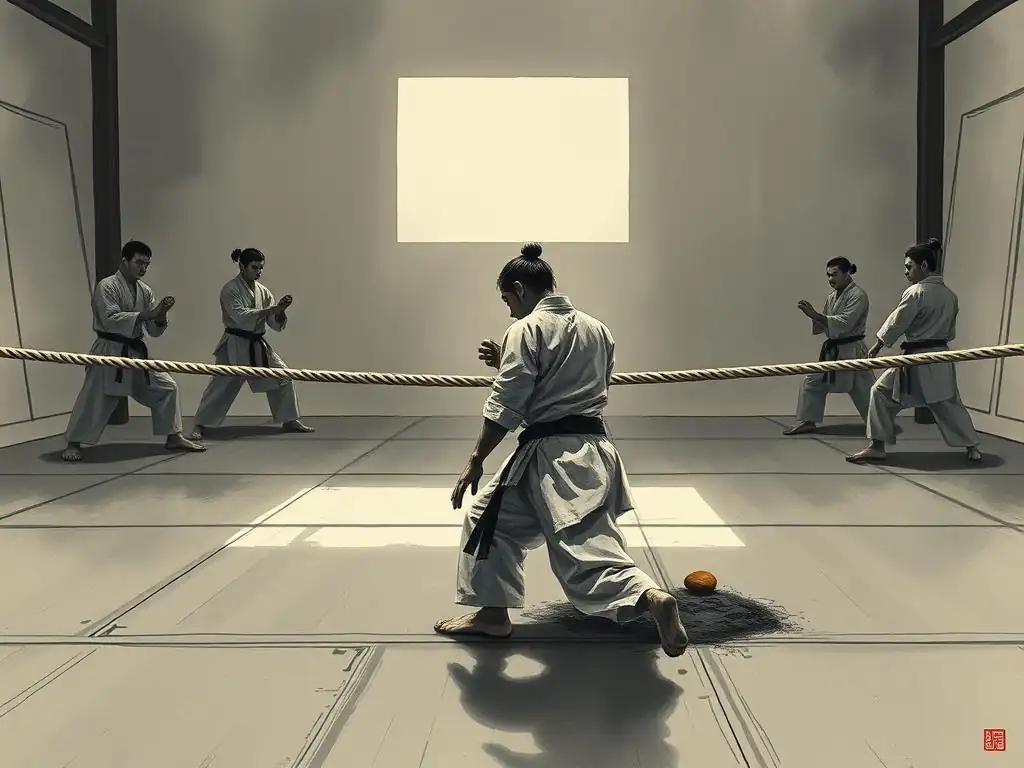
Preparing for the Kyokushin Hyakunin Kumite requires an almost unimaginable level of physical conditioning, far surpassing that needed for standard kumite or even competitive fighting. The practitioner must build endurance to sustain high-intensity effort for several hours, strength to deliver effective techniques even when fatigued, and incredible body conditioning to withstand repeated full-contact blows. Training regimens often include daily sparring sessions lasting hours, running long distances, extensive circuit training combining strength and cardio, and rigorous body hardening exercises like striking makiwara or conditioning limbs against heavy bags or even trees.
A typical preparation period can last anywhere from six months to a year, involving multiple training sessions per day. For instance, a candidate might start the day with a long run (5-10 km), follow it with intense sparring simulation (fighting dozens of rounds with various partners), spend the afternoon on strength and conditioning, and finish with kata or technical drills.
The sheer volume of training is designed to push the body beyond its normal limits, building the specific type of stamina and resilience needed to face 100 opponents sequentially. Nutritional planning and injury prevention are also crucial, though the risk of injury during such intense preparation and the challenge itself is extremely high.
Mental Fortitude and the Psychological Aspect of the Kumite Challenge
While physical preparation is essential, the mental fortitude required for the Kyokushin Hyakunin Kumite significance is arguably even more critical. Facing 100 opponents, knowing that each one is fresh while you are progressively more exhausted and injured, is a profound psychological battle. The practitioner must develop an "unbreakable will" – the ability to silence doubts, ignore pain signals, and maintain focus and fighting spirit for hours on end. This involves extensive mental training, often incorporating meditation, visualization, and philosophical study to cultivate mental toughness and emotional control.
Candidates often practice fighting dozens of rounds consecutively during training to simulate the cumulative fatigue and mental strain. They learn to manage discomfort, push through moments of despair, and maintain a positive, aggressive mindset even when their body is screaming for them to stop. The psychological preparation focuses on developing resilience to pressure, the capacity to absorb punishment without losing resolve, and the unwavering determination to complete the challenge, no matter the cost. Successfully navigating this mental landscape is as much a victory as enduring the physical onslaught.
Kyokushin Training Regimen: Preparing for the Ultimate Test
The standard Kyokushin training regimen provides the foundational fitness and techniques, but preparing for the Hyakunin Kumite demands a significantly intensified and specialized approach. Beyond the general classes, candidates engage in specific drills tailored to the challenge. This includes fighting dozens of consecutive rounds with training partners, each partner mimicking the fresh energy of the actual opponents. They practice getting up quickly after being knocked down, enduring sustained body blows, and maintaining offensive pressure while severely fatigued.
Body conditioning is paramount, involving repeated impact against heavy bags, sparring partners' bodies, and conditioning tools to harden the shins, forearms, and torso. Strength training focuses on functional movements and explosive power needed for striking and absorbing impact. Endurance is built through long-distance running, interval training, and high-volume, low-rest sparring. The training is not just about building capacity but also about instilling the mental discipline needed to push through pain and exhaustion, embodying the true Kyokushin spirit that is central to the Kyokushin Hyakunin Kumite significance.
The Rules and Regulations of the Kyokushin Hyakunin Kumite
Official Guidelines for the 100-Man Fight
The official rules for the Kyokushin Hyakunin Kumite, primarily overseen by the International Karate Organization (IKO), are designed to standardize the challenge while maintaining its inherent difficulty. The participant fights 100 opponents sequentially within a single day. Each bout typically lasts between 1 minute 30 seconds and 2 minutes. There is usually minimal rest between fights, just enough time for the defeated or finished opponent to leave the mat and the next opponent to step on. Opponents are usually drawn from a pool of experienced Kyokushin practitioners, often black belts, ensuring a consistent level of resistance throughout the challenge.
Key criteria for successful completion include finishing all 100 fights within the time limit (usually specified as a single day, though the total fight time plus minimal rest often takes 3-5 hours), winning at least 50 bouts (by knockout, knockdown, or judge's decision), and demonstrating the ability to continue fighting even after being knocked down. If the participant is knocked down, they must stand up within a count of five seconds to continue the fight; repeated inability to do so can result in disqualification.
The rules emphasize continuous fighting and the demonstration of spirit, making the Kyokushin Hyakunin Kumite significance tied directly to perseverance.
Scoring and Judging Criteria in the Kyokushin Kumite
While knockouts (Ippon) and clear knockdowns (Waza-ari) are the most decisive outcomes in individual bouts within the Hyakunin Kumite, judging criteria are also applied if fights go the full time limit. Judges score based on effectiveness of techniques, damage inflicted, fighting spirit, and overall performance. Accumulating Waza-ari can lead to an Ippon, and winning a fight outright by Ippon or Waza-ari contributes to the required 50% win rate for successful completion. However, even if a fight ends without a clear winner or is judged as a loss, the participant must still continue to the next opponent.
The primary focus of the judges and officials is less on the win/loss record of individual rounds (though the 50% win rate is required) and more on the participant's ability to continue fighting with spirit and effectiveness throughout all 100 rounds. A participant demonstrating strong technique, resilience, and an unwavering fighting spirit, even in the later rounds when clearly exhausted, embodies the core values the Hyakunin Kumite is meant to test. This emphasis on spirit and perseverance underscores the deep philosophical significance of the Kyokushin Hyakunin Kumite challenge.
Safety Protocols and Considerations During the Challenge
Despite its reputation for brutality, efforts are made to ensure participant safety during the Hyakunin Kumite, though the inherent risks remain extremely high. Medical personnel, including doctors and paramedics, are always present ringside to monitor the participant's condition and intervene if necessary. Officials also monitor the participant for signs of severe injury or inability to continue safely. Opponents are instructed to maintain control and not intentionally inflict excessive, unnecessary damage, although hard contact is the standard.
However, the nature of fighting 100 full-contact rounds means that injuries are not just possible, but highly probable. Participants often suffer severe bruising, broken bones, ruptured muscles, and exhaustion-related issues.
The challenge is a calculated risk, undertaken only by those who fully understand and accept the potential consequences. While safety protocols are in place, the Hyakunin Kumite remains one of the most dangerous tests in martial arts, a fact that contributes to its legendary status and underscores the immense courage and dedication required to attempt it, highlighting the profound significance of the Kyokushin Hyakunin Kumite within the martial arts world.
The Significance of the Hyakunin Kumite in Kyokushin's Legacy: Beyond Physical Endurance
Demonstrating Kyokushin's Spirit: Perseverance and Unbreakable Will
The true significance of the Kyokushin Hyakunin Kumite lies not just in the physical feat of fighting 100 people, but in its demonstration of the core Kyokushin spirit: Osu no Seishin, often translated as perseverance, patience, and pushing one's limits. Completing the challenge requires an almost unimaginable level of mental and spiritual strength, the ability to overcome pain, exhaustion, and fear, and simply refuse to quit.
It embodies the principle of gambatte – doing your best and never giving up. Practitioners push through bone-deep fatigue, absorb countless blows, and continue to fight with spirit and technique, even when their bodies are failing.
This unwavering determination in the face of overwhelming odds is what the Hyakunin Kumite truly celebrates. It proves that the human spirit, when properly trained and focused through the rigorous discipline of Kyokushin, can achieve seemingly impossible feats. The successful completion of the 100-man fight serves as a powerful symbol within the Kyokushin community, inspiring practitioners at all levels to push past their own perceived limitations in training and in life. This emphasis on indomitable will is a central aspect of the Kyokushin Hyakunin Kumite significance.
The Hyakunin Kumite as a Rite of Passage in Kyokushin Karate
For the elite few who attempt and successfully complete it, the Hyakunin Kumite functions as a profound rite of passage. It marks the transition from a highly skilled and dedicated practitioner to a legendary figure within the style. It is a test that strips away ego and forces the individual to confront their deepest fears and weaknesses. Surviving and succeeding in the 100-man fight provides an unparalleled sense of accomplishment and transforms the practitioner's understanding of their own capabilities. It is a journey into the absolute extremes of human potential, both physical and mental.
While not mandatory for high dan ranks, completing the Hyakunin Kumite is often seen as the ultimate validation of a Kyokushin black belt's mastery, particularly at the 5th dan and above level where attempts are typically made. It signifies a level of dedication and resilience that few possess. The experience indelibly shapes the individual, imbuing them with a deep understanding of the Kyokushin philosophy that can only be gained through such extreme hardship. This transformative journey is a key component of the Kyokushin Hyakunin Kumite significance within the hierarchy and tradition of the style.
Symbolism of the 100-Man Fight: Representing Kyokushin's Core Values
The Hyakunin Kumite is perhaps the most potent symbol of Kyokushin Karate's core values. It encapsulates the emphasis on Jissen (realistic fighting), Osu no Seishin (perseverance), Seishin Tanren (cultivation of spirit), and the pursuit of ultimate truth through physical challenge. The number 100 itself holds symbolic weight in Eastern philosophy, often representing completion or totality. Fighting 100 opponents signifies confronting every possible challenge and overcoming them through sheer will and trained ability.
It represents the belief that true strength is forged through adversity and that the limits of human potential are far beyond what is commonly believed. The spectacle of a single individual facing a relentless wave of opponents embodies the spirit of standing strong against overwhelming odds, a metaphor applicable not just to martial arts but to life's challenges. This powerful symbolism contributes significantly to the Kyokushin Hyakunin Kumite significance, making it a central pillar of the style's identity and global reputation.
Notable Kyokushin Practitioners Who Completed the Hyakunin Kumite
Francisco Filho: A Pioneer of the Hyakunin Kumite
Francisco Filho, a Brazilian Kyokushin legend, is one of the most prominent figures to have successfully completed the Hyakunin Kumite. He undertook the challenge in 1995 in Japan. His performance was particularly remarkable, not only because he completed all 100 fights, but also because he achieved a high number of victories, reportedly winning 78 bouts, with 22 draws and no losses. This impressive record underscored his exceptional technical skill and power, in addition to his undeniable endurance and spirit.
Filho's successful completion was significant for several reasons. He was one of the first non-Japanese practitioners to accomplish the feat under the formal IKO rules, demonstrating the global reach and effectiveness of Kyokushin training. His performance inspired countless practitioners outside of Japan and solidified his status as one of Kyokushin's greatest fighters. His achievement remains a benchmark for technical prowess combined with the required mental toughness, adding considerably to the legacy and Kyokushin Hyakunin Kumite significance.
Akira Masuda: The Technical Master of the 100-Man Fight
Akira Masuda, a highly respected Japanese Kyokushin practitioner, completed the Hyakunin Kumite in 1989. Masuda's attempt is often highlighted for his exceptional technique and strategic approach throughout the grueling challenge. While maintaining the required fighting spirit, Masuda demonstrated a high level of technical execution, using precise strikes and effective defense to manage the 100 opponents. His completion rate and performance further illustrated that while spirit is paramount, refined technique is also crucial for navigating the physical demands of the challenge.
Masuda's success added another dimension to the understanding of what it takes to complete the Hyakunin Kumite, emphasizing that it is not solely about raw power or brute force, but also about intelligent fighting, efficient movement, and technical skill sustained over hours. His achievement continues to be studied by aspiring candidates and contributes to the rich tapestry of stories surrounding the Hyakunin Kumite, further solidifying its significance within the Kyokushin world and beyond.
Lessons Learned from Hyakunin Kumite Achievers
Studying the practitioners who have successfully completed the Hyakunin Kumite reveals common threads beyond their obvious physical prowess. Interviews and accounts from these individuals consistently highlight the overwhelming mental battle they faced. Figures like Filho, Masuda, Kenji Midori (who completed it weighing significantly less than many opponents), and others emphasize the critical role of mindset, visualization, and breaking the challenge down into smaller, manageable segments (e.g., focusing only on the next opponent). They speak of moments of despair and extreme pain, overcome only by sheer force of will and the unwavering commitment made before the challenge began.
These stories offer invaluable lessons not just for martial artists, but for anyone facing significant challenges in life. They demonstrate the power of setting audacious goals, preparing meticulously, and refusing to give up when faced with seemingly insurmountable obstacles. The experiences of these Hyakunin Kumite achievers underscore that the true victory lies in conquering oneself, pushing past perceived limits, and embodying the spirit of perseverance – lessons that highlight the profound and enduring Kyokushin Hyakunin Kumite significance.
The Hyakunin Kumite and its Impact on Kyokushin's Global Influence
Promoting Kyokushin's Full-Contact Approach Worldwide
The Hyakunin Kumite serves as a powerful, albeit extreme, demonstration of Kyokushin Karate's core philosophy: the pursuit of strength and truth through rigorous, full-contact training. In a world where many martial arts styles have moved towards lighter contact or sports-oriented sparring, the 100-man fight dramatically showcases Kyokushin's commitment to realistic combat and physical conditioning. Successful attempts by practitioners from various countries, such as Francisco Filho (Brazil), Nicholas Pettas (Denmark), and Sam Greco (Australia), have demonstrated that the Kyokushin method produces truly formidable martial artists capable of extraordinary feats, regardless of their origin.
This highly publicized challenge generates significant interest and respect for Kyokushin globally. News of a successful Hyakunin Kumite attempt spreads quickly within the martial arts community, reinforcing Kyokushin's reputation for producing tough, resilient fighters. It acts as a unique selling point for the style, attracting students who are specifically seeking a demanding and effective full-contact martial art. The spectacle and achievement of the Hyakunin Kumite contribute significantly to the global recognition and Kyokushin Hyakunin Kumite significance in the broader martial arts landscape.
Inspiring Future Generations of Kyokushin Karateka
The stories of those who have completed the Hyakunin Kumite are foundational myths within the Kyokushin community, inspiring countless practitioners around the world. From young white belts to seasoned black belts, the knowledge that such a test exists and has been conquered by individuals like them fuels ambition and pushes them to train harder. Hearing about the struggles and triumphs of figures like Sosai Oyama, Shokei Matsui, Akira Masuda, or Francisco Filho provides tangible proof of what is possible through dedication and the Kyokushin method.
These inspirational tales are shared in dojos, featured in martial arts publications, and discussed among students, reinforcing the values of perseverance and courage. While few will ever attempt the Hyakunin Kumite themselves, the existence of the challenge and the achievements of those who completed it serve as a constant reminder of the high standards and profound depths of spirit that Kyokushin training aims to cultivate. This inspirational aspect is a key element of the Kyokushin Hyakunin Kumite significance for the future of the style.
The Enduring Legacy of the Hyakunin Kumite in Martial Arts History
The Hyakunin Kumite has secured its place as one of the most demanding physical and mental tests in the history of martial arts. While other styles have their own rigorous grading requirements or endurance tests, none are quite as universally recognized or as brutally straightforward as fighting 100 full-contact rounds against fresh opponents. It stands as a unique benchmark of human fortitude and martial spirit. Its legacy extends beyond Kyokushin, influencing perceptions of what is possible within martial arts training and inspiring extreme endurance challenges in other disciplines.
Even as martial arts evolve and adapt, the Hyakunin Kumite remains a powerful symbol of tradition, dedication, and the pursuit of mastery through extreme hardship. It is a testament to Sosai Oyama's vision and the enduring strength of the Kyokushin philosophy. The continued discussion and occasional attempts at the challenge ensure that its significance remains relevant, a constant reminder of the deep connection between physical discipline, mental toughness, and spiritual growth at the heart of Kyokushin Karate. The Kyokushin Hyakunin Kumite significance is thus not just for the style itself, but for the broader history of martial arts.
The Hyakunin Kumite: A Controversial Yet Respected Challenge
Ethical Considerations and Debates Surrounding the Kumite
Despite its revered status within Kyokushin, the Hyakunin Kumite is not without controversy. Critics often raise ethical concerns regarding the extreme physical demands and inherent risks involved. The potential for serious injury, both short-term and long-term, is significant, leading some to question whether the pursuit of such an extreme test is responsible or necessary.
There are debates about the definition of "completion," given the cumulative damage sustained and the state of exhaustion the practitioner is in by the final rounds. Some argue that the challenge borders on self-harm and prioritizes a potentially dangerous tradition over the well-being of the practitioner.
These debates highlight the tension between honoring a demanding tradition and ensuring the safety and health of martial artists in the modern era. While supporters emphasize the voluntary nature of the challenge and the profound personal growth it entails, critics point to the potential for severe physical consequences. This ongoing discussion is part of the evolving understanding of the Hyakunin Kumite significance, acknowledging its historical and spiritual value while also considering modern ethical standards in sports and physical challenges.
Balancing Tradition with Modern Safety Standards
Maintaining the tradition of the Hyakunin Kumite while attempting to align with modern safety standards is a delicate balancing act for Kyokushin organizations. As mentioned, medical personnel are present, and opponents are instructed to exercise a degree of control, but the full-contact nature fundamentally limits how "safe" the challenge can truly be. Some discussions have involved exploring ways to mitigate risk, although fundamentally altering the format, such as adding significant rest periods or reducing the number of opponents, would arguably diminish the essence and significance of the challenge.
The current approach seems to be one of strict adherence to the established rigorous rules, coupled with robust medical support and careful selection of candidates who are deemed physically and mentally capable of attempting the feat. This acknowledges that the challenge is inherently risky but maintains that its value lies precisely in overcoming that risk through extreme preparation and spirit. The tension between preserving the historical Kyokushin Hyakunin Kumite significance and adapting to contemporary safety expectations remains an important consideration for the future of the style.
The Future of the Hyakunin Kumite in Kyokushin Karate
The future of the Hyakunin Kumite appears secure as a symbol and an occasional, elite challenge, rather than a common or required test. Its rarity contributes to its mystique and significance. It is unlikely to become a mass participation event due to its extreme nature and the limited number of individuals capable of attempting it, let alone completing it. Instead, it will likely continue to serve as the pinnacle of physical and spiritual achievement within Kyokushin, attempted only by a select few who feel compelled to test themselves against the ultimate standard set by Sosai Oyama.
As Kyokushin continues to evolve globally, the Hyakunin Kumite will remain a powerful link to its origins and core philosophy. Its significance will continue to be discussed, debated, and revered. While the number of successful completers may remain small, their achievements will continue to inspire and reinforce the reputation of Kyokushin as a style that demands and forges an indomitable spirit. The Kyokushin Hyakunin Kumite significance will thus endure as a central element of the style's identity and legacy in the martial arts world.
Frequently Asked Questions
What is the Hyakunin Kumite in Kyokushin Karate?
The Hyakunin Kumite is a grueling 100-man fight test in Kyokushin Karate. It's a demonstration of extreme physical and mental endurance. It serves as a rite of passage.
Why is the Hyakunin Kumite considered so significant?
It's significant because it represents the ultimate test of a Kyokushin karateka's spirit and skill. It pushes practitioners beyond their limits and embodies the "Osu" spirit of perseverance. It's a powerful symbol of dedication.
How does the Hyakunin Kumite contribute to Kyokushin's legacy?
The Hyakunin Kumite contributes to Kyokushin's legacy by showcasing the extreme demands and rewards of the discipline. It solidifies Kyokushin's reputation for uncompromising training and mental fortitude. It creates legends and inspires future generations.
What are the key physical and mental requirements for attempting the Hyakunin Kumite?
Key requirements include exceptional physical conditioning, unwavering mental strength, and a deep understanding of Kyokushin techniques. Stamina, resilience, and the ability to withstand pain are crucial.
How many people have successfully completed the Hyakunin Kumite?
The number is relatively small, making it a rare and prestigious achievement. It represents the pinnacle of achievement in Kyokushin, with only a select few ever accomplishing it. The exact number varies depending on criteria and organization.
Final Reflection: The Enduring Spirit of Kyokushin
The journey through the Hyakunin Kumite, as explored in this article, reveals more than just physical endurance; it unveils the unyielding spirit of Kyokushin. In a world often prioritizing instant gratification and superficial achievements, the Hyakunin Kumite stands as a testament to the power of perseverance, discipline, and the relentless pursuit of self-mastery, values that resonate deeply even in today's fast-paced society.
The legacy of the Hyakunin Kumite extends far beyond the dojo, influencing the cultural landscape by showcasing the transformative power of martial arts. It reminds us that true strength lies not only in physical prowess but also in mental fortitude and unwavering commitment. The ultimate aim of Karate lies not in victory nor defeat, but in the perfection of the character of its participants.
- Masutatsu Oyama, the founder of Kyokushin Karate. This quote encapsulates the profound impact the Hyakunin Kumite has on shaping individuals and fostering a culture of resilience.
Now, as you reflect on the significance of the Hyakunin Kumite, consider how its principles can be applied to your own life. Embrace the challenges that test your limits, cultivate unwavering discipline in your pursuits, and strive for self-improvement in all aspects of your being. Let the spirit of Kyokushin inspire you to overcome obstacles, persevere through adversity, and ultimately, discover the true potential that lies within.
Unleash Your Inner Strength!
Thank you for exploring the profound legacy of the Hyakunin Kumite. Now that you understand the dedication and spirit it embodies, it's time to translate that inspiration into action.
Here's how you can connect with Kyokushin's legacy:
- Challenge yourself to set a personal martial arts goal that pushes your limits, mirroring the perseverance of Hyakunin Kumite participants.
- Research a local Kyokushin dojo and attend a class to experience the intensity and discipline firsthand.
- Share this article with fellow martial arts enthusiasts and spark a discussion about the values of perseverance and indomitable spirit.
What small step will you take today to embody the spirit of the Hyakunin Kumite in your own life or training?