
Mushin: Achieving "No Mind" in Shotokan Practice and Life

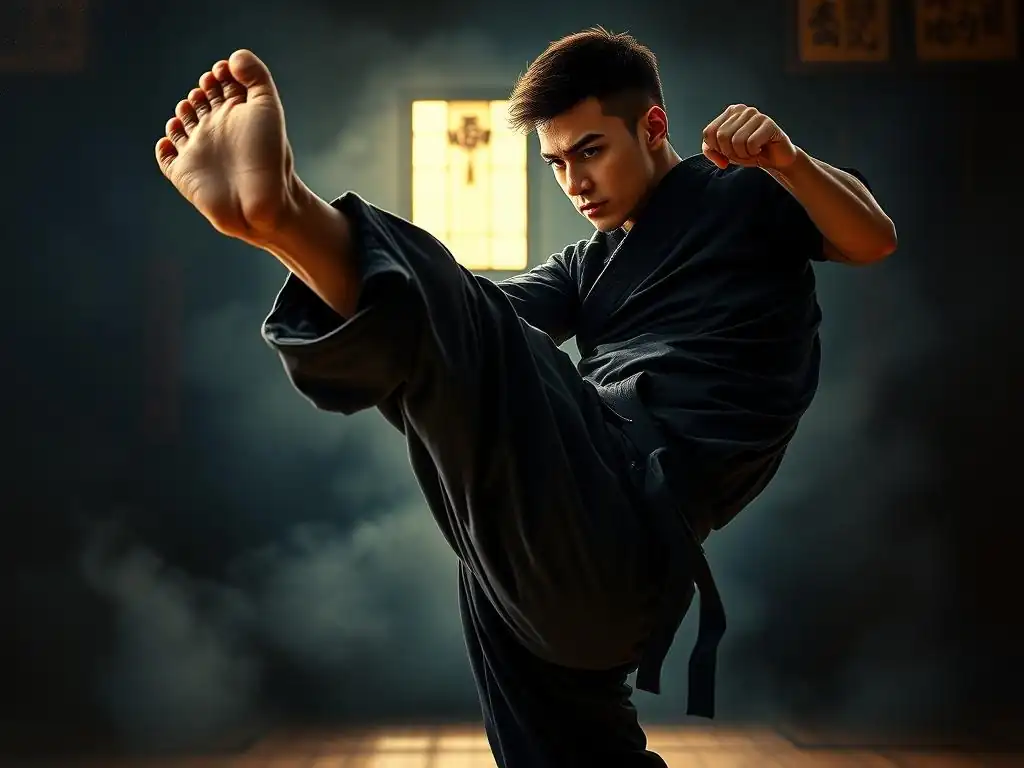
Welcome to Martial Arts Mastery, where the path to enlightenment is paved with discipline and understanding. Delve into the heart of Shotokan with us as we unravel the secrets of Mushin, the elusive "no mind" state. Can you truly quiet the inner critic and react instinctively? Explore the Shotokan Mushin nomind training techniques that can unlock a new level of focus and power, not just in your karate practice, but in every facet of your life. The journey begins now... are you ready to let go?
- Shotokan Mushin: Achieving "No Mind" in Karate Practice and Life
- The Role of Mushin in Shotokan Karate Training
- Shotokan Techniques for Cultivating Mushin
- Practical Applications of Mushin in Shotokan Self-Defense
- The Benefits of Mushin Beyond the Dojo: Applying "No Mind" to Daily Life
- Overcoming Common Challenges in Achieving Mushin
- The Case of Sensei Nakayama: Mushin in JKA Karate
- Advanced Mushin Concepts in Shotokan Karate
- Maintaining Mushin: Long-Term Practice and Development
-
Frequently Asked Questions
- What is Mushin and how does it relate to Shotokan training?
- How can I develop Mushin in my Shotokan practice?
- Why is achieving Mushin important for self-defense?
- What role does Zanshin play in achieving Mushin within Shotokan?
- Are there practical exercises besides kata that can help cultivate Mushin?
- Final Reflection: Embracing the Empty Cup
- Unlock Your Potential: Embrace Mushin Today!
Shotokan Mushin: Achieving "No Mind" in Karate Practice and Life
Defining Mushin: Beyond Just Emptying Your Mind
Mushin, often translated as "no mind," is a core concept in many martial arts, including Shotokan karate. However, this translation can be misleading. Mushin is not about emptying the mind into a state of unconsciousness or vacancy. Instead, it represents a state of heightened awareness and readiness, where the mind is free from conscious thought, planning, or emotional distraction, allowing for instantaneous reaction. It is a state where the mind is like a perfectly still mirror, reflecting everything without judgment or interference.
In Shotokan practice, achieving Mushin means moving beyond the analytical stage of technique execution. When a practitioner is in a state of Mushin, their body reacts instinctively based on years of rigorous training, rather than deliberating on the correct response. This is crucial for speed and effectiveness, particularly in dynamic situations like kumite or self-defense. It is the culmination of dedicated Shotokan Mushin nomind training techniques, where the physical movements become second nature, freeing the mind to perceive and react without delay.
The Origins of Mushin in Zen Buddhism and its Influence on Martial Arts
The concept of Mushin is deeply rooted in Zen Buddhism, where it describes a state of consciousness achieved through meditation and rigorous practice. Zen masters sought to free the mind from the ego, attachments, and the incessant stream of thoughts, leading to a clearer perception of reality and spontaneous, unhindered action. This philosophy profoundly influenced the samurai class in feudal Japan, who adopted Zen principles to cultivate mental fortitude and effectiveness in combat.
Many historical martial arts traditions absorbed these Zen concepts, integrating them into their training methodologies. The idea was that a warrior with a mind bound by fear, doubt, or conscious deliberation would be slower and less effective than one whose actions flowed naturally from instinct and training. Shotokan karate, with its emphasis on character development and philosophical depth, inherited this legacy, seeing Mushin not just as a state for combat, but as a path to self-mastery. The philosophical underpinnings are as vital as the physical Shotokan Mushin nomind training techniques themselves.
Mushin vs. Conscious Thought: How They Differ in Combat Scenarios
In a combat scenario, conscious thought is a significant liability. The process of perceiving a threat, analyzing it, recalling a suitable technique, formulating a plan, and then executing it takes precious time – often milliseconds that can mean the difference between success and failure. This is the domain of the analytical mind, which operates sequentially and is susceptible to hesitation and error under pressure.
Mushin, conversely, operates on a different level. Through extensive repetition and conditioning, the body's responses are programmed directly, bypassing the conscious decision-making process. When a stimulus (like an opponent's attack) is perceived, the appropriate counter-response is triggered instantaneously, much like a reflex, but far more complex and strategic. This allows Shotokan practitioners operating in a state of Mushin to react with incredible speed and fluidity, adapting effortlessly to the unfolding situation without the hindrance of internal dialogue or doubt. It is the ultimate goal of many Shotokan Mushin nomind training techniques.
The Role of Mushin in Shotokan Karate Training
Integrating Mushin into Kihon: Foundational Techniques and "No Mind"
Kihon, the fundamental techniques of Shotokan karate, are the bedrock upon which all other skills are built. Training in kihon involves countless repetitions of basic stances, blocks, strikes, and kicks. This relentless repetition is not merely about perfecting form; it is a deliberate method for embedding these movements deeply into the practitioner's muscle memory and nervous system. Consider the classic Shotokan training method of practicing a single technique, like a front punch ( oi-zuki), hundreds or even thousands of times in a single session.
This volume of practice aims to reach a point where the technique can be executed perfectly without conscious thought. The conscious mind might initially focus on hip rotation, stance, or breath, but through repetition, these elements become automatic. When the instructor calls a technique, the body responds instantly and correctly, without the mind having to process the request and coordinate the movement step-by-step. This is the first step towards achieving Mushin in Shotokan – making the fundamentals so ingrained they become spontaneous action, a key aspect of Shotokan Mushin nomind training techniques.
Mushin and Kata: Achieving Fluidity and Spontaneity in Prearranged Forms
Kata are prearranged sequences of techniques that simulate combat scenarios against multiple imaginary opponents. Initially, learning a kata is a highly conscious process, requiring intense focus on memorizing the sequence, timing, rhythm, and application ( bunkai) of each movement. Practitioners spend years refining these forms, seeking technical perfection.
However, the goal of kata practice extends beyond technical mastery. Advanced kata performance aims for a state where the form flows naturally and powerfully, almost as if the practitioner is not consciously performing the movements but rather allowing the kata to express itself through them. In this state of Mushin, the transitions are seamless, the power generation is intuitive, and the bunkai is implicitly understood and expressed in the movement's dynamics. The kata becomes a living, breathing expression of the principles of Shotokan, executed with spontaneity and focus, demonstrating a high level of Shotokan Mushin nomind training techniques integration.
Kumite and Mushin: Reacting Instinctively in Sparring
Kumite, or sparring, is perhaps the most obvious application of Mushin in Shotokan karate. In the dynamic and unpredictable environment of sparring, conscious planning is simply too slow. An opponent's attack or opening appears and disappears in a fraction of a second. A practitioner who has to stop and think "They are throwing a reverse punch, I should block with age-uke and counter with gyaku-zuki" will invariably be too late.
In a state of Mushin during kumite, the practitioner's mind is calm and alert, observing the opponent without fixation. When the opponent initiates an action, the trained body reacts instantly and appropriately, selecting from its vast repertoire of techniques without conscious deliberation. This allows for rapid defense and counter-attack, adapting fluidly to the opponent's movements. This ability to react instinctively under pressure is a direct result of dedicated Shotokan Mushin nomind training techniques focused on developing this state of reactive spontaneity.
Shotokan Techniques for Cultivating Mushin
Zanshin: Maintaining Awareness and Readiness in Shotokan
Zanshin, often translated as "remaining mind" or "lingering spirit," is a state of continued awareness and readiness even after a technique or exchange is completed. In Shotokan, Zanshin is emphasized in every movement, from the end of a block or strike to the final posture in kata. It means maintaining a calm, alert state, scanning the environment (or imaginary opponents) for potential follow-up attacks or threats. While distinct from Mushin, Zanshin is deeply complementary.
Developing Zanshin cultivates the habit of continuous, non-fixated awareness. This prevents the mind from becoming complacent or distracted after an action, which is essential for maintaining the calm, ready state characteristic of Mushin. By practicing Zanshin consistently, practitioners train their minds to remain open and perceptive, reducing the tendency to dwell on past actions or future possibilities, thereby facilitating the state of "no mind" in dynamic situations. It's a fundamental aspect of comprehensive Shotokan Mushin nomind training techniques.
Meditation and Mindfulness Practices for Developing Mushin
While not always explicitly part of the physical curriculum in every dojo, meditation and mindfulness practices are invaluable tools for cultivating Mushin. Traditional Zen meditation ( zazen) aims to train the mind to observe thoughts without engaging with them, allowing them to pass like clouds in the sky. This practice directly addresses the "mental chatter" that prevents the achievement of "no mind."
Regular meditation helps practitioners develop the ability to quiet the internal dialogue and attain a state of calm, focused awareness. Mindfulness, the practice of being fully present in the moment, further enhances this by training the mind to focus on the immediate reality rather than getting lost in planning or worrying. Integrating even short periods of meditation or mindfulness into a daily routine or before training can significantly aid the development of Mushin, supporting the physical Shotokan Mushin nomind training techniques with crucial mental discipline.
Repetitive Training (反復練習): Building Muscle Memory and Releasing Thought
As mentioned earlier, Hanpuku Renshu (反復練習), or repetitive training, is a cornerstone of Shotokan methodology and perhaps the most direct physical path to Mushin. The sheer volume of repetitions involved in practicing basics, combinations, and kata aims to hardwire the techniques into the nervous system. Consider a typical advanced Shotokan class where students might perform hundreds of basic blocks and strikes, dozens of combinations, and multiple kata in a single session, several times a week.
This intense repetition moves the execution of techniques from the conscious, cortical level to the subcortical, automatic level. The body learns to perform the movements efficiently and powerfully without needing instruction from the conscious mind. This frees the conscious mind from the task of directing physical action, allowing it to remain in a state of open awareness – the state of Mushin. This relentless dedication to repetition is perhaps the most fundamental of all Shotokan Mushin nomind training techniques.
Practical Applications of Mushin in Shotokan Self-Defense
Utilizing "No Mind" for Effective Reaction Time in Street Encounters
In a sudden, real-world self-defense situation, reaction time is paramount. Unlike a controlled sparring environment, a street encounter is unpredictable, often initiated without warning, and carries significant consequences. Hesitation or the need to consciously process the situation can be disastrous. This is where the state of Mushin becomes critically important for the Shotokan practitioner.
By training to react instinctively through Shotokan Mushin nomind training techniques, the practitioner can bypass the "freeze" response that often occurs when the conscious mind is overwhelmed. The body, conditioned through thousands of repetitions of basic defenses and counters, can respond instantaneously to threats. An unexpected grab might trigger a trained release and strike, or a sudden lunge might elicit an immediate block and counter, all occurring faster than conscious thought could formulate a plan. This instantaneous reaction, born from Mushin, significantly increases the chances of effectively defending oneself.
Overcoming Fear and Hesitation Through Mushin Training
Fear and hesitation are major impediments in self-defense. The conscious mind, when confronted with danger, can become paralyzed by fear, second-guessing actions or freezing entirely. This internal conflict prevents decisive action. Mushin training helps to mitigate this by reducing the reliance on the fearful, analytical mind in moments of crisis.
By cultivating a state of "no mind," the practitioner learns to act through fear rather than being controlled by it. The ingrained responses take over, driven by training rather than emotional paralysis. While the physical sensations of fear may still be present, the mind's ability to detach from them allows the trained body to function effectively. This mental resilience, developed through dedicated Shotokan Mushin nomind training techniques, is as vital as the physical techniques themselves in a real-world scenario.
Adapting Shotokan Techniques with Unconscious Competence
Effective self-defense requires adaptability. While Shotokan provides a robust framework of techniques, no two street encounters are identical. The ability to apply techniques flexibly and adapt to unexpected angles, distances, or multiple attackers is crucial. Mushin facilitates this adaptability by allowing the practitioner to operate from a state of unconscious competence.
When techniques are deeply ingrained through Mushin training, they are not rigid, pre-programmed responses but rather tools that can be intuitively modified or combined on the fly. The practitioner isn't consciously deciding "I will now use mae-geri," but rather the body recognizes the opening and distance and the appropriate kick is spontaneously generated, perhaps adjusted slightly for the specific situation. This fluid, intuitive application of technique, stemming from Mushin, allows Shotokan practitioners to adapt effectively in the chaotic environment of self-defense.
The Benefits of Mushin Beyond the Dojo: Applying "No Mind" to Daily Life
Enhanced Focus and Concentration Through Mushin Principles
The discipline required to cultivate Mushin in Shotokan karate directly translates to enhanced focus and concentration in daily life. The practice of quieting the internal dialogue, observing thoughts without attachment, and remaining fully present in the moment are skills honed through Mushin training.
Applying these principles means approaching tasks with a focused, uncluttered mind. Whether it's concentrating on a complex work project, engaging in a conversation, or even performing a mundane chore, the ability to minimize distractions and immerse oneself fully in the activity leads to greater efficiency and effectiveness. The mental discipline developed through Shotokan Mushin nomind training techniques builds a stronger capacity for sustained attention.
Improved Decision-Making Under Pressure Using Mushin
Decision-making under pressure in daily life shares similarities with reacting in a combat scenario. Whether facing a tight deadline, dealing with a crisis, or making a difficult personal choice, the ability to remain calm and think clearly is essential. The principles of Mushin can significantly improve this process.
By training the mind to avoid fixation, emotional reactivity, and overthinking, Shotokan practitioners develop the capacity to assess situations more objectively and respond more effectively under duress. Instead of getting bogged down in anxiety or analysis paralysis, they can access a state of calm awareness that allows for more intuitive and effective decision-making. This aspect of Mushin training goes beyond physical techniques, cultivating mental resilience applicable to diverse challenges.
Reducing Stress and Anxiety with a "No Mind" Approach
A significant source of stress and anxiety in modern life is the constant mental chatter – worrying about the future, dwelling on the past, and getting caught in loops of negative thought. The "no mind" aspect of Mushin offers a powerful antidote to this.
By practicing the principles of observing thoughts without judgment and focusing on the present moment, individuals can learn to detach from these stressful mental patterns. The goal isn't to eliminate thoughts entirely, but to reduce their power and influence. Cultivating the calm, centered state associated with Mushin allows for a more peaceful internal environment, significantly reducing overall stress and anxiety levels. The mental discipline inherent in Shotokan Mushin nomind training techniques provides tools for managing the challenges of modern life.
Overcoming Common Challenges in Achieving Mushin
Dealing with Mental Chatter and Intrusive Thoughts
One of the most significant obstacles to achieving Mushin is the persistent "mental chatter" – the endless stream of thoughts, worries, plans, and distractions that occupy the mind. Intrusive thoughts, whether related to daily life stressors or self-doubt about one's training, can make it incredibly difficult to reach a state of "no mind" during practice or critical moments.
Overcoming this requires consistent mental discipline, often cultivated through practices like meditation and mindfulness, as discussed earlier. It's not about forcing the thoughts away, which is often counterproductive, but about training the mind to observe them without getting drawn into them. A practitioner might acknowledge a thought ("Ah, I'm worrying about work") and then gently guide their focus back to their breathing, their stance, or the immediate demands of their Shotokan training. This persistent redirection is key to developing mental stillness.
The Importance of Patience and Persistence in Mushin Training
Achieving Mushin is not a quick or easy process; it is the result of years, often decades, of dedicated training and self-cultivation. Patience is absolutely essential. Progress is often gradual, and there will be days when the mind feels particularly restless or distracted, making the state of "no mind" seem impossible to reach.
Persistence is equally vital. Giving up when faced with challenges ensures that Mushin remains an elusive concept rather than a tangible state. Consistent, disciplined practice – both physical Shotokan Mushin nomind training techniques and mental exercises like meditation – is the only path forward. Understanding that setbacks are a normal part of the process and continuing to train despite them is crucial for long-term development.
Recognizing and Addressing Mental Blocks in Shotokan Practice
Mental blocks can significantly hinder the pursuit of Mushin. These might include fear of failure, fear of injury, performance anxiety during kumite or gradings, or even subconscious resistance to letting go of conscious control. These blocks manifest as hesitation, rigidity, or an inability to react spontaneously.
Recognizing these mental blocks is the first step. This often requires honest self-reflection and sometimes the guidance of an experienced instructor who can observe the practitioner's behavior and offer insights. Addressing them might involve specific mental exercises, visualization techniques, or simply pushing through the discomfort in a controlled training environment. For example, a practitioner struggling with hesitation in kumite might benefit from specific drills designed to force faster reactions, gradually building confidence and reducing the mental block.
The Case of Sensei Nakayama: Mushin in JKA Karate
Nakayama's Early Training and Emphasis on Fundamentals
Masatoshi Nakayama (1913-1987) was a pivotal figure in modernizing and systematizing Shotokan karate, particularly through his leadership of the Japan Karate Association (JKA). His early training under Gichin Funakoshi and his son Gigo Funakoshi instilled in him a deep appreciation for the fundamental techniques ( kihon) and kata. Nakayama Sensei emphasized the scientific analysis of techniques, using slow-motion film and biomechanics to understand power generation and efficiency.
However, this scientific approach was always grounded in the traditional understanding that mastery required countless repetitions to build instinctive capability. He understood that analyzing techniques intellectually was necessary for teaching and refinement, but true combat effectiveness came from the body's ability to execute those techniques automatically. His training methods were designed to build this fundamental base, creating the foundation for Mushin through rigorous repetition of Shotokan Mushin nomind training techniques.
Nakayama's Application of Mushin in Tournament Kumite
While Nakayama Sensei was primarily known as a teacher and theorist rather than a major tournament competitor himself, his students and the JKA competitors he coached exemplified the application of Mushin in tournament kumite. JKA tournaments in the 1960s and 70s were characterized by incredibly fast, powerful, and decisive exchanges. Competitors like Hirokazu Kanazawa, Teruyuki Okazaki, and Takayuki Mikami were renowned for their ability to react with lightning speed and precision.
This level of reactive speed was a direct result of the intense training regimen emphasizing Hanpuku Renshu and the cultivation of Mushin. Competitors couldn't consciously plan their attacks and defenses at the speed required; their responses had to be instantaneous, flowing from a state of heightened awareness and ingrained technique. Nakayama Sensei's system aimed to produce practitioners who could enter this state of "no mind" under the pressure of competition, allowing their training to take over.
Nakayama's Philosophy on Integrating Mushin into Daily Life
Nakayama Sensei, following the tradition of his teachers, viewed karate not just as a fighting method but as a path for personal development. His philosophy extended the principles learned in the dojo to daily life. He believed that the discipline, focus, and mental control cultivated through Shotokan training, including the pursuit of Mushin, were invaluable for navigating the challenges of modern society.
He encouraged practitioners to apply the same calm focus and readiness developed for kumite to their professional and personal lives. The ability to remain calm under pressure, make clear decisions, and act decisively, all stemming from the state of Mushin, were seen as essential qualities for a well-rounded individual. Nakayama's teachings reinforced the idea that the mental training inherent in Shotokan Mushin nomind training techniques prepares one not just for physical conflict, but for the broader struggles of life.
Advanced Mushin Concepts in Shotokan Karate
Mushin and the Concept of "Water Mind" (Mizu no Kokoro)
Mizu no Kokoro, or "Mind like Water," is a concept closely related to Mushin and often discussed in the context of advanced martial arts philosophy. It describes a mind that is calm, clear, and reflective, like the surface of undisturbed water. Just as still water accurately reflects its surroundings without distortion, a mind in this state perceives reality clearly, without the ripples of emotion, prejudice, or conscious thought altering its perception.
In Shotokan, cultivating Mizu no Kokoro means developing a state of awareness that is open and receptive, yet calm and ready to respond. It is about being fully present and aware of the environment and the opponent without focusing on any single element to the exclusion of others. This state of serene alertness is a crucial component of Mushin, enabling the practitioner to react appropriately to any stimulus, not just anticipated ones. It's an advanced level of mental conditioning within Shotokan Mushin nomind training techniques.
Fudoshin: Immovable Mind and its Relation to Mushin
Fudoshin, meaning "Immovable Mind," is another advanced mental state highly valued in martial arts. It represents a mind that is resolute, stable, and unwavering in the face of danger, adversity, or strong emotions. A practitioner with Fudoshin cannot be easily startled, intimidated, or distracted from their purpose.
While seemingly different, Fudoshin and Mushin are deeply interconnected. Mushin, the state of "no mind," allows for spontaneous, unhesitating action because the mind is not paralyzed by fear or doubt. Fudoshin is the underlying mental fortitude that prevents external circumstances or internal emotions from disrupting this state of spontaneous readiness. One could say that Fudoshin provides the stable platform from which Mushin can operate effectively, particularly under extreme pressure. Developing this mental resilience is part of the deeper aim of Shotokan Mushin nomind training techniques.
Exploring the Philosophical Depth of "No Mind" in Shotokan
Beyond its practical application in combat, the concept of Mushin in Shotokan karate delves into profound philosophical territory. It touches upon the nature of consciousness, the relationship between mind and body, and the pursuit of self-mastery. The journey towards Mushin is often seen as a process of shedding the ego and its limitations – the need to control, to analyze, to be right.
Embracing Mushin is about trusting the deep well of knowledge and skill built through years of dedicated practice and allowing it to manifest spontaneously. It's a form of profound letting go. This philosophical depth distinguishes Shotokan and other traditional martial arts from mere fighting systems, elevating the physical techniques into a path for holistic personal growth. Understanding this deeper meaning enhances the practice of Shotokan Mushin nomind training techniques.
Maintaining Mushin: Long-Term Practice and Development
Integrating Mushin into Your Shotokan Training Routine
Cultivating Mushin is not a one-time achievement but a continuous process. To maintain and deepen this state, it must be actively integrated into the regular Shotokan training routine. This means approaching every aspect of practice – kihon, kata, and kumite – with the intention of moving beyond conscious execution towards spontaneous action.
During kihon, focus on performing techniques with complete awareness and relaxation, aiming for a state where the body moves efficiently without mental effort. In kata, strive for fluidity and natural expression after the form is technically mastered. In kumite, practice maintaining calm awareness and trusting your trained reactions without overthinking. Regularly incorporating meditation or mindfulness before or after training sessions can also reinforce the mental aspects necessary for Mushin.
Continual Self-Reflection and Improvement
The path to Mushin requires ongoing self-reflection. Practitioners must honestly assess their own mental state during training and identify when they are being hindered by conscious thought, hesitation, or emotional distraction. This self-awareness is crucial for pinpointing areas that need further work.
Keeping a training journal, discussing experiences with training partners, or simply taking a few moments after practice to reflect on one's mental state can be beneficial. Recognizing patterns of mental interference allows the practitioner to address them specifically through targeted mental exercises or adjustments to their physical training approach. This commitment to continual self-improvement is integral to mastering Shotokan Mushin nomind training techniques.
Seeking Guidance from Experienced Instructors in Mushin Principles
While personal practice and self-reflection are vital, the guidance of an experienced Shotokan instructor is invaluable in the pursuit of Mushin. Senior instructors have spent decades on this path themselves and possess the insight to recognize the signs of a developing "no mind" state in their students.
An instructor can provide specific feedback on how mental states are affecting physical performance, suggest tailored exercises to overcome mental blocks, and offer philosophical insights into the deeper meaning of Mushin within the Shotokan context. Their guidance can help navigate the subtle and often challenging aspects of cultivating Mushin, ensuring the practitioner stays on the right path and avoids common pitfalls.
Frequently Asked Questions
What is Mushin and how does it relate to Shotokan training?
Mushin, often translated as "no mind" or "mind without mind," is a state of mental clarity and responsiveness. In Shotokan, it means reacting spontaneously and effectively without conscious thought, allowing for fluid and natural movements.
How can I develop Mushin in my Shotokan practice?
Developing Mushin involves consistent practice of basic techniques, kata, and kumite to build muscle memory. Meditation and mindfulness exercises can also help quiet the conscious mind and improve focus.
Why is achieving Mushin important for self-defense?
In a self-defense situation, hesitation can be dangerous. Mushin allows you to react instinctively and without delay, using your trained techniques to defend yourself effectively and efficiently in a real-world situation.
What role does Zanshin play in achieving Mushin within Shotokan?
While Mushin is the state of "no mind," Zanshin is a state of alert awareness and focus after an action. Practicing Zanshin helps maintain readiness and prevents complacency, ultimately contributing to a more complete Mushin.
Are there practical exercises besides kata that can help cultivate Mushin?
Yes. Sparring (kumite) with an emphasis on reacting instinctively and limiting conscious planning can be very helpful. Also, drills that focus on speed and reaction time can aid in developing the spontaneous response associated with Mushin.
Final Reflection: Embracing the Empty Cup
The exploration of Mushin, or "no mind," within the context of Shotokan practice and its broader application to life, reveals a profound truth: true mastery lies not in accumulating knowledge, but in cultivating a state of receptive awareness. The techniques we've discussed, from Kihon to Kumite, are merely tools; the real power resides in the ability to transcend conscious thought and react instinctively, both on the dojo floor and in the face of life's inevitable challenges.
The concept of Mushin has deeply resonated throughout history, influencing not only martial arts but also artistic expression and philosophical thought. Its enduring appeal lies in its promise of freedom from the limitations of the ego and the anxieties of the mind. The mind must always be in the state of 'flowing,' for when it stops in any way that means the flow is interrupted and it is this interruption that is injurious to the well-being of the mind. In the case of swordsmanship, this means death.
- Takuan Soho, The Unfettered Mind. This quote perfectly encapsulates the core principle: a mind unburdened by preconceptions is a mind capable of responding with unparalleled clarity and precision.
As you step away from this exploration of Shotokan Mushin and nomind training techniques, I invite you to consider how you can apply this principle of "no mind" in your own life. Can you approach your challenges with a sense of openness and receptivity, allowing your intuition to guide you? Can you quiet the internal chatter and embrace the present moment fully?
The path to Mushin is a lifelong journey, but the rewards – increased awareness, heightened intuition, and a deeper connection to yourself and the world around you – are immeasurable. Embrace the empty cup, and allow the wisdom of "no mind" to fill it.
Unlock Your Potential: Embrace Mushin Today!
Thank you for diving into the concept of Mushin and its profound impact on both Shotokan practice and daily life. Now that you've discovered the power of "no mind," it's time to put these principles into action and experience the transformative benefits firsthand.
- Embark on a dedicated week of focused training, specifically practicing letting go of preconceived notions and reactive thoughts during your Shotokan kata.
- Share your insights on Mushin with a training partner and explore how they apply the concept in their martial arts journey.
- Try incorporating a short mindfulness exercise into your daily routine, such as a 5-minute meditation, to cultivate a greater sense of presence and calm, mirroring the "no mind" state.
How will you intentionally create space for "Mushin" in your next training session or daily activity?