
Chinto / Gankaku in ShitoRyu: Understanding Its Unique Lineage and Dynamic Form

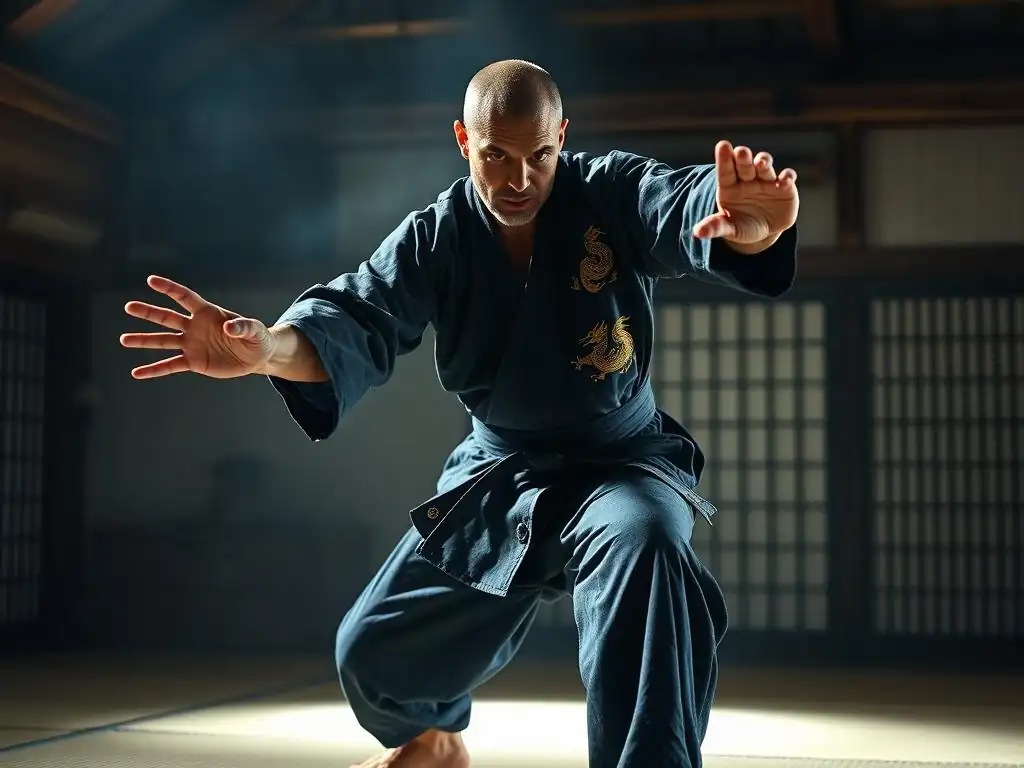
Welcome to Martial Arts Mastery, your gateway to unlocking the secrets of combat traditions worldwide! Ever wondered about the enigmatic ShitoRyu Chinto / Gankaku technique? This ancient form, steeped in history and demanding precision, holds a unique place within the ShitoRyu lineage. Prepare to delve deep into its dynamic form, unraveling the philosophical underpinnings and practical applications that make it a cornerstone of this powerful martial art. Are you ready to explore the intricacies of this captivating kata and discover its profound impact on your training?
- Chinto / Gankaku in Shito-ryu: Understanding Its Lineage and Dynamic Form
- Introduction to Shito-ryu Karate and the Significance of Chinto/Gankaku
- Historical Lineage and Origins of Chinto/Gankaku Kata
- Techniques and Movements in Shito-ryu Chinto/Gankaku
- Analyzing the Bunkai (Application) of Chinto/Gankaku Techniques
- The Dynamic Form of Gankaku: A Detailed Examination
- Comparing Chinto/Gankaku Across Different Karate Styles
- Training Methods for Mastering Shito-ryu Chinto/Gankaku
- Philosophical Underpinnings of Chinto/Gankaku in Shito-ryu Karate
- Conclusion: The Enduring Legacy of Chinto/Gankaku in Shito-ryu Karate
-
Frequently Asked Questions
- What is the significance of Chinto/Gankaku within Shito-Ryu Karate?
- How does Shito-Ryu's Chinto/Gankaku differ from its versions in other Karate styles?
- What are the key training elements required to master Chinto/Gankaku in Shito-Ryu?
- What historical figures are most associated with the transmission of Chinto/Gankaku within Shito-Ryu?
- What are some practical self-defense strategies derived from Chinto/Gankaku in Shito-Ryu?
- Final Reflection: Embracing the Legacy of Chinto/Gankaku
- Unleash Your Inner Gankaku!
Chinto / Gankaku in Shito-ryu: Understanding Its Lineage and Dynamic Form
Introduction to Shito-ryu Karate and the Significance of Chinto/Gankaku
Overview of Shito-ryu Karate: History and Characteristics
Shito-ryu is one of the four major styles of Okinawan Karate, founded by Kenwa Mabuni (1889–1952). Mabuni was unique in that he trained under two of the most prominent masters of the time: Anko Itosu (who taught Shuri-te) and Kanryo Higaonna (who taught Naha-te). This dual lineage gives Shito-ryu its characteristic diversity, encompassing both the linear, powerful movements typical of Shuri-te and the circular, softer techniques found in Naha-te. Mabuni's vision was to create a style that synthesized these approaches, preserving a vast repertoire of kata from various Okinawan traditions.
The hallmark of Shito-ryu is its extensive curriculum of kata, reportedly numbering over 60 distinct forms, though some estimates place the number closer to 100 or more when variations are included. This emphasis on preserving a wide range of historical forms distinguishes it from styles that standardized or reduced their kata lists. Shito-ryu techniques are known for their speed, economy of motion, and practical application (bunkai).
The stances are often higher and more natural than in some other styles, facilitating rapid transitions and combinations. Mastery of a ShitoRyu Chinto / Gankaku technique, for instance, requires understanding both the sharp, direct attacks and the fluid, defensive movements inherent in the style.
Kata's Role in Shito-ryu Training: A Comprehensive Approach
In Shito-ryu, kata is considered the cornerstone of training. It is not merely a sequence of movements but a living library of techniques, strategies, and principles. Each kata contains pre-arranged sequences that represent defensive and offensive scenarios, preserving the practical application of karate techniques that were developed over centuries. Students spend significant time practicing kata to develop proper form, power generation, balance, coordination, and mental focus.
Beyond physical execution, kata practice in Shito-ryu involves deep study of bunkai, the analysis and application of the movements within realistic self-defense contexts. Understanding the bunkai transforms the kata from a performance piece into a dynamic training tool. For example, studying the bunkai of the ShitoRyu Chinto / Gankaku technique reveals intricate defenses against grabs, strikes, and throws, highlighting the form's practical combative value. This comprehensive approach ensures that students understand why they are performing certain movements, connecting the solo practice to partner drills and sparring.
Chinto/Gankaku: A Unique and Advanced Kata in Shito-ryu
Chinto, also known as Gankaku (Crane on a Rock) in some styles, is an advanced kata known for its unique techniques and challenging balance requirements. In Shito-ryu, both names, Chinto and Gankaku, are sometimes used, reflecting its diverse lineage, though Mabuni Sensei primarily taught it under the name Chinto. This kata is typically introduced to students at the brown or black belt level, signifying its complexity and the foundational skills required to perform it effectively.
The ShitoRyu Chinto / Gankaku technique set is characterized by distinctive elements such as the one-legged stance (Tsuru Dachi), vertical fist strikes (Tate Tsuki), and dynamic shifts in direction and elevation. The kata demands exceptional balance, leg strength, and precise body control. Its movements are often interpreted as representing the characteristics of a crane – agile, evasive, and capable of powerful, focused strikes. Mastering the nuances of this ShitoRyu Chinto / Gankaku technique is a significant milestone for practitioners, demonstrating a high level of technical proficiency and physical conditioning.
Historical Lineage and Origins of Chinto/Gankaku Kata
Tracing the Roots: Influences of Tomari-te and Chinese Martial Arts
The exact origins of the Chinto kata are shrouded in some mystery, typical of many older martial arts forms. However, it is widely believed to have roots in the Tomari region of Okinawa, one of the three historical centers of Okinawan karate development (along with Shuri and Naha).
Tomari-te was influenced by both Shuri-te and Chinese martial arts, particularly White Crane styles, which aligns with the kata's name "Crane on a Rock" and its characteristic one-legged stance. Historical accounts suggest the kata may have been taught by a Chinese shipwreck survivor or visiting martial artist in the Tomari area centuries ago.
This kata is often associated with Sokon "Bushi" Matsumura (approx. 1809-1899), a legendary Okinawan martial artist who trained in both Shuri-te and potentially Chinese styles. Another prominent figure linked to its transmission is Kosaku Matsumora (1829-1898) of Tomari-te. The intricate footwork and emphasis on balance and agility in the ShitoRyu Chinto / Gankaku technique likely reflect these diverse influences, blending Okinawan combat principles with elements derived from Chinese boxing systems, specifically those known for evasive movements and unique stances.
Master Itosu Anko: Standardization and Transmission of Chinto
Master Anko Itosu (1831-1915) played a crucial role in the modernization and dissemination of Okinawan karate, particularly Shuri-te. He was a student of Sokon Matsumura and is credited with introducing karate into the Okinawan school system around 1900. To make karate more accessible and safer for group instruction, Itosu modified many traditional kata, including Chinto. His version became the standard Chinto practiced in Shuri-te derived styles, like Shotokan.
Itosu's modifications often involved simplifying complex or dangerous movements and standardizing the sequences. While preserving the core structure and key techniques, he adapted the kata for educational purposes. His version of Chinto emphasizes strong, linear movements and stable stances, reflecting the principles he promoted. This standardization was vital for the spread of karate beyond Okinawa, and the ShitoRyu Chinto / Gankaku technique, as inherited through Mabuni, carries the imprint of Itosu's influential adaptations, though Mabuni also preserved older variations.
Gankaku: Uesato's Interpretation and Focus on Balance
While Itosu's version became prevalent, another interpretation of Chinto was transmitted through masters like Seisho Aragaki (1840-1920) and later refined by figures like Juhatsu Kyoda (1887-1968), who founded To'on-ryu. In some lineages, particularly those with stronger ties to Aragaki or earlier Tomari-te, the kata is known as Gankaku. This name, meaning "Crane on a Rock," highlights the kata's iconic one-legged stance (Tsuru Dachi) and its visual representation of a crane perched for balance or attack.
Juhatsu Kyoda, a student of Kanryo Higaonna (Naha-te) and Seisho Aragaki, is known for his emphasis on natural body mechanics and balance. His transmission of Gankaku likely retained elements closer to the kata's original form or Aragaki's interpretation, potentially placing greater emphasis on fluidity, circular movements, and dynamic balance transitions compared to Itosu's more linear approach. The ShitoRyu Chinto / Gankaku technique, as taught in Shito-ryu, draws on both these streams, showcasing Mabuni's synthesis of different traditions.
Evolution within Shito-ryu: Mabuni Kenwa's Refinement
Kenwa Mabuni, having studied under both Itosu and Higaonna, and also having exposure to other masters like Aragaki, inherited multiple versions or interpretations of the Chinto kata. True to his goal of preserving the vast heritage of Okinawan karate, Mabuni incorporated his version of Chinto (often referred to by that name) into the Shito-ryu curriculum. His refinement involved integrating elements from different lineages, ensuring the kata reflected the comprehensive nature of his style.
Mabuni's Chinto maintains the characteristic one-legged stance and dynamic movements but is executed with the speed, fluidity, and slightly higher stances typical of Shito-ryu. He meticulously documented the bunkai for his kata, ensuring the practical applications of the ShitoRyu Chinto / Gankaku technique were understood and preserved. The Shito-ryu version is distinct from others, such as the Shotokan Gankaku, in its specific sequence, timing, and application principles, serving as a testament to Mabuni's unique synthesis of karate traditions.
Techniques and Movements in Shito-ryu Chinto/Gankaku
Stance Work and Footwork: Emphasis on Stability and Agility
The stance work in Shito-ryu Chinto is dynamic and varied, emphasizing both rooted stability and rapid transitions. While foundational stances like Zenkutsu Dachi (front stance) and Kokutsu Dachi (back stance) appear, the kata frequently utilizes shorter, higher stances such as Neko Ashi Dachi (cat stance) and prepares for or executes movements from the challenging Tsuru Dachi (crane stance). This combination requires practitioners to develop strong leg muscles and core stability.
The footwork is equally crucial, involving quick steps, pivots, and directional changes. Techniques often involve stepping offline, evading attacks before countering. For example, a rapid side step followed by a counter-strike is a common pattern. The transitions between stances must be smooth and efficient, allowing for maximum speed and power generation. Mastering the intricate footwork is essential for executing the ShitoRyu Chinto / Gankaku technique sequence correctly and for understanding its practical applications.
Hand Techniques and Striking: Precision and Power Generation
Shito-ryu Chinto features a diverse array of hand techniques, including various strikes and blocks. Striking techniques range from powerful straight punches ( Choku Tsuki, Oi Tsuki) to whipping strikes ( Uchi) and intricate vertical fist strikes ( Tate Tsuki). The kata also incorporates open-hand techniques and joint manipulations within its bunkai. Precision is paramount, focusing on striking vulnerable points with accuracy and proper body mechanics.
Power generation in these techniques relies heavily on hip rotation ( Koshi Kaiten), ground reaction force, and the coordinated movement of the entire body. Even seemingly simple movements utilize subtle shifts in weight and tension to deliver maximum impact. For instance, a vertical fist strike from Tsuru Dachi requires generating power from a highly unstable base, demanding precise timing and core engagement. The ShitoRyu Chinto / Gankaku technique repertoire is a masterclass in generating focused power through efficient body use.
Blocking and Defensive Maneuvers: Utilizing Circular Movements
While strikes are prominent, Chinto also includes effective blocking and defensive maneuvers, often incorporating circular or evasive movements. Techniques like Soto Uke (outside block), Uchi Uke (inside block), and Gedan Barai (downward sweep block) are present, but they are frequently executed with a fluid, almost yielding quality before transitioning into a counter-attack. This reflects the principle of deflecting or redirecting force rather than meeting it head-on.
Circular blocks or parries are used to control an opponent's limbs or create openings. The dynamic footwork mentioned earlier often works in conjunction with these defensive techniques, allowing the practitioner to evade a direct attack while simultaneously setting up a counter. Understanding the flow between defense and offense is key to unlocking the practical applications of the ShitoRyu Chinto / Gankaku technique.
Unique Characteristics: One-Legged Stances and Vertical Fists
Two of the most visually distinctive elements of Shito-ryu Chinto are the prominent use of the one-legged stance ( Tsuru Dachi) and the vertical fist strike ( Tate Tsuki). Tsuru Dachi is not merely a static pose but a dynamic transition point or a stance used for striking or blocking while maintaining a small base. It requires significant balance, leg strength, and control, often representing the agility and readiness of a crane.
The vertical fist strike, where the fist is oriented vertically upon impact, is another characteristic technique. This strike can be delivered as a punch ( Tate Tsuki) or a rising strike ( Tate Age Tsuki). While present in other styles, its frequency and specific execution within the ShitoRyu Chinto / Gankaku technique sequence are noteworthy. It is often applied in close-quarters combat or as a follow-up to a defensive maneuver, targeting areas like the ribs or jaw. These unique elements contribute significantly to the kata's distinctiveness and its advanced technical requirements.
Analyzing the Bunkai (Application) of Chinto/Gankaku Techniques
Self-Defense Applications: Practical Combative Scenarios
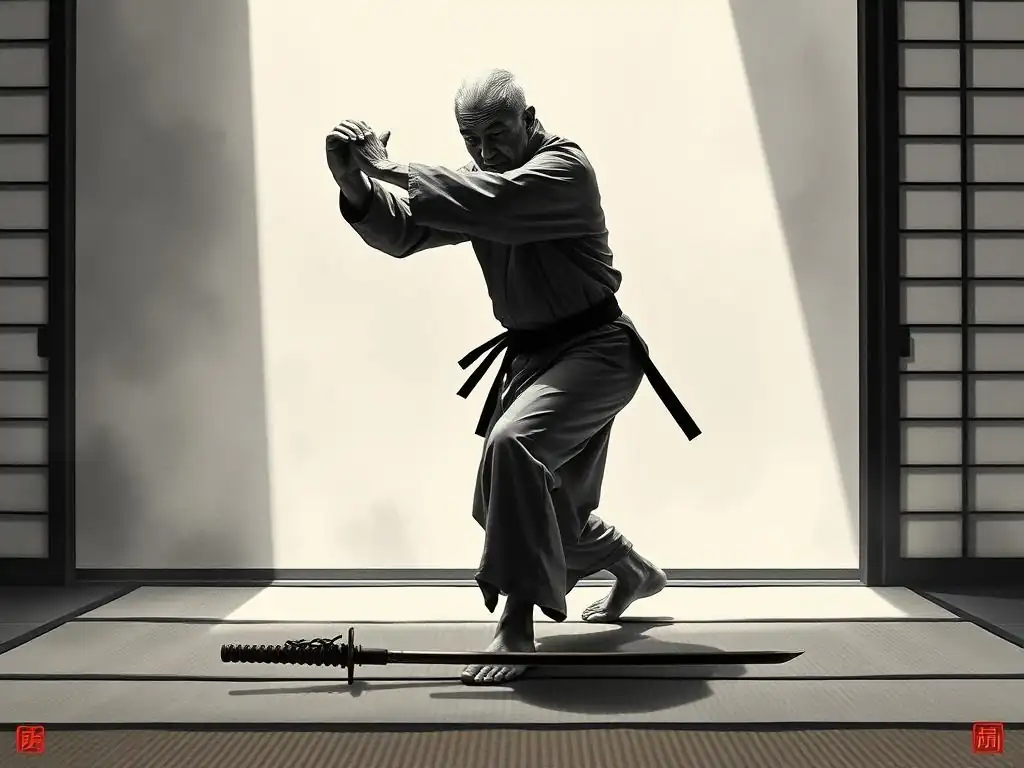
The bunkai of Shito-ryu Chinto reveals its roots as a practical self-defense form. The movements are not abstract; they represent responses to common attacks such as punches, kicks, grabs, and potentially weapon threats. For instance, the initial sequence involving stepping and blocking can be interpreted as defending against a front punch or grab. The subsequent rapid-fire techniques often represent follow-up strikes or joint manipulations.
Examining the ShitoRyu Chinto / Gankaku technique applications shows a preference for close-to-medium range combat. Techniques like the vertical fist strikes are highly effective in tight spaces. The evasive footwork and dynamic stance changes allow the practitioner to create angles and escape from holds or disadvantageous positions. The bunkai emphasizes controlling the opponent, disrupting their balance, and delivering decisive counter-attacks.
Common Misconceptions: Avoiding Literal Interpretations
A common pitfall when studying kata bunkai is interpreting the movements too literally. Kata sequences are often condensed or stylized representations of combative principles, not step-by-step fight choreography. For example, a movement might look like a simple block, but its bunkai could involve a parry, a joint lock, or a throw setup. Similarly, a single strike in the kata might represent a rapid combination of techniques in application.
In the context of the ShitoRyu Chinto / Gankaku technique, interpreting the Tsuru Dachi solely as a static pose is a misconception. Its bunkai often involves using the raised leg for a kick, a knee strike, checking an opponent's leg, or transitioning rapidly into another technique. Effective bunkai study requires understanding the underlying principles of leverage, body mechanics, and distance management that the kata embodies, rather than just the surface-level appearance of the movements.
Practical Drills: Partner Exercises for Application
To truly understand the bunkai of Chinto, practical partner drills are essential. These drills allow practitioners to test the techniques against a resisting opponent in a controlled environment. For example, practicing the defense against a grab from the kata's opening movements with a partner helps refine timing, distance, and the application of force. Drills focusing on transitions into and out of Tsuru Dachi with a partner simulating an attack improve balance and real-world applicability.
Partner exercises for the ShitoRyu Chinto / Gankaku technique often involve:
- Simulated attacks (punches, grabs) followed by kata defenses.
- Applying joint locks or throws derived from kata movements.
- Practicing striking combinations shown in the kata sequence.
- Drilling evasive footwork and transitions under slight pressure.
Such drills bridge the gap between solo kata performance and practical self-defense, making the techniques functional.
Real-World Scenarios: Adapting Techniques for Different Situations
While kata bunkai provides a blueprint, real-world self-defense is unpredictable. Effective application of the ShitoRyu Chinto / Gankaku technique requires the ability to adapt the principles and movements to varying situations. This means understanding why a technique works (e.g., disrupting balance, targeting weak points) rather than just how it looks in the kata. For example, the defense against a front punch might need to be slightly modified depending on the attacker's distance, angle, or size.
Adapting Chinto techniques involves recognizing the underlying principles of evasion, counter-attacking from unexpected angles, and utilizing balance points. The dynamic nature of the kata, with its shifts in elevation and direction, prepares practitioners for fluid, non-linear combat. Training should therefore include scenarios that are not carbon copies of the bunkai but require applying the core concepts in slightly different contexts, fostering adaptability and spontaneity.
The Dynamic Form of Gankaku: A Detailed Examination
Gankaku's Focus on Balance and Stability: Utilizing Tsuru Dachi
The name "Gankaku" (Crane on a Rock) itself highlights the kata's central theme of balance and stability, most prominently embodied by the Tsuru Dachi (Crane Stance). This one-legged stance requires significant physical control, demanding strength in the supporting leg and core, as well as mental focus to maintain equilibrium. However, Tsuru Dachi in Gankaku is not a static pose for long periods; it's a dynamic position used for transitions, evasions, or launching attacks.
The kata frequently moves in and out of Tsuru Dachi, often involving a quick raise of the leg followed by a strike, block, or step. This constant shifting demands dynamic balance – the ability to regain and maintain stability while in motion or after executing a technique. Mastery of the ShitoRyu Chinto / Gankaku technique, particularly its Gankaku interpretation, hinges on developing this dynamic balance, allowing practitioners to execute powerful techniques from an unstable-looking base.
Understanding the Crane Stance (Tsuru Dachi): Proper Execution
Proper execution of Tsuru Dachi involves more than just lifting one leg. The supporting leg should be slightly bent, with the knee aligned over the foot. The lifted leg is typically bent at the knee, with the foot resting against the inside of the supporting knee or thigh. The body's weight is centered, and the core muscles are engaged to maintain upright posture and stability. The shoulders should be relaxed, and the gaze focused.
The Tsuru Dachi in the ShitoRyu Chinto / Gankaku technique is used for multiple purposes:
- Evading a leg sweep or low attack.
- Setting up a kick or knee strike.
- Checking an opponent's leg or balance.
- Creating an unstable platform from which to strike, mimicking a crane's sudden movements.
Achieving stable Tsuru Dachi requires dedicated practice focusing on leg strength, flexibility, and proprioception (awareness of body position in space).
Gankaku's Adaptation for Shito-ryu: Emphasis on Natural Movement
In Shito-ryu, Kenwa Mabuni refined Gankaku (or Chinto) to fit the style's emphasis on natural movement and fluidity. While maintaining the core structure and unique techniques like Tsuru Dachi, the transitions between movements are often smoother and less rigid compared to some other styles. Stances, even when deep, allow for quick shifts, and the overall flow of the kata is designed for speed and efficiency.
Mabuni's adaptation ensures that even the technically demanding movements, like transitioning into or out of Tsuru Dachi, feel integrated into the overall sequence rather than being isolated, static poses. The ShitoRyu Chinto / Gankaku technique in this interpretation encourages practitioners to move with a sense of natural grace and power, reflecting the synthesis of different Okinawan traditions that defines Shito-ryu.
Breathing (Kokyu): Coordinating Breath with Movement
Proper breathing, or kokyu, is fundamental to the effective performance of any karate kata, and Gankaku is no exception. Breathing should be coordinated with the movements: exhaling sharply during strikes or powerful blocks ( Kime), and inhaling naturally during preparatory or transitional movements. Deep, controlled breathing helps maintain relaxation, build internal energy ( Ki), and provide the power needed for techniques.
In the dynamic ShitoRyu Chinto / Gankaku technique, kokyu also plays a role in maintaining balance, especially in Tsuru Dachi. Holding one's breath can create tension that hinders stability, while controlled exhalation during a strike from this stance helps root the supporting leg and focus power. Mastering the rhythm of breath throughout the kata enhances both the physical execution and the internal energy flow, making the form more dynamic and powerful.
Comparing Chinto/Gankaku Across Different Karate Styles
Shito-ryu vs. Shotokan: Differences in Stance and Technique
Chinto (known as Gankaku in Shotokan) is a kata shared by several karate styles, but its execution varies significantly. The Shotokan version, inherited from Anko Itosu via Gichin Funakoshi, typically utilizes deeper, longer stances like Zenkutsu Dachi and Kokutsu Dachi. The movements are often more linear, powerful, and punctuated by strong, sharp transitions. The Tsuru Dachi in Shotokan Gankaku is often held for a slightly longer duration and appears more fixed than in Shito-ryu.
In contrast, the Shito-ryu Chinto / Gankaku technique emphasizes slightly higher, more natural stances, prioritizing speed and fluidity in transitions. While power is still crucial, it is often generated through rapid body rotation and whip-like movements. The Tsuru Dachi is more dynamic, often used as a brief transition or launching point. These differences reflect the broader characteristics of each style: Shotokan emphasizing strong, rooted power and linear attack, while Shito-ryu integrates both linear and circular movements with an emphasis on speed and a wider variety of techniques.
Variations in Interpretation: Exploring Different Approaches
Even within styles, there can be minor variations in the performance of Chinto/Gankaku depending on the specific lineage or instructor. These variations might affect the exact timing, the depth of a stance, the angle of a block, or the interpretation of a particular movement's bunkai. For example, some Shito-ryu schools might emphasize a slightly different hand position in Tsuru Dachi or a nuanced angle in a strike.
Exploring these variations highlights the living nature of kata transmission. While the core sequence and principles of the ShitoRyu Chinto / Gankaku technique remain consistent, the subtle differences reflect the interpretations and emphasis passed down through different masters and generations. Understanding these variations provides deeper insight into the historical development and diverse applications of the kata.
Advantages of the Shito-ryu Approach: Adaptability and Fluidity
The Shito-ryu approach to Chinto/Gankaku offers distinct advantages, particularly in its emphasis on adaptability and fluidity. The higher, more natural stances facilitate quicker movement and transitions, which can be highly beneficial in dynamic self-defense situations. The integration of both linear and circular movements provides a wider range of defensive and offensive options.
The dynamic execution of techniques, including the fluid transitions involving Tsuru Dachi, allows for greater spontaneity and less telegraphing of intent. This focus on seamless movement makes the ShitoRyu Chinto / Gankaku technique highly versatile, enabling practitioners to rapidly change direction, elevation, and technique based on the unfolding situation. This adaptability is a key strength of the Shito-ryu style as a whole.
Tomari-te's Influence: Rooted in Practical Self-Defense
Regardless of stylistic interpretation, the common lineage of Chinto/Gankaku in Tomari-te points to its roots in practical self-defense. Tomari was a port town, and its martial arts were influenced by interactions with sailors and merchants, likely leading to techniques focused on close-quarters combat and dealing with various types of attacks. The kata's structure, featuring evasive movements, rapid strikes, and techniques suitable for grappling range, reflects this practical heritage.
The ShitoRyu Chinto / Gankaku technique, by preserving much of the original character of the kata while integrating it into a comprehensive system, retains this strong connection to its combative origins. Studying the kata's history and its Tomari-te roots provides valuable context for understanding its practical applications and its effectiveness as a self-defense tool.
Training Methods for Mastering Shito-ryu Chinto/Gankaku
Fundamental Exercises: Developing Core Strength and Flexibility
Mastering an advanced kata like Shito-ryu Chinto requires a solid foundation of physical conditioning. Fundamental exercises focusing on core strength, leg strength, and flexibility are crucial. Squats, lunges, and calf raises build the power needed for stances and movements. Plank variations and core rotations improve stability and the ability to generate power through the hips.
Flexibility is also key, particularly in the hips, hamstrings, and ankles, to allow for proper stance depth, high kicks (if applicable in bunkai), and fluid transitions. Dynamic stretching and mobility drills should be incorporated into training routines. Developing this physical base is essential before attempting the complex movements of the ShitoRyu Chinto / Gankaku technique.
Drills for Improving Balance and Coordination: Single-Leg Training
Given the prominence of Tsuru Dachi, specific drills for improving balance and coordination are indispensable. Practicing standing on one leg for extended periods, first on a stable surface and then on slightly unstable ones (like a folded towel), helps build proprioception and ankle stability. Incorporating simple movements while on one leg, such as arm blocks or gentle twists, further challenges balance.
Drills that involve transitioning quickly into and out of Tsuru Dachi are also vital. This could involve stepping into the stance, holding briefly, and then stepping out or executing a technique. Practicing these transitions repeatedly helps develop the coordination and strength needed for the dynamic balance required by the ShitoRyu Chinto / Gankaku technique.
Strategies for Memorization and Perfection: Visualization and Repetition
Learning and perfecting the sequence of Chinto/Gankaku requires dedicated memorization strategies and tireless repetition. Breaking the kata down into smaller sections and practicing each section until it is fluid before linking them together is a common and effective method. Repetition is key to building muscle memory, allowing the body to execute the movements naturally.
Visualization is another powerful tool. Mentally walking through the kata, focusing on the feeling of the movements, the transitions, and the bunkai applications, can significantly aid memorization and improve performance. Visualizing the ShitoRyu Chinto / Gankaku technique sequence helps reinforce the order and nuances, even when not physically practicing.
Importance of Understanding Principles: Applying Theory to Practice
True mastery of Chinto/Gankaku goes beyond mere physical execution; it requires a deep understanding of the underlying principles of karate and the kata itself. This includes understanding concepts like kime (focus of power), chakugan (focus of eyes), hyoshi (rhythm/timing), and chikara no kyojaku (application of hard/soft force).
Applying these principles transforms the ShitoRyu Chinto / Gankaku technique from a series of isolated movements into a dynamic, combative form. Understanding why a movement is performed in a certain way, based on its bunkai and the principles of leverage or evasion, informs how it should be executed. This theoretical understanding, combined with physical practice, leads to a higher level of proficiency and a deeper appreciation for the kata.
Philosophical Underpinnings of Chinto/Gankaku in Shito-ryu Karate
Applying Principles to Daily Life: Cultivating Mental Fortitude
The physical and mental discipline required to master an advanced kata like Shito-ryu Chinto extends beyond the dojo. The principles learned, such as perseverance, focus, and the ability to maintain balance under pressure (literally and figuratively), are directly applicable to daily life. The dedication needed to perfect a complex ShitoRyu Chinto / Gankaku technique builds mental fortitude and resilience.
Facing the challenges within the kata – the difficulty of Tsuru Dachi, the complexity of the sequence, the demand for precision – teaches patience and the value of sustained effort. This cultivates a mindset of tackling difficult tasks with determination and a focus on continuous improvement, qualities that are invaluable in navigating life's challenges.
Mental Discipline: Focus, Perseverance, and Self-Control
Performing Chinto/Gankaku requires intense mental focus. Distraction can lead to errors in sequence, loss of balance, or incorrect technique. Maintaining concentration throughout the kata, which can take approximately 1 to 1.5 minutes to perform at a moderate pace, trains the mind to stay present and attentive. This enhanced focus translates into improved concentration in other areas of life.
Perseverance is essential when encountering difficult sections or techniques. The initial awkwardness of Tsuru Dachi or the challenge of coordinating rapid movements requires the practitioner to push through frustration and continue practicing. This builds a habit of perseverance that is crucial for achieving any long-term goal. Furthermore, the self-control needed to execute precise movements and maintain composure during demanding parts of the ShitoRyu Chinto / Gankaku technique fosters discipline and emotional regulation.
Finding Deeper Meaning: Beyond Physical Technique
While the physical techniques and self-defense applications are primary aspects of Chinto/Gankaku, there is a deeper meaning to be found in its practice. The kata can be viewed as a moving meditation, a way to connect with the history and philosophy of karate. Each movement, when performed with intent and understanding, becomes a link to the masters who developed and transmitted the form over generations.
Reflecting on the symbolic meaning of "Crane on a Rock" – representing grace, vigilance, and stability in the face of adversity – can provide personal inspiration. The kata becomes more than just a sequence of blocks and strikes; it embodies principles of strategic thinking, adaptability, and the pursuit of perfection. Finding this deeper meaning enriches the practice of the ShitoRyu Chinto / Gankaku technique.
Chinto/Gankaku: A Path to Personal Growth and Development
Ultimately, the journey of mastering Shito-ryu Chinto/Gankaku is a path of personal growth and development. It challenges practitioners physically, mentally, and even spiritually. The dedication required builds character. The lessons learned about balance, adaptability, focus, and perseverance contribute to becoming a more well-rounded individual.
The process of breaking down the kata, understanding its history and bunkai, and tirelessly refining its execution mirrors the process of striving for excellence in any endeavor. Through the demanding yet rewarding practice of the ShitoRyu Chinto / Gankaku technique, practitioners not only develop formidable martial arts skills but also cultivate valuable life skills that contribute to their overall personal development.
Conclusion: The Enduring Legacy of Chinto/Gankaku in Shito-ryu Karate
Continuing Relevance: Adaptability in Modern Self-Defense
The Shito-ryu Chinto / Gankaku technique, despite its historical roots, remains highly relevant in modern self-defense. Its emphasis on dynamic movement, evasive footwork, and versatile techniques applicable in close quarters addresses common scenarios encountered in real-world confrontations. The ability to transition rapidly between stances and techniques, as trained through this kata, provides practitioners with the adaptability needed to respond effectively to unpredictable attacks.
The bunkai of Chinto offers practical solutions to grabs, strikes, and balance disruption, which are fundamental elements of self-defense. While the context of violence has changed over centuries, the underlying principles of leverage, body mechanics, and vulnerable points remain constant. The ShitoRyu Chinto / Gankaku technique provides a framework for applying these timeless principles in a dynamic and effective manner.
Preserving Traditions: Maintaining the Essence of Shito-ryu
Practicing Chinto/Gankaku is also an act of preserving the rich traditions and historical legacy of Shito-ryu karate. As one of the core advanced kata inherited and refined by Kenwa Mabuni, it embodies the synthesis of different Okinawan lineages that defines the style. By diligently studying and performing this kata, practitioners connect with the generations of masters who developed and transmitted these techniques.
Maintaining the integrity of the ShitoRyu Chinto / Gankaku technique, adhering to the specific details passed down within the lineage, ensures that the essence of Mabuni's vision is preserved. This commitment to tradition is not about being stuck in the past but about honoring the knowledge and wisdom of those who came before, ensuring that the valuable lessons contained within the kata continue to be available to future generations.
Encouragement for Further Study: Deepening Understanding and Skill
Mastering Shito-ryu Chinto/Gankaku is a lifelong endeavor. There are always deeper layers of understanding to uncover, nuances in technique to refine, and applications to explore. This article serves as an introduction, but true proficiency comes from dedicated, ongoing practice and study under qualified instructors.
We encourage practitioners to delve further into the history, bunkai, and philosophical aspects of the ShitoRyu Chinto / Gankaku technique. Seek out opportunities to train with experienced sensei, study historical texts or interpretations, and engage in practical bunkai drills. The path to mastery is continuous, offering endless opportunities for deepening one's understanding and skill in this remarkable kata and the art of Shito-ryu karate.
Frequently Asked Questions
What is the significance of Chinto/Gankaku within Shito-Ryu Karate?
Chinto/Gankaku holds a special place as one of the advanced kata in Shito-Ryu, showcasing unique stances and techniques. Its lineage traces back to Okinawan roots, making it a crucial element in understanding the style's comprehensive approach.
How does Shito-Ryu's Chinto/Gankaku differ from its versions in other Karate styles?
While the foundational principles remain similar, Shito-Ryu's Chinto/Gankaku often emphasizes fluid movement and practical application, reflecting the style's diverse influences. Minor variations in the sequence and interpretation exist.
What are the key training elements required to master Chinto/Gankaku in Shito-Ryu?
Mastering Chinto/Gankaku demands a strong foundation in balance, footwork, and kihon (basic techniques). Focus on understanding the bunkai (application) is also critical for effective execution.
What historical figures are most associated with the transmission of Chinto/Gankaku within Shito-Ryu?
While originating in Okinawa, figures like Kenwa Mabuni, the founder of Shito-Ryu, played a crucial role in integrating and preserving Chinto/Gankaku within the style. He emphasized its self-defense applications.
What are some practical self-defense strategies derived from Chinto/Gankaku in Shito-Ryu?
Chinto/Gankaku emphasizes techniques effective in confined spaces and against multiple attackers. It focuses on evasive movements and striking vital points, equipping practitioners with practical self-defense skills.
Final Reflection: Embracing the Legacy of Chinto/Gankaku
The exploration of Chinto/Gankaku within Shito-Ryu reveals more than just a martial arts technique; it unveils a profound connection to history and a testament to the enduring power of adaptation. This journey into the unique lineage and dynamic form of Chinto/Gankaku underscores its continued relevance in modern Shito-Ryu, reminding us that true mastery lies not only in execution but also in understanding the rich tapestry of its origins and the principles that underpin its effectiveness.
The influence of Chinto/Gankaku extends beyond the dojo, shaping our understanding of balance, precision, and the strategic application of force. Personally, delving into its intricacies has deepened my appreciation for the art of Shito-Ryu and the dedication of those who preserved and refined this powerful kata. The ultimate aim of Karate lies not in victory or defeat, but in the perfection of the character of its participants.
- Gichin Funakoshi. This quote resonates deeply when considering the discipline and mental fortitude required to truly embody the spirit of Chinto/Gankaku.
As we conclude this exploration, I invite you to reflect on the lessons embedded within Chinto/Gankaku. Consider how its principles of adaptability, balance, and focused power can be applied not only in your martial arts practice but also in navigating the challenges and opportunities of everyday life. Embrace the legacy, continue the pursuit of knowledge, and strive to embody the spirit of Chinto/Gankaku in all that you do.
Unleash Your Inner Gankaku!
Thank you for diving into the world of Chinto/Gankaku and its captivating lineage! We hope you've gained a deeper appreciation for this dynamic form and its place within Shito-ryu. Now, it's time to translate that knowledge into action.
Here’s how you can further explore this fascinating kata:
- Prioritize Perfecting Your Stance: Dedicate your next training session to mastering the Tsuruashi-dachi (crane stance) – focusing on balance, stability, and power generation. This is the cornerstone of Gankaku, so nail it!
- Explore the historical connections between Chinto/Gankaku and other styles, researching how its techniques have been adapted and interpreted across different martial arts.
- Share your newfound understanding of Chinto/Gankaku by discussing its nuances with fellow martial artists and instructors.
Ready to embody the spirit of Gankaku and elevate your Shito-ryu practice?