
Goal Setting, the Martial Arts Way: Achieving Your Dreams with Discipline


Welcome to Martial Arts Mastery, your ultimate resource for unlocking the secrets and wisdom of martial arts!
Ever wondered how legendary martial artists achieved seemingly impossible feats? It all starts with a powerful mindset and a clear vision. Dive into our exploration of martial arts goal setting and discover how to apply time-tested principles of discipline and focus to not only excel in your training, but also to conquer challenges and achieve your dreams in every aspect of life. Prepare to transform your approach and unlock your full potential – the journey to mastery begins now!
- Goal Setting, the Taekwondo Way: Achieving Your Dreams with Discipline
- Introduction: Unleashing Your Potential Through Taekwondo Goal Setting
- Understanding the Core Principles of Taekwondo Goal Setting
- Step-by-Step Guide: Setting Effective Taekwondo Goals
- Applying Taekwondo Discipline to Overcome Obstacles
- The Importance of Tracking Progress in Taekwondo Goal Setting
- Integrating Taekwondo Philosophy into Daily Life Goals
- Examples of Successful Taekwondo Goal Setting
- Conclusion: Mastering Your Life Through Taekwondo Goal Setting
-
Frequently Asked Questions
- What is the importance of goal setting in martial arts training?
- How does martial arts training help with goal setting in other areas of life?
- What are some examples of specific, measurable, achievable, relevant, and time-bound (SMART) goals in martial arts?
- How can I overcome plateaus or setbacks when pursuing my martial arts goals?
- What role does self-discipline play in achieving martial arts goals?
- Final Reflection: Embracing the Warrior's Path to Achievement
- Unleash Your Inner Warrior: Take Action Now!
Goal Setting, the Taekwondo Way: Achieving Your Dreams with Discipline
Introduction: Unleashing Your Potential Through Taekwondo Goal Setting
Embracing the Taekwondo Mindset for Success
Taekwondo, a Korean martial art, is renowned not just for its dynamic kicking techniques but also for its profound philosophical underpinnings. At its heart lies a mindset built on pillars like courtesy, integrity, perseverance, self-control, and indomitable spirit. Embracing this Taekwondo mindset is crucial for anyone looking to achieve significant goals, both within the dojang and in their daily lives. It's about cultivating mental fortitude and a positive attitude that views challenges not as roadblocks but as opportunities for growth. This internal cultivation is just as vital as mastering physical techniques.
This mindset provides a powerful framework for martial arts goal setting. It teaches the practitioner to approach objectives with seriousness and dedication, understanding that true mastery comes through consistent effort and a willingness to push past perceived limits. By internalizing these principles, the journey toward setting and achieving goals becomes less about innate talent and more about cultivated habit and unwavering commitment. It transforms abstract aspirations into tangible plans, grounded in the disciplined approach synonymous with Taekwondo training.
Why Taekwondo Principles Enhance Goal Achievement
The core tenets of Taekwondo directly translate into effective strategies for setting and achieving goals. Discipline, for example, is the bedrock of consistent training; it's the force that gets you to the dojang even when you don't feel like it. This same discipline is essential for sticking to a study schedule, a fitness plan, or a career development path.
Perseverance, another key principle, teaches you to keep going despite setbacks. In Taekwondo, this might mean practicing a difficult technique hundreds of times until it's perfect; in life, it means not giving up on a long-term objective when faced with obstacles.
Furthermore, self-control, vital for managing emotions during sparring or maintaining composure under pressure, helps in managing impulses that might derail goal pursuit – like procrastination or distractions. Respect, extended to instructors, fellow students, and the art itself, fosters humility and a willingness to learn, adapt, and value the journey as much as the destination. These principles, practiced daily in Taekwondo, build a robust mental and emotional foundation that makes setting and achieving goals in martial arts, and beyond, a more structured and attainable endeavor.
Understanding the Core Principles of Taekwondo Goal Setting
Discipline: The Foundation of Achieving Taekwondo Goals
Discipline in Taekwondo is not merely about following rules; it's the consistent application of effort towards improvement. It's the commitment to showing up for training sessions regularly, perhaps 3-4 times a week, even when tired or busy.
This regularity is vital for mastering complex movements like a turning kick or a specific Poomsae sequence, which requires thousands of repetitions to execute with power, balance, and precision. It's the discipline to practice drills, like holding a low stance for five minutes or performing 100 front kicks on each leg daily, that builds the foundational strength and muscle memory necessary for advanced techniques.
This unwavering commitment to practice, regardless of immediate results, builds the mental toughness needed for effective martial arts goal setting. Consider the goal of breaking three inches of wood with a single strike. Achieving this isn't about raw power initially, but the disciplined practice of technique, angle, and focus over weeks or months. It requires consistently hitting practice targets, refining the motion, and conditioning the striking surface. Without the discipline to adhere to a structured training plan, such a goal remains an aspiration rather than a tangible achievement.
Respect: Valuing the Process and Overcoming Challenges
Respect in Taekwondo extends beyond bowing to the instructor or senior belts; it encompasses respect for the art's history, its teachings, and the training process itself. This respect means acknowledging that mastery takes time – achieving a black belt, for instance, is a journey that typically spans 3 to 5 years of dedicated effort. Respecting this timeline means valuing the learning process at each stage, understanding that earning each colored belt is a necessary step, each with its own specific curriculum and challenges to overcome.
When setting goals in martial arts, respecting the process means not seeking shortcuts but embracing the effort required. If the goal is to perfect a difficult jump spinning kick, respect for the process means diligently practicing the prerequisite techniques first – the basic turning kick, balance drills, and jumping exercises – before attempting the full movement.
It means respecting the feedback from instructors and peers, using it constructively to improve. This respectful approach fosters patience and resilience, enabling practitioners to navigate platebacks or failures not as signs to give up, but as integral parts of the learning curve, reinforcing the commitment to their martial arts goal setting.
Focus: Maintaining Concentration on Your Taekwondo Objectives
Focus is paramount in Taekwondo, whether executing a complex Poomsae, engaging in sparring, or attempting a breaking technique. It's the ability to channel all physical and mental energy into the task at hand, blocking out distractions. In Poomsae, maintaining focus means remembering a sequence of potentially 20-30 movements perfectly under the pressure of performance, ensuring each stance, block, and strike is executed with precision and power. During sparring, focus allows a practitioner to read their opponent's movements, anticipate attacks, and react effectively within split seconds.
Applying this principle to martial arts goal setting involves maintaining unwavering concentration on the defined objective. If the goal is to compete in a tournament within six months, focus means dedicating training time specifically to sparring drills, conditioning, and strategy relevant to competition, rather than getting sidetracked by other aspects of training. It requires consciously directing energy and attention towards tasks that directly contribute to the goal's achievement. This intense focus helps filter out non-essential activities and ensures that effort is expended efficiently, significantly increasing the likelihood of reaching the desired outcome.
Step-by-Step Guide: Setting Effective Taekwondo Goals
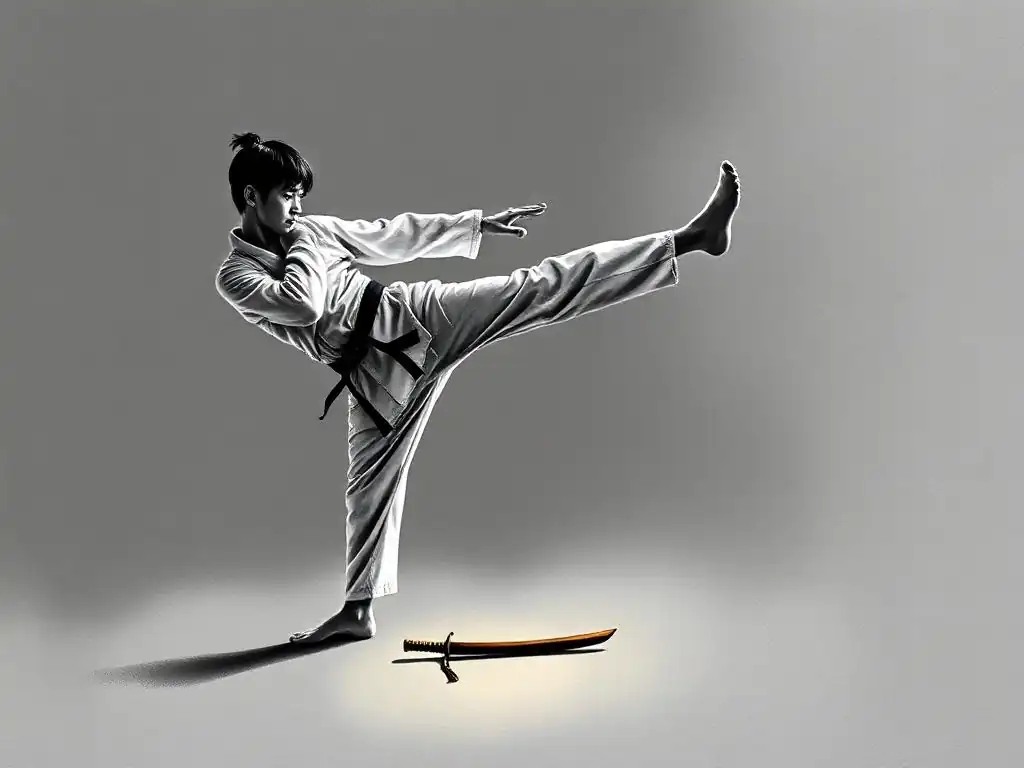
Defining Your Vision: What Do You Want to Achieve in Taekwondo?
The first step in effective Taekwondo goal setting is to define a clear vision of what you want to achieve. This goes beyond simply saying "I want to get better." It involves introspection about your motivations and aspirations within the art. Do you dream of achieving a specific belt rank, competing successfully, mastering advanced techniques, improving your physical fitness dramatically, or perhaps even teaching others someday? Your vision should be personal and inspiring, something that truly motivates you to put in the necessary effort.
Consider where you want to be in your Taekwondo journey in the next year, three years, or even five years. Visualizing this future state provides direction and purpose for your training. For instance, a vision might be "to achieve my black belt and demonstrate a high level of proficiency in Poomsae and sparring" or "to become a certified instructor and share the benefits of Taekwondo with my community." Articulating this broad vision is the crucial starting point before breaking it down into more actionable steps for setting goals in martial arts.
Setting SMART Taekwondo Goals: Specific, Measurable, Achievable, Relevant, Time-Bound
Once your vision is clear, the next step is to translate it into specific, actionable goals using the SMART framework. Each goal should be:
- Specific: Clearly defined, leaving no room for ambiguity. What exactly do you want to achieve?
- Measurable: Quantifiable so you can track progress. How will you know when you've achieved it?
- Achievable: Realistic and within your capabilities, though possibly challenging. Is this goal possible for you?
- Relevant: Aligned with your overall vision and values. Does this goal matter to your Taekwondo journey?
- Time-Bound: Assigned a deadline to create urgency and accountability. When will you achieve this?
Applying the SMART criteria to your martial arts goal setting ensures your objectives are well-defined and trackable. This systematic approach prevents vague aspirations from remaining just that and transforms them into concrete targets with clear pathways to achievement.
Example: Setting a SMART Goal for Breaking Technique Improvement
Let's apply the SMART framework to a common Taekwondo goal: improving breaking technique. A vague goal might be "get better at breaking boards." A SMART goal, however, would look like this:
"Successfully break two standard 1-inch pine boards stacked together with a turning kick within the next three months, by practicing breaking technique drills and conditioning three times per week, and attending one dedicated breaking workshop."
- Specific: Break two 1-inch pine boards with a turning kick.
- Measurable: The success is quantifiable – either the boards break or they don't. Progress can be measured by practicing with one board, then two, and tracking consistency.
- Achievable: Breaking two 1-inch boards with a proper turning kick is achievable for an intermediate-level practitioner with focused practice over three months.
- Relevant: This goal directly contributes to mastering a core Taekwondo skill and potentially preparing for demonstrations or belt tests.
- Time-Bound: The deadline is "within the next three months."
This SMART goal provides a clear target, a method for tracking progress, and a defined timeline, making it far more likely to be achieved than a general desire to improve.
Breaking Down Large Goals into Smaller, Manageable Steps
Large, ambitious goals can feel overwhelming. The key is to break them down into smaller, more manageable steps or milestones. This makes the overall objective seem less daunting and provides a series of smaller victories that build momentum and motivation. For example, if your long-term goal is to achieve your black belt (a 3-5 year process), your immediate steps would be focused on mastering the curriculum for your current belt level.
Consider the path from white belt to yellow belt. The smaller steps involve mastering specific techniques (e.g., front kick, low block, middle punch), understanding the tenets of Taekwondo, and performing the first Poomsae (Taegeuk Il Jang) correctly. Each technique mastered, each successful practice of the Poomsae, and passing the grading test for that belt constitute smaller, achievable steps towards the larger goal. This hierarchical approach to martial arts goal setting provides a clear progression and keeps you focused on the immediate actions required.
Creating a Training Plan: A Roadmap to Taekwondo Success
With your SMART goals defined and broken down into smaller steps, the next essential element is creating a structured training plan. This plan serves as your roadmap, outlining the specific activities, frequency, and duration of your practice. It should detail what techniques, patterns, conditioning exercises, or sparring drills you will focus on during each training session to move closer to your goals.
A sample training plan for someone aiming to improve flexibility and kicking height might include:
- Monday: Flexibility and stretching (30 minutes), Basic kicks practice (30 minutes).
- Wednesday: Poomsae practice (45 minutes), Balance drills (15 minutes).
- Friday: Sparring drills (45 minutes), Conditioning (15 minutes).
- Saturday: Open mat/Practice specific techniques needing improvement (60 minutes).
This structured approach ensures that your training time is used efficiently and purposefully, directly supporting your martial arts goal setting. It removes guesswork and provides a clear schedule to follow, making consistent progress more likely.
Applying Taekwondo Discipline to Overcome Obstacles
Mental Fortitude: Developing Resilience in the Face of Setbacks
Taekwondo training inherently builds mental fortitude, a crucial trait for overcoming obstacles in goal achievement. Practitioners learn to push through physical discomfort during demanding workouts, recover quickly from being hit during sparring, and persevere when struggling to learn a complex movement. This resilience is vital because the path to achieving significant martial arts goals, or any goals, is rarely smooth. You will encounter setbacks, plateaus, and moments of doubt.
Developing mental fortitude means viewing these challenges not as failures, but as opportunities to learn and adapt. If you fail a belt test, mental fortitude enables you to analyze why you didn't pass, learn from the experience, and rededicate yourself to training the weaker areas. If you suffer a minor injury, resilience means following rehabilitation diligently and adjusting your training plan rather than giving up entirely. This unwavering spirit, cultivated through the rigorous demands of Taekwondo, is a powerful asset in navigating the inevitable difficulties that arise when pursuing ambitious goals.
Overcoming Procrastination: Taking Action Towards Your Goals
Procrastination is a common enemy of goal achievement. The discipline instilled by Taekwondo training provides a direct countermeasure. Taekwondo emphasizes taking immediate, decisive action – whether blocking an incoming strike or executing a powerful kick. This principle translates into the habit of acting promptly on tasks related to your goals, rather than delaying them. It's about recognizing the feeling of resistance and pushing through it to begin.
Using techniques learned in the dojang can help. Just as you commit to attending a scheduled class, commit to specific time blocks for working on your goals outside of physical training, such as researching nutrition for performance or studying the history of the art. Breaking down large tasks, as discussed earlier, also makes them less intimidating and easier to start.
The Taekwondo focus on consistent effort, even in small increments, teaches that starting is often the hardest part, and momentum builds with action. By applying the proactive discipline of Taekwondo, you can effectively combat procrastination and keep moving forward with your martial arts goal setting.
Cultivating Patience: The Key to Long-Term Taekwondo Progress
In a world that often expects instant results, Taekwondo teaches the profound value of patience. Mastery is not achieved overnight; it is the result of years of consistent practice, repetition, and gradual improvement. Achieving a higher belt rank, perfecting an advanced technique, or developing significant physical attributes like flexibility or power all require sustained effort over extended periods. This patient approach is fundamental to successful long-term martial arts goal setting.
Consider the goal of achieving a high level of flexibility, such as performing a full split. This is not something most people can accomplish in weeks. It requires daily, patient stretching for months, sometimes even a year or more, with incremental improvements along the way. Similarly, mastering a jump spinning hook kick involves patiently practicing the foundational movements repeatedly before successfully executing the full technique. This patient perseverance, a core tenet of Taekwondo, prevents discouragement when progress seems slow and reinforces the understanding that significant achievements are built brick by brick, through consistent, dedicated effort over time.
The Importance of Tracking Progress in Taekwondo Goal Setting
Monitoring Your Performance: Identifying Strengths and Weaknesses
Regularly monitoring your performance is a critical component of effective Taekwondo goal setting. Just as an instructor observes a student's technique to provide feedback, you need to objectively assess your own progress. This could involve tracking specific metrics relevant to your goals. For instance, if aiming to improve flexibility, you might measure how far you can reach past your toes in a seated stretch each month. If working on speed, you could time a specific sequence of movements. For strength goals, track the number of repetitions of exercises like push-ups or sit-ups.
Beyond quantitative data, qualitative assessment is also key. Ask instructors for specific feedback on your technique, Poomsae performance, or sparring strategy. Record yourself practicing to identify subtle errors or areas needing improvement that you might not notice otherwise. This honest evaluation helps pinpoint exactly where you are excelling and, more importantly, where your weaknesses lie. Identifying these areas is essential for directing your future training efforts effectively and staying on track with your martial arts goal setting.
Adjusting Your Training: Adapting to Changing Circumstances
Tracking progress isn't just about measurement; it's about using that information to inform and adjust your training plan. If your measurements or instructor feedback reveal that you're not progressing as expected towards a specific goal, your plan needs to be modified. Perhaps you need to increase the frequency of a particular drill, dedicate more time to conditioning, or seek additional guidance on a difficult technique. Taekwondo teaches adaptability – anticipating an opponent's moves and adjusting your strategy. This same principle applies to your goal plan.
Circumstances outside the dojang can also necessitate adjustments. A change in work schedule, family commitments, or minor injuries might mean you need to temporarily reduce training intensity or frequency. Recognizing these changes and adapting your martial arts goal setting and training plan accordingly is crucial for long-term adherence and success. Being flexible and willing to modify your approach based on real-world feedback and changing situations ensures that your goals remain achievable and your progress continues, albeit potentially on a revised timeline.
Celebrating Milestones: Recognizing and Rewarding Your Achievements
Achieving goals, especially large ones, is a journey marked by milestones. It is incredibly important to recognize and celebrate these smaller achievements along the way. Passing a belt test, successfully performing a Poomsae in front of the class without error, breaking a challenging number of boards, or lasting a full round of sparring with a senior belt – these are all significant milestones that represent progress towards your larger Taekwondo goals.
Celebrating these achievements provides positive reinforcement, boosts motivation, and helps prevent burnout. The reward doesn't have to be elaborate; it could be as simple as taking a moment to acknowledge your hard work, treating yourself to a new piece of training gear, or sharing your success with your instructor and fellow students. Recognizing these steps forward is vital for maintaining enthusiasm and commitment, fueling your drive to continue pursuing your martial arts goal setting and ultimately reach your most ambitious objectives.
Integrating Taekwondo Philosophy into Daily Life Goals
Applying Discipline to Other Areas of Your Life
The rigorous discipline cultivated through consistent Taekwondo training is not confined to the dojang; it is a transferable skill of immense value in all areas of life. The habit of showing up, putting in effort even when unmotivated, and adhering to a structured routine can be directly applied to achieving non-Taekwondo goals. Whether it's sticking to a healthy eating plan, maintaining a consistent study schedule for academic pursuits, managing personal finances responsibly, or consistently working on a professional project, the discipline muscle strengthened in Taekwondo is a powerful asset.
Consider the discipline required to wake up early for morning training or push through the last few minutes of a challenging workout. This same willpower can be harnessed to resist the urge to hit the snooze button when you've planned an early start to work on a personal goal, or to power through a difficult task at work instead of getting distracted. By consciously applying the principle of discipline learned through martial arts goal setting to your daily habits and objectives, you build a foundation of consistency that makes achieving success in any endeavor significantly more likely.
Using Focus to Improve Productivity and Efficiency
The intense focus required during Taekwondo practice – whether concentrating on an opponent's movements or executing a precise technique – can dramatically improve productivity and efficiency in daily life. In an age of constant distractions, the ability to single-mindedly concentrate on a task is a valuable skill. Applying the Taekwondo principle of focus means dedicating specific, uninterrupted blocks of time to work on important tasks, minimizing multitasking, and consciously returning your attention when it wanders.
For example, just as you focus solely on the Poomsae sequence during practice, dedicate a specific hour to working on a critical report for work, turning off email notifications and social media alerts. Approach complex problems with the same focused intensity you would use to analyze a sparring situation. This disciplined application of focus, honed through years of martial arts goal setting and training, allows you to complete tasks more effectively, reduce errors, and make significant progress on your daily goals with greater efficiency.
Maintaining Respect for Yourself and Others
Respect, a cornerstone of Taekwondo philosophy, has profound implications for achieving goals and living a fulfilling life outside the dojang. Respect for yourself means valuing your well-being, setting healthy boundaries, and acknowledging your own worth and capabilities. It involves practicing self-care, pursuing personal growth, and treating your body and mind with the same care you would show a valuable training partner. This self-respect is crucial for maintaining motivation and perseverance when pursuing long-term goals, ensuring you don't burn out or neglect your needs.
Respect for others is equally important. It means treating colleagues, family, and friends with courtesy and understanding. In the context of goal achievement, this translates to collaborating effectively, seeking mentorship respectfully, and acknowledging the contributions of others. It also means competing ethically and graciously, whether in sports, business, or personal challenges. By consistently applying the principle of respect, cultivated through the structured environment and ethical guidelines inherent in martial arts goal setting, you build stronger relationships, navigate challenges with integrity, and create a positive environment conducive to both personal and collective success.
Examples of Successful Taekwondo Goal Setting
Achieving Tournament Success Through Focused Training
A compelling example of successful martial arts goal setting is a Taekwondo practitioner aiming for tournament victory. Let's consider a red belt student named Sarah whose goal is to win a gold medal in sparring at a regional championship within six months. Her SMART goal is specific (win gold, sparring, regional), measurable (placing first), achievable (regional level is appropriate for her rank with focused effort), relevant (aligned with competitive aspirations), and time-bound (within six months).
Sarah breaks this down: improve speed by 15%, increase stamina to last three rounds strongly, master three specific scoring techniques, and reduce penalties. Her training plan includes extra cardio three times a week (stamina), dedicated sparring drills focusing on her target techniques (mastery), footwork drills (speed), and practice rounds with emphasis on rule adherence (penalties).
She tracks her progress by timing drills, sparring against various partners, and getting feedback from her coach weekly. After five months of disciplined, focused, and patient training, she enters the championship and wins the gold medal in her division, a direct result of her structured Taekwondo goal setting and execution.
Mastering a Difficult Poomsae Through Consistent Practice
Another example is a black belt candidate aiming to master a complex Poomsae, such as Taegeuk Pal Jang or a higher-level pattern required for their next Dan promotion. Mastering these patterns requires not just memorizing the sequence of 25-30+ movements but executing them with correct technique, power, balance, focus, and timing. The goal might be: "Perform Taegeuk Pal Jang perfectly in the upcoming black belt test in four months, achieving a score of at least 8.5 out of 10 from the examiners."
This goal is broken into steps: first, perfect the sequence of movements; second, refine each individual technique (stances, blocks, strikes); third, work on power and timing; fourth, practice the flow and rhythm of the entire pattern; fifth, perform under simulated test conditions. The training plan involves practicing the Poomsae daily, dedicating specific sessions to refining problematic sections, recording practice sessions for self-correction, and performing it for instructors weekly for feedback.
Through consistent, disciplined, and focused practice over the four months, the candidate successfully performs the Poomsae during the test, achieving their goal through dedicated martial arts goal setting and execution.
Improving Flexibility and Kicking Power with a Structured Plan
Consider a student who feels their kicks lack height and power. Their goal: "Increase kicking height by 6 inches and improve breaking power to consistently break a 1-inch board with a roundhouse kick within six months." This is a measurable, relevant, and time-bound goal. Breaking it down involves specific steps: daily stretching routine (flexibility), plyometric exercises (power), resistance band training (speed/power), and focused practice on kicking mechanics.
Their structured plan includes 30 minutes of intense stretching daily, two plyometric sessions per week, and practicing kicks against a heavy bag or paddle targets three times a week, focusing on hip rotation and snap. They track flexibility by measuring their reach or split depth and track power by the impact felt on the bag or the success rate with breaking lighter boards before attempting the 1-inch board.
By diligently following this plan, fueled by the discipline and focus learned in Taekwondo, the student achieves noticeable increases in both flexibility and kicking power within the six-month timeframe, successfully reaching their martial arts goal setting objective.
Conclusion: Mastering Your Life Through Taekwondo Goal Setting
The Power of a Taekwondo Mindset for Achieving Your Dreams
The journey through Taekwondo is a powerful metaphor for life's challenges and aspirations. The principles of discipline, respect, perseverance, self-control, and indomitable spirit are not confined to the training hall; they are universal keys to unlocking potential and achieving dreams.
By embracing the Taekwondo mindset and applying its structured approach to martial arts goal setting, practitioners gain not only physical prowess but also the mental and emotional resilience needed to navigate the complexities of life. This mindset empowers individuals to define their vision, create actionable plans, overcome obstacles, and maintain focus on their objectives, ultimately leading to greater success and fulfillment.
The process of setting goals in martial arts, breaking them down, tracking progress, and adapting to challenges builds a foundation of self-efficacy and determination. It teaches that consistent effort, guided by clear intentions and a disciplined approach, yields tangible results. This profound lesson, learned through the physical and mental demands of Taekwondo, equips individuals with the tools to approach any challenge, whether personal, professional, or academic, with confidence and a strategic mindset. It is a testament to the transformative power of martial arts goal setting when integrated with the art's core philosophy.
Continuing Your Journey of Self-Improvement and Goal Attainment
Achieving one goal in Taekwondo or in life is not the end of the journey, but rather a stepping stone to the next challenge and the next opportunity for growth. The principles of Taekwondo encourage a lifelong commitment to self-improvement. As you reach one milestone, the skills and mindset you've developed through effective martial arts goal setting prepare you to set new, perhaps more ambitious, goals. This continuous cycle of setting objectives, working diligently to achieve them, learning from the process, and then setting new ones is the essence of a life lived with purpose and growth.
Whether your future goals involve advancing further in Taekwondo, pursuing new career opportunities, mastering a new skill, or contributing to your community, the discipline, focus, and resilience honed through your training will serve as invaluable guides. The practice of martial arts goal setting becomes an ingrained habit, a natural way of approaching aspirations. By continuing to apply the powerful lessons of Taekwondo to your life, you embark on an ongoing journey of achievement, demonstrating the true mastery that extends far beyond physical techniques into the realm of character and personal fulfillment.
Frequently Asked Questions
What is the importance of goal setting in martial arts training?
Goal setting provides direction and motivation for your training. It helps you to track progress and stay focused on achieving your desired level of skill and understanding.
How does martial arts training help with goal setting in other areas of life?
The discipline cultivated through martial arts instills a mindset of consistent effort and perseverance. This translates into improved goal-setting abilities and increased success in various aspects of life.
What are some examples of specific, measurable, achievable, relevant, and time-bound (SMART) goals in martial arts?
A SMART goal could be: "Achieve my yellow belt in Judo within six months by attending three classes per week and practicing basic throws at home." This makes the goal tangible and trackable.
How can I overcome plateaus or setbacks when pursuing my martial arts goals?
Plateaus are common; adjust your training by focusing on weaknesses, trying new drills, or seeking guidance from instructors. Remember that consistent effort eventually leads to progress.
What role does self-discipline play in achieving martial arts goals?
Self-discipline is paramount for achieving martial arts goals. It enables you to stick to your training schedule, push through challenges, and maintain motivation even when progress feels slow.
Final Reflection: Embracing the Warrior's Path to Achievement
The principles of martial arts goal setting, as explored throughout this article, are not confined to the dojo. They resonate powerfully in our daily lives, offering a framework for achieving aspirations with the same focus, discipline, and unwavering spirit that defines a true martial artist. The ability to break down seemingly insurmountable challenges into manageable steps, coupled with consistent practice and unwavering self-belief, is a skill that transcends physical combat and unlocks potential in every facet of human endeavor.
The journey of setting and achieving goals, much like the path of a martial artist, is a deeply personal and transformative experience. It's about more than just reaching the destination; it's about the person you become along the way – the resilience you cultivate, the self-awareness you gain, and the unwavering commitment you develop. A black belt is nothing more than a belt that covers your waist. The real belt is the one that goes around your mind.
This quote perfectly encapsulates the essence of martial arts goal setting: it's about cultivating the mental fortitude to overcome obstacles and achieve your full potential.
Now, take a moment to reflect on your own aspirations. What dreams lie dormant within you, waiting to be awakened? Embrace the warrior's mindset, break down your goals into actionable steps, and commit to the daily practice that will lead you to success. The path may be challenging, but with discipline, perseverance, and a unwavering belief in yourself, you can achieve anything you set your mind to. Go forth and conquer your goals, one disciplined step at a time.
Unleash Your Inner Warrior: Take Action Now!
Thank you for exploring the art of goal setting, martial arts style! We hope you've found inspiration and practical strategies to conquer your dreams. Now, let's transform that knowledge into action.
- Embrace the Challenge: Dedicate just 15 minutes today to visualizing your primary goal and crafting a single, actionable step you can take towards it immediately.: This is your first kata on the path to mastery.
- Share your greatest takeaway from this article with a friend or fellow martial arts enthusiast. Spreading the knowledge strengthens your own understanding.
- Explore different martial arts disciplines! Each offers a unique path to self-improvement and can complement your current training or inspire a new passion.
What single, impactful action will you commit to today, inspired by the discipline of the martial arts?