
Savate's Swift Kicks: Plyometrics for French Kickboxing Power

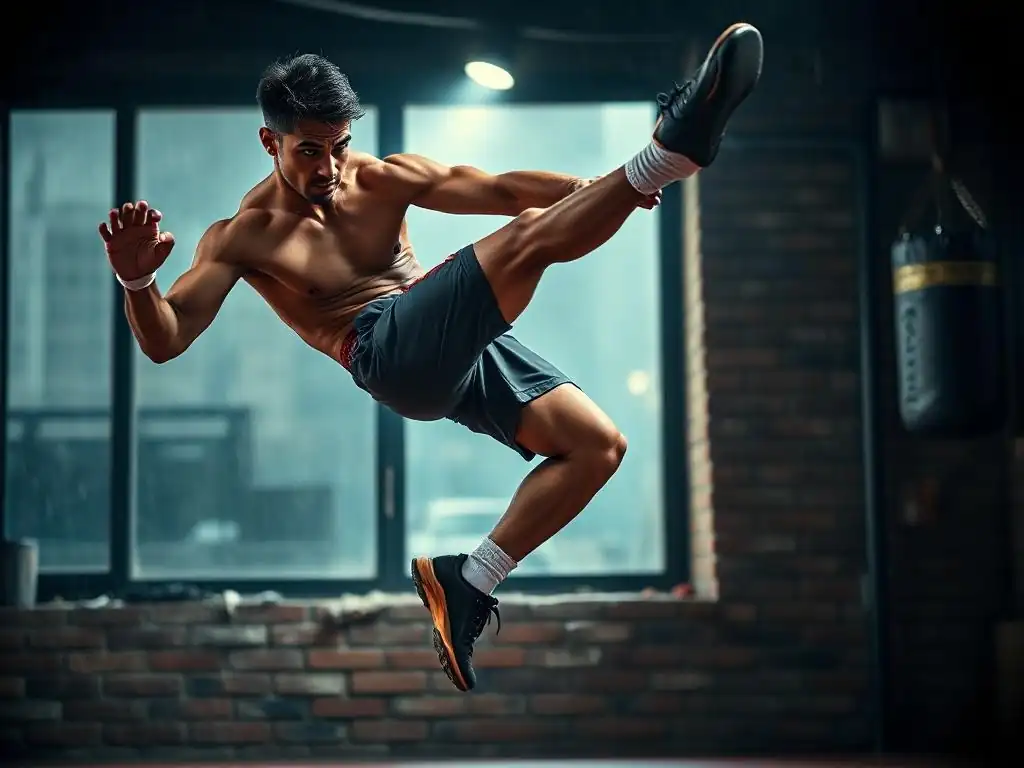
Welcome to Martial Arts Mastery, your portal to the world's fighting traditions! Prepare to unlock explosive power and agility. Ever wondered how Savate, the elegant French kickboxing style, generates such devastating kicks? Dive in as we explore the secrets of Savate plyometrics kickboxing power, revealing how targeted exercises can transform your leg strength into lightning-fast, fight-winning strikes. Discover the specific drills and techniques that will elevate your Savate game and leave your opponents in awe. Ready to unleash your potential?
Key Kicks in Savate: Chassé, Fouetté, Revers
Savate, often referred to as French kickboxing, is renowned for its elegant yet highly effective kicking techniques, executed with precision and power while wearing specially designed shoes. Among the most fundamental and characteristic kicks are the Chassé, the Fouetté, and the Revers. The Chassé, or "thrust kick," is typically a straight, piston-like movement, often delivered with the heel or sole of the shoe.
It can be a front Chassé (forward thrust), a side Chassé (lateral thrust), or even a rear Chassé. This kick is excellent for maintaining distance, intercepting an opponent's movement, or driving through a target with significant linear force. Its power comes from the rapid extension of the leg and the driving force from the supporting leg and hip.
The Fouetté, meaning "whip," is a circular or semi-circular kick, similar in principle to a roundhouse kick in other martial arts, but delivered with the instep or toe of the shoe. It can target the legs (bas), body (médian), or head (figure). Unlike some roundhouse kicks that use the shin, Savate's Fouetté relies on the shoe's surface and a rapid, whipping motion generated from the hip and rotation of the standing foot.
This kick is known for its speed and ability to land from various angles, making it a versatile offensive tool in Savate kickboxing. The Revers, or "reverse kick," is a hook or crescent-style kick, often delivered with the sole or heel, moving in a circular path towards the target. It can be a Revers frontal (front hook/crescent) or Revers latéral (side hook/crescent).
This kick often requires more balance and rotational power from the core and hips and is frequently used as a powerful counter-attack or finishing blow, capitalizing on an opponent's opening. Mastering these kicks is foundational to developing effective Savate plyometrics kickboxing power.
- What is Savate, and how does it relate to kickboxing?
- How does plyometrics contribute to Savate's kicking power?
- What are some examples of plyometric exercises suitable for Savate training?
- What are the key benefits of incorporating plyometrics into a Savate training regime?
- Is plyometric training safe for all Savate practitioners, or are there any considerations?
Frequently Asked Questions
What is Savate, and how does it relate to kickboxing?
Savate is a French kickboxing style that uses both hands and feet, with a strong emphasis on foot kicks. It differs from other kickboxing styles in its specific techniques and historical development.
How does plyometrics contribute to Savate's kicking power?
Plyometrics are exercises that use explosive movements to increase power. These movements help Savate practitioners develop the necessary force and speed for powerful kicks.
What are some examples of plyometric exercises suitable for Savate training?
Examples include jump squats, box jumps, and plyometric lunges. These exercises improve leg muscle strength and explosiveness, directly translating to more powerful Savate kicks.
What are the key benefits of incorporating plyometrics into a Savate training regime?
Plyometrics enhance kicking speed, power, and overall athletic performance. They also improve muscle elasticity and coordination, leading to more effective and efficient techniques.
Is plyometric training safe for all Savate practitioners, or are there any considerations?
Plyometric training can be demanding, so proper warm-up and cool-down routines are crucial. Beginners should start with low-impact exercises and gradually increase intensity to avoid injuries.
Final Reflection: Unleashing Potential Through Savate's Explosiveness
The exploration of Savate plyometrics undeniably reveals a potent pathway to amplified kickboxing power, but its true significance extends far beyond the ring. The integration of plyometric training into Savate, and martial arts in general, represents a commitment to pushing the boundaries of human potential and optimizing athletic performance. This isn't just about stronger kicks; it's about a deeper understanding of biomechanics and the explosive energy that lies dormant within us, waiting to be unleashed.
The impact of Savate plyometrics resonates far beyond the training dojo. It's a testament to the enduring human desire to improve, to refine, and to master physical skills. It highlights the interconnectedness of different training methodologies and the power of cross-disciplinary learning. The body achieves what the mind believes.
This quote, often attributed to Napoleon Hill, perfectly encapsulates the spirit of Savate plyometrics – a belief in the power of focused training and unwavering dedication to achieving peak performance.
Now, consider the principles we've discussed. Think about the explosive power you can cultivate, not just in Savate, but in every aspect of your life. Reflect on the dedication required to master a technique, the discipline needed to push past limitations, and the unwavering belief in your own potential. Embrace the spirit of Savate plyometrics, and dare to unlock the explosive power within you, transforming not only your physical capabilities but also your approach to every challenge you face.
Unleash Your Savate Potential!
Thank you for diving into the world of Savate plyometrics! You've now got the knowledge to add explosive power to your kicks. Ready to put it into practice?
Here's how to elevate your game:
- Commit to a 4-week plyometric program, focusing on the exercises outlined in the article. Track your progress and celebrate your improvements!
- Share this article with a fellow Savateur or martial arts enthusiast. Spread the knowledge and level up together.
- Experiment with combining these plyometric exercises with other training modalities like heavy bag work or sparring.
What's one plyometric exercise you're most excited to incorporate into your Savate training routine, and how do you plan to measure its impact on your kicks?