
Exploiting Anatomical Weaknesses: The Precision of Advanced Joint Targeting (CrossStyle)


Welcome to Martial Arts Mastery, your definitive guide to the world's fighting traditions. Uncover the secrets behind devastating techniques and the philosophies that underpin them. Intrigued by the precision and power of applying pressure to vulnerable points? Dive in now to discover the nuances of Advanced Joint Targeting Techniques and learn how to exploit anatomical weaknesses for unparalleled control and effectiveness. Are you ready to elevate your training?
- Exploiting Anatomical Weaknesses: The Precision of Advanced Joint Targeting
- Introduction to Advanced Joint Targeting Techniques
- Foundational Principles of Joint Targeting
- Advanced Joint Targeting Techniques: A Cross-Style Analysis
- Integrating Advanced Joint Targeting into Training
- Case Studies: Application of Advanced Joint Targeting
- The Future of Advanced Joint Targeting Techniques
- Conclusion: Mastering Precise Joint Control
-
Frequently Asked Questions
- What are Advanced Joint Targeting Techniques and what makes them "advanced"?
- Why is understanding Anatomical Weaknesses crucial for mastering these techniques?
- How does the CrossStyle approach enhance the application of Advanced Joint Targeting?
- What are some potential ethical considerations when practicing Advanced Joint Targeting Techniques?
- Where can I find more information on the historical context of Advanced Joint Targeting Techniques?
- Final Reflection: Mastering the Body's Vulnerabilities
- Unlock Your Joint Targeting Mastery!
Exploiting Anatomical Weaknesses: The Precision of Advanced Joint Targeting
Introduction to Advanced Joint Targeting Techniques
Understanding Anatomical Vulnerabilities for Joint Manipulation
Joints, the critical junctures where bones meet, are inherently designed for movement but also possess significant structural vulnerabilities that can be exploited. Unlike the dense strength of bone or the resilient elasticity of muscle, joints rely on a complex interplay of ligaments, tendons, cartilage, and synovial fluid within a limited range of motion.
Ligaments, fibrous tissues connecting bone to bone, are particularly susceptible to tearing or stretching when forced beyond their normal capacity, often requiring forces exceeding their tensile strength, which can be hundreds of pounds per square inch depending on the joint and ligament. Tendons, connecting muscle to bone, can also be strained or ruptured through improper joint manipulation, though direct ligament damage is a more common outcome of many joint locks.
The vulnerability arises from the joint's primary function: facilitating controlled movement. Each joint has a specific anatomical structure dictating its possible directions and ranges of motion. Applying force against this natural direction, or hyperextending or hyperflexing the joint past its physiological limit, places immense stress on the supporting soft tissues.
For instance, the elbow joint is primarily designed for flexion and extension (bending and straightening) with limited rotation. Forcing it to rotate unnaturally or hyperextending it beyond its approximately 0-10 degree range past straight can quickly lead to severe pain or structural damage, including ligament tears (like the UCL in the elbow) or even dislocation. Understanding these specific anatomical limitations is the foundational principle behind effective advanced joint targeting techniques.
Cross-Style Application of Joint Locks and Controls
Advanced joint targeting techniques are not confined to a single martial art but represent a powerful and often devastating set of skills found across a diverse range of disciplines. While the delivery systems and philosophies may differ, the underlying principles of leverage, angle, and anatomical knowledge remain constant. Arts like Aikido and Hapkido are renowned for their extensive curriculum of standing joint locks and controls, often used to neutralize an opponent or guide them without inflicting permanent injury in training, yet capable of causing significant pain or damage when applied with full force.
In contrast, grappling arts such as Brazilian Jiu-Jitsu (BJJ), Judo, Sambo, and Catch Wrestling feature sophisticated ground-based joint submissions, particularly targeting the elbow, shoulder, knee, and ankle. Judo, for example, includes a specific category of techniques called kansetsu-waza (joint techniques), primarily focusing on elbow locks, which are permitted in competition. BJJ expanded upon these, developing a vast array of leg locks and shoulder locks.
Even striking arts like Wing Chun or Savate incorporate elements of joint manipulation, often as part of trapping sequences or close-range exchanges to disrupt balance or create openings. This cross-pollination highlights the universal effectiveness of advanced joint targeting techniques when applied with precision and an understanding of human anatomy, regardless of the art's primary focus.
Foundational Principles of Joint Targeting
The Biomechanics of Joint Weakness: Leverage and Angle of Attack
The effectiveness of advanced joint targeting techniques hinges on applying biomechanical principles, primarily leverage and the precise angle of attack. Leverage allows a practitioner to amplify their force using the opponent's limb as a lever arm.
By controlling one point (the fulcrum, often the joint itself or a nearby bone) and applying force at another point along the limb (the effort), a relatively small amount of force can generate significant pressure or torque at the joint, overwhelming its structural integrity. Consider an arm bar targeting the elbow: the practitioner controls the opponent's wrist or hand (effort), stabilizes the elbow joint (fulcrum), and applies pressure to hyperextend the arm, using the opponent's forearm and upper arm as lever arms.
Equally critical is the angle of attack. Each joint has planes of motion where it is strong and stable, and directions where it is weak and vulnerable. Applying force directly against the natural line of movement or perpendicular to a stable plane rapidly leads to discomfort or damage.
For instance, the knee joint is strong when force is applied along the line of the leg (compression or tension) but is highly susceptible to forces applied sideways (valgus or varus stress) or rotational forces when the foot is fixed. Identifying and exploiting these specific angles – the path of least resistance for joint failure – is what differentiates effective advanced joint targeting techniques from mere wrestling or grappling. Mastering these biomechanical principles allows a practitioner to control an opponent with minimal effort or, if necessary, apply devastating force to a joint.
Identifying Key Anatomical Targets for Joint Locks
While theoretically any joint could be targeted, certain joints offer more practical and effective targets for advanced joint targeting techniques due to their accessibility, structure, and the debilitating effect of their compromise. The wrist is a common target due to its complexity and relatively small size, making it easy to manipulate with minimal control over the rest of the limb. Joint locks applied to the wrist can cause intense pain and control the entire arm and even the opponent's posture.
The elbow and knee are prime targets for more severe damage, as they are major hinge joints supporting significant weight and movement. Elbow locks, like the arm bar, leverage the entire arm and can easily lead to hyperextension, dislocation, or fracture.
Knee locks, such as knee bars or heel hooks (which also impact the ankle), attack the knee's stability and range of motion, potentially causing ligament tears (ACL, PCL, MCL, LCL) or meniscus damage, often resulting in immediate immobility. The shoulder joint, a ball-and-socket joint with a wide range of motion, is vulnerable to various locks (like the Kimura or Americana) that apply torque, potentially leading to dislocation or damage to the rotator cuff muscles and surrounding ligaments.
Finally, the ankle joint, while robust, is susceptible to locks that apply torque or hyperextension, impacting mobility and balance. These key targets form the basis of most advanced joint targeting techniques taught across different martial arts styles.
Safety Considerations in Practicing Joint Manipulation
Practicing advanced joint targeting techniques carries inherent risks and demands stringent safety protocols to prevent serious injury to training partners. The most crucial element is communication and control. Techniques should always be applied slowly and with increasing pressure, allowing the partner ample time to "tap out" – a universally recognized signal indicating pain or discomfort and the need to immediately release the technique. Ignoring a tap out is considered a severe breach of safety and training etiquette in almost all martial arts disciplines that practice joint locks.
Furthermore, practitioners must understand the difference between applying a technique for control or pain compliance versus applying it with injurious force. In training, the goal is typically to elicit a tap before any damage occurs. This requires developing sensitivity – the ability to feel the joint's limits and the partner's reaction.
Warm-up exercises are also essential to prepare the joints and surrounding tissues for the stresses of practice. While minor sprains or strains can occasionally occur even with precautions, adhering to these safety guidelines significantly reduces the risk of severe injuries like ligament tears, dislocations, or fractures, ensuring a sustainable and responsible training environment for advanced joint targeting techniques.
Advanced Joint Targeting Techniques: A Cross-Style Analysis
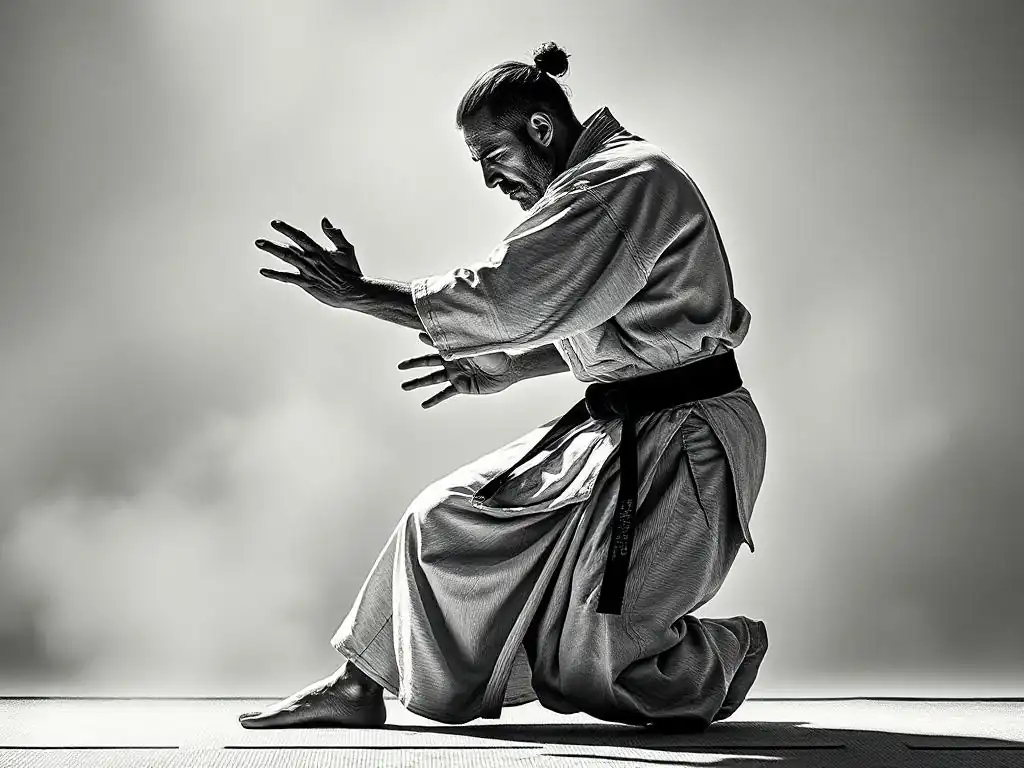
Targeting the Wrist Joint: Techniques and Variations
Wrist Locks from Aikido and Hapkido
Aikido and Hapkido are particularly rich in standing and kneeling wrist lock techniques, often used as means of control, pain compliance, or as entry points to throws and pins. Techniques like Aikido's Kotegaeshi (forearm return) involve rotating the wrist outwards while controlling the elbow, applying torque that can easily disrupt balance or force a fall.
Another common Aikido technique is Kokyu Nage (breath throw), which often incorporates wrist control to lead the opponent's energy and posture. Hapkido features a wide array of Sonmok Kwansool (wrist joint techniques), including various inward and outward twists, bends, and figure-four controls applied from different angles.
These techniques often exploit the wrist's natural flexibility but limited strength against torsional or bending forces, especially when combined with control over the elbow or shoulder to prevent the opponent from relieving pressure. Applied correctly, they can cause intense pain with relatively little force, making them effective for controlling a non-compliant individual without necessarily causing lasting injury if released promptly upon compliance or a tap out.
The variations often depend on the grip secured on the wrist and the direction of force applied – bending the wrist forward, backward, or twisting it inward or outward against its natural range of motion.
Chin Na Applications for Wrist Control
Chin Na (Qin Na) is a Chinese martial art term meaning "seize and control," focusing specifically on joint locks, pressure points, and grappling. Wrist control is a fundamental aspect of Chin Na, with dozens of distinct techniques categorized by the type of hold and manipulation (e.g., dividing tendon, misplacing bone). Chin Na wrist locks often involve intricate finger and hand grips combined with wrist manipulation to target specific tendons and joint structures.
Examples include techniques like Chuan Suo (Piercing Shuttle), which might involve twisting the wrist while applying pressure to specific points, or Dao Chan Shou (Inverted Shovel Hand), which could involve bending the wrist back sharply. Chin Na emphasizes sensitivity and understanding the flow of Qi (energy), applying minimal force to achieve maximum effect by exploiting anatomical weaknesses and leverage.
These techniques are often integrated into striking or trapping sequences, allowing a practitioner to transition seamlessly from blocking or striking into a controlling lock. The detailed understanding of hand and wrist anatomy in Chin Na allows for highly specific and painful manipulations, sometimes targeting individual bones or tendons within the wrist structure.
Elbow Joint Manipulation: Hyperextension and Control
Arm Bars from Brazilian Jiu-Jitsu and Judo
The arm bar, or Juji Gatame (cross body arm lock) in Judo and BJJ, is perhaps the most iconic elbow joint submission technique. It involves isolating the opponent's arm and applying pressure to hyperextend the elbow joint against its natural range of motion (typically beyond 0-10 degrees past straight). In BJJ and Judo, this technique is often applied from dominant positions like the guard, mount, or side control, using the practitioner's legs, hips, and arms to create a powerful fulcrum and lever system.
A standard Juji Gatame involves securing the opponent's arm between the practitioner's thighs, controlling the wrist with both hands, and using hip pressure to extend the elbow. The force applied leverages the opponent's forearm and upper arm against the practitioner's hips, creating immense pressure on the elbow joint's ligaments (collateral ligaments, anterior capsule).
Judo includes other elbow locks ( Ude Garami - arm entanglement, Ude Hishigi - arm breaking) besides the straight arm bar, often applied from standing or ground positions, targeting the elbow through bending or twisting actions. These techniques are highly effective competitive submissions, often forcing a tap out within seconds if applied correctly.
Elbow Joint Targeting in Wing Chun
While primarily known as a striking art focusing on close-range combat and centerline control, Wing Chun incorporates elements of joint manipulation, particularly targeting the elbow during trapping and hand-fighting sequences. Wing Chun's Chi Sao (sticking hands) training develops sensitivity and the ability to control the opponent's limbs. During Chi Sao or combat, if an opponent extends their arm or leaves their elbow exposed, a Wing Chun practitioner can apply sudden, sharp pressure or torque to the elbow joint.
Techniques might involve trapping the opponent's arm and applying pressure to the elbow sideways (valgus or varus stress) or twisting the arm to hyper-rotate the joint. For instance, a Gan Sao (cutting hand) block could transition into a sharp downward force on the opponent's elbow. These manipulations are often quick, sharp actions designed to momentarily disrupt the opponent's structure, balance, or guard, creating an opening for a strike or further control, rather than sustained submission holds found in grappling arts. The focus is on exploiting the elbow's vulnerability to off-axis force when the arm is extended or partially bent.
Shoulder Joint Attacks: Dislocation and Subluxation Techniques
Keylock Variations for Shoulder Control
Keylocks, often referred to as Americana ( Ude Garami in Judo/BJJ) or Kimura ( Gyaku Ude Garami in Judo/BJJ), are powerful shoulder locks that utilize a figure-four grip on the opponent's arm to apply torque to the shoulder joint. The Americana typically involves controlling the opponent's wrist and using the other arm to secure the opponent's triceps, then rotating the forearm upwards towards the head, forcing external rotation and extension of the shoulder joint. This puts immense pressure on the anterior capsule and ligaments of the shoulder.
The Kimura is the reverse: the practitioner controls the opponent's wrist with one hand and grabs their own wrist or forearm with the other, securing a figure-four grip on the opponent's arm (often bent at a 90-degree angle at the elbow). Torque is then applied by rotating the opponent's shoulder internally and upwards, stressing the posterior capsule, rotator cuff, and potentially the ligaments connecting the shoulder blade and collarbone.
Both techniques can be applied from various positions (mount, side control, guard) and are effective for pain compliance, control, or submission, capable of causing severe sprains, tears, or dislocations if applied with sufficient force and speed.
Targeting the Rotator Cuff: Vulnerability and Manipulation
The rotator cuff is a group of four muscles and their tendons surrounding the shoulder joint, crucial for movement and stability. While robust, these tendons are susceptible to compression and shearing forces, particularly when the shoulder is rotated externally or internally under pressure. Advanced joint targeting techniques can specifically target the rotator cuff by applying torque that compresses or stretches these tendons against the underlying bone.
For example, a technique might involve isolating the opponent's arm in a specific position (e.g., bent at the elbow, abducted from the body) and then applying sudden, sharp rotational force to the humerus (upper arm bone). This can pinch the rotator cuff tendons between the humerus head and the shoulder blade (impingement) or even cause tears.
While not always a direct "lock" in the sense of hyperextension, these manipulations exploit the rotator cuff's vulnerability to off-axis torque and compression, causing intense pain and potentially debilitating injury, making them a subset of advanced joint targeting techniques focused on soft tissue surrounding the joint.
Knee Joint Techniques: Immobilization and Takedowns
Leg Locks in Wrestling and Mixed Martial Arts (MMA)
Leg locks are a prominent category of advanced joint targeting techniques in grappling arts like Wrestling (especially Catch Wrestling) and MMA, focusing on submitting an opponent by attacking the knee or ankle joint. Common knee locks include the knee bar ( Ashi Hishigi in Judo), which involves isolating the opponent's leg and hyperextending the knee joint, similar to an arm bar on the arm. This technique places extreme stress on the anterior cruciate ligament (ACL) and posterior cruciate ligament (PCL).
More complex leg locks like heel hooks apply torque to the ankle, which simultaneously transmits rotational force up the tibia and fibula to the knee, stressing multiple ligaments (collaterals, cruciates) and potentially tearing the meniscus. Due to their potential for causing rapid and severe injury, heel hooks are often restricted or banned in certain competitive formats unless practitioners reach advanced levels.
Wrestling, particularly folkstyle or freestyle, utilizes less submission-oriented but still joint-stressing techniques like the "figure-four leg lock" applied to control or pin, which can put significant pressure on the knee if applied tightly. These techniques demonstrate how advanced joint targeting can be used for both submission and control in competitive environments.
Knee Joint Targeting in Muay Thai and Savate
While primarily striking arts, Muay Thai (Thai Boxing) and Savate (French Boxing) incorporate techniques that can target the knee joint for disruption, pain, or takedowns, often through striking or leveraging. In Muay Thai, low kicks delivered to the outer or inner thigh can destabilize the knee. More direct knee targeting can occur with a low-line side kick or stomp kick aimed at the opponent's knee joint, potentially causing pain, hyperextension, or even ligament damage if the opponent's weight is on that leg and they cannot absorb the impact.
Savate, known for its precise and powerful kicking techniques, also utilizes kicks that can target the knee. A well-placed coup de pied bas (low kick) to the side of the knee can disrupt balance and potentially injure the collateral ligaments. Some techniques might involve using footwork to create an angle and then applying force to the knee sideways or backward as a form of takedown assist. While not focused on submission holds, these striking applications represent another dimension of advanced joint targeting techniques, using percussive force or leverage to exploit the knee's structural weaknesses in a standing context.
Ankle Joint Locks: Control and Submission
Ankle Locks in Catch Wrestling and Sambo
The ankle joint, while seemingly robust, is vulnerable to various locks that apply torque, bending, or hyperextension forces, particularly when the opponent's foot is isolated. Catch Wrestling and Sambo have extensive repertoires of ankle locks.
The straight ankle lock (sometimes called a "straight foot lock") is a fundamental technique in both arts and BJJ, involving controlling the opponent's foot and applying pressure to hyperextend the ankle joint and potentially torque the lower leg bones. This technique primarily stresses the talocrural joint and surrounding ligaments, and if applied with enough force and torque, can also impact the knee (as seen with heel hooks).
Sambo, in particular, is known for its wide variety of leg and ankle attacks, often incorporating dynamic entries and transitions. Techniques like the Achilles lock (applying pressure to the Achilles tendon) or various twisting ankle locks are common. Catch Wrestling features brutal ankle and foot manipulations, often leading to rapid submissions. These arts demonstrate how understanding the complex structure of the foot and ankle allows for precise application of force to incapacitate an opponent or secure a submission through advanced joint targeting techniques.
Applications for Ankle Joint Manipulation in Self-Defense
In a self-defense context, advanced joint targeting techniques on the ankle can be highly effective for disrupting an attacker's balance, controlling them on the ground, or creating an opportunity to escape. If an attacker is on the ground, controlling their ankle and applying a simple twisting or bending motion can cause significant pain and prevent them from standing or pursuing. A figure-four control around the ankle can immobilize the leg.
Even from a standing position, if an attacker's foot is momentarily trapped or exposed, a sharp stomp or kick to the top of the foot or the ankle joint can cause intense pain and potentially break small bones or damage ligaments, instantly debilitating their mobility. While less focused on submission than sport applications, these techniques prioritize immediate effect and disruption. The goal is to exploit the ankle's vulnerability to impact and torque when it is bearing weight or isolated, providing a practical application of advanced joint targeting principles for self-protection.
Integrating Advanced Joint Targeting into Training
Developing Sensitivity and Precision in Joint Manipulation
Mastering advanced joint targeting techniques requires more than just knowing the mechanics; it demands highly developed sensitivity and precision. Sensitivity, often cultivated through specific drills like Chi Sao (Wing Chun) or flow rolling (BJJ), involves learning to feel your partner's structure, balance, and subtle reactions to pressure. It's about understanding the 'feel' of a joint reaching its limit just before pain or injury occurs. This allows practitioners to apply techniques with the minimum necessary force for control or to ensure a safe tap out during training.
Precision involves applying force exactly at the right angle and point on the joint or limb to achieve the desired effect. Even a few degrees off can render a technique ineffective or significantly reduce its power. Developing this precision requires countless repetitions and focused practice, paying close attention to the details of hand placement, body positioning, and the direction of force.
Training partners provide crucial feedback on the effectiveness and comfort level of techniques. Many instructors advocate starting practice very slowly, focusing solely on the correct mechanics and feeling the joint's movement, gradually increasing speed and pressure only as precision and sensitivity improve.
Drills for Enhancing Joint Locking Speed and Accuracy
Specific drills are essential for translating theoretical knowledge of advanced joint targeting techniques into practical, effective skills. Repetition drills, where a practitioner executes a specific lock multiple times from a static position, build muscle memory and refine mechanics. Flow drills, where partners transition between different joint locks or from a basic control to a lock, enhance adaptability and the ability to apply techniques in dynamic situations.
Positional sparring, where practitioners start from a specific position (e.g., side control or standing grip) and focus only on achieving a particular joint lock submission, helps develop the strategic understanding and timing required to apply techniques against resistance. Incorporating resistance bands or specialized training dummies can also help develop the strength and feel needed to overcome an opponent's defensive reactions.
For example, a drill might involve a partner offering slight, then increasing, resistance as you attempt a wrist lock, forcing you to adjust your angle and leverage. Focused drilling on specific joint lock entries and finishes is key to increasing both the speed of application and the accuracy of the technique.
Wrist Lock Breakfall Drill, Elbow Hyperextension Drill, Shoulder Rotation Drill, Knee Bar Transition Drill, Ankle Lock Escape Drill
- Wrist Lock Breakfall Drill: Partner applies a light wrist lock, and the receiver practices safely falling or rolling to dissipate the force and escape the lock, emphasizing protecting the wrist during the fall.
- Elbow Hyperextension Drill: From a safe position (e.g., on the ground), one partner extends their arm. The other partner gently applies pressure to simulate an arm bar, stopping immediately at the first sign of discomfort or a pre-arranged signal, focusing purely on the feeling of the joint reaching its limit.
- Shoulder Rotation Drill: Partners work slowly through the range of motion of a shoulder lock like the Kimura or Americana, feeling the point of tension and potential pain, practicing applying and releasing pressure smoothly and safely.
- Knee Bar Transition Drill: Starting from a grappling position like guard, practitioners drill the sequence of movements required to transition into a knee bar setup, focusing on control of the leg and achieving the correct body position, stopping before applying painful pressure.
- Ankle Lock Escape Drill: One partner applies a basic straight ankle lock (lightly), and the other practices specific escape techniques, such as bridging, rolling, or turning into the pressure, focusing on body mechanics to relieve the joint stress.
Case Studies: Application of Advanced Joint Targeting
Self-Defense Scenario: Wrist Lock Escape from a Grab
Consider a common self-defense scenario: an attacker grabs your wrist forcefully from the front. While powerful strikes are an option, advanced joint targeting techniques offer an alternative focused on control and escape. Instead of trying to muscle out of the grip, which is often futile against a stronger aggressor, a simple bent wrist lock can be applied. By controlling the attacker's wrist with your free hand and bending their hand sharply back towards their forearm, you exploit the wrist's limited range of motion in that direction.
Applying pressure downwards while simultaneously pulling your trapped wrist free can generate intense pain, typically forcing the attacker to release their grip within 1-2 seconds as the pressure mounts on their wrist ligaments and tendons. This technique leverages the attacker's own grip and force against them.
Once the grip is broken, you gain a critical window of opportunity – perhaps 0.5 to 1.5 seconds of distraction or pain compliance – to escape, create distance, or follow up with other self-defense actions. This illustrates how a fundamental advanced joint targeting technique, precisely applied to an anatomical weakness, can be a highly effective tool for de-escalation or escape in a real-world confrontation.
Competitive Grappling: Arm Bar Transition in Brazilian Jiu-Jitsu
In competitive Brazilian Jiu-Jitsu, the arm bar is a frequently used and highly effective submission. A classic example is the arm bar transition from the guard. The practitioner on their back, in guard, controls the opponent's posture. They might then break the opponent's grip, isolate one arm by controlling the wrist and elbow, and swing their legs up high onto the opponent's shoulders while pivoting their hips.
This transition aims to secure the opponent's arm between the practitioner's thighs, positioning the hips close to the opponent's elbow to act as the fulcrum. With the arm isolated and the practitioner's body correctly aligned, they extend their hips, applying pressure to hyperextend the opponent's elbow joint. This often results in a rapid tap out.
Data from BJJ competitions shows arm bars are among the most common submissions, with success rates varying depending on the level of competition and the practitioner's skill, but often accounting for a significant percentage of submission victories in lower belts (e.g., potentially 15-20% or more of submissions). This specific transition is drilled thousands of times by BJJ practitioners, highlighting the importance of smooth, fast, and precise execution of advanced joint targeting techniques under pressure.
The Future of Advanced Joint Targeting Techniques
Emerging Trends in Joint Manipulation and Control
The future of advanced joint targeting techniques in martial arts training and application is likely to see continued evolution driven by cross-training, sports science, and safety advancements. As practitioners cross-train across disciplines (e.g., BJJ practitioners studying Judo throws, Aikido practitioners incorporating ground work), techniques and principles from different arts are being combined and refined. This leads to novel entries, transitions, and variations of existing joint locks, making them harder to defend against.
Sports science and biomechanics research are also providing deeper insights into the specific forces and angles that cause joint failure, potentially leading to more efficient and precise application of techniques. For instance, research on ligament tensile strength and joint kinematics under load can inform training methods.
Furthermore, there's a growing emphasis on the control aspect of joint manipulation – using locks for pain compliance or positional control rather than immediate submission, particularly in self-defense or law enforcement contexts. This trend focuses on using just enough force to neutralize a threat or gain compliance, minimizing the risk of permanent injury while still leveraging the power of advanced joint targeting.
Ethical Considerations of Using Advanced Joint Targeting
The inherent potential for causing severe pain and permanent injury with advanced joint targeting techniques raises significant ethical considerations for practitioners. Martial arts training often instills a code of conduct emphasizing respect, discipline, and the responsible use of force. Practitioners must grapple with the power they wield and understand when and how it is appropriate to apply such techniques. In training, the ethical imperative is paramount: prioritizing the safety of training partners through controlled application, clear communication, and immediate release upon a tap out.
In real-world self-defense scenarios, the ethical considerations become more complex. While advanced joint targeting can be a highly effective way to neutralize a threat with potentially less lethal force than striking, the risk of causing lasting injury (e.g., a torn ACL or dislocated shoulder) is high if full force is used. Practitioners must make split-second decisions based on the level of threat, using the minimum necessary force required to ensure their safety.
Understanding legal frameworks regarding the use of force in self-defense is also crucial. Ultimately, the ethical use of advanced joint targeting techniques requires not just technical mastery but also maturity, judgment, and a deep respect for the potential consequences of their application.
Conclusion: Mastering Precise Joint Control
Mastering advanced joint targeting techniques is a journey that requires a deep understanding of human anatomy, the principles of leverage and biomechanics, and dedicated practice across various applications. From the standing controls of Aikido and Hapkido to the ground submissions of BJJ and Sambo, and even the disruptive tactics in striking arts like Muay Thai and Savate, the ability to precisely target and manipulate joints is a powerful skill set. It allows practitioners to control opponents with minimal effort, gain compliance through pain, or, if necessary, incapacitate through structural compromise.
Developing the necessary sensitivity to feel a joint's limit and the precision to apply force at the optimal angle are cultivated through focused drilling and mindful practice. While the potential for injury necessitates strict safety protocols in training, the effectiveness of these advanced joint targeting techniques in self-defense and competitive contexts is undeniable.
As martial arts continue to evolve, the integration of cross-style knowledge and scientific understanding will further refine these techniques. Ultimately, the responsible practitioner understands that true mastery of precise joint control lies not just in the ability to apply the techniques, but in the wisdom to know when and how to use them ethically and safely.
Frequently Asked Questions
What are Advanced Joint Targeting Techniques and what makes them "advanced"?
Advanced joint targeting techniques are precise manipulations aimed at specific anatomical weaknesses, going beyond basic joint locks. They often require a deeper understanding of biomechanics and a higher level of skill in execution.
Why is understanding Anatomical Weaknesses crucial for mastering these techniques?
Understanding anatomical weaknesses allows practitioners to maximize leverage and minimize required force. Knowing where a joint is most vulnerable enables the application of techniques with greater efficiency and effectiveness.
How does the CrossStyle approach enhance the application of Advanced Joint Targeting?
The CrossStyle approach integrates techniques from multiple martial arts, providing a broader range of options and perspectives. This allows for a more adaptive and versatile application of joint targeting based on the situation.
What are some potential ethical considerations when practicing Advanced Joint Targeting Techniques?
Due to their potential for causing serious injury, responsible training and controlled practice are paramount. These techniques should only be used in self-defense situations where necessary and proportional force is justified.
Where can I find more information on the historical context of Advanced Joint Targeting Techniques?
MartialArtsMastery.org offers historical overviews of various martial arts disciplines. Explore the sections on traditional grappling arts like Judo, Aikido, and Ju-Jutsu to find relevant historical background and lineage.
Okay, here's a final reflection designed to close your article "Exploiting Anatomical Weaknesses: The Precision of Advanced Joint Targeting (CrossStyle)" and resonate with readers interested in advanced joint targeting techniques:
Final Reflection: Mastering the Body's Vulnerabilities
The exploration of advanced joint targeting techniques, as detailed in this article, isn't merely an academic exercise, but a crucial understanding for anyone involved in martial arts, self-defense, or physical therapy. The ability to precisely identify and exploit anatomical weaknesses represents a paradigm shift in how we approach movement, combat, and rehabilitation. This knowledge empowers practitioners to achieve greater efficiency, effectiveness, and ultimately, control.
The impact of understanding these principles extends far beyond the training mat or clinic. It fosters a deeper appreciation for the intricate design of the human body and the potential consequences of both its strengths and vulnerabilities. The ability to target joints with precision requires a profound respect for anatomy and biomechanics. As Bruce Lee famously said: Absorb what is useful, discard what is not, add what is uniquely your own.
This quote encapsulates the spirit of continuous learning and adaptation that is essential for mastering advanced joint targeting techniques.
Now, consider how you can integrate this knowledge into your own practice. Reflect on the anatomical principles discussed and how they apply to your specific discipline. Whether you are a martial artist refining your technique, a therapist seeking more effective treatment strategies, or simply an individual interested in understanding the human body, the principles of advanced joint targeting offer a powerful framework for growth and mastery. Embrace the challenge, continue to learn, and unlock the potential that lies within this intricate knowledge.
Unlock Your Joint Targeting Mastery!
Thank you for delving into the precision of advanced joint targeting. We hope you've gained valuable insights into exploiting anatomical weaknesses for enhanced martial arts techniques. Now, it's time to put that knowledge into action!
Here are some steps you can take to further your understanding and skills:
- Begin integrating the principles discussed into your regular training sessions, focusing on identifying and targeting specific joint vulnerabilities during drills and sparring.
- Explore related resources on biomechanics and anatomy to deepen your comprehension of joint structures and movement limitations.
- Share your insights and experiences with fellow martial artists in your community and online forums to foster collaborative learning and discussion.
What specific joint targeting technique are you most eager to practice and refine in your next training session?