
The Power of Proprioceptive Drills for Unshakeable Balance and Martial Arts Injury Avoidance

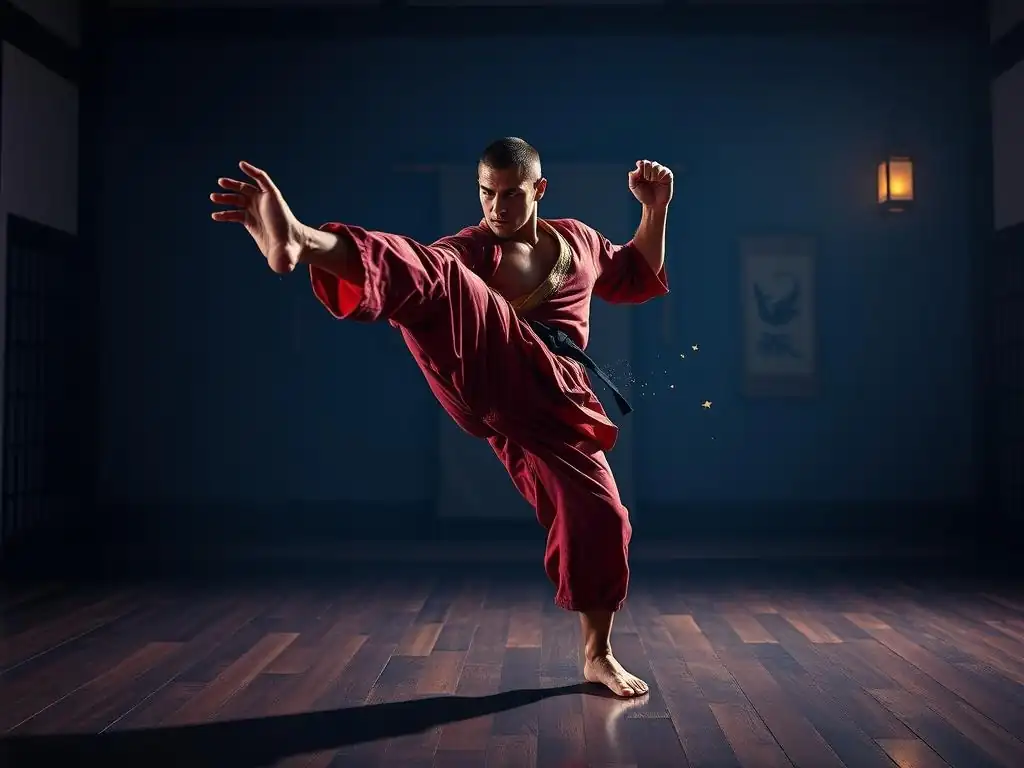
Welcome to Martial Arts Mastery, your ultimate resource for delving into the intricate world of combat disciplines! Are you ready to unlock the secrets to unshakeable balance and injury prevention? This article explores the often-overlooked, yet powerfully effective world of proprioceptive drills in martial arts. Discover how honing your body's awareness can transform your training and elevate your skills beyond the ordinary. Curious to learn how proprioception can give you a significant edge? Read on to find out!
- Introduction to Proprioception and Martial Arts Performance
- Proprioceptive Drills: Enhancing Balance and Coordination for Martial Arts
- The Link Between Proprioceptive Training and Injury Prevention in Martial Arts
- Practical Proprioceptive Drill Examples for Different Martial Arts Styles
- Integrating Proprioceptive Training into Your Martial Arts Routine
- Measuring Proprioceptive Improvement and Performance Gains
- The Importance of Consistency in Proprioceptive Training for Martial Arts Mastery
- Conclusion: Unlock Your Potential with Proprioceptive Training
-
Frequently Asked Questions
- What are proprioceptive drills and why are they important in martial arts?
- How do proprioceptive drills help prevent injuries in martial arts?
- Can you give some examples of proprioceptive drills suitable for martial artists?
- How often should martial artists incorporate proprioceptive drills into their training?
- How do proprioceptive drills relate to self-defense strategies?
- Final Reflection: Embracing the Body's Wisdom
- Unleash Your Inner Balance: Elevate Your Martial Arts Today!
Introduction to Proprioception and Martial Arts Performance
Understanding Proprioception: Your Body's Inner GPS
Proprioception is the sense of knowing where your body parts are in space without looking. It's a complex system involving sensory receptors in muscles, tendons, ligaments, and joints that send continuous signals to the brain. Think of it as your body's internal GPS or sixth sense, providing constant feedback about your posture, movement, and the relative position of your limbs. This subconscious awareness allows for smooth, coordinated actions and helps you react quickly to changes in your environment or position.
This intricate sensory feedback loop is fundamental to all physical activity, from simply standing upright to executing complex athletic maneuvers. The receptors, known as proprioceptors, are constantly firing, providing real-time data to the central nervous system. This allows the brain to make rapid adjustments to muscle tension and joint positioning, ensuring stability and control even when external forces are applied or surfaces are uneven. Without effective proprioception, simple tasks like walking on a slightly tilted surface would be challenging, and complex martial arts techniques would be impossible.
Why Proprioception Matters for Martial Artists: Balance, Stability, and Injury Prevention
For martial artists, superior proprioception is not merely an advantage; it is a necessity for peak performance and safety. The dynamic nature of martial arts, involving rapid changes in direction, explosive movements, intricate footwork, and often unstable positions, demands a highly tuned proprioceptive system. Excellent proprioception allows practitioners to maintain balance during powerful strikes, execute throws without losing footing, transition smoothly between stances, and recover quickly from off-balance situations. It underpins the stability required for generating power and the agility needed for effective evasion and defense.
Crucially, well-developed proprioception plays a significant role in injury prevention. By enhancing joint stability, particularly around the ankles, knees, hips, and shoulders, proprioceptive training helps the body react instantaneously to potentially injurious forces. For example, if you land awkwardly after a jump or are pushed off balance, your proprioceptive system signals the brain to rapidly engage stabilizing muscles, preventing excessive joint movement that could lead to sprains or strains.
Studies have shown that targeted proprioceptive drills martial arts athletes use can reduce the incidence of lower extremity injuries, such as ankle sprains, by a notable percentage, sometimes cited as reducing recurrence by up to 50-70% in athletes with previous injuries. This makes dedicated proprioceptive training a vital component of a martial artist's regimen.
Proprioceptive Drills: Enhancing Balance and Coordination for Martial Arts
Foundational Proprioceptive Exercises for Martial Arts
Building a strong foundation in proprioception begins with basic, controlled exercises that challenge balance and body awareness in stable environments before progressing to more dynamic or unstable conditions. These foundational proprioceptive drills martial arts practitioners can easily incorporate help establish the essential neural pathways for better control and stability. Starting with these allows the body to learn how to recruit stabilizing muscles effectively and improves the brain's ability to process sensory input from the joints and muscles.
Consistency with these fundamental exercises is key to developing reliable proprioceptive feedback. Even spending just 10-15 minutes several times a week on these basic drills can lead to significant improvements in balance time and body control. For instance, simply improving your single-leg stance time from 15 seconds to 60 seconds demonstrates a measurable increase in proprioceptive capability and ankle/knee stability, directly translating to better balance during martial arts movements like kicking or pivoting. These foundational exercises are the bedrock upon which more complex proprioceptive training for martial arts is built, providing the stability needed for advanced techniques.
Single Leg Stance Variations for Improved Stability
- Basic single leg stance (eyes open, eyes closed)
- Single leg stance with arm movements (circles, reaches)
- Single leg stance on different surfaces (firm ground, mat)
Balance Board and Wobble Board Exercises for Ankle and Knee Stability
- Two-foot stance on the board (rocking side-to-side, front-to-back, full circle)
- Single-foot stance on the board (with support initially)
- Squats or partial knee bends on the board
Bosu Ball Drills for Core Engagement and Proprioceptive Awareness
- Two-foot stance on the dome side (squats, weight shifts)
- Single-foot stance on the dome side
- Two-foot stance on the flat side
- Push-ups or planks with hands/feet on the dome
Advanced Proprioceptive Training for Martial Arts
Once foundational balance and stability are established, advanced proprioceptive training challenges the system under more dynamic and complex conditions, mimicking the unpredictable nature of martial arts combat. These advanced proprioceptive drills martial arts athletes use push the limits of balance control, reaction time, and coordination, requiring the body to make rapid, precise adjustments while moving or under external stimuli. Integrating these exercises helps bridge the gap between static balance and the dynamic balance needed for sparring, throws, and complex sequences.
Advanced proprioceptive training often involves multi-planar movements, higher speeds, and integrating balance challenges with other physical demands like power or agility. For example, performing agility ladder drills while adding a balance component (like pausing in a single-leg stance at the end of a sequence) or executing plyometric jumps and focusing on a stable, controlled landing rather than just the explosive power. These methods not only refine the proprioceptive system but also improve the body's ability to absorb force safely and react effectively to unexpected changes in momentum, crucial skills for avoiding injury during intense training or competition.
Agility Ladder Drills for Footwork and Coordination
- Basic ladder patterns (two-in, one-in)
- Lateral shuffle patterns
- Ickey Shuffle
- Integrating pauses in single-leg stances at the end of patterns
Plyometric Exercises with a Proprioceptive Focus
- Box jumps (focus on controlled landing)
- Lateral bounds (focus on stable landing and absorption)
- Single-leg hops (focus on balance and stability)
- Depth jumps (focus on quick, stable landing)
Dynamic Balance Training for Specific Martial Arts Movements
- Practicing kicks slowly on one leg, focusing on stability
- Executing throwing entries with a partner, focusing on maintaining balance while being off-centered
- Performing sparring drills on slightly uneven surfaces (with caution)
- Practicing rapid transitions between stances (e.g., front stance to back stance) with emphasis on stable landing
The Link Between Proprioceptive Training and Injury Prevention in Martial Arts
How Proprioception Reduces the Risk of Ankle Sprains in Martial Arts
Ankle sprains are among the most common injuries in martial arts, often occurring during landings, pivots, or rapid changes in direction. Proprioceptive training directly targets the mechanisms that prevent these injuries by improving the ankle joint's ability to sense its position and react quickly to instability. Specific proprioceptive drills martial arts practitioners perform for the ankle, such as single-leg stances on unstable surfaces or balance board exercises, strengthen the muscles surrounding the ankle and foot and, more importantly, enhance the neural feedback loop.
When the ankle begins to roll or move into a potentially injurious position, the improved proprioceptive system sends faster, more accurate signals to the brain. This allows the muscles around the ankle to contract rapidly and reflexively, stabilizing the joint and preventing the ligaments from being stretched or torn. Research consistently shows that individuals who undertake regular proprioceptive training have a significantly lower risk of ankle sprains, and for those with a history of sprains, the training can drastically reduce the likelihood of re-injury, sometimes by over 60%, demonstrating a clear protective effect.
Enhancing Knee Stability Through Proprioceptive Exercises
The knee is another joint highly susceptible to injury in martial arts, particularly issues like ligament sprains (ACL, MCL) or meniscus tears, often resulting from twisting motions, awkward landings, or collisions. Proprioceptive training plays a crucial role in enhancing knee stability by improving the control and coordination of the muscles that support the joint, including the quadriceps, hamstrings, and glutes. Exercises that challenge balance on one or both legs, especially on unstable surfaces or during dynamic movements, force these muscles to work harder to maintain alignment and stability.
Dedicated proprioceptive drills martial artists incorporate, such as single-leg squats on a Bosu ball or balancing during throws, improve the body's awareness of knee position and movement. This heightened awareness allows for quicker, more effective muscular responses when the knee is subjected to unexpected forces or torque. By training the proprioceptive system, the body becomes better equipped to automatically make micro-adjustments that keep the knee joint aligned and stable, significantly reducing the risk of excessive rotation or lateral movement that can lead to serious ligamentous injuries during the unpredictable nature of martial arts practice or competition.
Proprioceptive Training for Shoulder and Hip Health in Martial Arts
While ankle and knee injuries are prevalent, the shoulders and hips also face considerable stress in martial arts, particularly in styles involving throws, grappling, or high kicks. Proprioceptive training extends beyond the lower extremities and is vital for maintaining stability and health in these crucial joints as well. Exercises that involve balancing on the hands (like planks or handstands if applicable to the style), using resistance bands to challenge shoulder stability during movements, or performing hip-opening exercises while maintaining balance can improve proprioception in these areas.
For the hips, balance exercises that require controlled leg movements in various planes (e.g., single-leg balance with leg swings) improve the proprioceptive feedback from the hip joint and surrounding musculature, crucial for powerful kicks, throws, and maintaining a stable base. For the shoulders, incorporating stability ball push-ups or exercises with light weights focusing on controlled movement through a full range of motion enhances the joint's proprioceptive awareness, vital for absorbing impact during blocks or falls and generating power in strikes without compromising joint integrity.
Integrating these proprioceptive drills martial arts practitioners should perform helps build robust, injury-resistant joints throughout the body.
Practical Proprioceptive Drill Examples for Different Martial Arts Styles
Proprioceptive Drills for Karate: Stances and Kicks
Karate heavily relies on strong, stable stances and precise, often dynamic, kicking techniques. Proprioceptive training is essential for maintaining balance during deep stances and executing powerful kicks without falling off balance. Specific proprioceptive drills martial arts like Karate benefit from include holding deep stances (like Zenkutsu-dachi or Kokutsu-dachi) on slightly uneven surfaces or with eyes closed to challenge balance.
For kicking, practice slow, controlled kicks (Mae-geri, Mawashi-geri) while balancing on one leg, holding the kicking leg in position for several seconds before returning it with control. Perform these kicks on a slightly unstable surface like a thick mat or a folded towel to further challenge the proprioceptive system of the standing leg and hip. Another effective drill is practicing rapid transitions between stances, focusing on landing with perfect balance and stability each time, which refines the body's ability to quickly assess and stabilize in new positions.
Proprioceptive Exercises for Judo: Throws and Grappling
Judo involves frequent off-balancing, throws, and ground grappling, placing high demands on balance, stability, and the ability to react to external forces. Proprioceptive training is critical for maintaining balance while applying throws, recovering from being off-balanced, and controlling one's body during groundwork. Judo-specific proprioceptive drills martial arts practitioners can use include practicing Kuzushi (off-balancing) techniques slowly with a partner, focusing on maintaining your own stable base while disrupting theirs.
Balance on one leg while simulating gripping or pulling motions with a partner or resistance band. For groundwork, practice transitioning between positions (e.g., from guard to side control) slowly, focusing on maintaining core stability and body control. Performing Ukemi (breakfalls) with a focus on controlled landing and immediate recovery, paying attention to body awareness upon impact, also serves as a form of proprioceptive training, enhancing the body's ability to absorb force and stabilize quickly after being thrown or falling.
Proprioceptive Training for Taekwondo: Dynamic Kicking Techniques
Taekwondo is renowned for its dynamic, often aerial, kicking techniques, requiring exceptional balance, agility, and body control. Proprioceptive training is paramount for executing high, fast kicks and landing safely. Proprioceptive drills martial arts like Taekwondo should emphasize include practicing turning and spinning kicks slowly, focusing on maintaining balance throughout the rotation and achieving a stable landing.
Perform static balance exercises on one leg while holding the non-supporting leg in various kicking positions (e.g., chambered position for a roundhouse kick) for extended periods. Incorporate single-leg hops and jumps, focusing on controlled, balanced landings. Practice kicking combinations, emphasizing smooth transitions and maintaining balance between kicks. Using a balance pad or a slightly soft mat during these drills can further challenge the proprioceptive system, improving the stability required for powerful, multi-directional kicks and reducing the risk of ankle or knee injuries during complex sequences or jump kicks.
Proprioceptive Development for Boxing and Muay Thai: Footwork and Evasion
Boxing and Muay Thai rely heavily on agile footwork, rapid weight shifts, and maintaining balance while delivering and receiving strikes. Proprioceptive training enhances the fighter's ability to stay balanced while moving, pivot effectively, and recover quickly from impacts or off-balance situations. Proprioceptive drills martial arts focused on striking can utilize agility ladders for intricate footwork patterns, emphasizing quick, precise steps and maintaining a low, stable center of gravity.
Practice shadowboxing while standing on a slightly unstable surface like a balance pad or a folded mat, focusing on maintaining balance and control during punches and defensive movements. Perform drills involving rapid lateral movements and pivots, ensuring stable footing. Incorporate single-leg balance exercises, perhaps while simulating throwing a punch or checking a kick, to improve stability when weight is shifted onto one leg. These proprioceptive drills martial arts fighters use improve their ability to move fluidly, maintain balance under pressure, and reduce the risk of sprains or falls during intense exchanges.
Integrating Proprioceptive Training into Your Martial Arts Routine
Designing a Proprioceptive Training Program for Martial Artists
Integrating proprioceptive training effectively requires a structured approach that complements your existing martial arts practice without causing overtraining. A well-designed program should start with foundational exercises and gradually progress to more advanced and sport-specific drills. Ideally, dedicate 10-20 minutes to proprioceptive drills martial arts training sessions, perhaps as part of the warm-up or cool-down, or schedule separate short sessions several times a week.
The program should target the joints most vulnerable in your specific martial art (e.g., ankles and knees for kicking styles, shoulders and hips for grappling). Include a variety of exercises that challenge balance in different ways: static vs. dynamic, stable vs. unstable surfaces, eyes open vs. eyes closed. Progression should be gradual, increasing difficulty by adding movement, reducing support, closing eyes, or increasing speed. Remember to listen to your body and prioritize proper form over difficulty to maximize benefits and avoid injury.
Sample Proprioceptive Workout for Improved Balance and Injury Prevention
Here is a sample 15-minute proprioceptive workout focusing on general martial arts needs:
- Warm-up (3 mins): Light cardio, dynamic stretches (leg swings, arm circles).
- Single Leg Stance (5 mins):
- Right leg: 30 seconds eyes open, 30 seconds eyes closed. Repeat 2 times.
- Left leg: 30 seconds eyes open, 30 seconds eyes closed. Repeat 2 times.
- Single leg stance with arm circles (forward/backward): 30 seconds each leg.
- Balance Surface Work (5 mins): (Using a balance pad, folded towel, or Bosu ball)
- Two-foot stance: Rock front-to-back (30 secs), side-to-side (30 secs).
- Single-foot stance (with support if needed): 30 seconds each leg. Repeat 2 times.
- Mini-squats on two feet on the surface: 10 repetitions.
- Dynamic Balance (2 mins):
- Line walks (heel-to-toe): Walk forward and backward across the training area.
- Single-leg hops in place: 10 hops each leg, focusing on stable landing.
This sample provides a starting point. Adjust duration, repetitions, and exercise complexity based on your current skill level and the specific demands of your martial art. Consistency with these proprioceptive drills martial arts practitioners will find significantly improves their stability over time.
Progression and Regression: Adapting Proprioceptive Drills to Your Skill Level
Adapting proprioceptive drills martial arts practitioners use is crucial for continued improvement and safety.
- Regression (Making it Easier):
- Use a stable surface (firm ground) instead of unstable ones.
- Keep eyes open.
- Hold onto a wall or partner for support.
- Reduce the duration of balancing exercises.
- Perform movements slowly and deliberately.
- Start with two feet before progressing to one.
- Progression (Making it Harder):
- Move from stable to unstable surfaces (mat, balance pad, Bosu ball, wobble board).
- Close your eyes during exercises.
- Add dynamic movements (arm swings, leg swings, squats) while balancing.
- Perform exercises specific to your martial art's techniques (e.g., balancing during kicks, throw entries).
- Increase the duration or repetitions.
- Add external resistance (light weights, resistance bands) while balancing.
- Perform drills while fatigued (caution advised).
- Introduce external perturbations (light pushes from a partner - use caution and start gently).
Continuously evaluating your performance and adjusting the difficulty ensures that the proprioceptive drills martial arts training incorporates remain challenging enough to stimulate adaptation but not so difficult that they lead to frustration or injury.
Measuring Proprioceptive Improvement and Performance Gains
Assessing Your Balance and Stability Before and After Proprioceptive Training
Tracking progress is motivating and confirms the effectiveness of your proprioceptive training. A simple baseline assessment involves measuring how long you can hold a single-leg stance with eyes open and eyes closed on a firm surface. Record these times before starting a dedicated proprioceptive program. After several weeks or months of consistent training, re-test yourself under the same conditions. A significant increase in the duration you can maintain balance is a clear indicator of improved proprioceptive function and stability.
Another simple assessment is the Star Excursion Balance Test (SEBT), which measures how far you can reach in various directions with one leg while balancing on the other. Improved reach distances in multiple directions indicate enhanced dynamic balance and control. For martial arts-specific assessment, measure the stability of your stances (e.g., can you hold a deep stance for longer?)
or the control you have while executing techniques like kicks or throws, noting reduced wobbling or loss of balance. These informal assessments, combined with your subjective feeling of improved stability during training, provide valuable feedback on the impact of proprioceptive drills martial arts practice has benefited from.
Using Technology to Track Proprioceptive Progress
While not essential, technology can offer more objective and detailed insights into proprioceptive improvement. Force plates and balance boards equipped with sensors can measure sway velocity, sway area, and overall stability scores during various balance tests. These devices provide quantitative data that can precisely track subtle improvements over time that might be hard to detect with simple timing.
Wearable sensors or motion capture systems, sometimes used in advanced sports science, can analyze the quality and stability of movement during martial arts techniques. They can provide feedback on joint angles, body lean, and oscillations, helping to identify areas of instability and track how proprioceptive drills martial arts practitioners employ improve movement efficiency and control. While often expensive and less accessible, these technologies offer a high level of precision for those seeking detailed performance analysis.
Recognizing the Signs of Improved Proprioceptive Function
Beyond objective measurements, recognizing the practical signs of improved proprioception in your martial arts training is key. You'll likely notice greater ease and stability when performing techniques that previously challenged your balance, such as holding a high kick longer, transitioning smoothly between stances, or maintaining your base during grappling exchanges. Off-balance situations that once would have caused you to fall might now result in a quick, controlled recovery.
You may also feel more grounded and stable during sparring or dynamic drills, reacting more instinctively and effectively to unexpected movements or impacts. A significant sign of improved proprioception and its link to injury prevention is a reduction in minor stumbles, awkward landings, or instances where you felt your ankle or knee nearly gave out. These tangible improvements in performance and reduced near-misses are strong indicators that your proprioceptive drills martial arts training is paying off.
The Importance of Consistency in Proprioceptive Training for Martial Arts Mastery
Making Proprioceptive Drills a Habit for Long-Term Benefits
Like any aspect of martial arts training, consistency is paramount for realizing the full benefits of proprioceptive drills. Sporadic practice will yield minimal results; the nervous system requires regular stimulation to build and reinforce the neural pathways responsible for proprioception and balance. Aim to incorporate proprioceptive exercises into your routine at least 3-4 times per week, even if only for short sessions of 10-20 minutes.
Making proprioceptive drills martial arts practitioners use a non-negotiable part of their training habit ensures continuous improvement and maintenance of balance and stability. This consistent effort leads to lasting adaptations in the nervous system and musculoskeletal system, resulting in more ingrained, automatic balance responses that are reliable under the stress of training or competition. Treat these drills with the same discipline you apply to practicing forms or sparring.
Avoiding Over Training and Injury While Improving Proprioception
While consistency is important, it's also crucial to avoid overtraining, which can lead to fatigue, reduced performance, and increased injury risk. Proprioceptive training, especially on unstable surfaces, can be taxing on the stabilizing muscles and joints. Listen to your body; if you feel excessive fatigue or joint pain, reduce the intensity or frequency of your proprioceptive drills.
Ensure adequate rest and recovery between sessions. If performing proprioceptive drills martial arts athletes use after intense training, keep them lighter and shorter. Pay close attention to proper form during all exercises, particularly on unstable surfaces, to prevent awkward movements that could cause injury. Progress gradually, especially when introducing new or more challenging drills. The goal is to build resilience and stability over time, not to push through pain or excessive fatigue.
The Future of Proprioceptive Training in Martial Arts
The recognition of proprioception's critical role in performance and injury prevention is growing within the martial arts community. As sports science continues to evolve, we may see more sophisticated methods and tools for assessing and training proprioception becoming more accessible to practitioners. This could include personalized training programs based on individual balance profiles or the integration of virtual reality environments to simulate complex, unpredictable martial arts scenarios for training proprioceptive responses.
Furthermore, a deeper understanding of the specific proprioceptive demands of different martial arts styles will likely lead to the development of even more targeted and effective proprioceptive drills martial arts athletes can use to optimize their training. This focus on the body's internal sensing system represents a key area for future development, promising enhanced safety, improved performance, and greater longevity in the practice of martial arts.
Conclusion: Unlock Your Potential with Proprioceptive Training
The Unbreakable Connection Between Balance, Proprioception, and Martial Arts Excellence
Balance is not merely the absence of falling; it is a dynamic skill, constantly managed by the proprioceptive system, that is fundamental to martial arts excellence. Every movement, from the simplest stance to the most complex technique, relies on the body's ability to accurately sense its position and make instantaneous adjustments.
Superior proprioception translates directly into enhanced stability, greater control, more efficient power generation, and the agility needed to react effectively to opponents or unpredictable situations. It is the silent partner in every kick, punch, block, and throw, making the connection between a well-tuned proprioceptive system and martial arts mastery unbreakable.
Taking the Next Step: Implementing Proprioceptive Drills for Martial Arts Success.
Now that you understand the profound impact of proprioception on your martial arts journey, the next step is clear: actively integrate dedicated proprioceptive drills martial arts training demands into your regular routine. Start with foundational exercises to build a solid base, gradually progressing to more challenging and martial arts-specific movements. Be consistent, listen to your body, and track your progress.
By committing to improving your proprioceptive awareness and control, you are not only enhancing your performance capabilities but also significantly reducing your risk of injury, paving the way for safer, more effective, and more enjoyable training for years to come. Unlock your full potential by making proprioception a priority.
Frequently Asked Questions
What are proprioceptive drills and why are they important in martial arts?
Proprioceptive drills are exercises that enhance your body's awareness of its position and movement in space. They're crucial in martial arts because they improve balance, coordination, and reaction time, leading to better technique and performance.
How do proprioceptive drills help prevent injuries in martial arts?
By improving your body's awareness and control, proprioceptive drills allow you to react more effectively to unexpected movements and impacts. This reduces the risk of sprains, strains, and other injuries that commonly occur during training and sparring.
Can you give some examples of proprioceptive drills suitable for martial artists?
Examples include single-leg balance exercises, using a wobble board or balance beam, performing dynamic movements with your eyes closed, and practicing techniques on unstable surfaces. These drills challenge your body's stability and improve its ability to adapt.
How often should martial artists incorporate proprioceptive drills into their training?
Ideally, proprioceptive drills should be integrated into your routine several times a week. Even short, focused sessions can significantly improve your balance, stability, and overall performance.
How do proprioceptive drills relate to self-defense strategies?
Improved proprioception translates to faster reaction times and better control in self-defense situations. You'll be more able to maintain your balance, evade attacks, and execute techniques effectively under stressful conditions.
Final Reflection: Embracing the Body's Wisdom
The exploration of proprioceptive drills reveals more than just exercises; it unveils a profound connection to our physical selves. The ability to cultivate heightened body awareness is not merely a martial arts advantage, but a fundamental skill for navigating life with greater stability and resilience. In a world often disconnected from the physical, rediscovering this innate sense offers a powerful antidote to injury and a path towards enhanced performance in all endeavors.
The impact of proprioception extends far beyond the dojo. It's about fostering a deeper understanding of our bodies and their capabilities, allowing us to move with grace, confidence, and intention. This is especially crucial in a society increasingly reliant on technology, where physical awareness can easily be neglected. As the legendary Bruce Lee wisely stated: Knowing is not enough, we must apply. Willing is not enough, we must do.
This quote underscores the importance of actively engaging with proprioceptive training to unlock its full potential.
Now, I invite you to reflect on your own relationship with your body. Consider how you can integrate proprioceptive exercises into your daily routine, not just for improved balance and injury prevention, but for a richer, more embodied experience of life. Embrace the power of your inner wisdom, and discover the unshakeable foundation that awaits you.
Unleash Your Inner Balance: Elevate Your Martial Arts Today!
Thank you for exploring the world of proprioception and its impact on your martial arts journey! We hope you've discovered how these simple drills can significantly enhance your balance, prevent injuries, and unlock new levels of control. Now it's time to put that knowledge into action.
Here are a few steps you can take to continue your proprioceptive journey:
- Commit to incorporating five minutes of daily proprioceptive drills into your warm-up routine – your future self will thank you!
- Explore different surfaces and stances to challenge your balance further; even standing on one leg while brushing your teeth counts!
- Share this article with your training partners and discuss how you can support each other in improving your proprioception.
What’s one new proprioceptive drill you're excited to try in your next training session?