
Zanshin Explained: Sustained Awareness Beyond the Aikido Technique's End


Welcome to Martial Arts Mastery, your ultimate resource for exploring the rich tapestry of martial arts! Ever wondered what separates a skilled martial artist from a truly masterful one? Dive into our detailed analysis of Aikido zanshin sustained awareness training and unlock the secrets to maintaining unwavering focus and control, even after the technique concludes. Discover how this principle, deeply rooted in Aikido, transcends mere physical execution and elevates your understanding of martial arts to a new level. Prepare to deepen your knowledge and refine your practice.
- Understanding Zanshin in Aikido: The Essence of Sustained Awareness
- The Importance of Zanshin in Aikido Training
- Developing Zanshin: Practical Training Methods
- Zanshin in Aikido Kata and Paired Forms: Integrating Awareness into Movement
- Common Mistakes in Zanshin Practice and How to Avoid Them
- Zanshin and Self-Defense: Extending Awareness Beyond the Dojo
- Zanshin in Daily Life: Cultivating Sustained Awareness Beyond Aikido
- Advanced Concepts of Zanshin
- Conclusion: Mastering Zanshin for Enhanced Aikido Practice and Beyond
-
Frequently Asked Questions
- What is Zanshin in the context of Aikido?
- Why is Zanshin considered important in Aikido training?
- How does Zanshin extend beyond the physical execution of an Aikido technique?
- What are some practical exercises to develop Zanshin in Aikido?
- How does understanding Zanshin contribute to self-defense strategies?
- Final Reflection: Embracing Zanshin in Every Moment
- Embrace Zanshin: Extend Your Awareness!
Understanding Zanshin in Aikido: The Essence of Sustained Awareness
In the world of martial arts, particularly within the flowing dynamics of Aikido, concepts extend far beyond mere physical technique. One such profound principle is zanshin, often translated as "remaining mind" or "sustained awareness." It represents a state of focused readiness that persists not just during the execution of a movement, but critically, after the technique appears to be complete. Mastering zanshin is fundamental to effective Aikido practice and overall martial development.
This sustained awareness in Aikido is the cornerstone of true responsiveness. It's the ability to perceive threats or opportunities that may arise immediately following a technique, ensuring the practitioner is never caught off guard. Cultivating this aspect is a significant part of Aikido zanshin sustained awareness training, transforming simple movements into integrated, continuous actions rooted in constant vigilance.
What is Zanshin? Defining Sustained Awareness in Martial Arts
Zanshin is the state of relaxed but alert awareness that remains present even after a technique has seemingly concluded. It is the feeling of being completely finished with an action, yet simultaneously prepared for any subsequent event. In Aikido, this means after throwing or controlling an uke (training partner), the nage (thrower) doesn't relax completely but maintains connection, posture, and peripheral vision, ready to adapt if the uke recovers unexpectedly or if another threat emerges. This sustained awareness isn't about tension; it's about comprehensive, relaxed readiness.
This concept is not unique to Aikido, appearing in various forms across traditional Japanese arts, from swordsmanship (kendo) to archery (kyudo). In kendo, for instance, zanshin is demonstrated by maintaining a strong posture and gaze after striking, indicating readiness for a counter-attack. In Aikido, the manifestation is more fluid, involving maintaining central balance, connected posture, and a wide field of vision, ensuring that the state of sustained awareness is a continuous flow, not an interrupted pause after each technique. Effective Aikido zanshin sustained awareness training emphasizes this non-stop flow of attention.
Zanshin vs. Mushin: Differentiating Focused Awareness from No-Mind
While often discussed together, zanshin and mushin are distinct, albeit related, states of martial consciousness. Mushin, meaning "no-mind," is the state achieved during the execution of a technique or action. It's a state of flow where the mind is free from conscious thought, fear, or deliberation, allowing for spontaneous, intuitive action. Think of it as peak performance driven by instinct and training, unburdened by analytical processing in the moment of action.
Zanshin, conversely, is the state following the action. It's the conscious, yet relaxed, maintenance of sustained awareness and readiness after the mushin state has guided the immediate technique. While mushin is about acting without thinking, zanshin is about being fully present and aware after the action, ready for what comes next. Both are critical components of advanced martial skill, but they apply to different phases of engagement. Aikido zanshin sustained awareness training specifically targets this post-technique readiness.
The Importance of Zanshin in Aikido Training
Cultivating zanshin is not an optional add-on in Aikido; it is integral to developing effective, practical skill. Without sustained awareness, even perfectly executed techniques can leave a practitioner vulnerable. Zanshin ensures that the end of one movement flows seamlessly into readiness for the next potential interaction, whether it's dealing with the same uke's recovery or addressing multiple attackers.
This principle elevates Aikido from a collection of techniques into a dynamic, responsive martial art. It teaches students to think beyond the immediate throw or pin and consider the broader context of an encounter. Incorporating zanshin into every repetition is a core element of Aikido zanshin sustained awareness training, transforming rote practice into mindful, strategic development.
Why Zanshin Matters: Maintaining Control and Readiness
Zanshin is vital for maintaining control, both over the situation and oneself. After executing a technique like kokyunage (breath throw), zanshin means the nage doesn't just watch the uke fall but maintains their own balanced posture, keeps their eyes on the uke (and potentially other surroundings), and remains grounded. This readiness allows them to immediately adjust if the uke attempts to regain footing aggressively, or to transition smoothly if another partner initiates an attack in a multi-person exercise ( randori). Without this sustained awareness, the brief moment after the throw becomes a window of vulnerability.
Furthermore, zanshin is crucial for safety in the dojo. When practicing throws, maintaining zanshin means the nage remains aware of the uke's trajectory and landing, sometimes even guiding them safely down. This isn't just technical; it's about mutual respect and safety, rooted in constant, sustained awareness. Effective Aikido zanshin sustained awareness training instills this sense of responsibility and continuous readiness.
Beyond Technique: Zanshin as a State of Mind in Aikido
Zanshin transcends physical posture; it is fundamentally a state of mind. It is characterized by alertness without tension, focus without narrowness, and presence without rigidity. Developing zanshin involves training the mind to remain calm and receptive under pressure, capable of processing information from the environment without being overwhelmed. This mental discipline is as important as learning the physical movements of techniques.
This mental aspect of zanshin is closely tied to the philosophical goals of Aikido – to cultivate a peaceful yet unshakeable spirit. Maintaining sustained awareness allows a practitioner to perceive potential conflict early, potentially diffusing it before it escalates. It fosters a sense of centeredness and composure that is applicable not only in martial contexts but in daily life, reinforcing the idea that Aikido zanshin sustained awareness training is training for life itself.
Developing Zanshin: Practical Training Methods
Cultivating zanshin requires dedicated practice that goes beyond merely learning technique sequences. It involves specific exercises and a mindful approach to every movement, focusing on the state of being after the primary action. Instructors often emphasize specific points of focus to help students build this crucial skill.
Effective Aikido zanshin sustained awareness training incorporates various methods to train the body and mind to maintain this state of relaxed readiness. These methods often involve focusing on fundamental physical elements like posture, gaze, and breathing, integrating them into the execution of every technique.
Body Language and Zanshin: Maintaining Posture and Alertness
Maintaining a strong, centered posture is foundational to zanshin. After a technique, the body should not collapse or become lax. The spine should remain erect, the center of gravity low, and the joints relaxed but connected. This physical readiness allows for immediate movement in any direction. For example, after executing ikkyo and pinning the uke, maintaining zanshin involves keeping a stable base and upright posture, rather than hunching over, which restricts movement and visibility.
Body language also includes the subtle cues of readiness. Shoulders should be down and relaxed, not tensed up. Hands, even if not actively engaged in a technique, should be held in a natural, ready position, perhaps slightly in front of the body. This relaxed but alert physical state is a direct manifestation of sustained awareness. Consistent practice focusing on these details during Aikido zanshin sustained awareness training builds the physical habit of readiness.
Eye Contact and Zanshin: The Role of Visual Awareness
While direct, fixed eye contact can be confrontational and limit peripheral vision, zanshin involves a softer, wider gaze. This is often referred to as en zan no metsuke (looking at a distant mountain), meaning the eyes are focused broadly rather than fixated on a single point. After completing a technique, the practitioner's gaze should encompass the uke, their potential recovery, and the surrounding environment. This allows for awareness of other potential attackers or obstacles.
In a basic exercise like tai no henko, after turning and establishing connection, maintaining zanshin involves keeping visual awareness of the partner's position and balance, even as the turn finishes. This broad, relaxed visual sustained awareness is critical for processing information quickly and reacting appropriately. Training this aspect of zanshin is a key component of effective Aikido zanshin sustained awareness training.
Breathing Techniques for Zanshin: Cultivating Inner Calm and Focus
Calm, deep breathing is essential for maintaining zanshin. Holding one's breath or breathing shallowly creates tension and restricts fluid movement and clear thinking. After the exertion of a technique, the ability to immediately return to deep, centered breathing helps the practitioner remain calm and maintain sustained awareness rather than becoming flustered or exhausted.
Specific breathing exercises, often integrated into the warm-up or cool-down, help train this connection between breath and mental state. During technique practice, consciously exhaling with the completion of a movement and inhaling deeply while maintaining posture and awareness reinforces the link between physical action, breath, and zanshin. This integration is a vital part of Aikido zanshin sustained awareness training.
Zanshin in Aikido Kata and Paired Forms: Integrating Awareness into Movement
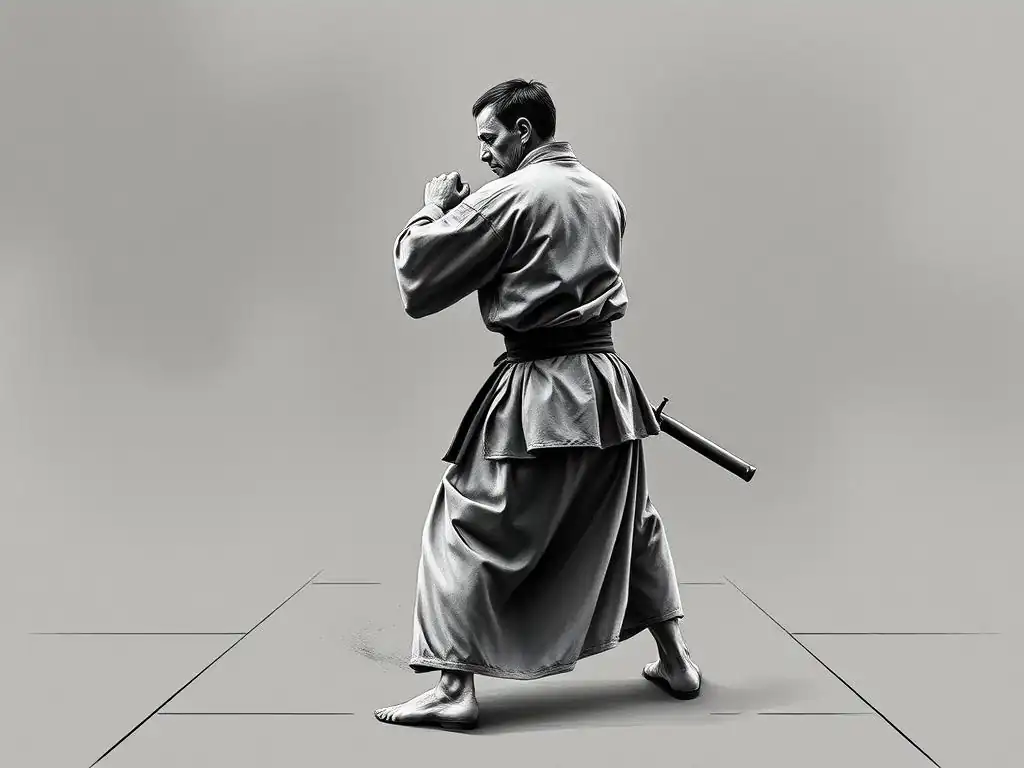
Aikido training heavily relies on kata (prearranged forms) and paired practices ( kumijo, kumitachi, tai jutsu). These structured exercises provide ideal environments for deliberately practicing zanshin. By understanding the intent behind the form – not just the movements – practitioners can focus on maintaining sustained awareness throughout the sequence, especially in the transitions and after the final declared technique.
Integrating zanshin into these practices means treating each repetition not as a standalone technique followed by a pause, but as part of a continuous flow. This approach in Aikido zanshin sustained awareness training ensures that readiness is not an afterthought but an ingrained habit woven into the very fabric of movement.
Applying Zanshin in Suwariwaza Kokyuho: Maintaining Connection After the Throw
Suwariwaza Kokyuho (seated breath power exercise) is a fundamental Aikido practice. After the nage executes the throw, the uke falls, often rolling away. Zanshin in this context means that the nage, remaining seated, maintains a strong, upright posture, keeps their gaze on the uke, and feels the connection through the ground or residual energy. They are ready if the uke were to attempt to recover and attack from the seated position.
The practitioner doesn't just sit back and relax after the uke has fallen approximately one or two body lengths away. Instead, they remain centered, feeling their connection to the earth and maintaining visual and energetic connection to the uke. This active state of sustained awareness ensures that the exercise develops more than just physical strength; it builds fundamental zanshin. Practicing Aikido zanshin sustained awareness training in this foundational exercise sets the stage for more complex movements.
Yokomenuchi Shihonage (side-of-the-head strike, four-direction throw) is a dynamic technique involving complex movement and projection. After executing the throw and the uke is sent rotating outwards, zanshin requires the nage to maintain their balance, keep their eyes on the uke's trajectory and landing, and remain poised. They are aware of where the uke is, how they are landing, and whether they are likely to bounce back or present another challenge.
This isn't just about watching the uke; it's about maintaining one's own stable base and readiness. If the uke lands awkwardly, the nage with good zanshin is prepared to adjust or even assist. If practicing in a multi-person scenario, the nage is already scanning for the next potential attacker while the first uke is still completing their fall. This layered sustained awareness is a hallmark of advanced Aikido zanshin sustained awareness training.
Common Mistakes in Zanshin Practice and How to Avoid Them
Developing zanshin is a process, and like any skill, it involves overcoming common pitfalls. Recognizing these mistakes is the first step to correcting them and deepening one's practice. Often, these errors stem from a lack of understanding of what sustained awareness truly entails or from ingrained habits of relaxing too soon.
Effective Aikido zanshin sustained awareness training includes identifying and correcting these common errors. Instructors provide feedback to help students refine their post-technique state, emphasizing continuous readiness over momentary completion.
Losing Focus: Recognizing and Rectifying Lapses in Awareness
One of the most common mistakes is losing focus immediately after the primary technique is completed. This might manifest as looking away from the uke, letting the posture collapse, or mentally checking out because "the technique is over." This lapse creates a vulnerable moment. To rectify this, practitioners must consciously extend their awareness past the perceived end point of the technique.
A practical way to train this is to have the instructor or another partner simulate a follow-up attack immediately after a technique is finished. This forces the practitioner to maintain sustained awareness and readiness. Consistent repetition with this emphasis during Aikido zanshin sustained awareness training helps build the habit of continuous focus.
Overthinking: Balancing Awareness with Natural Movement
Another mistake is trying too hard to force zanshin, leading to tension or overthinking. This can make movements stiff and unnatural, the opposite of the relaxed readiness that defines true zanshin. Zanshin should be a state of alert relaxation, not strained vigilance. The awareness should be broad and intuitive, not narrowly focused and analytical in the moment after the technique.
The key is to integrate zanshin into the natural flow of movement through consistent, mindful practice. Instead of thinking "Now I must do zanshin," the practitioner should aim for zanshin to be the natural state that persists throughout the entire interaction. This balance is refined through years of dedicated Aikido zanshin sustained awareness training.
Zanshin and Self-Defense: Extending Awareness Beyond the Dojo
While Aikido is practiced in a controlled environment, the principles, especially zanshin, are highly applicable to real-world self-defense scenarios. The ability to maintain sustained awareness is arguably more critical outside the dojo, where situations are unpredictable and threats may not come one at a time or from a single direction.
Applying zanshin in self-defense involves extending the concept of post-technique readiness to include environmental awareness and anticipating potential escalations or additional threats. This practical application is a powerful outcome of dedicated Aikido zanshin sustained awareness training.
Adapting Zanshin to Real-World Scenarios
In a real-world encounter, executing an Aikido technique might neutralize an immediate threat, but the situation rarely ends there. Maintaining zanshin means immediately assessing the environment – are there other attackers? Are there escape routes? Are there objects that could be used as weapons? The focus expands from the immediate interaction to the broader context. For example, after a successful throw, zanshin means not standing over the downed individual but creating distance while maintaining visual contact and scanning the surroundings.
This adaptation requires training beyond paired techniques, potentially incorporating scenario-based exercises that simulate unpredictable environments or multiple opponents. This type of Aikido zanshin sustained awareness training emphasizes adaptability and broad situational awareness.
Zanshin as a Preventative Measure: Awareness for Personal Safety
Perhaps the most valuable self-defense application of zanshin is its role in prevention. Zanshin isn't just post-technique; it's a state of sustained awareness that can be cultivated at all times. Being mindfully present in one's surroundings – observing people, noticing potential hazards, being aware of exits – allows one to identify and avoid dangerous situations before they even begin.
Walking down a street with zanshin means being alert to who is around you, where they are, and what their body language suggests. It's about noticing the slightly too-close follower or the group loitering in a doorway. This proactive sustained awareness, honed through Aikido zanshin sustained awareness training, is the first and often most effective line of defense.
Zanshin in Daily Life: Cultivating Sustained Awareness Beyond Aikido
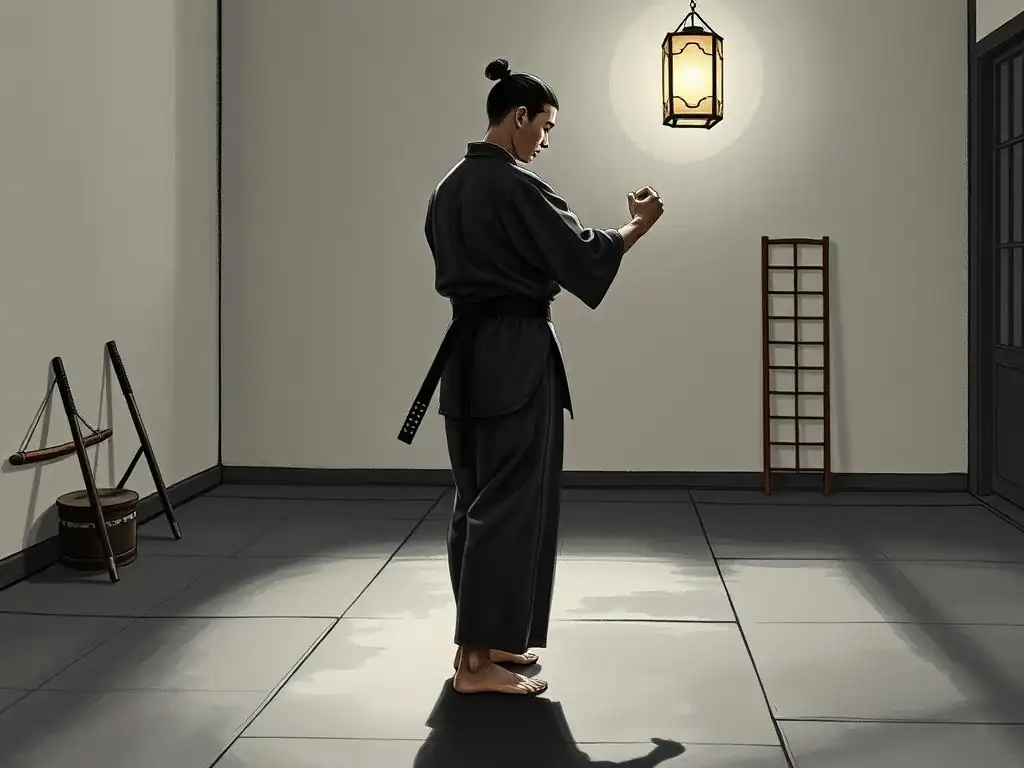
The principles of zanshin are not confined to the dojo or self-defense situations. The cultivation of sustained awareness has profound benefits for everyday life, enhancing focus, presence, and responsiveness in all interactions. Applying zanshin daily transforms it from a martial concept into a way of being.
Integrating zanshin into daily routines is a natural extension of dedicated Aikido zanshin sustained awareness training. It bridges the gap between martial practice and personal development, fulfilling Aikido's broader aim of self-improvement.
Applying Zanshin Principles to Everyday Interactions
In daily life, zanshin can manifest as being fully present during conversations – truly listening and observing, rather than thinking about what to say next. It means completing a task thoroughly while remaining aware of the next task or potential interruptions. For example, finishing writing an email (the 'technique') but immediately being aware of the need to send it and check for a reply (the 'sustained awareness').
It's about maintaining a calm, centered presence whether navigating a crowded street, participating in a meeting, or engaging with family. This continuous, relaxed sustained awareness improves focus, reduces stress, and enhances connection with others and the environment. Aikido zanshin sustained awareness training provides the framework for developing this pervasive presence.
Zanshin and Mindfulness: Enhancing Awareness in All Aspects of Life
The concept of zanshin shares significant overlap with modern mindfulness practices. Both emphasize being fully present in the moment, observing thoughts, feelings, and surroundings without judgment. Mindfulness training, often involving meditation and focused attention exercises, can complement and deepen the development of zanshin.
Conversely, the dynamic, embodied awareness cultivated through Aikido zanshin sustained awareness training offers a unique path to mindfulness, grounding the practice in physical presence and readiness. Whether sitting quietly or moving dynamically, the goal is a state of sustained awareness – alert, centered, and fully engaged with the present reality.
Advanced Concepts of Zanshin
As a practitioner deepens their understanding and practice of Aikido, their appreciation of zanshin also evolves. It becomes less about consciously remembering to be aware and more about zanshin being the natural, default state. This leads to exploring more nuanced concepts that interact with zanshin, such as kime and maai.
These advanced concepts highlight how zanshin is not isolated but interconnected with other fundamental principles of martial arts. Understanding these relationships is key to unlocking higher levels of skill and sustained awareness through dedicated Aikido zanshin sustained awareness training.
Kime and Zanshin: The Relationship Between Focus and Sustained Energy
Kime refers to focused power or decisiveness, often described as the moment of concentrated energy at the completion of a technique. While it might seem like the opposite of relaxed zanshin, they are complementary. Kime is the sharp point of the spear, while zanshin is the shaft and the hand holding it, ready for the next thrust or adjustment. A technique delivered with good kime is decisive, but without zanshin, the energy dissipates completely, leaving the practitioner vulnerable.
Zanshin ensures that the focused energy of kime doesn't vanish but transitions into a state of readiness. The power isn't lost; it's held in reserve, available for immediate use. This integration of focused power and sustained awareness is a mark of advanced practice and a goal of deep Aikido zanshin sustained awareness training.
Zanshin and the Concept of Maai: Understanding Distance and Timing
Maai refers to the critical concept of distance and timing between practitioners. Maintaining proper maai is essential during a technique, but zanshin extends this awareness after the technique. After executing a throw or a pin, the nage with good zanshin maintains awareness of the new maai relative to the uke and any other potential threats. They adjust their distance to maintain control or prepare for the next action.
For example, after a throw, zanshin dictates whether to move closer to control the uke (if safe) or move further away to create space and assess the situation. This decision is based on the sustained awareness of maai. Understanding and applying maai in the context of zanshin is a sophisticated aspect of Aikido zanshin sustained awareness training.
Conclusion: Mastering Zanshin for Enhanced Aikido Practice and Beyond
Zanshin is far more than just staying alert after a technique; it is the essence of sustained awareness that permeates every aspect of Aikido practice and extends into daily life. It is the bridge between the physical execution of a technique and the continuous, dynamic reality of an encounter. Cultivating zanshin transforms movement into meaningful action rooted in constant readiness.
From maintaining posture and gaze to integrating breathing and understanding spatial relationships, Aikido zanshin sustained awareness training provides the framework for developing this vital skill. It requires dedication, mindful repetition, and a commitment to being fully present, both on and off the mat.
The Ongoing Journey of Cultivating Sustained Awareness
Mastering zanshin is not a destination but an ongoing journey. It is a practice that deepens with every training session, every interaction, and every moment of conscious presence. As practitioners refine their physical techniques, they simultaneously refine their capacity for sustained awareness. This continuous development is at the heart of the Aikido path.
Embracing the principles of zanshin enhances not only martial effectiveness but also personal composure, situational awareness, and overall well-being. It teaches us to live with a calm, alert mind, ready to meet whatever comes next with presence and responsiveness. This commitment to Aikido zanshin sustained awareness training is a commitment to a more mindful and capable existence.
Frequently Asked Questions
What is Zanshin in the context of Aikido?
Zanshin is a Japanese term often translated as sustained awareness or remaining mind. It refers to maintaining focus and alertness after the execution of a technique. It's a crucial concept in Aikido and other martial arts.
Why is Zanshin considered important in Aikido training?
Zanshin is vital because it ensures you're prepared for follow-up attacks or unexpected situations. It prevents complacency and promotes a state of readiness even after a technique appears complete.
How does Zanshin extend beyond the physical execution of an Aikido technique?
Zanshin isn't just about physical awareness; it involves a mental and spiritual connection to your surroundings and opponent. It's about maintaining complete focus and being prepared for any eventuality.
What are some practical exercises to develop Zanshin in Aikido?
Practices include maintaining awareness after throwing an opponent, continuously scanning your surroundings, and practicing visualization techniques to anticipate potential threats. Focus on remaining present in the moment.
How does understanding Zanshin contribute to self-defense strategies?
A strong sense of Zanshin allows for proactive self-defense. By maintaining sustained awareness, you're better equipped to anticipate threats, react quickly, and adapt to changing circumstances in a real-world encounter.
Final Reflection: Embracing Zanshin in Every Moment
The exploration of Zanshin, initially framed within the context of Aikido, reveals a profound truth: sustained awareness is not merely a martial arts technique, but a vital principle for navigating life itself. The ability to maintain focus and presence beyond the immediate action, to remain vigilant and adaptable, resonates deeply in our fast-paced and unpredictable world. This article has hopefully illuminated how cultivating Zanshin can extend far beyond the dojo, influencing our interactions, decisions, and overall well-being.
The practice of Zanshin, cultivating a state of continuous awareness, has profoundly impacted my own understanding of mindfulness and presence. It's a constant reminder that true mastery lies not just in the execution of a skill, but in the sustained intention and awareness that follows. The real voyage of discovery consists not in seeking new landscapes, but in having new eyes.
- Marcel Proust. This quote perfectly encapsulates the essence of Zanshin – it's about seeing the world, and our place within it, with a heightened sense of awareness and responsibility.
Now, I invite you to consider how you can integrate the principles of Zanshin into your daily life. Can you cultivate a greater sense of presence in your interactions? Can you remain vigilant and adaptable in the face of challenges? Embrace the spirit of Zanshin, and discover the transformative power of sustained awareness in every moment.
Embrace Zanshin: Extend Your Awareness!
Thank you for exploring the concept of Zanshin and its profound implications for martial arts and beyond! Now, let's translate this awareness into action, fostering sustained presence in your daily life.
- Prioritize practicing mindfulness meditation, even for just five minutes each day, to cultivate a deeper sense of present moment awareness.
- Reflect on moments where you lost focus today: What triggered the lapse, and how can you proactively prevent such distractions moving forward?
- Share this article with a fellow martial artist and spark a discussion about how Zanshin can elevate their practice!
How will you apply the principle of Zanshin to your next training session or even a challenging conversation?