
Wrist Warriors: Protecting Your Wrists from Strikes, Blocks, and Grapples

Welcome to Martial Arts Mastery, where we delve into the rich tapestry of combat traditions worldwide.
Are your wrists ready for the rigors of training? Join us as we explore the crucial techniques for protecting your wrists in martial arts. Discover how to fortify this vulnerable joint against strikes, blocks, and grapples, ensuring you can train harder, longer, and safer. Curious about the secrets to wrist resilience? Read on to unlock the knowledge!
- Introduction: The Importance of Wrist Protection
- Understanding Wrist Anatomy and Vulnerability
- Essential Wrist Protection Techniques for Striking
- Wrist Protection Strategies for Blocking
- Grappling and Wrist Locks: Defense and Prevention
- Strengthening and Conditioning for Wrist Resilience
- Choosing the Right Wrist Support Gear
- Recovery and Rehabilitation for Wrist Injuries
- Conclusion: Long-Term Wrist Health
-
Frequently Asked Questions
- What are the most common wrist injuries in martial arts?
- How can I properly wrap my wrists for martial arts training?
- What types of exercises can strengthen my wrists and prevent injuries?
- What are some techniques in martial arts that emphasize wrist protection?
- When should I seek medical attention for a wrist injury sustained during martial arts?
- Final Reflection: The Enduring Strength of Resilient Wrists
- Strengthen Your Stance: Fortify Your Wrists Today!
Introduction: The Importance of Wrist Protection
Why Wrist Protection is Crucial
The wrists are intricate structures, vital for executing nearly every technique in martial arts, from delivering powerful strikes to controlling opponents in grappling. They act as critical links in kinetic chains, transferring force from the core and limbs into techniques. Without healthy, functional wrists, a martial artist's ability to train effectively, perform techniques safely, and progress in their discipline is severely compromised. Protecting wrists in martial arts is not merely a suggestion; it's a fundamental necessity for longevity and peak performance in any style.
Consider the forces involved in striking. A well-executed punch or palm strike can generate significant impact force – potentially hundreds or even thousands of Newtons depending on the practitioner and technique. This force travels through the hand and wrist. Similarly, blocking heavy strikes or absorbing the impact of falls places immense stress on these joints. In grappling, wrist locks are common submission techniques, and even general control holds can strain wrist ligaments and tendons if not applied or defended properly. Prioritizing the protection of these vulnerable joints is paramount to a sustainable martial arts journey.
Common Wrist Injuries in Martial Arts
Martial arts training, while rewarding, carries inherent risks, and wrist injuries are unfortunately common across many disciplines. Sprains, which involve damage to ligaments, are perhaps the most frequent, often occurring from awkward impacts during striking or sudden twists during grappling. Tendinitis, inflammation of tendons, can develop from repetitive stress, such as hitting heavy bags or performing numerous wrist-intensive techniques without adequate rest or conditioning.
More severe injuries include fractures, particularly to the small carpal bones like the scaphoid, often resulting from high-impact strikes or falls onto an outstretched hand. Dislocations, where bones are forced out of their normal alignment, can also occur, especially during grappling exchanges involving joint manipulation. Studies in combat sports often show wrist and hand injuries accounting for a significant percentage of reported incidents, sometimes ranging from 10% to over 20% of all injuries, highlighting the critical need for robust strategies for protecting wrists in martial arts.
This Guide: Mastering Wrist Protection
This guide is designed to be a comprehensive resource for martial artists seeking to safeguard their wrists throughout their training. We will delve into the anatomy of the wrist to understand its vulnerabilities, explore specific techniques for minimizing risk during striking, blocking, and grappling, and discuss essential conditioning exercises. Furthermore, we will cover the role of protective gear and the crucial steps for recovery should an injury occur.
Our aim is to provide actionable knowledge and practical strategies that you can implement immediately into your training routine. By understanding the mechanics of injury and adopting proactive measures, you can significantly reduce your risk, ensuring that your wrists remain strong and resilient, allowing you to train harder, longer, and more safely. Mastering the art of protecting wrists in martial arts is an investment in your long-term health and your continued progress as a practitioner.
Understanding Wrist Anatomy and Vulnerability
Wrist Anatomy: Bones, Ligaments, and Tendons
The wrist is a complex joint system composed of eight small carpal bones arranged in two rows, connecting the two long bones of the forearm (radius and ulna) to the five metacarpal bones of the hand. This intricate bony structure allows for a wide range of motion – flexion, extension, radial deviation (thumb side), and ulnar deviation (pinky side), as well as circumduction. However, this complexity also contributes to its vulnerability; the small size and numerous articulations of the carpal bones make them susceptible to displacement or fracture under sudden, high impact or twisting forces.
Holding these bones together and facilitating movement are numerous ligaments and tendons. Ligaments are tough, fibrous tissues connecting bone to bone, providing stability to the joints. The wrist is rich in ligaments, both internally and externally, and damage to these (sprains) can severely compromise stability and function.
Tendons, on the other hand, connect muscles to bones, allowing for movement when muscles contract. Many forearm muscles have tendons that cross the wrist to control finger and hand movements. These tendons can become inflamed (tendinitis) or even rupture under excessive strain or repetitive stress, further emphasizing the need for diligent protecting wrists in martial arts.
Impact of Strikes and Blocks on Wrist Joints
Striking techniques, such as punches, palm strikes, or even open-hand slaps, channel significant force through the wrist joint upon impact. If the wrist is not properly aligned and braced, this force can be absorbed unevenly by the carpal bones and ligaments, leading to sprains, fractures, or micro-trauma over time.
For instance, hitting a heavy bag with a bent wrist or improper fist formation can hyper-extend or hyper-flex the joint, placing excessive stress on the surrounding tissues. The speed and power generated in a strike mean that the forces involved upon impact are momentary but intense, demanding structural integrity from the wrist.
Blocking techniques also subject the wrists to considerable force. Whether blocking a punch, kick, or weapon, the wrist is often involved in absorbing or redirecting the opponent's energy. A common error is using a "soft" or relaxed wrist when blocking, which allows the joint to buckle under pressure, increasing the risk of sprains or hyperextension.
Effective blocking requires the wrist to be strong and properly positioned to either absorb impact along the length of the forearm bones or to deflect the force safely. The angle of impact and the rigidity of the wrist at that moment are crucial factors determining whether the force is safely managed or results in injury.
Grappling and Joint Locks: Wrist Vulnerability
Grappling exchanges, common in styles like Judo, Brazilian Jiu-Jitsu, Wrestling, and Aikido, present unique challenges for wrist safety. While not involving high-impact strikes, grappling frequently involves controlling limbs and applying joint locks. The wrist is a prime target for submission holds due to its relatively limited range of motion compared to ball-and-socket joints and the ease with which leverage can be applied. Techniques like straight wrist locks, rotational wrist locks, and various armbar setups can put extreme pressure on the wrist ligaments and carpal bones if applied forcefully or resisted improperly.
Beyond explicit joint locks, general grappling can strain wrists. Posting out to prevent a fall, gripping gi or limbs tightly for extended periods, or absorbing the weight of an opponent during transitions can all stress the wrist joint and its surrounding tissues. A sudden twist while trying to escape a hold or maintain balance can easily lead to a sprain. Therefore, understanding how to position your wrists defensively, how to apply control without causing unnecessary strain to your own joints, and knowing when to yield are all critical components of protecting wrists in martial arts grappling scenarios.
Factors Increasing Wrist Injury Risk
Several factors can increase a martial artist's susceptibility to wrist injuries. Lack of proper technique is paramount; incorrect fist formation in striking, improper blocking angles, or poor body mechanics in grappling all place undue stress on the wrists. Insufficient physical conditioning, specifically weak wrist flexors, extensors, and forearm muscles, means the joint lacks the muscular support needed to withstand forces encountered during training. Poor flexibility can also limit the wrist's safe range of motion, making it more prone to sprains when forced beyond its limits.
Training frequency and intensity also play a significant role. Rapidly increasing the volume or intensity of striking or grappling without adequate rest or progressive conditioning can lead to overuse injuries like tendinitis. Furthermore, training while fatigued compromises technique and reaction time, increasing the likelihood of awkward impacts or failed defenses. Pre-existing conditions, previous injuries, or inadequate warm-up before training sessions can also heighten the risk, underscoring the need for a holistic approach to protecting wrists in martial arts.
Essential Wrist Protection Techniques for Striking
Proper Fist Formation
Forming a correct and stable fist is the foundational technique for protecting wrists in martial arts striking. The ideal fist involves curling the fingers tightly into the palm, ensuring the fingernails do not dig into the skin. The thumb should then be wrapped outside of the curled fingers, resting against the side of the index and middle fingers, not tucked inside the fist. This thumb placement is crucial; tucking the thumb inside risks severe injury to the thumb bones upon impact.
When striking, the goal is for the impact force to travel straight through the bones of the forearm and wrist, hitting primarily with the knuckles of the index and middle fingers. This requires the wrist to be held firm and straight, aligned with the forearm, not bent forward (flexed) or backward (extended). A bent wrist upon impact creates a hinge, concentrating force on the delicate carpal bones and ligaments rather than allowing it to dissipate safely through the larger forearm bones. Practicing proper fist formation and maintaining a straight, locked wrist on impact is vital for minimizing injury risk.
Impact Distribution Techniques
Beyond proper fist formation, understanding how to distribute impact force is key to protecting wrists in martial arts striking. When striking a target, the goal is to connect with the strongest part of the fist (the first two knuckles) and ensure the wrist is straight, creating a direct line of force from the knuckles through the wrist, up the forearm, and into the elbow and shoulder. This alignment allows the larger, stronger bones of the forearm (radius and ulna) to absorb and dissipate the energy of the strike.
Techniques involve focusing on driving the entire body into the strike, not just the arm. Engaging the core, hips, and legs generates power and helps stabilize the striking limb. Upon impact, envision the force traveling through the target, maintaining the straight wrist alignment. Hitting soft targets (like focus mitts or heavy bags) correctly helps condition the bones and joints gradually. Avoid hitting hard, unyielding surfaces like walls or trees, especially without proper conditioning and technique, as this is a common cause of severe wrist fractures.
Wrist Bracing for Power
Effectively bracing the wrist means holding it firmly in a neutral, straight position, aligned with the forearm, just before and during impact. This rigidity prevents the wrist from bending on contact, which as discussed, can lead to injury. Think of the wrist as a solid extension of the forearm bone, not a flexible hinge. This bracing isn't about being stiff or tense throughout the entire movement, but rather about achieving a moment of solid rigidity at the point of impact.
Achieving this requires conscious effort and practice. Drills focusing on striking with a partner holding mitts, or hitting a heavy bag, provide opportunities to check wrist alignment. A common cue is to imagine pushing through the target. Strengthening the muscles that cross the wrist joint – the wrist flexors and extensors in the forearm – is also crucial, as these muscles provide the dynamic stability needed to maintain the braced position under force. Consistent practice with proper technique is the most effective way to develop this essential bracing ability for protecting wrists in martial arts striking.
Hand Wraps: A Step-by-Step Guide
Hand wraps provide crucial support and compression to the wrist and hand, helping to keep the small bones of the hand and wrist tightly packed and the wrist joint stabilized during striking. They are a vital piece of gear for anyone regularly hitting bags, mitts, or sparring. Standard cotton or elastic wraps are typically 100-180 inches long.
Here is a common wrapping method:
- Start Point: Place the thumb loop over your thumb, with the wrap material running along the back of your hand towards your wrist.
- Wrist Security: Wrap around your wrist 3-5 times, depending on the length of the wrap and your wrist size. This provides the primary wrist support. Ensure it's snug but not so tight it cuts off circulation.
- Across the Hand: From the wrist, wrap across the back of your hand to the base of your fingers.
- Knuckle Support: Wrap around your knuckles 3-4 times, keeping the fingers slightly spread. This protects the knuckles and helps hold the hand bones together.
- Weaving for Stability (Optional but Recommended): Weave the wrap between your fingers (e.g., between pinky and ring finger, then ring and middle, middle and index), bringing it back down to the wrist after each pass. This adds stability to the metacarpals.
- Return to Wrist/Hand: Continue wrapping diagonally across the back of the hand and around the wrist, covering any exposed areas and reinforcing the structure.
- Finish: Secure the wrap at the wrist using the Velcro closure. The wrap should feel supportive, keeping your wrist straight, but comfortable enough to make a fist easily.
Using hand wraps correctly is one of the most effective passive methods for protecting wrists in martial arts striking disciplines.
Wrist Protection Strategies for Blocking
Effective Blocking Techniques
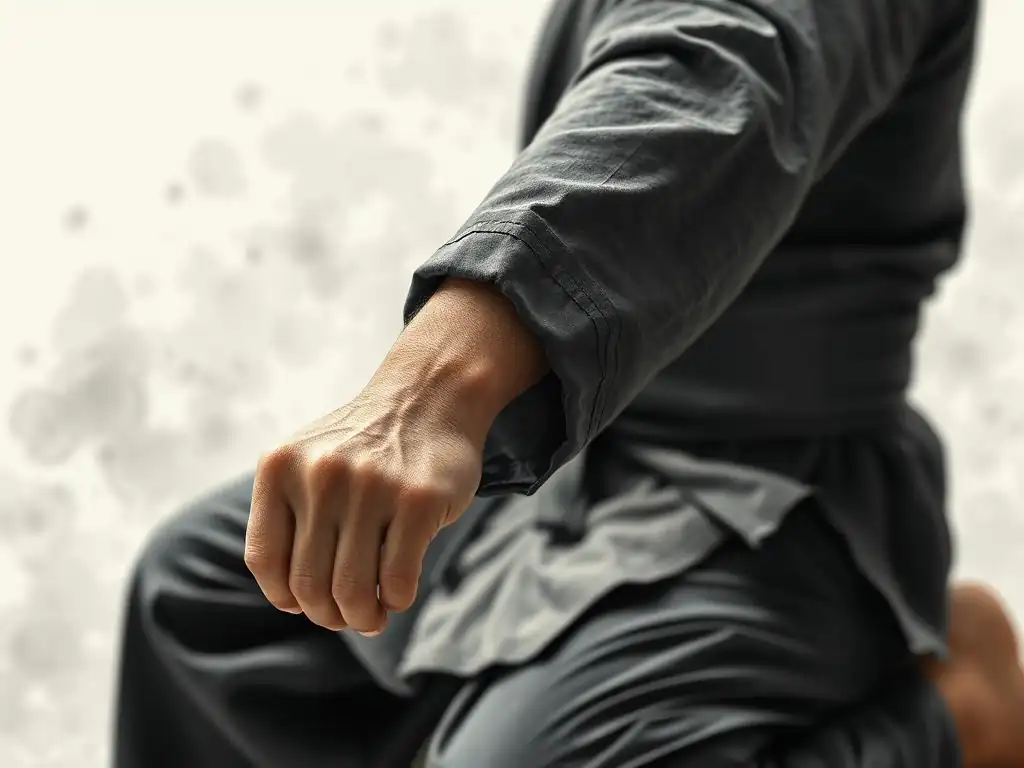
Effective blocking in martial arts involves more than just putting your arm up; it requires precise timing, positioning, and muscular tension to safely absorb or deflect incoming force. For techniques that involve the forearm or hand, maintaining a strong, slightly flexed wrist is often key. A completely relaxed wrist can buckle, while a fully extended wrist can be easily hyperextended. The ideal angle often involves a slight bend, providing some natural shock absorption while maintaining structural integrity.
Consider a forearm block against a round kick. The impact point should ideally be on the fleshy, muscular part of the forearm, away from the delicate wrist bones. However, the wrist must be braced to prevent the hand from flopping backward under the force. Similarly, in styles using open-hand blocks or parries, the wrist needs dynamic strength to control the movement and absorb incidental contact without collapsing. Learning and drilling the specific blocking mechanics taught in your style, focusing on proper wrist alignment and tension, is fundamental for protecting wrists in martial arts defensive applications.
Angling and Deflection
A highly effective strategy for protecting wrists during blocking is using angling and deflection rather than direct absorption of force. Instead of meeting an incoming strike head-on with a rigid block, angling your blocking limb allows the force to glance off or be redirected. This significantly reduces the impact energy that the wrist has to withstand. For example, slightly rotating your forearm during a block can cause a kick to slide off, or parrying a punch with an open hand at an angle can redirect its trajectory.
This principle applies across various martial arts. In Karate, blocks often involve rotational force to deflect. In Wing Chun, redirecting hand techniques are central. Even in styles focused on absorption, understanding how to slightly angle the receiving surface can mitigate peak impact forces. By minimizing the direct, perpendicular impact on the wrist joint, angling and deflection techniques are powerful tools for protecting wrists in martial arts defensive scenarios.
Strengthening Wrist Muscles for Blocking
While technique is paramount, muscular strength around the wrist joint provides crucial support for effective blocking. Strong wrist flexors (muscles on the palm side of the forearm) and extensors (muscles on the back of the forearm) help stabilize the wrist joint, preventing it from collapsing or hyper-extending under impact. These muscles act as dynamic braces, maintaining the required angle and rigidity during a block.
Regularly performing exercises that target these forearm muscles is essential. Simple wrist curls (both palm up and palm down) with light weights, reverse wrist curls, and exercises using resistance bands can build strength and endurance. Grip strength exercises, such as using hand grippers or towel pulls, also contribute to forearm strength and overall wrist stability. Developing robust forearm musculature provides the necessary foundation for executing strong, injury-resistant blocks, reinforcing the effort towards protecting wrists in martial arts.
Avoiding Blocking Mistakes
Several common mistakes can dramatically increase the risk of wrist injury during blocking. One of the most frequent is blocking with a relaxed or "floppy" wrist, which offers no structural integrity against incoming force. The wrist buckles, and the impact is absorbed poorly, often leading to sprains or hyperextension. Another error is blocking with a hyperextended wrist, pushing the hand backward; this position is inherently unstable and vulnerable to injury.
Blocking hard objects or powerful strikes without sufficient conditioning or proper technique is also a major risk factor. Attempting to absorb the full force of a heavy kick or punch head-on with inadequate forearm or wrist strength can result in significant trauma. Finally, failing to angle or deflect when appropriate, relying solely on brute force absorption, places unnecessary strain on the wrist joint. Consciously avoiding these pitfalls through mindful practice and drilling is vital for protecting wrists in martial arts blocking applications.
Grappling and Wrist Locks: Defense and Prevention
Recognizing Wrist Lock Setups
In grappling, awareness is your first line of defense against wrist locks. Understanding common setups allows you to identify danger early and react before the lock is fully applied. Many wrist locks originate from controlling the opponent's sleeve, wrist, or hand. For instance, a common setup involves an opponent securing your wrist and then using their other hand or body weight to bend it in an unnatural direction (forward, backward, or twisting).
Look for specific grips and body positions. If an opponent secures a tight grip on your wrist or fingers and starts maneuvering your hand into an awkward angle, they are likely attempting a wrist lock. Pay attention to their body mechanics – are they using their core and posture to apply leverage to your wrist? Recognizing these initial stages, such as them pinning your hand to the mat or their chest, gives you a critical window of opportunity to defend before the pressure becomes unbearable. Early recognition is key to effectively protecting wrists in martial arts grappling.
Escaping Wrist Locks
If caught in a wrist lock, attempting to muscle out or resist forcefully against the direction of the lock is often counterproductive and significantly increases the risk of injury. The ligaments and bones of the wrist are not designed to withstand the leverage a determined grappler can apply. The primary principle of escaping a wrist lock is to move with the pressure, not against it, or to change the angle of your wrist to break the opponent's leverage.
For example, if a straight wrist lock is bending your wrist backward, attempting to pull your hand straight back might only tighten the lock. Instead, try turning your hand or forearm to change the angle, or move your entire body to relieve the pressure. Sometimes, bridging or rolling can disrupt the opponent's base and break the hold. The most important escape strategy, however, is knowing when the pressure is too much and tapping out immediately to prevent serious damage. Your ego is not worth a potential several-month recovery from a ligament tear or fracture.
Strengthening Forearms and Grip
While flexibility and technique are crucial in grappling, strong forearms and a powerful grip provide a significant advantage in both applying and defending against wrist control and locks. Strong forearm muscles (flexors and extensors) provide stability to the wrist joint, making it more resilient to twisting and bending forces. A strong grip makes it harder for an opponent to establish control of your hand or wrist in the first place.
Exercises like deadlifts, pull-ups, farmer's walks, and using grip trainers directly improve grip strength and forearm musculature. Specific forearm exercises like wrist curls (with a barbell, dumbbell, or resistance band) and reverse wrist curls are also beneficial. Incorporating towel grips into your pulling exercises can further challenge your grip strength. Developing robust forearms and grip is a proactive step towards protecting wrists in martial arts grappling scenarios, making your hands harder targets for opponents.
Tapping Early
This is arguably the single most important strategy for preventing severe wrist injuries in grappling. In training, the goal is learning and improving, not "winning" at the cost of your training partner's or your own safety. Wrist locks can escalate very quickly; the point of discomfort to the point of injury can be a matter of split seconds. Unlike chokes or other joint locks where you might have a bit more time, wrist locks can snap ligaments or even break bones almost instantly if pressure is applied forcefully.
Develop the discipline to tap before you feel pain, as soon as you recognize you are caught in a legitimate lock and cannot escape. Tap when you feel significant pressure or when the joint is moving into a clearly compromised position. Training partners should apply wrist locks slowly and with control, allowing time to tap. Prioritizing safety through early tapping is a non-negotiable aspect of protecting wrists in martial arts grappling and ensures you can continue training long-term.
Strengthening and Conditioning for Wrist Resilience
Wrist Strengthening Exercises
Building strength in the muscles surrounding the wrist joint is fundamental for enhancing its resilience against the stresses of martial arts. Specific exercises target the wrist flexors and extensors in the forearm.
- Wrist Curls: Sit with your forearm resting on your thigh, palm up, holding a light dumbbell. Let your hand hang off your knee. Slowly curl the weight up towards your forearm, then lower it with control. Perform 2-3 sets of 10-15 repetitions.
- Reverse Wrist Curls: Same setup, but with your palm down. Curl the weight upwards, extending your wrist. Perform 2-3 sets of 10-15 repetitions.
- Radial and Ulnar Deviation: Hold a dumbbell with your hand palm down, thumb side up. Rest your forearm on a surface with your hand hanging off the side. Move the weight upwards by bending the wrist towards the thumb (radial deviation), then downwards (ulnar deviation is harder with this setup, often done with resistance bands or specific machines). Perform 2-3 sets of 10-15 repetitions for each movement.
Consistency is key. Performing these exercises 2-3 times per week can significantly improve the dynamic stability of your wrist joint, making it less susceptible to sprains and strains during training activities like striking and blocking.
Improving Wrist Flexibility
While strength is important, maintaining a healthy range of motion through flexibility is equally crucial for protecting wrists in martial arts. Tight wrist muscles and connective tissues can restrict movement, making the joint more prone to injury when forced beyond its normal range during techniques or falls. Regular stretching can help improve flexibility and reduce stiffness.
Gentle wrist stretches can be incorporated into your warm-up and cool-down routines.
- Wrist Extension Stretch: With your arm straight, palm facing down, use your other hand to gently push your fingers downwards, stretching the top of your wrist and forearm. Hold for 20-30 seconds.
- Wrist Flexion Stretch: With your arm straight, palm facing up, use your other hand to gently pull your fingers downwards towards your forearm, stretching the underside of your wrist and forearm. Hold for 20-30 seconds.
- Wrist Rotations: Gently rotate your wrists in circles, both clockwise and counter-clockwise, for 10-15 repetitions in each direction.
These stretches should be performed gently, without bouncing, and only to the point of a comfortable stretch, not pain. Improved flexibility allows the wrist to move more freely and safely within its natural range, reducing the risk of sprains during dynamic movements.
Forearm Strengthening Exercises
As mentioned earlier, strong forearms are intrinsically linked to wrist health and strength. The muscles in the forearm control wrist movement and provide critical support. Beyond specific wrist exercises, compound movements that heavily engage the forearms are highly beneficial.
Exercises like deadlifts, pull-ups, and rows require significant grip and forearm strength to hold onto the weight or your body. Incorporating variations like farmer's walks (carrying heavy weights for distance) or using thick bar attachments or towels on pull-up bars can further challenge forearm grip. Even simple exercises like squeezing a tennis ball or using a hand gripper regularly can contribute to overall forearm and grip strength, providing a stronger foundation for protecting wrists in martial arts. Aim to include forearm-intensive exercises in your overall strength training routine 1-2 times per week.
Nutrition for Wrist Health
While often overlooked, proper nutrition plays a role in the health and resilience of connective tissues like ligaments and tendons, which are crucial for wrist stability. Adequate protein intake is essential for the repair and synthesis of these tissues. Consuming enough collagen, a primary protein found in connective tissues, either through diet (bone broth, certain cuts of meat) or supplementation, may also support joint health, though research is ongoing.
Micronutrients are also important. Vitamin C is vital for collagen synthesis. Calcium and Vitamin D are necessary for bone health, making the carpal bones less susceptible to stress fractures. Omega-3 fatty acids, found in fish oil, flaxseeds, and walnuts, have anti-inflammatory properties that can help manage the minor inflammation that occurs during hard training. Ensuring a balanced diet rich in these nutrients supports the body's ability to repair and strengthen the structures that protect your wrists in martial arts.
Choosing the Right Wrist Support Gear
Types of Wrist Supports
Various types of wrist support gear are available, each offering different levels of support and suited for different purposes in martial arts.
- Hand Wraps: Primarily used in striking arts (boxing, Muay Thai, Karate), hand wraps provide compression to keep the small bones of the hand and wrist compact and offer moderate wrist stabilization by limiting hyperextension and hyperflexion. They fit inside gloves.
- Wrist Wraps: Thicker, shorter wraps, often with a thumb loop and Velcro closure, commonly used in weightlifting but also by some martial artists for extra support during specific strength training or conditioning drills. They offer more rigid support than hand wraps.
- Wrist Braces: More structured supports, often made of neoprene or elastic with stays or straps. These provide more significant support and limit a wider range of motion. They come in varying degrees of rigidity, from flexible compression sleeves to rigid braces used post-injury.
- Compression Sleeves: Provide light compression and warmth, which can help with circulation and minor discomfort, but offer minimal mechanical support against significant forces.
Choosing the right type depends on the activity (striking vs. grappling), the desired level of support, and whether you are using them preventatively or for managing a pre-existing condition.
Features of Effective Gear
When selecting wrist support gear for martial arts, consider several features to ensure effectiveness and comfort. For hand wraps, look for durable, slightly elastic material (cotton blends are common) that is long enough (100-180 inches) to provide adequate coverage and support. A secure thumb loop and strong Velcro closure are essential. The wraps should be washable as they absorb sweat.
For wrist wraps or braces used for more rigid support, look for materials that offer firm compression without being overly bulky. Adjustable straps or lacing allow for a customized fit and variable support levels. Some braces include metal or plastic stays for increased rigidity, suitable for specific exercises but potentially too restrictive for dynamic martial arts techniques. The gear should allow enough flexibility to perform your required movements while providing the necessary stability for protecting wrists in martial arts activities. Comfort and breathability are also important for extended training sessions.
When to Use Wrist Supports
The appropriate time to use wrist support gear depends on the type of gear and your training context. Hand wraps are standard practice for all heavy bag work, mitt work, and sparring in striking arts. They are considered essential protective equipment, akin to mouthguards or groin protectors. Using hand wraps helps absorb impact and prevent common striking-related wrist injuries.
More rigid wrist wraps or braces might be used preventatively by individuals with a history of wrist issues, or during exercises that place exceptional strain on the wrists (e.g., heavy push-ups, specific weightlifting). Post-injury, a medical professional might recommend a specific brace during the recovery or return-to-training phase to limit motion and prevent re-injury. However, relying solely on external support without addressing underlying issues like poor technique or weak conditioning is not a sustainable strategy for long-term protecting wrists in martial arts. Gear should supplement, not replace, proper training and conditioning.
Recovery and Rehabilitation for Wrist Injuries
Recognizing Wrist Injury Symptoms
Being able to recognize the signs and symptoms of a wrist injury is crucial for prompt and effective management. Ignoring symptoms or trying to "tough it out" can worsen the injury and prolong recovery time. Common symptoms include pain, which can range from a dull ache to sharp, intense pain, especially with movement or pressure. Swelling around the wrist joint is a very common indicator of inflammation or tissue damage.
Bruising may also be present, particularly with sprains or fractures. Tenderness to the touch over specific areas of the wrist can pinpoint the location of the injury. Difficulty moving the wrist through its full range of motion, stiffness, or a feeling of instability or "giving way" are also significant symptoms. In severe cases, a visible deformity might indicate a dislocation or fracture. Any persistent pain, swelling, or loss of function warrants attention when considering protecting wrists in martial arts practice.
Immediate Care: RICE Protocol
For most acute wrist injuries (sprains, strains, contusions), the immediate first aid protocol is RICE: Rest, Ice, Compression, and Elevation.
- Rest: Stop the activity that caused the injury immediately. Avoid using the injured wrist. Depending on the severity, this might mean taking a break from training for days or weeks.
- Ice: Apply an ice pack wrapped in a cloth to the injured area for 15-20 minutes at a time, several times a day. This helps reduce pain, swelling, and inflammation. Avoid applying ice directly to the skin.
- Compression: Use an elastic bandage to wrap the wrist gently but firmly. This helps reduce swelling. Ensure the wrap is not too tight, which could cut off circulation (signs include numbness, tingling, or increased pain).
- Elevation: Keep the injured wrist elevated above heart level whenever possible. This helps reduce swelling by assisting fluid drainage.
Implementing the RICE protocol promptly can significantly impact the severity and recovery time of minor to moderate wrist injuries, serving as the first step in protecting wrists in martial arts post-injury.
When to Seek Medical Attention
While RICE is effective for minor injuries, it is critical to know when to seek professional medical help. You should see a doctor if you experience any of the following:
- Severe pain that prevents you from moving your wrist or hand.
- Obvious deformity of the wrist or hand, suggesting a possible fracture or dislocation.
- Numbness, tingling, or coldness in the hand or fingers, which could indicate nerve or circulation damage.
- Inability to bear weight on your hand (e.g., pushing up from the floor).
- Swelling or bruising that is severe or worsens rapidly.
- Symptoms that do not improve after 24-48 hours of applying the RICE protocol.
A medical professional can accurately diagnose the injury (using X-rays or other imaging if necessary), recommend appropriate treatment (casting, splinting, physical therapy), and guide your safe return to training. Proper medical assessment is a non-negotiable part of protecting wrists in martial arts when injuries are suspected.
Rehabilitation Exercises
Once a wrist injury has been diagnosed and the initial healing phase is complete (often guided by a medical professional or physical therapist), a structured rehabilitation program is essential for restoring strength, flexibility, and function. Starting rehab too early or progressing too quickly can lead to re-injury.
Rehabilitation exercises typically start with gentle range of motion exercises to regain flexibility, such as the flexion, extension, and rotation stretches mentioned earlier. As healing progresses, strengthening exercises are introduced, starting with very light resistance (e.g., using therapy putty or light resistance bands) and gradually increasing weight or resistance over time. Grip strengthening exercises are also incorporated. A physical therapist can design a personalized program based on the specific injury and your martial arts discipline, focusing on movements and strengths necessary for safely returning to striking, blocking, and grappling while effectively protecting wrists in martial arts moving forward.
Conclusion: Long-Term Wrist Health
Prioritizing Wrist Protection
The journey of protecting wrists in martial arts is continuous and requires consistent effort. It begins with recognizing the vital role your wrists play and committing to safeguarding them. This means always using proper technique, whether striking, blocking, or grappling. It means understanding the forces involved in your specific discipline and taking proactive steps to mitigate risk. Don't view protective measures like hand wraps or conditioning as optional; they are fundamental aspects of responsible training.
Making wrist health a priority means being mindful of your wrists during every training session, listening to your body, and never sacrificing safety for momentary gain. It's about cultivating habits that reduce stress on the joints over the long term. This proactive approach is the cornerstone of a sustainable martial arts career, allowing you to train effectively for years to come without being sidelined by preventable injuries.
Consistent Conditioning
Building and maintaining strength and flexibility in the wrists and forearms is not a one-time task; it's an ongoing commitment. Regular conditioning exercises, performed 2-3 times per week, help ensure that the muscles and connective tissues supporting your wrist joints remain robust and capable of withstanding the demands of training. This includes targeted wrist exercises, forearm strengthening, and grip work.
Consistency in conditioning pays dividends by improving the dynamic stability of the wrist, enhancing its ability to absorb or redirect forces, and increasing its overall resilience. Just as you wouldn't neglect conditioning for your legs or core, your wrists require dedicated attention. Integrating these exercises into your regular fitness routine is a vital step in protecting wrists in martial arts effectively over the long haul.
Listen to Your Body
Perhaps the most important principle for preventing and managing injuries, including those of the wrist, is learning to listen to your body. Pain is a signal that something is wrong. Pushing through sharp pain or persistent discomfort is rarely wise and often leads to more serious injury. Pay attention to aches, stiffness, or reduced function in your wrists.
If you feel pain, assess its severity. Is it minor soreness, or does it feel like a deeper issue? Don't hesitate to reduce intensity, modify techniques, or take a rest day or two if your wrists feel stressed. If symptoms persist or worsen, seek professional medical advice. Being attuned to your body's signals and responding appropriately is a critical skill for injury prevention and a key component of protecting wrists in martial arts training.
The Rewards of Wrist Protection
Investing time and effort in protecting wrists in martial arts yields significant rewards. Healthy wrists mean you can train more consistently, allowing for steady progression in your techniques and physical conditioning. You can generate more power in strikes and maintain stronger control in grappling without the limitation or fear of pain.
Ultimately, prioritizing wrist health contributes to a longer, more fulfilling martial arts journey. It allows you to continue practicing the art you love for years, potentially decades, minimizing time lost to injury and maximizing your potential as a martial artist. The commitment to being a "Wrist Warrior" through diligent protection, conditioning, and mindful training is an investment in your body and your passion.
Frequently Asked Questions
What are the most common wrist injuries in martial arts?
The most common wrist injuries often involve sprains and strains due to impact from strikes or awkward landings during grappling. These injuries can range from mild discomfort to severe ligament damage.
How can I properly wrap my wrists for martial arts training?
Proper wrist wrapping involves using a supportive wrap to stabilize the joint. Ensure the wrap is firm but not too tight, allowing for circulation while providing support against hyper-extension or flexion.
What types of exercises can strengthen my wrists and prevent injuries?
Wrist-strengthening exercises include wrist curls, reverse wrist curls, and grip strengthening. These exercises build supporting muscles and improve the wrist's ability to withstand stress during training.
What are some techniques in martial arts that emphasize wrist protection?
Many martial arts teach techniques that prioritize proper hand positioning and impact distribution. These methods help to minimize stress on the wrist and avoid injury during blocking or striking.
When should I seek medical attention for a wrist injury sustained during martial arts?
Seek medical attention if you experience severe pain, swelling, or limited range of motion. These symptoms could indicate a serious injury requiring professional diagnosis and treatment, such as a fracture or ligament tear.
Final Reflection: The Enduring Strength of Resilient Wrists
The journey through martial arts is a testament to human resilience, but often, the unsung heroes of our movements – our wrists – are overlooked. Understanding and prioritizing wrist protection is not merely a technical detail; it's a fundamental aspect of longevity and mastery in any striking, blocking, or grappling discipline. The techniques and insights shared in this article serve as a crucial reminder that proactive care translates directly to enhanced performance and a reduced risk of debilitating injuries, allowing practitioners to continue their martial arts journey for years to come.
The influence of wrist health extends far beyond the dojo or the mat. It's about fostering a deeper connection with our bodies and understanding the intricate mechanics that allow us to execute powerful and precise movements. This awareness translates into a more mindful approach to training and a greater appreciation for the delicate balance between strength and vulnerability. The body achieves what the mind believes.
This quote encapsulates the essence of martial arts, but it also highlights the importance of believing in the resilience of our bodies, and actively working to protect them.
Now, as you step back onto the mat or into your daily life, consider the lessons learned here. Reflect on your own training habits and identify areas where you can prioritize wrist health. Let this knowledge empower you to move with greater confidence, knowing that you are actively safeguarding your body's potential. Embrace the responsibility of protecting your wrists, and you will unlock a new level of strength, precision, and longevity in your martial arts journey and beyond.
Strengthen Your Stance: Fortify Your Wrists Today!
Thanks for investing your time in learning about wrist protection – you've now got the knowledge to keep your wrists safe and strong on the mat! It's time to put that knowledge into action and build a resilient foundation for your martial arts journey.
- Prioritize wrist-strengthening exercises in your daily routine. Start with simple stretches and gradually incorporate exercises like wrist curls and reverse wrist curls with light weights. Consistency is key!
- Explore different types of wrist supports to find the perfect fit for your training style and address any specific weaknesses.
- Share this article with your training partners and spark a discussion on wrist health best practices at your dojo!
What's the first wrist-strengthening exercise you'll add to your warm-up today?