
Hiza Guruma Combinations: Linking with Other Judo Throws

Welcome to Martial Arts Mastery, your gateway to the world's fighting traditions!
Delve into the intricate dance of Judo throw combinations, where strategy meets execution. This week, we're unraveling the art of Hiza Guruma combinations, exploring how this fundamental throw can be seamlessly linked with other Judo techniques to create devastatingly effective sequences. Are you ready to elevate your Judo game? Let's unlock the secrets!
- Mastering Hiza Guruma: Introduction to Judo Throw Combinations
- Linking Hiza Guruma with Forward Throws: O Goshi and Uki Goshi
- Combining Hiza Guruma with Backward Throws: Ura Nage and Tomoe Nage
- Ashi-waza Combinations: Combining Hiza Guruma with Other Leg Techniques
- Te-waza Combinations: Linking Hiza Guruma with Hand Techniques
- Countering Opponent's Reactions: Adaptive Judo Throw Combinations Techniques
- Drills and Training Exercises for Mastering Hiza Guruma Judo Throw Combinations
- Advanced Strategies: Leveling Up Your Judo Throw Combinations Techniques
- Conclusion: The Art of Fluid Judo Throw Combinations with Hiza Guruma
-
Frequently Asked Questions
- How does Hiza Guruma fit into a Judo throw combination?
- What are some common Judo throws that combine well with Hiza Guruma?
- Why is understanding Judo throw combinations important?
- What factors should I consider when selecting a Judo throw combination?
- Are there any risks associated with attempting Judo throw combinations?
- Final Reflection: The Flowing Art of Judo Combinations
- Unlock Your Judo Potential: Master the Art of Combination!
Mastering Hiza Guruma: Introduction to Judo Throw Combinations
The Importance of Combination Techniques in Judo (Renzoku-waza)
In the dynamic world of Judo, relying on a single technique, no matter how perfected, rarely leads to consistent success against skilled opponents. The true mastery lies in the ability to seamlessly transition between techniques, creating sequences known as renzoku-waza, or combination techniques. These Judo throw combinations techniques are fundamental because they exploit an opponent's reaction to an initial attack.
When a Judoka defends against an incoming throw, they inevitably shift their weight and posture, often creating a new opening that can be immediately attacked with a different technique. This fluid chain of attacks is far more difficult to defend against than a solitary throw.
Developing proficiency in Judo throw combinations techniques significantly increases your scoring opportunities. According to analysis of competitive Judo matches, a substantial percentage of successful throws, estimated to be around 30-40% in high-level competition, are not the first attack but rather the second or third technique in a combination. This highlights that simply attempting a throw isn't enough; the ability to follow up effectively based on the opponent's defense is paramount. Mastering these sequences, particularly linking foundational throws like Hiza Guruma, allows a Judoka to maintain offensive pressure and capitalize on momentary imbalances.
Understanding Hiza Guruma's Mechanics and Setup
Hiza Guruma, or Knee Wheel, is a fundamental foot technique ( ashi-waza) in Judo, listed as the fourth technique in the Dai Ikkyo (First Group) of the Gokyo no Waza. Its core mechanic involves rotating the opponent around your stationary leg, specifically around your knee joint, which acts as a fulcrum.
The setup typically begins with kuzushi (breaking balance) towards the opponent's rear corner or side, often achieved through pulling with the hands while controlling their movement with your feet. As the opponent steps forward, you place the sole of your non-throwing foot against the outside of their forward knee, blocking its movement.
Effective execution requires precise timing and coordination between the hands and the blocking foot. The pulling hand (often the sleeve grip) creates rotation and forward momentum, while the gripping hand (lapel or collar) helps maintain control and apply downward or rotational force. The blocking foot must be firmly placed before the opponent's weight settles on that leg.
Common setups for Hiza Guruma include stepping back to draw the opponent forward or moving laterally. Success rates for the initial Hiza Guruma attempt can vary widely, but practicing the core mechanics diligently is essential before integrating it into complex Judo throw combinations techniques.
Linking Hiza Guruma with Forward Throws: O Goshi and Uki Goshi
Hiza Guruma to O Goshi Combination: A Powerful Forward Transition
The combination of Hiza Guruma into O Goshi (Major Hip Throw) is a classic example of linking an ashi-waza with a goshi-waza (hip technique). This sequence is highly effective because it capitalizes on a common reaction to a failed or defended Hiza Guruma. When an opponent successfully resists the rotation of Hiza Guruma, they often instinctively straighten up and shift their weight back onto their heels to regain balance and stability. This defensive posture, while preventing the initial foot sweep, makes them vulnerable to forward throws like O Goshi.
To execute this Judo throw combinations technique, initiate the Hiza Guruma setup, attempting to break balance and block the knee. If the opponent resists by straightening and pulling back, immediately transition your blocking foot back to a normal stance position.
Simultaneously, use your pulling hand to maintain forward momentum or pull upwards, and your gripping hand to pull the opponent tightly against your hip area as you pivot and load them onto your hip for O Goshi. This rapid change of attack direction – from attempting to rotate them around your leg to loading them onto your hip – exploits the opponent's defensive reaction and can lead to a high-amplitude throw.
Setting up Uki Goshi After a Failed Hiza Guruma Attempt
Another effective forward throw to link with Hiza Guruma is Uki Goshi (Floating Hip Throw). This combination often arises when the opponent defends Hiza Guruma by rotating away from the attack or stepping slightly sideways to avoid the knee block. While this defense might foil the Hiza Guruma, their sideways movement and rotational instability can be immediately exploited for Uki Goshi. Uki Goshi doesn't require the opponent to be loaded directly onto the hips like O Goshi; instead, it uses hip contact and rotational force to off-balance and throw them in a circular motion.
The transition from Hiza Guruma to Uki Goshi involves initiating the Hiza Guruma attack. If the opponent spins out or steps laterally to escape, maintain your grips and pivot your body towards the direction they are escaping. As you pivot, bring your hips close to theirs on the side they are moving towards.
Use your hands to continue the rotational pull, guiding them around your hip as you extend your leg on that side to create leverage. This Judo throw combinations technique is particularly useful against opponents who are agile and quick to react to foot sweeps, turning their attempt to escape into an opening for a different attack.
Combining Hiza Guruma with Backward Throws: Ura Nage and Tomoe Nage
Transitioning from Hiza Guruma to Ura Nage for Maximum Impact
Linking Hiza Guruma with Ura Nage (Rear Throw) is a less common but potentially high-impact Judo throw combinations technique. This combination capitalizes on an opponent's strong forward or downward resistance to Hiza Guruma. If you attempt Hiza Guruma and the opponent drives forward into you with significant force, trying to power through the technique or simply regain their balance by pushing back, they become vulnerable to a backward throw. Ura Nage involves arching your back and throwing the opponent over your head from a position where they are pressing heavily into you.
To execute this transition, initiate your Hiza Guruma attack. If the opponent actively resists by driving their weight forward into you, use this forward momentum against them. Maintain your grips firmly, particularly the lapel grip which can help control their upper body. As they press into you, drop your hips slightly, arch your back, and use your arms to lift and guide them over your head, throwing them backward. This requires precise timing and significant core strength but can be a devastating Judo combination throw when the conditions are right, often resulting in an Ippon (full point).
Utilizing Tomoe Nage as a Counter After Hiza Guruma
Tomoe Nage (Circle Throw) can function effectively as a follow-up or counter-attack when an opponent defends Hiza Guruma by driving forward or trying to step around the blocking leg aggressively. While Ura Nage deals with direct forward pressure, Tomoe Nage is excellent for opponents who try to circle into you or step heavily onto their front leg to regain balance. The principle is similar: use their forward momentum or heavy stance against them, but instead of a standing throw, you transition to a sacrifice technique ( sutemi-waza).
Initiate Hiza Guruma, attempting to break their balance backward or sideways. If the opponent steps heavily forward or tries to circle in aggressively to counter the leg block, drop your body backward, placing your foot (often the same one used for the Hiza Guruma block or the other one, depending on the angle) onto their lower abdomen or groin area.
Use your hands to pull them forward and over your head as you fall onto your back, completing the circular throw. This Judo throw combinations technique is particularly useful against opponents who are very forward-leaning or aggressive in their defense of ashi-waza.
Ashi-waza Combinations: Combining Hiza Guruma with Other Leg Techniques
Hiza Guruma to O Soto Gari: A Classic Judo Combination
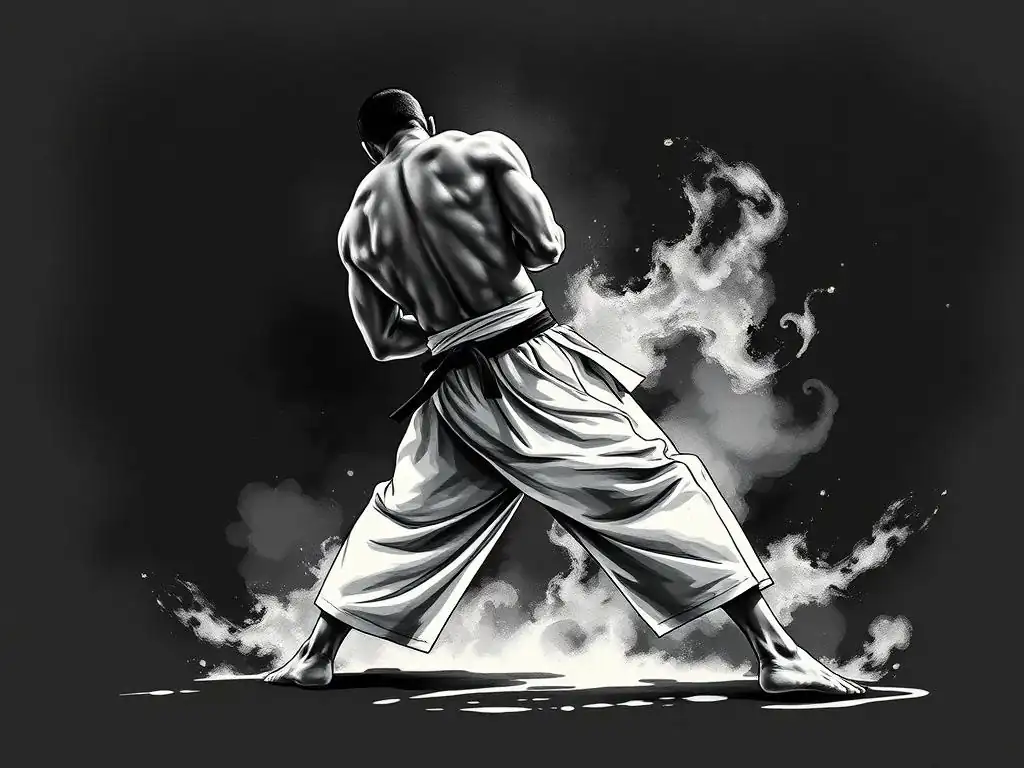
The combination of Hiza Guruma leading into O Soto Gari (Major Outer Reaping) is one of the most fundamental and widely taught Judo throw combinations techniques. It exploits a common and natural reaction to the initial Hiza Guruma attack. When a Judoka attempts Hiza Guruma on the opponent's front leg, the opponent will often instinctively step their back leg further back to widen their base and prevent the rotation. This defensive step shifts a significant amount of their weight onto that now-extended back leg, making it vulnerable to O Soto Gari.
To execute this classic sequence, initiate the Hiza Guruma attack on the opponent's leading leg, aiming to off-balance them backward. As they instinctively step their rear leg back to stabilize, immediately withdraw your Hiza Guruma blocking foot.
Pivot your body to align with their now vulnerable rear leg and sweep or reap it outwards with your leg while maintaining strong hand grips to continue the kuzushi and guide their fall. This transition is very fluid and rapid, often successful because the opponent is focused on defending the initial attack and is caught off-guard by the immediate follow-up on their other leg.
Deashi Harai to Hiza Guruma: Setting up the Initial Throw
While the focus is on Hiza Guruma combinations, it's also crucial to understand how Hiza Guruma itself can be the follow-up technique in Judo throw combinations techniques. A common setup involves starting with Deashi Harai (Forward Foot Sweep). Deashi Harai targets the opponent's foot as they step, aiming to sweep it away and break their balance forward or sideways. If the opponent successfully withdraws their foot or steps through the sweep, they often plant that foot firmly, creating a momentary anchor point and shifting their weight onto it.
This planted foot is now perfectly positioned to be targeted by Hiza Guruma. As the opponent recovers from the attempted Deashi Harai and places their weight onto the foot you just tried to sweep, immediately transition your attack.
Step back slightly with your non-throwing foot (the one not used for the sweep), pull with your hands to maintain forward momentum or rotation, and place the sole of your sweeping foot against the outside of their planted knee. This uses the opponent's recovery step from the Deashi Harai to set them up directly for the Hiza Guruma, demonstrating the interconnectedness of ashi-waza in Judo combination throws.
Hiza Guruma to Ko Uchi Gari: Exploiting Opponent's Balance
Combining Hiza Guruma with Ko Uchi Gari (Minor Inner Reaping) provides another versatile Judo throw combinations technique, particularly effective against opponents who step back or become very defensive against the initial Hiza Guruma. If you attempt Hiza Guruma and the opponent pulls their knee back or shifts their weight entirely off the targeted leg, they often end up with their weight primarily on their other leg, which might be slightly forward or level with your position. This creates an opportunity to attack the inside of that supporting leg.
Execute your Hiza Guruma attempt, aiming to off-balance and rotate. If the opponent successfully evades the block on their front leg by shifting weight back or laterally, immediately withdraw your Hiza Guruma foot. Maintain strong hand control to keep them off-balance.
Step in close to the opponent and use your foot to reap the inside of their supporting leg (the one they shifted their weight onto). This requires quick timing and coordination, transitioning from the rotational effort of Hiza Guruma to the inward reaping action of Ko Uchi Gari. It's a subtler Judo combination throw but highly effective when the opponent's weight distribution is momentarily compromised.
Te-waza Combinations: Linking Hiza Guruma with Hand Techniques
Ippon Seoi Nage After Hiza Guruma: Seamless Transition
Linking Hiza Guruma with Ippon Seoi Nage (One-Arm Standing Shoulder Throw) is a powerful example of combining an ashi-waza with a te-waza (hand technique). This Judo throw combinations technique is effective when the opponent defends Hiza Guruma by straightening their posture and pulling their arm upwards to resist the downward or rotational pull. This upward resistance from the opponent creates tension in their sleeve grip arm and positions their body high, making them susceptible to a shoulder throw.
Initiate the Hiza Guruma setup, applying rotational and downward force. If the opponent resists by pulling upwards strongly with their sleeve grip and straightening their back, immediately release or adjust your Hiza Guruma leg block. Maintain the sleeve grip firmly and transition into the entry for Ippon Seoi Nage. This involves pulling the opponent forward and down while rotating your body under their arm, bringing their arm over your shoulder. The opponent's upward defense against Hiza Guruma can directly feed into the downward pull needed for Seoi Nage, creating a very fluid and surprising Judo combination throw.
Tai Otoshi to Hiza Guruma: Creating Opportunities
While Hiza Guruma to Tai Otoshi (Body Drop) is also possible, often starting with Tai Otoshi to set up Hiza Guruma is a more common and effective Judo throw combinations technique. Tai Otoshi is a te-waza that involves blocking the opponent's movement with your leg while pulling them forward and across your body. If the opponent successfully avoids the Tai Otoshi block by stepping over your leg or resisting the forward pull by pushing back, they can create an opening for Hiza Guruma.
Attempt the Tai Otoshi, aiming to pull them forward and block with your leg. If they manage to step around or over your blocking leg and regain their balance with a forward step, maintain your grips. As they plant that forward foot firmly after evading the Tai Otoshi, immediately pivot and place your foot against the outside of their knee for Hiza Guruma.
Their forward momentum and the planted foot from recovering from Tai Otoshi make them vulnerable to the rotational attack of Hiza Guruma. This demonstrates how failed te-waza attempts can effectively set up ashi-waza in Judo combination throws.
Countering Opponent's Reactions: Adaptive Judo Throw Combinations Techniques
Adapting to Opponent's Defense Against Hiza Guruma
Successfully executing Judo throw combinations techniques hinges entirely on reading and adapting to the opponent's reactions. Against Hiza Guruma, common defenses include:
- Stepping back with the targeted leg.
- Stepping back with the opposite leg.
- Straightening up and pulling back.
- Driving forward into you.
- Stepping sideways or circling out.
- Counter-attacking with their own technique.
Each of these reactions creates a specific body position and weight distribution that makes the opponent vulnerable to a particular follow-up throw. For example, stepping back with the opposite leg (often the rear leg) is the classic setup for O Soto Gari. Driving forward strongly makes them susceptible to backward throws like Ura Nage or sacrifice throws like Tomoe Nage.
Stepping sideways or circling out can be countered with Uki Goshi or potentially a different ashi-waza or te-waza. Mastering these adaptive Judo throw combinations techniques requires extensive practice in uchi-komi (repeating practice) and randori (free practice) to build the instinctual response to different defensive postures.
Utilizing Kuzushi to Setup Follow-up Throws
Kuzushi, the art of breaking balance, is the cornerstone of all Judo techniques, but it is especially critical for setting up effective Judo throw combinations techniques. The initial attack, such as Hiza Guruma, isn't just an attempt to throw; it's primarily an attempt to create kuzushi and provoke a reaction that will lead to a throw. A well-executed Hiza Guruma attempt, even if defended, should force the opponent to commit their weight and energy to regaining balance, leaving them momentarily vulnerable in a new direction.
For instance, when an opponent defends a Hiza Guruma by strongly posting their other leg, you've achieved kuzushi in the sense that their balance is now heavily committed to that one point. This makes that supporting leg ripe for attack with techniques like O Soto Gari or Ko Uchi Gari.
Similarly, if they pull back strongly, you've created backward kuzushi on their upper body, which can be exploited by forward throws like O Goshi or Tai Otoshi. The key is to view the initial Hiza Guruma not as a pass-or-fail attempt, but as the first step in a sequence designed to constantly disrupt the opponent's balance and transition fluidly between attacks until one is successful.
Drills and Training Exercises for Mastering Hiza Guruma Judo Throw Combinations
Solo Practice Drills to Improve Technique and Speed
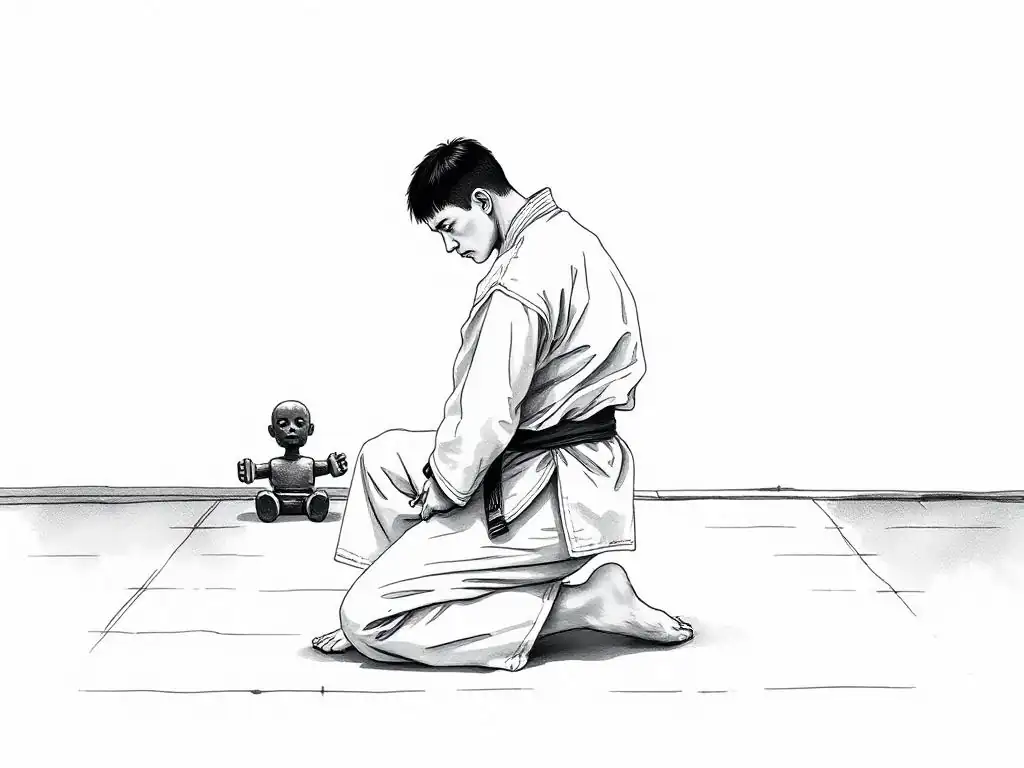
Developing fluid Judo throw combinations techniques starts with perfecting the mechanics of the individual techniques. Solo drills, often called tandoku-renshu, are invaluable for building muscle memory and improving speed without a partner's resistance. For Hiza Guruma and its combinations:
- Hiza Guruma Footwork: Practice the specific foot placement and body rotation for Hiza Guruma repeatedly, focusing on the timing of the foot block relative to an imaginary opponent's step. Perform 50-100 repetitions on each side.
- Combination Transition Simulation: Mentally visualize an opponent's reaction (e.g., stepping back to defend Hiza Guruma). Practice the footwork and body movement for the transition to the follow-up throw (e.g., O Soto Gari), executing the steps and rotation without a partner. Repeat for common combinations like Hiza Guruma to O Soto Gari, Hiza Guruma to O Goshi, and Hiza Guruma to Ko Uchi Gari.
- Grip Movement Practice: Using a resistance band or a stationary post, practice the hand movements and pulling actions required for both the initial Hiza Guruma and the transition to the follow-up technique. Focus on maintaining tension and control throughout the simulated sequence. Aim for smooth, rapid transitions.
#### Solo Drill Checklist:
- [ ] Hiza Guruma footwork (50-100 reps/side)
- [ ] Visualize & simulate Hiza Guruma -> O Soto Gari transition
- [ ] Visualize & simulate Hiza Guruma -> O Goshi transition
- [ ] Visualize & simulate Hiza Guruma -> Ko Uchi Gari transition
- [ ] Practice hand grips/pulls with resistance band for combinations
Partner Drills to Develop Timing and Coordination
Partner drills ( sotai-renshu) are essential for adding resistance, timing, and coordination to your Judo throw combinations techniques.
- Uchi-komi (Entry Practice): Perform uchi-komi for Hiza Guruma, focusing on the setup and initial kuzushi. Then, have your partner provide a specific, pre-planned reaction (e.g., stepping back heavily with the rear leg). Immediately transition and perform uchi-komi for the follow-up throw (e.g., O Soto Gari). Repeat this specific combination transition 10-20 times on each side. Cycle through different reactions and corresponding follow-up techniques.
- Nage-komi (Throwing Practice): Once comfortable with uchi-komi, progress to nage-komi, where the partner is thrown. Start slowly, focusing on the transition and safe falling. Gradually increase speed and realism. Practice specific Judo combination throws, such as Hiza Guruma into O Goshi, emphasizing the seamless flow from one technique to the next. Perform 5-10 throws per combination per side.
- Combination Flow Drill: Design a drill where you chain 2-3 potential follow-ups from Hiza Guruma. For instance, you attempt Hiza Guruma; if the partner steps back, you attempt O Soto Gari; if they defend O Soto Gari by stepping forward, you transition to Ko Uchi Gari. The partner reacts realistically (but cooperatively) to each attempted technique, allowing you to practice reading and reacting within the sequence.
#### Partner Drill Ideas:
- Hiza Guruma -> O Soto Gari Uchi-komi (Partner steps back)
- Hiza Guruma -> O Goshi Uchi-komi (Partner straightens/pulls back)
- Hiza Guruma -> Uki Goshi Uchi-komi (Partner steps sideways/circles out)
- Hiza Guruma -> O Soto Gari Nage-komi
- Hiza Guruma -> O Goshi Nage-komi
- Flow Drill: Hiza Guruma -> (Reaction A -> Throw X) OR (Reaction B -> Throw Y)
Randori Application: Implementing Combinations in Free Practice
The ultimate test for any Judo throw combinations techniques is their successful application in randori (free practice). Randori provides the realistic resistance and unpredictable reactions of a resisting opponent.
- Focus Randori: Dedicate specific randori sessions to focusing on initiating attacks with Hiza Guruma and actively looking for opportunities to transition to follow-up techniques based on your partner's defense. Don't just attempt Hiza Guruma and stop; maintain your grips and readiness to attack again.
- Observe Reactions: Pay close attention to how different partners defend your Hiza Guruma attempts. Do some consistently step back? Do others drive forward? Identifying these patterns will help you predict their reactions and select the most appropriate follow-up Judo combination throw.
- Maintain Pressure: Use combinations to maintain offensive pressure. Even if the initial Hiza Guruma doesn't break their balance significantly, the threat of the technique can cause a reaction that opens up the follow-up. Don't release your grips prematurely; stay connected and ready to transition.
- High-Intensity Rounds: Practice combinations in high-intensity randori rounds to simulate competition pressure. This helps refine timing and execution under fatigue and stress.
<q>In Randori, combinations aren't just about throwing; they're about constantly disrupting your opponent's posture and denying them the chance to launch their own attack. Hiza Guruma, as a quick Ashi-waza, is an excellent tool for initiating this disruption.</q>
Implementing these drills systematically is key to making Judo throw combinations techniques, starting with Hiza Guruma, a natural part of your Judo repertoire.
Advanced Strategies: Leveling Up Your Judo Throw Combinations Techniques
Combining Multiple Throws for Unpredictability
Moving beyond simple two-technique sequences, advanced Judo throw combinations techniques involve chaining three or even more techniques together. This level of complexity makes you incredibly unpredictable. The goal isn't necessarily to land the third technique, but to use the first two as feints or setup attempts that force the opponent into a defensive posture that makes them vulnerable to the third attack. For example, attempting Hiza Guruma, transitioning to O Soto Gari, and if they defend that by stepping forward, immediately attacking with Ko Uchi Gari or potentially even a sacrifice throw like Sumi Gaeshi.
This requires a deep understanding of how different defensive reactions create specific openings and the ability to transition rapidly between different types of techniques ( ashi-waza, goshi-waza, te-waza, sutemi-waza). It demands exceptional physical conditioning, superb grip fighting, and a highly developed sense of kuzushi and timing. While simple two-step Judo combination throws are the foundation, the ability to weave longer, unpredictable attack patterns is a hallmark of elite Judoka.
Reading Your Opponent's Movements and Intentions
At an advanced level, mastering Judo throw combinations techniques is less about pre-planned sequences and more about instantaneous reaction and reading. Elite Judoka don't just execute Combination A then Combination B; they constantly feel their opponent's weight, posture, and resistance through the grips. They anticipate reactions almost before they happen. This ability to "read" the opponent's body language and intent is developed through thousands of hours of randori.
For example, a subtle shift in weight, a slight straightening of the back, or a specific defensive grip can signal an impending reaction to your Hiza Guruma attempt. Learning to recognize these subtle cues allows you to initiate the transition to the follow-up technique milliseconds faster, catching the opponent precisely as they are becoming vulnerable. This intuitive understanding of kuzushi and reaction patterns is what separates good Judo throw combinations techniques from truly exceptional ones.
Conclusion: The Art of Fluid Judo Throw Combinations with Hiza Guruma
Emphasizing the Importance of Continuous Movement and Adaptation
Mastering Hiza Guruma combinations, and indeed all Judo throw combinations techniques, is not just about learning sequences; it's about developing the ability to maintain continuous movement and adapt instantaneously. Judo is a dynamic art, a constant push and pull, attack and defense. A successful Judoka never stops moving, never stops seeking kuzushi, and never stops looking for the next opportunity. Hiza Guruma, with its quick entry and potential for various follow-ups, is an ideal technique to build this continuous offensive mindset around.
The journey to proficiency in Judo combination throws requires dedication to perfecting individual techniques, diligent practice of transitions in cooperative drills, and fearless application in randori. It demands learning to read your opponent's body language, understanding how their defense creates your next attack, and maintaining the physical and mental readiness to switch techniques in a fraction of a second. Ultimately, the art of fluid Judo throw combinations techniques with Hiza Guruma is the art of turning your opponent's defense into your advantage, transforming a single technique into a powerful, unpredictable chain of attacks.
Frequently Asked Questions
How does Hiza Guruma fit into a Judo throw combination?
Hiza Guruma, being a leg wheel throw, is excellent for setting up follow-up techniques. It can destabilize the opponent, making them vulnerable to throws in different directions or even ground-based techniques.
What are some common Judo throws that combine well with Hiza Guruma?
Ouchi Gari and Koshi Guruma are excellent choices. Hiza Guruma can force the opponent to shift their weight, creating an opening for a reaping leg sweep or a hip wheel throw.
Why is understanding Judo throw combinations important?
Simply knowing individual throws isn't enough. Combining throws allows you to adapt to your opponent's reactions and create more opportunities for successful throws, enhancing your overall effectiveness.
What factors should I consider when selecting a Judo throw combination?
Consider your opponent's stance, reactions, and balance. Choose combinations that exploit their weaknesses and leverage your strengths, focusing on fluid transitions and maintaining control.
Are there any risks associated with attempting Judo throw combinations?
Yes, improper execution can lead to injury for both you and your opponent. Practice safely with a qualified instructor and focus on proper technique to minimize risks.
Okay, here's a final reflection tailored for your article "Hiza Guruma Combinations: Linking with Other Judo Throws," designed to resonate with readers interested in Judo throw combinations techniques:
Final Reflection: The Flowing Art of Judo Combinations
The exploration of Hiza Guruma combinations, as detailed in this article, reveals not just techniques, but a deeper understanding of the dynamic interplay within Judo. It's a reminder that Judo is not a collection of isolated throws, but a fluid system where one movement seamlessly transitions into the next, creating opportunities for victory and demonstrating the true artistry of the sport.
This continuous flow, this ability to link techniques, is what elevates Judo from a mere physical activity to a profound discipline. My own practice has been profoundly shaped by understanding these combinations, realizing that anticipation and adaptation are as crucial as the initial throw. Judo is the way to the most effective use of both physical and spiritual power. By training in attacks and defenses you refine your body and your soul and make progress in the Way.
- Jigoro Kano. This quote perfectly encapsulates the essence of Judo, highlighting the holistic development that comes from mastering these interconnected movements.
Now, consider how you can apply this principle of connection and flow to your own Judo practice. Don't just memorize individual throws; strive to understand how they connect, how one technique can set up another. Embrace the challenge of anticipating your opponent's movements and adapting your strategy accordingly. By doing so, you'll not only become a more effective Judoka, but you'll also deepen your appreciation for the beauty and complexity of this martial art.
Unlock Your Judo Potential: Master the Art of Combination!
Thank you for diving deep into the world of Hiza Guruma combinations! We hope you've gained valuable insights into linking this dynamic throw with others in your arsenal. Now, it's time to put that knowledge into action.
Here are a few things you can do to elevate your Judo game:
- Commit to drilling one Hiza Guruma combination three times a week for the next month. See how it transforms your randori.
- Share this article with your training partners and challenge them to incorporate Hiza Guruma into their own combination attacks.
- Record yourself practicing these combinations and analyze your technique. What small adjustments can you make for maximum impact?
What's the most unexpected throw you've successfully linked with Hiza Guruma? Share your experiences and inspire others in the comments below!