
Irimi Nage: A Profound Study in Dynamic Balance and Redirection


Welcome to Martial Arts Mastery, your gateway to understanding the profound world of combat arts. Ever wondered how a seemingly effortless movement can completely disrupt an opponent's balance? This article delves into the intricacies of Irimi Nage Balance Technique, exploring its dynamic application and the subtle principles that make it such a powerful tool. Discover the secrets behind this pivotal technique and unlock a deeper understanding of Aikido's core philosophy. Intrigued? Keep reading to master the art of redirection.
- Understanding Irimi Nage: Aikido's Core Throwing Technique
- The Irimi Nage Balance Technique: Disrupting Equilibrium
- Irimi Nage Variations and Applications
- Footwork and Body Mechanics in Irimi Nage
- The Role of Kuzushi (Off-Balancing) in Irimi Nage
- Irimi Nage Training Drills for Enhanced Proficiency
- Irimi Nage and Aikido Philosophy: Harmony and Redirection
- Common Mistakes in Irimi Nage and How to Correct Them
- Irimi Nage: A Journey of Skill and Refinement in Aikido
-
Frequently Asked Questions
- What is Irimi Nage and what makes it a valuable technique?
- How does Irimi Nage specifically utilize balance?
- What are some key principles behind mastering the Irimi Nage Balance Technique?
- How does the Irimi Nage Balance Technique fit into self-defense strategies?
- Where can I find more information about Irimi Nage training and the history of the technique?
- Final Reflection: Embracing the Flow of Irimi Nage
- Embrace the Flow: Transform Your Movement Today!
Understanding Irimi Nage: Aikido's Core Throwing Technique
Irimi Nage in Aikido: An Overview for Martial Arts Mastery
Irimi Nage, often translated as "entering throw," is a fundamental technique within the art of Aikido. It embodies many of the core principles taught by the founder, Morihei Ueshiba, emphasizing blending with an attacker's movement, entering their space, and using their own momentum and balance against them. Unlike techniques that rely purely on physical strength, Irimi Nage leverages positioning, timing, and the strategic disruption of an opponent's equilibrium to achieve the throw. It is a technique that showcases the dynamic nature of Aikido, requiring sensitivity and adaptability from the practitioner.
Mastering Irimi Nage is considered crucial for developing a deeper understanding of Aikido's body dynamics and philosophical underpinnings. It teaches the practitioner how to move offline from an attack, control the attacker's center, and execute a throw that redirects their energy rather than meeting it head-on. This technique is applicable against various attacks, making it a versatile tool in the Aikido practitioner's repertoire and a prime example of the effectiveness of the Irimi Nage Balance Technique.
The Essence of Irimi Nage: Entering and Throwing
At its heart, Irimi Nage is defined by the act of "entering" (Irimi) the attacker's space, moving past their line of attack rather than away from it. This immediate entry disrupts the attacker's posture and forward momentum, creating the initial opportunity for the throw. By entering, the Aikido practitioner positions themselves in a dominant angle, often behind or to the side of the attacker, where they can exert control over the attacker's center of balance.
Following the entry, the throw itself involves guiding the attacker's head and body in a circular or spiraling motion, causing them to lose their footing and fall. This guidance is achieved through subtle yet powerful controls exerted through contact points, typically the wrist, arm, and head/neck area. The effectiveness of the throw is directly tied to the quality of the entry and the practitioner's ability to maintain control while executing the necessary body mechanics, highlighting the critical role of the Irimi Nage Balance Technique in its successful application.
The Irimi Nage Balance Technique: Disrupting Equilibrium
Mastering Balance Breaking: The Key to Effective Irimi Nage
The success of Irimi Nage hinges significantly on the practitioner's ability to effectively break the attacker's balance, a concept known as kuzushi. This isn't merely about pushing or pulling; it's a dynamic process of disrupting the attacker's base and posture at the opportune moment, usually during their attack or as they recover. A well-executed Irimi Nage Balance Technique exploits the attacker's commitment to their movement, leveraging their own force to destabilize them.
Achieving effective kuzushi requires sensitivity to the attacker's weight distribution and direction of force. For example, against a strong forward strike like shomenuchi, entering past the line of attack and slightly off-center forces the attacker to overextend or twist, immediately compromising their stable base. This momentary instability is the window during which the throw is initiated, demonstrating that the Irimi Nage Balance Technique is less about brute force and more about precise timing and positioning relative to the opponent's center of gravity.
Dynamic Balance and Irimi Nage: A Symbiotic Relationship
Irimi Nage beautifully illustrates the principle of dynamic balance, not just in disrupting the attacker's equilibrium but also in maintaining one's own. As the practitioner enters and moves with the attacker, they must constantly adjust their own posture and weight distribution to remain stable and grounded. This personal stability is paramount; if the practitioner loses their own balance, they cannot effectively execute the Irimi Nage Balance Technique or the subsequent throw.
The relationship between the practitioner's balance and the attacker's imbalance is symbiotic. By maintaining a strong, centered posture, the Aikidoist creates a stable axis around which the attacker can be guided off-balance. This involves proper footwork (tai sabaki), correct hip movement, and maintaining a connection to the earth through one's hara (lower abdomen). The dynamic interplay of these elements constitutes the core of the Irimi Nage Balance Technique, allowing the practitioner to move fluidly while the attacker is rendered unstable.
Irimi Nage Variations and Applications
Different Entries for Irimi Nage: Adapting to the Attack
Irimi Nage is not a rigid, one-size-fits-all technique. Its execution depends heavily on the nature of the attack it is countering. Consequently, there are several common entry methods, each designed to address the specific angle, speed, and force of different attacks.
- Omote (Front) Entry: Typically used against frontal attacks. The practitioner moves forward and past the attacker, entering their space directly. This requires precise timing to avoid the initial strike and position oneself advantageously.
- Ura (Rear/Turning) Entry: Often used when the attack is faster or stronger, or when the practitioner needs to create more distance initially before circling in. The practitioner steps back or to the side, turning to blend with the attacker's energy before re-entering their space from a different angle.
Choosing the appropriate entry is vital for successfully applying the Irimi Nage Balance Technique, as it dictates how the initial disruption of the attacker's posture will occur. A mistimed or incorrect entry can leave the practitioner vulnerable or unable to generate the necessary leverage for the throw.
Shomenuchi, a downward strike to the head, is a classic attack scenario in Aikido training, and Irimi Nage is a common counter. Against shomenuchi, an effective Irimi Nage often utilizes an omote entry. As the attacker commits to their downward strike, the Aikidoist steps forward and to the side, entering past the attacking arm while simultaneously raising their arm or hand to guide the attacker's wrist or elbow. This entry places the practitioner inside the line of attack, disrupting the attacker's forward momentum and creating the initial kuzushi.
The practitioner then uses their body movement, particularly turning their hips and leading with their head, to guide the attacker's head downwards and around. The contact points (often controlling the attacker's arm and guiding their head/neck area) are used to maintain connection and control, leveraging the attacker's off-balance state to complete the throw. The effectiveness here stems directly from applying the Irimi Nage Balance Technique at the peak of the attacker's committed movement.
Yokomenuchi, a diagonal strike to the side of the head or neck, presents a different challenge. Countering yokomenuchi with Irimi Nage often involves an ura (turning) entry. As the attacker swings, the practitioner steps back and turns to blend with the circular energy of the strike. This allows the practitioner to avoid the initial blow and position themselves behind or to the side of the attacker.
Once blended, the practitioner re-enters the attacker's space, often coming in close and gaining control of the attacker's arm and body. The throw then proceeds similarly to the shomenuchi counter, guiding the attacker's head and body off-balance using circular motion and body mechanics. The ura entry is key here for safely entering the attacker's space after the peak of their lateral attack, demonstrating how the application of the Irimi Nage Balance Technique adapts to the attack vector.
Footwork and Body Mechanics in Irimi Nage
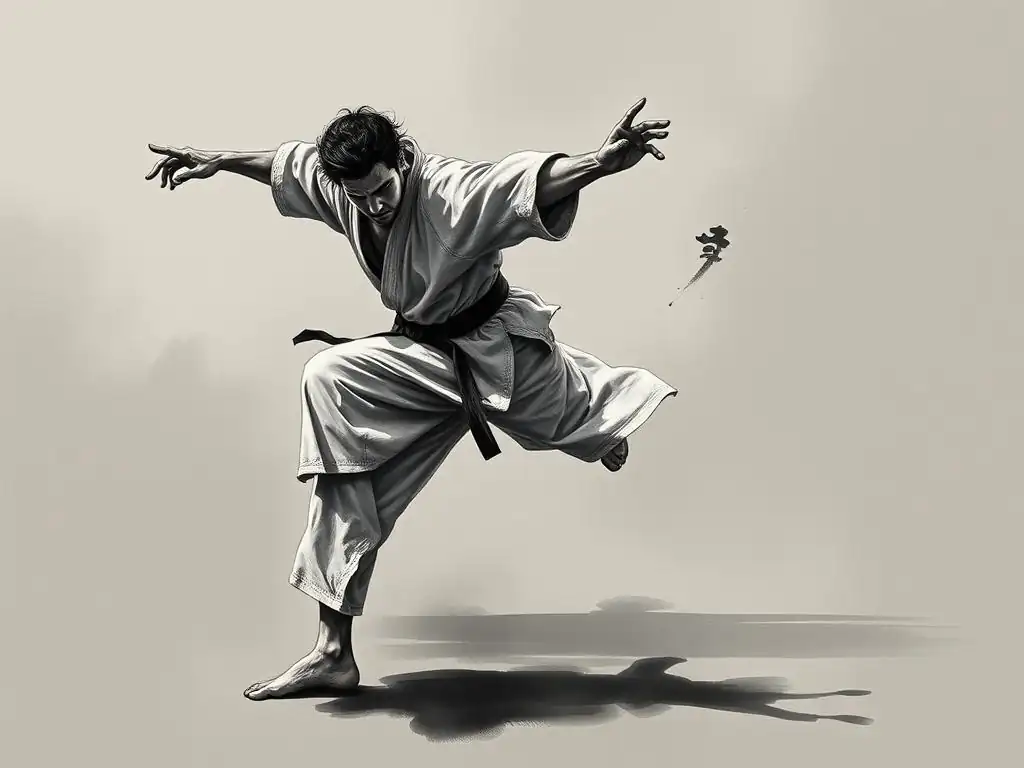
The Importance of Proper Footwork for Irimi Nage Execution
Proper footwork, or tai sabaki, is absolutely fundamental to executing Irimi Nage effectively. It is the engine that drives the entry, positions the practitioner correctly relative to the attacker, and enables the maintenance of one's own balance while disrupting the attacker's – the core of the Irimi Nage Balance Technique. Footwork isn't just about moving the feet; it's about moving the entire body as a connected unit, originating power and stability from the hips and core.
Specific footwork patterns, such as irimi (entering step) and tenkan (turning step), are essential for navigating the space around the attacker and achieving the correct angle for the throw. For instance, an irimi step might involve stepping forward and across the attacker's line of advance, while a tenkan step involves pivoting on one foot while bringing the other foot around. Precise foot placement and timing ensure that the practitioner is in a stable, powerful position to apply kuzushi and execute the throw, directly supporting the effectiveness of the Irimi Nage Balance Technique.
Body Rotation and Centering: Generating Power in Irimi Nage
Beyond just footwork, the rotation of the body, particularly the hips and torso, is crucial for generating the power and guiding motion needed for Irimi Nage. The throw is not primarily powered by the arms, but by the rotation of the practitioner's center. By leading with the hips and maintaining a strong connection through the core, the practitioner can effectively transfer their body weight and rotational energy into the technique.
Maintaining a strong, centered posture throughout the technique is also vital. This involves keeping the spine aligned, the shoulders relaxed, and the weight grounded through the legs and feet. A stable center allows the practitioner to absorb and redirect the attacker's energy without becoming destabilized themselves. This centered rotation is a key component of the Irimi Nage Balance Technique, ensuring that the practitioner remains balanced while imparting powerful rotational force to the off-balanced attacker.
Avoiding Common Footwork Mistakes in Irimi Nage
Several common footwork errors can undermine the effectiveness of Irimi Nage and compromise the practitioner's safety. One frequent mistake is stepping too far or not far enough during the entry, which can leave the practitioner out of position or vulnerable to follow-up attacks. Another is failing to move the hips and body as a unit, resulting in stiff, disconnected movement that lacks power and fluidity.
Additionally, lifting the weight too high or becoming rooted and static instead of maintaining dynamic movement hinders the ability to adjust and respond to the attacker's reactions. Correcting these issues involves diligent practice of basic Aikido footwork drills ( tai sabaki) and focusing on originating movement from the hips and hara. Developing smooth, adaptable footwork is essential for applying the Irimi Nage Balance Technique dynamically and effectively in varied situations.
The Role of Kuzushi (Off-Balancing) in Irimi Nage
Applying Kuzushi to Maximize Irimi Nage Effectiveness
As previously mentioned, kuzushi is the critical phase of off-balancing the attacker, and its effective application is what makes Irimi Nage work without requiring superior strength. Kuzushi in Irimi Nage isn't a single action but a continuous process that begins with the entry and continues until the attacker is thrown. It involves subtly or overtly disrupting the attacker's connection to the ground, their posture, or their intended direction of movement.
Specific methods for applying kuzushi in Irimi Nage include:
- Entering past their line of attack: This forces them to adjust their weight or twist.
- Applying pressure at specific points: Such as under the chin, on the back of the neck, or controlling an arm to pull/guide them off-balance.
- Utilizing their momentum: Blending with their forward energy and redirecting it in a way that causes them to overextend.
The goal of kuzushi is to create a moment or period where the attacker cannot effectively resist or regain their posture, making them susceptible to the throw. This precise application of the Irimi Nage Balance Technique is what distinguishes a powerful, effortless throw from a struggle.
Using Atemi (Strikes) to Create Openings for Irimi Nage
While Aikido is often characterized by its non-violent philosophy, the use of atemi (strikes) is present, primarily as a means to disrupt an attacker's focus or posture, thereby creating an opening for a technique like Irimi Nage. Atemi are not typically intended to cause serious injury but rather to momentarily startle, distract, or shift the attacker's weight, facilitating the application of kuzushi.
For example, a light, quick strike to the face ( men) or solar plexus ( suigetsu) delivered just before or during the entry for Irimi Nage can cause the attacker to flinch or momentarily tense up, disrupting their balance and concentration. This fleeting disruption provides the practitioner with the crucial second needed to establish control and apply the Irimi Nage Balance Technique effectively. The strike itself isn't the technique, but a tool to enhance the opportunity for the throw.
Irimi Nage Training Drills for Enhanced Proficiency
Solo Practice Drills for Irimi Nage Body Movement
Developing the correct body mechanics and footwork for Irimi Nage can be significantly enhanced through solo practice. These drills focus on building muscle memory, improving coordination, and understanding the flow of movement without the added variable of a partner's resistance.
Common solo drills include:
- Basic Irimi Tenkan: Practicing the fundamental entering and turning steps repeatedly, focusing on smooth weight transfer and hip rotation.
- Imaginary Attack Entry: Visualizing an attacker and practicing the entry movement for different attacks ( shomenuchi, yokomenuchi), ensuring proper angle and timing.
- Arm and Body Coordination: Moving the arms in the guiding motion of the throw while coordinating with the body's rotation, ensuring the entire body moves as a unit.
These solo exercises are crucial for internalizing the rhythm and feel of the technique, laying a solid foundation for applying the Irimi Nage Balance Technique effectively in partnered practice.
Partner Drills for Developing Irimi Nage Timing and Sensitivity
Partner drills are essential for learning to apply Irimi Nage against resisting or moving opponents and for developing the sensitivity needed to feel and respond to their energy. These drills progress from compliant partners to more dynamic and unpredictable scenarios.
Examples of partner drills:
- Basic Irimi Nage with Compliant Partner: Attacker offers a simple, committed attack, allowing the practitioner to focus on executing the technique with proper form.
- Progressive Resistance Drills: Attacker gradually adds more resistance or varies the speed of the attack, forcing the practitioner to adapt their timing and application of the Irimi Nage Balance Technique.
- Feeling the Kuzushi: Partners take turns attacking and receiving, with the focus on the receiver providing feedback on when and how their balance is being broken.
These drills build the ability to apply the technique in realistic situations, emphasizing the dynamic nature of the Irimi Nage Balance Technique against a live opponent.
Advanced Irimi Nage Drills: Integrating Multiple Attacks
Once the basic mechanics and timing are understood, advanced drills involve applying Irimi Nage against a variety of attacks and in more complex scenarios.
- Multiple Attackers: Practicing Irimi Nage when attacked by more than one person, requiring rapid transitions and spatial awareness.
- Random Attacks: Partner initiates different attacks without pre-arrangement, forcing the practitioner to quickly identify the attack and choose the appropriate entry and application of the Irimi Nage Balance Technique.
- Technique Transitions: Practicing transitioning from an attempted Irimi Nage to another technique if the initial attempt is blocked or countered.
These advanced drills push the practitioner to integrate Irimi Nage into a more fluid and adaptive response system, simulating the unpredictable nature of real-world encounters.
Irimi Nage and Aikido Philosophy: Harmony and Redirection
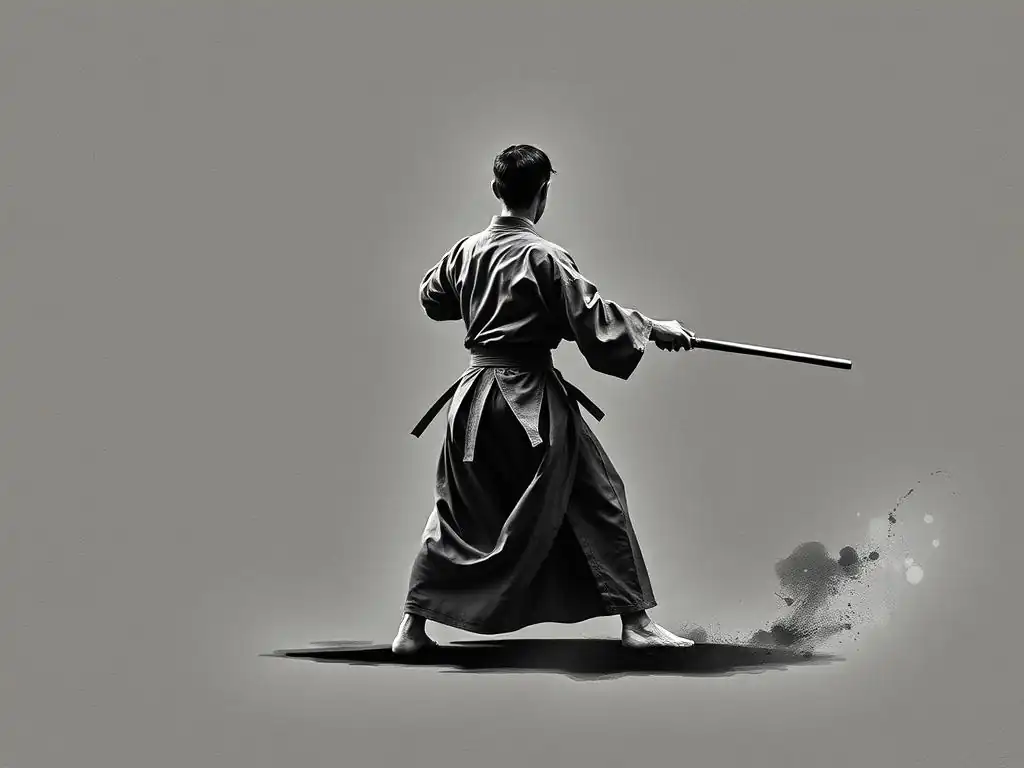
The Philosophical Underpinnings of Irimi Nage: Non-Resistance
Irimi Nage deeply embodies Aikido's core philosophical principle of non-resistance and blending. Rather than meeting force with equal or greater force, which creates conflict and collision, Irimi Nage seeks to harmonize with the attacker's energy. The act of "entering" allows the practitioner to move with the attack, joining their movement to the attacker's, rather than opposing it.
This blending ( awase) allows the practitioner to control the attacker's center and redirect their committed energy. The throw itself is not a violent imposition of will but a consequence of the attacker's own off-balance state, created by the practitioner's skillful timing and positioning. This reflects the Aikido ideal of resolving conflict by neutralizing the attack without necessarily harming the attacker, showcasing the philosophical depth embedded within the Irimi Nage Balance Technique.
Irimi Nage as an Expression of Aikido's Principles
Irimi Nage serves as a powerful physical expression of several key Aikido principles:
- Aiki: Blending and harmonizing with the opponent's energy.
- Kuzushi: Breaking the opponent's balance.
- Tai Sabaki: Fluid body movement and positioning.
- Kokyu Ryoku: Breath power or coordinated internal strength.
Through the practice of Irimi Nage, students learn to integrate these principles into dynamic action. The technique requires sensitivity to the attacker's ki (energy/intent), precise timing to apply kuzushi, and efficient body mechanics ( tai sabaki and kokyu ryoku) to execute the throw while maintaining their own center. It is a microcosm of Aikido practice, demonstrating how physical technique is inseparable from philosophical understanding and the mastery of the Irimi Nage Balance Technique.
Common Mistakes in Irimi Nage and How to Correct Them
Problems with Entry and Positioning in Irimi Nage
One of the most common errors in Irimi Nage is incorrect entry and positioning. Practitioners might step too late, too far, or at the wrong angle, failing to get inside the attacker's space effectively. This often results in being hit by the attack or being unable to establish control over the attacker's center.
Correction involves:
- Focusing on timing: Practice entering with or just before the peak of the attacker's commitment.
- Drilling tai sabaki: Repeatedly practicing the specific footwork patterns for different attacks to build muscle memory and spatial awareness.
- Entering close: Overcoming the natural instinct to pull away and instead commit to entering past the attacker, getting close to their center.
Correcting entry issues is foundational, as a poor entry compromises the entire Irimi Nage Balance Technique from the start.
Ineffective Kuzushi: Weakening the Irimi Nage Technique
Another frequent mistake is failing to apply effective kuzushi. This can happen if the practitioner tries to rely on strength rather than timing and positioning, or if they lose connection with the attacker during the technique. Without proper off-balancing, the throw becomes a struggle against the attacker's stable base.
Correction involves:
- Increased sensitivity: Learning to feel the attacker's weight distribution and direction of force.
- Timing the disruption: Applying pressure or redirection when the attacker is most vulnerable (e.g., stepping, striking, or recovering).
- Maintaining connection: Keeping appropriate contact points to guide the attacker's body and maintain their off-balance state throughout the throw, reinforcing the Irimi Nage Balance Technique.
Mastering kuzushi requires patience and sensitivity, focusing on leverage and timing over brute force.
Lack of Commitment: Completing the Irimi Nage Throw
Sometimes, practitioners successfully enter and apply some kuzushi but fail to fully commit to the throw, resulting in the attacker regaining balance or the technique looking incomplete. This can stem from hesitation, insufficient body rotation, or losing connection with the attacker.
Correction involves:
- Committing the body: Ensuring the entire body, led by the hips and head, rotates fully to guide the attacker through the throwing motion.
- Maintaining connection and flow: Keeping continuous, fluid contact with the attacker, guiding them seamlessly through the throw rather than pushing or pulling intermittently.
- Following through: Completing the motion fully, ensuring the attacker is guided safely to the ground.
Full commitment and follow-through are essential for transforming the initial disruption caused by the Irimi Nage Balance Technique into a successful and clean throw.
Irimi Nage: A Journey of Skill and Refinement in Aikido
Irimi Nage is far more than just a physical technique; it is a profound study in dynamic balance, timing, and the application of Aikido's core principles. Its mastery requires dedication to understanding not only the physical mechanics but also the underlying philosophy of blending and non-resistance. The journey to proficiency involves countless repetitions, focused practice on the Irimi Nage Balance Technique in its various forms, and a willingness to constantly refine one's movement and sensitivity.
Through diligent training, practitioners develop the ability to enter an attacker's space, disrupt their equilibrium using sophisticated kuzushi, and redirect their energy effectively and safely. Irimi Nage encapsulates the elegance and power of Aikido, demonstrating how harmony and dynamic balance can overcome brute force, making it a cornerstone technique for any serious student of the art.
Frequently Asked Questions
What is Irimi Nage and what makes it a valuable technique?
Irimi Nage is a dynamic throwing technique found in many martial arts, particularly Aikido. Its value lies in its ability to redirect an opponent's force and use their own momentum against them, resulting in a throw.
How does Irimi Nage specifically utilize balance?
Irimi Nage focuses on breaking an opponent's balance through entering (irimi) and then executing a throwing motion (nage). By disrupting their center of gravity, the technique becomes more effective with less strength.
What are some key principles behind mastering the Irimi Nage Balance Technique?
Key principles include precise timing, entering at the correct angle, and maintaining your own balance. Consistent practice and understanding body mechanics are also vital.
How does the Irimi Nage Balance Technique fit into self-defense strategies?
Irimi Nage offers a practical self-defense strategy by allowing a practitioner to neutralize an attacker regardless of size or strength. It emphasizes redirection and control over brute force.
Where can I find more information about Irimi Nage training and the history of the technique?
MartialArtsMastery.org provides extensive information on Irimi Nage, including training tips, historical overviews, and profiles of legendary practitioners who have mastered the technique.
Final Reflection: Embracing the Flow of Irimi Nage
The exploration of Irimi Nage, as a profound study in dynamic balance and redirection, resonates deeply in our current world, where adaptability and resilience are paramount. Mastering the principles of Irimi Nage extends far beyond the dojo, offering a framework for navigating the complexities of life with grace and unwavering equilibrium. The ability to seamlessly blend with an opponent's force, redirecting their energy while maintaining one's own center, is a skill applicable to conflict resolution, problem-solving, and even personal growth.
The enduring influence of Irimi Nage lies in its holistic approach to movement and interaction. It's not merely a technique; it's a philosophy of yielding and overcoming, a dance of balance and control. This understanding has profoundly shaped my own perspective on facing challenges, reminding me that true strength lies not in brute force, but in the ability to adapt and redirect. The ultimate aim of the art of Karate lies not in victory nor defeat, but in the perfection of the character of its participants.
- Gichin Funakoshi. This quote, though about Karate, perfectly encapsulates the spirit of Irimi Nage – it's about cultivating inner strength and balance through physical practice.
Now, I invite you to reflect on the principles of Irimi Nage – the dynamic balance, the seamless redirection, the unwavering center. How can you apply these lessons to your own life? How can you embrace the flow, redirect challenges, and maintain your equilibrium amidst the inevitable storms? Let the spirit of Irimi Nage guide you towards a more balanced, resilient, and ultimately, more fulfilling existence.
Embrace the Flow: Transform Your Movement Today!
Thank you for exploring the depths of Irimi Nage with us. We hope this article has provided you with valuable insights into the art of dynamic balance and redirection. Now, it's time to put that knowledge into action and truly embody these principles.
- Prioritize the Practice: Dedicate just 15 minutes each day to practicing the core footwork and body shifting essential for executing Irimi Nage. Feel the movement become ingrained.
- Explore related techniques. Research other Aikido techniques focusing on similar balance-breaking principles, like Shomenuchi Shihonage, to deepen your understanding of circular motion.
- Share your insights. Discuss your experiences and challenges with fellow martial arts enthusiasts online and encourage open conversation around balance and redirection.
What small adjustment will you make in your training today to unlock the potential of Irimi Nage?