
Reflex Training Drills for LightningFast Southern Mantis CloseRange Reactions

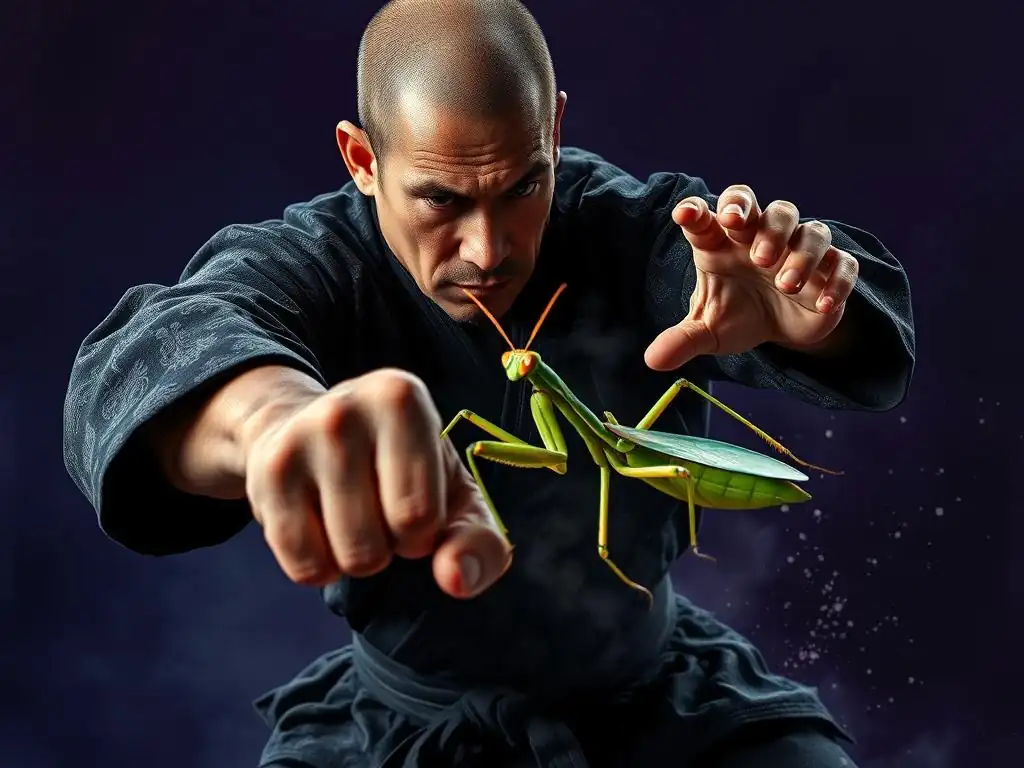
Welcome to Martial Arts Mastery, where we delve into the rich tapestry of combat traditions. Are you ready to unlock the secrets of lightning-fast reactions in close combat? This article explores the intricate world of Southern Mantis, revealing how specialized training drills can sharpen your Southern Mantis closerange reflexes to an almost preternatural level. Discover the techniques used by masters to develop an uncanny ability to anticipate and neutralize threats. Intrigued? Read on to begin your journey towards heightened awareness and unparalleled defensive prowess.
- Mastering Southern Mantis Close-Range Combat: The Importance of Reflexes
- Developing Lightning-Fast Reactions: Southern Mantis Reflex Training Drills
- Advanced Southern Mantis Reflex Training Techniques
- Optimizing Your Southern Mantis Reflex Training for Maximum Effectiveness
- Conclusion: Achieving Lightning-Fast Southern Mantis Close-Range Reflexes
-
Frequently Asked Questions
- What is Southern Mantis and why is it relevant to close-range reflexes?
- What types of drills are most effective for developing Southern Mantis close-range reflexes?
- How often should I train reflexes to see improvements in my Southern Mantis practice?
- What are some common mistakes people make when training for Southern Mantis close-range reflexes?
- How can I adapt reflex training drills to specifically target Southern Mantis techniques?
- Final Reflection: Honing the Edge of Instinct
- Unleash Your Inner Mantis: Master Close-Range Combat!
Mastering Southern Mantis Close-Range Combat: The Importance of Reflexes
Southern Praying Mantis Kung Fu is renowned for its devastating effectiveness in close-quarters combat. Unlike styles that emphasize long-range techniques, Southern Mantis excels when distances shrink, utilizing rapid, powerful strikes, intricate hand trapping, and immediate reactions. This focus on the 'inside fighting' range means that the practitioner's ability to react instantaneously is not just an advantage – it is absolutely fundamental to survival and success. In the confined space of a clinch or within arm's reach, exchanges happen at blinding speed, leaving no time for conscious thought; responses must be reflexive.
Developing lightning-fast reflexes is therefore paramount for any serious practitioner of Southern Mantis. The techniques are designed to exploit the smallest openings and defend against attacks that arrive with little warning. Without highly trained reflexes, even the most technically perfect Southern Mantis techniques will be too slow to land effectively or defend against a determined opponent in close proximity. Reflex training bridges the gap between knowing a technique and being able to apply it spontaneously under pressure, making it a core component of mastery in this dynamic style.
Understanding the Principles of Southern Praying Mantis Close-Range Fighting
Southern Praying Mantis Kung Fu operates on principles optimized for the limited space of close combat. Key among these is the emphasis on simultaneous blocking and striking ( Lin Wan Kiu Da), sticky hands ( Nim Tao), and generating explosive power from extremely short distances using body mechanics rooted in the core. The stance is typically compact, lower limbs solid, and the upper body mobile but rooted.
This structure allows for rapid changes in angle and direction while maintaining stability, essential when opponents are attempting to disrupt balance or structure at arm's length. The focus is on tactile sensitivity – feeling the opponent's energy, structure, and intent through contact, rather than solely relying on visual cues.
The efficacy of these principles hinges entirely on the practitioner's reaction speed. In a close-range encounter, an opponent's attack might be a sudden short hook, a trap, or a push designed to unbalance. The Southern Mantis practitioner must react instantly – yielding slightly while simultaneously striking, trapping a limb while countering, or shifting weight to maintain balance and launch an attack.
This requires reflexes that are not just fast, but also intelligent, automatically selecting the appropriate response based on subtle tactile and visual information received in a fraction of a second. It's estimated that successful close-quarters reactions often occur within 100-150 milliseconds, significantly faster than standard reaction times to simple visual stimuli.
Why Reflex Training is Crucial for Southern Mantis Practitioners
Reflex training is the engine that drives the Southern Mantis fighting machine in its intended range. Without highly developed reflexes, techniques like the rapid-fire Chop Choi (chopping strike) or the intricate Jam Sao (pressing hand) become academic exercises rather than effective combat tools. Close-range combat is inherently chaotic and unpredictable; there is no time to think through options. Reflexes allow the practitioner's body to respond autonomously, bypassing conscious decision-making processes that are too slow. This automaticity ensures that the practitioner can defend and counter almost simultaneously, overwhelming an opponent before they can fully commit to their own technique.
Moreover, reflex training in Southern Mantis cultivates essential qualities beyond mere speed. It builds tactile sensitivity, allowing practitioners to 'read' an opponent's movements through contact – feeling shifts in weight, tension, or direction of force before the movement is fully visible. This 'listening energy' ( Ting Jin) is a cornerstone of Southern Mantis close-range reflexes. The training also develops peripheral vision awareness and the ability to react to multiple stimuli simultaneously. This holistic development of sensory input and instantaneous physical output is what makes the Southern Mantis practitioner truly formidable in the close-range arena.
Developing Lightning-Fast Reactions: Southern Mantis Reflex Training Drills
Developing lightning-fast Southern Mantis closerange reflexes requires dedicated, specific training that goes beyond simply practicing forms or techniques in isolation. The drills outlined below are designed to challenge and improve different aspects of reactive speed and sensitivity crucial for close-quarters combat. Consistency and focused practice are key to hardwiring these responses into your nervous system.
Drill 1: The "Sticky Hands" Reflex Drill for Close-Range Sensitivity
The "Sticky Hands" drill, while sharing principles with similar exercises in other Southern Chinese martial arts, is adapted in Southern Mantis to cultivate sensitivity specifically for its unique close-range applications. It is a foundational exercise for developing tactile reflexes.
How to Perform the Sticky Hands Drill for Enhanced Southern Mantis Reflexes
To perform the basic Sticky Hands drill, two partners stand facing each other, typically within arm's reach. They establish light contact with their forearms or wrists, maintaining a relaxed but connected structure. The objective is not to overpower, but to 'listen' to the partner's movements and intentions through the point of contact. One partner might apply slight pressure or attempt a gentle push or pull, and the other must react instinctively by yielding, neutralizing the force, or finding an opening based solely on the tactile feedback received. The movements are circular and flowing initially, preventing static resistance.
The drill progresses by introducing variations. Partners can practice single-hand contact, double-hand contact, or incorporate light steps while maintaining connection. The speed is gradually increased, but the emphasis remains on sensitivity over force. The goal is to reduce the time between feeling a change in pressure or direction and initiating the appropriate defensive or offensive response. This direct tactile engagement is paramount for cultivating instantaneous Southern Mantis closerange reflexes derived from touch.
Benefits of the Sticky Hands Drill for Close-Range Awareness
The primary benefit of the Sticky Hands drill is the development of ting jin or 'listening energy'. This heightened tactile sensitivity allows the practitioner to feel an opponent's intention and movement before it fully manifests visually. In close combat, where visual cues can be obscured or misleading, this ability to react based on touch provides a critical advantage, enabling pre-emptive adjustments or counter-attacks. It trains the nervous system to process tactile information rapidly and initiate an appropriate physical response without conscious thought.
Furthermore, the Sticky Hands drill significantly improves structural integrity and balance under dynamic pressure. By constantly having to adjust to a partner's movements while maintaining contact, practitioners learn to root themselves and maintain their structure while in motion or absorbing force. This dynamic stability is essential for generating power and maintaining composure during the rapid, jostling exchanges characteristic of Southern Mantis close-range encounters, directly enhancing the physical foundation for rapid Southern Mantis closerange reflexes.
Drill 2: The "Rapid Fire Punch" Reaction Drill for Rapid Response
This drill focuses on developing the ability to launch immediate, explosive strikes upon recognizing a target or opening at close range. It trains the motor reflex for striking speed and precision.
Setting Up the Rapid Fire Punch Drill for Southern Mantis Reflex Training
Setting up the Rapid Fire Punch drill requires a partner holding focus mitts or striking pads. The practitioner stands in their Southern Mantis stance, typically one to two feet away from the partner holding the pads. The partner holding the pads can present them in various positions corresponding to common targets (head, body). The drill can begin with the partner simply holding the pads steady, and the practitioner reacting to a verbal cue ("Go!") or a visual cue (e.g., the partner slightly shifts the pads).
For more advanced reflex training, the partner can introduce unpredictability. They might hold the pads for a moment, then suddenly present one or both, or even offer a light, slow "attack" (like a gentle tap towards the practitioner's shoulder) which serves as the signal to unleash the rapid strikes. The key is the suddenness of the signal, forcing the practitioner to react instantly from a relaxed, ready state.
Executing the Rapid Fire Punch Drill: Focus and Precision
Upon receiving the signal, the practitioner must explode with a burst of rapid, short-range strikes – typically punches or palm strikes characteristic of Southern Mantis, such as Chop Choi, Jam Choi, or Biu Sao (thrusting fingers, though usually to body targets in drills). The focus is on speed and penetration, delivering 3-5 strikes in quick succession. There should be minimal wind-up; the power comes from body mechanics and core rotation. The practitioner must immediately return to their guard position after the burst.
While speed is crucial, precision must not be sacrificed. The strikes must land accurately on the target area of the pad. This drill trains the eyes and body to coordinate for instantaneous, accurate striking. It builds the reflexive ability to capitalize on fleeting openings in close quarters, honing the offensive aspect of Southern Mantis closerange reflexes. Regular practice, perhaps 3-5 rounds of 30 seconds each, significantly improves the speed and snap of close-range strikes.
Drill 3: The "Wall Bag Targeting" Drill for Close-Quarters Striking Speed
The wall bag is a traditional Southern Chinese martial arts training tool specifically designed for conditioning hands and developing short-range power and speed, making it ideal for honing Southern Mantis closerange reflexes in striking.
Preparing the Wall Bag for Southern Mantis Reflex Development
A wall bag is typically a rectangular canvas bag divided into sections, filled with materials like sand, beans, or gravel. It is securely mounted on a solid wall at a height appropriate for striking (usually chest to head level). Ensure the mounting is robust enough to withstand repeated, forceful impacts. The material inside provides resistance without the bag swinging, allowing for focused practice on generating power from a static, close target. Some practitioners use liniments or conditioning methods on their hands, though for pure reflex speed focus, this is secondary to the striking action itself.
The setup is simple: stand directly in front of the bag, typically within striking distance where your short-range techniques are most effective. This simulates the confined space of Southern Mantis close-range combat. Having multiple bags or sections allows for targeting practice at slightly different heights or angles.
Utilizing the Wall Bag Drill to Improve Striking Reflexes
The primary application of the wall bag for reflex training involves rapid, repetitive striking. Stand close and unleash bursts of Southern Mantis short strikes like Chop Choi, Jam Choi, or Gua Choi (hanging strike) onto the bag. The goal is maximum speed and power generation from zero distance. This trains the body to generate explosive force instantly without needing space for a wind-up. Practice hitting specific sections or alternating between them rapidly.
For more direct reflex work, set a timer for short intervals (e.g., 15-20 seconds) and aim to deliver as many quality strikes as possible. Alternatively, have a partner call out targets (e.g., "Left section! ", "Right! ", "Center!") or use visual cues (like a colored dot on the bag) that you must react to instantly with a strike to that specific area. This forces you to process information and react with a strike reflexively, sharpening the targeting aspect of Southern Mantis closerange reflexes under time pressure. Aim for consistency in speed and impact.
Drill 4: The "Sensitivity Touch" Drill for Enhanced Sensory Awareness
This drill refines the tactile sensitivity developed in Sticky Hands, focusing on detecting even more subtle cues and reacting with minimal, precise movements. It's about developing a predictive reflex based on nuanced touch.
Safety Considerations for Sensitivity Touch Training
Given the focus on subtle touch and potential probing for structural weaknesses, safety is paramount. Both partners must agree on the level of pressure and intensity, which should be kept very light initially. The goal is sensitivity, not sparring or testing strength. Avoid sudden, forceful movements that could hyperextend joints or cause discomfort. Communication between partners is essential; if something feels wrong or unsafe, stop and adjust.
Practitioners should have a basic understanding of joint mechanics and how to yield safely. This is not a drill for beginners without supervision. The focus is on feeling subtle shifts, not resisting strong forces, which minimizes the risk of injury when performed correctly with control and mutual respect.
Performing the Sensitivity Touch Drill to Sharpen Reflexes
Begin with light contact, similar to Sticky Hands, but the objective shifts from neutralizing force to detecting intent and structure through the slightest touch. Partners gently probe each other's structure through arm contact, applying minimal pressure to feel for stability or imbalance. One partner might attempt to subtly shift their weight or structure, and the other must react by instantly adjusting their own structure or finding a small opening based on that tiny perceived change.
This drill trains the nervous system to register and respond to micro-adjustments that precede larger movements. It builds the 'predictive reflex' – the ability to anticipate an opponent's action based on the initial, almost imperceptible physical cues felt through contact. Reacting to these subtle signals allows for faster, more efficient responses than waiting for a full attack to develop. This heightened sensory awareness is a sophisticated component of advanced Southern Mantis closerange reflexes, enabling practitioners to react with minimal wasted movement and maximum speed.
Advanced Southern Mantis Reflex Training Techniques
Once the foundational reflex drills are established, practitioners can incorporate more dynamic and integrated methods to further refine their Southern Mantis closerange reflexes. These techniques combine physical movement, timing, and mental focus.
Incorporating Footwork Drills for Improved Mobility and Reaction Time
Effective footwork is inseparable from rapid close-range reactions in Southern Mantis. The ability to instantly shift position, create an angle, or close distance allows the practitioner to apply their techniques effectively and evade incoming attacks. Static reflexes are limited; dynamic reflexes incorporate movement.
Triangle Step Drill, Arrow Step Drill, Circle Step Drill
The Triangle Step drill involves moving in a triangular pattern around a fixed point or partner. Starting from a base, the practitioner steps diagonally forward and to the side, then diagonally back to the original line, then steps laterally to the other side, forming a triangle. Practicing this drill rapidly improves the ability to change angles and position relative to an opponent instantly, crucial for setting up strikes or evading threats in close quarters. This builds reflexive movement that enhances Southern Mantis closerange reflexes by improving positioning.
The Arrow Step involves explosive linear movement – a rapid burst forward or backward. The Circle Step involves moving laterally around a point. Practicing these drills, sometimes reacting to a partner's movement or a signal, builds the reflexive ability to cover ground instantly in specific directions. This allows a practitioner to react to an incoming attack by reflexively moving off the line (Circle Step) or reacting to an opening by closing distance explosively (Arrow Step), directly improving the application speed of Southern Mantis closerange reflexes in a dynamic environment.
Utilizing Sparring Drills to Test and Refine Close-Range Reflexes
Sparring, in its various forms, provides the most realistic environment to test and develop Southern Mantis closerange reflexes under pressure against an unpredictable opponent. It forces spontaneous reactions.
Trapping Hands Sparring, One-Step Sparring (Ji Ben Gong), Full Contact Reflex Sparring
Trapping Hands Sparring is a semi-free drill where partners engage primarily with arm contact, focusing on trapping, controlling, and striking with short-range techniques. Similar to Chi Sao but with Southern Mantis specific techniques and footwork, it provides a dynamic context for practicing tactile reflexes and reacting to limb control attempts in real-time.
One-Step Sparring ( Ji Ben Gong or similar pre-arranged drills) involves one partner attacking with a single technique, and the other reacting with a specific defense and counter. While sometimes pre-arranged, practicing variations and increasing the speed makes it a valuable drill for honing specific defensive Southern Mantis closerange reflexes.
Full Contact Reflex Sparring (with appropriate protective gear and control) simulates the chaos of close combat more fully. Starting light and controlled, partners engage in free-form close-range exchanges. This forces practitioners to react instinctively to unexpected attacks, fakes, and movements. It builds the ability to maintain composure and apply techniques reflexively under physical and mental stress, integrating all aspects of training into spontaneous Southern Mantis closerange reflexes. Emphasis should always be on control and learning, not winning.
Integrating Chi Kung and Meditation for Enhanced Focus and Concentration
Reflexes are not purely physical; they have a significant neurological and mental component. Training the mind and internal energy enhances the speed and quality of physical reactions.
Zhan Zhuang (Standing Post), Yi Jin Jing (Muscle Tendon Change Classic), Small Universe Meditation
Zhan Zhuang, or Standing Post training, involves holding static postures for extended periods. This builds internal stability, rootedness, and awareness of body structure and energy flow. This foundational strength and integrated body awareness allow reactions to originate from a stable core, resulting in faster, more powerful, and better-coordinated movements, essential for generating explosive Southern Mantis close-range power and speed reflexively. It calms the nervous system, reducing unnecessary tension that slows reactions.
Yi Jin Jing is a set of dynamic exercises designed to strengthen muscles and tendons and promote circulation. Regular practice improves physical resilience, flexibility, and the ability to generate 'whipping' or explosive power. A body that moves efficiently and powerfully is better equipped to execute rapid, reflexive techniques.
Small Universe Meditation focuses on circulating internal energy and calming the mind. Meditation practices improve focus, concentration, and the ability to remain centered amidst chaos. A calm, focused mind can process sensory information faster and more accurately, leading to quicker and more precise reflexive responses in the heat of close combat, directly benefiting Southern Mantis closerange reflexes.
Optimizing Your Southern Mantis Reflex Training for Maximum Effectiveness
To truly achieve lightning-fast Southern Mantis closerange reflexes, training must be approached strategically. Simply going through the motions is insufficient; deliberate practice is required.
The Importance of Consistency and Gradual Progression
Reflex development is fundamentally about rewiring the nervous system through repetition. This neuroplasticity requires consistent stimulation. Training your reflexes for 15-30 minutes daily or several times a week is far more effective than one long session sporadically. Regularity builds and reinforces the neural pathways that allow for instantaneous reactions, making reflexive responses second nature.
Equally important is gradual progression. Begin each drill slowly, focusing on correct technique and sensitivity. As your reactions become smoother and more accurate at a slower pace, gradually increase the speed and intensity. Trying to perform drills too fast too soon leads to sloppy technique, ingrained errors, and potentially injury. Start with simple reactions (e.g., react to a single touch), then progress to more complex scenarios (e.g., react to varied touches or combinations). This phased approach ensures that speed is built upon a solid foundation of technical accuracy and control, leading to reliable Southern Mantis closerange reflexes.
Tailoring Your Training to Your Individual Needs and Strengths
Every practitioner has unique physical attributes, learning styles, and areas for improvement. While the core drills are beneficial for everyone, the specific emphasis and intensity should be tailored. Some individuals may naturally have quick visual reflexes but need to work harder on tactile sensitivity through Sticky Hands and Sensitivity Touch drills. Others might have strong hands but need to improve reactive footwork.
Identifying your specific strengths and weaknesses, ideally with the guidance of a qualified Southern Mantis instructor, allows you to allocate training time efficiently. Focus more effort on the drills that target your weaker areas while maintaining proficiency in your strengths. For instance, if your reaction to sudden visual cues is slow, incorporate more drills where the partner provides unexpected targets or signals. Personalized training ensures that your development of Southern Mantis closerange reflexes is balanced and addresses your specific needs.
Avoiding Common Mistakes in Southern Mantis Reflex Training
Several common pitfalls can hinder effective reflex development. One is training too fast too soon without establishing proper technique, which results in ingrained bad habits that are hard to correct. Another is focusing solely on speed drills while neglecting sensitivity training, leading to reactions that are fast but lack the crucial 'listening' ability needed for Southern Mantis close range.
Other mistakes include training inconsistently, lacking a partner for interactive drills, and tensing up excessively under pressure. Tension slows reactions and hinders fluid movement; learning to relax while remaining alert is vital. Finally, relying solely on visual cues and neglecting tactile feedback or vice versa limits the holistic development of sensory awareness. Effective Southern Mantis closerange reflexes integrate information from multiple senses simultaneously. Consciously avoiding these errors will significantly accelerate your progress.
Conclusion: Achieving Lightning-Fast Southern Mantis Close-Range Reflexes
Mastering Southern Mantis close-range combat hinges significantly on developing lightning-fast reflexes. These are not innate gifts but cultivated abilities, honed through dedicated and intelligent training. By understanding the core principles of Southern Mantis close-range fighting and diligently practicing specific drills like Sticky Hands, Rapid Fire Punch, Wall Bag Targeting, and Sensitivity Touch, practitioners build the essential reactive speed and sensitivity.
Incorporating advanced techniques such as dynamic footwork, realistic sparring drills, and internal cultivation methods like Chi Kung and meditation further refines these abilities, integrating physical skill with mental focus and internal energy. Through consistent practice, gradual progression, personalized training, and the avoidance of common errors, practitioners can hardwire their nervous system for instantaneous, effective responses. The ultimate goal is for the body to react autonomously and effectively in the chaotic space of close combat, embodying the dynamic power and precision of Southern Mantis closerange reflexes.
Frequently Asked Questions
What is Southern Mantis and why is it relevant to close-range reflexes?
Southern Mantis is a style of Kung Fu known for its aggressive close-quarters combat. Its emphasis on short power and rapid movements makes reflex training crucial.
What types of drills are most effective for developing Southern Mantis close-range reflexes?
Drills focusing on reaction time, hand speed, and footwork are ideal. This includes partner drills, shadow boxing, and bag work adapted for close-quarters scenarios.
How often should I train reflexes to see improvements in my Southern Mantis practice?
Consistency is key; aim for at least 3-4 times per week with dedicated reflex training sessions. Remember to focus on quality over quantity for optimal results.
What are some common mistakes people make when training for Southern Mantis close-range reflexes?
Neglecting fundamental stances and footwork, relying solely on speed without accuracy, and failing to incorporate realistic scenarios are common pitfalls.
How can I adapt reflex training drills to specifically target Southern Mantis techniques?
Focus on drills that simulate common Southern Mantis attacks and defenses. Use short, explosive movements and prioritize intercepting and controlling the opponent's centerline.
Final Reflection: Honing the Edge of Instinct
The exploration of Southern Mantis reflex training drills reveals more than just techniques; it unveils a pathway to cultivating instinctive action in the face of immediate threat. In a world increasingly demanding rapid adaptation and decisive responses, the principles of this ancient martial art offer a timeless framework for enhancing our inherent capabilities, extending far beyond the confines of combat.
The dedication required to master these drills speaks volumes about the human potential for growth and refinement. Witnessing the evolution from clumsy movements to fluid, lightning-fast reactions is a testament to the power of focused training and unwavering commitment. The journey of a thousand miles begins with a single step.
This proverb resonates deeply with the spirit of Southern Mantis, reminding us that even the most daunting goals are achievable through consistent effort and a belief in our own capacity for transformation.
Now, consider how you can apply these principles of focused training and instinctive reaction to your own life. Whether it's mastering a new skill, navigating challenging situations, or simply becoming more present in the moment, embrace the spirit of Southern Mantis. Cultivate your own "closerange reflexes" – the ability to react decisively and effectively to whatever life throws your way. The power to transform your potential into reality lies within you; begin your training today.
Unleash Your Inner Mantis: Master Close-Range Combat!
Thank you for exploring the world of Southern Mantis reflex training! Now that you've unlocked the secrets to lightning-fast reactions, it's time to put that knowledge into practice and truly embody the agile power of the praying mantis.
Here's how to take your training to the next level:
- Immediately begin incorporating at least 15 minutes of these reflex drills into your daily training routine. Consistency is key to building those crucial neural pathways!
- Record yourself practicing these drills. Analyzing your movements can reveal subtle areas for improvement you might otherwise miss.
- Share your training experiences and any modifications you discover with fellow martial artists in online forums. Your insights could help others on their journey!
What small adjustment can you make today to prioritize your reflex training and unlock a new level of combat prowess?