
Maai: The Philosophical Dance of Distance and Timing in Kendo

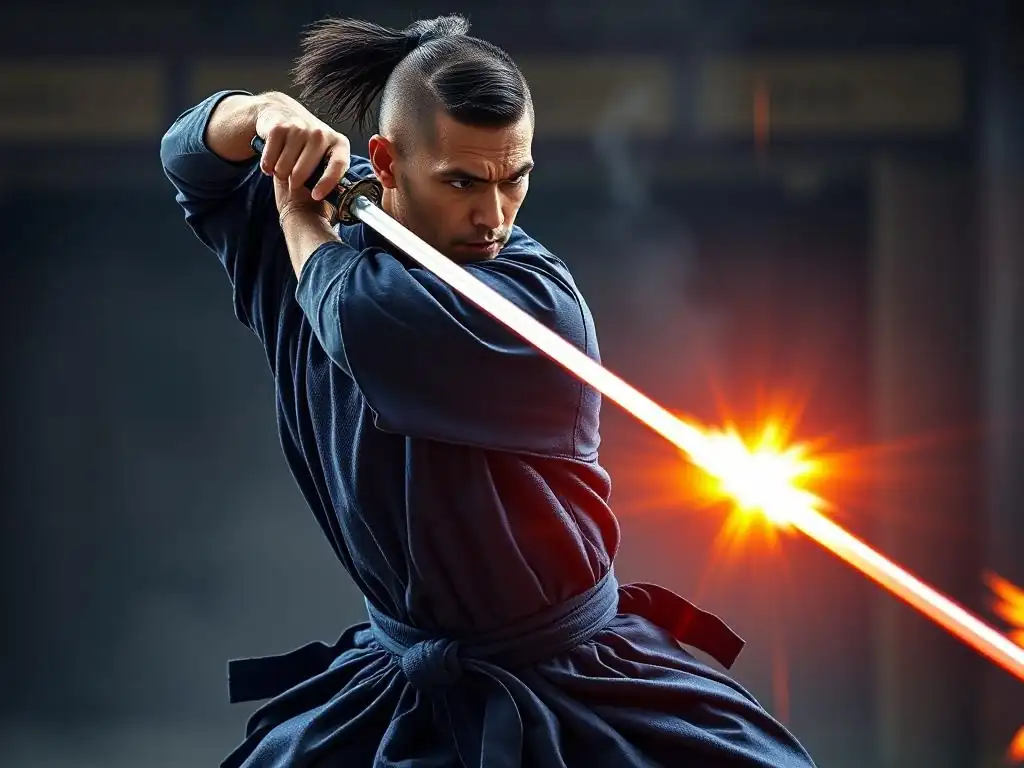
Welcome to Martial Arts Mastery, where we delve into the heart of combat traditions worldwide. Ever wondered how a single concept could unlock the secrets of both offense and defense? Prepare to unravel the intricate Kendo distance timing philosophy, a cornerstone of Japanese swordsmanship. Discover how maai, the artful management of space, transcends mere technique and becomes a profound expression of strategy and intention. Are you ready to master the distance?
- Understanding Maai: Distance and Timing in Kendo
- The Philosophical Underpinnings of Maai
- Mastering Distance: The Art of Measuring Maai in Kendo
- Timing in Kendo: Seizing the Moment
- The Interplay of Distance and Timing: A Dynamic Relationship
- Maai in Kendo Strategy and Tactics
- The Ethical Considerations of Maai in Kendo
- Maai: A Lifelong Pursuit in Kendo
- Frequently Asked Questions
- Final Reflection: Embracing the Unseen Rhythm of Maai
- Embrace the Art of Maai: Your Kendo Journey Continues!
Understanding Maai: Distance and Timing in Kendo
In the rigorous practice of Kendo, the Japanese art of swordsmanship, victory and defeat often hinge on a subtle yet profound concept known as Maai. Far more than just the physical space between two practitioners, Maai encompasses the critical interplay of distance, timing, rhythm, and psychological state. It is the dynamic zone where opportunity is created, recognized, and seized, embodying a core element of Kendo distance timing philosophy. Understanding and mastering Maai is fundamental, moving beyond mere technique to grasp the strategic and philosophical depths of Kendo.
This intricate concept is not static; it constantly shifts and evolves based on the actions, intentions, and even the breathing of both kendoka. Developing a keen sense of Maai allows a practitioner to position themselves optimally for attack or defense, anticipating their opponent's movements while controlling the flow of the engagement. It is a skill that requires years of dedicated practice, blending physical agility with mental acuity and a deep appreciation for the philosophical underpinnings of Kendo.
Defining Maai: The Core Concept of Kendo Distance
At its most basic, Maai refers to the distance between two opponents in Kendo. However, this definition is insufficient to capture its true essence. Maai is a compound word derived from Ma (間), meaning space, interval, or time, and Ai (合), meaning harmony, coming together, or suitability. Thus, Maai is the 'suitable interval' in both space and time, the dynamic distance that is just right for the situation. It's the constantly changing spatial-temporal relationship between kendoka.
Beyond the physical meters separating practitioners (which might typically range from 2 to 4 meters in sparring readiness), Maai includes the psychological distance, the rhythm of the engagement, and the timing of potential actions. It's not a fixed measurement but a fluid concept that changes with every step, breath, and shift in intent. For instance, a distance that is ideal for one technique might be completely wrong for another, and what is suitable against one opponent might be disastrous against another. This multi-layered interpretation is central to understanding Kendo distance.
The Importance of Maai in Kendo Philosophy
The concept of Maai is deeply intertwined with the philosophical principles of Kendo, serving as a practical manifestation of strategic thinking and mental discipline. Mastery of Maai reflects an understanding of the fluid nature of conflict and the importance of adapting to changing circumstances. It highlights the Kendo philosophy that true skill lies not just in executing powerful strikes, but in controlling the conditions under which those strikes occur.
In Kendo, controlling Maai allows a practitioner to dictate the terms of the engagement, creating opportunities for themselves while denying them to the opponent. It embodies the principle of minimum effort for maximum effect, using optimal positioning and timing rather than brute force. This strategic control of space and time is considered a higher level of skill than mere speed or strength, reflecting the depth of Kendo distance timing philosophy and its emphasis on intelligent, mindful action.
The Philosophical Underpinnings of Maai
Maai in Kendo is not merely a technical parameter; it is a profound philosophical concept that reflects the art's deeper principles of harmony, balance, and the unity of mind, body, and spirit. Understanding the philosophical underpinnings of Maai is crucial for any serious practitioner seeking to move beyond basic technique towards true mastery. It connects the physical act of maintaining distance with the mental and spiritual state required for effective swordsmanship.
This philosophical dimension elevates Maai from a simple measurement to a dynamic expression of one's inner state and understanding of the flow of combat. It is through the conscious manipulation and perception of Maai that a kendoka learns to read their opponent's intentions, maintain composure under pressure, and act decisively at the precise moment of opportunity. This holistic approach is a cornerstone of Kendo philosophy.
Maai as a Reflection of Kendo's Principles
Maai directly reflects several core principles of Kendo, such as Zanshin (remaining spirit or awareness), the readiness to respond appropriately after a strike or during a pause in action. Maintaining proper Maai allows a practitioner to sustain Zanshin, being neither too close to be vulnerable to immediate counter-attack nor too far to lose connection and control over the opponent. It's about maintaining a state of alert equilibrium.
Furthermore, Maai embodies the principle of Seme (pressure), the act of probing and disrupting the opponent's posture and spirit. By skillfully adjusting Maai, a kendoka can apply psychological pressure, forcing the opponent to react or revealing openings. For example, subtly closing the distance can provoke a premature reaction, while momentarily widening it can create a false sense of security. This dynamic manipulation of space is a physical manifestation of mental strategic pressure, integral to Kendo distance and timing.
Harmony and Balance in Kendo Distance Management
The concept of harmony and balance is central to the effective management of Maai. It's not about rigidly holding a specific distance, but about finding and maintaining a balanced relationship with the opponent, one that is harmonious with the rhythm of the engagement. This balance is constantly sought and adjusted, like a dance where both partners influence the spacing.
Maintaining balance in Maai also means balancing offense and defense. Being too close might facilitate attack but compromises defense, while being too far enhances defense but makes attack difficult. The ideal Maai is the one that allows for a balanced transition between attacking and defending, enabling opportunistic strikes while retaining defensive integrity. This pursuit of balanced distance management is a continuous theme in Kendo practice and its underlying philosophy.
Maai and the Concept of Ki-Ken-Tai-Icchi (Spirit, Sword, Body as One)
Maai is intrinsically linked to the fundamental Kendo principle of Ki-Ken-Tai-Icchi, the unity of spirit, sword, and body. A successful strike in Kendo requires these three elements to come together harmoniously at the moment of impact. Proper Maai is the necessary condition for this unity to occur effectively. If the distance is wrong, the body mechanics will be off, the spirit might hesitate, and the sword strike will lack power or accuracy, failing to achieve Ki-Ken-Tai-Icchi.
Conversely, achieving Ki-Ken-Tai-Icchi requires a deep understanding of Maai. The practitioner's spirit (intent and energy, Ki) must align with the physical movement of the body ( Tai) and the action of the sword ( Ken) within the correct spatial and temporal interval ( Maai). This means the timing of the step, the raising and lowering of the sword, and the kiai (spirit shout) must all converge at the ideal distance. Maai is the stage upon which Ki-Ken-Tai-Icchi is performed, making it a critical element in the practical application of Kendo distance timing philosophy.
Mastering Distance: The Art of Measuring Maai in Kendo
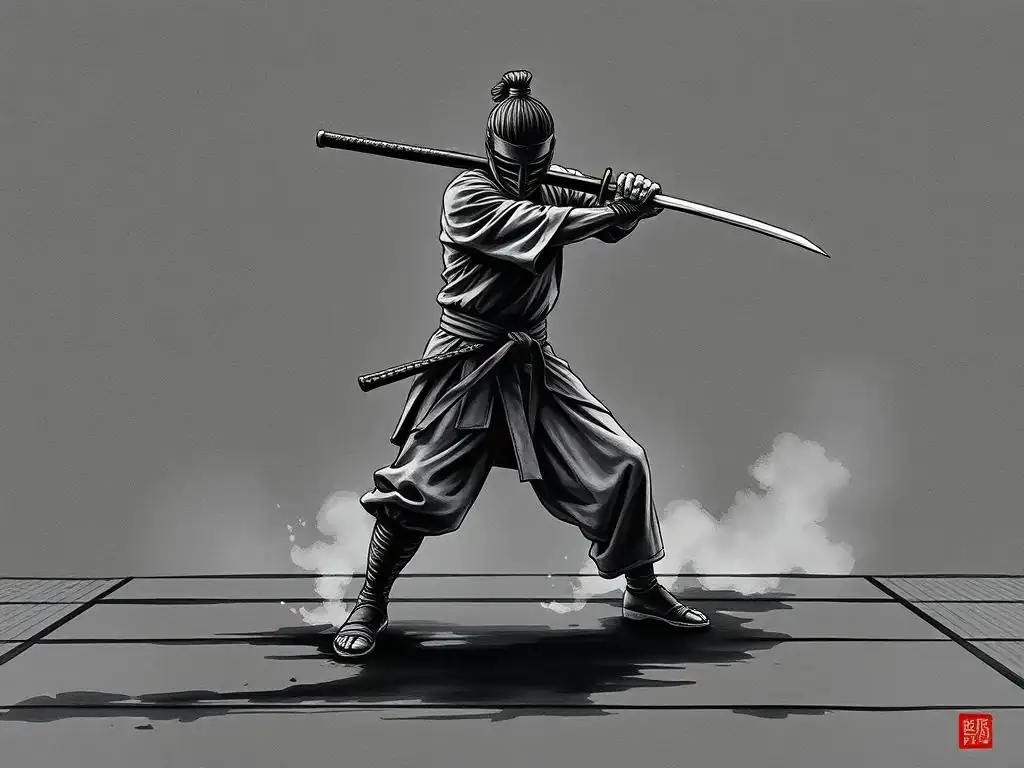
Mastering Maai is an ongoing process in Kendo, involving both technical training and intuitive development. It requires learning to perceive, adjust, and control the distance relative to the opponent, understanding that the optimal Maai is not fixed but dynamic. This art of measuring distance goes beyond simple visual estimation; it involves sensing the opponent's energy, rhythm, and intent.
Developing this sense of Maai is crucial for executing techniques effectively and safely. A common challenge for beginners is misjudging Maai, leading to strikes that fall short or overextend, leaving them vulnerable. Through constant practice and feedback, kendoka refine their ability to instinctively find and manipulate the appropriate distance for various situations and techniques, integrating technical skill with intuitive perception of Kendo distance.
Different Types of Maai in Kendo Practice
While Maai is fluid, specific conventional distances are recognized in Kendo practice as starting points or reference points. These distances are categorized based on the number of steps typically required to launch an effective attack.
Toma: Long Distance
Toma refers to the long distance, typically the initial distance when opponents face each other at the start of a practice bout or match. From toma, a strike usually requires more than one step forward, often involving a full running step or multiple smaller steps, followed by the final attacking step. This distance is generally considered safer defensively but makes initiating a successful attack more challenging due to the time and distance the strike must cover, giving the opponent more time to react.
Engaging from toma requires significant speed and commitment. Practitioners often use this distance to observe their opponent, probe for reactions with seme, and build up speed for a decisive charge. While it's the starting point, skilled practitioners constantly adjust Maai from toma to transition to a more advantageous distance for attack, demonstrating strategic control over Kendo distance.
Issoku Itto no Maai: One Step, One Strike Distance
Issoku Itto no Maai translates literally to "one breath, one sword" or more commonly "one step, one strike distance". This is considered the optimal attacking distance for many techniques, where a single large step forward (the attacking step, fumikomi) is sufficient to reach the target. It is typically closer than toma, allowing for faster, more direct attacks.
This distance requires precise judgment. Being slightly too far means the strike will fall short; being slightly too close leaves one vulnerable. Issoku Itto no Maai is the most frequently utilized distance for launching decisive attacks like Men (head strike) or Kote (wrist strike). Mastering this distance is fundamental to effective Kendo timing and execution. Many drills focus specifically on entering and striking correctly from Issoku Itto no Maai, highlighting its importance in training.
Chikai Maai: Close Distance
Chikai Maai refers to close distance, where opponents are closer than Issoku Itto no Maai. From this distance, a strike often requires little or no forward step, or perhaps just a small adjustment. This distance can be dangerous, as both practitioners are highly vulnerable to quick, short-range attacks or counter-attacks.
While less common for primary attacks in regulated matches, Chikai Maai is relevant in specific situations, such as follow-up attacks after a failed initial strike, or when attempting techniques like Do (body strike) from a very close range. It demands extremely fast reflexes and precise control. Navigating Chikai Maai effectively requires a different sense of Kendo distance and timing, often relying on sensing the opponent's movement and intent rather than visible cues.
Developing a Sense of Maai: Drills and Exercises
Developing a refined sense of Maai is paramount and is achieved through various drills and exercises. One fundamental drill is Kirikaeshi, a continuous exercise involving receiving and delivering strikes, which naturally trains practitioners to maintain appropriate distance and rhythm. The back-and-forth movement inherently requires constant adjustment of Maai.
Another crucial exercise is Uchikomi-geiko (target practice), where a senior student or instructor presents specific targets, and the junior student practices striking from the correct Issoku Itto no Maai. This drill focuses on accurately judging and entering the optimal distance for a single, strong strike. Furthermore, Ji-geiko (free sparring) is essential, as it provides the dynamic environment necessary to practice sensing and manipulating Maai against a resisting opponent, integrating physical Kendo distance with strategic timing.
Timing in Kendo: Seizing the Moment
Timing, or hyoshi (拍子) in Japanese, is the critical partner to distance in the concept of Maai. While Maai provides the spatial opportunity, timing is the temporal element – the ability to act at the precise moment when an opening exists and is most vulnerable. Effective timing in Kendo relies on keen observation, anticipation, and the ability to synchronize one's action with the opponent's rhythm and movements.
Mastering timing means understanding the opponent's flow, recognizing pauses, shifts in weight, or moments of hesitation, and striking before they can recover or initiate their own attack. It is the art of seizing the fleeting opportunity, often described as striking "just before" or "just as" the opponent moves. This intuitive sense of timing is a crucial component of Kendo distance timing philosophy.
Understanding Seme (Pressure) and Timing Opportunities
Seme (攻め), the act of applying pressure, is inextricably linked to creating timing opportunities. Seme involves subtly or overtly challenging the opponent's posture, spirit, or Maai, forcing them to react. This pressure can be applied through physical movement (e.g., stepping forward slightly), vocalization (a strong kiai), or simply by projecting strong intent.
A skilled practitioner uses Seme to disrupt the opponent's rhythm and balance, observing how they respond. The reaction to Seme often reveals a momentary opening or a predictable pattern of movement, creating the perfect timing for an attack. For example, if an opponent habitually raises their hands slightly in response to forward pressure, this upward movement creates a brief opening to the Kote or Men. Understanding how Seme generates these reactions is key to recognizing and exploiting timing windows in Kendo.
Recognizing and Exploiting Openings in Kendo
Recognizing openings ( suki - 隙) is a crucial skill in Kendo timing. Suki are not just physical gaps in defense (like an unprotected wrist or head), but also mental or spiritual openings (like hesitation, loss of focus, or predictable reactions). These openings are often momentary and must be exploited instantly.
Exploiting an opening requires perfect synchronization of distance and timing. The practitioner must be in the correct Maai to reach the target and initiate the strike at the exact moment the opening appears. This often means striking during the opponent's transition between movements, during their inhalation, or immediately following their failed attack. Developing the eye to see these subtle openings and the decisiveness to act upon them is a hallmark of advanced Kendo timing.
The Role of Debana (Anticipatory Strike) in Timing
Debana (出鼻) is a prime example of advanced timing in Kendo, referring to an anticipatory strike delivered at the very beginning of the opponent's movement or intention to move. It means striking as the opponent is initiating their attack, before their technique is fully formed or committed. This is considered a high-level technique because it requires not only precise timing but also the ability to read the opponent's intention early.
Successful Debana relies heavily on a refined sense of Maai and the ability to sense the opponent's Ki (energy or intent). By being in the correct distance and sensing the subtle shift that indicates the opponent is about to move, the practitioner can launch their strike simultaneously or fractionally earlier, intercepting the opponent's attack at its nascent stage. This emphasizes the predictive and intuitive aspects of Kendo timing within the context of dynamic Maai.
The Interplay of Distance and Timing: A Dynamic Relationship
Distance ( Maai) and timing are not independent concepts in Kendo; they are two sides of the same coin, locked in a dynamic and constantly shifting relationship. One cannot be effectively controlled without the other. The correct timing for a technique is dependent on being at the correct distance, and the optimal distance is the one that facilitates effective timing for a strike.
This interplay is the heart of the Kendo distance timing philosophy. It requires practitioners to simultaneously manage their spatial relationship to the opponent while sensing and controlling the temporal flow of the engagement. Mastery lies in the ability to fluidly adjust Maai to create timing opportunities and to time one's actions perfectly within the existing Maai.
Adjusting Maai Based on Opponent's Actions
Skilled kendoka constantly adjust their Maai in response to the opponent's actions. If the opponent advances, the practitioner might retreat slightly to maintain Issoku Itto no Maai or step to the side to change the angle and create a different kind of opening. If the opponent retreats, the practitioner must advance to close the distance and stay within striking range.
These adjustments are not merely reactive; they are often proactive, aiming to manipulate the opponent into a disadvantageous position or distance. For example, a practitioner might intentionally widen Maai to invite the opponent to step forward, then strike Debana as they commit. This dynamic adjustment based on continuous reading of the opponent is fundamental to controlling the flow of the bout through intelligent management of Kendo distance and timing.
Footwork and its Impact on Distance and Timing
Footwork, or Ashi-sabaki (足捌き), is the primary tool for controlling Maai and facilitating effective timing. The ability to move quickly, smoothly, and precisely allows a practitioner to enter and exit striking distance, change angles, and maintain balance while doing so. Poor footwork leads to being stuck at the wrong distance or being off-balance when attempting to strike.
Different types of footwork, such as Okuri-ashi (sliding step), Ayumi-ashi (walking step), and Tsugi-ashi (following step), are used to manage Maai. For instance, Okuri-ashi is crucial for maintaining consistent Maai while moving forward or backward, enabling quick adjustments. The explosive fumikomi step is essential for closing the final distance and generating power for a timed strike from Issoku Itto no Maai. Thus, mastery of footwork is synonymous with mastery of Kendo distance and timing.
Anticipating Opponent's Intentions Through Maai
A sophisticated understanding of Maai allows practitioners to anticipate the opponent's intentions. Subtle shifts in Maai by the opponent, changes in their posture, or the rhythm of their breathing can signal their readiness or intention to attack. Learning to read these cues within the context of Maai provides valuable milliseconds of warning or opportunity.
For example, if an opponent subtly shortens their Maai or shifts their weight forward, it's a strong indicator they might be preparing to strike. By recognizing this shift in Maai, the practitioner can prepare to defend, counter, or even strike Debana. This intuitive reading of the opponent's Ki through their physical presence and manipulation of Maai is a deep aspect of Kendo timing and strategic awareness.
Maai in Kendo Strategy and Tactics
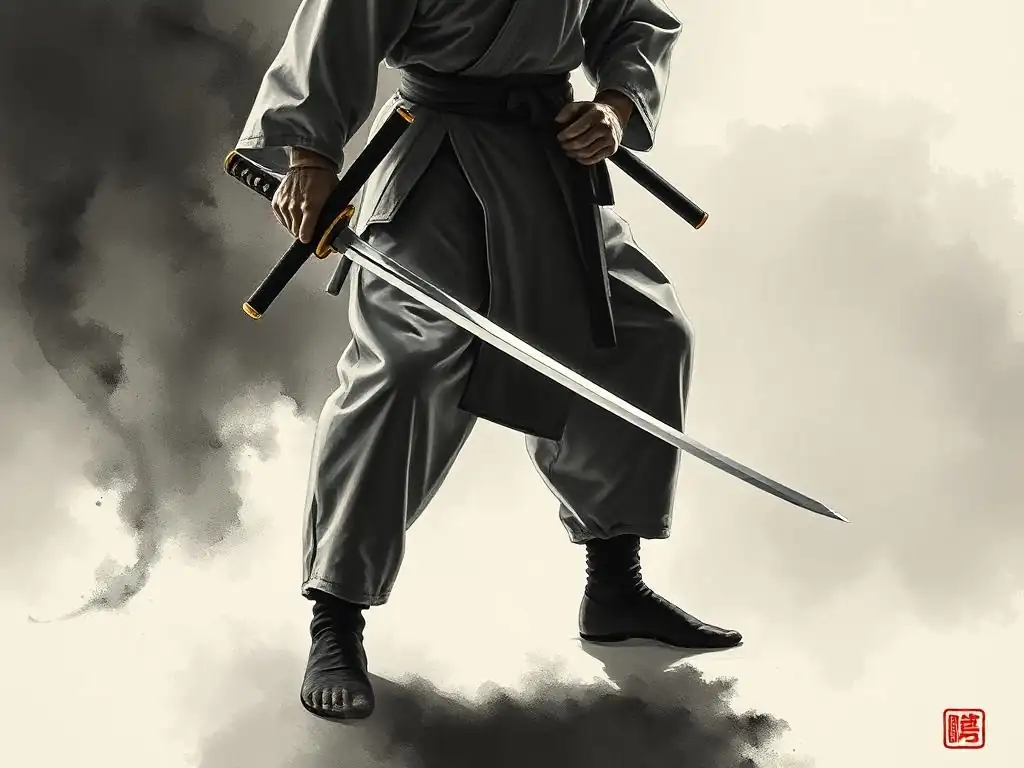
The strategic application of Maai is what elevates Kendo from a series of techniques to a sophisticated tactical exchange. Maai is not just the space where techniques happen; it is a tool used to control the engagement, create openings, and execute a winning strategy. Effective use of Maai allows a kendoka to impose their will on the opponent, dictating the pace and nature of the fight. This strategic dimension is a key part of Kendo distance timing philosophy.
Using Maai strategically means thinking several steps ahead, anticipating how adjustments in distance will influence the opponent's reactions and create future opportunities. It's about setting the stage for a successful attack or defense through intelligent spatial and temporal control.
Using Maai to Control the Pace of the Bout
Controlling Maai allows a practitioner to control the pace of the bout. By maintaining a wider Toma, the pace tends to slow down, allowing for more observation and careful probing. By constantly seeking to enter Issoku Itto no Maai or pushing into Chikai Maai, the pace accelerates, leading to a more dynamic and potentially chaotic exchange.
A skilled practitioner uses this control over pace to their advantage. They might speed up the engagement if they feel they have an advantage in quick exchanges, or slow it down if they need time to observe or recover. This conscious manipulation of tempo through Maai is a powerful strategic tool, demonstrating a deep understanding of Kendo timing and its impact on the fight's rhythm.
Setting Traps and Creating Opportunities with Maai
Maai is frequently used to set traps and create specific opportunities. As mentioned earlier, subtly changing Maai can provoke a desired reaction from the opponent. For example, a practitioner might intentionally retreat a step, making the opponent believe they have a clear path to attack, only to strike Debana as the opponent lunges forward.
Conversely, a practitioner might aggressively close the distance, forcing the opponent to defend or retreat awkwardly, potentially creating an opening in their guard or balance. These strategic manipulations of Kendo distance are designed to disrupt the opponent's preferred Maai and rhythm, leading them into a position where a well-timed strike can be delivered effectively. This proactive use of Maai is a core tactic in competitive Kendo.
Adapting Maai to Different Opponents and Styles
Effective Maai is not a one-size-fits-all concept; it must be adapted to the specific opponent and their style. An opponent who favors long-range attacks might require a different approach to Maai than one who excels in close-quarters combat. Similarly, opponents with different physical attributes (e.g., height, reach) will influence the optimal Maai.
A versatile kendoka can quickly assess their opponent's tendencies and adjust their Maai strategy accordingly. This might involve maintaining a slightly wider Maai against a fast, aggressive opponent or staying closer against someone who prefers to fight from a distance. The ability to flexibly adapt one's sense and control of Kendo distance and timing based on the opponent is a mark of advanced strategic thinking.
The Ethical Considerations of Maai in Kendo
While Maai is a critical strategic and technical concept, its application in Kendo is also governed by ethical considerations rooted in the art's philosophical foundations. Kendo is not merely about defeating an opponent, but about self-improvement and mutual respect. The use of Maai must align with these higher principles, reflecting the practitioner's character and understanding of the Kendo philosophy.
This ethical dimension emphasizes using Maai intelligently and respectfully, not exploitatively or aggressively in a malicious way. It reinforces that Kendo is a Do (道), a way or path, and every element, including Maai, should contribute to personal and mutual growth.
Fair Play and Respect in Distance Management
Managing Maai should always be done with a spirit of fair play and respect ( Rei) for the opponent. This means using Maai to create genuine opportunities based on skill and strategy, rather than attempting to deceive or injure the opponent through reckless or unfair manipulation of distance. For example, intentionally crowding an opponent in a way that compromises their safety is contrary to the spirit of Kendo.
Respecting the opponent's Maai and intentions, even while challenging them, is part of the etiquette and ethical code of Kendo. It's a recognition that the opponent is a partner in practice, essential for one's own development. This mutual respect in the dynamic exchange of Kendo distance is a reflection of the art's ethical framework.
Using Maai for Self-Defense, Not Aggression
Although Kendo techniques are inherently combative, the underlying philosophy emphasizes their use for self-improvement and, historically, self-defense, rather than unwarranted aggression. The strategic use of Maai should reflect this principle. It is used to create opportunities to strike decisively when necessary, but not to relentlessly pursue and overwhelm an opponent unnecessarily once a point is scored or the exchange is concluded.
The control afforded by Maai allows a practitioner to choose when and how to engage, enabling them to avoid unnecessary conflict or apply force only when appropriate. This mindful application of Kendo distance control aligns with the defensive rather than purely aggressive stance promoted by Kendo philosophy.
The Moral Implications of Timing and Opportunity
The ability to recognize and exploit timing opportunities ( suki) also carries moral implications within Kendo. While seizing the moment is key to success, it should not come at the expense of ethical conduct. This means not exploiting openings created by an opponent's injury, equipment malfunction, or blatant unfairness.
The pursuit of perfect timing is about aligning one's actions with the natural flow of the engagement and the opponent's honest movements, not capitalizing on misfortune or unethical behavior. The moral use of timing in Kendo reinforces the idea that victory achieved through unethical means is hollow and contradicts the art's purpose of character development. This ethical consideration is integral to the comprehensive Kendo distance timing philosophy.
Maai: A Lifelong Pursuit in Kendo
The mastery of Maai is not a destination but a lifelong journey in Kendo. As practitioners gain experience, their understanding and intuitive sense of distance and timing deepen. What felt like a technical calculation in the beginning evolves into an almost instinctive perception. This continuous refinement is a core aspect of dedicated Kendo practice and reflects the art's emphasis on perpetual learning and self-improvement.
Senior practitioners often demonstrate a profound, almost effortless control of Maai, appearing to be in the right place at the right time with uncanny consistency. This is the result of decades spent honing their perception of Kendo distance and timing, integrating it completely into their physical movement and mental state.
Continuous Refinement of Distance and Timing
Even after many years of practice, kendoka continue to refine their sense of Maai. This happens through continued Ji-geiko against a variety of opponents, participation in Shiai (matches), and receiving guidance from more experienced instructors. Each encounter presents new challenges and nuances in Maai to be understood and adapted to.
Furthermore, as one's own physical condition changes with age, the optimal Maai for executing techniques may subtly shift, requiring further adjustment and refinement. This ongoing process of adapting and improving one's perception and control of Kendo distance and timing is a testament to the depth and complexity of the concept.
The Connection Between Maai and Mental Discipline
Mastering Maai requires significant mental discipline. It demands constant awareness, focus, and the ability to remain calm and centered amidst the dynamic and often intense environment of a Kendo bout. Hesitation, fear, or over-eagerness can instantly disrupt one's sense of Maai, leading to poor judgment of distance and mistimed actions.
The mental discipline cultivated through practicing Maai extends beyond the dojo. It fosters patience, observation skills, adaptability, and the ability to make quick, informed decisions under pressure. This connection between the physical practice of Maai and the development of mental fortitude is a key aspect of Kendo philosophy.
Maai as a Path to Self-Improvement Through Kendo Philosophy
Ultimately, the pursuit of mastering Maai serves as a path to self-improvement, aligning with the overarching goals of Kendo. By striving to perfect their understanding and application of distance and timing, practitioners develop not only their physical technique but also their mental acuity, strategic thinking, and intuitive perception.
The challenges encountered in understanding and controlling Maai force practitioners to confront their own limitations, fears, and tendencies. Overcoming these challenges through persistent effort and mindful practice contributes significantly to personal growth. Thus, Maai, as a central element of Kendo distance timing philosophy, is a powerful vehicle for cultivating discipline, awareness, and a deeper understanding of oneself and the dynamic relationship between action and opportunity.
Frequently Asked Questions
What is maai in the context of Kendo?
Maai refers to the optimal distance and timing between combatants in Kendo. It's a crucial element for both offensive and defensive strategies.
How does maai relate to the philosophy of Kendo?
The mastery of maai reflects a deeper understanding of self-control, awareness, and reactivity. It's a key aspect of achieving fudoshin, a state of unwavering mind.
Why is distance and timing so important in Kendo?
Correct distance and timing allow a practitioner to strike effectively while minimizing their own vulnerability. It's about maximizing efficiency and control.
What are some practical ways to improve one's maai in Kendo training?
Focus on footwork drills, sparring exercises, and visualization techniques. Practice consciously adjusting your distance and timing based on your opponent's movements and intentions.
How does understanding maai contribute to self-defense strategies beyond Kendo?
The principles of maai – maintaining the right distance and timing – are transferable to any self-defense situation. It allows for better assessment of threats and more effective responses, emphasizing preventative measures.
Final Reflection: Embracing the Unseen Rhythm of Maai
The principles explored within this article, dissecting the Kendo distance timing philosophy inherent in maai, are not merely historical artifacts of a martial art. They resonate deeply within the complexities of modern interaction, negotiation, and even personal relationships. Understanding the subtle dance of distance and timing, as practiced in Kendo, provides a framework for navigating the nuanced spaces between individuals and ideas in all facets of life.
The profound impact of maai extends beyond the dojo, influencing our understanding of connection and separation. Its lessons on patience, observation, and the strategic use of space are invaluable in a world often characterized by immediacy and impulsive action. The ultimate aim of martial arts is not having to use them.
This ancient wisdom, echoing the essence of maai, highlights the power of anticipation and strategic positioning to avoid conflict altogether, fostering a deeper understanding of harmony and balance.
Now, consider how the principles of maai can inform your own interactions. Reflect on the distances you maintain, both physical and emotional, and the timing of your actions. Can you cultivate a greater awareness of the space between yourself and others, allowing for more thoughtful and effective engagement? Embrace the unseen rhythm, the philosophical dance of distance and timing, and discover the power of maai in shaping a more mindful and purposeful life.
Embrace the Art of Maai: Your Kendo Journey Continues!
Thank you for exploring the subtle, yet powerful concept of Maai in Kendo with us! You've now unlocked a deeper understanding of distance, timing, and intention. Ready to put this knowledge into action?
Here's how you can further refine your Maai and elevate your Kendo practice:
- Prioritize purposeful training: Actively focus on your spacing in your next Keiko, consciously adjusting your distance to control the engagement.
- Delve deeper:Research historical Kendo texts or discuss Maai with experienced sensei to uncover nuanced interpretations and training methods.
- Share your insights: Spark a conversation on our forums, sharing your biggest "aha" moment regarding Maai and how you plan to apply it.
What small adjustment to your current practice will yield the biggest improvement in your Maai today?