
Shaolin Long Fist (Chang Quan): Mastering Unrivaled Reach and Power

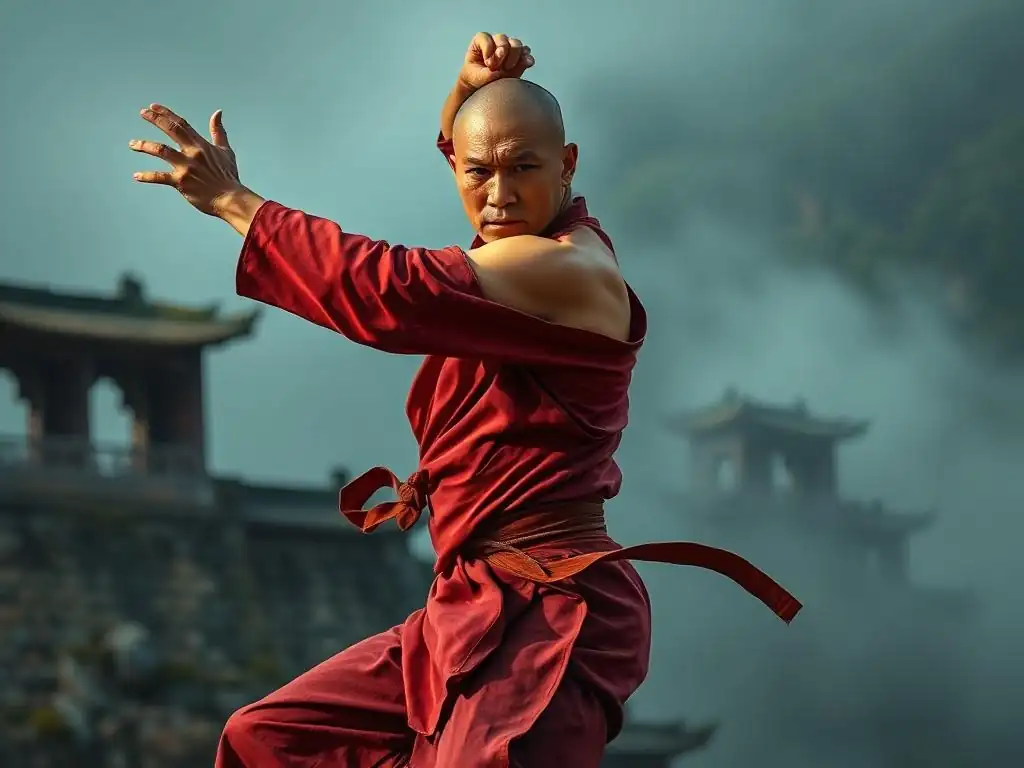
Welcome to Martial Arts Mastery, your gateway to the world's most compelling fighting systems. Delve into the rich tapestry of martial arts, from ancient philosophies to cutting-edge techniques. Ever wondered how to harness unrivaled reach and power in combat? Then prepare to journey into the heart of Shaolin Long Fist techniques training, where tradition meets innovation. Discover the secrets behind this dynamic style and unlock your potential within. Let the mastery begin!
- Praying Mantis Kung Fu: Trapping, Striking, and Evasion
- Introduction to Praying Mantis Kung Fu
- Understanding Praying Mantis Kung Fu Techniques Training
- Core Principles of Praying Mantis Kung Fu Training
- Praying Mantis Kung Fu Forms and Drills for Mastery
- Praying Mantis Kung Fu in Combat: Self-Defense Applications
- Advanced Praying Mantis Kung Fu Training Methods
- The Legacy of Praying Mantis Kung Fu
- Conclusion: Embracing the Speed and Precision of Praying Mantis Kung Fu
-
Frequently Asked Questions
- What is Shaolin Long Fist (Chang Quan), and what makes it unique?
- What are the key principles emphasized in Shaolin Long Fist techniques training?
- How does Shaolin Long Fist contribute to practical self-defense?
- What kind of historical context is important to understand regarding Shaolin Long Fist?
- Where can I find resources for Shaolin Long Fist techniques training, besides MartialArtsMastery.org?
- Final Reflection: Embracing the Endless Journey of Chang Quan
- Unleash Your Inner Dragon: Continue Your Chang Quan Journey!
Praying Mantis Kung Fu: Trapping, Striking, and Evasion
Introduction to Praying Mantis Kung Fu
What is Praying Mantis Kung Fu? An Overview
Praying Mantis Kung Fu, or Tang Lang Quan (螳螂拳), is a dynamic and complex Chinese martial art renowned for its rapid hand techniques, agile footwork, and unique trapping abilities. Developed in Northern China, it imitates the movements and predatory tactics of the praying mantis insect, particularly its quick, powerful strikes and grappling-like forelimbs. The style emphasizes close-range combat, utilizing a continuous barrage of attacks, blocks, and controls to overwhelm an opponent.
Characterized by its distinctive "mantis hook" hand shape (Gou Shou) and principle of simultaneous defense and attack, Praying Mantis Kung Fu training focuses on speed, precision, and deceptive movements. Unlike some styles that rely heavily on large, sweeping motions, Mantis Kung Fu operates within a tighter sphere, making it highly effective in confined spaces. Its rich history and diverse branches reflect centuries of adaptation and refinement, solidifying its place as a formidable and fascinating martial art.
The Legend of Wang Lang and the Creation of Praying Mantis Style
The most widely accepted origin story attributes the creation of Praying Mantis Kung Fu to a man named Wang Lang (王朗) during the late Ming or early Qing dynasty (roughly 17th century). Legend says Wang Lang was a skilled martial artist but struggled to defeat his contemporaries. One day, he witnessed a fierce battle between a praying mantis and a cicada. He was struck by the mantis's ferocity, its ability to use its forelimbs to trap and strike, and its agile movements to evade the larger cicada.
Intrigued, Wang Lang reportedly captured the mantis and studied its movements meticulously, using a stick to prod it and observe its reactions. He synthesized these observations – the hooking, trapping, and rapid strikes – with techniques from various existing martial arts styles, including the 18 Elder Luohan Hands (十八羅漢手) from Shaolin Temple and techniques from over sixteen other known systems.
This synthesis led to the birth of a new, highly effective fighting method, which he named after the insect that inspired him. While historical verification of Wang Lang and this exact event is debated among scholars, the legend provides a compelling narrative for the style's core principles.
Key Characteristics: Speed, Evasion, and Continuous Attack
Praying Mantis Kung Fu is fundamentally defined by three core characteristics: blinding speed, masterful evasion, and relentless continuous attack. The speed is evident in the rapid-fire hand combinations, often delivered in quick succession to overwhelm an opponent's defenses. This isn't just about moving fast, but about striking multiple times before the opponent can react or recover.
Evasion is achieved through highly mobile and deceptive footwork, allowing practitioners to quickly shift angles, avoid incoming blows, and maintain optimal distance for their close-range tactics. Combined with subtle body shifts and head movements, evasion creates openings while keeping the practitioner safe. Finally, the principle of continuous attack means that techniques are chained together seamlessly; a block flows into a strike, a strike into a trap, a trap into another strike. This constant pressure prevents the opponent from establishing their own rhythm or mounting a sustained offense, embodying the mantis's predatory nature.
Understanding Praying Mantis Kung Fu Techniques Training
Foundational Stances and Footwork in Praying Mantis Style
Effective Praying Mantis Kung Fu training begins with mastering its foundational stances and agile footwork. Stances like the Bow-and-Arrow Stance (Gong Bu), Horse Stance (Ma Bu), and Cat Stance (Mao Bu) provide stability and power generation, similar to many Chinese martial arts. However, Mantis style places significant emphasis on transitional stances and the unique "Mantis Stance" or "Hook-Hand Stance" (Gou Lou Bu), which is often narrow and allows for quick forward or backward movement while keeping hands ready for action.
The footwork is perhaps even more critical than the static stances. Mantis footwork is characterized by its agility, deceptiveness, and constant adjustment. Techniques like "hook steps" (Gou Bu) and "following steps" (Sui Bu) allow practitioners to quickly close or bridge distance, change direction rapidly, evade attacks, and position themselves advantageously relative to the opponent. The goal is fluid, almost dance-like movement that maintains balance while creating opportunities for attack or defense.
Hand Techniques: Hooks, Bridges, and Precise Strikes
The hand techniques are the hallmark of Praying Mantis Kung Fu, centered around the distinctive "mantis hook" (Gou). This is not just a hand shape but a versatile tool used for trapping, pulling, controlling, and striking. The Gou can hook an opponent's limb, clothing, or even their head, creating openings or disrupting their balance.
Beyond the hook, Mantis utilizes 'bridging' techniques (Da Qiao) to penetrate an opponent's guard or occupy their defensive space, often using forearm or hand techniques to clear a path. Strikes are typically short, sharp, and precise, delivered rapidly in combinations. These include straight punches, chops, palm strikes, and finger strikes often aimed at vulnerable points on the body. The rapid alternation between hooking, bridging, and striking creates a complex, unpredictable offense.
Leg Techniques: Low Kicks and Deceptive Footwork
While Praying Mantis Kung Fu is renowned for its hand techniques, leg techniques and footwork play a vital supporting role. Kicks in Mantis style are generally kept low, targeting the opponent's legs, shins, or groin. This emphasis on low kicks helps maintain the practitioner's balance and stability, crucial for the style's close-range engagements and rapid hand movements. High kicks are rare as they compromise the stable base needed for Mantis strategy.
Deceptive footwork works in tandem with leg techniques and hand movements. Feinting with the feet to draw a reaction, shifting weight to create false tells, or using rapid, small steps to close distance unexpectedly are all part of the Mantis arsenal. The footwork is designed not just for movement, but to disrupt the opponent's timing and positioning, setting them up for hand attacks or creating opportunities for low kicks.
Mastering Close-Range Combat: The Art of Trapping and Controlling
Praying Mantis Kung Fu excels in close-range combat, where its unique techniques truly shine. Mastering this range involves becoming highly proficient in the art of trapping and controlling the opponent's limbs. Trapping (Luo Shou) involves using hands and forearms to bind, check, or pull an opponent's arms or legs, preventing them from striking or defending effectively. This might involve hooking their wrist, pinning their forearm, or using both hands to control a single limb.
Once a limb is trapped or controlled, the practitioner can deliver rapid, undefended strikes with their free limbs. Control goes beyond simple trapping; it involves using structure, balance, and subtle pressure to manipulate the opponent's body and off-balance them. This constant interplay of trapping, controlling, and striking is the essence of Mantis close-range fighting, creating a chaotic, overwhelming situation for the opponent while the practitioner maintains control.
Core Principles of Praying Mantis Kung Fu Training
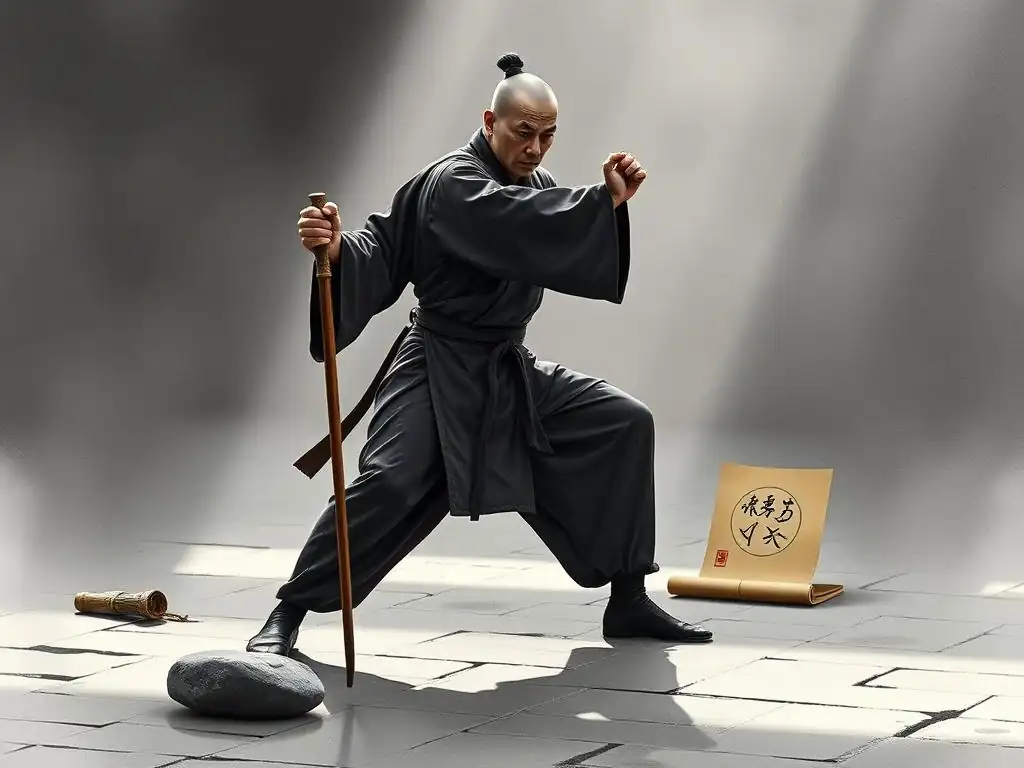
The Importance of Sensitivity and Reflexes for Mantis Practitioners
For effective Praying Mantis Kung Fu techniques training, cultivating high levels of sensitivity and lightning-fast reflexes is paramount. Sensitivity, often developed through partner drills akin to Chi Sao ("sticky hands"), involves learning to "listen" to the opponent's energy, intent, and force through physical contact. By feeling subtle changes in pressure or direction, a Mantis practitioner can anticipate an attack or withdrawal and react instantaneously.
This heightened sensitivity directly feeds into the development of reflexes. The ability to react instantly to an opponent's movement – whether it's trapping an incoming punch, shifting position to evade, or launching a counter-attack – is critical in the rapid exchanges characteristic of Mantis style. Drills focus on developing automatic, ingrained reactions rather than conscious thought, allowing the body to respond fluidly and without hesitation.
Developing Speed and Agility in Close-Quarters Combat
Speed and agility are not just characteristics of the style; they are fundamental goals of Praying Mantis Kung Fu training. In close-quarters combat, the ability to move and strike faster than the opponent is a decisive advantage. Training regimens include numerous drills specifically designed to enhance hand speed, foot speed, and overall body agility.
Rapid-fire striking drills, often using focus mitts or traditional wall bags, help build the muscle memory for delivering multiple strikes in quick succession. Footwork drills, practiced solo and with partners, improve the ability to change direction, cover distance, and shift weight rapidly while maintaining balance. Agility exercises, sometimes incorporating simple obstacles or reaction cues, refine the body's ability to move fluidly and unpredictably, essential for effective evasion and positioning in tight spaces.
Cultivating Internal Strength (Qi) for Enhanced Power and Endurance
While often seen as an external style due to its speed and striking, many Praying Mantis lineages also emphasize the cultivation of internal strength, or Qi (氣). This isn't about mystical energy, but about developing integrated body power, efficient movement, and enhanced endurance through proper breathing, posture, and mental focus.
Training methods include specific breathing exercises (Qi Gong) and meditative practices that help calm the mind and build internal stability. Coordinating breath with movement enhances power generation, allowing strikes to be delivered with more force and less muscular effort. Cultivating Qi also contributes to greater stamina, enabling practitioners to maintain the high-intensity, continuous attack strategy that defines the style for longer periods during combat or sparring.
Connecting Mind and Body: Focus and Intent in Mantis Movements
A crucial, often understated, principle in Praying Mantis Kung Fu training is the connection between mind and body, driven by focus (Jing Shen) and intent (Yi). Physical techniques are merely tools; their effectiveness is greatly amplified by the practitioner's mental state and direction. Training emphasizes cultivating a calm yet alert mind, capable of instantaneous reaction.
Focus is required to pay attention to details in forms and drills, ensuring precision and correct body mechanics. Intent, or Yi, is the mental direction of energy and force. It's the difference between mechanically performing a technique and executing it with purpose and conviction. Mantis movements are not just physical actions; they are guided by a clear intent to trap, control, or strike, ensuring that every movement is purposeful and contributes to the overall strategy.
Praying Mantis Kung Fu Forms and Drills for Mastery
Introduction to Traditional Praying Mantis Forms
Traditional Praying Mantis Kung Fu is rich in forms (Tao Lu), which serve as living encyclopedias of the style's techniques, principles, and strategies. These choreographed sequences simulate combat scenarios against multiple imaginary opponents, allowing practitioners to practice transitions, combinations, and body mechanics in a flowing manner. Different branches of Praying Mantis (like Seven Star, Plum Blossom, or Six Harmony) have their own unique sets of forms.
Some forms are fundamental, focusing on core stances, footwork, and basic hand techniques, while others are more advanced, incorporating complex combinations, throws, joint locks, and weapons. Practicing forms repeatedly helps build muscle memory, develop coordination, improve balance, and deepen understanding of the style's underlying principles. They are essential for preserving the lineage's techniques and cultivating the characteristic speed and flow of Mantis movements.
Essential Drills for Improving Mantis Techniques
Beyond solo forms, Praying Mantis Kung Fu techniques training incorporates numerous drills designed to isolate and refine specific skills. Essential drills include:
- Rapid Striking Drills: Practicing fast, short combinations on focus mitts or a wooden dummy to develop hand speed and accuracy.
- Footwork Drills: Moving through specific patterns (e.g., triangle stepping, straight line advances/retreats) to improve agility and balance.
- Trapping Drills: Partner exercises focusing on using Mantis hooks and hand shapes to trap and control an opponent's arms.
- Bridging Drills: Working with a partner to practice techniques for entering past their guard or defensive structure.
- Reaction Drills: Responding quickly to visual or tactile cues, often involving a partner initiating simple attacks.
These drills break down the complex movements found in forms into manageable components, allowing practitioners to focus on developing speed, precision, and reflex in specific areas before integrating them back into full forms or sparring.
Partner Training: Applications of Mantis in Sparring and Chi Sao
Partner training is indispensable for applying Praying Mantis Kung Fu techniques training in a dynamic context. Light sparring, often with protective gear, allows practitioners to test their speed, timing, and distance management against a resisting opponent. The focus is typically on applying the rapid-fire, close-range tactics characteristic of the style.
Drills similar to Wing Chun's Chi Sao, or "sticky hands," are also common. These involve partners maintaining light contact with each other's arms to develop sensitivity, learn to "listen" to the opponent's force and intention, and practice trapping, controlling, and finding openings based on feel rather than sight. This type of partner work is crucial for developing the intuitive reflexes needed for effective close-quarters engagement.
Beng Bu: Foundation Form Analysis
Beng Bu (崩步), often translated as "Crushing Step" or "Pounding Step," is widely considered a fundamental or foundational form in many Praying Mantis lineages, particularly Seven Star Praying Mantis. It is a relatively short form but packed with core techniques and principles. Analyzing Beng Bu provides deep insight into the style's essence.
The form emphasizes strong, rooted stances and direct, powerful forward movements. It incorporates key Mantis hand techniques like the hook (Gou), chop (Pi), punch (Chong), and block/parry (Lan/Jie). The "Crushing Step" refers to the solid, driving footwork used to advance and generate power. Studying Beng Bu teaches practitioners basic body mechanics, coordination of hand and foot movements, and the aggressive, forward-driving spirit of the style. Mastery of Beng Bu is seen as essential before progressing to more complex forms.
Praying Mantis Kung Fu in Combat: Self-Defense Applications
Adapting Mantis Techniques for Real-World Scenarios
The principles and techniques of Praying Mantis Kung Fu are highly adaptable for real-world self-defense scenarios. While traditional forms are complex, the core concepts of speed, evasion, trapping, and continuous attack translate effectively to street situations. The style's focus on close range is particularly relevant, as many confrontations end up in grappling range or confined spaces.
Adapting Mantis techniques involves simplifying complex combinations into practical, effective responses. Instead of executing an entire form sequence, a practitioner might use a rapid Mantis hook to disrupt a grab, evade a swing with quick footwork, and immediately counter with a barrage of short, sharp strikes. The emphasis remains on overwhelming the threat quickly and decisively using the tools developed through rigorous Praying Mantis Kung Fu techniques training.
Utilizing Evasion and Deception for Tactical Advantage
In a self-defense situation, survival often depends on avoiding damage. Praying Mantis Kung Fu's emphasis on evasion and deception provides a significant tactical advantage. Agile footwork allows practitioners to quickly step offline, away from the line of attack, while simultaneously positioning themselves for a counter. Subtle body shifts and head movements can make the practitioner a difficult target.
Deception can involve feinting a strike to draw a block, creating an opening elsewhere, or using rapid, unexpected movements to confuse the attacker. The goal is to disrupt the opponent's timing and balance, creating windows of opportunity for the Mantis practitioner to apply their close-range trapping and striking techniques before the attacker can recover or mount a sustained offense.
Combining Mantis with Qinna (Joint Locking) and Shuai Jiao (Wrestling)
Some lineages of Praying Mantis Kung Fu incorporate elements of Qinna (joint locking) and Shuai Jiao (Chinese wrestling/takedowns), adding further layers to its self-defense capabilities. While the core of Mantis is striking and trapping, integrating joint locks or throws allows practitioners to control an opponent without necessarily causing severe injury, or to take the fight to the ground if necessary.
A Mantis trapping sequence might transition smoothly into a wrist lock (Qinna) to control an opponent or force compliance. Similarly, using Mantis footwork and body mechanics, a practitioner might off-balance an opponent during a close-range exchange and execute a throw (Shuai Jiao) to end the confrontation. This integration makes the style more versatile and provides options beyond just striking.
Defending Against Common Attacks: A Mantis Perspective
Applying Praying Mantis Kung Fu techniques training to defend against common attacks involves using the style's core principles. Against a typical haymaker punch, a Mantis practitioner might use rapid footwork to step offline (evasion), simultaneously using a bridging hand technique to deflect or control the incoming arm, and immediately counter with rapid strikes to the head or body.
Against a grab, the practitioner could use the Mantis hook to peel the opponent's fingers away or trap their grabbing arm, while simultaneously stepping back or shifting weight to break their balance and following up with strikes. The key is the speed and continuity – defending and attacking happen almost simultaneously, preventing the attacker from regaining control or launching follow-up attacks. The close-range trapping is particularly effective against grabs and holds.
Advanced Praying Mantis Kung Fu Training Methods
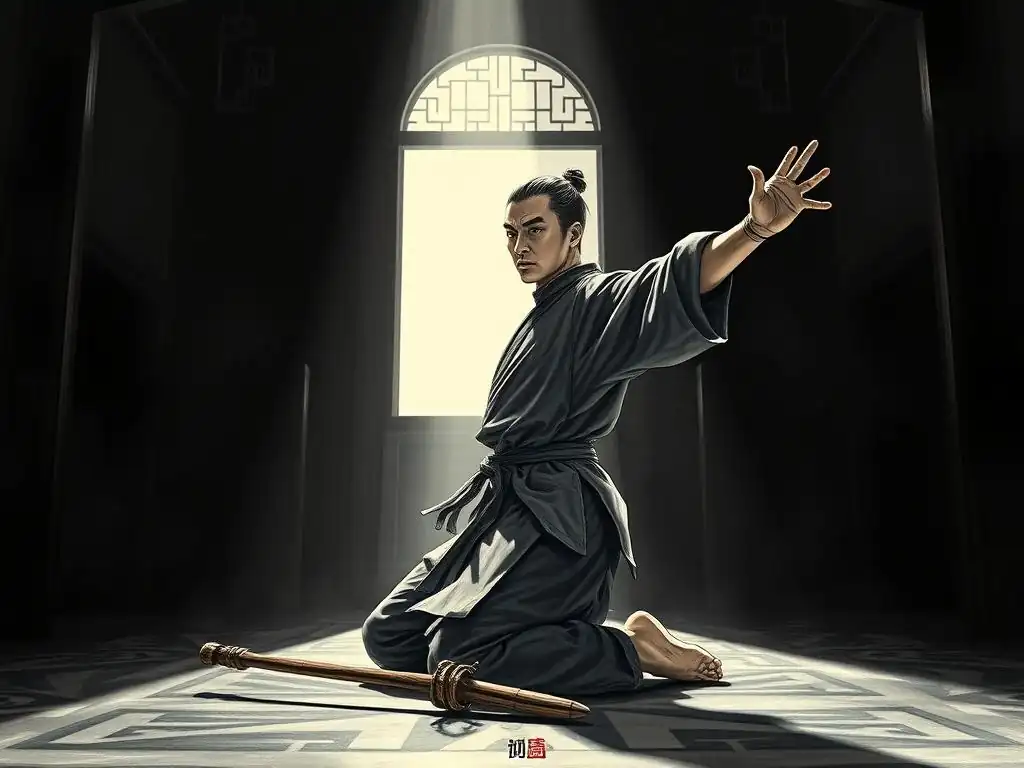
Developing Fa Jing (Explosive Power) in Mantis Techniques
Advanced Praying Mantis Kung Fu training delves into the cultivation of Fa Jing (發勁), or explosive power. Unlike brute muscular strength, Fa Jing is the ability to generate a sudden, whip-like release of power through coordinated body movement, originating from the core and expressed through the extremities. It makes strikes incredibly potent, even seemingly light ones.
Developing Fa Jing involves meticulous practice of body mechanics, focusing on relaxation followed by instantaneous tension, proper alignment, and the coordinated use of the waist and hips. Drills specifically target this explosive release in various techniques, such as punches, chops, and palm strikes. It's a critical component for ensuring that the rapid Mantis strikes carry significant impact.
Mastering Dim Mak (Pressure Point Striking)
Mastering Dim Mak (點脈), or pressure point striking, is an advanced and often esoteric aspect of some Praying Mantis lineages. This involves acquiring detailed knowledge of anatomy and the body's vital points (acupoints) and developing the precision and power to strike them effectively. The goal is not just to cause pain, but potentially to disrupt the opponent's system or cause temporary incapacitation.
This level of training requires years of dedicated study and practice, often involving theoretical knowledge alongside practical application drills. While the effectiveness and specific claims surrounding Dim Mak are sometimes debated, the principle of targeting vulnerable points with precise strikes aligns well with the Mantis style's emphasis on accuracy and efficiency in close range.
Understanding Iron Body Training for Enhanced Resilience
Iron Body (Tie Bu) training, sometimes incorporated into Mantis lineages, focuses on conditioning the body to withstand impact and increasing the power of strikes. This can involve striking various parts of the body (forearms, shins, torso) with implements like sandbags, dowels, or even bare hands, gradually building resilience.
Concurrently, Iron Body training often includes conditioning the striking surfaces (fists, palms, forearms) through hitting hard surfaces or specialized bags. This toughens the skin, tissues, and bone, making the practitioner's own strikes more effective and less prone to injury. While controversial in some modern contexts, historically it was a common method to prepare the body for the rigors of combat.
Silk Reeling Energy: Developing Internal Power
Silk Reeling Energy (Chan Si Jin 纏絲勁), a concept often associated with internal martial arts like Tai Chi and Baguazhang, is also found in some advanced Praying Mantis Kung Fu training methods. It refers to the development of smooth, spiraling, connected power that flows throughout the entire body, originating from the core.
Practicing Silk Reeling exercises cultivates internal fluidity, coordination, and the ability to generate power that is subtle yet penetrating. It enhances the effectiveness of Mantis techniques by ensuring that the whole body contributes to every movement, making trapping more secure, strikes more powerful, and transitions more seamless. It represents a deeper level of internal refinement within the style.
The Legacy of Praying Mantis Kung Fu
Famous Practitioners of Praying Mantis Kung Fu Throughout History
Praying Mantis Kung Fu has been preserved and propagated through generations of dedicated masters. While specific historical records can be sparse, certain figures stand out in the lineage charts of various branches. For example, Jiang Hua Long (姜化龍) is a highly respected figure in the Seven Star Praying Mantis lineage, credited with refining and popularizing the style in the late 19th and early 20th centuries.
Another influential figure is Wang Yushan (王玉山), a student of Jiang Hua Long, who further developed the Seven Star system. In Plum Blossom Praying Mantis, masters like Fan Xudong (范旭東) were instrumental in its spread. These masters, through their teaching and refinement of forms and techniques, ensured the continuation of the style through challenging historical periods, passing down the intricate Praying Mantis Kung Fu techniques training methods to their disciples.
The Influence of Praying Mantis on Other Martial Arts Styles
Given its unique and effective techniques, it is plausible that Praying Mantis Kung Fu has influenced or exchanged ideas with other martial arts styles, particularly those developed in Northern China. While direct lineage tracing can be difficult, the Mantis style's emphasis on rapid hand combinations, trapping, and agile footwork shares some conceptual similarities with elements found in other Northern Chinese systems.
The idea of synthesizing techniques from multiple styles, central to the legend of Wang Lang, suggests an inherent openness to incorporating effective methods, a practice common in the development of many martial arts. Specific hand shapes or trapping concepts found in Mantis might have been adopted or adapted by practitioners of other styles who encountered Mantis masters.
Preserving and Promoting Praying Mantis Kung Fu in the Modern Era
In the modern era, preserving and promoting traditional Praying Mantis Kung Fu faces challenges similar to many traditional martial arts, including attracting new students and maintaining the integrity of training methods. However, dedicated masters and organizations worldwide are actively working to ensure its survival.
This includes documenting forms and techniques, establishing schools and associations, and organizing workshops and tournaments. The internet and multimedia resources have also played a role in increasing awareness and providing access to information about the style, though the depth of Praying Mantis Kung Fu techniques training still requires dedicated in-person instruction from qualified teachers. Efforts are ongoing to balance tradition with accessibility, ensuring future generations can experience this unique art.
Resources for Further Study: Books, Videos, and Schools
For those interested in delving deeper into Praying Mantis Kung Fu, various resources are available. Historically significant texts and instructional books, often translated from Chinese, provide detailed descriptions of forms and techniques, though understanding them requires foundational knowledge.
Numerous instructional videos, produced by various masters and schools, offer visual demonstrations of forms, drills, and applications. While these can be helpful supplements, they cannot replace hands-on instruction. The most effective way to learn Praying Mantis Kung Fu techniques training is by finding a reputable school with qualified instructors from an established lineage. Researching local and international schools and their lineage is recommended for serious study.
Conclusion: Embracing the Speed and Precision of Praying Mantis Kung Fu
Praying Mantis Kung Fu stands as a testament to the power of observation and synthesis in martial arts development. Its unique blend of rapid-fire hand techniques, agile footwork, and sophisticated trapping strategies creates a formidable fighting system effective in close-range combat. From the legendary origins with Wang Lang to the intricate details of its forms and drills, the style offers a deep and rewarding path for practitioners.
Mastering Praying Mantis Kung Fu techniques training requires dedication to developing speed, precision, sensitivity, and agility. It challenges practitioners to connect mind and body, cultivate internal strength, and apply these principles in dynamic, practical ways. Embracing the spirit of the praying mantis – patient yet explosive, deceptive yet direct – allows practitioners to unlock the full potential of this fascinating and powerful martial art.
Frequently Asked Questions
What is Shaolin Long Fist (Chang Quan), and what makes it unique?
Shaolin Long Fist, or Chang Quan, is a Northern Shaolin style known for its extended, flowing movements. It emphasizes long-range striking and powerful kicks, distinguishing it from shorter-range styles.
What are the key principles emphasized in Shaolin Long Fist techniques training?
Training focuses on developing flexibility, speed, and power through coordinated body movements. It stresses the importance of proper stance and efficient energy transfer to maximize reach and impact.
How does Shaolin Long Fist contribute to practical self-defense?
Its long-range techniques allow practitioners to maintain distance and control the engagement. The emphasis on powerful strikes and kicks provides effective self-defense options against various threats.
What kind of historical context is important to understand regarding Shaolin Long Fist?
It's vital to appreciate its Shaolin Temple origins and its evolution within Chinese martial arts history. Understanding its connection to Zen Buddhism can also enrich the practice.
Where can I find resources for Shaolin Long Fist techniques training, besides MartialArtsMastery.org?
While MartialArtsMastery.org is a great resource, consider seeking out qualified instructors and reputable Shaolin schools. Look for demonstrations and tutorials that are both informative and safe.
Final Reflection: Embracing the Endless Journey of Chang Quan
The exploration of Shaolin Long Fist, or Chang Quan, culminates not in mastery, but in the realization that the journey itself is the destination. The enduring appeal of Chang Quan lies not just in its devastating reach and power, but in its holistic approach to self-cultivation, a principle deeply relevant in our fast-paced, disconnected world. The discipline, focus, and unwavering commitment required to even begin to understand Chang Quan's intricacies offer a powerful antidote to the distractions and superficiality that often plague modern life.
The influence of Chang Quan extends far beyond the physical realm. It's a living testament to the power of tradition, resilience, and the pursuit of excellence, shaping not only the body but also the mind and spirit. The dedication required to master even the most basic techniques instills invaluable qualities that translate into all aspects of life. As Bruce Lee famously said, I fear not the man who has practiced 10,000 kicks once, but I fear the man who has practiced one kick 10,000 times.
This sentiment perfectly encapsulates the essence of Chang Quan: unwavering dedication to perfecting the fundamentals.
Now, as you close this article, consider the lessons embedded within the flowing movements and powerful strikes of Shaolin Long Fist. Reflect on the importance of discipline, perseverance, and the pursuit of continuous improvement. Embrace the challenge of mastering not just the techniques, but also the underlying principles of balance, focus, and unwavering spirit. Let the spirit of Chang Quan inspire you to cultivate your own inner strength and reach your full potential, both on and off the training floor.
Unleash Your Inner Dragon: Continue Your Chang Quan Journey!
Thank you for delving into the world of Shaolin Long Fist! We hope you’ve gained a deeper appreciation for its dynamic techniques and powerful heritage. Now, it's time to translate that knowledge into action.
- Begin your physical practice today! Find a qualified Chang Quan instructor near you and start developing your stance, forms, and power.
- Dive deeper into the history and philosophy of Shaolin Long Fist. Explore related martial arts traditions like Taijiquan and Wing Chun to broaden your understanding.
- Share this article with fellow martial arts enthusiasts and spark a conversation about the beauty and effectiveness of Chang Quan.
What’s the first Chang Quan movement you’re going to practice this week?