
The BJJ Guard: Your Ultimate Guide to Defense and Offense from Your Back


Welcome to Martial Arts Mastery, where we delve into the fascinating world of combat traditions!
Ever feel vulnerable on your back? Not anymore. In this article, we unlock the secrets of the Brazilian Jiu-Jitsu guard, your ultimate weapon for both defense and setting up devastating attacks from the ground. Discover the fundamental principles and advanced techniques that transform this seemingly precarious position into a strategic advantage. Intrigued? Let's explore the BJJ guard and revolutionize your grappling game!
- Introduction to the Brazilian Jiu-Jitsu Guard
- Understanding the Different Types of BJJ Guard
- Brazilian Jiu-Jitsu Guard Defense: Protecting Yourself
- BJJ Guard Offense: Launching Attacks from Your Back
- Developing Your BJJ Guard Game: Drills and Training
- Advanced BJJ Guard Concepts and Techniques
- Common Mistakes to Avoid in Your BJJ Guard Game
- The Future of the BJJ Guard: Evolution and Innovation
- Conclusion: Mastering the Guard for BJJ Dominance
-
Frequently Asked Questions
- What is the BJJ Guard and why is it so important in Brazilian Jiu-Jitsu?
- What are some common types of guards in Brazilian Jiu-Jitsu?
- How can I improve my guard retention in BJJ?
- What are some effective attacks that can be launched from the guard position?
- What are the essential principles of guard defense in Brazilian Jiu-Jitsu?
- Final Reflection: Embracing the Power of the Guard
- Unleash Your Guard Potential!
Introduction to the Brazilian Jiu-Jitsu Guard
What is the Guard in BJJ? A Foundational Position
The guard in Brazilian Jiu-Jitsu is a fundamental position where one practitioner is on their back, using their legs and arms to control the distance and position of their opponent, who is typically attempting to pass their legs to achieve a dominant top position. It is not merely a defensive posture but a dynamic platform for both preventing the opponent from improving their position (defense) and initiating attacks such as sweeps and submissions (offense). This position is unique to grappling styles that emphasize ground fighting and is arguably the cornerstone of BJJ, differentiating it significantly from other martial arts.
Historically, the guard evolved from positions found in traditional Japanese Jiu-Jitsu and Judo, but the Gracie family and other pioneers of BJJ developed it into the intricate system known today. Early BJJ focused heavily on the closed guard, but the development of open guard variations in the late 20th century revolutionized the art, allowing practitioners to engage opponents from further away and with greater mobility. Mastery of the guard is considered essential for any serious BJJ practitioner, regardless of their physical attributes or preferred game style.
Why Mastering the Guard is Crucial for BJJ Success
Mastering the guard is paramount because it represents the most common position a practitioner will find themselves in during live sparring or competition, especially when facing a skilled opponent who wants to be on top. Without a solid guard, a practitioner is highly susceptible to having their guard passed, leading to disadvantageous positions like side control, mount, or back control, where the opponent has significant leverage for submissions and control. A strong guard game provides a reliable layer of Brazilian JiuJitsu guard defense, allowing one to survive against heavier or stronger opponents.
Furthermore, the guard is the source of a vast array of offensive techniques. It allows a smaller or weaker person to control a larger opponent's posture, limbs, and balance, creating opportunities to reverse positions through sweeps or finish the fight with submissions. Consider the statistics from major BJJ competitions; a significant percentage of matches are decided by submissions initiated from the guard or sweeps that lead to dominant top positions.
For example, studies from events like the IBJJF World Championships show that successful sweeps from various guard types account for a substantial portion of points scored in matches. Developing a versatile guard means you are never truly on the defensive, even when on your back.
The Guard's Role in BJJ Strategy: Defense and Offense
The guard serves a dual purpose in BJJ strategy, acting as both a shield and a sword. Defensively, the primary objective is guard retention – using frames, hooks, and hip movement to prevent the opponent from passing the legs and stabilizing a dominant position. Effective Brazilian JiuJitsu guard defense involves understanding common passing strategies and having practiced responses to maintain the space and connection necessary to keep the opponent in front. This defensive layer is critical for survival and tiring out an opponent attempting to exert pressure.
Offensively, the guard is an incredibly dynamic platform. From this position, practitioners can launch sweeps to reverse the situation and end up in a top position, or apply submissions to finish the match. The strategic goal is often to control the opponent's posture and balance, creating openings for these attacks. A skilled guard player constantly transitions between defensive postures and offensive attacks, making themselves a dangerous opponent even when on their back. The interplay between defense and offense from the guard is what makes BJJ such a complex and effective martial art.
Understanding the Different Types of BJJ Guard
Closed Guard: Maintaining Control and Setting Up Submissions
The closed guard is arguably the most fundamental guard position, characterized by the practitioner on their back having both legs wrapped around the opponent's waist and the ankles locked together behind their back. This position offers excellent control over the opponent's posture, making it difficult for them to stand up or generate significant passing pressure. It is a highly secure position, particularly effective for smaller practitioners controlling larger opponents. The closed guard provides a strong foundation for Brazilian JiuJitsu guard defense by limiting the opponent's mobility.
From the closed guard, a wide range of offensive techniques are available. By breaking the opponent's posture down, practitioners can attack with submissions like the triangle choke, armbar, and guillotine choke. Sweeps such as the scissor sweep, hip bump sweep, and flower sweep are also highly effective from this position. While it may seem static, a dynamic closed guard involves constant adjustments, hip movement, and grip fighting to maintain control and create openings, making it a cornerstone of any solid BJJ game plan, especially for beginners building their Brazilian JiuJitsu guard defense skills.
Open Guard: Creating Space and Utilizing Leg Attacks
Open guard refers to any guard position where the legs are not locked around the opponent's waist. Instead, the legs, feet, and hips are used actively to create space, maintain distance, and control the opponent's limbs and posture. This category encompasses a vast array of variations, each with its own characteristics and objectives. Open guard generally allows for greater mobility and versatility than closed guard but also requires more active use of the legs and hips for effective Brazilian JiuJitsu guard defense and offense.
The power of the open guard lies in its adaptability. By using hooks (feet placed on the opponent's body or limbs) and frames (using arms or legs to create distance), the practitioner can dictate the range and angle of engagement. This allows for sophisticated strategies involving off-balancing, limb isolation, and transitions between different guard types. While potentially riskier if the opponent is skilled at passing, a well-developed open guard game provides numerous opportunities for dynamic sweeps and entries into leg attacks, making it a favorite among competitors seeking to control the flow of the match from their back.
Butterfly Guard: Controlling Distance and Sweeping Opportunities
The butterfly guard is a prominent open guard variation where the practitioner on their back places both feet on the inside of the opponent's thighs, acting as hooks. This position is characterized by the ability to elevate the opponent and disrupt their base using the hooks and upper body control, often achieved through collar ties or arm control. It is particularly effective when the opponent is kneeling or sitting relatively close. The butterfly guard excels at generating powerful sweeps by combining hip elevation with upper body manipulation.
This guard is known for its dynamic sweeps, such as the basic butterfly sweep (often involving an arm drag or collar tie) and various sophisticated elevation sweeps. It also offers good opportunities for transitions to other guards or submissions if the opponent resists the sweep. The key to an effective butterfly guard is maintaining active hooks and upper body control to prevent the opponent from posturing up or easily passing. It requires good timing and sensitivity to the opponent's weight distribution.
Spider Guard: Controlling Posture and Limbs
The spider guard is an open guard variation that heavily relies on controlling the opponent's sleeves and using the feet to push or pull on their biceps or hips. The most common configuration involves placing one foot on the opponent's bicep (creating a "spider hook") and the other foot on their hip or bicep, while controlling both sleeves. This creates significant leverage and control over the opponent's posture and arm movements, making it very difficult for them to establish strong grips or drive forward effectively.
This guard is excellent for disrupting the opponent's balance, preventing strong base establishment, and setting up a variety of sweeps and submissions, particularly armbars and triangle chokes. It requires good flexibility in the hips and legs, as well as strong grip strength or proficient use of lapel grips. The spider guard is a favorite among lighter practitioners as it allows them to neutralize the strength and pressure of heavier opponents by extending their limbs and controlling distance.
De La Riva Guard: Versatile Sweeps and Back Takes
The De La Riva guard (DLR guard), named after Ricardo De La Riva, is an open guard variation where one of the practitioner's legs wraps outside the opponent's leg, with the foot hooking behind their knee, while the other leg hooks on the inside of the opponent's thigh or hip. Simultaneously, the practitioner controls the opponent's corresponding sleeve and often the pants leg of the leg they are controlling. This position is highly effective when the opponent is standing.
The DLR guard is renowned for its versatility in off-balancing the opponent and setting up numerous sweeps, such as the stand-up sweep, ankle pick sweep, and various transitions to other guards like the X-guard or single leg X-guard. It also provides excellent entries to take the opponent's back. Maintaining a strong DLR guard requires active hip movement, precise hook placement, and effective grip fighting to prevent the opponent from disengaging or passing. It's a cornerstone of modern sport BJJ, frequently seen at the highest levels of competition.
Half Guard: A Powerful Transition Position
Half guard is a position where the practitioner on their back has one of the opponent's legs trapped between their own legs. The opponent is typically on top, attempting to pass the remaining leg to achieve side control or mount. While seemingly a defensive position, the half guard is a dynamic battleground and a powerful transition point. The bottom player seeks to secure specific grips and frames to prevent the opponent from solidifying their top position and to create openings for sweeps or transitions to other guards.
Effective half guard play involves controlling the opponent's trapped leg, establishing strong underhooks or frames (like the Z-guard), and using hip escapes to create space. From here, numerous sweeps are possible, including the basic half guard sweep (using an underhook), the knee shield sweep, and transitions to deep half guard or back takes. The half guard is also a common position to enter leg lock submissions. It requires a good understanding of leverage and weight distribution to navigate successfully.
Other BJJ Guard Variations: Lasso Guard, X-Guard
Beyond the core types, BJJ boasts a multitude of other guard variations, each offering unique advantages and challenges. The lasso guard, for example, involves threading one of your legs through the opponent's arm and gripping their sleeve, creating a powerful lever and control point that makes it very difficult for them to use that arm or posture up. This guard is excellent for controlling distance and setting up specific sweeps and transitions, often seen paired with spider guard concepts.
The X-guard is another highly effective open guard, primarily used when the opponent is standing. It involves controlling one of the opponent's legs with both of your legs, creating an 'X' shape across their base. One leg hooks behind their knee, while the other leg extends across their hip or groin, often combined with upper body control.
The X-guard is a premier position for executing powerful sweeps that elevate the opponent and force them off balance, frequently leading to transitions to single leg X-guard or dominant top positions. These are just two examples showcasing the incredible depth and continuous evolution of BJJ guard positions.
Brazilian Jiu-Jitsu Guard Defense: Protecting Yourself
Fundamental Principles of BJJ Guard Defense
Effective Brazilian JiuJitsu guard defense hinges on several core principles. Firstly, maintaining proper distance and connection with the opponent is paramount. This is achieved through active use of the legs as hooks and frames, preventing the opponent from getting too close or establishing a strong base within your guard. Secondly, controlling the opponent's posture is crucial, as a well-postured opponent is much harder to sweep or submit and can apply significant pressure. Breaking posture often involves pulling or pushing on the opponent's head, arms, or collar.
Thirdly, constant hip movement (shrimping, bridging) is vital for creating space, adjusting angles, and escaping pressure. If an opponent starts to pass, hip escapes allow you to re-angle and bring your legs back between you and them. Fourthly, grip fighting is essential – securing your grips while simultaneously breaking the opponent's grips prevents them from controlling your limbs or uniform to initiate their pass. Finally, developing an understanding of common passing strategies allows for anticipatory Brazilian JiuJitsu guard defense, reacting before the pass is fully initiated.
Preventing the Pass: Maintaining Active Guard
Preventing the guard pass is the primary objective of Brazilian JiuJitsu guard defense. This is achieved not through passive resistance, but through maintaining an active guard. An active guard means your legs and arms are constantly working – pushing, pulling, hooking, and framing – to disrupt the opponent's balance, break their posture, and prevent them from establishing control points like grips on your pants or collar, or head and arm control.
This involves continuous adjustments based on the opponent's movements. For instance, if they try to move to your side, you must instantly hip escape and re-angle your legs to face them. If they try to stand up, you must use your legs to pull them down or transition to a standing-based guard. An active guard player doesn't wait for the opponent to make their move; they proactively use their limbs and core to make the opponent uncomfortable and constantly threaten with sweeps or submissions, making their Brazilian JiuJitsu guard defense a dynamic offense.
Common BJJ Guard Passing Attempts and How to Defend Them
Understanding and being prepared for common guard passing attempts is key to robust Brazilian JiuJitsu guard defense. Opponents will typically rely on a few high-percentage passes. Recognizing the setup for these passes early allows you to apply specific defensive tactics to shut them down before they gain momentum. This requires drilling specific defensive reactions to common attacks.
For example, passes often fall into categories like pressure passes (stack, double under), speed passes (knee cut, toreando), or legion-style passes. Each requires a different defensive approach, focusing on breaking grips, creating frames, and using hip movement in specific ways to recover guard or transition to a more advantageous position. Effective Brazilian JiuJitsu guard defense means having a toolbox of counters for the most frequent attacks you'll face.
Defending the Knee Cut Pass
The knee cut pass is a ubiquitous and effective guard pass where the opponent drives one knee across your body, aiming to slice through your legs and establish side control. Defending the knee cut pass is a fundamental aspect of Brazilian JiuJitsu guard defense. The primary defense involves creating a strong frame with your arm (often the arm on the side the knee is cutting towards) against their hip or upper body to create space and prevent them from closing the distance.
Simultaneously, your leg on the side they are cutting towards must actively resist, often by placing the foot on their hip or using it as a hook. Your other leg might act as a shield (knee shield) or help maintain distance. Crucially, you must use hip escapes (shrimping) aggressively to create space and angle your body away from the incoming knee, allowing you to bring your legs back into play and recover guard. Gripping their collar or sleeve can also help disrupt their balance and posture during the pass attempt.
Defending the Stack Pass
The stack pass is a pressure pass where the opponent lifts your legs and drives your knees towards your chest and head, aiming to fold you up and pass around your compressed guard. This pass is particularly effective against practitioners who rely heavily on the closed guard or deep open guards. Defending the stack pass requires strong core control and specific framing.
The main defense involves using your arms to create frames against the opponent's hips or shoulders to prevent them from driving your knees into your chest. Pushing with your feet on their hips or shoulders can also help create space. It is crucial to avoid letting them stack you completely, as this compromises your ability to move your hips.
If stacked, bridging and shrimping can help create momentary space to insert a frame or recover a leg. Sometimes, accepting a transition to half guard is a necessary step to regain a more stable defensive posture against a determined stack passer.
Defending the Double Under Pass
The double under pass is a powerful pressure pass where the opponent gets both arms underneath your legs, lifts them, and drives forward, often aiming to put your back flat on the mat and pass to side control or mount. This pass is difficult to defend once the opponent has secured deep grips under your legs and established strong head and shoulder pressure. Effective Brazilian JiuJitsu guard defense against the double under starts early.
Prevention involves preventing the opponent from getting their arms deep under your legs in the first place, often by using frames with your arms and legs or maintaining hooks that disrupt their entry. If they get the grips, creating frames with your arms under their chin or on their hips can help alleviate some of the pressure and prevent them from flattening you out completely.
Hip escapes are essential to create space, and sometimes transitioning to a butterfly or half guard can be a way to disrupt their base and recover. Gripping their sleeves or collar to break their posture can also be an effective early defense.
Regaining Guard: Escaping Bad Positions
Despite the best Brazilian JiuJitsu guard defense, everyone occasionally gets their guard passed. Regaining guard from a bad position, such as side control or knee-on-belly, is a critical skill. This involves using frames, hip escapes, and transitional movements to get your legs back between you and your opponent. From side control, for example, the primary goal is often to create an elbow-knee frame on the opponent's hip or body, then use a hip escape to slide away and insert a knee shield or half guard.
From knee-on-belly, the immediate reaction is usually to bridge and push the opponent's knee or hip to create space and turn onto your side, allowing you to bring a knee between you and them. Escaping the mount often involves bridging and turning to escape to half guard.
These are not strictly guard defense techniques in the sense of preventing the pass from the outset, but they are essential skills for recovering your primary defensive and offensive position after a pass has occurred. Mastering these escapes significantly improves overall survivability and allows you to return to a position where you can again apply your guard skills.
BJJ Guard Offense: Launching Attacks from Your Back
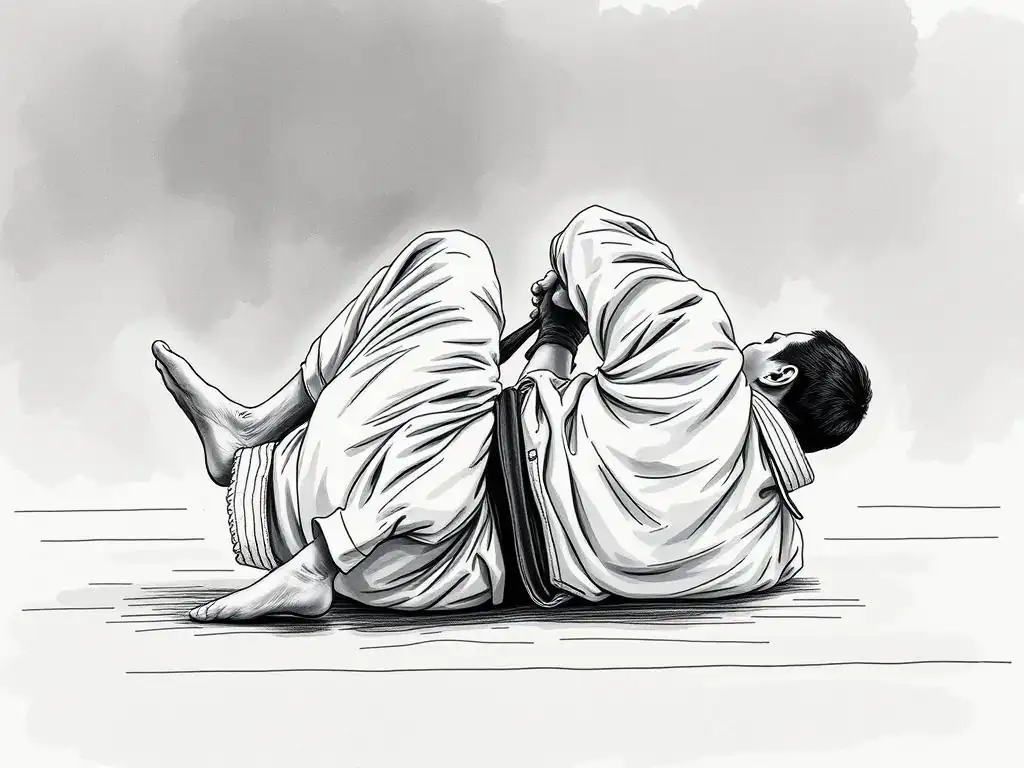
Sweeps from the Guard: Reversing Position
Sweeps are offensive techniques performed from the guard with the objective of reversing positions with the opponent, ending up on top (e.g., in side control, mount, or standing) while they end up on the bottom. Successful sweeps score points in competition (typically 2 points in IBJJF rules) and are a fundamental part of the BJJ guard player's arsenal. They rely on disrupting the opponent's balance and base using leverage, timing, and control.
The ability to sweep is crucial for preventing the opponent from settling into a dominant top position and for creating opportunities to pass their guard or initiate submissions from a more advantageous position. A diverse sweeping game, utilizing techniques from different guard types, makes a practitioner's guard much harder to defend against. Developing powerful and well-timed sweeps is a key component of moving from a purely defensive guard to a dynamic offensive platform.
Butterfly Guard Sweeps: Techniques and Setups
The butterfly guard is particularly known for its powerful elevation sweeps. The basic butterfly sweep often involves securing an arm drag or collar tie on one side of the opponent, using the butterfly hooks to lift their corresponding leg slightly, and then extending the opposite leg hook while bridging and turning to knock them over in the direction of the arm drag. Another common setup is the double underhook sweep, where you secure underhooks on both of the opponent's arms, use your hooks to lift them, and then choose a direction to sweep based on their reaction.
These sweeps are effective because they capitalize on the opponent's proximity and posture while kneeling or sitting. The hooks provide incredible leverage to disrupt their base. Mastering butterfly sweeps requires timing the elevation with the upper body control and understanding how to react to the opponent's balance shifts. It's a highly dynamic guard type that leads to exciting exchanges and frequent position reversals.
Scissor Sweep from Closed Guard: A Classic Technique
The scissor sweep is one of the most fundamental and widely taught sweeps from the closed guard. It involves using your legs in a scissor-like motion to off-balance the opponent and knock them over. The setup often begins by breaking the opponent's posture, establishing grips (commonly on a sleeve and the opposite collar), and then positioning one leg across the opponent's chest or shoulder as a frame, while the other leg acts as a hook behind their knee.
The execution involves simultaneously pulling with the collar grip, pushing with the arm frame, and extending the leg across the chest while pulling the leg hook behind the knee, creating a rotational force that sweeps the opponent to the side. The scissor sweep is effective because it uses leverage against the opponent's base and posture. It's a foundational sweep that every BJJ practitioner should learn early in their training to develop offensive skills from the closed guard.
De La Riva Guard Sweeps: Unbalancing Your Opponent
The De La Riva guard offers a multitude of sweeps, many of which are highly effective against a standing opponent. One common DLR sweep is the stand-up sweep (also known as the "berimbolo setup" sweep). This involves controlling the opponent's pants leg and sleeve, using the DLR hook and inner leg hook to disrupt their balance, and then elevating yourself to a standing position while maintaining control of their leg, ultimately taking them down.
Another effective DLR sweep is the ankle pick sweep, where you use the DLR hook and grip on the opponent's leg to off-balance them backward, while simultaneously reaching down to grab their opposite ankle and pull it, causing them to fall. DLR sweeps often involve significant hip movement and transitions to other leg-entanglement positions like the single leg X-guard before completing the sweep. Their effectiveness lies in isolating and controlling one of the opponent's primary base supports (their leg).
Submissions from the Guard: Finishing the Fight
Beyond sweeps, the guard is a potent platform for applying submissions to finish the match. Submissions from the guard leverage the control and leverage gained from the position to apply joint locks or chokes. Successfully finishing submissions from the guard often requires breaking the opponent's posture, isolating a limb or the neck, and applying pressure while preventing their escape.
Developing a few high-percentage submissions from your preferred guard types is crucial for being a threat from your back. While sweeps aim to reverse position, submissions aim to end the fight directly. A good guard player constantly looks for opportunities to transition from control and sweeping attempts into submission entries, keeping the opponent constantly under threat.
Triangle Choke from Guard: Setup and Execution
The triangle choke is a classic and highly effective blood choke that can be initiated from various guard positions, most commonly the closed guard or open guards like spider guard. The basic setup from closed guard involves breaking the opponent's posture, getting an arm across your centerline, and then throwing one leg over their shoulder and locking it with the other leg behind your knee, trapping their neck and one arm.
Execution involves controlling the opponent's free arm, angling your body (often by shrimping out), lifting your hips, and squeezing your legs together to apply pressure to the carotid arteries. The triangle choke is powerful because it uses the strong leg muscles to apply pressure and is difficult to defend if locked on tightly. It requires flexibility and precision in the leg placement and body angling.
Armbar from Guard: Variations and Finishes
The armbar is a joint lock targeting the elbow, and the guard provides numerous entries to this submission. From closed guard, a common entry involves controlling one of the opponent's arms, breaking their posture, and then swinging one leg over their head while maintaining control of the arm, positioning your hips close to their shoulder, and extending their arm across your hips to apply pressure to the elbow joint.
Variations exist from almost every guard type. For example, spider guard offers entries by isolating an arm and using the spider hook as a lever. De La Riva guard can transition to armbars as the opponent attempts to pass. Finishing the armbar requires keeping the opponent's thumb pointing up, maintaining hip pressure against their elbow, and extending your hips while pulling down on their wrist. It's a versatile attack that punishes opponents who leave their arms exposed.
Omoplata from Guard: An Uncommon but Effective Submission
The omoplata is a shoulder lock submission that can be initiated from various guard positions, often from the closed guard or open guards like spider or lasso guard. It involves isolating one of the opponent's arms and using your leg to control their shoulder joint, applying rotational pressure. A common entry from closed guard involves getting an arm across your body, controlling the sleeve, and throwing the leg on the same side over their shoulder, then rotating your body to sit up and secure the position, trapping their shoulder under your leg.
The omoplata is often less expected than armbars or triangles, making it a potent surprise attack. It also frequently leads to transitions, as opponents defending the omoplata may expose their back or transition to other positions. Finishing requires controlling their posture, preventing them from rolling out, and applying pressure by rotating your body and driving your hips forward.
Guillotine Choke from Closed Guard
The guillotine choke is a standing or kneeling front headlock choke, but it is also a highly effective submission from the closed guard, particularly when the opponent attempts to posture up or drive forward. The setup involves securing a front headlock grip around the opponent's neck with one arm, often with the hand gripping your own wrist (S-grip or traditional grip).
From closed guard, as the opponent pushes into you or tries to posture up, you can quickly secure the grip, lock your closed guard tightly around their waist to control their posture, and then arch your back and pull up on the choke, applying pressure to their trachea or carotid arteries depending on the specific grip and angle. The guillotine from closed guard is often a quick submission that punishes opponents who fail to maintain proper posture.
Transitions and Setups: Combining Sweeps and Submissions
A skilled guard player doesn't just have a list of isolated techniques; they understand how to transition between different guard types and how to use sweep attempts to set up submissions, and vice versa. For instance, an opponent defending a sweep attempt might shift their weight or posture in a way that exposes an arm for an armbar or opens up space for a triangle choke entry.
Similarly, attempting a submission can cause an opponent to react in a way that makes them vulnerable to a sweep. For example, if an opponent successfully defends a triangle choke by posturing up, they might become susceptible to a hip bump sweep from closed guard. This fluid transition game is what makes a guard truly dangerous and difficult to pass. It requires reading the opponent's reactions and having practiced sequences that link different techniques together.
Developing Your BJJ Guard Game: Drills and Training
Essential Drills for BJJ Guard Retention
Developing strong Brazilian JiuJitsu guard defense requires consistent drilling specifically focused on maintaining the guard position. Essential drills include hip escape (shrimping) drills, both solo and with a partner applying light pressure. Partner drills focusing on maintaining frames against pressure, such as having a partner apply chest pressure while you use arm and leg frames to create space, are crucial.
Another key drill involves a partner attempting slow, deliberate guard passes (like a knee cut or stack pass) while you focus solely on using your legs, hips, and frames to prevent them from stabilizing the pass and recovering your guard. These drills should be practiced from various guard types to build adaptability. Spending dedicated time on guard retention solidifies the defensive foundation of your guard.
Drills for BJJ Guard Passing Defense
Drilling specific defenses against common guard passes is vital for improving Brazilian JiuJitsu guard defense. This involves having a partner initiate a specific pass, such as the knee cut or double under, and drilling your predetermined defensive reaction repeatedly. For example, drill the sequence of framing, shrimping, and replacing the guard against a partner attempting a knee cut pass.
These drills should start slowly to focus on technique and timing, gradually increasing speed and resistance as proficiency grows. Practicing defending against different types of pressure (heavy pressure vs. speed) from different partners also helps. This targeted drilling builds muscle memory and improves reaction time, making your Brazilian JiuJitsu guard defense more intuitive and effective under pressure.
Drills for BJJ Guard Sweeps and Submissions
Drilling offensive techniques from the guard is equally important. This involves practicing the mechanics of your favorite sweeps and submissions with a cooperative partner. For sweeps, drill the setup, timing, and execution repeatedly, focusing on the weight transfer and leverage points. For submissions, practice the entry, control, and finishing mechanics, ensuring proper alignment and pressure.
Combine these drills into sequences. For example, drill transitioning from a sweep attempt into a submission entry if the sweep is defended. Practicing these offensive drills builds confidence and proficiency, turning your guard into a genuine threat. Aim to drill a few key sweeps and submissions from your primary guard positions until they become second nature.
Live Rolling Strategies: Implementing Your Guard in Sparring
Live rolling (sparring) is where you test and refine your guard game against resisting opponents. When rolling, focus on implementing the techniques and principles you've been drilling. Don't just try to survive; actively work your guard. For example, dedicate rounds to specifically working your closed guard, focusing on breaking posture and attempting scissor sweeps or triangles.
Against different opponents (heavier, lighter, faster, slower), observe how they attempt to pass and adapt your Brazilian JiuJitsu guard defense accordingly. Use rolling as an opportunity to identify weaknesses in your guard – perhaps you struggle against pressure passers, or opponents easily break your open guard grips. Use these insights to inform your future drilling and training focus. Gradually increase the intensity and complexity of your guard game in live rolling as your skills develop.
Advanced BJJ Guard Concepts and Techniques
The Importance of Frames and Levers in BJJ Guard
Advanced guard play heavily relies on a nuanced understanding and application of frames and levers. Frames are structures created with your bones (typically arms and legs) to maintain distance and prevent the opponent from applying pressure or advancing. Examples include an arm framing against the opponent's hip during a knee cut pass defense or a knee shield creating space in half guard.
Levers are created by using your limbs or grips to control and manipulate the opponent's weight and balance. Examples include using a spider hook on the bicep to extend their arm and disrupt posture, or using a De La Riva hook to control their leg and unbalance them. Mastering the creation and utilization of frames and levers is crucial for controlling the opponent's body mechanics from your back and forms the backbone of sophisticated Brazilian JiuJitsu guard defense and offense.
Using Hip Movement for BJJ Guard Control
Exceptional hip movement is a hallmark of advanced guard players. It's not just about shrimping to escape bad positions; it's about constant, subtle adjustments to maintain optimal angle, create space, and load the opponent's weight onto your hooks or frames. Advanced hip movement allows you to transition smoothly between different guard types, evade pressure, and generate power for sweeps.
Consider the agility of elite guard players like Marcelo Garcia or Rafa Mendes; their ability to move their hips independently of their upper body allows them to constantly re-align, escape grips, and set up attacks from seemingly impossible positions. Drilling hip escapes, bridging, and rotational movements extensively builds the body awareness and strength necessary for advanced guard control.
Breaking Down Your Opponent's Posture from Guard
A key objective from many guard positions, especially closed guard, is breaking the opponent's posture. A well-postured opponent is stable, strong, and difficult to sweep or submit. By pulling their head down, controlling their arms, or disrupting their base, you can force them to bend over, bringing their weight onto you and compromising their ability to defend.
Techniques like collar ties, sleeve grips, and using your legs to pull their hips in are all employed to achieve this. Once posture is broken, the opponent is vulnerable to a wide range of attacks. Maintaining broken posture requires constant effort and grip fighting, as opponents will actively try to re-establish a strong base. This is a fundamental offensive strategy from the guard.
Combining Different Guard Types for a Dynamic Game
Truly advanced guard players don't specialize in just one guard; they develop the ability to seamlessly transition between multiple guard types based on the opponent's posture, grips, and reactions. If an opponent stands up from closed guard, you might transition to De La Riva or X-guard. If they try to pass your spider guard, you might transition to lasso or half guard.
This dynamic approach makes your guard unpredictable and much harder to pass. It requires a deep understanding of the principles underlying different guards and how they connect. Developing a dynamic guard game involves drilling transitions explicitly and practicing them extensively in live rolling. It's about having a fluid response to whatever the opponent does, always maintaining control and threatening with offense.
Common Mistakes to Avoid in Your BJJ Guard Game
Allowing Your Opponent to Establish a Strong Base
One of the most critical errors in guard play is allowing the opponent to establish a strong, stable base within your guard. This happens when you fail to use your legs and arms effectively to control distance and posture. A well-based opponent is heavy, difficult to move, and has the leverage to apply passing pressure effectively.
To avoid this, you must be proactive with your frames and hooks. If the opponent starts to get comfortable, use your legs to push, pull, or elevate them, constantly disrupting their balance. Don't be passive; use your limbs to make them unstable from the moment they engage with your guard. This proactive approach is essential for effective Brazilian JiuJitsu guard defense.
Neglecting Your Guard Retention
Another common mistake is focusing solely on offense (sweeps and submissions) while neglecting guard retention. While attacking is important, if you cannot prevent your guard from being passed, you'll spend most of your time in defensive, disadvantageous positions. Strong Brazilian JiuJitsu guard defense is the foundation.
Guard retention is the ability to keep your legs between you and your opponent and recover your guard if they start to pass. This requires dedicated drilling of hip escapes, framing, and recognizing passing attempts early. Prioritize developing solid guard retention skills before trying to master complex offensive techniques. A practitioner with excellent guard retention can survive and recover even against superior opponents.
Relying Too Heavily on One Type of Guard
Becoming overly reliant on a single guard type makes your game predictable and easier for opponents to strategize against. If you only play closed guard, opponents will focus on closed guard passes. If you only play spider guard, they'll work on breaking spider grips.
While it's natural to have preferred guards, developing proficiency in at least two or three different guard types (e.g., closed guard for control, open guard for dynamism, and half guard for recovery) makes you a much more well-rounded and adaptable guard player. This forces opponents to be proficient in defending multiple guard styles, spreading their defensive capabilities thin.
Not Actively Seeking Sweeps and Submissions
Conversely, some practitioners become too passive in their guard, focusing solely on defense and survival. While strong Brazilian JiuJitsu guard defense is necessary, a guard that doesn't pose an offensive threat is less effective in the long run. Opponents will feel less pressure and can pass more deliberately.
You must actively look for opportunities to sweep or submit from your guard. Use your control and frames not just to defend, but to create openings. Even if you don't finish the attack, the threat forces the opponent to react, often creating new opportunities. A balance between solid defense and active offense is key to a dominant guard game.
The Future of the BJJ Guard: Evolution and Innovation
Emerging Trends in BJJ Guard Techniques
The BJJ guard is a constantly evolving aspect of the art, with new techniques and variations emerging regularly, often driven by top competitors. Recent trends have included increased emphasis on lapel guards (using the opponent's gi lapel for control and leverage), worm guard (a specific lapel guard variation), and sophisticated leg entanglement entries from various open guards.
These innovations often build upon existing principles but find novel ways to control the opponent's base, posture, and mobility. Staying current with these trends involves watching high-level competition, attending seminars, and training at gyms known for innovative guard play. While not every new technique becomes a staple, they push the boundaries of what's possible from the back.
Adapting Your Guard to Different Opponent Styles
A truly effective guard player can adapt their game to different opponent styles. Against a strong, pressure passer, your Brazilian JiuJitsu guard defense needs to be robust, focusing on frames and preventing close proximity. Against a fast, agile opponent who relies on speed passes, you might favor open guards that allow you to maintain distance and utilize dynamic leg movements.
Against opponents known for specific attacks (e.g., leg lockers), you need to be aware of their entries from your guard and have defenses prepared. This adaptability comes with experience and consciously working your guard against a variety of training partners with different body types and game styles. It's not just about having a guard; it's about having a guard that works against anyone.
The Importance of Continuous Learning in BJJ
The dynamic nature of the BJJ guard underscores the importance of continuous learning in Brazilian Jiu-Jitsu. The art is not static; techniques evolve, and strategies change. To maintain an effective guard, you must constantly seek new knowledge, refine existing techniques, and adapt to new challenges.
This involves consistent training, drilling, rolling, seeking feedback from instructors and training partners, and studying BJJ resources (like this website!). The journey of mastering the guard is a lifelong one, requiring dedication and a willingness to evolve alongside the art itself.
Conclusion: Mastering the Guard for BJJ Dominance
The BJJ Guard: A Lifelong Journey of Learning and Improvement
Mastering the BJJ guard is not a destination but a continuous journey. It requires dedication to understanding fundamental principles, drilling techniques repeatedly, and applying them intelligently in live sparring. From the foundational closed guard to the intricacies of modern open guards, each position offers layers of complexity to explore. Developing strong Brazilian JiuJitsu guard defense provides the necessary foundation, while cultivating offensive threats through sweeps and submissions transforms the guard into a powerful weapon.
Embrace the Guard: A Powerful Weapon in Your BJJ Arsenal
View the guard not as a position of weakness, but as a dynamic platform for control, defense, and attack. A well-developed guard makes you incredibly difficult to submit or pass and provides endless opportunities to reverse positions or finish the fight. Embrace the challenge of learning and refining your guard game. It is arguably the most distinctive and potent aspect of Brazilian Jiu-Jitsu, offering leverage and control that can neutralize size and strength advantages. Invest the time and effort into your guard, and it will become a powerful and reliable weapon in your BJJ arsenal.
Frequently Asked Questions
What is the BJJ Guard and why is it so important in Brazilian Jiu-Jitsu?
The guard is a fundamental position in BJJ where you control your opponent from your back. It's crucial because it allows you to defend against attacks and launch your own submissions and sweeps.
What are some common types of guards in Brazilian Jiu-Jitsu?
Several variations exist, including closed guard, open guard, butterfly guard, and half guard. Each guard offers different control points and offensive opportunities.
How can I improve my guard retention in BJJ?
Focus on maintaining strong grips, controlling distance with your legs, and anticipating your opponent's movements. Consistent drilling and positional sparring are key.
What are some effective attacks that can be launched from the guard position?
The guard is a great platform for submission attacks like armbars, triangles, and omoplatas. You can also execute sweeps to reverse the position and gain top control.
What are the essential principles of guard defense in Brazilian Jiu-Jitsu?
Prioritize preventing your opponent from passing by maintaining a strong structure and controlling their posture. Also, use framing techniques to create space and defend against strikes.
Final Reflection: Embracing the Power of the Guard
The journey through the Brazilian Jiu-Jitsu guard, as we've explored, is more than just a series of techniques; it's a testament to the transformative power of leverage and strategy. In a world that often prioritizes brute strength, the guard offers a compelling alternative, a way to defend and even dominate from a seemingly vulnerable position, a skill increasingly relevant in self-defense and competitive grappling alike.
The guard's influence extends far beyond the mats. It teaches us resilience, adaptability, and the importance of seeing opportunity where others see only disadvantage. This concept of finding strength in perceived weakness resonates deeply with the challenges we face in everyday life. It's not the size of the dog in the fight, but the size of the fight in the dog.
This adage, often attributed to Mark Twain, perfectly encapsulates the spirit of the guard and its enduring appeal.
Now, as you step off the mats and back into your daily life, consider the lessons learned within the guard. How can you apply the principles of leverage, strategy, and resilience to overcome obstacles and achieve your goals? Embrace the power of the guard, not just in Brazilian Jiu-Jitsu, but in every aspect of your life, and discover the strength you possess, even when you feel you're on your back.
Unleash Your Guard Potential!
Thank you for diving into the world of the BJJ guard! We hope you've gained a deeper understanding of its defensive and offensive capabilities. Now, it's time to put that knowledge into action.
- Commit to spending at least 15 minutes per training session specifically working on your guard retention and escapes.
- Share this guide with a training partner to explore and refine these techniques together, enhancing mutual growth.
- Reflect on your rolling sessions: What specific guard techniques could have improved your position or created an opening?
What single adjustment will you make to your guard game this week to see the biggest impact?