
The Blast Double Leg: Technique for Maximum Impact

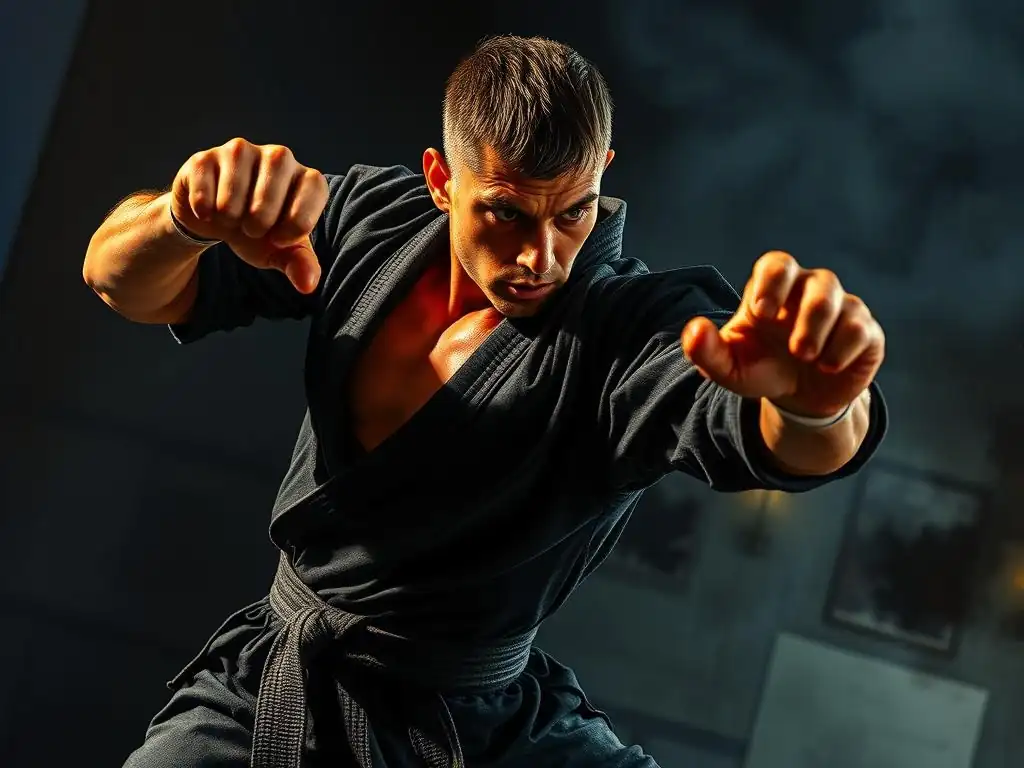
Welcome to Martial Arts Mastery, your gateway to understanding the profound world of combat. Ever wondered how to execute a flawless and devastating takedown? This article delves deep into the Blast Double Leg technique training, revealing the secrets to mastering this powerful maneuver. Prepare to unlock a new level of grappling prowess and discover the nuances that separate a good takedown from a truly impactful one. Intrigued? Let's begin!
- The Single Leg Takedown: Technique for Maximum Impact
- Mastering the Single Leg Takedown: A Comprehensive Guide
- Understanding the Fundamentals of the Single Leg
-
Step-by-Step Breakdown of the Single Leg Technique
- Step 1: Setting Up the Single Leg - Initial Movement and Targeting
- Step 2: Penetration Step and Level Change for the Single Leg
- Step 3: Securing the Leg: Grip and Position for Maximum Control
- Step 4: Lifting and Driving: Completing the Takedown
- Step 5: Finishing the Single Leg: Securing Top Position
- Advanced Single Leg Variations and Setups
- Drills and Training Exercises for Single Leg Proficiency
- Common Mistakes and How to Fix Them in Your Single Leg
- Integrating the Single Leg into Your Wrestling Game
- The Importance of Conditioning and Strength Training for Single Leg Success
- Single Leg: Technique Training for Different Skill Levels
- Analyzing Successful Single Leg Takedowns in Wrestling History
- Conclusion: Elevate Your Takedown Game with the Single Leg
-
Frequently Asked Questions
- What is the Blast Double Leg technique and what makes it effective?
- How does the Blast Double Leg differ from a standard double leg takedown?
- What are some key training tips for mastering the Blast Double Leg?
- What martial arts disciplines commonly utilize the Blast Double Leg?
- What are some common mistakes to avoid when performing the Blast Double Leg?
- Final Reflection: Mastering the Art of Domination
- Ignite Your Takedowns: Master the Blast Double!
The Single Leg Takedown: Technique for Maximum Impact
Mastering the Single Leg Takedown: A Comprehensive Guide
The single leg takedown stands as one of the most fundamental and effective techniques in wrestling and many martial arts disciplines. Its prevalence from youth leagues to the Olympic stage is a testament to its power and versatility. Mastering the single leg requires a deep understanding of its mechanics, consistent practice, and the ability to adapt it to different opponents and situations.
This comprehensive guide explores the technique, training methods, and strategic considerations necessary to make the single leg a cornerstone of your takedown game. Whether you're a beginner learning the basics or an experienced wrestler refining your attacks, dedicated Single Leg technique training is crucial for success.
Developing a dominant single leg involves more than just learning the steps; it requires cultivating explosiveness, timing, balance, and control. Wrestlers who excel with this technique often possess strong legs, a solid base, and the ability to read their opponent's reactions. Effective Single Leg technique training focuses not just on execution but also on the setups, finishes, and transitions that make the move truly devastating. By breaking down the technique into its core components and addressing common pitfalls, athletes can build a reliable and high-percentage takedown they can count on in critical moments.
Understanding the Fundamentals of the Single Leg
What is the Single Leg Takedown and Why is it Effective?
The single leg takedown is an offensive wrestling maneuver where the attacker secures one of the opponent's legs and drives forward or across their body to force them off balance and onto the mat. The primary goal is to get behind the opponent or secure a dominant position like side control or a leg ride after the takedown. Its effectiveness stems from the principle of leverage; by controlling one leg, the attacker removes a significant portion of the opponent's base, making it difficult for them to maintain balance and defend.
This technique is particularly effective because it allows the attacker to penetrate their opponent's defensive shell and get to a strong attacking angle. Unlike upper-body throws that often require close contact or breaking grips, the single leg can be initiated from a slight distance, making it safer against opponents with strong upper-body defense.
Data from collegiate wrestling tournaments often shows that single leg attacks account for a substantial percentage of successful takedowns, sometimes exceeding 40% of all initiated leg attacks due to their versatility and multiple finishing options. This high success rate underscores the importance of consistent Single Leg technique training.
Key Principles Behind a Powerful Single Leg
A powerful single leg relies on several core principles: penetration, level change, control, and drive. Penetration involves stepping deep into the opponent's space, getting your head to the side of their leg. The level change is crucial; dropping your hips low allows you to get under the opponent's defense and generate upward force.
Control is established by securing a strong grip on the captured leg, typically behind the knee or at the ankle, preventing the opponent from pulling it away or sprawling effectively. Finally, the drive is the forward or lateral pressure used to disrupt the opponent's balance and complete the takedown.
Another vital principle is head position. Keeping your head up and tight to the opponent's body (either hip or ribcage depending on the angle) is essential for maintaining control and preventing them from circling away or defending effectively. A common coaching point is "head up, eyes forward," emphasizing posture and forward pressure. Without proper head position and a strong drive, the opponent can easily defend by sprawling or circling out, turning your attack into a vulnerable position. Effective Single Leg technique training emphasizes mastering these fundamental principles before moving to advanced variations.
Essential Stance and Posture for Single Leg Execution
Executing a successful single leg begins with a strong, balanced wrestling stance. A good stance involves having your feet shoulder-width apart or slightly wider, with one foot slightly forward. Your knees should be bent, hips low, and back straight, maintaining a low center of gravity. This athletic posture allows for explosive movement and quick changes in direction, essential for both setting up and executing the attack. Your weight should be distributed evenly, allowing you to move forward, backward, or laterally instantly.
Maintaining good posture throughout the setup and execution is paramount. As you initiate the attack, dropping your level while keeping your back straight and head up is critical. Slouching or rounding your back during the level change compromises your power and makes you susceptible to counter-attacks. A common error in Single Leg technique training is neglecting stance and posture, which are the foundation of the move. Practicing maintaining a low, balanced stance and executing level changes with a straight back are fundamental drills for building a reliable single leg.
Step-by-Step Breakdown of the Single Leg Technique
Step 1: Setting Up the Single Leg - Initial Movement and Targeting
Setting up the single leg is often as important as the execution itself. This involves creating an opening and getting your opponent to react in a way that makes their leg accessible. Common setups include hand fighting to control ties (like collar ties or wrist control), using fakes or feints to draw a reaction, or pressuring the opponent to step back and expose a leg. The goal is to get the opponent to shift their weight or position their leg within your attack range.
Targeting the correct leg is also key. Often, wrestlers target the lead leg, as it is typically closer and easier to reach. However, attacking the trail leg can also be effective, especially if the opponent is heavily weighted on their lead leg. Effective Single Leg technique training incorporates various setup drills, focusing on hand fighting, movement, and observing opponent reactions to create optimal attack opportunities. A common setup might involve snapping the opponent's head down to get them to posture up, or using a sweep single motion to get them to step back.
Step 2: Penetration Step and Level Change for the Single Leg
The penetration step is the explosive movement that closes the distance and gets you into position to secure the leg. From your stance, you simultaneously drop your level by bending your knees and lowering your hips, while stepping forward with your lead leg deep between or outside your opponent's legs. Your trail leg follows, driving off the mat to generate power. This step should be deep and fast, aiming to get your lead knee past the opponent's lead foot line.
The level change must happen with or before the penetration step, not after. Dropping your hips low ensures you get under the opponent's defensive sprawl. Imagine trying to shoot under a table rather than into it. Your head should be kept up and aimed to the side of the opponent's body, not directly at their knee or hip, to maintain good posture and avoid head clashes. Practicing the penetration step and level change combination is a core part of Single Leg technique training, often done as a solo drill hundreds of times.
Step 3: Securing the Leg: Grip and Position for Maximum Control
Once you've penetrated, the immediate priority is securing a strong grip on the opponent's leg. The most common grip is behind the knee, cupping it with one or both hands. Another effective grip is securing the ankle with one hand while the other hand controls the thigh or hip. The key is to prevent the opponent from pulling their leg free or sprawling effectively. Your head should be tight to the side of their body (ribs or hip), driving forward.
Your body position relative to the opponent's leg is crucial for control. You want to be low, with your chest tight to their thigh, and your head driving into their side. This prevents them from gaining separation or using their leg to create distance. A common mistake in Single Leg technique training is securing a weak grip or allowing space between your body and the opponent's leg, which makes it easy for them to defend. Maintaining a "sticky" connection and constant pressure is vital.
Step 4: Lifting and Driving: Completing the Takedown
With the leg secured and your body tight, the next step is to lift and drive to break the opponent's balance and complete the takedown. Lifting involves using your legs and hips to elevate the captured leg slightly, further disrupting their base. Your back should remain straight, generating power from your lower body, not pulling with your arms. The drive is a relentless forward or diagonal pressure, pushing the opponent backward or across the mat.
The direction of the drive depends on the opponent's reaction and your finishing strategy. Driving straight back is effective if they are trying to stand tall. Driving across their body (e.g., cutting the corner) is often more effective against a strong sprawl, using their momentum against them. The power for the lift and drive comes from your legs and hips, not your upper body. Imagine driving a car forward with your legs. Consistent resistance training and drills focusing on leg drive are essential components of effective Single Leg technique training.
Step 5: Finishing the Single Leg: Securing Top Position
Completing the single leg takedown involves transitioning from controlling the leg to securing a dominant position on the mat. Common finishes include running the pipe (driving straight back until they fall), cutting the corner (driving across their body and circling behind), or switching to a double leg or tree top finish if the opponent is hopping on one leg. The finish needs to be quick and decisive to avoid being countered.
As the opponent goes down, your objective is to immediately transition to a position of control, such as securing the hips, locking up a cradle, or transitioning to side control. Avoid getting stuck on the leg as they fall, which can allow them to scramble back up or expose you to rolls. A successful finish results in two points in wrestling and puts you in a position to score further or control the match. Practicing various finishes in Single Leg technique training ensures you have multiple options regardless of how your opponent defends.
Advanced Single Leg Variations and Setups
The High Crotch Single Leg Transition
The high crotch is a takedown closely related to the single leg, targeting the opponent's thigh or hip area rather than just the knee or ankle. A common advanced technique is to transition from a single leg attempt to a high crotch, or vice-versa, based on the opponent's defense. If you shoot a low single leg and the opponent sprawls hard, pushing their weight back, you can slide your attacking arm up the leg to secure a high crotch grip on the inner thigh, allowing you to lift and elevate more effectively.
This transition requires excellent body awareness and the ability to change grips and angles quickly. It's particularly useful against opponents with strong lower body defense who are difficult to lift from a low single leg. By transitioning to the high crotch, you gain access to their center of gravity, making them easier to elevate and drive. Wrestlers like Cael Sanderson were masters of seamlessly transitioning between leg attacks, highlighting the importance of training these combinations in advanced Single Leg technique training.
Using Fakes and Feints to Set Up the Single Leg
Effective takedown artistry often involves deception. Using fakes and feints is a crucial advanced setup for the single leg. A fake shot involves mimicking the initial movement of a takedown (level change, slight step) without committing fully, aiming to draw a reaction from the opponent. If they react by sprawling or pulling a leg back, it creates an opening that you can immediately exploit with a real single leg attack on the exposed leg or the leg they shifted weight onto.
Feints can also involve upper body movements, like faking a collar tie snap to get the opponent to posture up, opening access to their legs. Wrestlers who use fakes effectively often increase their takedown percentage significantly. For instance, an opponent who reacts to 70% of fakes provides numerous opportunities for a well-timed follow-up attack. Integrating fake shots and feints into Single Leg technique training adds layers of strategy and unpredictability to your offense.
Adapting the Single Leg Against Different Opponents
No two opponents defend the single leg the same way. Adapting your single leg technique based on your opponent's body type, style, and typical defenses is a mark of an advanced wrestler. Against a taller opponent, you might need a deeper penetration step and focus on driving across their body to break their long base. Against a shorter, stockier opponent, you might need to focus more on lifting power and securing a tight grip to prevent them from sitting out or rolling.
Consider an opponent with a strong sprawl. You might need to focus on cutting the corner immediately upon penetration, using their forward momentum against them, rather than trying to drive straight through their defense. Against someone who hops on one leg when attacked, practicing finishes that secure the elevated leg (like the tree top finish) becomes essential. Advanced Single Leg technique training involves drilling the technique against various defensive reactions and body types to build adaptability.
Drills and Training Exercises for Single Leg Proficiency
Solo Drills for Perfecting the Penetration Step
Solo drills are fundamental for building muscle memory and perfecting the mechanics of the single leg. The most basic solo drill is the penetration step itself. Starting in your stance, practice dropping your level and stepping deep with your lead leg, driving off your trail leg. Repeat this hundreds of times, focusing on speed, depth, and keeping your head up and back straight.
Another solo drill is the "shadow wrestling" single leg. Go through the entire motion from setup (imaginary hand fight) to penetration, securing the imaginary leg, and completing the drive. Focus on fluidity and linking the movements together. Practicing the level change in isolation, dropping your hips low and exploding back up, also builds the necessary explosive power. Dedicating 10-15 minutes per practice to these solo Single Leg technique training drills can significantly improve your foundational mechanics.
Partner Drills for Developing Timing and Coordination
Partner drills allow you to practice the single leg against resistance and learn timing. A basic partner drill is the "penetration step to secure." One partner stands passively in a stance. The other practices the setup and penetration step, securing the leg, but stops before lifting or driving. This focuses solely on closing the distance and establishing control.
Another common drill is the "single leg finish drill." One partner starts with their leg already secured by the other. The top partner then practices various finishes (running the pipe, cutting the corner) against passive or light resistance. Live drilling, starting from a tie-up and attempting single legs, is the most direct form of Single Leg technique training, allowing you to react to real-time defense. Partner work is crucial for developing the feel and timing necessary for executing the technique effectively against a resisting opponent.
Resistance Training for Explosive Power in the Single Leg
Explosive power is essential for the penetration step and the drive to finish the single leg. Resistance training should focus on movements that mimic the mechanics of the takedown. Squats, lunges, and deadlifts build overall leg and back strength. Plyometric exercises like box jumps, jump squats, and bounding improve explosive power.
Training with resistance bands can also directly simulate the movement. Attach a band around your waist and anchor it behind you. Practice penetration steps against the band's resistance to build explosive forward movement. Driving against a partner holding a pad or belt can also simulate the finishing drive. Incorporating these types of exercises into your strength and conditioning program complements your mat-based Single Leg technique training, enhancing your ability to execute the move with force.
Common Mistakes and How to Fix Them in Your Single Leg
Addressing Common Errors in Footwork and Positioning
One of the most frequent mistakes in the single leg is poor footwork, specifically not taking a deep enough penetration step. A shallow step leaves you too far away from the opponent, making it easy for them to sprawl and defend. To fix this, focus on driving off your back leg and aiming your lead knee to land past the opponent's lead foot. Solo penetration step drills, focusing on depth and speed, are crucial for correction.
Another common error is poor positioning after securing the leg – standing too tall or letting your head drop. This reduces your leverage and control. The fix involves consciously keeping your hips low, chest tight to the opponent's thigh, and head up, driving into their side. Coaches often use cues like "stay glued" or "head in the pocket" during Single Leg technique training to emphasize this tight positioning.
Troubleshooting Problems with Grip and Control
A weak or loose grip on the opponent's leg is a major vulnerability. If you're only holding loosely behind the knee or at the ankle, they can easily pull their leg free. Ensure your grip is tight, using your hands to cup and secure the leg firmly. For the behind-the-knee grip, imagine trying to pull their heel towards their butt.
Lack of control also stems from not keeping your body tight to the opponent's leg. If there's space between your chest and their thigh, they have room to maneuver and defend. The fix is constant forward pressure and keeping your chest glued to their leg. Practicing grip fighting drills and partner drills focused solely on securing and maintaining control of the leg before attempting to finish can help solidify this aspect of Single Leg technique training.
Correcting Issues with Lifting and Driving
Many wrestlers try to lift the opponent with just their arms, resulting in a weak finish and fatigue. The power for the lift and drive comes from the legs and hips. If you're struggling to complete the takedown, it might be because you're not using your lower body effectively. Focus on keeping your back straight and driving forward using your legs, as if performing a standing squat or lunge.
Another issue is driving in the wrong direction against the opponent's defense. If they sprawl hard, driving straight back might just stall the move. Learn to recognize their defense and adjust your drive – cutting the corner against a hard sprawl is often more effective. Partner drills where the defender provides specific reactions (hard sprawl, hopping, sitting out) allow you to practice adapting your finish during Single Leg technique training.
Integrating the Single Leg into Your Wrestling Game
Combining the Single Leg with Other Takedowns
The single leg rarely exists in isolation in a high-level wrestling match. It's often chained together with other techniques to create a fluid and unpredictable offense. A common combination involves faking a single leg to set up a double leg, or vice-versa. If you attempt a single leg and the opponent defends by pulling the leg back, you can transition to a high crotch or even a double leg by scooping up the other leg.
Another combination is the snap down to a single leg. Snap the opponent's head down to break their posture, and as they stand back up, their leg becomes vulnerable for a quick single leg attack. Practicing these combinations in live drilling and situational Single Leg technique training helps you develop a more dynamic and effective overall takedown game.
Using the Single Leg in Competition Scenarios
The single leg is a go-to takedown in competition due to its reliability and scoring potential. It's effective from various tie-ups and ranges. Wrestlers often use it when they have a clear opening, feel they have a speed or power advantage, or want to force a scramble. In a close match, a well-executed single leg can be the difference between winning and losing.
Consider a scenario where the opponent has strong upper body defense. A single leg from space or off a snap is often the highest percentage attack. If the opponent is constantly pressuring forward, a well-timed low single can use their momentum against them. Analyzing your opponent's tendencies during a match and knowing when and how to deploy your single leg is a key strategic element developed through extensive Single Leg technique training and competition experience.
Developing a Strategic Approach to Takedowns with the Single Leg
Developing a strategic approach involves understanding your strengths, your opponent's weaknesses, and how the single leg fits into your overall game plan. Are you fast and explosive? Focus on quick, low single legs from space. Are you strong and relentless? Focus on driving finishes and wearing your opponent down. Do you have great hand fighting? Use it to create openings for your single leg.
Your strategy might involve using the single leg early in the match to test your opponent's defense, or saving it for later rounds when they are fatigued. You might set up your single leg with specific tie-ups you excel at. A strategic approach involves not just executing the move but knowing when and why to attempt it, and having follow-up options if the initial attack is defended. This level of tactical awareness is honed through thoughtful Single Leg technique training and analysis.
The Importance of Conditioning and Strength Training for Single Leg Success
Building Leg Strength for Explosive Takedowns
Powerful legs are non-negotiable for a dominant single leg. The initial penetration step and the drive to finish rely heavily on lower body strength and explosiveness. Exercises like squats, lunges, and deadlifts build foundational strength in the quads, hamstrings, and glutes – the primary muscles used in the single leg motion.
Plyometric exercises, such as box jumps and jump squats, specifically target the fast-twitch muscle fibers responsible for explosive power. Incorporating these into your routine will improve the speed and force of your penetration step. A wrestler with strong legs can shoot faster and drive through resistance more effectively, making their Single Leg technique training translate into more successful takedowns. For example, many elite wrestlers can squat over 1.5-2 times their body weight, demonstrating the importance of lower body strength.
Developing Core Stability for Enhanced Control
While leg strength provides the power, core stability is essential for maintaining posture, balance, and control throughout the single leg attempt. A strong core helps you keep your back straight during the level change, prevents you from getting off-balance when driving, and allows you to maintain a tight connection to the opponent's leg.
Exercises like planks, Russian twists, and leg raises strengthen the abdominal muscles and obliques. Movements like good mornings and back extensions build strength in the lower back, crucial for maintaining a strong posture. A stable core allows you to transfer power efficiently from your legs through your body and into the opponent. Including core work as a regular part of your training regimen is vital for maximizing the effectiveness of your Single Leg technique training.
Conditioning for Endurance During Takedown Sequences
Wrestling exchanges, especially takedown attempts, are highly anaerobic and require bursts of intense effort. A single leg attempt might involve multiple setups, a powerful shot, a scramble, and a finish, all requiring significant energy expenditure. Conditioning is crucial to maintain explosiveness and technique throughout a match, especially in later rounds.
Interval training, such as sprints or high-intensity rounds of drilling, mimics the stop-and-go nature of wrestling. Circuit training that combines strength exercises with cardiovascular bursts also builds wrestling-specific endurance. Being able to attempt multiple single legs throughout a match without your power or technique degrading is a significant advantage gained through dedicated conditioning alongside your Single Leg technique training.
Single Leg: Technique Training for Different Skill Levels
Single Leg Drills for Beginners
Beginners should focus on mastering the absolute fundamentals: stance, level change, and the penetration step. Simple drills like repeated penetration steps across the mat (solo) or stepping into a partner's leg without resistance are ideal starting points. The focus is on correct form, depth, and speed, not necessarily finishing the takedown.
Partner drills where one person holds a static leg position while the beginner practices securing the grip and maintaining tight body position are also effective. Live drilling for beginners should start with limited resistance, gradually increasing as confidence and technical proficiency grow. The goal of initial Single Leg technique training for beginners is to build a solid foundation of mechanics and muscle memory.
Advanced Single Leg Strategies for Experienced Wrestlers
Experienced wrestlers should focus on refining setups, finishes, and counter-reactions. This includes drilling specific hand fighting sequences that lead directly into a single leg, practicing transitions between different leg attacks (single to high crotch, single to double), and drilling finishes against realistic, high-resistance defenses.
Advanced Single Leg technique training also involves analyzing opponents and developing specific game plans. This might include drilling specific single leg variations that exploit a particular opponent's tendencies, such as drilling low singles against someone who stands tall, or practicing cutting the corner against a hard sprawler. Mental preparation and visualization of successful single leg attacks are also valuable for experienced athletes.
Customizing Your Single Leg Approach Based on Body Type and Style
Your body type and natural style should influence how you approach the single leg. A shorter, stockier wrestler might excel at powerful, driving finishes from a low single, focusing on strength and leverage. A taller, lankier wrestler might find more success with faster, penetration-style single legs from space, relying on speed and reach.
Someone with long arms might prefer gripping the ankle and controlling the distance, while someone with shorter arms might favor the tight behind-the-knee grip. Analyzing your physical attributes and natural movements allows you to customize your Single Leg technique training to emphasize the variations and finishes that best suit you, making the technique feel more natural and effective.
Analyzing Successful Single Leg Takedowns in Wrestling History
Dan Gable - A Case Study in Single Leg Execution
Dan Gable, the legendary Olympic gold medalist and coach, was renowned for his relentless pressure and mastery of fundamental techniques, including the single leg. Gable didn't necessarily use flashy setups; his single leg was often initiated from basic tie-ups or even from space, relying on sheer speed, explosiveness, and an unbreakable will to finish.
His single leg was characterized by a deep, powerful penetration step and an immediate, driving finish, often running the pipe until the opponent was flat on their back. Gable's success highlighted that technical perfection and relentless execution, honed through countless hours of Single Leg technique training, could overcome even the toughest defenses. His matches serve as prime examples of how a fundamental move, executed with intensity and precision, can dominate opponents.
Jordan Burroughs - Adapting the Single Leg in High-Pressure Situations
Jordan Burroughs, multiple world champion and Olympic gold medalist, is arguably the most prominent single leg artist of the modern era. His "blast double" (which is often a form of single leg that transitions quickly to both legs) and his traditional single leg are devastatingly effective, even against the world's best. Burroughs' success is a masterclass in setting up the single leg through sophisticated hand fighting and fakes, and his ability to finish from seemingly impossible positions.
Burroughs often secures the leg and then engages in a dynamic battle, adapting his finish based on the opponent's defense – whether it's elevating the leg, cutting the corner, or transitioning to a double leg. His matches demonstrate the importance of adaptability and having multiple finishing options, showcasing advanced Single Leg technique training applied under intense pressure. Watching footage of Burroughs' single leg attacks provides invaluable insights into modern execution and strategy.
Conclusion: Elevate Your Takedown Game with the Single Leg
The single leg takedown is a cornerstone technique for any wrestler or martial artist incorporating takedowns into their repertoire. Its effectiveness stems from fundamental principles of leverage, speed, and control. While the basic steps are relatively straightforward, mastering the single leg requires dedicated and consistent practice, focusing on everything from the initial setup and penetration to securing the leg, driving power, and completing the finish.
By incorporating solo and partner drills, strength and conditioning, and strategic analysis into your regimen, you can significantly improve your single leg proficiency. Learning from the examples of legendary wrestlers like Dan Gable and Jordan Burroughs provides insight into both the fundamental power and the advanced adaptability of the technique. Integrating the single leg effectively into your overall game, through focused Single Leg technique training, will undoubtedly elevate your ability to control the action and score points on the mat.
Frequently Asked Questions
What is the Blast Double Leg technique and what makes it effective?
The Blast Double Leg is a powerful takedown technique in grappling. Its effectiveness lies in its explosive entry and ability to quickly unbalance an opponent.
How does the Blast Double Leg differ from a standard double leg takedown?
Unlike standard double legs, the Blast Double Leg emphasizes speed and power at the initial entry. This aggressive approach aims to overwhelm the opponent and secure the takedown with force.
What are some key training tips for mastering the Blast Double Leg?
Focus on developing explosive leg strength, practicing proper footwork and angles, and mastering the timing of the shot to maximize impact.
What martial arts disciplines commonly utilize the Blast Double Leg?
The Blast Double Leg is frequently employed in wrestling, mixed martial arts (MMA), and Brazilian Jiu-Jitsu (BJJ), where takedowns are crucial for controlling the fight.
What are some common mistakes to avoid when performing the Blast Double Leg?
Avoid telegraphing your shot, maintain a low center of gravity, and ensure you drive through your opponent to avoid getting stuffed or countered.
Final Reflection: Mastering the Art of Domination
The journey through the intricacies of the blast double leg, as outlined in this article, reveals more than just a wrestling technique; it unveils a pathway to unleashing explosive power and unwavering control. The principles discussed, from stance and penetration to finish and follow-through, are not merely steps in a sequence, but rather a holistic approach to dominating an opponent and achieving peak performance. This understanding is profoundly relevant today, as the demand for effective and efficient grappling techniques continues to rise across various combat sports and self-defense disciplines.
The impact of mastering the blast double leg extends far beyond the wrestling mat. It cultivates discipline, enhances physical prowess, and instills a mindset of relentless pursuit. The dedication required to perfect this technique mirrors the dedication needed to succeed in any challenging endeavor. The only way to do great work is to love what you do.
- Steve Jobs. This quote resonates deeply, as the passion and commitment poured into mastering the blast double leg translate into a powerful force, shaping not only athletic ability but also personal character.
Now, consider the lessons learned. The precision, the power, the unwavering focus required to execute a successful blast double leg – these are qualities that transcend the physical realm. How can you apply this same dedication and explosive energy to your own goals? Embrace the challenge, refine your technique, and unleash your own inner force. The path to mastery, in wrestling and in life, begins with a single, decisive step.
Ignite Your Takedowns: Master the Blast Double!
Thanks for diving deep into the power of the blast double leg! We hope you’ve gained valuable insights into executing this explosive takedown. Now, it's time to put that knowledge into action and elevate your grappling game.
- Hit the mats and drill! Dedicate your next training session to mastering the blast double, focusing on speed, technique, and footwork.
- Review footage of successful blast doubles from high-level wrestlers and MMA fighters to identify subtle nuances in their approach.
- Share this article with your training partners and discuss how you can incorporate this technique into your sparring sessions.
What specific drill are you going to use this week to improve your blast double entry?