
Armored Dagger Combat: Techniques for Breaching Knightly Defenses

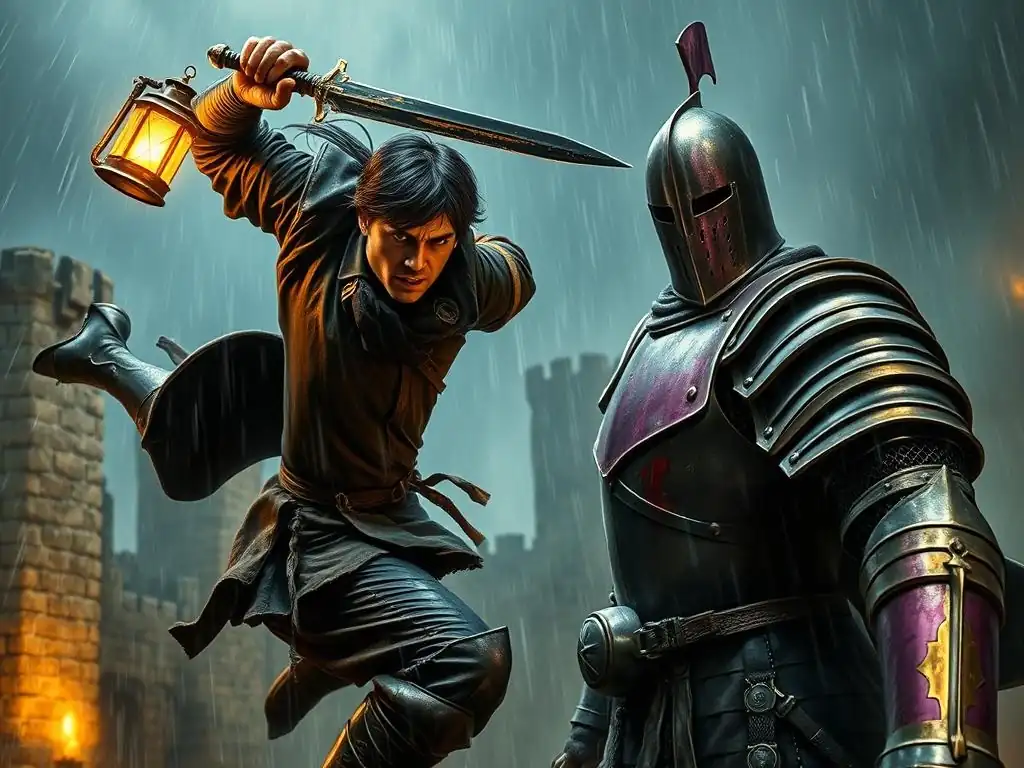
Welcome to Martial Arts Mastery, where we delve into the profound world of combat traditions. Prepare to journey back in time and explore the deadly precision of Medieval armored dagger fighting techniques. How did warriors overcome the seemingly impenetrable defenses of a knight? Uncover the secrets, tactics, and specialized skills developed to exploit the vulnerabilities of plate armor and learn how these principles resonate even today. Intrigued? Let's begin.
- Introduction to Medieval Armored Dagger Fighting Techniques
- Understanding Knightly Armor and its Weak Points
- Essential Armored Dagger Fighting Techniques
- Breaching Knightly Defenses: Advanced Dagger Techniques
- Specific Armored Dagger Techniques and Maneuvers
- Grappling and Takedowns in Armored Dagger Combat
- Training Drills for Armored Dagger Fighting
- Historical Examples and Interpretations of Armored Dagger Combat
- Safety Considerations for Practicing Armored Dagger Techniques
- Conclusion: Mastering Armored Dagger Fighting in HEMA
-
Frequently Asked Questions
- What made armored dagger fighting techniques necessary in the Medieval period?
- What are some of the key targets when fighting a knight in armor with a dagger?
- What types of daggers were typically used in armored combat?
- Were there specific techniques for disarming a knight in armor with a dagger?
- How does the historical understanding of armored dagger fighting inform modern self-defense strategies?
- Final Reflection: The Enduring Legacy of Skill and Innovation
- Uncover the Secrets: Master Armored Combat Now!
Introduction to Medieval Armored Dagger Fighting Techniques
The Evolution of Dagger Combat Against Armor
The development of effective Medieval armored dagger fighting techniques was a direct response to the increasing sophistication of plate armor throughout the late medieval period. As armor became more complete and resistant to sword cuts and even spear thrusts, warriors needed alternative methods to neutralize a fully encased opponent. The dagger, specifically designed with a stiff, often triangular or square-section blade, became a crucial tool for exploiting the inherent weaknesses in even the finest plate harness.
This shift in combat strategy is clearly documented in historical martial arts treatises from the 14th and 15th centuries. Masters like Fiore dei Liberi and Hans Talhoffer dedicated significant portions of their works to daga en armadura (dagger in armor) techniques, illustrating grappling, joint manipulation, and precise dagger thrusts aimed at vulnerable points. This evolution wasn't just about having a sharp point; it required a deep understanding of human anatomy, armor construction, and leveraged body mechanics to deliver force effectively through relatively small gaps or against materials designed to deflect blows. The ability to fight effectively with a dagger when both combatants were heavily armored became a hallmark of a skilled warrior.
Importance of Armored Dagger Fighting in HEMA
In the modern practice of Historical European Martial Arts (HEMA), the study of Medieval armored dagger fighting techniques holds significant importance. It offers unique insights into the realities of late medieval combat, where close-quarters grappling and precision were paramount once opponents closed the distance. Unlike unarmored combat, where cuts and broad thrusts are common, armored combat with a dagger emphasizes leverage, control, and targeting specific, small areas, often within a grappling context.
Training in these techniques provides practitioners with a deeper appreciation for the strategic thinking required in a fully armored context. It highlights the limitations and possibilities presented by wearing 25-35 kg of steel. Furthermore, armored dagger fighting drills, even when simulated with protective gear, build essential skills applicable to other HEMA disciplines, such as understanding body mechanics under load, effective close-range grappling, and the crucial ability to identify and exploit defensive weaknesses. Mastering these techniques is not merely an academic exercise but a vital part of reconstructing and understanding historical martial prowess.
Understanding Knightly Armor and its Weak Points
Anatomy of Medieval Plate Armor: A Primer
Medieval plate armor evolved over centuries, reaching its peak in the 15th and 16th centuries with the development of the full harness. A complete suit of plate armor typically consisted of numerous articulated pieces designed to cover the entire body, providing excellent protection against cuts, thrusts, and blunt force trauma. Key components included the helm (helmet), gorget (neck protection), pauldrons (shoulder), rerebraces and vambraces (upper and lower arm), gauntlets (hands), cuirass (torso - breastplate and backplate), faulds and tassets (waist and upper thigh), cuisses (thigh), poleyns (knee), greaves (lower leg), and sabatons (feet).
The armor was constructed from hardened steel plates, typically ranging in thickness from 1.5 mm to 2.5 mm in critical areas like the breastplate and helm, tapering to slightly thinner gauge in more articulated sections like the limbs (around 1 mm to 1.5 mm). These plates were carefully shaped to deflect blows and riveted or strapped together with leather straps and buckles. While incredibly protective, the inherent need for movement created specific areas of relative weakness that Medieval armored dagger fighting techniques were designed to exploit.
Identifying Vulnerable Areas in Knightly Armor for Dagger Attacks
Despite the impressive coverage of plate armor, several areas remained relatively vulnerable, making them prime targets for Medieval armored dagger fighting techniques. These vulnerabilities were often located where plates overlapped or where articulation was necessary for movement. Key targets included the eye slits or ventail of the helm, the armpits (often covered by mail or internal plates but still a potential point of entry), the groin (similar protection to the armpits), the neck (especially at the join between the helm and gorget), and the backs of the knees and elbows where plates met.
Historical manuals explicitly describe targeting these points. For example, Fiore dei Liberi illustrates thrusts aimed at the armpit or groin when grappling, and Talhoffer shows techniques focusing on the face or neck. While the steel plates themselves were generally impervious to a dagger thrust, the gaps and joins represented opportunities. A well-placed, forceful thrust with a stiff dagger point into an eye slit or through mail reinforcement could penetrate and inflict a disabling or fatal wound. Understanding the specific construction of the opponent's armor was crucial for identifying these fleeting vulnerabilities.
Limitations of Armor: Exploitable Gaps and Joints
The primary limitations of plate armor, from the perspective of Medieval armored dagger fighting techniques, were the necessary gaps and the flexibility of the joints. To allow the wearer to move, armor was constructed in articulated sections. These articulations, such as those at the shoulder, elbow, knee, and hip, involved overlapping plates or sections covered by mail or leather. While designed to offer protection, these areas were less robust than the solid plate sections.
Furthermore, certain critical areas like the armpits, groin, and the inner elbow often relied on mail or were covered by relatively thinner, overlapping plates to allow for range of motion. The visor of the helm, while protective, had necessary openings for vision and ventilation (the occularium and ventail), which were potential entry points for a dagger point. These small, often moving targets required precise techniques, close distance, and often grappling to control the opponent and ensure the dagger point could find its mark against the steel shell.
Essential Armored Dagger Fighting Techniques
Grip and Stance for Armored Dagger Combat
Effective Medieval armored dagger fighting techniques begin with the proper grip and stance, which differ significantly from unarmored combat. In armored fighting, the primary grip is often the "icepick" or reverse grip (point downwards), or a strong forward grip (point upwards or forwards) depending on the immediate goal. The reverse grip is particularly effective for delivering powerful downward thrusts into vulnerable areas like the neck, shoulder joint, or armpit from a close clinch. The forward grip is useful for thrusting into the torso if a gap is found or for using the dagger as a lever.
The stance in armored dagger combat is less about dynamic movement and more about stability and leverage. Given the weight of the armor and the close proximity, the stance is typically low and grounded, with a focus on maintaining balance while grappling. The body is often bladed, presenting a smaller target, but the core focus is on controlling the opponent's body and limbs to create an opening for the dagger thrust. The off-hand is crucial for grappling, parrying, and controlling the opponent's weapon or limbs.
Footwork and Maneuvering Against Armored Opponents
Footwork in Medieval armored dagger fighting techniques is generally not characterized by large, sweeping movements due to the weight and restrictive nature of the armor (a full harness could weigh 25-35 kg). Instead, it focuses on short, powerful steps, pivots, and maintaining a stable base while engaging in close-quarters grappling. The goal is often to gain a dominant angle or position relative to the opponent's vulnerable points while preventing them from doing the same.
Maneuvering involves closing distance rapidly, often entering a clinch or grapple, and then using body weight and leverage to unbalance or control the opponent. Techniques involve stepping offline to avoid an attack while simultaneously entering the grapple, or using small adjustments to shift weight and gain mechanical advantage. The heavy armor means that once a grapple is established, it's difficult for either fighter to disengage easily, making efficient, close-range footwork and body mechanics paramount for setting up a dagger attack.
Basic Attack Vectors: Targeting Weak Points
The basic attack vectors in Medieval armored dagger fighting techniques are almost exclusively thrusts aimed at specific weak points in the armor. Unlike unarmored combat where cuts and slashes are viable, these are ineffective against plate. The most common targets include the gaps at the:
- Visor/occularium (eyes/face)
- Neck (between helm and gorget)
- Armpits
- Groin
- Inner elbow
- Back of the knee
These thrusts are typically delivered with significant body weight behind them, often using the leverage gained from grappling. The angle of the thrust is critical; the dagger needs to find a path between plates or penetrate mail. Historical manuals show thrusts delivered upwards into the armpit or groin, downwards into the neck or collarbone area, or straight into the face through the eye slits. Precision, rather than brute force against the plate itself, is the key to these basic attacks.
Breaching Knightly Defenses: Advanced Dagger Techniques
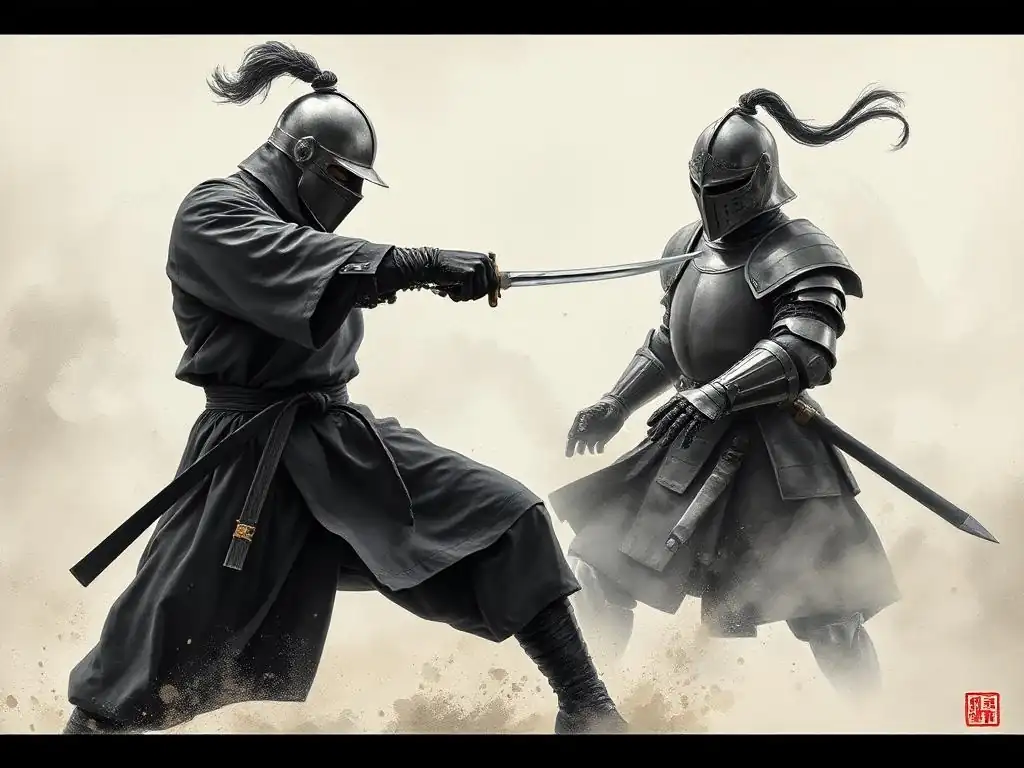
The Half-Swording Grip and its Application
While primarily associated with swords, the concept of the "half-swording" grip (gripping the blade itself) has parallels and applications in advanced Medieval armored dagger fighting techniques. Although you wouldn't typically grip a dagger blade mid-fight due to its size and sharpness, the principle of using the weapon as a short, stiff rod or lever is relevant. For instance, some historical illustrations show the off-hand gripping the back of the dagger blade near the point to provide extra force and stability for a thrust aimed at penetrating mail or finding a narrow gap.
This technique, sometimes called Mordhau grip applied to a dagger (though Mordhau specifically refers to gripping a sword blade to use the hilt as a hammer), allows the practitioner to exert significant linear force directly behind the dagger's point. It minimizes the risk of the blade bending or slipping when attempting to find purchase against armor or penetrate mail. This method turns the dagger into a short, rigid spike, enabling more powerful and controlled thrusts into small, vulnerable areas like the eye slits or through mail links in the armpit.
Using the Dagger as a Lever: Joint Locks and Control Techniques
Many advanced Medieval armored dagger fighting techniques involve using the dagger itself as a lever or control device within a grappling context, rather than solely as a stabbing weapon initially. Once a strong clinch is established, the dagger can be used to apply pressure to joints, control limbs, or force the opponent into a disadvantageous position. For example, the dagger point can be placed against a joint, and pressure applied to manipulate the limb.
Historical manuscripts demonstrate techniques where the dagger is used to threaten the face or throat while simultaneously applying a joint lock or throw. Fiore dei Liberi shows techniques where the dagger is held to the opponent's face while twisting their arm or leg to force submission or create an opening. This highlights that armored dagger combat is a synthesis of grappling and weapon use, where the dagger serves dual purposes: threat/control and finishing tool. Using the dagger's stiffness and point as a lever against the opponent's body is a sophisticated method of control.
Stabbing Techniques for Penetrating Armor Gaps
Penetrating the gaps in knightly armor requires specific stabbing techniques that go beyond a simple forward thrust. These Medieval armored dagger fighting techniques emphasize precision, angle, and power delivery. Techniques often involve gripping the dagger with a strong, two-handed grip (one on the hilt, one potentially bracing the blade or the wrist) to drive the point home. The angle of attack is crucial – the dagger point must be aligned to slide between plates or find a weakness in mail, rather than glancing off the surface.
Specific techniques described in historical sources include:
Punta falsa(false point): A deceptive movement or feint to make the opponent expose a weak point before delivering the real thrust.- Upward thrusts: Aimed at the armpit or groin from underneath the opponent's guard or during a lift/throw.
- Downward thrusts: Targeting the neck, collarbone, or shoulder joint from a dominant position, often using the reverse grip.
- Horizontal thrusts: Aimed at the eye slits or throat from the front.
These thrusts are often delivered with a sudden, explosive movement, using the entire body's weight and leverage generated from the grapple. The stiff, narrow profile of a rondel or bollock dagger was ideal for concentrating force onto a small point, increasing the likelihood of penetration through mail or finding a gap.
Specific Armored Dagger Techniques and Maneuvers
The "Murder Stroke": A Powerful Dagger Thrust
While the term "Murder Stroke" ( Mordstreich in German) is most famously associated with gripping a sword blade to use the crossguard or pommel as a hammer against armor, the underlying principle of delivering a powerful, concentrated blow against armor with a weapon held like a short, stiff club has parallels in Medieval armored dagger fighting techniques. When applied to a dagger, this concept often translates to using a two-handed grip on the dagger (one hand on the hilt, the other potentially bracing the blade near the point) to deliver a forceful, spike-like thrust aimed at penetrating a vulnerable area.
This method maximizes the linear force behind the dagger's point, making it capable of punching through mail links or finding purchase in narrow gaps with greater certainty than a one-handed thrust. Historical illustrations show fighters using this braced, two-handed grip to target the face, neck, or even attempt to force the point through overlapping plates at close range. It's a technique of last resort or opportunity, requiring extreme close quarters and the ability to commit fully to driving the point home against a heavily armored opponent.
Targeting the Visor and Neck Area
Targeting the visor and neck area is a critical component of Medieval armored dagger fighting techniques, as these are amongst the most vulnerable points on a fully armored knight. The visor, while protecting the face, has eye slits (occularium) and ventilation holes (ventail) that are potential, albeit small, entry points. A precise, forceful thrust from a stiff dagger like a rondel could potentially penetrate an eye slit or find its way through the ventail, with devastating consequences.
The neck area, where the helm connects to the gorget, is another prime target. While often covered by articulated plates and mail, the join itself represents a potential gap. Techniques involve grappling to control the opponent's head and body, then delivering a downward or horizontal thrust aimed specifically at this junction. Historical manuals show techniques where the fighter gains control of the opponent's helm to expose the neck or align the eye slits for a thrust. The effectiveness of these techniques relies heavily on close control and accurate targeting under pressure.
Exploiting the Armpit and Groin Regions
The armpit and groin regions were significant weak points in most forms of medieval plate armor, making them prime targets for Medieval armored dagger fighting techniques. While often reinforced with mail or extra plates, these areas required flexibility for movement and thus could not be covered with solid, rigid plate to the same extent as the torso or limbs. The mail used in these areas, while strong, was susceptible to penetration from a stiff, sharp point driven with sufficient force.
Techniques targeting these areas typically involve closing distance and entering a grapple. From a clinch, the fighter can use leverage to control the opponent's limbs and torso, creating an opening to thrust the dagger upwards into the armpit or groin. Historical depictions frequently show fighters grappling on the ground or in a standing clinch, delivering these upward thrusts. These attacks are effective because they target vital areas (major blood vessels, nerves, abdominal cavity) through relatively less protected points, making them a cornerstone of armored dagger combat strategy.
Grappling and Takedowns in Armored Dagger Combat
Integrating Grappling into Armored Dagger Fights
Grappling ( Ringen) is not merely an adjunct to Medieval armored dagger fighting techniques; it is often the necessary prerequisite for their successful application. Against a fully armored opponent, maintaining distance is advantageous for weapons like swords or polearms. However, to effectively use a dagger, one must close the distance and control the opponent's body. The armor makes striking less effective and grappling offers the primary means to create and exploit vulnerabilities.
Historical treatises like those by Fiore dei Liberi and Hans Talhoffer intersperse dagger techniques within grappling sequences. They show how to close in, establish dominant grips (e.g., controlling the opponent's arms, head, or torso), use throws or takedowns to bring the opponent off balance or to the ground, and then apply the dagger thrust while maintaining control. The weight and bulk of the armor significantly influence grappling mechanics, requiring techniques that rely on leverage, body weight, and controlling the opponent's structure rather than speed or agility alone.
Takedown Techniques Against Armored Opponents
Takedown techniques in Medieval armored dagger fighting techniques are adapted to the unique challenges posed by heavy armor. Standard wrestling throws might be difficult due to the weight and rigidity of the opponent. Instead, takedowns often focus on:
- Leverage-based throws: Using grips on limbs or the body to apply leverage and unbalance the opponent.
- Trips and sweeps: Exploiting the opponent's footwork (or lack thereof) and heavy stance to trip or sweep their legs.
- Body weight throws: Using one's own weight and momentum to drive the opponent down, often by getting underneath their center of gravity.
- Controlling the head and neck: Using grips on the helm or gorget to manipulate the opponent's balance.
These takedowns are often designed not just to get the opponent to the ground, but to land in a dominant position (e.g., on top, controlling the opponent's arms) from which a dagger thrust can be delivered. The goal is to neutralize the opponent's ability to defend effectively or counter-attack while you apply the dagger. Getting an armored opponent to the ground and maintaining control is a physically demanding but crucial step in many armored dagger exchanges.
Maintaining Control on the Ground
Once an armored opponent is on the ground, maintaining control is paramount before attempting a dagger thrust. The ground environment further restricts movement for both fighters, but being in a dominant position (e.g., mounted on the chest, side control, or controlling the head and arms) is essential for successfully applying Medieval armored dagger fighting techniques. The weight of the armor makes it difficult for the bottom fighter to bridge, roll, or escape easily if the top fighter maintains pressure and control.
Ground control techniques involve using your weight to pin the opponent, securing grips on their limbs or armor to prevent them from moving or striking, and positioning your body to protect yourself while leaving their vulnerable points exposed. Historical illustrations show fighters pinning opponents to the ground, often with a knee on the chest or hip, while delivering dagger thrusts to the armpit, groin, or neck. Maintaining this control requires significant strength and endurance, as the opponent will be fighting intensely to escape the vulnerable position.
Training Drills for Armored Dagger Fighting
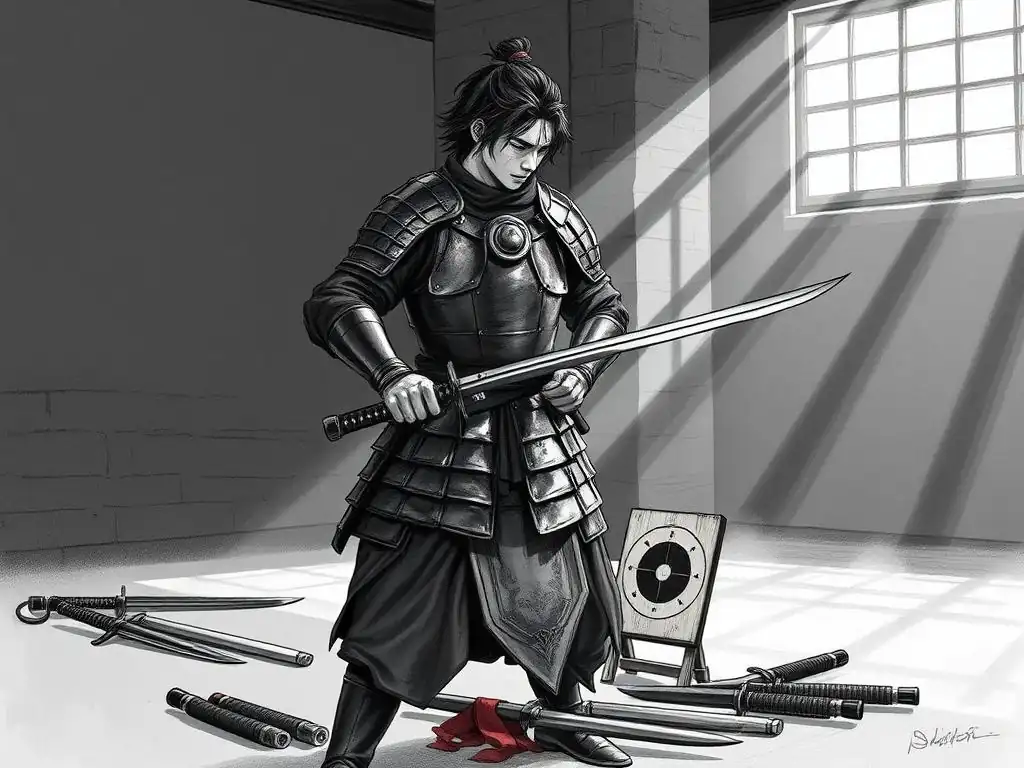
Partner Drills for Developing Precision and Timing
Training Medieval armored dagger fighting techniques effectively requires specific partner drills focused on precision, timing, and control. These drills are typically performed with protective gear, including padded daggers or trainers, heavily padded jackets or gambesons, and often HEMA fencing masks or even simulated armor. Drills often start slowly, focusing on the mechanics of closing distance, establishing grips, and finding target areas.
Examples of partner drills include:
Entry drills: Practicing closing distance and entering a grapple from various starting positions.Control drills: Working on establishing and maintaining dominant positions in the clinch and on the ground.Targeting drills: Focusing on placing the padded dagger point precisely on identified vulnerable points while the partner offers resistance or slight movement.Transition drills: Practicing moving from a standing grapple to a takedown and then to a ground control position while maintaining the threat of the dagger.
These drills help develop the muscle memory and spatial awareness needed to navigate the close-quarters environment of armored combat and deliver accurate thrusts under pressure, without the immediate danger of sharp steel.
Simulating Armored Combat Scenarios
To truly understand and practice Medieval armored dagger fighting techniques, simulating the conditions of armored combat is highly beneficial. While full plate armor is impractical for regular training, using appropriate protective gear that simulates the restrictions and targets of armor is key. This might involve:
- Wearing heavily padded HEMA jackets and pants.
- Using forearm and shin protectors that simulate plate.
- Wearing a robust HEMA mask and gorget.
- Adding weights to simulate the armor's load (though this must be done carefully to avoid injury).
- Using blunt or padded training daggers.
Drills can then involve sparring within defined parameters (e.g., start in a clinch, focus only on dagger use) or simulating specific scenarios depicted in historical manuals, such as being disarmed of a primary weapon and resorting to the dagger, or encountering a fully armored opponent in close quarters. These simulations help practitioners understand the physical demands, the altered range of techniques, and the strategic priorities of fighting in armor.
Building Strength and Endurance for Armored Dagger Fighting
Executing Medieval armored dagger fighting techniques effectively requires significant physical strength and endurance, due to the weight of the armor (if worn) and the demanding nature of close-quarters grappling. Training should include exercises that build:
Grip strength: Essential for maintaining control of the opponent and the dagger.Core strength: Crucial for stability, delivering powerful thrusts, and resisting throws.Upper body strength: For grappling, controlling limbs, and delivering downward thrusts.Lower body strength: For maintaining a stable stance, executing takedowns, and controlling an opponent on the ground.Cardiovascular endurance: Armored combat is intensely physical and tiring.
Specific exercises might include deadlifts, squats, weighted carries (to simulate armor weight), pull-ups, rows, push-ups, and various grip exercises (e.g., farmer's walks, towel pull-ups). Combining these strength exercises with high-intensity interval training or circuit training can help build the specific kind of power and stamina required for sustained effort in armored grappling and dagger application. A focus on functional strength that translates to powerful, controlled movements is more beneficial than bodybuilding alone.
Historical Examples and Interpretations of Armored Dagger Combat
Examining Historical Texts and Manuscripts on Armored Dagger Fighting
The primary source material for reconstructing Medieval armored dagger fighting techniques comes from historical combat treatises (Fechtbücher) created by fight masters of the period. These manuscripts contain illustrations and descriptive text detailing techniques for various weapons, including the dagger in armored combat. Key examples include:
Flos Duellatorum(Flower of Battle) by Fiore dei Liberi (early 15th century): Contains a dedicated section ondaga en armadura, showing numerous grappling entries, controls, takedowns, and specific dagger thrusts to vulnerable points while armored.- Manuscripts by Hans Talhoffer (mid-15th century): Features extensive illustrations of armored combat, including detailed sequences of dagger fighting, grappling, and using the dagger on the ground.
- The Gladiatoria Fechtbuch (mid-15th century): Another significant source with detailed illustrations of armored combat techniques, including dagger work within the grapple.
These manuscripts provide invaluable visual and textual instruction, illustrating grips, stances, entries, takedowns, and the specific targets for dagger thrusts against armored opponents. Studying and interpreting these primary sources is the foundation of modern HEMA practice in this area.
Notable Figures and Their Contributions to Armored Dagger Fighting
While the names of individual knights and warriors who mastered Medieval armored dagger fighting techniques are largely lost to history, the fight masters who compiled the treatises are the notable figures whose contributions we study today. Masters like Fiore dei Liberi and Hans Talhoffer codified and illustrated the techniques that were likely taught and practiced by the martial elite of their time.
Fiore dei Liberi, an Italian master active in the early 15th century, presented a structured system that clearly integrated dagger use within his broader grappling curriculum for armored combat. His detailed illustrations provide clear examples of leverage, control, and targeting. Hans Talhoffer, a German master from the mid-15th century, offered highly dynamic and often brutal depictions of armored combat, showcasing a wide variety of takedowns, joint locks, and dagger applications, including using the dagger in judicial duels fought in armor. Their work serves as the instructional bedrock for reconstructing these historical skills.
Reconstructing Historical Techniques for Modern Practice
Reconstructing Medieval armored dagger fighting techniques from historical manuscripts is a complex process that involves interpreting illustrations, translating and understanding archaic language, and applying the techniques through practical physical training. HEMA practitioners and researchers study multiple manuscripts to compare interpretations and develop a comprehensive understanding.
The reconstruction process involves:
Translation and Interpretation: Deciphering the text and illustrations of the historical manuals.Physical Experimentation: Trying out the depicted techniques with partners, often starting slowly and gradually adding speed and resistance.Contextual Understanding: Researching the historical context, armor technology, and fighting culture of the period.Developing Drills: Creating safe and effective training methodologies based on the reconstructed techniques.
This iterative process of study, practice, and refinement allows modern practitioners to bring these historical Medieval armored dagger fighting techniques back to life, gaining practical insight into the challenges and strategies of combat against a fully armored opponent.
Safety Considerations for Practicing Armored Dagger Techniques
Proper Protective Gear and Equipment
Practicing Medieval armored dagger fighting techniques safely requires the use of appropriate protective gear and equipment to mitigate the risks associated with grappling and simulated stabbing. Even with blunt or padded training daggers, the force and targets involved necessitate protection. Essential gear includes:
HEMA Fencing Mask: With adequate back-of-the-head protection.Gorget: Rigid neck protection is crucial due to the primary target areas.HEMA Jacket/Gambeson: Heavily padded torso and arm protection (minimum 350N or 800N fabric recommended).Forearm and Elbow Protectors: To protect against accidental strikes or pressure.Gloves: Padded gloves are necessary for hand protection during grappling and against accidental contact.Groin Protector: Essential for male practitioners.Shin and Knee Protectors: For protection during takedowns and ground work.Training Daggers: Made from materials like blunt steel, nylon, or rubber, designed to bend or have rounded tips to prevent penetration.
Using the correct gear, properly fitted and maintained, is the first line of defense against injury when practicing these demanding techniques.
Safe Training Environments and Procedures
A safe training environment and adherence to strict procedures are critical when practicing Medieval armored dagger fighting techniques. Training should take place in a space with adequate room to move and fall safely, ideally with padded mats, especially for practicing takedowns and ground fighting.
Key safety procedures include:
Supervision: Training should always be supervised by experienced instructors familiar with HEMA safety protocols.Control: Techniques should be practiced with control, starting slowly, and gradually increasing intensity only as proficiency and trust between partners develop.Communication: Partners must communicate clearly about their comfort level, any discomfort, or if they need to stop.Checking Gear: Ensure all protective gear is worn correctly and functioning properly before starting drills.Understanding Limits: Do not attempt techniques beyond your skill level or physical capability, or with partners who are not adequately trained or protected.
A focus on safety allows practitioners to explore the demanding nature of armored dagger combat without unnecessary risk of serious injury, ensuring the longevity and responsible growth of HEMA practice.
Awareness of Risks and Mitigation Strategies
Even with proper gear and procedures, practicing Medieval armored dagger fighting techniques carries inherent risks. The close-quarters grappling, throws, and simulated thrusts can lead to injuries ranging from bruises, sprains, and muscle strains to more serious issues if safety protocols are not followed. Awareness of these risks is the first step in mitigating them.
Mitigation strategies include:
Proper Warm-up and Cool-down: Preparing the body for strenuous activity and aiding recovery.Conditioning: Building the necessary strength and endurance to perform techniques safely and reduce fatigue-related errors.Technique Mastery: Focusing on correct form and control over speed and power, especially in throws and thrusts.Responsible Partnership: Training with trusted partners who are equally committed to safety and control.Knowing When to Stop: Recognizing signs of fatigue or minor injury and taking breaks or ceasing training for the day.Regular Equipment Checks: Ensuring training daggers are not damaged and protective gear is intact.
By combining robust protective gear, strict safety protocols, physical conditioning, and a culture of safety-first within the training group, the risks associated with practicing these historical Medieval armored dagger fighting techniques can be significantly reduced, allowing for productive and safe learning.
Conclusion: Mastering Armored Dagger Fighting in HEMA
The Art and Science of Breaching Knightly Defenses
Mastering Medieval armored dagger fighting techniques represents a sophisticated blend of art and science. The "science" lies in understanding the mechanics of leverage, the structural weaknesses of historical armor, and the anatomy of the human body to deliver effective force with a stiff point. This requires analytical study of historical sources and practical experimentation with body mechanics under load.
The "art" is in the fluid application of these principles in a dynamic, unpredictable environment. It involves timing, spatial awareness, adapting techniques to a resisting opponent, and the nuanced control required in close-quarters grappling while wielding a potentially lethal weapon. Successfully breaching knightly defenses with a dagger is not simply about strength, but about precision, control, and strategic thinking – a true testament to the martial skill of medieval warriors and modern HEMA practitioners alike.
Continued Learning and Development in Armored Dagger Combat
The study of Medieval armored dagger fighting techniques is an ongoing journey of learning and development. As HEMA research progresses, new interpretations of historical manuscripts emerge, and practical training methodologies evolve. Practitioners continually refine their understanding of body mechanics, leverage, and the subtle variations in techniques depicted across different sources and masters.
Development involves consistent, diligent practice of fundamental techniques, progressive sparring with increasing levels of intensity and gear simulation, and cross-training in related disciplines like unarmored grappling and other armored weapon forms. Participation in workshops, seminars, and study groups focused on armored combat allows for sharing knowledge and collaborative interpretation of historical sources. This commitment to continuous learning ensures that the reconstruction and practice of these historical techniques remain vibrant and accurate.
The Legacy of Medieval Armored Dagger Fighting
The legacy of Medieval armored dagger fighting techniques endures today within the global HEMA community. What were once vital skills for survival on the battlefield or in the dueling lists are now preserved and practiced as a unique martial art and historical study. These techniques offer a window into the martial realities of an era defined by the pinnacle of personal armor.
Studying these techniques provides valuable insights not only into historical combat but also into universal principles of leverage, control, and exploiting vulnerabilities that remain relevant in various martial contexts. The dedication of modern practitioners ensures that the knowledge and physical skills codified by masters like Fiore dei Liberi and Hans Talhoffer are not lost, but continue to be explored, understood, and appreciated for their ingenuity and effectiveness against the formidable challenge of knightly plate armor.
Frequently Asked Questions
What made armored dagger fighting techniques necessary in the Medieval period?
Armored dagger fighting became essential due to the increasing effectiveness of plate armor, rendering traditional sword blows less impactful. Daggers offered a way to exploit gaps and weak points in the armor.
What are some of the key targets when fighting a knight in armor with a dagger?
Key targets included the joints of the armor, such as the armpits, groin, and neck, where movement was possible. Fighters also aimed for the visor opening if possible.
What types of daggers were typically used in armored combat?
Specialized daggers like the rondel dagger with a stiff blade designed for piercing armor were common. Also used were baselards and other sturdy daggers capable of delivering focused force.
Were there specific techniques for disarming a knight in armor with a dagger?
Yes, techniques involved leveraging the dagger to manipulate the armor plates and create openings. Fighters also aimed to unbalance the knight, making them vulnerable.
How does the historical understanding of armored dagger fighting inform modern self-defense strategies?
While not directly applicable, the principles of targeting vulnerable areas and using leverage remain relevant. Understanding this history provides insights into close-quarters combat and weapon manipulation.
Final Reflection: The Enduring Legacy of Skill and Innovation
The preceding exploration of medieval armored dagger fighting techniques reveals that the pursuit of tactical advantage is a timeless human endeavor. Even amidst the seemingly impenetrable defenses of plate armor, ingenuity and specialized skill could find a way. This isn't just a historical curiosity; it's a testament to the enduring human capacity to adapt and overcome, a principle that resonates deeply in our modern world, where challenges, though different, demand similar resourcefulness.
The influence of these historical combat techniques extends beyond the battlefield, shaping our understanding of strategy, problem-solving, and the relentless pursuit of mastery. The dedication required to master these skills, the meticulous study of weaknesses, and the sheer audacity to confront seemingly insurmountable odds are lessons that continue to inspire. The measure of intelligence is the ability to change.
- Albert Einstein. This quote perfectly encapsulates the spirit of armored dagger combat, where adaptability was the key to survival and victory.
Now, consider how these principles apply to your own life. Are there "armored" challenges you face, seemingly impenetrable obstacles blocking your path? Perhaps the lessons of medieval armored dagger fighting – the meticulous study of weaknesses, the innovative application of skill, and the unwavering commitment to overcoming adversity – can provide the inspiration and the framework you need to breach those defenses and achieve your own personal victories. Embrace the spirit of innovation, hone your skills, and remember that even the most formidable armor can be pierced with the right technique and unwavering determination.
Uncover the Secrets: Master Armored Combat Now!
Thank you for diving into the world of armored dagger fighting! We hope you've gained valuable insights into how to overcome seemingly impenetrable defenses. Now, it's time to translate that knowledge into action.
- Begin practicing basic thrusts and parries against a training dummy or sparring partner wearing protective gear. Focus on targeting weak points in simulated armor.
- Delve deeper: Research historical accounts of armored combat tactics and weaponry used during the medieval period to broaden your understanding.
- Share your insights: Discuss the most effective techniques you've learned with fellow martial arts enthusiasts and explore new strategies together.
What surprising weakness in knightly armor will you target first in your training?