
The Art of "Empty Hand" Fighting: Philosophical Roots in Taekwondo's Name

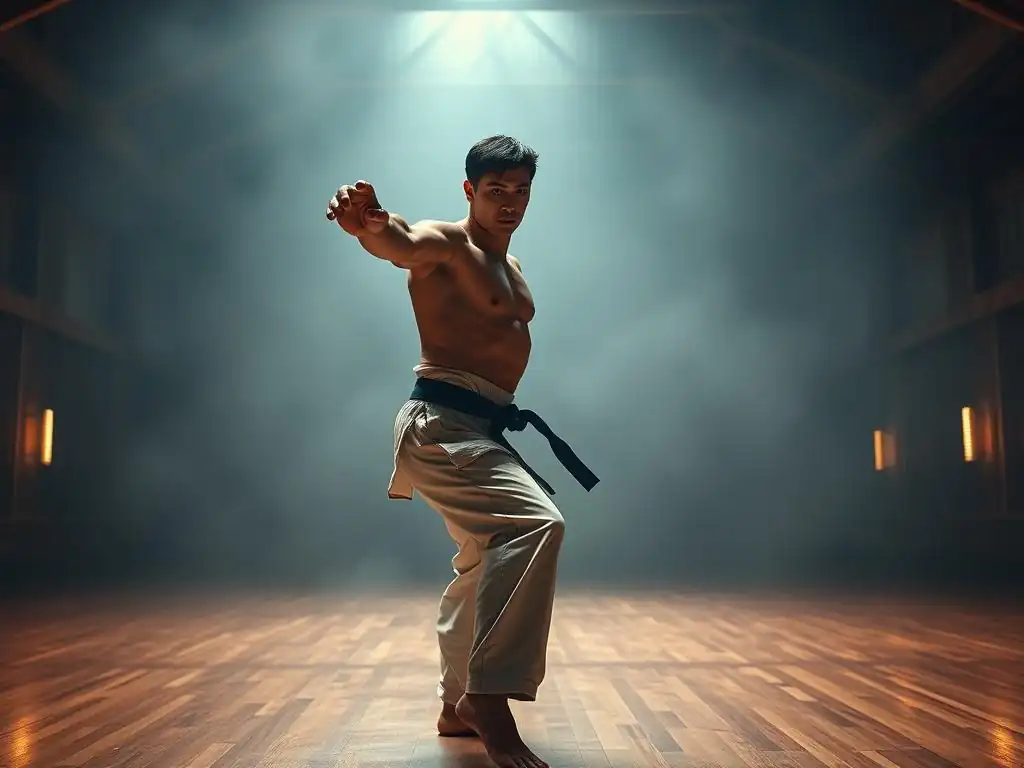
Welcome to Martial Arts Mastery, your definitive guide to the world of combat! Delve into the rich tapestry of martial arts, from ancient philosophies to modern techniques. Ready to understand the profound meaning behind Taekwondo's "empty hand" philosophy? This journey begins here, unlocking secrets woven into the very name of this powerful discipline. Prepare to explore!
- Understanding Taekwondo's Core Principles: Beyond Physical Techniques
- "Tae": Foot Techniques and Their Application
- "Kwon": Hand Techniques and Striking Strategies
- "Do": The Way of Taekwondo: A Journey of Self-Development
- The Interconnection Between Physical Skill and Mental Fortitude in Taekwondo
- Taekwondo's Principles in Practical Application
- Comparing Taekwondo with Other Martial Arts
- Preserving the Integrity of Taekwondo's Principles
- Conclusion: The Enduring Relevance of Taekwondo's Philosophy
-
Frequently Asked Questions
- What is the core philosophy behind the term "empty hand" in Taekwondo?
- How does the name "Taekwondo" itself relate to this "empty hand" philosophy?
- Beyond physical techniques, what other elements are encompassed by the "empty hand" philosophy in Taekwondo?
- How has the "empty hand" philosophy influenced the evolution of Taekwondo techniques?
- Is the "empty hand" philosophy unique to Taekwondo, or is it present in other martial arts?
- Final Reflection: Embracing the Way of the Hand and Foot
- Unlock Your Inner Warrior: Embrace the Taekwondo Path!
Understanding Taekwondo's Core Principles: Beyond Physical Techniques
Taekwondo: A Holistic Martial Art
Taekwondo, originating from Korea, is far more than just a system of kicking and punching. It is fundamentally a holistic martial art that seeks to develop the practitioner physically, mentally, and spiritually. Developed in the post-WWII era by various Kwan (schools) integrating traditional Korean martial arts like Taekkyeon and Gwonbeop with influences from Okinawan Karate, Taekwondo rapidly evolved into a globally recognized discipline. Its curriculum encompasses a wide array of techniques, including strikes, blocks, stances, and forms (poomsae or tuls), but these physical elements serve as a vehicle for deeper personal growth, embodying the core "Taekwondo empty hand philosophy".
The training regimen is rigorous, pushing practitioners to improve their physical conditioning, flexibility, strength, and endurance. However, equal emphasis is placed on cultivating mental attributes such as focus, discipline, perseverance, and self-control.
This dual focus on the body and mind distinguishes Taekwondo as a path to comprehensive self-improvement, where mastering a difficult kick is as much about mental fortitude as it is about physical power. The journey through the belt system, typically progressing from white belt through various colored belts to black belt degrees (dan), symbolizes this ongoing process of learning and refinement, where each level represents not just technical proficiency but also a deeper understanding of the art's philosophical underpinnings.
Exploring the Meaning Behind "Tae Kwon Do"
The name "Taekwondo" itself is a powerful encapsulation of the art's essence and its connection to the "empty hand" concept. Broken down, it consists of three Korean words: "Tae" (태), meaning "foot" or "to strike with the foot"; "Kwon" (권), meaning "fist" or "to strike with the hand"; and "Do" (도), meaning "way" or "art".
Thus, Taekwondo translates literally to "The Way of the Foot and the Hand". This name directly points to the practice of using one's own body – specifically hands and feet – as the primary tools for combat and self-defense, aligning perfectly with the broader martial arts tradition of "empty hand" fighting, as opposed to using weapons.
The term "Kwon" is particularly significant in highlighting the "empty hand" aspect. It denotes the use of fists and other hand-based strikes and blocks, emphasizing that the practitioner's own body is the weapon. This concept is central to the Taekwondo empty hand philosophy, which teaches that the ultimate power resides within the individual, cultivated through rigorous training and discipline.
Unlike arts focused on weaponry, Taekwondo relies solely on the practitioner's developed physical and mental capabilities. The name itself serves as a constant reminder that mastery comes from within, through dedicated practice of both foot and hand techniques guided by a moral and philosophical "Do".
"Tae": Foot Techniques and Their Application
Precision and Power in Footwork
Taekwondo is renowned globally for its dynamic and diverse array of kicking techniques, often executed with impressive speed, power, and height. The emphasis on "Tae" goes beyond simple kicks; it involves sophisticated footwork, balance, and the generation of explosive power through the coordinated movement of the entire body, particularly the hips and core.
Techniques like the roundhouse kick (dollyo chagi), front kick (ap chagi), side kick (yeop chagi), and axe kick (naeryeo chagi) are staples, each requiring precise targeting and timing. A well-executed competition-style roundhouse kick from a trained athlete can travel at speeds estimated to exceed 30 miles per hour, delivering significant impact force.
Developing this level of precision and power requires countless hours of practice, focusing on flexibility, muscle conditioning, and mastering the kinetic chain. Stances like the walking stance (ap seogi) and back stance (dwit seogi) provide stable bases for generating power and maintaining balance during complex kicking sequences. Drills often involve striking various targets, from stationary pads to moving targets, and practicing combinations that flow seamlessly. This constant refinement of "Tae" techniques is fundamental to Taekwondo's identity and its effectiveness as an "empty hand" art, leveraging the natural power and reach advantage of the legs.
Developing Balance and Agility Through "Tae"
The extensive training in foot techniques inherently develops exceptional balance and agility in Taekwondo practitioners. Executing high and fast kicks requires the ability to stand stably on one leg, often while the other leg is in dynamic motion or extended for striking. Holding stances for extended periods strengthens the legs and core muscles essential for stability. Exercises like single-leg kicks, jumping kicks, and spinning techniques push the limits of balance and spatial awareness.
Furthermore, the dynamic nature of sparring and forms necessitates high levels of agility. Practitioners must be able to move quickly, change direction instantaneously, and react to an opponent's movements. Drills focusing on lateral movement, forward and backward stepping, and pivoting are integral to developing the agility needed to evade attacks and set up offensive techniques. This continuous focus on "Tae" not only builds powerful legs but also cultivates a highly developed sense of balance and quick, responsive movement, making the practitioner a more effective and elusive "empty hand" fighter.
"Kwon": Hand Techniques and Striking Strategies
The Importance of Precise Hand Movements in Taekwondo
While Taekwondo's kicks are often the most visible aspect, hand techniques ("Kwon") form a crucial and integral part of the art, essential for both offense and defense. These include a wide range of blocks (makgi), punches (jirugi), and strikes (taerigi). Precise hand movements are vital for effectively intercepting incoming attacks with blocks or targeting vulnerable areas with strikes. Different parts of the hand and arm are utilized – the knuckles for punches, the edge of the hand (sonkal) for knife-hand strikes, the forearm for blocks, and the palm heel (sonbadak) for pushing or striking.
Mastering these techniques requires focus on proper form, alignment, and generating power through hip rotation and body weight transfer, similar to kicks but often in closer range. For example, a well-executed straight punch (ap joomuk jirugi) relies on driving power from the ground up through the core and rotating the fist at the point of impact. Practice involves striking targets like focus mitts or heavy bags to develop power and accuracy. The Taekwondo empty hand philosophy emphasizes using the entire body as a weapon, and "Kwon" techniques are the expression of this principle through the upper limbs.
Mastering Hand Combinations for Self-Defense
In practical application and self-defense, "Kwon" techniques are rarely used in isolation. They are combined with footwork, stances, and other hand movements to create effective defensive and offensive sequences. Basic combinations might involve a block immediately followed by a counter-punch or a series of rapid punches to overwhelm an opponent. Advanced combinations integrate footwork, moving into or away from an attacker while simultaneously blocking and striking.
Consider a scenario where an attacker attempts a grab. A Taekwondo practitioner might use a high block (olgul makgi) to defend their head, followed instantly by a straight punch to the attacker's body or face, or use a low block (araj makgi) to counter a leg attack and follow up with a knife-hand strike (sonkal taerigi).
These combinations are drilled repeatedly to become instinctive responses. The "empty hand" concept is fully realized when the practitioner can fluidly transition between defensive blocks and offensive strikes using only their hands and feet, demonstrating the versatility and practicality of "Kwon" within the broader Taekwondo system.
"Do": The Way of Taekwondo: A Journey of Self-Development
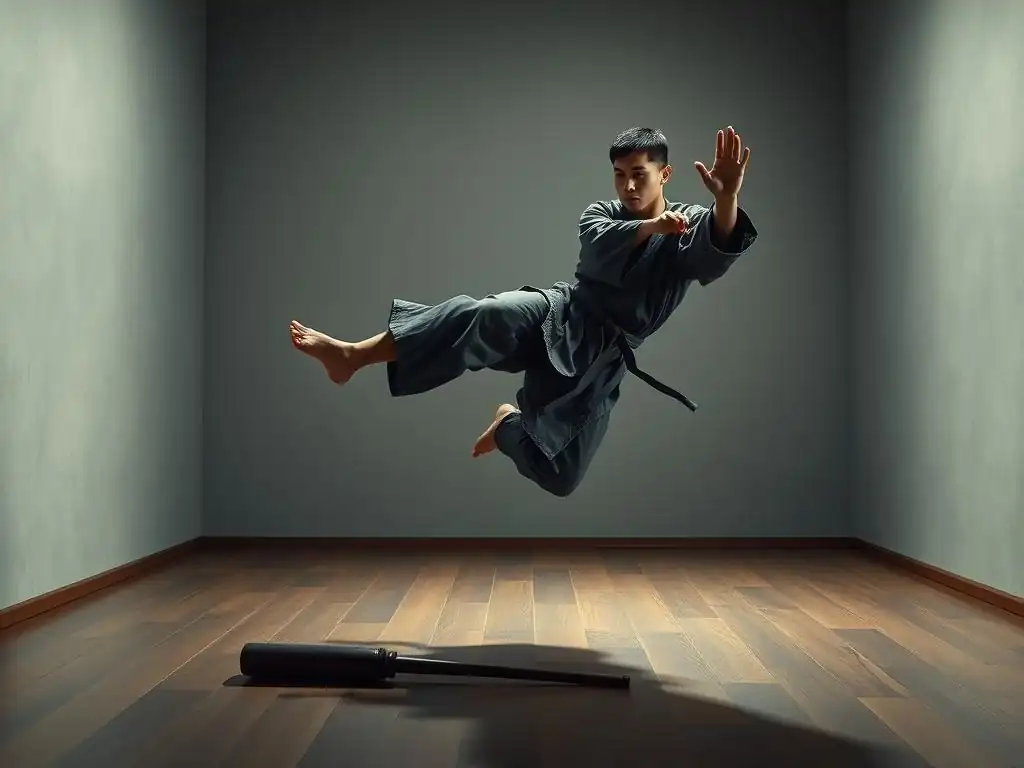
"Do" and the Cultivation of Respect and Perseverance
The "Do" aspect of Taekwondo is arguably the most profound, representing the philosophical path and way of life that the physical techniques serve to cultivate. It emphasizes moral development, ethical conduct, and personal growth beyond the physical realm. Core principles embedded in the "Do" include respect, discipline, perseverance, and humility. Respect is demonstrated through bowing to the instructor (sabomnim) and fellow students (haksaeng), maintaining proper etiquette in the dojang (training hall), and showing consideration for others.
Perseverance (In Nae) is crucial to advancing in Taekwondo. The training is physically demanding, requiring practitioners to push past fatigue, pain, and frustration. Learning complex forms, enduring sparring sessions, and breaking boards all demand significant mental toughness and the refusal to give up. This cultivation of perseverance in training translates directly into daily life, helping individuals overcome challenges and pursue long-term goals. The "Do" guides the practitioner to understand that true mastery is a continuous journey requiring unwavering dedication and effort, embodying a key element of the Taekwondo empty hand philosophy related to inner strength.
The Tenets of Taekwondo and their Impact on Personal Growth
The philosophical foundation of Taekwondo is often summarized in its core tenets, which vary slightly between organizations (like the World Taekwondo Federation's five tenets or the International Taekwon-Do Federation's five tenets) but share common themes. Commonly cited tenets include:
- Courtesy (Ye Ui): Politeness and respect towards others.
- Integrity (Yom Chi): The ability to discern right from wrong and stand by one's conscience.
- Perseverance (In Nae): The willingness to endure and persist towards goals.
- Self-Control (Guk Gi): The ability to control one's actions and emotions.
- Indomitable Spirit (Baekjul Boolgool): The courage to face challenges and injustice without fear.
These tenets are not abstract concepts but are actively integrated into training and expected to be lived outside the dojang. Practicing self-control during sparring, demonstrating courtesy during class, and showing perseverance when learning a difficult technique all reinforce these values. Embracing the "Do" through these tenets shapes character, fostering qualities like confidence, humility, resilience, and ethical awareness. This focus on holistic development is central to the Taekwondo empty hand philosophy, asserting that the ultimate purpose of training is not just self-defense but the creation of a better self and contributing positively to society.
The Interconnection Between Physical Skill and Mental Fortitude in Taekwondo
How Physical Training Reinforces Taekwondo's Core Principles
In Taekwondo, the physical demands of training are inextricably linked to the development of mental fortitude and the reinforcement of the art's core principles. Pushing through the burning sensation in the legs during repetitive kicking drills builds perseverance. Maintaining a disciplined posture in stances for extended periods cultivates patience and focus. The rigorous practice of forms (poomsae or tuls), which require memorization of complex sequences and precise execution, enhances concentration and attention to detail, reflecting integrity in practice.
Sparring, a dynamic application of physical techniques, is a prime example of how physical activity builds mental strength. Practitioners must exercise self-control under pressure, manage fear, and maintain respect for their opponent even in competition. The physical challenge serves as a crucible, forging mental resilience and discipline. This constant interplay between physical exertion and mental engagement underscores the holistic nature of Taekwondo, where the body becomes a tool not only for self-defense but also for shaping the mind and character, embodying the practical application of Taekwondo empty hand philosophy.
The Role of Mental Discipline in Achieving Mastery
Achieving mastery in Taekwondo is impossible without significant mental discipline. Beyond memorizing techniques, it requires focus, concentration, visualization, and the ability to manage emotions like fear, anxiety, or overconfidence. Before performing a complex breaking technique (gyeokpa), a practitioner must mentally visualize the successful execution, overcoming any doubt. During a belt promotion test, maintaining composure and focus under scrutiny is as important as the physical performance.
Many Taekwondo schools incorporate elements aimed at strengthening the mind, such as meditation, breathing exercises, or discussions on the tenets. Instructors often emphasize the importance of a focused mind (jipjoong) during training and application. The ability to remain calm and think strategically in a confrontational situation, relying on trained reflexes rather than panic, is a direct result of cultivated mental discipline. This mental fortitude is the unseen strength that underlies physical technique, representing the deeper power unlocked by the Taekwondo empty hand philosophy.
Taekwondo's Principles in Practical Application
Self-Defense Strategies Based on Taekwondo Techniques
While Taekwondo is a popular sport, its roots lie in practical self-defense. The "empty hand" techniques of Taekwondo provide effective strategies for dealing with various threats. From a distance, powerful and fast kicks can deter or disable an attacker. The long reach of leg techniques allows a practitioner to engage an aggressor before they can get close. At closer range, swift hand strikes, blocks, and evasive footwork become critical.
A key principle in Taekwondo self-defense, aligned with the "Do," is awareness and de-escalation. The first line of defense is avoiding dangerous situations altogether. If confronted, the goal is often to neutralize the threat quickly and escape, rather than engage in prolonged combat. Techniques are applied with the principle of using minimal force necessary to ensure safety. For instance, a well-timed side kick to an attacker's leg can create distance and incapacitate without causing excessive harm, allowing the defender to retreat.
Real-World Application: Responding to an Aggressive Encounter
Consider a scenario: An individual is aggressively approached in a parking lot. Drawing upon Taekwondo training, the practitioner's initial response, guided by the "Do," would be situational awareness and attempting verbal de-escalation or creating distance. If the aggressor closes in and attempts a physical attack, such as a grab or shove, the Taekwondo empty hand philosophy comes into play.
Instead of grappling, the practitioner might utilize quick footwork (like a step-back or shuffle) to evade the initial lunge. Simultaneously, a block (e.g., a forearm block to defend against a swing) would be employed.
Immediately following the block, a swift counter-attack using a hand technique (like a palm heel strike to the chest to push back) or a quick, low-level kick (like a snap kick to the knee) could disrupt the attacker's balance or create an opening. The objective is not prolonged fighting but creating an opportunity to escape safely, demonstrating how Taekwondo techniques are applied defensively and strategically in real-world situations, emphasizing control and efficiency.
Comparing Taekwondo with Other Martial Arts
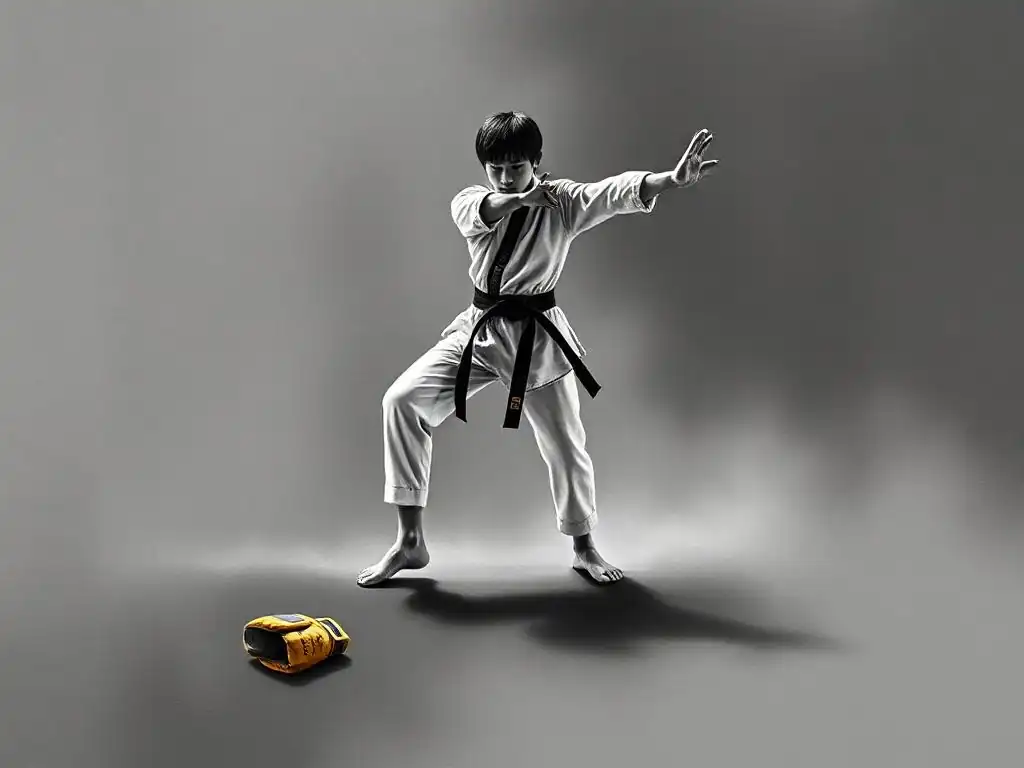
Taekwondo vs. Karate: Differences in Technique and Philosophy
Taekwondo and Karate, both originating from East Asia and sharing "empty hand" roots, exhibit significant differences in their technical emphasis and philosophical articulation. Karate, largely developed in Okinawa and Japan, typically features lower, more stable stances and a greater emphasis on linear hand strikes (like the straight punch) and powerful, often lower-level, kicks. While Karate also has dynamic techniques, Taekwondo is generally characterized by its higher, faster, and more varied kicking techniques, including spinning and jumping kicks, reflecting a more dynamic and mobile style of movement.
Philosophically, both arts stress discipline and character development ("Kara-te" itself meaning "empty hand," implying a state of being), but Taekwondo's "Do" tenets are often more explicitly codified and integrated into the curriculum and ranking system. The Taekwondo empty hand philosophy, with its distinct tenets of courtesy, integrity, perseverance, self-control, and indomitable spirit, provides a clear framework for personal growth that is consistently referenced in training and promotion criteria. While Karate also cultivates similar values, they may be expressed differently depending on the specific style or school.
Taekwondo vs. Judo: Contrasting Striking and Grappling Styles
Comparing Taekwondo with Judo highlights a fundamental divergence in martial arts approaches: striking versus grappling. Taekwondo, as discussed, is primarily an "empty hand" striking art, utilizing kicks and punches from a distance. Its focus is on delivering powerful, fast impacts and maintaining distance or closing it quickly for a strike. Judo, on the other hand, is a grappling art developed from Japanese Jujutsu, focusing on throws, pins, and joint locks. Its techniques involve close-quarters engagement, using leverage and balance disruption to control or submit an opponent.
This technical difference inherently shapes their respective philosophies and training methodologies. Taekwondo's "Do" emphasizes using one's body as a weapon for dynamic striking and self-improvement through tenets. Judo's philosophy, often summarized by principles like "maximum efficiency with minimum effort" (Seiryoku Zen'yō) and "mutual welfare and benefit" (Jita Kyōei), centers on using an opponent's energy against them and developing physical and moral strength through mutual practice. While both are "empty hand" arts in the sense of not using traditional weapons, their application of the body differs vastly – one for striking power, the other for control and leverage.
Preserving the Integrity of Taekwondo's Principles
The Role of the Kukkiwon in Maintaining Standards
The Kukkiwon, officially the World Taekwondo Headquarters located in Seoul, South Korea, plays a pivotal role in standardizing and promoting Taekwondo globally, particularly the World Taekwondo (WT) style. Established in 1972, the Kukkiwon serves as the central institution for issuing dan (black belt) and poom (junior black belt) certificates, recognized worldwide. It also develops and refines the standardized forms (poomsae) and sets technical standards for instructors and practitioners.
By providing a unified curriculum and certification system, the Kukkiwon helps preserve the technical integrity and philosophical consistency of Taekwondo across different countries and schools. It organizes international seminars and training courses to ensure that instructors are teaching according to established standards.
While variations exist between WT and ITF (International Taekwon-Do Federation) styles, the Kukkiwon's efforts have been crucial in maintaining a recognizable core of techniques and principles, ensuring that the Taekwondo empty hand philosophy and practice remain rooted in its Korean origins. As of recent estimates, the Kukkiwon has issued millions of black belt certifications globally, reflecting its vast influence.
Adapting Taekwondo's Principles to Modern Training Methods
While preserving its core, Taekwondo training continually adapts to modern understanding of sports science, pedagogy, and the changing needs of practitioners. Modern training often incorporates advanced conditioning techniques, injury prevention strategies, and sports psychology insights. Competitive Taekwondo (WT sparring) has evolved with electronic scoring systems and specific rule sets, leading to adaptations in strategy and technique for sport performance.
However, the fundamental principles and the Taekwondo empty hand philosophy remain relevant. The tenets of courtesy, integrity, perseverance, self-control, and indomitable spirit are as applicable in a modern sports context or a contemporary self-defense class as they were in traditional training.
Instructors find innovative ways to teach these values, relating them to challenges faced by students in school, work, or personal life. The adaptability of Taekwondo lies in its ability to embrace modern training methodologies while staying true to its foundational "Do," ensuring its continued relevance as both a martial art and a path for personal development in the 21st century.
Conclusion: The Enduring Relevance of Taekwondo's Philosophy
Taekwondo, "The Way of the Foot and the Hand," is a dynamic martial art whose name itself speaks to its "empty hand" origins and philosophy. The emphasis on "Tae" (foot) develops powerful, precise kicking techniques, while "Kwon" (hand) provides essential striking and blocking skills.
However, the true depth of the art lies in "Do," the philosophical path that guides practitioners towards self-improvement through core tenets like courtesy, integrity, and perseverance. This Taekwondo empty hand philosophy goes far beyond mere physical combat; it is a system for cultivating mental fortitude, ethical behavior, and a resilient spirit.
The interplay between rigorous physical training and the pursuit of these moral principles is what makes Taekwondo a holistic discipline. Despite modern adaptations and its evolution as a sport, the core principles and the philosophical underpinnings of Taekwondo remain profoundly relevant, offering practitioners a powerful means of self-defense and, more importantly, a lifelong journey of personal growth and mastery.
Frequently Asked Questions
What is the core philosophy behind the term "empty hand" in Taekwondo?
The term "empty hand" (Taekwondo) reflects the art's emphasis on using the body as the primary weapon, relying on natural movements and techniques rather than external weapons. It highlights resourcefulness and adaptability in self-defense.
How does the name "Taekwondo" itself relate to this "empty hand" philosophy?
"Taekwondo" literally translates to "the way of the foot and fist." This directly emphasizes the use of unarmed combat and the development of physical prowess, aligning with the "empty hand" concept.
Beyond physical techniques, what other elements are encompassed by the "empty hand" philosophy in Taekwondo?
It extends beyond just physical skills. It also incorporates mental discipline, respect, and self-control, fostering a holistic approach to personal development and ethical conduct.
How has the "empty hand" philosophy influenced the evolution of Taekwondo techniques?
The "empty hand" principle has led to the development of a diverse range of kicks, punches, blocks, and stances designed for effective self-defense in various situations. It prioritizes practical application.
Is the "empty hand" philosophy unique to Taekwondo, or is it present in other martial arts?
While the specific expression varies, the "empty hand" philosophy is a common thread in many martial arts, emphasizing the body's potential as a weapon and the importance of internal strength and technique.
Final Reflection: Embracing the Way of the Hand and Foot
The journey through Taekwondo's name and its "empty hand" philosophy reveals more than just a martial art; it unveils a profound connection to self-discipline, respect, and the pursuit of inner peace. This exploration is particularly relevant today, as we navigate a world increasingly reliant on external tools and technology, often neglecting the inherent power and potential within ourselves. Understanding the philosophical underpinnings of Taekwondo offers a pathway to rediscover that inner strength and apply it to all aspects of life.
The art of "empty hand" fighting transcends mere physical combat; it's a continuous journey of self-improvement and ethical conduct. This resonates deeply with me, as it highlights the importance of cultivating inner resources and facing challenges with grace and resilience. To truly master Taekwondo, one must not only perfect the physical techniques but also cultivate a strong moral character and a deep understanding of its philosophical principles.
This quote encapsulates the essence of Taekwondo's enduring appeal, reminding us that true strength lies not just in physical prowess but in the cultivation of a balanced and virtuous life.
As you step away from this exploration of Taekwondo's empty hand philosophy, I invite you to consider how you can embrace this concept in your own life. How can you cultivate your inner resources, face challenges with courage and integrity, and strive for personal growth? Let the spirit of Taekwondo inspire you to unlock your full potential and live a life guided by purpose, discipline, and unwavering respect for yourself and others.
Unlock Your Inner Warrior: Embrace the Taekwondo Path!
Thank you for exploring the philosophical depths of Taekwondo with us. We hope you’ve gained a deeper appreciation for the art's rich history and the power behind its name. Now, it's time to translate that knowledge into action and continue your journey of martial arts mastery.
- Begin your Taekwondo journey! Find a qualified instructor in your area and enroll in a beginner's class to experience the "empty hand" fighting philosophy firsthand.
- Delve further into Korean history. Research historical events like the Korean War that influenced the modern form of Taekwondo and enriched the meaning of its philosophical background.
- Share your reflections on the art. What aspects of Taekwondo's philosophy resonate most deeply with you, and how can they be applied in your daily life?