
Timing Your Counters: The Secret to Kyorugi Success


Welcome to Martial Arts Mastery, your gateway to the world's most effective and inspiring combat disciplines.
Unlocking victory in Kyorugi isn't just about power; it's about precisely timing your strikes. This article delves into the crucial art of Kyorugi counter timing techniques, revealing the secrets to anticipating your opponent's moves and turning their attacks into your opportunities. Curious to discover how to transform your defensive stance into a devastating counter-attack? Read on to master the crucial timing elements that separate champions from contenders.
- Mastering Counter-Striking in Taekwondo Kyorugi
- Understanding the Fundamentals of Kyorugi Counter Attacks
- Key Elements of Kyorugi Counter Timing
- Effective Kyorugi Counter-Striking Techniques
- Advanced Kyorugi Counter Strategies
- Drills to Improve Kyorugi Counter Timing
- Common Mistakes in Kyorugi Counter Timing and How to Avoid Them
- The Mental Game of Kyorugi Countering
- Kyorugi Counter-Timing in Competition: Real-World Application
- Conclusion: Elevating Your Kyorugi Game with Precise Counter Timing
-
Frequently Asked Questions
- What is Kyorugi, and why is timing so important?
- How do I identify the right moment to counter in Kyorugi?
- What are some fundamental Kyorugi counter timing techniques?
- How can I improve my reaction time for better counter timing?
- Are there specific drills I can use to practice Kyorugi counter timing?
- Final Reflection: Mastering the Moment
- Unleash Your Inner Champion: Take Control of Your Counters!
Mastering Counter-Striking in Taekwondo Kyorugi
Understanding the Fundamentals of Kyorugi Counter Attacks
Counter-striking in Taekwondo Kyorugi is not merely reacting; it is a sophisticated tactical approach that leverages an opponent's actions against them. At its core, a successful counter relies on intercepting or responding immediately after an opponent initiates an attack, often when they are most vulnerable due to commitment or loss of balance.
Mastery of Kyorugi counter timing techniques allows a practitioner to turn defense into offense seamlessly, scoring points while minimizing exposure to incoming strikes. This strategy is often favored by experienced competitors who understand the rhythm and flow of a match, allowing them to conserve energy and exploit openings with efficiency.
The effectiveness of a counterattack is directly proportional to the precision of its timing and execution. Unlike initiating an attack on your own terms, countering requires reading subtle cues and reacting within a fraction of a second. A well-timed counter can neutralize a powerful offensive technique, disrupt an opponent's rhythm, and score valuable points, sometimes even resulting in a knockout if the counter is powerful and lands cleanly on a vulnerable target area. Developing robust Kyorugi counter timing techniques is a cornerstone of advanced sparring ability, transforming a reactive fighter into a proactive opportunist.
The Importance of Timing and Distance in Kyorugi Counter-Strikes
Timing and distance are the two most critical variables determining the success or failure of a Kyorugi counter-strike. Perfect timing involves launching your counterattack at the precise moment the opponent's guard is compromised or their momentum is committed forward, typically just as their attack is finishing or slightly before it lands if you're intercepting. This narrow window of opportunity, often lasting milliseconds, is when the opponent is least prepared to defend against an incoming strike.
Misjudge the timing – too early and you might walk into their attack, too late and they may recover their defense or balance. Studies in sports science analyzing elite Taekwondo matches suggest that counter-attacks initiated within 0.2-0.4 seconds of an opponent's commitment have a significantly higher scoring probability, sometimes exceeding a 60% success rate in competitive scenarios compared to general offensive actions.
Distance management is inextricably linked to timing when executing Kyorugi counter timing techniques. Maintaining the correct range allows you to evade the opponent's attack while simultaneously positioning yourself optimally for your counter. If you are too close, you may not have enough space to generate power or avoid the incoming strike effectively.
If you are too far, your counterattack may fall short, allowing the opponent time to recover or even counter your counter. Elite practitioners constantly adjust their distance, using subtle footwork to stay just outside the opponent's primary striking range, ready to either step in quickly to counter or evade and create space for a retreat counter. For instance, a common tactic involves using a small step back to evade a front-leg kick and immediately countering with a powerful rear-leg Dollyo Chagi before the opponent's foot touches the ground.
Recognizing Telegraphing and Attack Patterns in Kyorugi
A significant advantage in developing Kyorugi counter timing techniques comes from the ability to recognize when an opponent is about to attack, a phenomenon known as telegraphing. Telegraphing occurs when a fighter makes subtle, often involuntary movements that signal their intention before the actual strike is launched. This could include a slight dip of the shoulder, a shifting of weight, a tensing of muscles, or even a change in breathing pattern.
Learning to spot these cues provides a precious fraction of a second's warning, enabling a faster and more effective counter-reaction. Experienced competitors spend countless hours observing opponents, both in training and competition, specifically looking for these tells. For example, some fighters habitually raise their lead heel slightly before launching a front kick, or their rear hip might rotate visibly just before a roundhouse kick.
Beyond individual tells, recognizing an opponent's preferred attack patterns is vital for predictive Kyorugi counter timing techniques. Most fighters have habitual combinations, favored angles of attack, or tendencies to follow certain moves with others. By observing their past actions in the match or studying their previous fights, you can anticipate their likely next move in a given situation.
If an opponent frequently follows a failed front kick with a stepping roundhouse, being ready to counter the roundhouse kick becomes a high-percentage strategy. Analyzing statistics from professional bouts shows that fighters who effectively identify and exploit common attack sequences can increase their counter-scoring rate by as much as 30-40% against predictable opponents. This level of tactical analysis transforms reactive countering into a more proactive, calculated approach.
Developing Anticipation and Reflexes for Effective Counterattacks
Developing effective anticipation is key to mastering Kyorugi counter timing techniques. Anticipation is the skill of predicting an opponent's actions before they fully commit, based on their stance, movement, tactical situation, and observed patterns. This isn't guesswork; it's an educated prediction built on experience and observation. Training drills that focus on recognizing specific setups or movements and reacting appropriately are crucial.
For instance, practicing against a partner who throws only certain types of attacks allows you to hone your reaction time and decision-making process for countering those specific techniques. Over time, this conscious practice becomes intuitive, allowing you to react almost instantaneously to perceived threats. This level of anticipation enables counters that intercept the opponent's attack midway or land simultaneously, rather than merely reacting after their strike has begun its trajectory.
While anticipation helps predict what might happen, sharp reflexes ensure you can act when it happens. Reflexes are the body's involuntary, rapid responses to stimuli. In Kyorugi, this means reacting instantly to visual cues like an opponent's movement. Improving reflexes for Kyorugi counter timing techniques requires dedicated training, often involving drills designed to shorten reaction time.
Examples include using reaction balls, working with focus mitts held by a partner who simulates sudden attacks, or practicing against a partner who initiates attacks randomly. These drills train the neuromuscular system to respond with minimal delay. While natural aptitude plays a role, consistent, focused training can significantly improve reaction speed. Many elite athletes demonstrate reaction times to visual stimuli well below 0.2 seconds, a speed essential for exploiting the narrow windows available for effective counter-strikes in high-paced matches.
Key Elements of Kyorugi Counter Timing
Mastering Kyorugi counter timing techniques involves understanding and controlling several interconnected elements during live sparring. These elements include not just the physical techniques but also the tactical awareness and positioning required to make those techniques effective. It's a holistic approach that combines movement, observation, and precise action. Developing proficiency in these areas allows a fighter to create and seize opportunities for counter-striking consistently throughout a match, regardless of the opponent's style or intensity.
Success in counter-striking hinges on the ability to read the opponent's intentions and physical state while simultaneously managing your own position and readiness. This requires a high degree of spatial awareness and tactical intelligence. Recognizing subtle shifts in balance, changes in rhythm, or moments of hesitation in an opponent's movement provides critical information that can be leveraged for a counter. Furthermore, understanding your own optimal range and preferred counter techniques is essential, ensuring you are always positioned to deliver your most effective responses.
Distance Management and Range Control for Effective Counters
Effective distance management is perhaps the single most important tactical skill for successful Kyorugi counter timing techniques. It's about constantly adjusting your position relative to your opponent to control the engagement zone. The goal is often to stay just outside their primary attacking range, forcing them to commit forward to reach you. When they commit, they expose themselves, creating the vulnerability you need to exploit.
This might involve small, precise steps back, lateral movements, or pivoting. Elite competitors are masters of this 'outside fighting,' using subtle footwork to maintain a safe distance while remaining poised to close it instantly for a counter. Data from international tournaments shows that fighters who effectively control the distance concede significantly fewer points from their opponent's initial attacks, often by 20-30% compared to those who fight at a more static range.
Conversely, managing distance also involves knowing when and how to step into the opponent's range for a counter. Some counters, particularly intercepting ones, require you to meet the opponent's forward momentum. This demands courage and precise timing. It often involves a small step forward or a diagonal angle taken simultaneously with their attack initiation.
This closes the distance rapidly, allowing your counter to land before they can fully extend or recover. For example, countering a stepping roundhouse with a quick jab or Bandal Chagi often requires stepping slightly forward and offline. The ability to fluidly transition between maintaining distance and closing distance is a hallmark of advanced Kyorugi counter timing techniques and is practiced extensively through various footwork drills.
Reading Opponent Stance, Weight Distribution, and Eye Movement
Reading an opponent's physical cues is a fundamental aspect of developing sharp Kyorugi counter timing techniques. Their stance provides information about their readiness and potential attack angles. A squared stance might indicate readiness for powerful straight attacks or spinning techniques, while a more bladed stance often favors front-leg techniques and evasive movement.
Observing how their weight is distributed is also crucial. A fighter with weight heavily on their front leg might be setting up a front-leg kick or preparing to drive forward, making them potentially vulnerable to a counter that targets their rear side or disrupts their forward momentum. If their weight shifts noticeably to the rear leg, they might be setting up a powerful rear-leg kick or preparing to move backward.
Subtle cues like eye movement can also offer insights into an opponent's intentions, though these are harder to read consistently and require significant experience. Some fighters might glance at their intended target just before attacking, while others try to mask their intentions by looking elsewhere. While not as reliable as reading body mechanics, combining observation of eye direction with stance and weight distribution analysis adds another layer to anticipating attacks for improved Kyorugi counter timing techniques.
Training involves consciously observing these elements during sparring, perhaps focusing on one cue per round, until reading them becomes more intuitive. Anecdotal evidence from coaches suggests that fighters who actively work on reading these cues can anticipate attacks 10-15% more accurately than those who rely solely on gross movements.
Footwork Drills for Evasive Maneuvering and Counter Positioning
Footwork is the foundation upon which all Kyorugi counter timing techniques are built. Effective footwork allows you to evade incoming attacks while simultaneously positioning yourself to launch your counter. Drills focusing on rapid forward and backward steps, lateral shuffling, diagonal movements, and pivoting are essential.
The goal is to move efficiently and explosively, changing direction quickly to avoid strikes and find the optimal angle for your counter. Practicing moving just enough to evade, rather than over-committing to a large movement, is key to maintaining balance and readiness. For instance, a small step back to evade a front kick is often more effective than a large leap, as it keeps you within range to counter immediately.
Specific footwork drills designed for Kyorugi counter timing techniques often involve reacting to a partner's simulated attack. For example, a partner might throw a slow front kick, and the defender practices side-stepping and immediately stepping back in to counter. Another drill might involve the partner stepping forward aggressively, and the defender practices a rapid backward shuffle while maintaining guard and assessing counter opportunities. Incorporating tasks lists into training can help structure this:
- [ ] Drill 1: Evasion Step + Rear Leg Counter (e.g., step back from Ap Chagi, counter with Dollyo Chagi)
- [ ] Drill 2: Lateral Evasion + Opposite Side Counter (e.g., side-step Dollyo Chagi, counter with Bandal Chagi)
- [ ] Drill 3: Pivot Evasion + Spinning Counter Setup (e.g., pivot away from attack, set up Dwi Chagi)
Consistent practice of these fundamental footwork patterns under increasing pressure and speed is critical for developing the reactive movement necessary for high-level Kyorugi counter timing techniques.
Effective Kyorugi Counter-Striking Techniques
While timing and positioning are crucial, having a repertoire of effective counter-striking techniques is equally important for Kyorugi success. Different situations call for different counters, and selecting the right technique at the right moment maximizes scoring potential and minimizes risk. The most effective counters are often those that are quick, direct, and exploit the opening created by the opponent's attack.
The choice of counter depends heavily on the opponent's attack, their stance, your relative distance, and your own strengths. A powerful, committed attack might be best countered with an evasive movement followed by a rear-leg technique, while a lighter, probing attack might be met with an intercepting front-leg kick. Understanding the applications and timing nuances of various techniques is key to developing versatile Kyorugi counter timing techniques.
Utilizing the Roundhouse Kick (Dollyo Chagi) as a Counter
The Dollyo Chagi, or roundhouse kick, is one of the most powerful and versatile techniques in Taekwondo and serves as an excellent counterattack. Its effectiveness as a counter often comes from its ability to land with significant force when the opponent is moving forward or is momentarily off-balance.
A common scenario for using the Dollyo Chagi as a counter involves evading an opponent's linear attack (like an Ap Chagi) by stepping back or to the side, and immediately launching a rear-leg Dollyo Chagi into the exposed side or torso before they can recover their guard. The momentum generated by their forward movement can even amplify the impact of your kick.
In competitive Kyorugi, the Dollyo Chagi accounts for a significant percentage of scoring techniques, and its use as a counter is particularly high against opponents who over-commit to their initial attacks. Analysis of scoring patterns in major tournaments suggests that Dollyo Chagi counters can represent 25-35% of successful counter-strikes.
Another application of the Dollyo Chagi as a counter involves using the front leg. A quick front-leg Dollyo Chagi can be used to intercept an opponent who is stepping in to attack, particularly effective against those who are setting up a combination. The speed and shorter range of the front leg make it ideal for interrupting an opponent's rhythm and scoring quickly.
Timing this requires anticipating their forward movement and launching the kick just as their lead foot is landing or slightly before. While less powerful than the rear-leg version, the front-leg Dollyo Chagi counter is faster and requires less commitment, making it a lower-risk option for disrupting an opponent's offensive flow and showcasing precise Kyorugi counter timing techniques.
Countering with the Back Kick (Dwi Chagi)
The Dwi Chagi, or back kick, is a powerful spinning technique that can be devastatingly effective as a counter, particularly against aggressive, forward-moving opponents. Its strength lies in the power generated by the rotation and the element of surprise. A common application for the Dwi Chagi counter is when an opponent is pressing forward or chasing you.
By pivoting away from their attack and launching the Dwi Chagi, you use their momentum against them, potentially landing a significant blow to the torso or head. This counter requires excellent spatial awareness and timing to ensure the opponent is within range at the completion of the spin. Due to its power, a well-timed Dwi Chagi counter often scores multiple points and can even result in a knockdown, making it a high-reward technique when executed with precise Kyorugi counter timing techniques.
Another scenario for employing the Dwi Chagi as a counter is against an opponent who is circling or moving laterally aggressively. As they move across your field of vision, a sudden pivot and Dwi Chagi can catch them off guard, especially if they are focused on setting up their own attack. This requires reading their lateral movement and anticipating their trajectory.
While the Dwi Chagi is a higher-risk counter due to the commitment involved in the spin, its potential for scoring heavily makes it a valuable tool in an advanced Kyorugi fighter's arsenal. Successfully landing a Dwi Chagi counter in competition can significantly shift the momentum of a match.
Employing the Cut Kick (Bandal Chagi) as a Defensive Counter
The Bandal Chagi, or cut kick (sometimes referred to as an axe kick or diagonal kick depending on execution), can be highly effective as a defensive counter, particularly against opponents who rely on strong guards or linear attacks. This technique involves lifting the leg straight up and cutting downwards or diagonally with the sole or heel.
As a counter, it is often used to disrupt an opponent's posture, break their guard, or land on their head as they are either stepping in or recovering from their own technique. A common use is against an opponent who is trying to crowd you or maintain a high guard; the Bandal Chagi can come over their arms to land on the head, scoring points.
The Bandal Chagi is also an effective counter against opponents who lean forward excessively or have a low stance, targeting the top of their head or shoulder. Its downward trajectory makes it difficult to block with standard guards.
Timing is key; it's often most effective when the opponent is transitioning between movements or is momentarily static after an attack. While perhaps not as common a scoring technique as the Dollyo Chagi in all weight classes, the Bandal Chagi offers a unique angle of attack that can surprise opponents and is a valuable addition to a fighter's Kyorugi counter timing techniques repertoire, particularly against specific defensive styles.
Using the Jab or Front Kick (Ap Chagi) to Disrupt Attacks
The Ap Chagi, or front kick, and the jab (a quick hand technique, though less common for scoring in WT Kyorugi rules, the principle of using a quick, linear probe applies) are excellent tools for disrupting an opponent's attack before it fully develops. These techniques are fast, have minimal commitment, and can be used to maintain distance or intercept an opponent's forward movement. Using an Ap Chagi as a counter often involves timing it to land just as the opponent is stepping in or loading their weight onto their front leg for their own attack.
This can stop their attack dead, push them back, or at least disrupt their balance and timing. This type of counter is less about scoring power points and more about tactical disruption and control, though points can certainly be scored to the torso or head.
The speed and low commitment of the Ap Chagi make it a low-risk counter option. It's particularly useful against aggressive fighters who constantly press forward. A series of well-timed Ap Chagi counters can frustrate such an opponent, forcing them to change their strategy.
This technique is a cornerstone of defensive Kyorugi counter timing techniques, allowing a fighter to manage the distance and control the rhythm of the match without exposing themselves significantly. It can also set up more powerful follow-up techniques if the opponent is successfully disrupted. Statistics from competitive matches show that defensive Ap Chagi can successfully disrupt an opponent's intended attack sequence in a high percentage of cases, sometimes over 70% when timed correctly against a committed step.
Advanced Kyorugi Counter Strategies
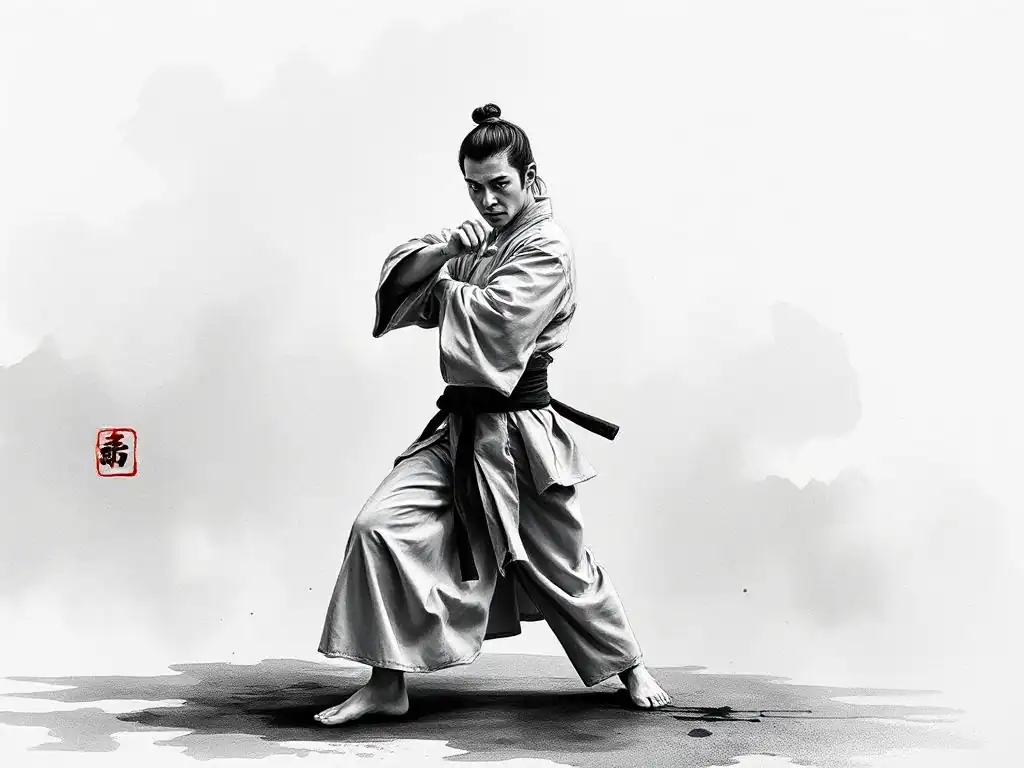
Moving beyond individual techniques, advanced Kyorugi counter timing techniques involve strategic planning and psychological manipulation. Elite fighters don't just react; they actively create opportunities for their preferred counters. This involves understanding opponent psychology, using deception, and thinking several steps ahead.
These strategies require a deep understanding of Kyorugi tactics and the ability to read and influence an opponent's actions. It's about setting traps and exploiting predictable responses, turning the entire ring into a stage for tactical maneuvering aimed at creating precise counter opportunities.
Feinting and Baiting to Elicit Predictable Attacks
Feinting and baiting are sophisticated tactics used to manipulate an opponent into attacking in a specific way or at a specific time, thereby setting them up for a predetermined counter. A feint is a fake attack or movement intended to draw a reaction. For example, a quick lift of the front leg might make the opponent flinch or commit to a defensive block, briefly exposing another area or disrupting their readiness.
Baiting involves intentionally leaving an opening or adopting a vulnerable posture to tempt the opponent into attacking. This requires confidence and precise timing, as you must be ready to evade and counter the moment they take the bait.
Successfully using feints and baiting requires understanding your opponent's typical reactions. If they consistently react to a head feint by raising their guard high, you can bait that reaction and counter with a low kick or a body shot as their guard is up. If they always attack when you drop your hand slightly, you can bait that attack and be ready with an immediate, fast counter.
This proactive approach to creating counter opportunities is a hallmark of advanced Kyorugi counter timing techniques. It turns the defensive counter into an offensive setup, allowing the fighter to dictate the terms of the engagement even when seemingly reacting.
Combining Defensive Blocks with Immediate Counterattacks
While evasion is a primary method for setting up counters, combining defensive blocks or parries with immediate counterattacks is another effective strategy in Kyorugi counter timing techniques. A well-executed block absorbs or deflects the opponent's strike, and the instant their technique is neutralized, you launch your counter. This requires immense speed and coordination, as the transition from defense to offense must be seamless. For instance, blocking a Dollyo Chagi to the body with a forearm block and immediately responding with a fast front-leg Dollyo Chagi or Ap Chagi before the opponent's kicking leg touches the ground.
This strategy is particularly useful against powerful, committed attacks that are difficult to evade entirely within the tight confines of competition. It allows you to absorb some of the impact while simultaneously creating an opening. The timing is critical – the counter must be launched as or immediately after the block is completed, before the opponent can recover their balance or guard. Practicing drills that link specific blocks with corresponding counters is essential for developing this rapid transition. For example:
- [ ] Drill: Body block + Front leg Dollyo Chagi counter
- [ ] Drill: Head block + Rear leg Ap Chagi counter
- [ ] Drill: Parry incoming kick + Side step + Rear leg Dollyo Chagi counter
Mastering this blend of defense and immediate offense enhances the versatility of your Kyorugi counter timing techniques.
Exploiting Opponent Weaknesses with Targeted Counters
Identifying and exploiting an opponent's specific weaknesses is a key element of advanced Kyorugi counter timing techniques. Every fighter has vulnerabilities, whether it's a predictable reaction to pressure, a weakness in their guard after certain techniques, poor balance after specific movements, or a tendency to favor one side. Once a weakness is identified, the strategy becomes about creating situations that expose that weakness and having the right counter technique ready to exploit it. For example, if an opponent consistently drops their rear hand after throwing a front-leg kick, a fast rear-leg head kick counter becomes a high-percentage option.
This requires keen observation during the match and potentially pre-fight analysis if possible. It involves asking questions like: Which side do they favor? Do they recover quickly after spinning techniques? Is their guard high or low?
Do they react poorly to pressure or feints? Once weaknesses are identified, the game plan shifts to designing exchanges that force the opponent into situations where their weakness is exposed, allowing for a targeted counter. This level of tactical intelligence, combined with precise Kyorugi counter timing techniques, is what separates good fighters from great ones. It's estimated that exploiting identified weaknesses can increase the success rate of specific counters by 20-50% against that particular opponent.
Drills to Improve Kyorugi Counter Timing
Consistent and targeted training is essential for honing Kyorugi counter timing techniques. While sparring is the ultimate test, specific drills break down the complex skill of countering into manageable components, allowing for focused repetition and refinement. These drills should emphasize not just the physical techniques but also the crucial elements of timing, distance, and reading the opponent.
Effective drills progress from predictable scenarios to more reactive and live situations, gradually increasing the speed and variability of the opponent's actions. This systematic approach helps build the necessary muscle memory, visual processing speed, and decision-making skills required for effective countering in the dynamic environment of a Kyorugi match.
Partner Drills for Reactive Counter-Striking
Partner drills are fundamental for developing reactive Kyorugi counter timing techniques. These drills involve one partner simulating attacks while the other focuses solely on evading and countering. Initially, the attacks can be slow and predictable, allowing the defender to practice the correct evasion footwork and counter technique with proper timing. As proficiency increases, the speed and variability of the attacks should increase, forcing quicker reactions and better timing.
Examples of partner drills include:
- Attack/Counter 1-for-1: Partner A throws one specific attack (e.g., Ap Chagi). Partner B evades (e.g., steps back) and immediately counters with a predetermined technique (e.g., rear leg Dollyo Chagi). Repeat, focusing on timing the counter as Partner A recovers.
- Random Attack Counter: Partner A throws any attack from a limited set (e.g., Ap Chagi, front leg Dollyo Chagi). Partner B must identify the attack, evade, and counter appropriately. This forces quicker reading and decision-making, crucial for Kyorugi counter timing techniques.
- Pressure Counter: Partner A maintains light offensive pressure (pushing forward, feinting). Partner B focuses on maintaining distance and countering only when a clear opening appears due to Partner A's over-commitment or error. This simulates the pressure of a live match.
These drills build the reactive speed and timing necessary to respond effectively to an opponent's actions.
Shadow Sparring Focused on Counter Timing and Precision
Shadow sparring, normally used for practicing techniques and movement, can be specifically adapted to improve Kyorugi counter timing techniques. This involves visualizing an opponent and reacting to their imagined attacks with appropriate evasions and counters. The key is to make the imagined opponent's actions as realistic as possible, including feints, combinations, and changes in rhythm.
During shadow sparring focused on countering, the practitioner should verbalize the imagined opponent's action ("He throws a front kick!") and then execute the evasion and counter with realistic speed and power. This helps link the visual cue (imagined attack) with the physical response (evade + counter). It allows for high-volume repetition of specific counter scenarios without the physical impact of partner drills.
Focusing on the timing of the counter relative to the imagined attack's trajectory is paramount. For example, practicing stepping back just as the imagined kick reaches you and launching your counter as the imagined leg begins to withdraw. Using a mirror can help check footwork and body positioning for optimal counter execution.
Sparring with Specific Counter-Attack Goals and Scenarios
Live sparring is the ultimate test and training ground for Kyorugi counter timing techniques. However, instead of just free sparring, focusing rounds on specific counter-attack goals can accelerate improvement. For instance, dedicate a round to only attempting counters against the opponent's front-leg techniques. Another round might focus on countering only when the opponent spins.
Setting specific goals helps the practitioner actively look for those particular counter opportunities rather than just reacting randomly. This focused approach improves recognition of specific attack patterns and refines the timing for the desired counter techniques. It also encourages strategic thinking during the match. Examples of sparring goals could be:
- [ ] Goal 1: Successfully land 3 counters against opponent's Ap Chagi.
- [ ] Goal 2: Counter every time opponent attempts a Dwi Chagi.
- [ ] Goal 3: Use feints to set up at least 2 counters.
- [ ] Goal 4: Focus on using front-leg counters to disrupt opponent's rhythm.
After each round with a specific goal, review what worked and what didn't. This iterative process of setting goals, attempting them in live sparring, and reviewing the results is highly effective for integrating Kyorugi counter timing techniques into your natural sparring style.
Common Mistakes in Kyorugi Counter Timing and How to Avoid Them
Even experienced practitioners can fall victim to common errors when attempting Kyorugi counter timing techniques. Recognizing these pitfalls is the first step towards avoiding them. Mistakes often stem from poor observation, incorrect judgment of distance, or over-committing to the counter itself.
Avoiding these errors requires discipline, focus, and continuous self-correction based on training and sparring feedback. It's about refining the subtle aspects of timing and execution that make the difference between a successful counter and getting hit.
Telegraphing Your Counter: Maintaining Deception
One of the most common mistakes is telegraphing your own counterattack. Just as you look for tells in your opponent, they are looking for them in you. If your counterattack is preceded by a large, obvious movement, a winding up of the body, or a change in posture, the opponent will see it coming and either defend, evade, or even counter your counter. This defeats the purpose of using Kyorugi counter timing techniques, which relies on exploiting the opponent's vulnerability when they are least expecting your return strike.
To avoid telegraphing, practice launching your counter techniques with minimal preparatory movement. Focus on explosive speed and efficiency of motion, drawing power from core rotation and hip torque rather than large wind-ups. Drills that emphasize starting your counter from a neutral or defensive stance directly are crucial. Shadow sparring with a focus on eliminating unnecessary movements before the counter can help identify and correct these tells. The goal is for your counter to appear almost instantaneous, flowing directly from your evasion or defensive action.
Over-Extending and Losing Balance: Maintaining Stability
Another critical error in Kyorugi counter timing techniques is over-extending or losing balance during or immediately after the counterattack. While counters often require explosive power, over-committing your weight or extending too far leaves you vulnerable if the counter misses or is blocked. An opponent who successfully defends against an off-balance counter can immediately launch their own attack with a significant advantage. Losing balance also makes it impossible to follow up or defend against a potential combination.
Maintaining stability during counters requires strong core strength and precise control of your body weight. Practice drills that emphasize recovering your stance and balance immediately after throwing a technique. Focus on landing your counter and being ready to move or defend instantly. This might mean pulling your leg back quickly after a kick or settling back into a balanced stance after a hand technique. Remember, the goal is not just to land the counter, but to do so safely and maintain readiness for the ongoing exchange. Using task lists in training can help reinforce this:
- [ ] Drill: Execute counter kick, immediately return leg to guard position.
- [ ] Drill: Execute counter hand technique, immediately return hands to guard.
- [ ] Sparring: After any counter attempt, assess balance and readiness for follow-up.
Prioritizing balance and recovery prevents your successful counter attempt from becoming a liability.
Ignoring Opponent Setups: Maintaining Awareness
Sometimes, a seemingly obvious opening for a counter is actually a trap set by the opponent. Failing to recognize that an opponent is intentionally baiting you or setting up a specific follow-up attack can lead you directly into danger. This mistake stems from focusing too narrowly on the immediate opportunity for a counter and ignoring the broader tactical context and the opponent's potential next move. Effective Kyorugi counter timing techniques require not just reacting to the current action but also anticipating the consequences of your reaction.
To avoid this, always maintain awareness of the opponent's overall strategy and tendencies. Ask yourself: Why is this opening available? Is this typical for this opponent? What could they do next if I commit to this counter?
If an opponent consistently follows a failed attack with a powerful spin kick, being ready to counter the spin kick might be safer than jumping on the initial "opening." This requires a higher level of tactical awareness and the ability to read the opponent's potential combinations and traps. It emphasizes that Kyorugi counter timing techniques are part of a larger strategic game, not isolated reactions.
The Mental Game of Kyorugi Countering
Beyond the physical and technical aspects, the mental game is profoundly important for successful Kyorugi counter timing techniques. Confidence, focus, and adaptability are crucial for reacting effectively under pressure and making split-second decisions. A hesitant mind leads to slow reactions and missed opportunities, while a focused mind can read cues and execute counters with precision.
The dynamic and unpredictable nature of Kyorugi sparring demands mental resilience. Maintaining composure, staying present in the moment, and trusting your training are essential for consistently applying effective counter strategies, especially in competitive environments where pressure is high.
Building Confidence in Your Counter-Striking Abilities
Confidence is paramount for executing Kyorugi counter timing techniques effectively. Hesitation kills counters; you must commit fully to the evasion and the subsequent strike within that narrow window of opportunity. Building confidence comes primarily from successful repetition in training. As you successfully land counters in drills and sparring, your belief in your ability to do so in a real match grows. Positive reinforcement from coaches and training partners also contributes significantly.
Setting achievable goals in sparring, such as landing a specific type of counter even once in a round, can help build confidence incrementally. Analyzing your own sparring footage to see successful counter attempts reinforces positive behaviors and helps identify areas for improvement without the immediate stress of the exchange. A confident fighter is more likely to trust their timing and commit to the counter, increasing its speed and power. Remember that even elite athletes miss counters sometimes; learning from mistakes without letting them diminish confidence is key.
Maintaining Focus and Awareness During Sparring
Maintaining intense focus and awareness throughout a Kyorugi match is non-negotiable for effective counter timing techniques. You must constantly observe the opponent's movements, anticipate their intentions, manage distance, and be ready to react instantly. Distractions, fatigue, or lapses in concentration can lead to missed cues and failed counters, or worse, getting caught by an opponent's attack.
Training focus involves practicing staying present in the moment. This can include mindfulness exercises, visualization, and simply training yourself to concentrate for extended periods. During sparring, actively reminding yourself to "watch the eyes," "check the weight," or "manage the distance" can help maintain awareness. Simulating competition scenarios in training, including managing fatigue while trying to stay focused, is also beneficial. The ability to maintain high-level focus for multiple rounds is a distinguishing trait of top-tier Kyorugi competitors and directly impacts their ability to execute complex Kyorugi counter timing techniques consistently.
Adaptability and Adjusting Your Counter Strategy
No two opponents are exactly alike, and even a single opponent may change their strategy mid-match. Therefore, adaptability is a crucial mental skill for Kyorugi counter timing techniques. Your initial plan for countering might not work against a particular opponent or might become less effective as the match progresses. You must be able to recognize this and adjust your counter strategy on the fly.
This might involve switching from primarily evasive counters to using more intercepting ones, changing which specific techniques you use to counter, or focusing on exploiting a newly identified weakness. For example, if your opponent stops telegraphing their front kick effectively, you might need to shift focus to countering their roundhouse kicks instead. This requires continuous observation, analysis, and willingness to deviate from the original plan.
Coaches often play a vital role here, observing the match from the outside and advising on necessary adjustments to counter strategies between rounds. Being able to adapt your Kyorugi counter timing techniques makes you a much harder opponent to predict and defeat.
Kyorugi Counter-Timing in Competition: Real-World Application
Ultimately, the goal of practicing Kyorugi counter timing techniques is to apply them successfully in competition. The environment of a real match – with its pressure, speed, and unpredictability – presents unique challenges and opportunities. Analyzing how counters are successfully implemented in high-stakes competition provides valuable insights into their practical application.
Observing elite athletes demonstrates the subtle nuances of timing, distance, and tactical setup required for counters to score points and influence the outcome of a match. Real competitive scenarios highlight which Kyorugi counter timing techniques are most effective under pressure and against different styles.
Analyzing Successful Counter-Strikes in Taekwondo Matches
Watching footage of high-level Kyorugi matches is an excellent way to learn about effective counter timing techniques in action. Pay close attention to when successful counters are thrown, the preceding action by the opponent, the counter technique used, and the footwork involved. Look for patterns: Do certain fighters consistently counter specific attacks? How do they create the opening? What is their distance management like just before the counter?
Analyzing statistics from competitive platforms can also provide insights. For example, data might show that Dollyo Chagi counters are most successful against opponents moving forward, while Ap Chagi counters are more effective at disrupting initial attacks. Observing how points are scored from counters in various weight classes and against different international styles provides a broader understanding of the practical effectiveness of different Kyorugi counter timing techniques in competitive settings.
Developing a Game Plan Based on Counter Opportunities
Before a competition match, developing a game plan that includes potential counter opportunities based on your opponent's known style (if possible) is highly beneficial. If you know your opponent favors certain attacks or has predictable patterns, you can anticipate these and prepare specific counters. For instance, if they rely heavily on a step-in Dollyo Chagi, your game plan should include specific footwork (e.g., side-step or step-back) and counter techniques (e.g., Bandal Chagi or rear-leg Dollyo Chagi) to use against it.
Even without prior knowledge, having a general framework for countering common attacks is useful. The game plan isn't rigid; it's a guide. It allows you to enter the ring with a proactive mindset regarding counter-striking, making you more likely to spot and exploit opportunities as they arise. Integrating planned Kyorugi counter timing techniques into your overall match strategy increases your tactical options and scoring potential.
Analyzing Opponent Tendencies and Exploitable Patterns
During the initial moments of a match, dedicate time to observing your opponent's live tendencies. How do they move? What is their preferred range? What attacks do they favor when under pressure? Do they telegraph? Do they have any obvious tells or weaknesses? This live analysis is crucial for adapting your Kyorugi counter timing techniques specifically to the opponent in front of you today.
As the match progresses, continue to look for exploitable patterns. Do they always follow a blocked kick with a hand technique? Do they lose balance when they spin? Do they tire in the later rounds and become more predictable? Identifying these live patterns allows you to adjust your counter strategy, focusing on the techniques and timings most likely to succeed against that specific opponent's current state and habits. This ongoing analysis and adaptation are hallmarks of elite Kyorugi performance.
Conclusion: Elevating Your Kyorugi Game with Precise Counter Timing
Mastering Kyorugi counter timing techniques is a complex but incredibly rewarding pursuit that can significantly elevate your performance in Taekwondo sparring. It transcends simple reaction, combining elements of tactical anticipation, precise distance management, sharp reflexes, technical proficiency, mental fortitude, and strategic planning.
By diligently practicing the fundamentals of timing and distance, learning to read your opponent's tells and patterns, developing a versatile repertoire of counter techniques, and incorporating advanced strategies like feinting and exploiting weaknesses, you build a robust counter-striking game. Consistent training through targeted drills and focused sparring rounds refines these skills, turning conscious effort into intuitive reaction. Overcoming common mistakes like telegraphing and losing balance ensures your counters are not only effective but also safe.
Ultimately, the mental game of confidence, focus, and adaptability allows you to apply these skills successfully under the pressure of competition. Embracing the discipline required to hone your Kyorugi counter timing techniques will make you a more elusive, unpredictable, and effective fighter, capable of turning your opponent's aggression into your own scoring opportunities.
Frequently Asked Questions
What is Kyorugi, and why is timing so important?
Kyorugi is the sparring discipline in Taekwondo. Timing is crucial because it allows you to intercept attacks and exploit openings, turning defense into offense.
How do I identify the right moment to counter in Kyorugi?
Look for tells in your opponent's movements, such as telegraphing their attack or becoming unbalanced. This allows you to capitalize on their vulnerability.
What are some fundamental Kyorugi counter timing techniques?
Common techniques involve waiting for the extension of an opponent's kick before intercepting or using a preemptive strike to disrupt their attack.
How can I improve my reaction time for better counter timing?
Drills that focus on reflex training and predictive analysis are essential. This includes sparring with different partners and varying attack patterns.
Are there specific drills I can use to practice Kyorugi counter timing?
Yes, shadow sparring focusing on specific counter-attack scenarios and partner drills where one person attacks and the other counters are highly effective.
Final Reflection: Mastering the Moment
The intricacies of Kyorugi counter timing techniques, as explored throughout this article, are not merely theoretical exercises confined to the dojang. They represent a crucial, dynamic element in the ever-evolving landscape of competitive Taekwondo, directly impacting performance and ultimately, success. Understanding and applying these principles is more relevant than ever in today's fast-paced, strategically complex Kyorugi matches.
The profound impact of precise timing extends far beyond the immediate exchange of blows. It shapes the flow of the fight, dictates the opponent's reactions, and ultimately, defines the victor. My own journey in Taekwondo has taught me that mastering timing is not just about physical skill, but about cultivating a deep understanding of rhythm, anticipation, and strategic thinking. The best fighter is never angry,
Bruce Lee famously said. This sentiment perfectly encapsulates the calm, calculated precision required to execute a perfectly timed counter, transforming potential aggression into decisive victory.
Now, I invite you to consider how these principles of timing can be applied not only in Kyorugi, but also in your own life. Reflect on the moments where precise timing, or a lack thereof, has shaped your outcomes. Embrace the challenge of cultivating patience, observation, and strategic thinking. By mastering the moment, you can unlock your full potential, both on and off the mat, and achieve a level of success you never thought possible.
Unleash Your Inner Champion: Take Control of Your Counters!
Thank you for diving into the art of timing and discovering the secrets to Kyorugi success! Now that you're armed with this knowledge, it's time to transform theory into tangible results and elevate your sparring game.
Here's how to take the next step:
- Commit to dedicating 15 minutes, 3 times a week, to solely practicing your counter-timing drills with a partner or training dummy. Focus on identifying openings and executing your counters with precision.
- Explore videos of professional Kyorugi matches, paying close attention to the subtle cues and timing strategies employed by top athletes. Note your observations.
- Share one surprising takeaway from this article with your training partners and discuss how you can all incorporate improved timing into your sparring sessions.
What specific counter are you most excited to master, and what steps will you take this week to get there?