
Kokyu Nage: A Study in Effortless Power, Connection, and Projection

Welcome to Martial Arts Mastery, where we delve deep into the heart of combat traditions. Ever wondered how a smaller defender can overcome a larger aggressor with seeming ease? Today, we unlock the secrets of Kokyu Nage, a fascinating Aikido technique built on connection, balance breaking, and efficient energy transfer. Discover the surprising Kokyu Nage technique benefits and how this subtle art can amplify your martial prowess. Prepare to explore the principles of effortless power and expand your understanding of this captivating discipline.
- Understanding Kokyu Nage in Aikido
- Kokyu Nage Technique Benefits: Unveiling the Advantages
- Mastering the Mechanics of Kokyu Nage
- Types of Kokyu Nage: Variations and Applications
- Kokyu Nage Training Drills and Exercises
- Common Mistakes to Avoid in Kokyu Nage
- The Role of Kokyu Nage in Aikido Self-Defense
- Advanced Kokyu Nage Concepts and Applications
- The History and Evolution of Kokyu Nage
-
Frequently Asked Questions
- What is Kokyu Nage and what are its core principles?
- What are the key benefits of mastering Kokyu Nage techniques?
- How does Kokyu Nage relate to the concept of "effortless power" as described by MartialArtsMastery.org?
- What are some practical self-defense applications of Kokyu Nage?
- How can I begin learning and improving my Kokyu Nage technique, according to MartialArtsMastery.org's training tips?
- Final Reflection: Embracing Effortless Power
- Unlock Your Inner Power: Master the Art of Kokyu Nage!
Understanding Kokyu Nage in Aikido
What is Kokyu Nage? Exploring Breath, Connection, and Balance
Kokyu Nage, often translated as "breath throw," is a fundamental and distinctive technique in Aikido. It is not a throw based on brute strength or muscular force, but rather on the principle of harmonizing one's own energy and movement with that of an attacker, known as uke.
The essence of Kokyu Nage lies in disrupting uke's balance through subtle shifts, proper timing, and the projection of one's own internal power, often coordinated with breath ( kokyu). Unlike throws that might rely on leveraging joints or applying significant physical power, Kokyu Nage seeks to lead uke's energy to a point where their structure collapses naturally, allowing them to be thrown with minimal effort from the defender, nage.
This technique embodies the core Aikido principles of non-resistance and blending. Instead of meeting force with force, nage uses connection and spherical movement to guide uke's attack, turning it back upon them. A successful Kokyu Nage feels almost effortless to nage, as the throw is a natural consequence of uke losing their center of gravity.
It highlights the Aikido ideal that a smaller, weaker person can effectively neutralize a larger, stronger attacker by understanding and applying principles of balance, timing, and connection rather than relying on superior physical attributes. The focus is on control and projection, often leaving uke off-balance and unable to continue their attack effectively.
The Core Principles: Centering, Connection, and Extension
At the heart of Kokyu Nage are three interconnected principles: centering, connection, and extension ( kokyu-ryoku). Centering refers to maintaining one's own stable, grounded core, often visualized as the hara or lower abdomen. A strong center provides the foundation for all movement and allows nage to remain stable while interacting with uke's force. This principle is crucial; without a stable center, nage cannot effectively lead or control uke's energy. Developing a strong, relaxed center is a primary focus in Aikido training.
Connection involves establishing a physical and energetic link with uke. This connection isn't just about holding on; it's about feeling uke's intention, direction of force, and state of balance. Through this connection, nage can sense uke's movement and blend with it.
Extension ( kokyu-ryoku) is the projection of energy from one's center outward, through the point of connection, to disrupt uke's balance and lead their movement. This energy is not brute force but a focused, unified power generated by the whole body, coordinated with breath. Mastery of these principles allows nage to execute Kokyu Nage with remarkable efficiency, demonstrating the potential for generating significant power through internal unity rather than muscular effort.
Kokyu Nage Technique Benefits: Unveiling the Advantages
Enhancing Balance and Stability Through Body Unification
One of the significant Kokyu Nage technique benefits is the profound improvement in one's own balance and stability. The constant practice of maintaining a grounded center while interacting with a moving partner forces practitioners to develop a sophisticated understanding of their own posture and weight distribution. Aikido training, particularly drills focusing on Kokyu Nage, emphasizes keeping the spine aligned, the hips settled, and the connection to the ground firm. This focus cultivates a natural, relaxed stability that extends beyond the dojo.
Practitioners often report increased awareness of their body's alignment in daily activities. The ability to remain stable while being pushed or pulled, a core requirement for executing Kokyu Nage effectively, translates directly to improved balance in dynamic situations. Over time, consistent practice can lead to observable improvements in static balance (e.g., standing on one leg) and dynamic balance (e.g., recovering from a stumble). This enhanced stability is a direct result of learning to unify the body's structure and move from the core, a fundamental principle demonstrated and refined through Kokyu Nage.
Improving Connection and Sensitivity with Uke's Energy
Another key advantage among the Kokyu Nage technique benefits is the development of heightened sensitivity and the ability to connect with a partner's energy. Kokyu Nage is impossible to perform successfully by simply grabbing or pushing; it requires nage to feel uke's intention and movement. Through repeated practice, practitioners learn to read subtle cues from uke – the direction of their force, their point of balance, their muscular tension. This sensitivity allows nage to anticipate uke's actions and blend with their energy rather than opposing it.
This improved sensitivity isn't limited to physical contact; it extends to understanding spatial relationships and timing. Learning to connect means learning to lead uke off-balance by disrupting their structure at the right moment, often with minimal apparent force. This skill is honed through specific partner drills where the focus is purely on blending and leading without relying on strength. The development of this kind of connection and sensitivity is a profound benefit, teaching practitioners to interact harmoniously and effectively with dynamic forces, whether in a martial context or everyday life.
Developing Effortless Power Generation Through Relaxation
Perhaps one of the most transformative Kokyu Nage technique benefits is the realization and development of effortless power generation through relaxation. Many new students initially try to execute Kokyu Nage using muscular strength, which is ineffective against a resisting partner. The technique, however, teaches that true power in Aikido comes from a unified body, correct structure, and coordinated movement originating from the center, not from isolated muscle groups. Relaxation is paramount because tension restricts the flow of energy and prevents the body from moving as a single, cohesive unit.
By learning to relax and move from their center, practitioners discover how to project force that feels substantial to uke yet requires minimal physical strain from nage. This concept, often described as kokyu-ryoku, is the power generated by the coordinated use of the entire body, often synchronized with breath.
Practicing Kokyu Nage repeatedly helps students unlearn the habit of tensing up and instead cultivate a state of relaxed readiness from which powerful, yet fluid, movements can emerge. This ability to generate significant power with minimal effort is a hallmark of advanced Aikido practice and a major benefit derived specifically from techniques like Kokyu Nage.
Mastering the Mechanics of Kokyu Nage
Posture and Body Alignment: Maintaining a Stable Center
Mastering Kokyu Nage begins with impeccable posture and body alignment. A stable center is not just a philosophical concept; it is a physical reality achieved through correct structural alignment. The spine should be erect but relaxed, allowing energy to flow freely. The hips should be settled, providing a solid base. The knees are typically slightly bent, allowing for fluid movement and adjustment. Maintaining this integrated posture ensures that any force transmitted through the body is directed efficiently and that the practitioner remains grounded even when interacting with a strong force.
Incorrect posture, such as a rounded back or locked knees, compromises the center and makes effective Kokyu Nage impossible. The body must function as a single, interconnected unit, with the power originating from the hips and hara, extending through the limbs, and projecting outwards. Consistent practice of basic stances and movements, like tai sabaki (body movement), reinforces the muscle memory needed to maintain this stable alignment under pressure. Without this fundamental physical stability, attempts at Kokyu Nage will likely devolve into ineffective pushing matches.
Utilizing Breath Control (Kokyu): Coordinating Breath with Movement
The term kokyu means breath, and its conscious control is integral to Kokyu Nage. In Aikido, breath is not just for oxygen; it's seen as a way to unify mind and body and to project energy. Coordinating breath with movement allows nage to generate power at the precise moment needed for the throw. Typically, an out-breath is synchronized with the projection of energy and the execution of the technique, facilitating relaxation and the release of force. Holding one's breath or breathing erratically during the technique hinders the natural flow of movement and power.
Effective kokyu in Kokyu Nage involves a deep, abdominal breath that supports the body's structure and allows for smooth, continuous movement. As nage blends with uke's movement, the breath helps to time the disruption of uke's balance and the subsequent projection that leads to the throw. This conscious coordination of breath and action is a key element that differentiates Kokyu Nage from purely physical throws and contributes significantly to its characteristic "effortless" feel. Developing conscious breath control is a core aspect of Aikido training and directly impacts the effectiveness of techniques like Kokyu Nage.
Connection and Blending: Achieving Aiki with Uke
Achieving aiki, the harmonious blending of energies, is essential for successful Kokyu Nage. Connection is the physical manifestation of this blending. It's about maintaining contact with uke in a way that allows nage to feel their intention and lead their energy. This connection is not rigid; it's supple and adaptable, allowing nage to adjust their movement based on uke's reaction. The goal is to join with uke's movement, guiding it into a circular or spherical path that disrupts their linear attack.
Blending involves moving in sync with uke, entering their space ( irimi) and turning ( tenkan) to redirect their force. Instead of blocking or resisting, nage moves with uke, staying just slightly ahead of their balance point. This requires constant sensitivity and subtle adjustments. When nage successfully blends, uke's force becomes nage's momentum, which can then be directed to unbalance and throw uke. The skill of connection and blending, refined through techniques like Kokyu Nage, is perhaps the most distinctive characteristic of Aikido and central to its effectiveness.
Types of Kokyu Nage: Variations and Applications
Shomen Irimi Nage: Entering Directly for the Throw
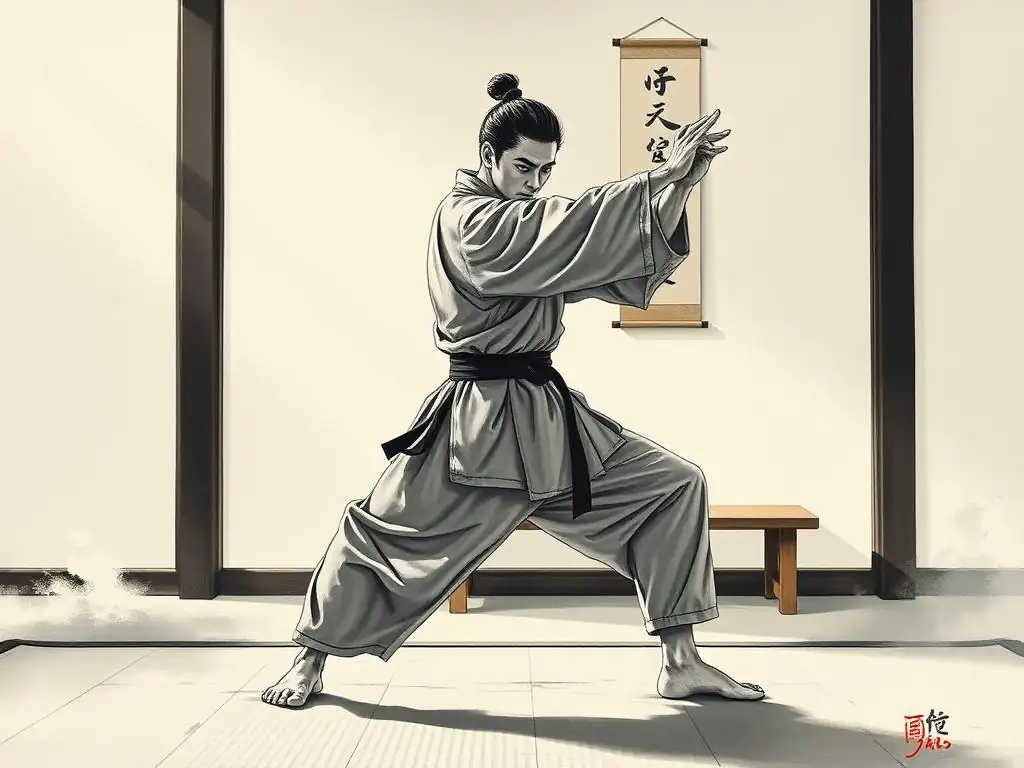
While often taught as a distinct technique, the principles of Kokyu Nage are deeply embedded in many Aikido throws, including variations commonly categorized as Irimi Nage. A common application of kokyu principles occurs in a direct irimi (entering) movement against a frontal attack ( shomen uchi or tsuki).
In this scenario, nage enters directly towards uke, blending with the attack's energy, and using their body's structure and extension ( kokyu-ryoku) to unbalance uke and lead them into a throw. This isn't the classic two-handed grip throw often shown as "Kokyu Nage," but it exemplifies using kokyu principles in a dynamic entry.
A more specific example often labeled as a type of Kokyu Nage against shomen uchi involves nage entering inside the attack, taking control of uke's head or neck area with one hand while maintaining connection with the other arm or body, and using a strong forward/upward extension from the hips and center to lead uke's balance directly backwards or sideways, resulting in a throw. The key is that the throw is powered by nage's unified body and extension, not just pulling or pushing with the arms. The feeling is one of projecting uke from their base of support.
Ushiro Ryo Kata Dori Kokyu Nage: Addressing Rear Two-Handed Grabs
A classic and frequently practiced application of Kokyu Nage is against a rear two-handed shoulder grab ( ushiro ryo kata dori). In this situation, uke grabs both of nage's shoulders from behind, restricting movement. Nage must first establish a strong connection and center, preventing uke from breaking their balance immediately. The technique involves subtle hip movement, breath coordination, and a powerful extension ( kokyu-ryoku) often directed upwards and outwards, disrupting uke's grip and balance.
A typical execution involves nage settling their weight, perhaps sinking their hips slightly, and then generating a powerful upward and forward extension through their arms, which are connected to uke's grip. This movement, combined with a turn or shift in posture, leverages uke's own force and position against them. Because uke is gripping tightly, they are strongly connected to nage.
Nage uses this connection and uke's commitment to the grab to their advantage, projecting energy through the connection to unbalance uke directly behind them or to the side, leading to a throw. This variation clearly demonstrates how kokyu-ryoku can be applied even when physically restricted.
Suwari Waza Kokyu Nage: Executing from a Seated Position
Kokyu Nage is also practiced extensively from a seated position ( suwari waza). This form of training is particularly valuable for developing a strong connection to the ground and generating power solely from the hips and upper body, as the legs are less mobile. Suwari waza Kokyu Nage often occurs against grabs like katate dori (single hand grab) or ryote dori (two hand grab) while both nage and uke are seated.
In suwari waza, the emphasis on connection and extension from the hara is even more pronounced. Nage must use subtle shifts of weight on the knees and hips, combined with coordinated breath and upper body extension, to unbalance uke.
For example, against a seated ryote dori, nage might settle their weight, establish a strong connection through the arms, and then execute a powerful, unified movement from the hips and core, projecting energy through the arms to lift or unbalance uke and throw them. This requires significant internal strength and coordination, highlighting the fact that Kokyu Nage is about unified body power, not just standing leverage.
Kokyu Nage Training Drills and Exercises
Solo Exercises for Developing Center and Stability
Developing the foundational principles for Kokyu Nage begins with solo practice. Exercises like fune kogi undo (rowing exercise) and ikkyo undo (first principle exercise) are crucial for building a strong, mobile center and understanding body unification. Fune kogi undo, for instance, teaches coordinated movement from the hips and hara, mimicking the extension and retraction needed for projecting energy. Practicing basic stances like hanmi and shifting weight smoothly while maintaining upright posture helps cultivate groundedness and stability.
Another valuable solo exercise is focusing on extending ki (energy) from the fingertips while maintaining a relaxed posture and strong center. This helps develop the feeling of projecting unified body power outwards. Simply standing and practicing deep, coordinated breathing from the abdomen can also enhance kokyu awareness. These solo drills build the internal strength and body awareness necessary before attempting Kokyu Nage with a partner, ensuring that the practitioner has a stable base and understanding of generating power from within.
Partner Drills for Enhancing Aiki and Connection
Partner drills are essential for learning to connect and blend with uke's energy, a core aspect of the Kokyu Nage technique benefits. Exercises like kokyu dosa (breath exercise with partner) are fundamental. In kokyu dosa, uke sits holding nage's hands or wrists firmly, while nage stands and attempts to unbalance uke using only posture, centering, and extension, often synchronized with breath. This drill explicitly removes the option of using muscular force and forces nage to rely purely on connection, structure, and kokyu-ryoku.
Other partner drills involve uke providing gentle, constant pressure from different directions while nage maintains their center and posture, learning to absorb and redirect force without becoming rigid. Practicing basic blending movements ( tai sabaki) with a partner, where uke initiates a simple push or grab and nage practices entering and turning, helps develop the sensitivity and timing required to stay connected and lead uke's energy. These drills provide the necessary feedback to refine the subtle physical and energetic connection needed for effective Kokyu Nage.
Ukemi Practice: Safely Receiving and Integrating the Throw
While not a drill for executing Kokyu Nage, dedicated ukemi (the art of receiving a technique, including falls and rolls) practice is vital for both partners. For uke, proper ukemi allows them to receive Kokyu Nage safely and repeatedly, providing consistent feedback to nage. Learning to fall and roll correctly prevents injury and allows uke to relax and respond naturally to nage's technique, making the training more realistic and beneficial.
For nage, understanding ukemi from the perspective of uke enhances their ability to execute Kokyu Nage safely and effectively. Nage learns how their actions impact uke's balance and how to lead uke into a position where they can take a safe fall. This mutual understanding, developed through consistent ukemi practice, deepens the connection between partners and makes the training environment safer and more conducive to learning the nuances of techniques like Kokyu Nage. It reinforces the cooperative nature of Aikido training, even when practicing powerful throws.
Common Mistakes to Avoid in Kokyu Nage
Over-Reliance on Muscular Force
One of the most common mistakes when learning Kokyu Nage is attempting to use excessive muscular force. Students, especially those with backgrounds in other martial arts or sports, often instinctively try to push, pull, or muscle uke into a throw. This approach is counterproductive in Kokyu Nage because it relies on meeting uke's force with equal or greater force, which contradicts the principle of blending. A stronger uke can easily resist or overpower purely muscular attempts.
Focusing on muscle tension inhibits the free flow of energy and prevents the body from moving as a unified structure. Instead of generating power from the core and extending it, isolated muscle use creates rigidity. Instructors frequently correct students who are visibly tensing their arms or shoulders. Overcoming this habit requires conscious effort and a shift in understanding from "doing something to uke" to "connecting with uke and leading their energy." Recognizing and releasing unnecessary tension is a critical step in developing effective Kokyu Nage.
Neglecting Proper Body Posture and Alignment
Another frequent error is neglecting proper body posture and alignment. Students might bend at the waist, round their shoulders, or lock their knees. Any deviation from a stable, upright, and connected posture weakens the practitioner's own base and ability to generate unified power. If nage is off-balance or structurally unstable, they cannot effectively unbalance uke using the principles of Kokyu Nage.
Maintaining correct posture is not static; it requires continuous subtle adjustments to remain centered while moving and interacting with uke. Failing to maintain a strong connection to the ground or allowing uke's force to collapse one's own structure are symptoms of poor alignment. Instructors often emphasize keeping the hara engaged and the spine elongated. Correcting this mistake involves constant self-awareness and diligent practice of foundational body movements and stances, reinforcing the physical structure needed for Kokyu Nage.
Losing Connection with Uke's Center
Losing connection with uke's center is a critical mistake that renders Kokyu Nage ineffective. The throw relies on disrupting uke's balance by leading their energy. If the physical and energetic link is broken, nage loses the ability to feel uke's movement and influence their balance. This can happen if nage pulls away, becomes rigid, or focuses solely on manipulating uke's limbs rather than connecting to their core.
A lost connection means nage is no longer blending with uke but acting upon them externally. This often results in uke being able to easily re-establish their balance or resist the technique. Maintaining a consistent, supple connection allows nage to feel where uke's weight is shifting and apply pressure or redirection at the optimal moment. Correcting this involves focusing on staying "heavy" and connected at the point of contact, feeling uke's intention, and moving in relation to uke's center, not just their periphery.
The Role of Kokyu Nage in Aikido Self-Defense
Applying Kokyu Nage to Control and Neutralize Attacks
In a self-defense context, Kokyu Nage serves as a highly effective means to control and neutralize an attack without causing unnecessary harm. Unlike strikes or joint locks that can inflict injury, a well-executed Kokyu Nage disrupts the attacker's balance and posture, rendering them unable to continue their aggression. The throw itself is designed to lead the attacker to the ground in a way that minimizes injury, provided they know ukemi. Even if they don't, the primary effect is ending the attack by removing the attacker's base of support.
For example, against a grab, Kokyu Nage allows the defender to use the attacker's grip and momentum against them. By blending and extending, the defender can turn a committed grab into an opportunity to unbalance the attacker. This ability to use the attacker's energy makes Kokyu Nage particularly useful against larger or stronger opponents. The focus is on control – leading the attacker's body where the defender wants it to go – rather than brute force confrontation.
Adapting Kokyu Nage for Various Attack Scenarios
While specific forms of Kokyu Nage are taught against predefined attacks (e.g., shomen uchi, katate dori), the underlying principles of centering, connection, and extension are highly adaptable. An experienced practitioner can apply the kokyu principle to a wide range of real-world attack scenarios, even those that don't fit a textbook definition. The ability to sense an attacker's balance and apply disruptive extension can be used against pushes, shoves, tackles, or even strikes, provided a connection can be established.
For instance, against a shove, a practitioner might step in, connect with the attacker's chest or shoulder, and use their body weight and extension to continue the attacker's forward momentum into a controlled fall or throw. The key is recognizing the opportunity to blend with the incoming force and redirect it using kokyu-ryoku. This adaptability makes the principles learned through Kokyu Nage highly relevant for practical self-defense, extending beyond the specific techniques practiced in the dojo.
Ethical Considerations: Utilizing Techniques Responsibly
Aikido, including techniques like Kokyu Nage, is taught with a strong ethical foundation emphasizing de-escalation and minimal harm. Practitioners are instructed to use their skills responsibly and only as a last resort for self-defense. Kokyu Nage, by its nature, is less likely to cause serious injury than techniques involving strikes or aggressive joint manipulation, aligning with Aikido's philosophy of resolving conflict peacefully whenever possible.
The goal is to neutralize the threat, not to injure the attacker. A well-executed Kokyu Nage achieves this by removing the attacker's ability to continue the assault. While the technique can be powerful, its application is intended to end the confrontation swiftly and safely for both parties. This ethical dimension is integral to the study of Kokyu Nage and all Aikido techniques, underscoring the responsibility that comes with developing such effective skills.
Advanced Kokyu Nage Concepts and Applications
Exploring Subtle Energy and Intent (Ki) in Kokyu Nage
At advanced levels, the practice of Kokyu Nage delves deeper into the concepts of subtle energy and intent, often referred to as ki. While ki can be a complex topic, in the context of Kokyu Nage, it relates to the feeling of interconnectedness, the projection of unified body power, and the ability to sense and influence uke's state not just physically but energetically. This is where the "effortless" aspect becomes even more pronounced; the throw seems to happen with minimal physical effort, guided by subtle intention and energy flow.
Advanced practitioners focus on extending their ki or unified energy through the connection with uke, disrupting their balance at a more fundamental level. This isn't about mystical powers, but about refining body mechanics, breath control, and mental focus to such a degree that the projection of force feels internal and pervasive rather than external and muscular. Learning to sense uke's intention before they even fully commit to a movement allows for even earlier blending and unbalancing, leading to throws that seem to occur almost automatically.
Integrating Kokyu Nage with Flowing Movements (Ki No Nagare)
Advanced Kokyu Nage is often practiced within the framework of ki no nagare (flow of ki or energy). This involves performing techniques in a continuous, flowing manner, seamlessly transitioning from one movement or technique to the next. Instead of executing Kokyu Nage as a discrete, isolated technique against a static attack, it is applied within a dynamic exchange, responding fluidly to uke's continuous movement and reactions.
In ki no nagare practice, uke maintains a continuous attack or pressure, and nage blends and applies techniques like Kokyu Nage as opportunities arise within the flow. This requires significant sensitivity, adaptability, and the ability to maintain connection and center while constantly moving. Executing Kokyu Nage from a state of continuous flow further refines the principles of blending and effortless power, demonstrating how the technique can be applied effectively in dynamic, unpredictable situations.
Musubi: Connecting with Uke on a Deeper Level
The concept of musubi means connection, tying, or knotting, and in advanced Aikido, it refers to connecting with uke on a deeper level – physically, mentally, and energetically. In the context of Kokyu Nage, musubi means establishing such a complete connection that nage and uke temporarily function as a single unit. Nage doesn't just manipulate uke; they become intertwined, and nage guides this unified entity.
Achieving musubi allows nage to influence uke's balance and posture with minimal apparent effort, as if they are moving their own body. This profound level of connection enables the most advanced forms of Kokyu Nage, where the throw appears almost magical, requiring only a subtle shift of weight or intention from nage. Musubi represents the highest expression of blending and connection in Aikido and is a key goal in the advanced study of techniques like Kokyu Nage.
The History and Evolution of Kokyu Nage
The Origins of Kokyu Nage in Aikido's Founder's Vision
Kokyu Nage was a central technique in the art developed by Morihei Ueshiba, the founder of Aikido. O Sensei Ueshiba emphasized the importance of kokyu-ryoku (breath power or unified power) from his early days. He sought to create a martial art that transcended mere physical technique, incorporating spiritual and philosophical principles. Kokyu Nage, with its reliance on internal power, blending, and minimal physical conflict, perfectly embodied this vision.
Ueshiba often demonstrated techniques that appeared miraculous, throwing multiple attackers with seemingly no effort. These demonstrations were often based on the principles now codified in Kokyu Nage – using connection, timing, and effortless extension to disrupt an opponent's balance. The technique was not just a physical throw but a manifestation of O Sensei's understanding of universal energy and harmonious interaction. It represented a move away from the more physically destructive techniques found in older martial systems towards a method of control and resolution.
Key Influences on the Development of Kokyu Nage: Daito-ryu Aiki-jujutsu
A major influence on the development of Kokyu Nage, and indeed much of Aikido, was Daito-ryu Aiki-jujutsu, the art O Sensei Ueshiba studied extensively under Sokaku Takeda. Daito-ryu is known for its sophisticated joint locks, throws, and the principle of aiki, which involves using the opponent's energy against them. While Daito-ryu techniques can be quite forceful and physically demanding, the underlying principles of blending and unbalancing were foundational.
O Sensei took the aiki principles he learned in Daito-ryu and evolved them, emphasizing the non-resistant, harmonious aspects and the development of internal power ( kokyu-ryoku) over brute force. Many of the physical mechanics of unbalancing and leading an opponent found in Daito-ryu throws and controls were adapted and refined into Aikido's Kokyu Nage, transforming them from potentially injurious applications into methods of control and projection powered by unified body energy and breath, rather than just leverage or strength.
Variations in Kokyu Nage Across Different Aikido Lineages
Like many techniques in Aikido, Kokyu Nage is practiced with variations across different lineages and organizations. While the core principles of centering, connection, and extension remain consistent, the specific movements, entry points, and execution details can differ. For example, some styles might emphasize a more static, rooted approach to kokyu dosa, while others focus on dynamic, moving applications.
The Aikikai Foundation, the largest Aikido organization, teaches a broad spectrum of Kokyu Nage applications. Styles like Yoshinkan Aikido might have slightly different body mechanics and emphasize a more direct, powerful extension. Ki Society Aikido places particular emphasis on the concept of ki and its extension, influencing their approach to generating kokyu-ryoku.
These variations reflect the interpretations and emphases passed down from O Sensei through his senior students. Despite the differences in form, the essential principle of using unified body power and connection to unbalance and throw uke remains the defining characteristic of Kokyu Nage across all authentic Aikido lineages.
Frequently Asked Questions
What is Kokyu Nage and what are its core principles?
Kokyu Nage is a technique emphasizing using your opponent's own momentum and balance against them. It relies on breath control (Kokyu) and connection, rather than brute strength.
What are the key benefits of mastering Kokyu Nage techniques?
Mastering Kokyu Nage leads to improved body awareness, enhanced sensitivity to movement, and the ability to generate power efficiently, without relying solely on physical strength.
How does Kokyu Nage relate to the concept of "effortless power" as described by MartialArtsMastery.org?
Kokyu Nage embodies "effortless power" by using precise timing and leverage to disrupt an opponent's balance. This allows for throws and techniques that seem to require little physical exertion, focusing on efficient energy transfer.
What are some practical self-defense applications of Kokyu Nage?
Kokyu Nage can be used to redirect attacks, break an opponent's posture, and create openings for strikes or throws. Its emphasis on balance disruption makes it effective in close-quarters combat.
How can I begin learning and improving my Kokyu Nage technique, according to MartialArtsMastery.org's training tips?
Focus on developing a strong center, practicing proper body alignment, and cultivating sensitivity to your partner's movements. Consistent practice of foundational exercises is crucial.
Final Reflection: Embracing Effortless Power
The exploration of Kokyu Nage, as detailed throughout this article, isn't merely an academic exercise in martial arts technique; it’s a journey into understanding the profound potential of harmonious movement and efficient energy transfer. In a world often characterized by brute force and relentless competition, the principles of Kokyu Nage offer a refreshing alternative, demonstrating that true power lies not in physical dominance, but in the subtle art of connection and projection.
The enduring appeal of Kokyu Nage lies in its ability to transcend the physical realm, influencing our understanding of interpersonal dynamics and personal growth. The emphasis on yielding, blending, and redirecting energy resonates deeply with the challenges we face in navigating complex relationships and overcoming personal obstacles. As Morihei Ueshiba, the founder of Aikido, wisely stated: True victory is victory over oneself.
This philosophy underscores the importance of self-mastery and the cultivation of inner peace, principles that are central to the practice and understanding of Kokyu Nage.
Now, I invite you to consider how the principles of Kokyu Nage can be applied to your own life. How can you cultivate a greater sense of connection with those around you? How can you learn to yield to the inevitable forces of change, redirecting them to your advantage? Embrace the spirit of effortless power, and discover the transformative potential that lies within.
Unlock Your Inner Power: Master the Art of Kokyu Nage!
Thank you for exploring the secrets of Kokyu Nage with us. We hope this article has given you a taste of the effortless power and connection this technique offers. Now, it's time to put that knowledge into action and experience it for yourself.
Here’s how you can deepen your understanding and skill:
- Find a qualified instructor: Seek out a dojo or seminar where you can learn Kokyu Nage directly from a knowledgeable teacher. This hands-on experience is crucial for developing the sensitivity and timing required for this subtle art.
- Practice mindful movement exercises like Tai Chi or Qigong, and integrate their philosophy into your daily life to develop your internal awareness and connection with the vital energy.
- Share this article with your fellow martial artists and start a discussion on the principles of connection and projection in Kokyu Nage.
What small, practical step will you take today to begin integrating the principles of Kokyu Nage into your training?