
Irimi Nage: Is It Aikido's Most Misunderstood Yet Vital Throw?


Welcome to Martial Arts Mastery, where we delve into the rich tapestry of martial arts disciplines! Prepare to explore the nuances of combat, philosophy, and personal growth. In this article, we're untangling the complexities of a technique often shrouded in mystery: the Irimi Nage Aikido throw. Is it truly Aikido's most misunderstood, yet utterly vital, maneuver? Join us as we unravel its secrets and reveal its powerful applications – prepare to be enlightened!
- Understanding the Core Principles of Irimi Nage in Aikido
- Common Misconceptions About Irimi Nage Aikido Techniques
- Irimi Nage's Vital Role in Aikido Training and Application
- Mastering the Mechanics of Irimi Nage: A Step-by-Step Breakdown
- Irimi Nage Variations and Applications in Aikido
- The Philosophy Behind Irimi Nage: Beyond the Physical Technique
- Advanced Irimi Nage Applications and Strategies
- Irimi Nage: A Journey of Continuous Learning and Refinement
- Frequently Asked Questions
- Final Reflection: Embracing the Essence of Irimi Nage
- Unleash Your Inner Aikidoka: Master the Art of Irimi Nage!
Understanding the Core Principles of Irimi Nage in Aikido
Defining Irimi Nage: The Entering Throw
Irimi Nage, often translated as the "entering throw," is one of the foundational techniques in the martial art of Aikido. At its heart, this Aikido throw involves moving into the line of attack or towards the opponent's center, rather than away from it.
This direct, forward movement is a defining characteristic that sets it apart from many other throwing techniques found across various martial disciplines, which might rely more on evading or circling around an attack initially. The technique is designed not just to unbalance and throw an attacker, but to neutralize their forward momentum by merging with and redirecting it.
This technique is introduced relatively early in Aikido training, often after students have grasped basic movements like tai sabaki (body movement) and ukemi (falling techniques). Its importance lies in teaching practitioners to overcome the natural instinct to retreat when faced with aggression. Instead, Irimi Nage encourages a proactive, albeit non-resistant, engagement. The core principle is to enter the attacker's space, gain a position of advantage, and utilize their own energy and balance against them, culminating in the Irimi Nage Aikido throw.
The Significance of Irimi (Entering) and Nage (Throw)
The term Irimi (入り身), meaning "entering the body" or simply "entering," is arguably the most critical component of Irimi Nage. It signifies a commitment to stepping forward and inward, breaking the attacker's perceived safe space and disrupting their structure and intent from its very inception. This contrasts sharply with techniques based on tenkan (turning movement) which initially lead the attacker past you.
Irimi requires precise timing and courage, as it involves moving towards the potential danger. The goal is not collision, but rather to slip inside the attacker's sphere of influence to a position where you can control their balance and movement.
The second part, Nage (投げ), translates to "throw." This denotes the final action of the technique, where the attacker is directed off their feet and onto the mat. However, the throw in Irimi Nage is a direct consequence of the successful Irimi and subsequent control of the attacker's balance ( kuzushi).
It is not a forceful heave or a test of strength. Instead, the throw is a natural conclusion to the blending and redirection of the attacker's energy achieved through the entering movement and subsequent bodywork. The power of the Irimi Nage Aikido throw comes from leveraging the attacker's own momentum and structure, facilitated by the deep Irimi.
The Importance of Timing and Distance ( Maai) in Irimi Nage Execution
Effective execution of the Irimi Nage Aikido throw is heavily reliant on impeccable timing and maintaining the correct distance, known as Maai. Maai is not simply physical distance, but also encompasses the timing and interval between participants – the optimal space and moment to initiate a technique.
For Irimi Nage, the correct Maai allows the practitioner (nage) to enter decisively without being struck or grabbed effectively, positioning themselves optimally to apply control. Entering too early might lead to a direct collision or being countered, while entering too late means the attacker's technique is already too advanced to be easily disrupted by the Irimi.
Mastering Maai for Irimi Nage involves developing a keen sense of awareness regarding the attacker's intent, speed, and trajectory. For instance, against a forward strike like shomen uchi, the Maai must allow nage to step inside the line of attack as the strike extends, but before its full force is realized.
This requires countless repetitions and sensitivity training. An incorrect Maai will invariably result in the technique failing; the nage might be too far to make effective contact, too close to generate power or avoid the strike, or mistime the entry entirely, highlighting Maai as the invisible foundation of a successful Irimi Nage.
Common Misconceptions About Irimi Nage Aikido Techniques
Myth 1: Irimi Nage is Simply a Forward Throw
A common misconception, often stemming from observing the technique performed slowly or against compliant partners ( uke) in a dojo setting, is that the Irimi Nage Aikido throw is merely a straightforward push or pull that sends the attacker directly forward. This limited view fails to capture the dynamic and spherical nature of the technique as applied against a resisting or aggressive opponent. While the initial irimi step is forward, the subsequent movement and control involve significant circularity and blending, not a simple linear application of force.
In practice, a truly effective Irimi Nage rarely results in the attacker being thrown in a straight line directly in front of nage. The technique requires nage to move past the attacker's center, guiding them in a curve that disrupts their balance in multiple dimensions. The throw is often the result of nage turning their body ( tai sabaki) while maintaining contact and control, causing uke to spiral or fall in an arc. This circular motion is key to redirecting the attacker's energy safely and effectively, distinguishing it from simple linear throws found in other arts.
Reality: The Circular Motion and Blending Aspect of Irimi Nage
The reality of executing the Irimi Nage Aikido throw against a committed attack involves a sophisticated blending of movement and energy, characterized by significant circularity. After the initial forward irimi step, nage typically moves past the attacker, often turning their hips and upper body in a motion akin to tenkan or a tight circle, while maintaining connection. This blending ( musubi) allows nage to merge with the attacker's force and lead them, rather than opposing them head-on.
Consider an attack like katate-dori (single-hand grab). Nage performs irimi, stepping in and towards uke. However, instead of just pulling or pushing forward, nage uses their body turn to lead uke's arm and body in a circular path, typically upwards and past nage's center. This circular motion breaks uke's balance ( kuzushi) along multiple axes simultaneously. The final throw is not a result of brute force applied forward, but the culmination of this spiral leading uke off balance and directing them down along the arc of the movement, demonstrating the technique's reliance on blending and redirection over brute force.
Myth 2: Irimi Nage Only Works Against Unskilled Opponents
Another pervasive myth is that the Irimi Nage Aikido throw is only effective against beginners or those who are not resisting fully. Critics might argue that a strong, skilled opponent could easily stiffen up, resist the entry, or simply power through the technique. While it is true that executing any technique against a resisting, skilled opponent is more challenging, Irimi Nage is designed precisely to work because of the opponent's strength and momentum, not in spite of it.
The effectiveness of Irimi Nage against skilled or powerful opponents lies in its core principle of utilizing the attacker's energy. A stronger, more committed attack provides more energy for nage to blend with and redirect. A skilled opponent's committed movement can be used to facilitate their own unbalancing if nage can perform the irimi and blending correctly.
Aikido masters demonstrate the ability to apply Irimi Nage against powerful individuals precisely because they have honed their timing, maai, irimi, and blending to a degree where the attacker's force becomes the engine of their own downfall. It is not about overcoming strength with strength, but about leveraging force through superior positioning and timing.
Reality: Adapting Irimi Nage for Diverse Attack Scenarios
The reality is that the principles of Irimi Nage can be adapted to a wide variety of attack scenarios, from grabs and strikes to multiple attackers, provided the practitioner has sufficient skill and sensitivity. While the basic form might be taught against a simple shomen uchi or tsuki (thrusting punch), the underlying concepts of entering, blending, and controlling balance are universally applicable. For instance, against a rear grab ( ushiro ryote-dori), an irimi movement combined with a turn can break the attacker's hold and structure, setting up a throw that utilizes their forward pull.
Skilled practitioners learn to perceive the attacker's intent and energy flow in real-time and adjust their irimi and subsequent movement accordingly. Against a powerful punch, the irimi might be a split-second evasive entry to the side, immediately followed by control of the arm and body. Against a bear hug, the irimi might involve collapsing inward to disrupt the attacker's base before executing the throw.
This adaptability, moving beyond rote technique to fluid application of principles, is what makes Irimi Nage a vital technique even against diverse and skilled aggression. The success of the Irimi Nage Aikido throw in varied contexts is a testament to its fundamental principles rather than its application against limited scenarios.
Irimi Nage's Vital Role in Aikido Training and Application
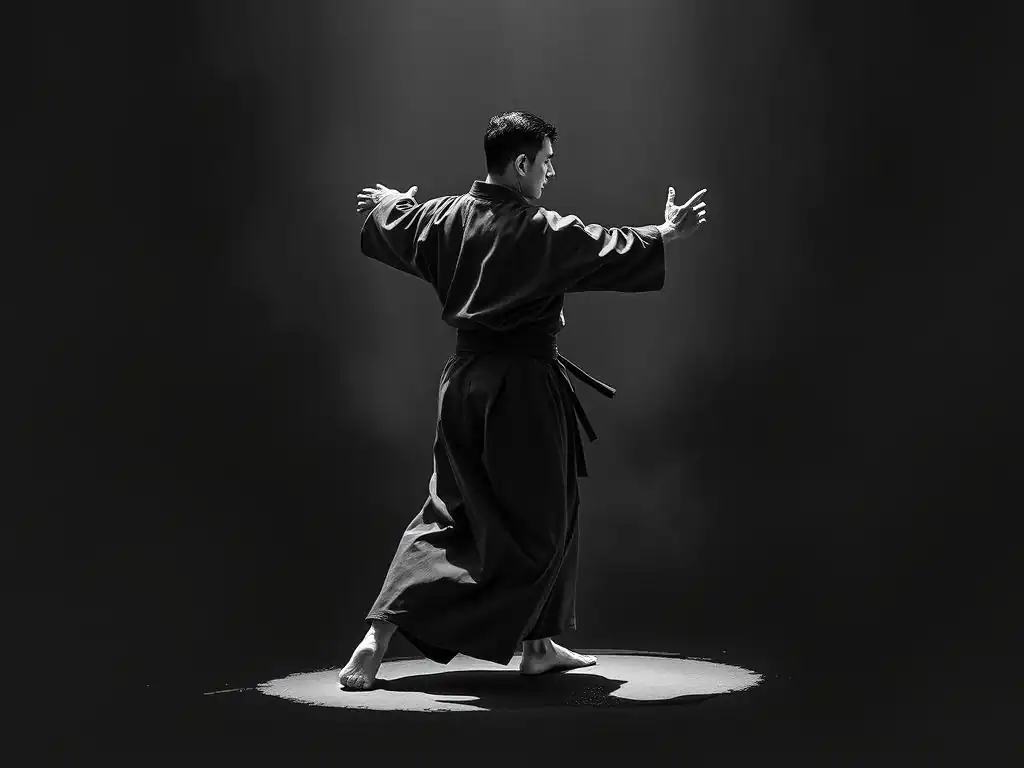
Irimi Nage as a Foundation for More Complex Aikido Techniques
Irimi Nage is not just a standalone technique; it serves as a crucial foundation for understanding and executing many other, more complex Aikido movements. The core principle of entering ( irimi) is fundamental to numerous throws and joint locks. Techniques like kote gaeshi (wrist twist), shiho nage (four-corner throw), and even aspects of kokyu nage (breath power throw) often begin with or incorporate an irimi movement to bridge the gap, disrupt the attacker's balance, and establish control. Without a solid grasp of how to enter effectively and safely, many subsequent techniques become significantly harder or impossible to apply.
Furthermore, the dynamic of leading the attacker's energy in a circular path, which is central to the Irimi Nage Aikido throw, is a recurring theme throughout Aikido. Learning to blend and redirect force through the physical structure of Irimi Nage helps students internalize the aiki principles of non-resistance and harmonious movement. This physical understanding then translates to other techniques, allowing practitioners to see the underlying similarities and apply the same core concepts in different contexts, solidifying Irimi Nage's place as a cornerstone of the Aikido curriculum.
Developing Tai Sabaki (Body Movement) Through Irimi Nage Practice
Consistent practice of Irimi Nage is instrumental in developing effective tai sabaki, or body movement, which is essential for all Aikido techniques. Executing the irimi step requires precise footwork and hip rotation to enter the attacker's space without colliding. The subsequent blending phase demands coordinated movement of the entire body – hips, shoulders, and feet working in unison – to lead the attacker off balance. This constant requirement for integrated, fluid body movement makes Irimi Nage an excellent drill for improving overall tai sabaki.
Students repeatedly practicing the Irimi Nage Aikido throw learn to pivot, step, and turn efficiently while maintaining connection with their partner. They develop sensitivity to how their own body movement affects the partner's balance and learn to adjust their posture and angle dynamically. This refinement of tai sabaki through Irimi Nage practice enhances the practitioner's ability to move effectively in any direction, evade attacks, and position themselves advantageously for a wide range of Aikido applications, making it a fundamental exercise for developing core physical skills.
Cultivating Aiki Principles: Harmony and Non-Resistance
Beyond the physical mechanics, Irimi Nage is a powerful vehicle for cultivating the philosophical principles of Aikido, particularly harmony ( wa) and non-resistance. The technique is not about meeting force with equal or greater force. Instead, it embodies the principle of aiki – harmonizing with the attacker's energy and using it. The irimi movement itself is a form of entering into harmony with the attack's direction, rather than opposing it.
By learning to blend with the attacker's forward momentum during the Irimi Nage Aikido throw, practitioners experience firsthand the effectiveness of yielding and redirecting energy. This physical experience helps internalize the idea that conflict can be resolved not through confrontation, but through merging and leading towards a peaceful resolution (represented by the throw itself, which ideally results in a safe fall). The practice encourages a mindset of adaptability and non-opposition, fostering the core aiki principles that extend beyond the dojo into daily life interactions.
Mastering the Mechanics of Irimi Nage: A Step-by-Step Breakdown
Step 1: Entering ( Irimi) and Creating an Opening
The initial step in executing the Irimi Nage Aikido throw is the irimi itself – the act of entering. This involves a decisive step forward and inward, moving towards the attacker's center or slightly off their line of attack, depending on the specific attack. The timing here is paramount: the entry must occur at the precise moment that allows you to penetrate their defense or move inside their line of attack effectively and safely. This isn't a hesitant shuffle, but a committed, focused movement.
Simultaneously with the step, the practitioner ( nage) uses their hands and body to create an opening or disrupt the attacker's structure ( kuzushi). For example, against a shomen uchi (overhead strike), nage might step irimi while raising a hand to parry or guide the incoming arm upwards, clearing a path for their body to enter safely past the strike and towards the attacker's side or rear. The goal is to gain a superior position relative to the attacker's balance and momentum, setting the stage for the control and throw.
Step 2: Controlling the Opponent's Balance ( Kuzushi)
Once the irimi is complete and nage is positioned effectively, the next crucial step is to take control of the opponent's balance ( kuzushi). Kuzushi means breaking the attacker's stability in any direction – forward, backward, or to the sides. In Irimi Nage, this is achieved primarily through the combination of the deep irimi entry and the subsequent leading motion of nage's body and arms. By entering deeply, nage forces the attacker to either step back (losing forward momentum and structure) or be pushed off balance.
Nage maintains connection, typically with the attacker's arm or shoulder, and uses their body weight and movement to guide the attacker. The circular or spiraling motion of nage's body as they move past the attacker actively pulls or pushes uke off their stable base. The control is not a static hold but a dynamic process of leading the attacker's weight and structure in a direction where they cannot recover their balance. This phase is critical; without effective kuzushi, attempting the throw in the next step will likely fail or require excessive force.
Step 3: Executing the Throw ( Nage) with Proper Body Alignment
The final step is the execution of the throw ( nage) itself. This is the culmination of the successful irimi and kuzushi. With the attacker's balance broken and their energy redirected, nage continues their movement, leading the attacker to the ground. Proper body alignment and connection are vital throughout this phase. Nage's body should remain stable and connected to the attacker, guiding them with smooth, continuous motion rather than jerking or heaving.
The throw is often facilitated by nage turning or pivoting, causing the attacker to fall in an arc around nage's center. Maintaining control of the attacker's arm or sleeve provides leverage and direction for the throw. The power comes from nage's core and body structure, not just the arms. The direction and force of the Irimi Nage Aikido throw should ideally guide the attacker into a safe fall ( ukemi), reflecting the non-injurious philosophy of Aikido. The throw is a natural extension of the blending movement, completing the redirection of the attacker's energy.
Drills and Exercises for Perfecting Irimi Nage Technique
Perfecting the Irimi Nage Aikido throw requires dedicated practice focusing on its various components. Numerous drills are used in Aikido dojos to build proficiency. A fundamental exercise is tai sabaki practice, specifically focusing on the irimi step and the subsequent turning movement, performed solo and with a partner holding lightly. This helps refine footwork and body coordination. Another common drill is practicing the irimi entry against various static grabs ( katate-dori, ryote-dori) to develop timing and connection.
Partner drills focusing specifically on maintaining musubi (connection) while moving through the Irimi Nage sequence are also crucial. Ukemi practice is equally vital for uke, enabling them to receive the throw safely and allowing nage to practice full-power throws without fear of injuring their partner. Repetition, starting slowly and gradually increasing speed and resistance, is key. Instructors often use variations of attacks and body positions to challenge students and deepen their understanding of the technique's adaptable principles, reinforcing the mechanics of the Irimi Nage Aikido throw.
Irimi Nage Variations and Applications in Aikido
Shiho Nage and Irimi Nage: Exploring the Connection
While seemingly distinct, Shiho Nage (four-corner throw) and Irimi Nage share fundamental connections, particularly in their reliance on entering and leading the attacker's energy. Both techniques often begin with an irimi type entry to establish control and disrupt balance. In many Aikido lineages, the initial movement to control the attacker's arm in Shiho Nage utilizes a similar principle of stepping inside the line of attack to gain a superior position, much like the beginning of Irimi Nage.
The difference lies primarily in the subsequent control and throwing mechanism. Irimi Nage typically involves leading the attacker past nage's center and throwing them forward or diagonally, often involving a spiral. Shiho Nage, on the other hand, involves controlling the attacker's arm in a specific lock and then leading them in a turning motion that projects them in one of the four directions relative to nage's final position.
However, the ability to execute a strong irimi and effectively lead the partner's energy, principles refined through Irimi Nage practice, directly enhances the practitioner's ability to perform a powerful and controlled Shiho Nage. Understanding the relationship between these two foundational Aikido throws deepens one's grasp of Aikido's core principles of blending and redirection.
Applying Irimi Nage in Self-Defense Scenarios
In practical self-defense situations, the Irimi Nage Aikido throw offers several advantages, particularly against committed, linear attacks like punches, grabs, or shoves. The core irimi movement is a direct way to neutralize incoming force by moving into it and off the line, rather than purely retreating. Against a forward punch ( tsuki), a well-timed irimi allows the defender to slip past the incoming fist while simultaneously closing the distance and gaining control of the attacker's arm and body, positioning for the throw.
Against grabs like a wrist grab ( katate-dori), the irimi step disrupts the attacker's base and leverage, making it difficult for them to maintain a strong grip or pull effectively. The subsequent blending and throwing motion quickly takes the attacker off their feet, ending the immediate threat.
While executing the full, aesthetic dojo version might be challenging in chaotic real-world scenarios, the underlying principles of entering, blending, and unbalancing are highly adaptable. The ability to perform a decisive irimi and break an attacker's balance using their own energy, central to the Irimi Nage Aikido throw, provides a powerful option for quickly and decisively resolving a physical confrontation.
Using Irimi Nage for Control and De-escalation
Beyond its application as a throw, the principles inherent in Irimi Nage can also be used for control and de-escalation, aligning with Aikido's philosophy of minimal harm. The initial irimi and blending can be used to gain control of an individual without necessarily throwing them forcefully. By entering and leading, one can guide a person off balance or simply escort them in a desired direction, using their own movement against them in a controlled manner.
For instance, if someone is aggressively advancing, a soft irimi combined with leading their arm or shoulder can steer them away or spin them around, disrupting their forward momentum without a violent throw. The control established during the kuzushi phase allows for manipulation of the attacker's body; this can be used to guide them to a seated position or simply maintain a position of advantage while communicating or waiting for assistance.
The focus shifts from the final throw ( nage) to the control gained through the irimi and blending. This highlights the versatility of the Irimi Nage Aikido throw principles, applicable for both decisive resolution and less injurious control.
The Philosophy Behind Irimi Nage: Beyond the Physical Technique
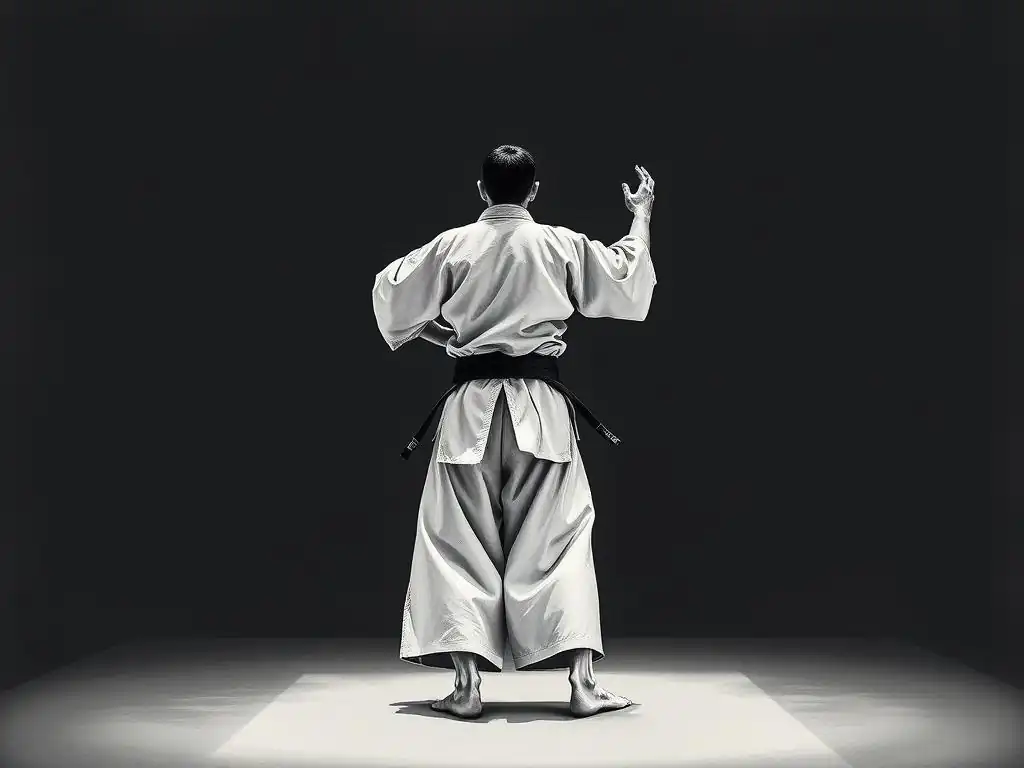
Irimi Nage as a Manifestation of Aikido's Principles of Harmony
Irimi Nage serves as a profound physical manifestation of Aikido's central principle of aiki, often translated as "harmonizing energy." Unlike martial arts that rely on meeting force with opposing force, Irimi Nage embodies the concept of blending with an attack. The irimi step itself is an act of moving with the attacker's energy and direction, rather than against it. This initial harmony allows nage to connect with uke without direct conflict.
The subsequent process of leading and redirecting the attacker's energy, culminating in the throw, is a physical dialogue where nage guides uke's force along a path that resolves the conflict safely for nage. There is no clash of wills or strength; instead, it's a demonstration of yielding and redirecting. Practicing the Irimi Nage Aikido throw repeatedly helps students internalize this non-resistant approach, understanding that true strength in Aikido comes from flexibility and the ability to harmonize with and control dynamic situations, rather than overpowering them.
Integrating Irimi Nage into a Holistic Martial Arts Practice
For practitioners of Aikido or those integrating Aikido principles into other martial arts, Irimi Nage offers a unique perspective on engagement and conflict resolution. It challenges the common martial instinct to block, evade, or strike forcefully. Instead, it promotes entering, blending, and leading – skills that are transferable and can enhance techniques from other disciplines. Understanding the dynamics of irimi can improve entries in judo throws, enhance close-quarters control in jiu-jitsu, or provide options for dealing with linear attacks in striking arts.
Moreover, the emphasis on maai, timing, and kuzushi within Irimi Nage are universal principles applicable across martial arts. By focusing on these elements through the lens of the Irimi Nage Aikido throw, practitioners develop a deeper understanding of body mechanics, leverage, and the critical importance of disrupting an opponent's balance at the right moment. Integrating the philosophy and mechanics of Irimi Nage can lead to a more fluid, adaptable, and less physically demanding martial arts practice overall.
The Mental and Spiritual Aspects of Mastering Irimi Nage
Mastering Irimi Nage goes beyond physical proficiency; it involves significant mental and even spiritual development. The initial irimi step requires courage – overcoming the natural fear response to step towards danger. It demands a calm mind to perceive the attacker's intent and timing accurately. As practitioners advance, they develop heightened sensitivity ( aiki) to their partner's energy and intentions, allowing for intuitive responses rather than pre-planned movements.
The practice of the Irimi Nage Aikido throw also cultivates qualities like patience, perseverance, and humility. It takes countless repetitions to refine the technique, facing frustration and failure along the way. Learning to blend with an attacker's energy fosters empathy and understanding, seeing them not just as an opponent but as a partner whose energy can be guided. This holistic development of body, mind, and spirit is central to Aikido's philosophy and is profoundly influenced by the dedicated pursuit of mastering fundamental techniques like Irimi Nage.
Advanced Irimi Nage Applications and Strategies
Combining Irimi Nage with Other Aikido Throws
Advanced practitioners explore combining the principles and movements of Irimi Nage with other Aikido throws, creating fluid, dynamic sequences. A common strategy is to initiate with an irimi entry, and if the attacker reacts in a way that closes off the standard Irimi Nage path, pivot into a different technique like kote gaeshi, shiho nage, or even a different type of kokyu nage. The initial irimi serves as a versatile entry that can transition into multiple outcomes depending on the attacker's response.
For instance, after an irimi entry against a grab, if the attacker strongly resists being led forward, their reaction might expose an opening for a wrist lock or a turn that leads directly into shiho nage. The ability to flow seamlessly between techniques, using the core principles of entering and blending, is a hallmark of advanced Aikido. The proficiency gained from mastering the basic Irimi Nage Aikido throw provides the fundamental body mechanics and sensitivity required to execute these sophisticated combinations effectively and spontaneously.
Using Ukemi to Enhance Irimi Nage Proficiency
While ukemi (the art of falling safely) is typically seen as the partner's role ( uke) when receiving a throw, dedicated ukemi practice is crucial for nage's understanding and improvement of Irimi Nage. By experiencing the throw from the perspective of uke, practitioners gain invaluable insight into what makes an Irimi Nage effective or ineffective. They feel how proper kuzushi feels compared to insufficient unbalancing, how smooth blending facilitates a safe fall versus a jarring impact, and how timing affects the technique's power.
This empathetic understanding from receiving the Irimi Nage Aikido throw allows practitioners to refine their own technique when acting as nage. They learn to apply just the right amount of force and direction to facilitate a safe, controlled fall for their partner, enhancing their sensitivity and control. Furthermore, strong ukemi allows nage to practice the technique at higher speeds and with greater commitment, as they trust their partner to fall safely. This mutual reliance and shared learning through both roles accelerate mastery of the technique.
Developing Sensitivity and Intuition in Irimi Nage Execution
At advanced levels, executing the Irimi Nage Aikido throw becomes less about consciously following steps and more about developing a deep sensitivity ( aiki) and intuition. This involves learning to read the attacker's intention and physical state almost instantaneously, reacting not with pre-programmed movements but with spontaneous, appropriate responses. Sensitivity is developed through countless hours of practice, focusing on the connection with the partner's energy and physical structure.
Intuition in Irimi Nage allows the practitioner to adapt the technique subtly in real-time based on the attacker's resistance or movement. Instead of a single rigid form, the technique becomes fluid and responsive. This level of mastery means the irimi, kuzushi, and nage phases merge into a seamless flow, guided by feeling and intuition rather than conscious thought. Achieving this level of instinctive execution is a primary goal of advanced Aikido training and the continued refinement of the Irimi Nage Aikido throw is a direct path to cultivating this vital martial sensitivity.
Irimi Nage: A Journey of Continuous Learning and Refinement
The Importance of Consistent Practice and Guidance from a Qualified Instructor
Mastering the Irimi Nage Aikido throw is not a destination but a continuous journey that requires consistent, dedicated practice under the guidance of a qualified instructor. Repetition is essential to develop the muscle memory, timing, and coordination needed for effective irimi, blending, and throwing. However, practice without knowledgeable feedback can lead to ingraining incorrect habits. An experienced instructor provides crucial corrections on posture, movement, connection, and the underlying principles, ensuring safe and effective progress.
Regular attendance at classes, workshops, and seminars provides varied perspectives and challenges, deepening understanding. Working with different partners of varying sizes, strengths, and skill levels further refines one's adaptability. The nuances of maai, kuzushi, and blending are often subtle and require years of diligent effort to fully grasp. The guidance of a sensei who embodies the principles of Aikido is invaluable in navigating this complex learning process and ensuring the practitioner develops not just physical technique but also a deeper understanding of the art's philosophy.
Adapting Irimi Nage to Your Individual Body Type and Style
While the core principles of the Irimi Nage Aikido throw are universal, its execution will naturally vary slightly depending on the individual practitioner's body type, size, and natural movement style. A taller, longer-limbed person might execute the irimi and blending with slightly larger movements than a shorter, more compact individual. Similarly, someone with a background in a different martial art might initially approach the movement with a different physicality.
A sign of maturity in one's Aikido practice is the ability to adapt techniques like Irimi Nage to best suit one's own physical attributes while staying true to the fundamental principles. This isn't about changing the technique fundamentally, but finding the most efficient and effective way for your body to perform the irimi, achieve kuzushi, and execute the throw. This personal refinement comes through self-awareness, experimentation, and the guidance of an instructor who understands individual differences, ensuring the Irimi Nage Aikido throw becomes a natural extension of one's own body.
Embracing the Challenges and Rewards of Mastering Irimi Nage in Aikido
The journey to mastering Irimi Nage is filled with challenges, from overcoming the initial hesitation to enter an attack to developing the nuanced sensitivity required for advanced application. Students will face frustration when the technique doesn't work, when timing is off, or when encountering partners who are difficult to move. These challenges are integral to the learning process, pushing practitioners to refine their understanding and technique.
However, the rewards of diligently practicing the Irimi Nage Aikido throw are immense. Successfully executing a powerful, controlled Irimi Nage against a committed attack, using minimal physical strength, is incredibly satisfying. Beyond the physical accomplishment, the process cultivates patience, perseverance, humility, and a deeper understanding of conflict resolution. Mastering Irimi Nage provides a tangible experience of Aikido's core principles in action, making it a vital, albeit sometimes misunderstood, technique on the path of martial arts mastery.
Frequently Asked Questions
What exactly is Irimi Nage in Aikido?
Irimi Nage is a fundamental Aikido throwing technique that involves entering or moving directly towards your opponent, disrupting their balance, and then executing a throw. It's often described as a 'body drop' throw.
Why is Irimi Nage considered a misunderstood technique?
Many practitioners struggle with the timing, distance, and proper body mechanics. Misconceptions about its application and reliance on strength over technique also contribute to misunderstandings.
What are the key elements for successfully executing Irimi Nage?
Essential elements include precise body positioning, effective entry to break balance, and smooth integration of the entry movement into the throwing action. A strong connection with Uke is also vital.
How does Irimi Nage differ from other Aikido throws?
Unlike some throws that rely on circular motion or joint locks, Irimi Nage emphasizes a direct, linear entry and the use of the entire body weight to execute the throw. It's a more direct approach.
Can Irimi Nage be used effectively in self-defense situations?
Yes, when executed correctly, Irimi Nage can be a highly effective self-defense technique, especially against forward attacks. Its directness and ability to quickly unbalance an attacker make it valuable.
Final Reflection: Embracing the Essence of Irimi Nage
The preceding exploration of Irimi Nage reveals it to be far more than just a technique; it's a distillation of Aikido's core principles. Its enduring relevance lies in its ability to teach us about timing, entry, and the redirection of force, skills that transcend the dojo and apply to navigating the complexities of life itself. Understanding Irimi Nage, therefore, is understanding a fundamental aspect of Aikido's philosophy and its practical application.
The subtle power of Irimi Nage continues to shape the way practitioners approach not only Aikido, but also conflict resolution and personal growth. The art of seamlessly blending with an opponent's energy, of turning aggression into harmony, is a lesson that resonates deeply within me and countless others. True victory is victory over oneself; that is, the ability to transform one's own negative energy into positive energy.
This quote, though not directly about Irimi Nage, perfectly encapsulates the underlying principle of transforming conflict into opportunity, a skill honed through the diligent practice of this often misunderstood throw.
Now, as you step away from this exploration of Irimi Nage, consider how its principles might inform your own interactions. Can you find opportunities to blend with resistance, to redirect negativity, and to find harmony amidst chaos? Embrace the essence of Irimi Nage, not just as a technique, but as a path towards a more centered, balanced, and ultimately, more effective way of being. Let the lessons learned here inspire you to move forward with intention, awareness, and a commitment to transforming conflict into connection.
Unleash Your Inner Aikidoka: Master the Art of Irimi Nage!
Thank you for exploring the depths of Irimi Nage with us. We hope you've gained a new appreciation for the intricacies and power of this vital Aikido technique. Now, it's time to take your understanding to the next level!
Here's how you can further your journey:
- Prioritize perfecting your entry: Focus intensely on your tenkan and irimi movements. A flawless entry is the cornerstone of a successful Irimi Nage.
- Record yourself practicing and analyze your form alongside the principles discussed, noting areas to improve based on our recommendations.
- Share this article with fellow Aikidoka and spark a discussion about their experiences and challenges with Irimi Nage – let's learn together!
What subtle adjustment will you make to your Irimi Nage technique to unlock its full potential?