
The 31 Jo Kata: A Comprehensive Guide to Aikido's Iconic Staff Form

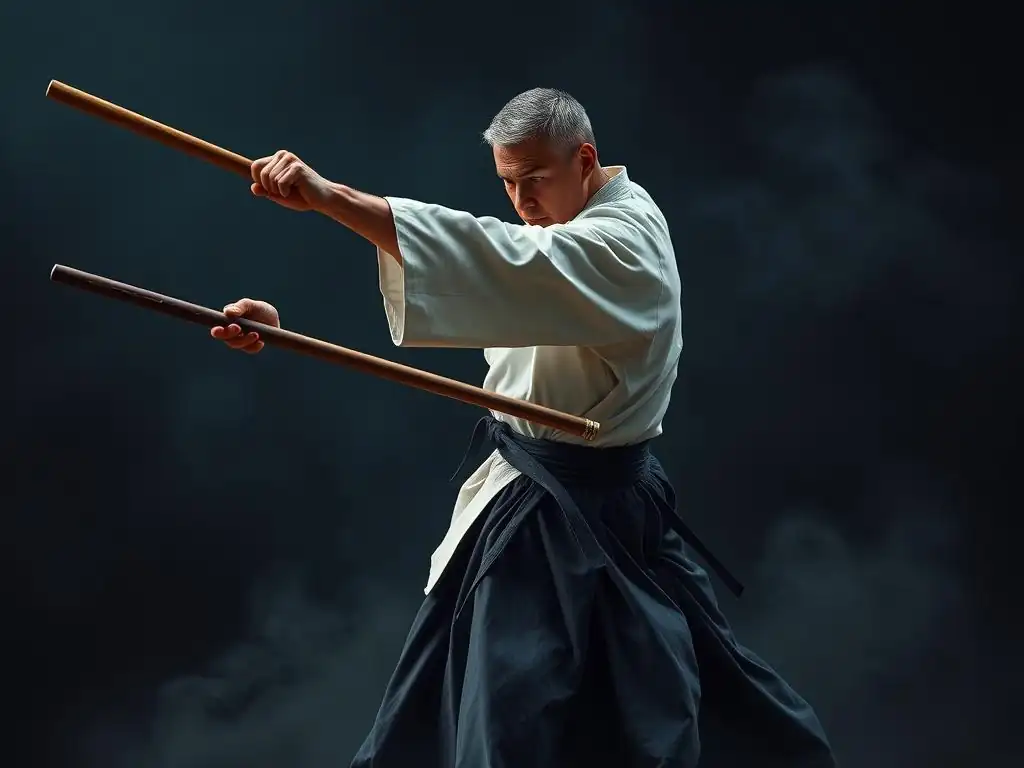
Welcome to Martial Arts Mastery, where the pursuit of knowledge meets the discipline of combat. Delve into the rich tapestry of global martial arts, exploring its history, techniques, and philosophy. Are you ready to unlock the secrets hidden within the 31 Jo Kata? This guide provides a comprehensive exploration of Aikido jo kata techniques, offering insights into this iconic staff form and its profound connection to the art of blending. Discover the intricacies and unlock the power within – your journey to mastery begins now.
- Introduction to Aikido Jo Kata Techniques
- Historical Context of the 31 Jo Kata
- Breaking Down the 31 Jo Kata Movements: A Step-by-Step Guide
- Mastering Aikido Jo Kata: Training Tips and Considerations
- Aikido Jo Kata Applications in Self-Defense
- Advanced Jo Kata Techniques and Variations
- Benefits of Practicing Aikido Jo Kata
- Conclusion: The Enduring Value of the 31 Jo Kata in Aikido
- Frequently Asked Questions
- Final Reflection: Embracing the Flow of the Jo
- Unleash Your Inner Aikido Master Now!
Introduction to Aikido Jo Kata Techniques
What is Jo Kata in Aikido? Understanding the Staff Form
Jo kata in Aikido refers to pre-arranged sequences of movements performed with a jo, a wooden staff typically around 128 centimeters (approximately 50 inches) in length. These kata are not merely physical drills; they are structured practices designed to teach fundamental principles of movement, distance, timing, and coordination, all core concepts in Aikido practice.
The jo, while a weapon, is used in Aikido primarily as a tool for solo training and understanding body dynamics, extending the practitioner's reach and illustrating principles applicable to empty-hand techniques. Studying these Aikido jo kata techniques allows students to internalize the flow of energy and the connection between their center and the weapon.
The practice of jo kata provides a framework for developing proficiency with the staff while simultaneously refining essential Aikido body mechanics. Unlike some martial arts where kata are primarily for solo demonstration or combat simulation against imaginary opponents, Aikido jo kata techniques often emphasize the underlying principles of connection, extension (ki no nagare), and entering movements that are vital in partnered Aikido techniques. The 31 Jo Kata, specifically, is a cornerstone of this weapons training, offering a systematic progression through various strikes, thrusts, and defensive actions, fostering a deeper understanding of aiki principles through weapon use.
The Significance of the 31 Jo Kata in Aikido Training
The 31 Jo Kata, known in Japanese as Sanjuichi Jo Kata, holds a pivotal place in the Iwama style of Aikido, founded by Morihiro Saito Sensei, a direct and long-term student of O-Sensei Morihei Ueshiba. Its significance lies in its role as a distillation of fundamental jo movements and principles believed to have been taught by O-Sensei himself, although the specific formal structure of the 31 techniques is attributed to Saito Sensei.
This specific kata is often the first comprehensive jo form taught to students, serving as a foundation for understanding more complex solo and partnered jo exercises, including the 13 Jo Kata and various jo kumitachi (paired weapon forms).
Mastery of the 31 Jo Kata is considered essential for developing a strong base in Aikido weapons training and, by extension, enhancing empty-hand technique. It systematically teaches basic strikes like tsuki (thrusts) and uchi (strikes), defensive blocks ( uke), and transitions, emphasizing correct body alignment, footwork ( ashi sabaki), and hip movement crucial for generating power and stability. Regularly practicing these Aikido jo kata techniques helps practitioners develop better ma-ai (combative distance), kamae (stance), and the ability to extend their energy through the jo, skills directly transferable to tai jutsu (empty-hand techniques) and aiki-ken (sword training).
Historical Context of the 31 Jo Kata
The Origins of the Jo Staff in Aikido
The use of the jo staff in Aikido is deeply rooted in the martial traditions that influenced O-Sensei Morihei Ueshiba. While Aikido is primarily known for its empty-hand techniques, O-Sensei extensively studied various weapon arts, including Jojutsu (staff art) and Kenjutsu (sword art), throughout his training.
It is believed that O-Sensei integrated principles from traditional Japanese staff arts, such as the Shinto Muso-ryu Jojutsu, into his evolving martial system. However, his approach to weapons, like his approach to empty-hand techniques, was unique, emphasizing blending, control, and the principles of aiki rather than pure combat forms focused solely on striking or thrusting for lethal effect.
O-Sensei used the jo and ken (sword) as tools to teach the same fundamental principles as empty-hand Aikido: harmonious movement, connection to one's center, and the extension of ki. He often practiced and taught weapon movements alongside empty-hand techniques, viewing them as complementary aspects of a single system. While O-Sensei taught various jo movements and principles, he did not formalize a single, numbered jo kata structure in the way it is commonly known today. The specific, codified sequence of the 31 Jo Kata techniques emerged later, building upon the foundation O-Sensei laid in his dojo in Iwama.
Morihiro Saito's Contribution to the 31 Jo Kata
Morihiro Saito Sensei (1928-2002) was one of O-Sensei Morihei Ueshiba's longest-serving students, training extensively with the founder in Iwama from 1946 until O-Sensei's death in 1969. Saito Sensei dedicated his life to preserving and systematizing the Iwama curriculum as he learned it directly from O-Sensei, which included a significant emphasis on aiki-ken and aiki-jo (Aikido sword and staff). While O-Sensei taught many individual jo movements and principles, Saito Sensei compiled and structured these into formal kata and kumijo (paired jo forms) to make them teachable and preserve the specific forms he witnessed and practiced with the founder.
Saito Sensei is credited with formalizing the 31 Jo Kata as a pedagogical tool. He organized the various strikes, thrusts, parries, and transitions taught by O-Sensei into the specific 31-movement sequence known today. His aim was to provide students with a systematic way to learn the fundamental jo techniques and body movements that O-Sensei emphasized. This codified kata became a standard part of the Iwama curriculum and has since spread to many other Aikido schools globally, serving as a foundational solo practice for developing proficiency in Aikido jo kata techniques and understanding the aiki principles applied with the staff.
Breaking Down the 31 Jo Kata Movements: A Step-by-Step Guide
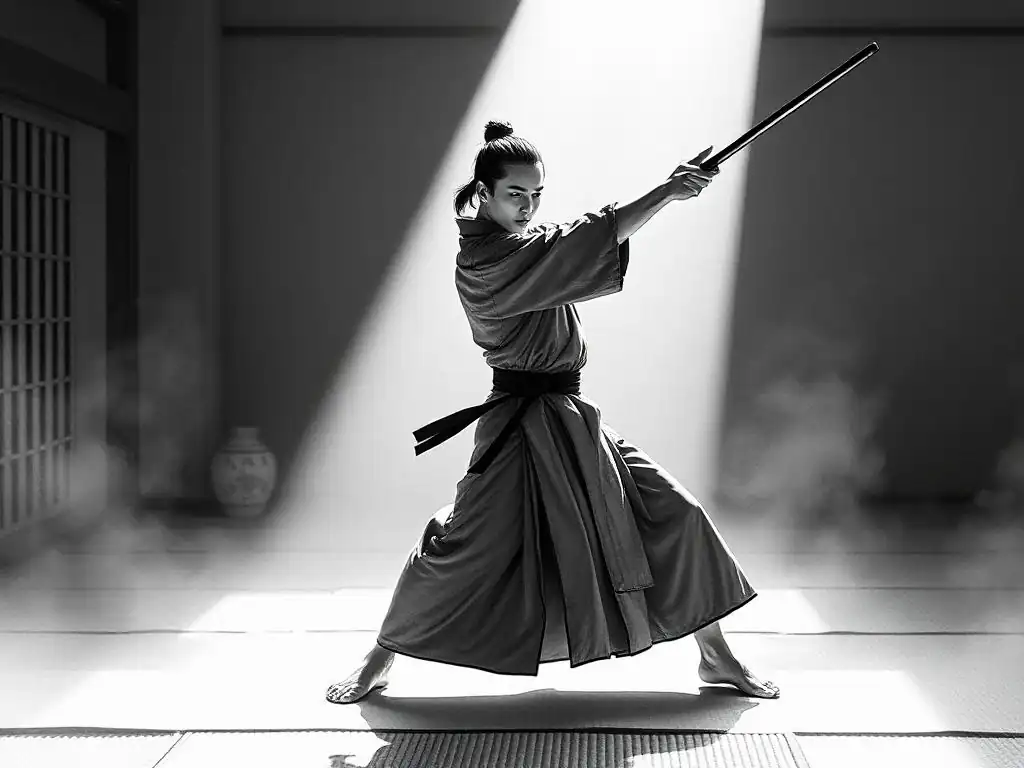
Stance and Posture in Aikido Jo Kata
Proper stance and posture are fundamental to effective Aikido jo kata techniques, just as they are in empty-hand practice. The primary stance used is often a variation of hanmi (half-body stance), where one foot is slightly forward, and the body is angled. This stance provides stability, mobility, and allows for efficient generation of power from the hips and core.
The weight distribution is typically balanced, allowing for fluid movement forward, backward, and circularly. Maintaining a relaxed but alert posture is crucial, with the spine aligned and shoulders relaxed, enabling energy to flow freely through the body and into the jo.
The connection to the ground through the feet is paramount; practitioners must feel rooted yet ready to move instantly. The knees are slightly bent, and the hips are engaged, acting as the center of movement and power generation.
This stable base is essential for executing strikes and thrusts with power and precision and for absorbing or redirecting force if practicing with a partner (though the 31 Jo Kata is a solo form, its principles apply to paired practice). Correct posture also ensures that the practitioner's center is stable, which is vital for maintaining control of the jo and executing techniques without losing balance or power.
Basic Jo Grips and Handling Techniques
There are several basic grips used when practicing Aikido jo kata techniques, each serving a specific purpose for different movements. The most common is the standard grip, often with hands spaced roughly shoulder-width apart on the jo. For strikes and blocks, a two-handed grip is typical, allowing for greater control and power. The lead hand's grip might vary slightly depending on the specific technique – sometimes closer to the end of the jo for thrusts, other times more centered.
Proper handling involves using the whole body, not just the arms, to manipulate the jo. Power originates from the hips and center, transferring through the body to the hands and into the staff. The grip should be firm enough for control but relaxed enough to allow for fluid movement and quick changes in direction or technique. Learning to slide the hands along the jo ( tenkan with the jo) is also a crucial handling technique, enabling rapid adjustments for distance and transitioning between different types of attacks or defenses within the Aikido jo kata techniques.
Detailed Explanation of Each Movement in the 31 Jo Kata
The 31 Jo Kata is a continuous sequence, but it's broken down into distinct movements for learning. Each movement builds upon the previous one and prepares for the next, embodying principles of flow and continuity. Below is a description focusing on the technique and intended application of each of the 31 Aikido jo kata techniques.
First Movement: Choku Tsuki - Technique and Application
This movement begins from a basic stance, often hidari hanmi (left half-body stance). Choku Tsuki means "direct thrust". The technique involves a linear forward step (often okuri ashi or sliding step) coupled with a direct, powerful thrust of the jo towards an imaginary opponent's center or face. The power comes from the forward body movement and the extension of the lead arm and jo.
Its application is a fundamental offensive thrust, designed to penetrate the opponent's guard or create distance. It emphasizes linear power, body-weapon connection, and the importance of forward intention.
Second Movement: Kaeshi Tsuki - Technique and Application
Following the Choku Tsuki, this movement involves a quick withdrawal or redirection of the jo, often accompanied by a slight pivot or step, immediately followed by another thrust, sometimes targeting a different level or angle. Kaeshi means "return" or "counter".
The application is a follow-up thrust, perhaps after the first thrust was parried or evaded, or as a deceptive movement. It teaches the ability to quickly change direction and re-engage, maintaining forward pressure or exploiting an opening created by the initial action.
Third Movement: Ushiro Tsuki - Technique and Application
From a forward-facing posture, this movement involves a pivot, often 180 degrees, combined with a thrust directed behind the practitioner. Ushiro means "rear" or "backward". This requires coordinating the body turn with the jo's extension.
Its application is to deal with an opponent who has moved behind you, or as part of a larger turning movement to face a new direction or opponent. It emphasizes awareness of one's surroundings and the ability to generate power in any direction.
Fourth Movement: Uke Otoshi - Technique and Application
Uke Otoshi means "receiving and dropping" or "blocking and dropping". This movement involves a defensive action, often a block or parry against an incoming attack (imaginary), followed by a downward strike or movement of the jo, potentially targeting the opponent's weapon or limbs.
The application is primarily defensive, teaching how to receive or deflect an attack and immediately transition into a controlling or disabling action. It highlights the principle of blending with force and redirecting it downwards.
Fifth Movement: Hantai Uchi Otoshi - Technique and Application
Similar to Uke Otoshi, but Hantai means "opposite". This movement involves a block or parry from the opposite side or angle compared to the previous movement, again followed by a downward dropping motion of the jo.
Its application reinforces the defensive principles of Uke Otoshi but from a different line of attack, ensuring readiness to defend from multiple angles. It emphasizes adapting the defensive action based on the incoming force.
Sixth Movement: Happo Giri - Technique and Application
Happo Giri means "eight-direction cut". This is a dynamic movement involving a series of strikes or cuts with the jo, rapidly moving through eight directions around the practitioner (forward, backward, left, right, and the four diagonals). The jo typically sweeps through these directions in a continuous flow.
The application is for clearing space around oneself or engaging multiple imaginary opponents simultaneously. It develops fluidity, spatial awareness, and the ability to control the jo in a wide range of motion, integrating body turn with weapon movement.
Seventh Movement: Kaeshi Tsuki - Technique and Application
This is a repeat of the Second Movement, emphasizing the importance of the counter-thrust. It occurs after the multi-directional movement of Happo Giri, bringing the focus back to a direct linear attack.
Its application serves as a reminder that even after complex movements, a direct, focused attack can be necessary. It reinforces the transition from broad, sweeping motions to sharp, linear techniques.
Eighth Movement: Men Uchi - Technique and Application
Men Uchi means "head strike". This movement involves raising the jo overhead and executing a strong vertical strike downwards, typically targeting the imaginary opponent's head or upper body. Power comes from the whole body, driving the jo down.
The application is a powerful, decisive strike designed to end an encounter or break an opponent's posture/guard. It teaches generating maximum force through a vertical cut, similar to a sword cut ( suburi).
Ninth Movement: Men Uchi Kaeshi Tsuki - Technique and Application
Following the Men Uchi, this movement combines the downward strike with a rapid transition into a Kaeshi Tsuki (counter-thrust). After the initial downward cut, the jo is quickly retracted and thrust forward.
Its application demonstrates the ability to follow up a powerful strike that might miss or be blocked with an immediate thrust, maintaining pressure and exploiting any opening created by the initial attack. It emphasizes quick transitions between different types of attacks.
Tenth Movement: Men Uchi Ushiro Tsuki - Technique and Application
This movement combines the Men Uchi with an Ushiro Tsuki (rear thrust). After the downward head strike, the practitioner pivots and executes a thrust behind them.
The application addresses the possibility of an opponent moving around or behind during the execution of a forward strike. It reinforces the need for 360-degree awareness and the ability to respond to threats from any direction.
Eleventh Movement: Men Uchi Uke Otoshi - Technique and Application
This combines the Men Uchi with the Uke Otoshi (block and drop). After the downward strike, the jo is used in a defensive block/parry motion, followed by a downward controlling movement.
Its application shows how to transition from an offensive strike to a defensive action if the strike is met with a counter-attack or block, immediately controlling the opponent's line of attack.
Twelfth Movement: Men Uchi Hantai Uchi Otoshi - Technique and Application
Similar to the Eleventh Movement, but combining Men Uchi with Hantai Uchi Otoshi (opposite block and drop). After the downward strike, a defensive action and downward control are executed from the opposite side.
This reinforces the defensive transitions from Men Uchi, ensuring readiness to defend from counter-attacks coming from either side.
Thirteenth Movement: Gyaku Yokomen Uchi - Technique and Application
Gyaku Yokomen Uchi means "reverse side-of-the-head strike". This involves a diagonal strike with the jo, typically across the body from the shoulder towards the opposite hip or knee, aiming for the side of the opponent's head or neck. Gyaku indicates the reverse direction or grip might be involved.
The application is a diagonal cutting/striking attack, effective for bypassing linear guards or targeting the opponent's flank. It teaches generating power through diagonal movements and body rotation.
Fourteenth Movement: Gyaku Yokomen Uchi Kaeshi Tsuki - Technique and Application
Combines the Gyaku Yokomen Uchi with a Kaeshi Tsuki (counter-thrust). After the diagonal strike, the jo is rapidly retracted and thrust forward.
This application is a follow-up attack, transitioning from a diagonal strike to a linear thrust. It shows how to maintain offensive pressure and exploit openings with different attack vectors.
Fifteenth Movement: Gyaku Yokomen Uchi Ushiro Tsuki - Technique and Application
Combines the Gyaku Yokomen Uchi with an Ushiro Tsuki (rear thrust). After the diagonal strike, the practitioner pivots and thrusts behind them.
Addresses the scenario where an opponent moves behind during a diagonal attack, emphasizing the importance of adapting to changing positions and maintaining 360-degree awareness.
Sixteenth Movement: Gyaku Yokomen Uchi Uke Otoshi - Technique and Application
Combines the Gyaku Yokomen Uchi with Uke Otoshi (block and drop). After the diagonal strike, a defensive block/parry is executed, followed by a downward controlling movement.
Shows how to transition from a diagonal offensive strike to a defensive action and control if the strike is met with a counter-attack.
Seventeenth Movement: Gyaku Yokomen Uchi Hantai Uchi Otoshi - Technique and Application
Combines the Gyaku Yokomen Uchi with Hantai Uchi Otoshi (opposite block and drop). After the diagonal strike, a defensive block/parry is executed from the opposite side, followed by a downward controlling movement.
Reinforces the defensive transitions from Gyaku Yokomen Uchi, ensuring readiness to defend from counter-attacks coming from different angles.
Eighteenth Movement: Tsuki Gedan Gaeshi - Technique and Application
Tsuki Gedan Gaeshi means "thrust lower-level return/sweep". This movement involves a thrust ( Tsuki), often targeting the mid-level, followed by a downward or sweeping movement ( Gedan Gaeshi) of the jo, typically towards the opponent's legs or weapon.
The application is a combination attack, using a thrust to occupy the opponent's upper body or guard, then following immediately with a lower-level sweep or strike to their base or weapon, aiming to disrupt balance or disarm.
Nineteenth Movement: Hasso Gaeshi Tsuki - Technique and Application
Hasso Gaeshi Tsuki transitions from Hasso no kamae (a standing posture with the jo held vertically beside the head) into a thrust. The movement involves a turn or pivot, bringing the jo from the Hasso position into a forward thrust ( Tsuki).
This application demonstrates transitioning from a strong, ready stance into a direct attack. Hasso no kamae is a power-generating posture, and this movement teaches how to efficiently channel that potential energy into a linear thrust.
Twentieth Movement: Hasso Gaeshi Ushiro Tsuki - Technique and Application
From Hasso no kamae, this movement involves a pivot and a thrust directed behind the practitioner ( Ushiro Tsuki).
Similar to previous Ushiro Tsuki applications, this addresses threats from the rear, but specifically shows how to transition from the Hasso power posture to a rearward attack, utilizing the turn to generate force.
Twenty-First Movement: Hasso Gaeshi Uke Otoshi - Technique and Application
From Hasso no kamae, this movement transitions into Uke Otoshi (block and drop). The jo moves from the vertical Hasso position into a defensive block and subsequent downward control.
This application shows how to quickly switch from a ready offensive posture ( Hasso) to a defensive action, emphasizing the principle of flexibility and readiness to respond to incoming attacks.
Twenty-Second Movement: Hasso Gaeshi Hantai Uchi Otoshi - Technique and Application
From Hasso no kamae, transitions into Hantai Uchi Otoshi (opposite block and drop). The jo moves from Hasso into a defensive block from the opposite side, followed by a downward control.
Reinforces the defensive transitions from Hasso, ensuring readiness to defend from counter-attacks coming from different angles.
Twenty-Third Movement: Hasso Gaeshi Gyaku Yokomen Uchi - Technique and Application
From Hasso no kamae, transitions into Gyaku Yokomen Uchi (reverse side-of-the-head strike). The jo moves from Hasso into a diagonal strike across the body.
This application shows how to transition from a ready stance into a diagonal cutting attack, utilizing the body turn from the Hasso position to generate power for the strike.
Twenty-Fourth Movement: Hasso Gaeshi Happo Giri - Technique and Application
From Hasso no kamae, transitions into Happo Giri (eight-direction cut). The movement involves a dynamic series of strikes in eight directions originating from or passing through the Hasso position.
This application demonstrates the transition from a single ready posture to a broad, multi-directional defensive or offensive action, showing how to use the jo to control the space around oneself.
Twenty-Fifth Movement: Hasso Gaeshi Men Uchi - Technique and Application
From Hasso no kamae, transitions into Men Uchi (head strike). The jo moves from Hasso into a powerful vertical downward strike.
This application shows how to transition from a ready posture into a decisive vertical attack, leveraging the body mechanics developed in Hasso to power the strike.
Twenty-Sixth Movement: Hasso Gaeshi Tsuki - Technique and Application
This is a repeat of the Nineteenth Movement ( Hasso Gaeshi Tsuki), reinforcing the fundamental transition from Hasso to a direct thrust. This repetition highlights the importance of this basic movement sequence within the Aikido jo kata techniques.
Its application emphasizes returning to a core linear attack after exploring other possibilities, reinforcing the direct thrust as a primary technique.
Twenty-Seventh Movement: Hasso Gaeshi Kaeshi Tsuki - Technique and Application
From Hasso no kamae, transitions into Kaeshi Tsuki (counter-thrust). The jo moves from Hasso, perhaps feigning a different attack, and then executes a rapid counter-thrust.
This application demonstrates combining the Hasso transition with a follow-up or deceptive thrust, showing how to use the initial movement to set up a secondary, perhaps more effective, attack.
Twenty-Eighth Movement: Hasso Gaeshi Ushiro Tsuki - Technique and Application
This is a repeat of the Twentieth Movement ( Hasso Gaeshi Ushiro Tsuki), reinforcing the transition from Hasso to a rear thrust.
Its application reiterates the importance of being able to defend or attack to the rear even when starting from a forward-oriented ready stance.
Twenty-Ninth Movement: Hasso Gaeshi Uke Otoshi - Technique and Application
This is a repeat of the Twenty-First Movement ( Hasso Gaeshi Uke Otoshi), reinforcing the transition from Hasso to Uke Otoshi.
Its application emphasizes the readiness to shift from an offensive posture to a primary defensive and controlling action.
Thirtieth Movement: Hasso Gaeshi Hantai Uchi Otoshi - Technique and Application
This is a repeat of the Twenty-Second Movement ( Hasso Gaeshi Hantai Uchi Otoshi), reinforcing the transition from Hasso to Hantai Uchi Otoshi.
Its application stresses the importance of being able to defend from counter-attacks originating from different lines after transitioning from Hasso.
Thirty-First Movement: Happo Gaeshi - Technique and Application
Happo Gaeshi means "eight-direction return/sweep". This final movement often involves a dynamic turn or pivot, bringing the jo around in a sweeping or controlling motion, often ending in a ready stance facing the original direction or a new one. It can be seen as a concluding movement that clears the space.
Its application is a final, sweeping action that addresses any remaining threats or concludes the sequence, returning the practitioner to a state of readiness. It summarizes the principle of 360-degree awareness and control using the jo.
Mastering Aikido Jo Kata: Training Tips and Considerations
Proper Alignment and Body Mechanics for Effective Jo Kata
Effective execution of Aikido jo kata techniques hinges heavily on proper body alignment and mechanics, mirroring the principles of empty-hand Aikido. The power for strikes and thrusts does not come solely from the arms but from the connection of the entire body, originating from the hips and transmitted through a stable core and aligned spine.
Imagine the jo as an extension of your center; any break in alignment or disconnection in the body will result in a loss of power and stability in the movement. For instance, in a choku tsuki, a bent wrist or locked elbow will absorb the force generated by the stepping body weight and hip rotation, significantly reducing the thrust's effectiveness.
Focusing on hara (the lower abdomen, considered the body's center of gravity and energy) is crucial. Movements should initiate from the hara, guiding the body and the jo. This involves maintaining a relaxed but engaged posture, with knees slightly bent and hips mobile.
Practice moving the jo by moving your body, not just your arms. For example, a men uchi should feel like your entire body weight is dropping behind the strike, guided by the jo, rather than just a powerful arm swing. Pay close attention to the connection between your hands on the jo and your center, ensuring that your movements are unified and grounded.
Developing Power and Precision in Jo Kata Movements
Developing both power and precision in Aikido jo kata techniques requires dedicated practice focusing on specific aspects. Power is generated through efficient body mechanics: coordinated stepping, hip rotation, and extension from the hara. Initially, practice movements slowly to understand the correct sequence and feel the connection between your body and the jo.
As the form becomes familiar, gradually increase speed, focusing on generating a 'snap' or 'whip' effect at the end of strikes and thrusts, but without sacrificing control. Repetition is key; performing each strike or thrust hundreds of times ( suburi) helps build muscle memory and refine the power generation.
Precision involves accurate targeting, control over the jo's trajectory, and stopping power. For example, when practicing tsuki, aim for a specific point (like the center of an imaginary target) and strive to stop the jo precisely at the intended distance ( ma-ai). For uchi movements, focus on the angle and the plane of the strike, ensuring it is clean and decisive.
Using visual markers or even lightly touching a target can help train precision. Combining slow, deliberate practice focusing on form with faster repetitions focusing on speed and power is an effective approach to developing both attributes simultaneously in your Aikido jo kata techniques.
Integrating Aikido Principles into Jo Kata Practice
Practicing Aikido jo kata techniques is not just about learning weapon forms; it's about deepening the understanding and application of core Aikido principles. Principles like irimi (entering), tenkan (turning), kokyu (breath power), ma-ai (distance), and kamae (stance) are all embodied within the kata. For instance, the stepping and pivoting in movements like Ushiro Tsuki directly relate to irimi and tenkan principles used in empty-hand techniques to get off the line of attack and enter the opponent's space. The flow between movements teaches ki no nagare (flow of energy) and continuity.
Consciously bringing these principles into your jo kata practice elevates it beyond mere choreography. When performing a tsuki, focus on extending your ki through the jo to the imaginary target. When turning, feel your hara leading the movement and maintaining your center. Consider the ma-ai you are establishing with each step and technique. By viewing the jo kata through the lens of Aikido principles, practitioners can see how the weapon movements are simply extensions of the body movements and concepts used in tai jutsu. This integrated understanding is a primary goal of Aikido weapons training.
Common Mistakes to Avoid When Learning the 31 Jo Kata
Several common mistakes can hinder progress and understanding when learning the 31 Jo Kata. One prevalent error is using only arm strength to move the jo, leading to weak techniques, poor balance, and fatigue. Remember that power comes from the hips and center. Another mistake is holding the jo too tightly, which restricts fluid movement and prevents the transmission of ki. The grip should be firm for control but relaxed enough to allow the jo to move freely.
Poor ma-ai (distance management) is also a common issue; practitioners might extend too far or not far enough, losing balance or effectiveness. Pay attention to your stepping and the reach of the jo relative to your body. Lack of focus and rushing through the movements without attention to detail also inhibits learning. Each movement in the 31 Jo Kata has a specific purpose and requires deliberate execution. Finally, neglecting the connection to the ground and a stable base ( hanmi) leads to being easily unbalanced. Ensure your stances are strong and your weight is properly distributed throughout the kata.
Aikido Jo Kata Applications in Self-Defense
Translating Jo Kata Movements into Practical Techniques
While Aikido jo kata techniques are primarily for solo training and understanding principles, the movements within the kata contain practical applications that can be translated into self-defense scenarios, both with and without a weapon. Each strike, thrust, block, and transition in the 31 Jo Kata represents a potential response to an attack or an offensive action. For example, the Choku Tsuki (direct thrust) can be applied as a primary attack to create distance or deter an aggressor. The Men Uchi (head strike) or Gyaku Yokomen Uchi (diagonal strike) can be used to strike vulnerable areas or an opponent's limbs/weapon.
More subtly, the footwork and body movements embedded in the kata, such as pivoting ( tenkan) and entering ( irimi), are directly applicable to avoiding attacks and gaining a superior position in a confrontation. The defensive movements like Uke Otoshi teach principles of blocking and redirecting force, which can be adapted to use the jo (or even an improvised staff-like object) to parry or deflect strikes. Understanding the ma-ai practiced in the kata helps in judging distance in a real situation. The transitions between movements teach fluidity and the ability to string together multiple techniques, essential for effective self-defense.
Using the Jo for Blocking, Striking, and Controlling
The jo staff, when used in a self-defense context, serves multiple functions derived from the Aikido jo kata techniques. It can be used effectively for striking, thrusting, blocking, and controlling an opponent. Strikes ( uchi) like men uchi or yokomen uchi can target the head, collarbone, ribs, or limbs with significant force. Thrusts ( tsuki) like choku tsuki or ushiro tsuki can target soft tissues, joints, or be used to keep an aggressor at a distance. The approximately 1.3-meter length of the jo provides a significant reach advantage.
For blocking, the jo can be held horizontally or vertically to parry incoming strikes from fists, kicks, or other weapons. The uke otoshi movements in the kata demonstrate using the jo to receive and redirect force downwards, potentially breaking an opponent's posture or striking their weapon hand. Beyond striking and blocking, the jo can be used for controlling techniques: trapping limbs, applying pressure to joints (though this requires careful, specific training beyond the kata), or using its length to maintain distance or leverage. The 31 Jo Kata techniques provide the foundational movements and body mechanics for these varied applications.
Adapting Jo Kata for Ukemi and Aiki-Ken Integration
Practicing Aikido jo kata techniques also indirectly benefits other aspects of Aikido training, notably ukemi (falling and rolling) and aiki-ken (sword training). Understanding the angles and forces generated by jo movements helps practitioners develop better ukemi when receiving techniques, as they become more aware of how attacks are launched and where the force is directed. This awareness allows for safer and more effective falls and rolls to evade or mitigate the impact of techniques.
Furthermore, the principles and body mechanics used in jo kata are highly transferable to aiki-ken. Both use a weapon as an extension of the body, emphasizing hara connection, hip movement, and ma-ai. Specific movements in the jo kata, such as the vertical men uchi or diagonal gyaku yokomen uchi, have direct parallels in sword suburi and kata. Training in one weapon form often enhances understanding and proficiency in the other. For example, mastering the coordination of stepping and striking in the 31 Jo Kata directly improves similar coordination required for effective sword cuts and thrusts in aiki-ken.
Advanced Jo Kata Techniques and Variations
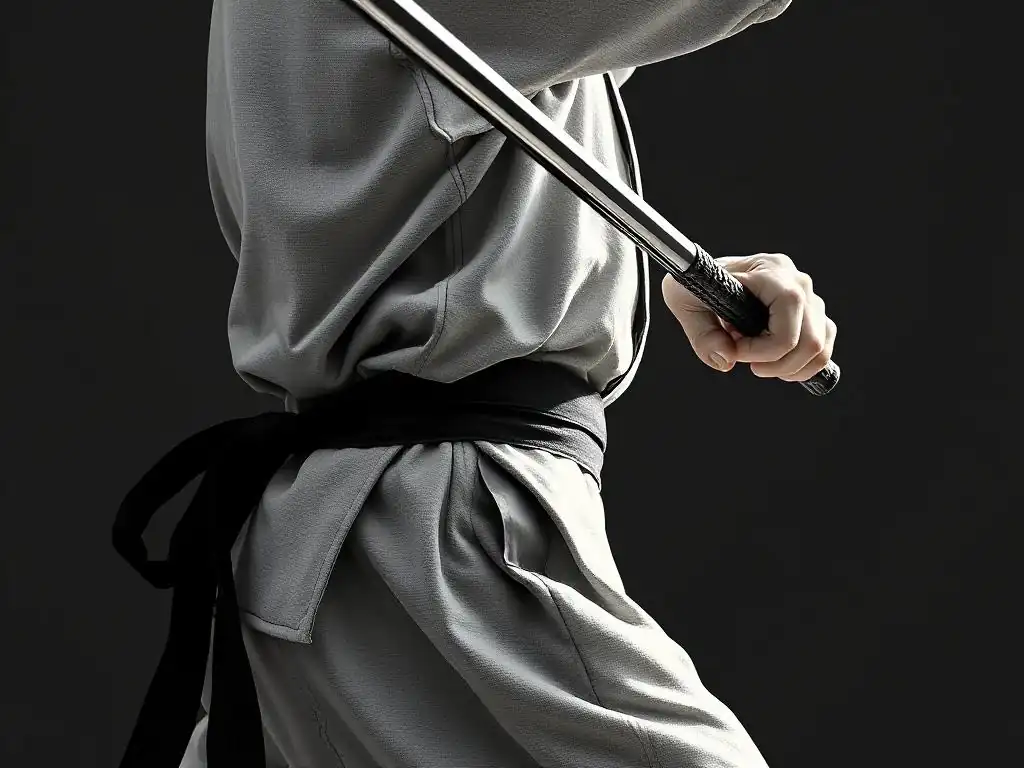
Exploring Variations in Grip and Footwork within the 31 Jo Kata
While the fundamental 31 Jo Kata techniques follow a specific sequence and utilize standard grips, experienced practitioners often explore subtle variations to deepen their understanding and adapt the form. Variations in grip tightness can be explored, using a looser grip for fluidity and speed in transitions versus a firmer grip for power in strikes.
Hand placement can also be varied slightly depending on the desired outcome – for instance, sliding the hands closer together for faster manipulation or wider apart for increased leverage in certain movements. These subtle adjustments are not about changing the core technique but refining its application.
Footwork variations within the kata, while maintaining the core structure, can also be explored. This includes variations in the type of step used (e.g., tsugi ashi - bringing the rear foot up to the front, ayumi ashi - natural walking step, or okuri ashi - sliding step) to emphasize different aspects like speed, stability, or entering. Exploring these variations allows practitioners to understand how slight changes in body mechanics and footwork impact the effectiveness and feel of the Aikido jo kata techniques, preparing them to adapt these movements in more dynamic situations like kumijo (paired jo practice).
Developing Flow and Continuity Between Jo Kata Movements
One of the hallmarks of advanced jo kata practice is the development of seamless flow and continuity between the 31 Jo Kata techniques. Initially, students learn the movements as discrete steps, often pausing slightly between them. However, the goal is to perform the kata as a single, continuous sequence where each movement flows naturally into the next, embodying the principle of ki no nagare (flow of energy). This requires anticipating the next movement while executing the current one, maintaining a constant connection to your center and the jo.
Developing this flow involves minimizing unnecessary tension and pauses. The end of one movement should set up the beginning of the next. For example, the withdrawal of the jo from a tsuki should immediately transition into the preparation for the following strike or block. This continuity enhances the kata's effectiveness by making it harder for an opponent to anticipate or react to individual techniques. Practicing the kata repeatedly at a steady, relaxed pace, focusing on the transitions rather than just the end points of each movement, is key to developing this essential flow in Aikido jo kata techniques.
Benefits of Practicing Aikido Jo Kata
Enhancing Body Awareness and Coordination
Regular practice of the 31 Jo Kata significantly enhances body awareness and coordination. Manipulating a 128cm staff requires precise control over one's limbs, balance, and spatial relationship with the weapon. Students must become acutely aware of the jo's position in space relative to their body, avoiding striking themselves or losing control. This external focus on controlling an object forces practitioners to become more aware of their internal body mechanics – how their weight is distributed, how their hips are moving, and how their hands are connected to their center.
The complex sequence of the 31 Jo Kata techniques demands high levels of coordination, requiring simultaneous execution of footwork, hip rotation, and arm/jo movements. Mastering the timing and synchronization of these elements improves overall motor skills and proprioception (the sense of the relative position of one's own parts of the body and strength of effort being employed in movement). This improved body awareness and coordination gained through jo kata practice directly translates to better performance in empty-hand Aikido techniques, making movements more efficient, powerful, and controlled.
Improving Timing and Spatial Awareness
Practicing the 31 Jo Kata is an excellent way to improve timing and spatial awareness, two critical components of effective martial arts. Each strike, thrust, and defensive movement within the kata has an optimal timing relative to the imaginary opponent's position and action. While practicing solo, the practitioner must visualize the opponent and execute the techniques with appropriate timing and distance ( ma-ai). This constant visualization and execution refine the internal sense of timing required to engage or evade an opponent effectively.
Furthermore, the kata requires continuous awareness of the space around the practitioner, especially in movements like Happo Giri (eight-direction cut) or Ushiro Tsuki (rear thrust). The practitioner must be mindful of the jo's trajectory in 360 degrees. This spatial awareness, crucial for avoiding obstacles or multiple attackers, becomes ingrained through repetitive practice. The ability to judge distances for thrusts, the range of strikes, and the space needed for turns and pivots are all honed through the diligent study of Aikido jo kata techniques.
Strengthening Mental Focus and Discipline
The intricate sequence and physical demands of the 31 Jo Kata require significant mental focus and discipline. Learning and correctly executing all 31 movements in order, with proper technique and flow, demands concentration and attention to detail. The repetitive nature of practice builds mental fortitude and patience. It teaches practitioners to stay present in the moment, focusing on the current movement while preparing for the next, without letting the mind wander.
Overcoming the physical and mental challenges of mastering the kata fosters discipline and perseverance. It teaches the value of consistent effort and the rewards of dedicated practice. The mental clarity and disciplined approach cultivated through practicing Aikido jo kata techniques extend beyond the dojo, positively impacting other areas of life. The ability to maintain focus under physical exertion and to break down a complex task into manageable steps are invaluable skills developed through this rigorous training.
Conclusion: The Enduring Value of the 31 Jo Kata in Aikido
The 31 Jo Kata stands as a vital and enduring element within the practice of Aikido, particularly emphasizing the importance of integrated weapon training. It is far more than a simple sequence of movements; it is a comprehensive system for teaching fundamental Aikido principles, body mechanics, and spatial awareness through the use of the jo staff. From its historical roots in O-Sensei's training and its formalization by Morihiro Saito Sensei, the kata provides a structured path for students to develop proficiency with the staff while simultaneously deepening their understanding of empty-hand techniques.
Mastering the Aikido jo kata techniques cultivates essential physical attributes like coordination, balance, power, and precision, alongside crucial mental qualities such as focus, discipline, and perseverance. The kata's movements, while practiced solo, contain direct applications relevant to self-defense and provide a foundation for partnered weapon practice ( kumijo). Its study reinforces the interconnectedness of tai jutsu, aiki-ken, and aiki-jo, highlighting O-Sensei's vision of a unified martial path. For any serious student of Aikido, dedicated practice of the 31 Jo Kata offers profound insights and tangible improvements, solidifying its place as an iconic and indispensable form.
Frequently Asked Questions
What is the 31 Jo Kata in Aikido?
The 31 Jo Kata is a standardized series of movements using the jo (a wooden staff) in Aikido training. It serves as a foundational form for learning jo techniques and principles.
Why is the 31 Jo Kata important for Aikido practitioners?
It's crucial for developing body awareness, distance management, and blending with an opponent's energy. Mastery of the Kata also enhances understanding of Aikido principles.
Where did the 31 Jo Kata originate?
The 31 Jo Kata was formalized by Morihiro Saito Sensei, a direct student of Aikido's founder, Morihei Ueshiba. It's based on Ueshiba's teachings on jo techniques.
What are some key elements to focus on when learning the 31 Jo Kata?
Focus on maintaining proper posture, executing smooth transitions between movements, and developing powerful strikes while staying centered.
Does MartialArtsMastery.org offer resources to help learn the 31 Jo Kata?
Yes, MartialArtsMastery.org provides historical overviews, training tips, and potentially practical self-defense strategies related to jo techniques, all contributing to a deeper understanding of Aikido jo kata techniques.
Final Reflection: Embracing the Flow of the Jo
The journey through the 31 Jo Kata, as we've explored, is more than just a study of Aikido jo kata techniques; it's a deep dive into the principles of Aikido itself. In a world increasingly defined by rigid structures and predictable outcomes, the adaptability and flowing movement inherent in the Jo Kata offer a powerful reminder of the strength found in yielding and redirecting force, a lesson profoundly relevant in navigating the complexities of modern life.
The practice of the 31 Jo Kata has not only preserved a vital aspect of Aikido tradition but has also profoundly influenced the way practitioners approach movement, strategy, and even conflict resolution. The discipline required to master these techniques fosters a deeper understanding of balance, timing, and the interconnectedness of mind and body. True victory is self-victory; let that be the measure of your success.
This quote, often attributed to Morihei Ueshiba, perfectly encapsulates the essence of the Jo Kata: a journey of self-improvement and the pursuit of harmony, both on and off the mat.
As you step away from this guide, consider how the principles of the 31 Jo Kata – adaptability, fluidity, and the redirection of energy – can be applied to your own life. Embrace the flow, find strength in yielding, and remember that true mastery lies not just in the perfection of technique, but in the cultivation of a resilient and harmonious spirit. Let the lessons of the Jo guide you towards a more balanced and fulfilling path.
Unleash Your Inner Aikido Master Now!
Thank you for diving deep into the world of the 31 Jo Kata! We hope this guide has provided valuable insights into mastering this fundamental Aikido form. Ready to translate that knowledge into action?
- Start practicing! Commit to performing the first five movements of the 31 Jo Kata daily for the next week.
- Explore variations! Research online to find different interpretations of the Jo Kata by various Aikido masters.
- Share your journey! Post a video of yourself practicing the Jo Kata on social media and tag us @MartialArtsMasteryOrg.
What's one small adjustment you can make today to improve your Jo Kata technique?