
The Universal Language of Leverage: Advanced Joint Control Across Global Styles

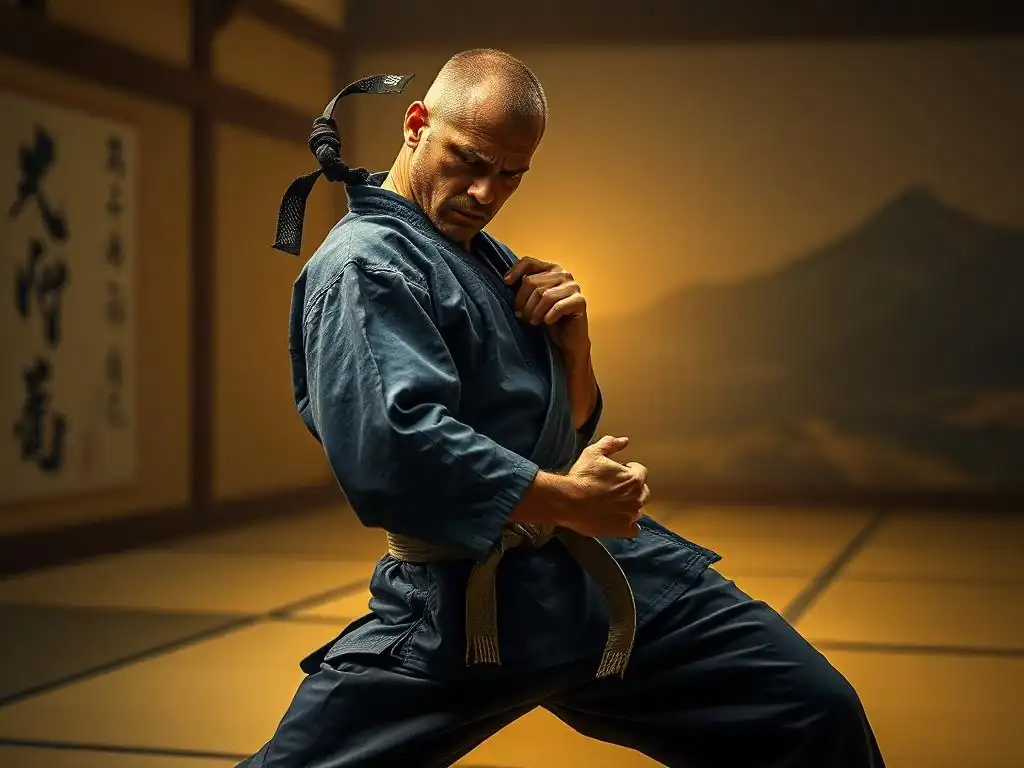
Welcome to Martial Arts Mastery, your gateway to understanding the intricate world of combat! Delve into the shared principles that connect diverse fighting styles. Ever wondered how seemingly different martial arts can achieve the same devastating effect? Our exploration of leverage joint control techniques unveils the secrets behind these universal principles. Discover how to maximize your power and control, regardless of your chosen discipline. Read on to unlock the advanced strategies used by masters worldwide and transform your training.
- Mastering Leverage Joint Control Techniques in Martial Arts
- Cross-Style Analysis of Joint Control: A Global Perspective
- Advanced Applications of Leverage Joint Control Techniques
- Drilling and Sparring for Joint Control Mastery
- The Ethical Considerations of Leverage Joint Control
- Refining Your Joint Control Skills: Specific Drills and Exercises
- The Future of Leverage Joint Control in Martial Arts
-
Frequently Asked Questions
- What exactly are joint control techniques in martial arts, and why are they considered "universal"?
- How does MartialArtsMastery.org approach the topic of leverage joint control techniques across different martial arts disciplines?
- What are some key benefits of mastering leverage-based joint control techniques for self-defense?
- Does MartialArtsMastery.org offer training tips or resources for learning advanced joint control techniques?
- How does the "Universal Language of Leverage" relate to the broader philosophical underpinnings of martial arts, as explored on MartialArtsMastery.org?
- Final Reflection: Mastering the Art of Leverage
- Unlock Your Joint Locking Potential Now!
Mastering Leverage Joint Control Techniques in Martial Arts
Understanding the Core Principles of Joint Leverage
Leverage is a fundamental principle in physics, defining how force can be amplified or redirected using a lever, fulcrum, and effort. In martial arts, particularly in the application of leverage joint control techniques, this principle translates into utilizing an opponent's skeletal structure as a lever system to create mechanical advantage. By applying force at specific points and angles relative to a joint, practitioners can generate significant pressure or control with minimal effort.
This allows individuals of varying physical strengths to effectively neutralize larger or stronger opponents. The goal is often not just to inflict pain, but to gain compliance or incapacitate through controlled manipulation of joint mechanics.
Effective leverage joint control techniques rely heavily on understanding the natural range of motion and structural weaknesses of human joints—shoulders, elbows, wrists, hips, knees, and ankles being primary targets. By moving a joint past its normal anatomical limits, or by isolating it against a stable point (often the practitioner's own body or the ground), immense stress can be placed on ligaments, tendons, and cartilage.
A skilled martial artist uses body positioning, weight distribution, and precise angle application to create the most efficient lever, maximizing force transfer and minimizing the opponent's ability to resist or escape. This intricate dance of physics and anatomy forms the bedrock of advanced joint manipulation across numerous styles.
The Biomechanics of Effective Joint Manipulation
The biomechanics of effective joint manipulation involve understanding the interplay between force, angle, and anatomical structure. Joints are complex systems of bones, ligaments, tendons, and cartilage, designed for specific ranges of motion.
Leverage joint control techniques exploit the fact that applying force outside this range, or in a way that isolates a joint against resistance, can cause significant discomfort or damage. For instance, an arm bar (like the Juji Gatame in Judo/Jujutsu) works by using the practitioner's body as a fulcrum across the opponent's elbow joint and applying downward pressure on the arm, effectively turning the forearm and upper arm into levers attempting to hyperextend the elbow.
Precision in angle is critical. A slight deviation in the angle of force application can drastically reduce the effectiveness of a joint lock, allowing the opponent to escape or resist. Skilled practitioners develop a deep proprioceptive understanding of their own body and the opponent's, feeling the subtle shifts in resistance and adjusting their position and angle accordingly.
This dynamic adjustment is key to maintaining control. Furthermore, understanding the concept of kuzushi (breaking balance), often associated with Judo and Aikido, is vital; an opponent who is off-balance is less able to resist joint manipulation, as their structure is already compromised, making the application of leverage joint control techniques significantly easier and more effective.
Cross-Style Analysis of Joint Control: A Global Perspective
Joint Locks in Japanese Martial Arts: Aikido and Jujutsu
Japanese martial arts have a rich history of incorporating leverage joint control techniques as core components of their systems. Aikido, founded by Morihei Ueshiba, is renowned for its emphasis on throws and joint locks ( kansetsu waza) derived from Daito-ryu Aiki-jujutsu.
Techniques like Kote Gaeshi (wrist twist), Shiho Nage (four-direction throw, often involving shoulder lock principles), and the Gokyo (five principles) series of pin-downs and joint controls are central to its curriculum. These techniques utilize circular motion, blending with the opponent's movement, and precise application of leverage to redirect force and control joints, often leading to takedowns or immobilizations without necessarily causing injury if applied correctly and with compassion, aligning with Aikido's philosophy of non-violence.
Jujutsu, the "gentle art," from which Judo and Aikido originated, is a comprehensive system that includes a vast array of leverage joint control techniques ( kansetsu waza) alongside throws ( nage waza) and striking ( atemi waza). Historically, Jujutsu was developed for use on the battlefield against armored opponents, where striking might be ineffective but joint manipulation could disable. Techniques target wrists, elbows, shoulders, knees, and ankles.
The focus is often on breaking the opponent's posture and applying immediate, high-pressure joint locks or breaks. Modern sport derivatives like Judo and Brazilian Jiu-Jitsu have refined specific joint locking techniques, particularly arm bars and leg locks, for competitive application, demonstrating the adaptability and enduring effectiveness of Jujutsu's foundational leverage joint control principles.
Applying Aikido Principles of Leverage to Joint Manipulation
Aikido's unique approach to leverage joint control techniques is deeply intertwined with its principles of aiki (harmony of energy) and kuzushi (breaking balance). Instead of meeting force with force, Aikido practitioners blend with an attacker's movement, using their momentum and direction to facilitate the application of a joint lock.
A key principle is the use of circular motion, which allows the practitioner to stay off the line of force and position themselves optimally for leverage. For example, in Kote Gaeshi, the defender redirects the attacker's forward energy into a spiraling motion that twists the wrist, using the attacker's own body weight and momentum against them.
Furthermore, Aikido emphasizes controlling the opponent's center and posture ( shisei) to create the necessary instability for a joint lock. By disrupting the opponent's base and alignment, their joints become vulnerable. The leverage applied is often relative to the opponent's entire structure, not just the isolated joint.
Techniques like Ikkyo (first teaching) involve controlling the arm and shoulder, using the defender's body as a fulcrum to apply pressure to the elbow and shoulder, requiring precise positioning and connection ( musubi) to the opponent's movement. This holistic approach makes Aikido's leverage joint control techniques highly effective when executed correctly, relying more on timing and positioning than raw strength.
Jujutsu's Comprehensive Approach to Joint Locking
Jujutsu boasts one of the most extensive catalogs of leverage joint control techniques found in any martial art. Its kansetsu waza cover virtually every major joint in the body and are designed for use in various ranges—standing, kneeling, or on the ground. The approach is often more direct and forceful than Aikido's, though still rooted in the principle of using leverage. Techniques can range from quick, painful manipulations designed to elicit a tap-out or compliance, to sustained controls for immobilization, and even techniques aimed at causing breaks or dislocations if necessary for self-preservation.
The diversity in Jujutsu's leverage joint control techniques is evident in its various schools and modern derivatives. Brazilian Jiu-Jitsu, for instance, has specialized in ground-based joint locks, developing intricate sequences for transitioning between arm bars, shoulder locks (like the Kimura and Americana), and a wide array of leg locks targeting the knee and ankle. Traditional Jujutsu often includes standing joint locks that transition into throws or takedowns.
The emphasis is on isolating the joint, establishing a strong mechanical advantage using body weight and positioning, and applying pressure rapidly to overcome resistance. This comprehensive system provides practitioners with tools for controlling or incapacitating opponents regardless of the fight's context or range.
Chinese Martial Arts: Qinna and Joint Immobilization
Chinese martial arts incorporate leverage joint control techniques under the umbrella term Qinna (擒拿), which translates roughly to "seize and control." Qinna is not a single style but a category of techniques found within many different Chinese martial arts systems, including Wing Chun, Eagle Claw (Ying Zhao Quan), Tai Chi Chuan, and various forms of Kung Fu. Qinna techniques involve joint locks, pressure point attacks, bone displacement, and muscle/tendon grabbing. The focus is on controlling an opponent through immediate pain compliance or structural compromise, often as a precursor to a throw, strike, or takedown, or simply for restraint.
Qinna's approach to leverage joint control techniques is highly systematic, often categorizing techniques based on the type of manipulation (e.g., dividing/separating, controlling/holding, locking, sealing vital points, bone dislocation). Techniques are typically designed to be applied quickly and deceptively, often integrated seamlessly within striking or blocking sequences. The goal is to exploit the opponent's natural reactions to pain or pressure to facilitate control. The effectiveness of Qinna relies on precise knowledge of human anatomy, including not just joints but also tendons, muscles, and nerve points, allowing practitioners to apply leverage and pressure with maximum efficiency.
Exploring Qinna Techniques for Joint Control
Qinna techniques for leverage joint control are diverse and highly detailed, reflecting centuries of anatomical study and combat application. They often involve manipulating the smaller joints like fingers and wrists, as these are easily accessible and highly sensitive. Techniques might include twisting, bending, or hyperextending these joints to create immediate pain and gain control of the opponent's entire arm or posture. For instance, finger locks can be used to control a striking hand or to lead an opponent into another technique.
Beyond the smaller joints, Qinna also targets elbows, shoulders, knees, and ankles. Elbow locks might involve bending the elbow in an unnatural direction or twisting it. Shoulder locks can utilize the opponent's arm as a lever to apply pressure to the shoulder joint. Many Qinna techniques are designed to be executed from close range, often within grappling range or immediately following a block or parry. The intricate nature of Qinna requires significant study and practice to understand the precise angles and pressures needed for effective application of these leverage joint control techniques.
The Role of Pressure Points in Chinese Joint Locks
A distinctive aspect of many Chinese leverage joint control techniques, particularly within Qinna, is the integration of pressure point attacks ( Dim Mak or Dian Xue). While not all Qinna relies on pressure points, many techniques are significantly enhanced by targeting specific points located near joints, muscles, or nerves. Applying pressure or striking these points simultaneously with a joint manipulation can amplify the pain compliance effect and make resistance much more difficult for the opponent.
Pressure points targeted in Qinna techniques often lie along meridians or nerve pathways. For example, a wrist lock might be combined with pressure on a point on the forearm that controls muscles necessary for grip, making it harder for the opponent to resist the lock. Similarly, techniques targeting the shoulder or elbow might involve pressure on points that affect the arm's strength or cause temporary numbness. This combination of mechanical leverage and neurological disruption makes Qinna's leverage joint control techniques potent tools for control and incapacitation.
Filipino Martial Arts: Dumog and Limb Destruction
Filipino martial arts (FMA), often collectively referred to as Kali, Arnis, or Eskrima, are known for their weapon-based combat but also include sophisticated empty-hand components. Dumog is the grappling and wrestling aspect found in many FMA systems, which heavily utilizes leverage, body mechanics, and joint manipulation for control, throws, and takedowns. While not always focused on submitting an opponent via a sustained lock like BJJ, Dumog employs leverage joint control techniques to off-balance, disrupt structure, and facilitate other actions, including "limb destruction."
Limb destruction in FMA, particularly in the context of empty hand, refers to techniques designed to damage an opponent's limbs, specifically their joints and muscles, to render them ineffective for striking or grappling. This can involve striking vulnerable points on the limbs, applying quick, sharp joint manipulations (sometimes called "snapping" techniques), or using leverage to hyperextend or twist joints during entries or transitions. The philosophy is often pragmatic: disable the tools the opponent uses to attack. Leverage joint control techniques in Dumog are thus often applied explosively and in combination with strikes or takedowns.
Dumog Concepts: Leverage and Off-Balancing
Leverage is a cornerstone of Dumog, used not just for joint locks but extensively for off-balancing ( pagtumba or pagbagsak) and takedowns. Dumog practitioners utilize body positioning, weight transfer, and knowledge of human anatomy to create mechanical advantages. Techniques often involve close-range grappling, using underhooks, overhooks, and body ties to control the opponent's structure. By applying pressure at specific points and angles, practitioners can easily disrupt the opponent's balance, making them vulnerable to throws or joint manipulations.
The application of leverage joint control techniques in Dumog is often fluid and dynamic. A practitioner might use a wrist lock entry to off-balance an opponent, transitioning immediately into a throw or a strike to a vulnerable point on the limb. The goal is not usually to hold a lock for an extended period but to use the threat or application of leverage to create an opening or disable the opponent's limb function rapidly. This dynamic use of leverage is a key characteristic of Dumog's practical, self-defense oriented approach.
Utilizing Limb Destruction Techniques for Self-Defense
Limb destruction techniques in Filipino Martial Arts represent a more aggressive application of leverage and anatomical knowledge for self-defense. While not exclusively joint locks, they often involve using leverage to attack the structural integrity of the opponent's limbs. This can manifest as applying quick, sharp joint twists or bends during an exchange, or striking vulnerable points around joints (like the elbow or knee) to cause pain, temporary dysfunction, or lasting injury.
When leverage joint control techniques are used for limb destruction in FMA, they are typically applied with significant force and speed, aiming to hyperextend, twist, or otherwise compromise the joint's stability. For example, a quick, sharp twist on a wrist during a block or parry can not only cause pain but potentially sprain or fracture the joint. Similarly, leveraging an arm against one's own body to apply sudden, sharp pressure to the elbow can significantly injure the joint. These techniques are used in dire self-defense situations to rapidly neutralize an attacker's ability to continue their assault.
Western Wrestling and Catch Wrestling: Joint Submission Holds
Western wrestling, particularly styles like Folkstyle, Freestyle, and Greco-Roman, primarily focuses on takedowns and control through pins, with joint locks generally prohibited in competition (except for some controlled variations like the figure-four body lock). However, the underlying principles of leverage and body control are paramount. Catch Wrestling, a historical offshoot of Greco-Roman and other grappling styles, explicitly embraced a wide array of leverage joint control techniques, making submission holds a central part of its practice.
Catch Wrestling, often dubbed "the sport of scientific wrestling," sought to gain submissions by any means necessary, including a comprehensive system of joint locks and chokes. Techniques like the Americana (keylock), Kimura (double wrist lock), kneebars, ankle locks, and neck cranks were standard fare. The emphasis was on controlling the opponent's body position to isolate a joint and then applying leverage to force a tap-out. Catch Wrestling's legacy heavily influenced modern submission grappling and mixed martial arts, where leverage joint control techniques are crucial for victory.
The Power of Leverage in Wrestling Submissions
In wrestling-based submission grappling, leverage is the key to applying effective submission holds, particularly joint locks. Wrestlers learn to control opponents through positioning, weight distribution, and applying leverage to break posture and create openings for takedowns or pins. In Catch Wrestling and submission grappling, this understanding of leverage is extended to joint manipulation. By using grips, body weight, and the ground as a fulcrum, a practitioner can apply immense pressure to a specific joint.
Consider the Americana shoulder lock. The practitioner controls the opponent's wrist and uses their other arm to secure the opponent's elbow, creating a lever system. By rotating the forearm upwards towards the head and driving the elbow down into the ground (or practitioner's body), leverage is applied to the shoulder joint, forcing external rotation beyond its limit. This requires precise body positioning and control to prevent the opponent from relieving the pressure, demonstrating the fundamental role of leverage in executing these powerful leverage joint control techniques.
Catch Wrestling's Emphasis on Joint Isolation
A defining characteristic of Catch Wrestling's approach to leverage joint control techniques is the emphasis on isolating the target joint. Before applying a lock, the practitioner works to control the opponent's body in such a way that the target joint is the only part of the limb or structure that can move, or is forced to move against resistance. This prevents the opponent from using their body weight or other limbs to alleviate the pressure on the joint.
Techniques often involve intricate leg entanglements, arm controls, and body positioning to pin the opponent's torso or other limbs, leaving the target limb isolated. For example, applying a kneebar often involves controlling the opponent's leg between the practitioner's own legs and using grips to prevent the opponent from bending their knee or turning out. Leverage is then applied to hyperextend the knee joint. This systematic isolation ensures that the force generated through leverage directly impacts the target joint, making Catch Wrestling's leverage joint control techniques notoriously effective and painful.
Advanced Applications of Leverage Joint Control Techniques

Adapting Joint Locks to Different Body Types and Situations
Applying leverage joint control techniques effectively requires significant adaptation based on the opponent's body type, flexibility, and the specific situation (e.g., standing, on the ground, in confined spaces). A technique that works perfectly on a less flexible opponent might be ineffective on someone highly mobile. Similarly, the mechanics of a joint lock applied from mount differ significantly from one applied during a scramble or while standing. Skilled practitioners understand that the fundamental principle of leverage remains constant, but the method of applying it must be fluid.
Against a larger, stronger opponent, using their weight and momentum against them becomes even more critical, often requiring more emphasis on breaking their balance and structure before attempting a lock. Techniques might need to be applied more rapidly to prevent the opponent from using their strength to power out. Against a smaller, faster opponent, maintaining tight control and preventing them from escaping becomes paramount.
This requires precise timing and the ability to transition quickly between different leverage joint control techniques or control positions. Adapting angle, pressure, and timing based on these variables is a hallmark of advanced joint control mastery.
Transitioning Between Joint Locks for Maximum Effectiveness
Rarely does an opponent remain passive while a joint lock is being applied. They will attempt to defend, escape, or counter. Advanced application of leverage joint control techniques involves the ability to seamlessly transition between different locks or control positions as the opponent reacts. If an opponent successfully defends against an arm bar by tucking their arm, the practitioner might transition to a shoulder lock, a wrist lock, or even sweep or take the back. This requires anticipating the opponent's likely defenses and having follow-up techniques ready.
Developing smooth transitions involves understanding the underlying mechanics of multiple leverage joint control techniques and how they relate to each other. Often, the defensive movement against one lock creates an opening for another. For example, someone defending a kneebar might expose their ankle or hip. Mastering these transitions makes the practitioner's attacks much harder to defend and provides multiple pathways to submission or control. Drilling specific transition sequences is essential for developing this fluidity in applying leverage joint control techniques.
Incorporating Strikes with Joint Manipulation for Enhanced Control
While some styles focus purely on grappling, many traditional and modern combat systems incorporate strikes in conjunction with leverage joint control techniques. This combination can be used to set up a joint lock, distract the opponent during application, or enhance the effectiveness of the control. A strike delivered just before attempting a lock can momentarily stun or distract the opponent, making it easier to secure the necessary grip and position for leverage.
Alternatively, applying low-level joint pressure while simultaneously delivering strikes can be a highly effective control strategy. For instance, maintaining a wrist control or arm tie while delivering strikes with the free hand makes it difficult for the opponent to block or counter effectively. In some systems, striking pressure points near a joint while applying a lock amplifies pain compliance, as discussed in Qinna. This integration of strikes and leverage joint control techniques adds another layer of complexity and effectiveness, particularly in self-defense or combat sports where both are permitted.
Drilling and Sparring for Joint Control Mastery
Developing Sensitivity and Timing for Joint Lock Application
Mastering leverage joint control techniques is not just about knowing the mechanics; it's fundamentally about developing sensitivity and timing. Sensitivity, often referred to as "feeling" the opponent, involves being attuned to their movements, their shifts in weight, their tension, and their attempts to resist or escape. This allows the practitioner to anticipate reactions and adjust their application of leverage and control in real-time. Drills that focus on slow, cooperative application of techniques, where partners provide subtle resistance, are crucial for developing this sensitivity.
Timing refers to the ability to apply a joint lock at the precise moment the opponent is most vulnerable—often when they are off-balance, transitioning, or reacting to another action. Applying a lock too early allows the opponent to defend; too late, and the opportunity is gone. Drilling specific entries into joint locks from various positions and movements helps refine this timing. Sparring, especially with rules that allow for controlled submission attempts, provides a dynamic environment to test and improve both sensitivity and timing under pressure when applying leverage joint control techniques.
Safe Sparring Practices for Joint Manipulation Training
Training leverage joint control techniques carries inherent risks of injury. Therefore, safe sparring practices are paramount. This includes clear communication between partners, agreeing on the intensity level, and having a universal signal for submission ("tapping out"). Partners must trust each other to apply techniques with control and release immediately upon a tap. Sparring should focus on the application of the technique up to the point of potential danger, not on forcing the submission once pain is felt.
Specific safety protocols might include:
- Starting from controlled positions.
- Using protective gear (though less common for joint locks than strikes, mouthguards are still advisable).
- Having experienced instructors supervise sparring sessions.
- Emphasizing positional control over forcing submissions.
- Working with partners of comparable skill levels initially.
Adhering to these practices ensures that practitioners can explore the dynamic application of leverage joint control techniques without causing unnecessary harm, allowing for consistent and safe progress.
Progressing from Static Drills to Dynamic Application
Training in leverage joint control techniques typically follows a progression from static, cooperative drills to more dynamic, resistant, and eventually sparring-based application. Static drills involve practicing the technique step-by-step with a compliant partner, focusing on correct grips, body positioning, and the path of movement. This builds muscle memory and understanding of the mechanics. For example, practicing an arm bar from a seated guard with a partner who offers no resistance.
Once the mechanics are understood, drills progress to adding light, then increasing resistance. This helps develop the ability to apply the technique against a non-compliant opponent and learn to adjust. Finally, integrating joint lock attempts into sparring scenarios allows practitioners to apply techniques in a chaotic, unpredictable environment, testing their timing, sensitivity, transitions, and ability to apply leverage joint control techniques effectively under pressure. This gradual progression builds competence and confidence safely.
The Ethical Considerations of Leverage Joint Control
Understanding the Responsibility of Joint Locking Techniques
Mastering leverage joint control techniques comes with a significant ethical responsibility. These techniques are inherently dangerous and, if applied with excessive force or malicious intent, can cause severe, permanent injury, including ligament tears, dislocations, and fractures. Practitioners must understand the potential consequences of their actions and the level of force required to achieve different outcomes—from gaining compliance through pain to causing structural damage.
Training should emphasize the principle of using the minimum force necessary to achieve the desired outcome. In a self-defense context, this might mean applying just enough pressure to escape or neutralize an immediate threat. In a training or competitive context, it means recognizing the tap-out and releasing the pressure instantly. This ethical understanding is as crucial as the technical proficiency in applying leverage joint control techniques.
Using Joint Locks for Self-Defense vs. Aggression
A core ethical consideration is the distinction between using leverage joint control techniques for legitimate self-defense versus employing them aggressively or unnecessarily. In self-defense, these techniques are tools to stop an imminent threat of harm. The level of force used should ideally be proportionate to the threat. A joint lock might be used to break free from a grab, control a non-compliant individual until help arrives, or, in a life-threatening situation, to incapacitate an attacker.
Using these techniques out of anger, for dominance in a non-threatening situation, or to inflict gratuitous injury constitutes aggression, not self-defense. Martial arts training instills discipline and respect, which should guide the practitioner's decision-making regarding the application of potentially devastating leverage joint control techniques. The power inherent in these skills demands restraint and a clear understanding of the legal and ethical boundaries of their use.
De-escalation Strategies and Alternatives to Joint Manipulation
Responsible martial arts training includes learning de-escalation strategies and exploring alternatives to physical force, including leverage joint control techniques. Not every confrontation requires physical intervention, and verbal de-escalation or creating distance should often be the first response. Even when physical action is necessary, simpler, less injurious methods like breaking grips, maintaining distance, or using non-damaging control holds might be sufficient.
Leverage joint control techniques, particularly those with high potential for injury, should be considered tools for situations where less force is ineffective or insufficient to ensure safety. A well-rounded practitioner understands when and when not to apply these techniques, prioritizing safety and de-escalation whenever possible. Training in alternatives reinforces the ethical responsibility associated with possessing skills in leverage joint control techniques.
Refining Your Joint Control Skills: Specific Drills and Exercises
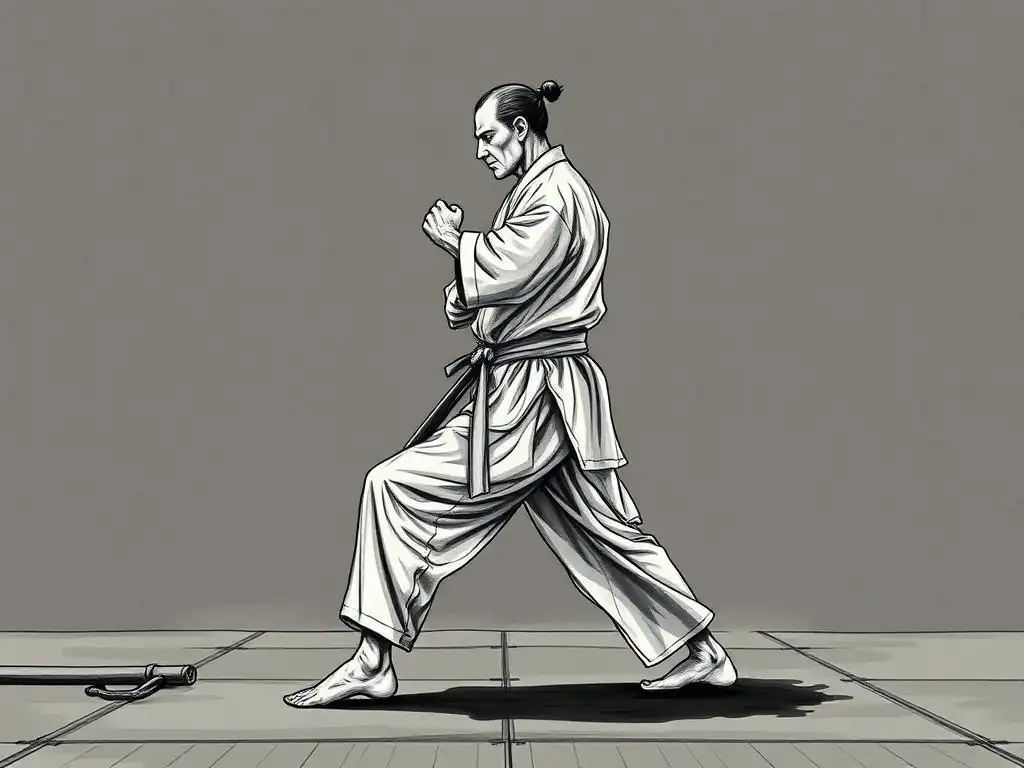
Aikido: Wrist Rotation Drills and Kuzushi Practice
To refine leverage joint control techniques in Aikido, dedicated practice of wrist rotation drills is essential. Techniques like Kote Gaeshi and Kote Mawashi (wrist turning) require precise hand positioning, wrist flexibility, and the ability to lead the opponent's energy. Drilling these rotations repeatedly, both individually and with a partner, builds the necessary dexterity and understanding of the biomechanics involved.
Equally important is continuous practice of kuzushi (breaking balance). Drills focusing on entering techniques from various attacks, specifically aiming to off-balance the partner using body movement and connection, directly enhance the effectiveness of Aikido's leverage joint control techniques. Practicing blending with attacks ( Tai Sabaki) while simultaneously initiating a joint control principle helps integrate movement and technique application seamlessly.
Jujutsu: Arm Bar Transitions and Leg Lock Entries
Refining leverage joint control techniques in Jujutsu often involves extensive drilling of transitions between different joint locks and control positions, particularly focusing on arm bars and leg locks in grappling-oriented styles. Drilling the transition from a mount or guard position into an arm bar, and then understanding how to switch to a different arm lock (like a shoulder lock) if the opponent defends, builds crucial fluidity and adaptability.
For leg locks, practicing entries from various positions—like passing guard, from a scramble, or from a standing position—is key. Drills should focus on securing control of the leg, isolating the joint (knee or ankle), and establishing the correct body position for applying leverage. Repetition of specific entries and transitions helps in recognizing opportunities and executing leverage joint control techniques rapidly and effectively under pressure.
Qinna: Chin Na Seizing and Controlling Drills
Qinna mastery requires dedicated drills focused on seizing and controlling specific parts of the opponent's limbs. This involves practicing precise grip placements on wrists, fingers, or parts of the arm, often while simultaneously stepping or shifting weight to disrupt the opponent's balance. Drills might involve a partner extending a limb in various ways, and the practitioner quickly applying a specific seizing or locking technique.
Practicing the integration of pressure point strikes or pressure with the joint manipulation is also vital. Drills could involve a partner offering a compliant limb, and the practitioner slowly practicing applying the joint lock while simultaneously locating and applying pressure to a nearby point. This builds the coordination and anatomical understanding needed for effective Qinna leverage joint control techniques.
Dumog: Off-Balancing and Takedown Drills
Improving leverage joint control techniques within Dumog is closely tied to developing proficiency in off-balancing and takedowns. Drills focus on close-range entries, gaining dominant grips (underhooks, overhooks, body ties), and using body weight and movement to disrupt the opponent's posture. Practicing how to use wrist or arm controls to initiate a spin or pull that off-balances the opponent is fundamental.
Specific drills might involve practicing entries that transition immediately into a quick joint manipulation (like a wrist twist or elbow bend) followed by a takedown. The emphasis is on fluidity and using the leverage from the joint control attempt to facilitate the throw or takedown, rather than holding the lock. This dynamic application of leverage joint control techniques is central to Dumog training.
Wrestling: Americana and Kimura Setups
In Catch Wrestling and submission grappling influenced by wrestling, refining leverage joint control techniques involves extensive drilling of setups for common submission holds like the Americana and Kimura. Drills focus on achieving dominant control positions (like side control or mount), securing the opponent's arm, and establishing the correct grip and body mechanics to apply the leverage for the shoulder lock.
Practicing these setups from different defensive reactions of the opponent is also crucial. For example, drilling how to secure the Kimura grip when the opponent pushes with a straight arm, or how to transition from an Americana attempt if the opponent turns their arm. Repetition builds the automatic reactions needed to capitalize on opportunities for these leverage joint control techniques during live grappling.
Exercises to Improve Grip Strength and Joint Flexibility
Supporting the application of leverage joint control techniques requires physical conditioning, particularly focusing on grip strength and joint flexibility (for the practitioner, not the opponent!). Strong grips are essential for securing limbs and maintaining control while applying leverage. Exercises like deadlifts, pull-ups, farmer's walks, and specific grip trainers can significantly improve hand and forearm strength.
While flexibility in joints is exploited in the opponent, the practitioner needs their own joints to be mobile and resilient to withstand the dynamic forces involved in grappling and applying locks. Mobility exercises for wrists, elbows, and shoulders, along with overall body flexibility, can prevent self-injury and allow for better positioning when applying leverage joint control techniques. Conditioning should be a complementary part of technical training.
The Future of Leverage Joint Control in Martial Arts
Integrating New Research and Biomechanical Insights
The understanding of leverage joint control techniques continues to evolve with advancements in sports science, biomechanics, and medical knowledge. Research into joint physiology, injury mechanisms, and optimal force application can lead to refinements in technique and training methodologies. Analyzing the biomechanics of successful joint locks in competition using motion capture and force sensors can provide data-driven insights into the most efficient angles and pressures.
Integrating this new research allows practitioners and instructors to refine existing techniques, develop safer training practices, and potentially discover novel applications of leverage. Understanding the precise limits of joint movement and the forces required to cause injury can also inform safety protocols and ethical guidelines. The future of leverage joint control techniques will likely involve a more scientific approach to training and application.
Cross-Training and Innovation in Joint Manipulation Techniques
Cross-training between different martial arts styles has historically been a major driver of innovation, and this is particularly true for leverage joint control techniques. Practitioners who train in multiple grappling arts (e.g., BJJ, Judo, Catch Wrestling, Sambo, Dumog) can combine principles and techniques from different systems to create new, hybrid approaches. Learning how Aikido uses blending and kuzushi might inform a BJJ practitioner's entry into an arm bar, or a Catch Wrestler's aggressive leg lock entries might be adopted by others.
Innovation also comes from exploring less common targets or methods. While major joints are primary targets, exploring leverage on the spine, neck, or smaller joints in more intricate ways could lead to new leverage joint control techniques. The competitive landscape of submission grappling and MMA constantly pushes practitioners to develop novel techniques and transitions that opponents haven't seen before, ensuring that the application of leverage to joint control remains a dynamic and evolving field.
The Evolving Landscape of Joint Control in Competitive Martial Arts
The role and application of leverage joint control techniques in competitive martial arts continue to evolve based on rule sets and strategic development. In sports like Judo, arm bars are allowed but leg locks are prohibited. Brazilian Jiu-Jitsu has different rules depending on belt level, gradually introducing more complex and dangerous leg and foot locks. MMA allows a wide range of joint locks, and their effectiveness is clearly demonstrated in competition.
As athletes become more skilled at defending common locks, practitioners must innovate, developing new entries, transitions, and less conventional leverage joint control techniques. The strategic landscape constantly shifts, with periods where certain joint locks (like heel hooks) become highly dominant until defenses catch up. This competitive pressure drives both the refinement of classic leverage joint control techniques and the creation of new ones, ensuring their continued relevance in the modern martial arts world.
Frequently Asked Questions
What exactly are joint control techniques in martial arts, and why are they considered "universal"?
Joint control techniques involve manipulating an opponent's joints to induce pain, restrict movement, or gain control. They are considered universal because the fundamental biomechanics of human joints are consistent across all individuals, making these techniques applicable regardless of fighting style.
How does MartialArtsMastery.org approach the topic of leverage joint control techniques across different martial arts disciplines?
The website breaks down joint control by discipline, highlighting style-specific variations while emphasizing the underlying principles of leverage and biomechanics that make them effective. It provides historical context and practical application tips.
What are some key benefits of mastering leverage-based joint control techniques for self-defense?
Mastering these techniques allows for the control of a larger, stronger opponent through strategic application of force against vulnerable joints. It can lead to effective takedowns, submissions, and the ability to neutralize threats quickly.
Does MartialArtsMastery.org offer training tips or resources for learning advanced joint control techniques?
Yes, the website provides training tips, articles, and possibly videos that cover proper technique execution, safety considerations, and drills to improve proficiency in leverage-based joint manipulations.
How does the "Universal Language of Leverage" relate to the broader philosophical underpinnings of martial arts, as explored on MartialArtsMastery.org?
The "Universal Language" highlights the importance of understanding principles over memorization, embodying a core martial arts philosophy. Effective joint control leverages leverage, efficiency, and adaptability over brute force.
Final Reflection: Mastering the Art of Leverage
The exploration of leverage joint control techniques across diverse martial arts styles reveals a profound truth: the principles of physics and anatomy transcend cultural boundaries. What began as a technical analysis of specific holds and manipulations ultimately underscores the universality of human movement and the ingenious ways we've learned to exploit its vulnerabilities. This understanding is not merely academic; it's a practical tool for self-defense, athletic performance, and a deeper appreciation for the interconnectedness of martial arts traditions worldwide.
The enduring power of leverage lies in its ability to amplify force and control movement, making it a cornerstone of countless fighting systems. Witnessing the subtle variations and shared strategies across styles like Aikido, Brazilian Jiu-Jitsu, and wrestling highlights the ingenuity of the human mind in adapting to different contexts. Give me a lever long enough and a fulcrum on which to place it, and I shall move the world.
- Archimedes. This ancient wisdom resonates even today, reminding us that understanding leverage is understanding power itself, both on and off the mat.
Now, consider how you can apply these principles of leverage in your own life. Whether you're a martial artist seeking to refine your technique, an athlete looking for a competitive edge, or simply someone interested in understanding the mechanics of movement, the lessons learned here can be transformative. Embrace the challenge of mastering leverage, not just in physical techniques, but in your approach to problem-solving and achieving your goals. The power to move the world, or at least your corner of it, lies within your grasp.
Unlock Your Joint Locking Potential Now!
Thank you for diving deep into the world of joint control! We hope you've gained valuable insights into how leverage transcends individual martial arts. Now, it's time to put that knowledge into action and refine your skills.
Here’s how to continue your journey:
- Commit to consistent practice. Dedicate at least 15 minutes, 3 times a week, to drilling the key joint locks discussed in the article. Focus on fluidity and control, not just speed or force.
- Explore related styles. Research and watch videos of martial arts like Aikido or Hapkido to see how other practitioners apply similar principles in unique ways.
- Share your breakthroughs. Found a joint lock that works exceptionally well for you? Discuss it in the comments section below and share your tips with the Martial Arts Mastery community.
Which joint lock are you most excited to master and how will you incorporate it into your training this week?