
What to Expect at Your First HEMA Longsword Tournament: A Beginner's Guide

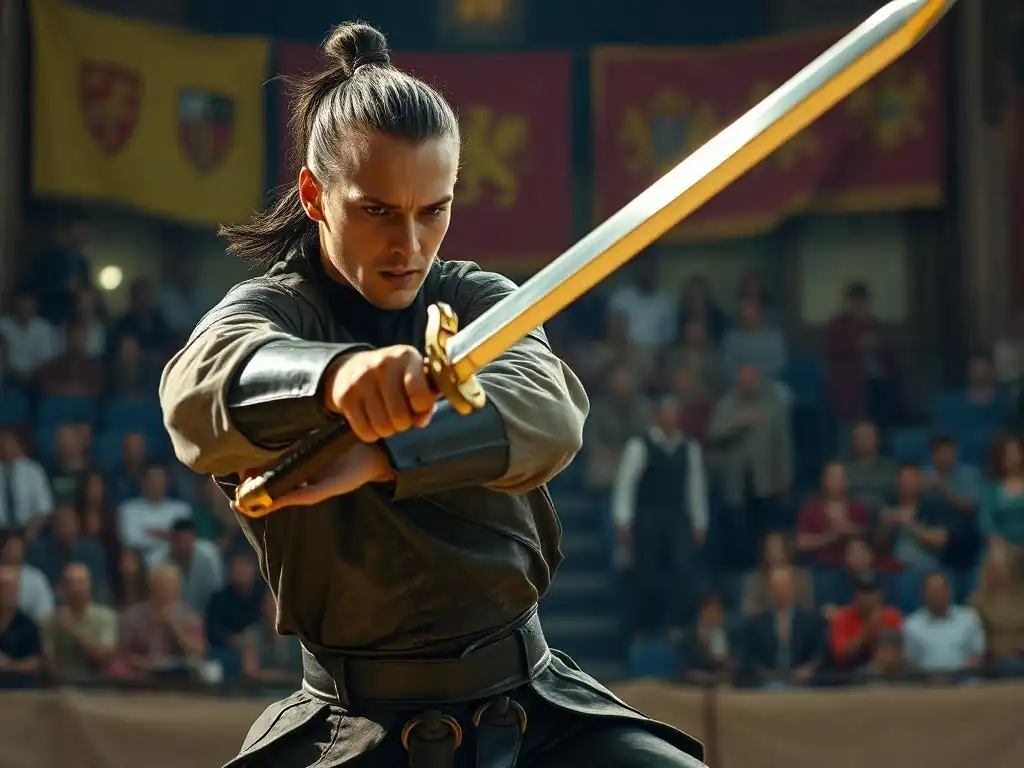
Welcome to Martial Arts Mastery, where we delve into the fascinating world of combat disciplines! Ever wondered what it's really like to step onto the steel-clashing stage? Our journey today begins with a deep dive into the thrilling world of Historical European Martial Arts. Curious about what awaits you at your first HEMA longsword tournament? Prepare to shed your trepidation and embrace the challenge with our comprehensive beginner's guide – consider this your essential roadmap to navigate the clash of steel and spirit. Let's begin!
- Introduction to HEMA Longsword Tournaments for Beginners
- Preparing for Your First HEMA Longsword Tournament: A Beginner's Checklist
- Understanding the Rules and Regulations of HEMA Longsword Tournaments
- During the HEMA Longsword Tournament: A Beginner's Experience
- Post-Tournament: Reviewing and Learning from Your Experience
- HEMA Longsword Tournament Beginner's Guide: Key Takeaways and Next Steps
-
Frequently Asked Questions
- What exactly is HEMA, and why is it becoming more popular?
- What equipment do I absolutely need to participate in a HEMA longsword tournament?
- What are some common rules or scoring conventions I should be aware of in HEMA longsword tournaments?
- How should I prepare for the physical demands of a HEMA longsword tournament?
- What are some strategies for staying calm and focused during my first tournament?
- Final Reflection: Embracing the Steel, Forging the Future
- Unleash Your Inner Swordsman: Ready to Compete?
Introduction to HEMA Longsword Tournaments for Beginners
Welcome to the World of Historical European Martial Arts Longsword Fencing
Historical European Martial Arts (HEMA) is a global movement dedicated to the study and practice of historical fighting systems. Among the most popular disciplines is longsword fencing, based on treatises primarily from the 14th to 16th centuries. Participating in a HEMA longsword tournament is a significant step for any practitioner, offering a unique blend of competitive sport, historical study, and physical challenge. While the thought of competing might seem daunting at first, understanding what to expect can transform apprehension into excitement. This guide aims to demystify the process, providing a clear path for navigating your first HEMA longsword tournament.
The HEMA community has grown exponentially over the past couple of decades, leading to a proliferation of events worldwide. From small local gatherings with a dozen participants to large international competitions hosting hundreds, there's a wide spectrum of HEMA longsword tournament opportunities. These events are not just about winning; they are vibrant social hubs where practitioners from different schools and backgrounds meet, share knowledge, and test their skills in a safe, controlled environment. For a beginner, the atmosphere is often supportive, with experienced fencers eager to share insights and encouragement.
Why Participate in a HEMA Longsword Tournament? Benefits for Beginners
Competing in a HEMA longsword tournament offers unparalleled benefits for a beginner's development. The pressure of a competitive bout exposes strengths and weaknesses in ways that regular sparring often doesn't. You'll quickly learn which techniques hold up under stress and where your training needs more focus. Receiving feedback from experienced judges and observing other fencers provides valuable learning opportunities that accelerate skill acquisition. It's a concentrated dose of diverse experience that helps solidify your understanding of longsword principles under real-time constraints.
Beyond technical skill, a HEMA longsword tournament hones crucial mental attributes. Managing pre-fight nerves, staying focused during intense exchanges, and maintaining composure after receiving hits or losing a bout are all part of the learning process. The resilience built through competition translates directly back into more effective and confident training. Furthermore, participating connects you more deeply with the broader HEMA community, opening doors to training opportunities, friendships, and a deeper appreciation for the art. It's a challenging but incredibly rewarding step in your HEMA longsword journey.
Preparing for Your First HEMA Longsword Tournament: A Beginner's Checklist
Essential Gear for HEMA Longsword Fencing Competitions: A Beginner's Guide to Equipment
Safety is paramount in a HEMA longsword tournament, and this begins with having the correct protective gear. Tournament organizers specify required equipment based on the intensity and ruleset of the event. For longsword, this typically involves a significant amount of padding and protection against forceful impacts. Investing in quality gear is not just about compliance; it's about ensuring you can participate safely and confidently, minimizing the risk of injury during competitive exchanges.
Required Protective Gear: Ensuring Safety in HEMA Longsword Tournaments
The absolute essentials for a HEMA longsword tournament include a HEMA-specific mask (rated for high-impact, often 1600N), a padded jacket (commonly 350N or 800N rating), heavy gloves providing significant finger and hand protection (often specialized HEMA gauntlets), a gorget (neck and throat protection), and groin protection (cup for males, pelvic protector for females). Most tournaments also mandate knee and elbow pads.
These pieces of gear are designed to absorb the force of blunt steel impacts, protecting vulnerable areas. Checking the specific tournament's equipment requirements well in advance is critical, as some events may have stricter rules or require specific certifications for gear.
Additional recommended gear, though sometimes required depending on the ruleset, includes shin guards, forearm guards, and a back protector. Rib protectors are also a good idea. While this may seem like a lot, the purpose is simple: to allow fencers to engage with commitment while mitigating risk. For your first HEMA longsword tournament, ensure all your gear fits properly and is in good condition. Borrowing gear for a first event is sometimes possible, but owning your own ensures fit and reliability, which significantly enhances safety and comfort.
Choosing the Right Longsword for Tournament Use: Beginner's Considerations
Tournament longswords are specifically designed for sparring and competition. They are typically made of blunt steel with rounded edges and tips (often rolled or spatulated) to prevent piercing injuries. Critically, they must have a certain level of flex, particularly in the thrust, to absorb impact. Most tournament rulesets specify acceptable flex standards and maximum tip diameters. Swords designed purely for cutting practice or historical accuracy without safety modifications are not permitted in a HEMA longsword tournament.
For a beginner, selecting a tournament longsword involves considering weight, balance, and blade length. A typical longsword weighs between 1.3 kg and 1.6 kg with a blade length often ranging from 33 to 38 inches. The balance point (PoB) is also important; a sword balanced closer to the hilt feels lighter and faster, while one balanced further out can feel more powerful in cuts but slower in hand.
Beginners often benefit from a well-balanced sword that isn't excessively heavy. If you are unsure, ask your instructor or experienced club members for advice or to try their swords. Confirming the tournament's specific weapon requirements before purchasing or bringing a sword is essential for a smooth experience at your HEMA longsword tournament.
Physical and Mental Preparation for a HEMA Longsword Tournament
Successfully navigating a HEMA longsword tournament requires both physical conditioning and mental fortitude. Bouts can be physically demanding, involving bursts of intense activity, while the competitive environment tests your ability to perform under pressure. Adequate preparation in both areas significantly impacts your performance and overall enjoyment of the event.
Building Stamina and Endurance for Longsword Fights
HEMA longsword bouts, while relatively short (often 2-3 minutes), require significant stamina and endurance due to the protective gear's weight and the explosive nature of the movements. Regular sparring is the best preparation, simulating the demands of a real fight. Supplementing sparring with targeted physical training is highly beneficial.
Focus on exercises that build anaerobic capacity and muscular endurance, such as interval training, footwork drills (like ladder drills or cone drills), and circuit training incorporating movements specific to longsword fencing (lunges, guards, cuts). Aim for consistent training, perhaps 3-4 times a week, including at least one dedicated sparring session, in the months leading up to your first HEMA longsword tournament.
Strength training should focus on core stability, leg strength for powerful movement, and shoulder/back strength for control and power in strikes. Kettlebell swings, squats, lunges, and planks are excellent additions to your routine. Remember that carrying approximately 8-12 kg of gear adds to the physical load. Simulating tournament conditions by sparring in full gear for extended periods can help you adapt to the physical demands. Proper physical preparation ensures you have the energy and resilience to perform consistently throughout your HEMA longsword tournament pools and potentially elimination rounds.
Developing a Tournament Mindset: Focus and Composure
The mental aspect of a HEMA longsword tournament is often underestimated. Nerves are normal, especially for a beginner, but learning to manage them is key. Practice visualization techniques, mentally rehearsing scenarios and successful techniques. Develop a pre-fight routine that helps you focus and get into the right headspace. This could involve listening to music, doing specific warm-up exercises, or quiet contemplation.
Crucially, cultivate resilience. You will likely take hits, and you will likely lose bouts. The ability to accept these outcomes, learn from them, and maintain composure for the next fight is vital. Avoid getting fixated on mistakes or bad calls. Focus on executing your game plan and adapting as needed. Remember that your first HEMA longsword tournament is primarily a learning experience. Approaching it with a mindset focused on growth rather than solely on winning will lead to a more positive and beneficial experience.
Understanding the Rules and Regulations of HEMA Longsword Tournaments
Navigating your first HEMA longsword tournament requires a solid understanding of the ruleset being used. While there are variations between events and organizations, many core principles are shared. Familiarizing yourself with the scoring system, valid targets, and prohibited actions is crucial for competing effectively and safely.
Common HEMA Longsword Tournament Rulesets Explained for Beginners
HEMA rulesets aim to simulate historical combat while prioritizing participant safety. They define what constitutes a valid hit, how points are awarded, and what actions are penalized. While the exact point values and rules around afterblows might differ, the fundamental concept of striking valid targets with sufficient force and proper technique is universal. Understanding these basics is essential for any HEMA longsword tournament beginner guide.
Point Systems and Scoring in HEMA Longsword Fencing
Most HEMA longsword tournament rulesets use a point system based on the target area and the technique used. Typically, thrusts to the torso or head score the highest points (often 2 or 3 points), while cuts to the head or torso score slightly less (often 1 or 2 points). Hits to limbs usually score the fewest points (often 1 point).
The concept of the "afterblow" is critical: if a fencer is hit but immediately responds with a valid hit of their own before the judges call "Hold! ", their hit may reduce or negate the points awarded to the initial attacker.
For example, Fencer A hits Fencer B's head for 2 points, but Fencer B immediately hits Fencer A's arm for a 1-point afterblow; Fencer A might only receive 1 net point. Judges assess the exchange, determine who hit first, the validity and target of each hit, and the timing of any afterblows to award points.
Bouts usually last for a set time limit (e.g., 2-3 minutes) or until one fencer reaches a certain score (e.g., 5, 7, or 10 points). Understanding the scoring dynamics, including the impact of afterblows, influences tactical decisions. For instance, knowing that a quick afterblow can mitigate an opponent's successful attack changes how you react after being hit. Pay attention during the rules briefing at your HEMA longsword tournament for clarification on the specific scoring nuances being used.
Penalties and Fouls: Avoiding Disqualification in Tournaments
Safety and sportsmanship are enforced through penalties and fouls in a HEMA longsword tournament. Common fouls include striking after the judges have called "Hold! ", intentionally targeting illegal areas (like the back of the head or spine, which are often prohibited), using excessive force deemed unsafe, stepping out of the defined fighting area (the ring or list), and unsportsmanlike conduct.
Penalties typically escalate from warnings for minor infractions to point deductions for repeated or more serious fouls. Severe fouls, such as uncontrolled force resulting in injury or blatant disregard for safety rules, can lead to immediate disqualification from the bout or even the entire HEMA longsword tournament. Always listen carefully to judge instructions and err on the side of caution. If you are unsure about a call, you can often politely ask for clarification after the bout, but arguing with judges during the fight is typically considered unsportsmanlike and may result in a penalty.
Pre-Fight Procedures: What to Expect Before Each Bout
Before you step into the ring to fight, there are several standard procedures designed to ensure safety and order. Knowing these steps will help you feel more comfortable and prepared for each individual bout in your HEMA longsword tournament.
Gear Checks and Weapon Inspection: Ensuring Safety Compliance
Safety checks are a non-negotiable part of any HEMA longsword tournament. Before your pool or elimination round begins, or sometimes immediately before each bout, officials will inspect your gear to ensure it meets the required safety standards. This includes verifying your mask is undamaged and properly fitted, your jacket and gloves provide adequate protection, and you are wearing all mandated padding and protection. Your weapon will also be inspected to confirm it is a tournament-legal blunt, has sufficient flex, and the tip is safe.
This process might feel tedious, but it's for everyone's safety. Ensure all your gear is easily accessible and laid out correctly when called for inspection. If any gear is deemed unsafe or non-compliant, you will not be allowed to fight until it is rectified. Having your gear in order and ready for inspection is a simple but crucial step in preparing for your HEMA longsword tournament bouts.
Ring Entry and Addressing the Judges: Tournament Etiquette
When it's your turn to fight, you'll be called to the designated fighting area, often referred to as "the ring" or "the list." There's typically a specific protocol for entering the ring. Common practice involves approaching the ring, possibly saluting the judges and your opponent as a sign of respect, and waiting for instructions. The judges will confirm you are ready and explain any specific rules or procedures for that bout if necessary.
Listen carefully to the judge's commands, such as "Ready? ", "Fight! ", and "Hold!". Respond clearly (e.g., "Ready!"). Maintaining polite and respectful conduct towards judges and opponents throughout the HEMA longsword tournament is part of the martial arts spirit and expected etiquette. After the bout concludes, it is customary to salute your opponent and the judges again, regardless of the outcome.
During the HEMA Longsword Tournament: A Beginner's Experience
The tournament day itself can be a whirlwind of activity, excitement, and nervous energy. Understanding the structure of the competition and how to manage your time and energy between bouts is crucial for performing your best and enjoying the experience.
The Flow of a Typical HEMA Longsword Tournament Day
A HEMA longsword tournament day usually starts with check-in, gear inspection, and a rules briefing. The competition then proceeds through different phases, most commonly starting with pool play followed by elimination rounds. Knowing the schedule and structure helps you plan your day and stay ready.
Pool Play vs. Elimination Rounds: Understanding Tournament Structure
Most HEMA longsword tournaments begin with a pool phase. Participants are divided into smaller groups (e.g., pools of 5-7 fencers), and everyone in the pool fights every other person in a round-robin format. The purpose of pool play is to rank fencers based on their performance (e.g., number of wins, point differential) to seed them for the next phase. You will fight multiple bouts in quick succession during your pool, providing ample fighting experience regardless of wins or losses.
Following the pool phase, the top-ranked fencers advance to the elimination rounds (often called "Direct Elimination" or "DE"). This is a single-elimination bracket, similar to many sports tournaments. If you lose a bout in the DE, you are out of the competition. Bouts in the elimination rounds might be longer or have higher point requirements than pool fights. The bracket progresses until the final bout determines the tournament champion. Understanding this structure helps you know how many fights to expect and the stakes of each phase in your HEMA longsword tournament experience.
Managing Your Time and Energy Between Bouts
Tournament days can be long, with significant waiting time between your fights, especially during pool play or if you advance deep into the elimination bracket. It's vital to use this time wisely. Find a comfortable place to rest, stay hydrated by drinking water, and eat light snacks to keep your energy levels up. Avoid expending unnecessary energy walking around too much or getting caught up in distractions.
Use the waiting time to observe other fencers, especially potential future opponents. You can pick up on their preferred techniques, stances, and tendencies. If you have a coach or teammates, discuss your previous bouts and plan for upcoming ones. Stay near the fighting area so you don't miss your call to fight. Effective time management between bouts is a key skill developed through participating in a HEMA longsword tournament.
In the Ring: Applying Your Skills Under Pressure
Stepping into the ring is where your training is put to the test. The environment is different from casual sparring – there are judges watching, possibly spectators, and the stakes are higher. However, the fundamental principles of longsword fencing still apply. Focus on executing your techniques and tactics effectively under this increased pressure.
Reading Your Opponent and Adapting Your Strategy
Every opponent is different, with their own strengths, weaknesses, and preferred style. In the initial exchanges of a bout, try to "read" your opponent. Observe their guard, how they move their feet, whether they favor cuts or thrusts, and how they react to your actions. Are they aggressive or defensive? Do they have tells before they attack?
Based on your observations, be prepared to adapt your strategy. If your initial plan isn't working, don't keep repeating the same actions. For example, if they are effectively shutting down your thrusts, try using more cuts or feints to open lines. If they are passive, you might need to be more proactive in creating opportunities. Flexibility and the ability to adjust mid-bout are critical skills honed in a HEMA longsword tournament.
Controlling Distance and Timing in Longsword Fencing
Distance and timing are arguably the two most crucial elements in longsword fencing, and they become even more critical in a competitive HEMA longsword tournament setting. Distance control means maintaining the optimal range – close enough to threaten your opponent and land a hit, but far enough away to avoid being hit yourself or to safely defend against their attacks. Constantly managing the distance, moving in and out, is fundamental.
Timing involves initiating your actions at the most advantageous moment. This could mean attacking just as your opponent is recovering from their own action, timing a counter-attack to intercept their movement, or exploiting a momentary lapse in their guard. Developing a good sense of timing requires practice and experience. In the pressure of a HEMA longsword tournament bout, executing techniques with good timing and distance is key to scoring points and avoiding hits.
Post-Tournament: Reviewing and Learning from Your Experience
Your first HEMA longsword tournament is a significant learning opportunity, regardless of the outcome. The period immediately following the event is crucial for reflecting on your performance, gathering feedback, and using the experience to inform your future training.
Analyzing Your Performance: Identifying Strengths and Weaknesses
After the adrenaline subsides, take time to analyze your performance in each bout. What techniques worked well for you? Where did you consistently struggle? Did you find yourself reacting effectively or getting caught off guard? If tournament organizers or fellow practitioners recorded bouts, watching them back can be incredibly insightful, revealing habits or tactical errors you might not have noticed in the moment.
Identify specific areas for improvement. For example, you might notice that opponents consistently exploited an opening in a particular guard, or that you struggled against fencers who used a lot of grappling. Conversely, acknowledge what you did well – perhaps your defensive work was solid, or a specific attack landed consistently. This honest self-assessment is vital for setting focused training goals after your HEMA longsword tournament experience.
Seeking Feedback from Judges and Experienced Fencers
Don't hesitate to politely seek feedback after your bouts or at the end of the day. Judges, if they have the time, can often provide insights into why certain calls were made or what they observed about your fencing. More experienced fencers or instructors who watched you fight can offer valuable critiques and suggestions based on their expertise.
Be open to constructive criticism. The goal is to learn and improve, and external perspectives can highlight areas you might be blind to. Asking specific questions about particular exchanges or techniques you attempted can yield more helpful responses than general inquiries. Engaging with the community in this way is a great benefit of participating in a HEMA longsword tournament.
Continuing Your HEMA Longsword Training Journey After the Tournament
Your first HEMA longsword tournament is not an endpoint, but a milestone in your training journey. Use the experience to refine your practice. If you identified weaknesses, dedicate specific training time to address them. If certain techniques proved effective, work on integrating them more smoothly into your repertoire.
Consistency is key. Continue attending regular classes or training sessions at your HEMA school or club. Consider attending workshops or seminars led by experienced instructors to learn new techniques and concepts. Your experience in the HEMA longsword tournament will provide context and motivation for your ongoing development in Historical European Martial Arts.
HEMA Longsword Tournament Beginner's Guide: Key Takeaways and Next Steps
Participating in your first HEMA longsword tournament is a memorable and valuable experience. It challenges you physically and mentally, provides concrete feedback on your skills, and deepens your connection with the HEMA community. While preparation is important, remember that the primary goal for a beginner is learning and participation, not necessarily winning.
Resources for New HEMA Longsword Tournament Participants
For those looking to dive deeper after their first event or prepare for the next, several resources are available. Your local HEMA club and instructors are the most immediate and valuable resource, providing guidance, training partners, and access to gear. Online HEMA forums and social media groups connect you with the wider community for discussions and advice.
Tournament websites and prospectuses are essential resources for specific event rules, schedules, and required gear. Reputable HEMA gear vendors (easily found through community recommendations) provide the necessary protective equipment and tournament-legal swords. Don't be afraid to ask questions within the community; HEMA practitioners are generally very willing to help newcomers navigate the world of competitive HEMA longsword fencing.
Building a Community: Connecting with Other HEMA Practitioners
One of the most rewarding aspects of a HEMA longsword tournament is the sense of community. You'll meet people from various backgrounds united by a shared passion for historical martial arts. Take the opportunity to talk to other fencers, judges, and organizers. Share your experiences, learn about their training, and make connections.
Building these relationships can lead to future training opportunities, sparring partners, and a support network within the HEMA community. The camaraderie and shared love for HEMA longsword are as much a part of the tournament experience as the fighting itself. Embrace the social aspect, and you'll find your HEMA journey enriched by the people you meet.
Frequently Asked Questions
What exactly is HEMA, and why is it becoming more popular?
HEMA stands for Historical European Martial Arts, which focuses on reconstructing and practicing historical fighting techniques. Its popularity stems from its blend of physical activity, intellectual study, and community engagement.
What equipment do I absolutely need to participate in a HEMA longsword tournament?
You'll typically require a HEMA-approved mask, a gorget (neck protection), gloves, a chest protector, and a rigid groin protector. Some tournaments may have specific equipment requirements beyond these basics.
What are some common rules or scoring conventions I should be aware of in HEMA longsword tournaments?
Scoring typically involves landing clean hits with the foible (weak part of the blade) or middle of the blade on designated target areas. Rules often emphasize safety, control, and historical accuracy in technique.
How should I prepare for the physical demands of a HEMA longsword tournament?
Focus on cardiovascular fitness, strength training (especially core and arms), and sparring. Practice footwork, bladework drills, and endurance exercises to build stamina for multiple bouts.
What are some strategies for staying calm and focused during my first tournament?
Prioritize breath control, visualization, and sticking to your game plan. Remember to focus on learning and having fun rather than solely on winning.
Final Reflection: Embracing the Steel, Forging the Future
The journey into Historical European Martial Arts (HEMA), and specifically the longsword, is more than just learning techniques; it's about connecting with history and challenging oneself. This guide, aimed at demystifying the first HEMA longsword tournament experience, underscores the growing accessibility and appeal of this historically rich martial art. It's a testament to the dedication of the HEMA community in fostering a welcoming environment for newcomers, ensuring that the art continues to thrive and evolve.
The allure of HEMA lies not only in the physicality of the sport but also in the intellectual and historical exploration it demands. Witnessing the growth of HEMA firsthand, from small gatherings to organized tournaments, has been inspiring, and it highlights the enduring human fascination with skill, strategy, and the pursuit of mastery. The sword is a tool, and like any tool, it is only as good as the person wielding it.
This quote, though simple, encapsulates the essence of HEMA: it's about self-improvement and understanding the art, not just winning.
Now, armed with this knowledge and a newfound understanding of what to expect, it's time to take the leap. Embrace the challenge, step onto the tournament floor, and forge your own path in the world of HEMA. Let the clang of steel be a reminder of the history you're honoring and the skills you're developing. Your journey awaits – are you ready to answer the call?
Unleash Your Inner Swordsman: Ready to Compete?
Thank you for diving into the world of HEMA longsword tournaments! Now that you're equipped with essential knowledge, it's time to consider taking the next step and experiencing the thrill of competition. Here's how to make that leap:
- Make the commitment and Sign up for your first tournament! Visit your regional HEMA alliance website, and find a rookie-friendly tournament.
- Share this guide with fellow aspiring HEMA competitors and form a practice and support group. The more, the merrier!
- Reflect on your training and ask: What's one small adjustment to your footwork that you'll focus on implementing before your first bout?