
Americana Grips: Securing the FigureFour for Maximum Impact in BJJ

Welcome to Martial Arts Mastery!
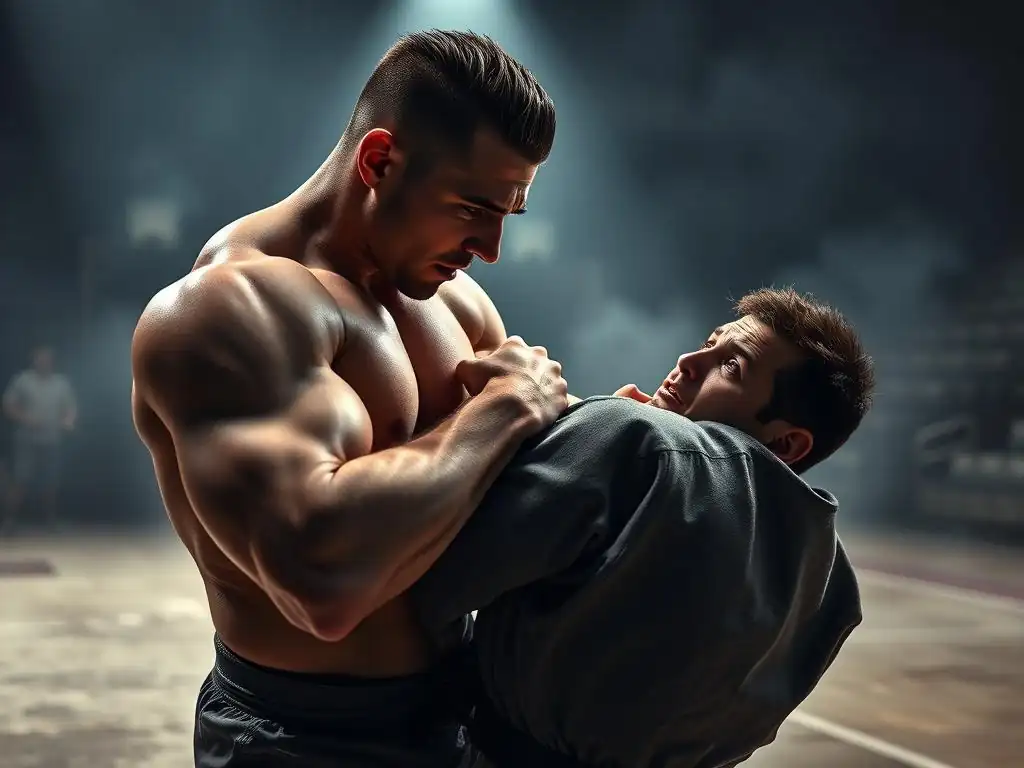
Ever wondered how the seemingly simple Americana lock can become an inescapable submission weapon in BJJ? Dive deep into the intricacies of BJJ figure four grips and unlock the secrets to maximizing their impact. This article explores the nuances of securing the figure four, transforming a basic hold into a potent offensive tool. Discover the techniques, strategies, and subtle adjustments that separate mastery from mediocrity. Ready to elevate your ground game?
- Kimura Mastery: Maximizing Submission Effectiveness with Grip Variations
- Mastering the Kimura in BJJ: The Power of Grip Control
- Understanding the BJJ Kimura Submission
- Optimizing Your Kimura: Grip Technique
- Variations of the Kimura Grip
- Maximizing Kimura Impact: Advanced Techniques and Setups
- Troubleshooting the Kimura: Common Problems and Solutions
- Drills and Training Exercises for Kimura Mastery
- The Importance of Control and Leverage in the Kimura
- BJJ Kimura: Beyond the Basics
-
Frequently Asked Questions
- What is a figure four grip in Brazilian Jiu-Jitsu (BJJ)?
- Why are figure four grips important for the Americana submission?
- What are some key details to consider when securing a figure four grip for the Americana?
- What are some common mistakes people make when attempting a figure four grip for the Americana?
- Besides the Americana, can figure four grips be used in other BJJ techniques?
- Final Reflection: Mastering the Figure Four: A Legacy of Control
- Master the Figure Four: Elevate Your BJJ Game Now!
Kimura Mastery: Maximizing Submission Effectiveness with Grip Variations
Mastering the Kimura in BJJ: The Power of Grip Control
Mastering submissions is a cornerstone of Brazilian Jiu-Jitsu, and the Kimura lock stands out as a particularly versatile and potent joint attack. This technique targets the opponent's shoulder joint, applying pressure through external rotation and abduction of the arm. Its effectiveness is not solely dependent on strength, but critically on the precise application of leverage and, most importantly, the securement and maintenance of the BJJ figure four grips. Understanding how to properly form and control this fundamental grip is paramount for both initiating the submission and ensuring its successful completion.
The Kimura is often accessible from a variety of positions, including side control, mount, half guard, and even guard. This positional versatility makes it a high-percentage attack in competition and sparring. However, without a deep understanding of the mechanics behind the BJJ figure four grips and how different hand placements can amplify pressure and control, the technique loses much of its power. A loose or improperly formed grip allows the opponent crucial seconds to defend, posture up, or initiate an escape sequence, highlighting the critical link between grip mastery and submission success in BJJ.
Understanding the BJJ Kimura Submission
What is the Kimura? A Breakdown for Grapplers
The Kimura, also known as the reverse Ude Garami in Judo, is a shoulder lock that utilizes a figure-four grip to isolate and manipulate the opponent's arm. The attacking grappler secures the opponent's wrist with one hand while their other arm reaches under the opponent's arm to grasp their own wrist. This creates a closed loop, or the distinctive BJJ figure four grips, around the opponent's arm. The attacking grappler then uses their body mechanics to rotate the opponent's shoulder joint externally, applying painful and potentially damaging pressure if not tapped.
The mechanism of the Kimura involves leveraging the opponent's arm against their shoulder socket. By controlling the wrist and the upper arm simultaneously within the figure-four structure, the grappler can dictate the angle and force applied to the shoulder. Success hinges on maintaining tension and controlling the opponent's posture and body rotation, preventing them from relieving the pressure or turning into the attack. The structure of the BJJ figure four grips provides the necessary framework for this intricate joint manipulation.
Why the Kimura is a Powerful Submission in Brazilian Jiu-Jitsu
The Kimura is a powerful submission in BJJ for several key reasons. Firstly, it attacks a large, relatively fragile joint (the shoulder) from positions where the attacking grappler often has significant positional control, such as side control or mount. This combination of joint vulnerability and positional dominance creates high-percentage finishing opportunities. Secondly, the BJJ figure four grips used in the Kimura are incredibly strong when locked correctly, making it difficult for the opponent to break the grip or pull their arm free.
Furthermore, the Kimura is not just a finishing move; it is a versatile tool for control and transitions. Even if the submission isn't completed, the threat of the Kimura allows the grappler to control the opponent's posture, create openings for passes, or transition to other attacks like armbars or back takes. Many sweeps and positional advancements in BJJ are also initiated by threatening or setting up the Kimura, forcing the opponent to react in ways that expose them to other techniques. The inherent leverage provided by the BJJ figure four grips makes these transitions highly effective.
The Role of Grip Selection in Kimura Effectiveness
The foundational BJJ figure four grips are central to the Kimura, but subtle variations in how this grip is formed and maintained can significantly impact its effectiveness. The primary goal of the grip is to create a secure connection that allows the attacking grappler to apply leverage to the opponent's arm and shoulder without their hands slipping or being broken apart. Different hand placements and grip styles within the figure-four can offer varying degrees of control, pressure, and adaptability depending on the opponent's size, strength, and defensive reactions.
For instance, a tight, well-connected figure-four grip minimizes the space between the attacking grappler's arms and the opponent's limb, reducing the opponent's ability to create slack or escape. Conversely, a loose grip allows the opponent to rotate their shoulder, pull their elbow free, or slide their arm out. Selecting the appropriate grip variation, such as a Gable grip or an S-grip, and understanding when and how to adapt the BJJ figure four grips based on the situation are crucial skills for maximizing the finishing potential of the Kimura submission.
Optimizing Your Kimura: Grip Technique
Step-by-Step Guide to Forming a Secure Kimura Grip
Forming a secure BJJ figure four grips for the Kimura begins with isolating the opponent's arm. Typically, this involves controlling their wrist with one hand (let's say your right hand controls their left wrist). Your other arm (your left arm) then reaches under their isolated arm, threading through the space between their arm and torso. Once your left arm is through, you bend your elbow and reach back to grab your own right wrist. This creates the characteristic figure-four lock, with your left arm forming the "4" shape around your right wrist and the opponent's arm trapped within.
Key details for a secure grip include getting your underhooking arm deep enough to comfortably grasp your other wrist, ensuring there is no significant gap between your arms and the opponent's limb, and keeping your wrists straight and strong to prevent them from bending under pressure. The grip should feel tight and connected, like a single unit. Practice transitioning quickly from wrist control to securing the BJJ figure four grips against a resisting partner to build speed and precision in this crucial first step of the Kimura attack.
Hand Placement for Maximum Leverage in the Kimura
Optimal hand placement within the BJJ figure four grips is vital for maximizing leverage and applying pressure effectively. When you secure your wrist with your other hand, aim to grip close to your wrist joint, not your fingers. This provides a stronger skeletal connection and reduces the strain on your hand and fingers. The hand gripping the opponent's wrist should ideally control the wrist itself, not just the hand, to prevent them from easily rotating their wrist or slipping their hand out.
The depth of the underhooking arm is also critical. The deeper your arm is threaded under the opponent's arm and closer to their shoulder, the more leverage you will have when applying rotational force. Conversely, if your underhooking arm is shallow, closer to their elbow or wrist, it becomes much harder to generate effective torque on their shoulder. Experiment with slight adjustments in your grip depth and hand placement within the BJJ figure four grips to find the position that feels most secure and allows you to generate the most control and pressure on your training partner's shoulder.
Common Mistakes to Avoid When Creating the Kimura Grip
Several common mistakes can undermine the effectiveness of your BJJ figure four grips for the Kimura. One frequent error is failing to get a deep enough underhook. This leaves a large gap, allowing the opponent space to maneuver and defend. Another mistake is gripping too high on your own arm (towards the elbow) instead of your wrist, which weakens the figure-four structure and makes it easier for the opponent to break your grip. Similarly, gripping the opponent's hand instead of their wrist gives them more freedom to adjust their grip or posture.
A third common issue is allowing slack in the figure-four. The grip should be tight and connected, with minimal space between your arms and the opponent's limb. Slack allows the opponent to rotate their shoulder or pull their arm out. Finally, neglecting to control the opponent's posture or hips while establishing the grip is a major pitfall. If the opponent can sit up or turn away forcefully, they can often strip the BJJ figure four grips before any significant pressure can be applied. Always focus on control before applying maximum finishing pressure.
Variations of the Kimura Grip
The Gable Grip: A Foundation for Success
The Gable grip is one of the most fundamental and widely used variations of the BJJ figure four grips in the Kimura. In this grip, instead of one hand grabbing the wrist of the other arm, both hands clasp together. One hand cups the back of the other hand, with fingers interlocked or parallel. This creates a strong, unified connection between the two arms that form the figure-four.
The advantage of the Gable grip lies in its simplicity and strength. It's relatively easy to establish quickly and provides a solid, direct connection. While it might offer slightly less fine-tuned control than gripping your own wrist, it's often sufficient for generating significant power, especially for beginners or when dealing with a strong, explosive opponent. Mastering the Gable grip is an essential first step in learning how to effectively utilize the BJJ figure four grips for the Kimura submission.
The S-Grip for Increased Control
The S-grip is another variation of the BJJ figure four grips that offers increased control and connection, particularly when dealing with slippery conditions or opponents who are actively trying to pull their arm out. To form the S-grip within the figure-four, one hand grips the opponent's wrist as usual. The other hand, after threading under the opponent's arm, forms an 'S' shape by overlapping the fingers of one hand with the fingers of the other hand, creating a secure palm-to-palm or finger-to-finger connection without grabbing your own wrist directly.
This grip can provide a very tight connection, reducing the likelihood of your hands slipping apart. It often allows for slightly better pressure distribution along the opponent's arm and can feel more secure for some practitioners than the Gable grip. While slightly more complex to execute initially than the Gable grip, developing proficiency with the S-grip variation of the BJJ figure four grips can add another layer of control to your Kimura attacks, especially in No-Gi situations where friction is reduced.
Adapting the Wrist Lock Grip in No-Gi BJJ
In No-Gi BJJ, securing a traditional BJJ figure four grips for the Kimura requires adapting the hand placement since there is no gi sleeve to grip. The figure-four structure remains the same, but the attacking grappler must secure the opponent's actual wrist or hand. This is where adapting principles similar to wrist lock grips can be useful. Instead of grabbing a gi sleeve, the hand controlling the opponent's wrist will directly grip their wrist or the base of their hand using a strong C-grip or similar control.
The underhooking arm then reaches under and grasps the attacking grappler's own wrist or forearm, forming the figure-four. The hand controlling the opponent's wrist needs to maintain a very secure connection, preventing the opponent from simply pulling their hand free. Sometimes, applying a slight wrist manipulation or control within the context of securing the BJJ figure four grips can help prevent the opponent from rotating their hand to escape, adding another layer of control specific to the No-Gi environment where friction is lower.
Maximizing Kimura Impact: Advanced Techniques and Setups
Setting Up the Kimura from Mount
Setting up the Kimura from mount is a classic BJJ technique that utilizes the top position's inherent control to isolate the opponent's arm and secure the BJJ figure four grips. From mount, the attacking grappler can often trap one of the opponent's arms by pinning it against the mat or their own body weight. As the opponent tries to push or frame, the grappler can transition to controlling the wrist and threading the arm under to establish the figure-four.
A common setup involves using knee-on-belly briefly to force a reaction, then settling back into mount while securing the arm as the opponent pushes. Once the BJJ figure four grips are locked, maintaining heavy chest pressure and hip control prevents the opponent from bridging or turning effectively. The finish often involves walking the opponent's hand up towards their head while maintaining the figure-four and applying rotational pressure, demonstrating the powerful leverage afforded by controlling the arm from this dominant position.
Transitioning to the Kimura from Side Control
Side control offers numerous opportunities to transition into the Kimura, making it one of the most common entry points for this submission. From side control, the attacking grappler has control over the opponent's upper body and often their arms. As the opponent frames against the neck or hip, one arm becomes exposed and vulnerable to the Kimura attack. The grappler can secure the opponent's wrist with the arm controlling the head/neck side, then thread the other arm under the isolated arm to establish the BJJ figure four grips.
Key to a successful transition from side control is maintaining tight pressure and preventing the opponent from shrimping away or turning into the attacker. Using underhooks or cross-faces can help pin the opponent while the BJJ figure four grips are being secured. Once the grip is locked, the grappler can adjust their angle, often sitting up slightly or transitioning to a higher side control/knee-on-belly position, to apply the finishing pressure, leveraging the strength provided by the figure-four configuration.
Combining the Kimura with Other Submissions
The Kimura is highly effective when combined with other submissions, particularly armbars and straight armlocks. The BJJ figure four grips used for the Kimura can often be quickly converted into grips for an armbar or vice versa. If an opponent successfully defends the initial Kimura attack by straightening their arm, the attacking grappler can transition their control to isolate the elbow and extend the arm for a straight armlock.
Conversely, if an opponent defends an armbar by bending their arm tightly, the attacking grappler can often switch their grip to establish the BJJ figure four grips for a Kimura attack. This ability to chain attacks makes the Kimura a central part of many grapplers' submission systems. Mastering the transitions between the Kimura and other attacks, all while maintaining control of the opponent's limb, significantly increases the chances of securing a tap by forcing the opponent to defend multiple threats simultaneously, often leading to a successful finish with the figure-four grip.
Troubleshooting the Kimura: Common Problems and Solutions
Dealing with Opponent Resistance
Opponent resistance is inevitable when attempting a Kimura. Common forms of resistance include straightening the arm, hiding the arm close to the body, gripping their own gi or leg, or forcefully turning into the attacker. Dealing with this requires understanding counters and having backup plans. If the opponent straightens their arm, transition to a straight armlock. If they hide their arm, use the BJJ figure four grips to break their posture and create space, or switch to a different attack on the exposed side.
If the opponent grips their own gi or leg, use your body weight and leverage from the BJJ figure four grips to break their grip. Sometimes, simply walking their hand up their back while maintaining the figure-four can be enough to pry their grip open. If they turn into you, transition to mount or the back. The key is to use the control offered by the figure-four grip not just for the submission, but also as a dominant control point to maintain position or transition when the primary attack is defended.
Adjusting Your Grip for Different Body Types
Adjusting your BJJ figure four grips for different body types is crucial for consistent success with the Kimura. When attacking a larger, stronger opponent, a tighter, more connected grip is often required. Using the S-grip might provide a more secure connection than the Gable grip. You may also need to use more of your body weight and hip pressure to keep the opponent pinned and prevent them from using their strength to escape.
When attacking a smaller, more flexible opponent, you might need to be more precise with the angle of attack and the application of torque. Their flexibility might allow them to tolerate more rotational pressure before tapping, requiring you to focus on isolating the shoulder joint completely. The depth of your underhook might also need adjustment; on a smaller arm, you might need to thread your arm deeper to get the necessary leverage. Practice against partners of varying sizes to learn how to adapt your BJJ figure four grips and body mechanics effectively.
Preventing the Kimura Escape
Preventing the Kimura escape requires constant control and anticipation. The most common escapes involve the opponent straightening their arm, pulling their arm free, or turning into the attacker. To prevent these, maintain tight pressure with your chest and hips, controlling the opponent's posture and preventing them from creating space. The BJJ figure four grips must remain tight and connected throughout the attack sequence.
If the opponent tries to straighten their arm, immediately transition your attack towards a straight armlock, preventing them from fully extending and relieving pressure. If they try to pull their arm out, use your legs and hips to keep them pinned while reinforcing your BJJ figure four grips. If they turn into you, use the figure-four grip as a steering wheel to control their rotation and transition to mount or the back, maintaining control of the arm throughout the movement. Anticipating common reactions and having immediate follow-ups is key to preventing successful escapes.
Drills and Training Exercises for Kimura Mastery
Partner Drills for Developing Grip Strength
Developing strong BJJ figure four grips is essential for Kimura mastery. Partner drills focusing specifically on establishing and maintaining the grip can be highly beneficial. One simple drill involves starting in a position where the Kimura is accessible (like side control). One partner offers passive resistance with their arm, and the other practices quickly and correctly securing the figure-four grip. This can be done repetitively to build muscle memory and speed.
A more active drill involves the partner trying to subtly pull their arm out or break the grip while the attacker focuses solely on maintaining the secure BJJ figure four grips. This helps the attacker learn how to keep tension and connection under slight pressure. Another drill is positional holding; secure the figure-four grip and hold it for a set amount of time (e.g., 30-60 seconds) against moderate resistance, focusing on using proper structure and minimal muscular effort to maintain the lock.
Positional Sparring Focused on Kimura Setups
Positional sparring is an excellent way to integrate the Kimura into your live rolling. Set specific starting positions where the Kimura is a common attack, such as side control, mount, or offensive half guard. The goal of the round is for the attacking partner to attempt to secure the BJJ figure four grips and finish the Kimura, while the defending partner focuses solely on preventing the Kimura and escaping the position.
This focused training allows practitioners to work on the nuances of setting up the Kimura against realistic resistance without the pressure of a full spar. They can practice transitioning to the figure-four grip from various defensive reactions, learn how to maintain control while the opponent defends, and explore different finishing mechanics. Regular positional sparring on Kimura setups helps solidify the technique and improve the ability to find the BJJ figure four grips in dynamic situations.
Integrating the Kimura into Your BJJ Game
Integrating the Kimura into your overall BJJ game requires conscious effort during regular training. Start by identifying opportunities to apply the technique during open mat or light sparring. Don't just look for the finish; look for the setups and the chance to secure the BJJ figure four grips. Even if you don't finish, practicing the entry and control phases is valuable.
Actively look for the opponent's exposed arm when in dominant positions like side control or mount. When in guard, explore Kimura traps from positions like butterfly guard or half guard. The more you look for and attempt the Kimura, the better you will become at recognizing the setups and executing the technique. Over time, the process of isolating the arm and securing the BJJ figure four grips will become second nature, making the Kimura a reliable tool in your submission arsenal.
The Importance of Control and Leverage in the Kimura
Maintaining Body Positioning for a Successful Kimura
Maintaining correct body positioning is paramount for a successful Kimura submission, even with a perfect BJJ figure four grips. Your position relative to your opponent dictates the leverage you can apply and their ability to escape. From side control or mount, keeping your weight heavy and distributed correctly prevents them from bridging or shrimping away. Your hips and chest should be controlling their torso, limiting their movement.
When applying the finish, adjusting your angle – often by sitting up slightly or rotating your hips – allows you to apply rotational force to the shoulder rather than just pulling on the arm. Your body acts as the lever, with the opponent's shoulder as the fulcrum and the BJJ figure four grips as the connection point. Poor body positioning compromises this leverage system, making the submission significantly weaker, regardless of how tight your grip feels.
Using Your Core for Leverage and Control
Effective use of your core muscles is critical for generating leverage and maintaining control when applying the Kimura. The power for the submission comes from rotating your torso and using your body weight, not just pulling with your arms. With the BJJ figure four grips secured, engage your core to drive your weight into the opponent and initiate the rotational movement that attacks the shoulder.
Your core also helps maintain stability and prevent the opponent from disrupting your base. A strong core connection allows you to move as a single unit, transferring force efficiently from your hips and legs through your core and into the BJJ figure four grips. This integrated body movement, powered by the core, is far more effective than relying solely on arm strength to apply the submission pressure. Learning to engage your core throughout the attack sequence is a key element of maximizing Kimura effectiveness.
Avoiding Common Mistakes That Lead to Failed Kimura Attempts
Beyond grip issues, several body positioning mistakes commonly lead to failed Kimura attempts. A frequent error is leaning too far forward or backward, allowing the opponent to easily disrupt your balance. Another is failing to control the opponent's hips; if they can shrimp away effectively, they can create the space needed to escape the BJJ figure four grips. Not adjusting your angle during the finish is also a common pitfall; attempting to finish with your chest flat on the mat often provides insufficient leverage.
Failing to maintain heavy pressure is another mistake. Light pressure allows the opponent freedom to move and defend. Always strive to keep your weight distributed onto the opponent, limiting their mobility. Finally, rushing the finish before control is fully established is a common error. Ensure your BJJ figure four grips are secure and your body positioning is correct before attempting to generate maximum torque on the shoulder. Patience and control are key to successful Kimura execution.
BJJ Kimura: Beyond the Basics
Advanced Kimura Finishes and Transitions
Beyond the standard rotational finish, there are advanced ways to finish the Kimura or transition from it. One common advanced finish involves using the BJJ figure four grips to lift the opponent's elbow off the mat and drive it towards their head, creating a different angle of attack on the shoulder. Another is the "Kimura trap" system, where the figure-four grip is used primarily as a control mechanism to prevent the opponent from posturing up or pulling their arm free, leading to transitions to the back, sweeps, or other submissions.
Transitions from the Kimura can include diving under the opponent's arm for an armbar if they straighten, or using the grip to initiate a sweep from guard. Some advanced practitioners also use the figure-four grip to control the opponent's arm while passing the guard or transitioning to mount, demonstrating its versatility as a control tool beyond just a submission threat. Mastering these advanced applications of the BJJ figure four grips elevates the Kimura from a single technique to a comprehensive system of control and attack.
Integrating the Kimura into Your Overall Submission Game
Integrating the Kimura into your overall submission game means understanding its relationship with other techniques and recognizing when it is the highest-percentage attack available. The Kimura pairs particularly well with armbars, as mentioned, but also with attacks like the omoplata and even leg locks (though less directly). Understanding how securing the BJJ figure four grips on an arm can open up opportunities for attacks on other limbs or positions is crucial.
Develop sequences where the Kimura is either the primary attack or a strong secondary option. For example, if your initial armbar attempt from mount is defended, immediately look for the Kimura. If your opponent is defending a pass by stiff-arming, look for the figure-four entry. By actively chaining techniques and recognizing the setups the Kimura provides or fits into, you make your submission game more dynamic and effective, constantly threatening your opponent with the power derived from secure BJJ figure four grips.
Frequently Asked Questions
What is a figure four grip in Brazilian Jiu-Jitsu (BJJ)?
A figure four grip in BJJ refers to a specific locking hand position where one hand clasps the wrist of the other, creating a strong and secure grip that resembles the number four. This grip is crucial for submissions like the Americana.
Why are figure four grips important for the Americana submission?
The figure four grip is essential for applying leverage during the Americana submission. It allows you to control your opponent's arm and shoulder, maximizing the pressure and forcing the tap.
What are some key details to consider when securing a figure four grip for the Americana?
Focus on a tight grip and proper hand placement. Ensure your hands are connected securely and that you are controlling your opponent's wrist and elbow to prevent escape.
What are some common mistakes people make when attempting a figure four grip for the Americana?
Common mistakes include loose grips, incorrect hand placement, and failing to control the opponent's body. These errors can reduce the effectiveness of the submission and allow for escapes.
Besides the Americana, can figure four grips be used in other BJJ techniques?
Yes, figure four grips can be useful in other grappling situations. They're particularly helpful for controlling limbs and applying pressure in various positions, though their primary association remains the Americana.
Final Reflection: Mastering the Figure Four: A Legacy of Control
The journey through the intricacies of BJJ figure four grips reveals more than just a technical advantage; it unveils a deeper understanding of leverage, control, and the art of submission. In today's rapidly evolving landscape of Brazilian Jiu-Jitsu, where innovation and adaptation are paramount, mastering these grips offers a timeless foundation for both offense and defense, providing a crucial edge against even the most skilled opponents.
The enduring power of the figure four grip lies not only in its mechanical effectiveness but also in its psychological impact. It's a testament to the enduring principles of BJJ, where technique trumps brute strength, and where a well-executed grip can dictate the flow of an entire match. It's not about who's the strongest; it's about who can apply the most intelligent pressure.
This quote, often attributed to various BJJ masters, perfectly encapsulates the essence of the figure four grip and its ability to amplify force through precise application.
As you continue your BJJ journey, remember that the figure four grip is more than just a technique; it's a gateway to understanding the fundamental principles of leverage and control. Embrace the challenge of mastering these grips, experiment with their applications, and discover how they can elevate your game to new heights. The mat awaits, and the potential for growth is limitless.
Master the Figure Four: Elevate Your BJJ Game Now!
Thank you for delving into the world of Americana grips and the Figure Four. We hope this article has provided you with the insights and techniques to significantly enhance your BJJ game. Now it's time to put that knowledge into action!
Here's how you can immediately improve:
- Drill the Figure Four grip transitions relentlessly. Muscle memory is key to executing this technique under pressure. Aim for at least 15 minutes of focused drilling per session.
- Explore variations of the Americana grip, such as the reverse grip or the palm-up grip, to discover which works best for your body type and preferred attacking style.
- Share this article with your training partners and challenge them to a Figure Four grip sparring session to test your skills and learn from each other.
Ready to tap into your potential? What's one adjustment you'll make to your Americana grip technique during your next training session?