
Understanding Force Vectors: Directing Your Power with Precision

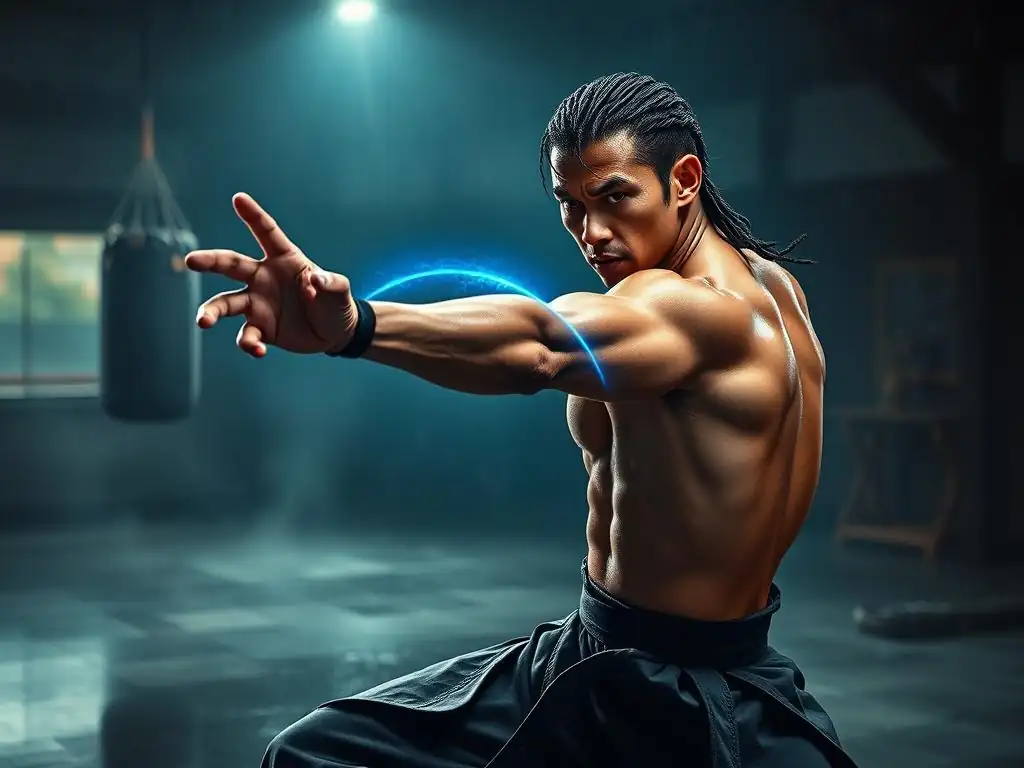
Welcome to Martial Arts Mastery, your gateway to unlocking the secrets of combat and self-discovery. Ever wondered how a smaller martial artist can overcome a larger opponent? Our exploration of force vector training techniques reveals the precise principles that turn leverage and angles into devastating power. Dive in and discover how mastering these concepts can revolutionize your training and self-defense capabilities, opening a new dimension of understanding in your martial arts journey.
- Introduction to Force Vectors in Martial Arts
- What is a Force Vector? A Biomechanical Breakdown
- The Importance of Force Vector Training Techniques for Martial Artists
- Force Vector Training Techniques: Practical Application
- Applying Force Vector Principles to Different Martial Arts Styles
- Drills and Exercises for Developing Force Vector Awareness
- Advanced Concepts in Force Vector Application
- Conclusion: Mastering Force Vectors for Martial Arts Excellence
-
Frequently Asked Questions
- What exactly are force vectors in the context of martial arts?
- How can understanding force vectors improve my martial arts training?
- What are some practical examples of applying force vector principles in self-defense?
- Does the concept of force vectors apply to all martial arts disciplines?
- Where can I learn more about specific force vector training techniques for different martial arts?
- Final Reflection: Harnessing the Power of Direction
- Harness Your Inner Strength: Master the Vector!
Introduction to Force Vectors in Martial Arts
The Role of Force Vectors in Striking Power
In martial arts, generating maximum power in strikes is often discussed in terms of speed, mass, and technique. However, a deeper biomechanical understanding reveals the crucial role of force vectors. A force vector is essentially a physical quantity that has both magnitude (how much force) and direction (where the force is applied). In striking, it's not just about generating a large amount of force, but about directing that force precisely towards the target to achieve maximum impact and penetration. Understanding force vectors allows practitioners to analyze their movements, identify inefficiencies, and optimize their technique to channel energy effectively.
Optimizing force vectors can mean the difference between a glancing blow and a devastating strike. For instance, a straight punch (like in boxing or Karate) aims to deliver force along a linear path directly through the target. Any deviation in this path, such as the fist veering upwards or downwards upon impact, represents force being directed away from the intended target, reducing the effective power delivered.
By focusing on force vector alignment during training, martial artists can ensure that the accumulated force from their entire body – originating from the ground, traveling through the legs, hips, core, and shoulder – is channeled into a single, powerful, and precisely directed vector at the point of impact. This principle is fundamental to generating true knockout power.
Martial Arts Mastery: Precision and Power Generation
Achieving mastery in martial arts involves the intricate balance of precision and power. While raw strength contributes to the potential magnitude of force, it is the precise application and direction of that force – guided by an understanding of force vectors – that unlocks true effectiveness. Many traditional techniques, developed over centuries, inherently leverage principles of force vectors, even if the terminology wasn't explicitly used. For example, the coiling and uncoiling motion in many martial arts stances and strikes is designed to align multiple forces (from rotation, extension, and body weight) into a single, powerful vector.
Modern martial arts training benefits significantly from a biomechanical perspective, including the study of force vectors. Incorporating force vector training techniques allows practitioners to move beyond simply mimicking movements to understanding the underlying physics. This knowledge empowers them to refine their techniques, adapt them to different situations, and even diagnose and correct flaws in their own or their students' execution. It transforms training from rote memorization into an intelligent exploration of movement efficiency and power generation. Mastery, in this context, is the ability to consciously control and direct the forces generated by the body with pinpoint accuracy.
What is a Force Vector? A Biomechanical Breakdown
Defining Force Vectors: Magnitude and Direction
A force vector is a fundamental concept in physics, representing a force's influence on an object. Crucially, it comprises two essential components: magnitude and direction. Magnitude refers to the amount or strength of the force, often measured in units like Newtons or pounds. Direction indicates the line along which the force acts and the way it is pointing. In the context of a martial arts strike, the magnitude would be the total force generated by the body's kinetic chain, and the direction would be the specific angle and path the strike follows towards the target.
Consider a simple straight punch. The magnitude of the force depends on factors like the mass of the striking limb and body, and the acceleration applied. The direction is ideally a straight line originating from the shoulder (or even further back, leveraging hip rotation) and extending directly through the target.
If the punch lands, the force vector describes how much total force was delivered and the exact angle at which it impacted the target. Understanding both aspects is vital; a high-magnitude force applied at an incorrect angle might glance off or push the target, whereas the same magnitude force applied precisely along the target's weak axis can cause significant disruption.
Understanding Vector Components: Horizontal and Vertical Forces
Any force vector acting at an angle can be broken down into its constituent components, typically horizontal and vertical forces relative to a reference plane (like the ground or the target surface). This decomposition is incredibly useful in analyzing complex martial arts movements. For example, a diagonal kick might have both a significant horizontal component (pushing the opponent backward or sideways) and a vertical component (lifting or driving through the target). Similarly, a downward elbow strike has a strong vertical component and potentially a smaller horizontal one depending on the angle.
Analyzing these components helps in understanding why a technique works or where its power is being misdirected. If a punch that should be linear has a large upward vertical component upon impact, it suggests issues with alignment, body mechanics, or targeting. By identifying the specific horizontal and vertical (or even lateral) components of a strike's force vector, martial artists can refine their movements to ensure the maximum possible force is directed along the desired axis. This principle is applied in force vector training techniques to isolate and improve specific aspects of a strike's delivery.
Force Vectors and Resultant Force: Optimizing Impact
When multiple forces act on an object (or are generated by the body simultaneously), their combined effect is described by a single resultant force vector. This resultant vector represents the total magnitude and direction of all the individual forces added together.
In martial arts striking, the power of a technique like a cross or a roundhouse kick is not just from a single muscle group but is the result of summing up forces generated by the legs pushing off the ground (ground reaction force), the rotation of the hips and torso, the extension of the arm or leg, and even the mass of the body moving forward.
Optimizing impact means aligning these multiple individual force vectors so that their resultant vector is maximized and directed precisely at the target. This requires coordination, timing, and efficient body mechanics. For example, in a powerful Karate front kick, the resultant force vector is primarily horizontal, achieved by combining the upward drive of the leg, the forward hip thrust, and the extension of the foot.
If the body leans back too much, a significant portion of the force vector might be directed upwards instead of forward, reducing the effective impact force delivered horizontally. Understanding how different body movements contribute to the resultant force vector is a key aspect of developing effective force vector training techniques.
The Importance of Force Vector Training Techniques for Martial Artists
Maximizing Striking Efficiency with Force Vector Control
Implementing force vector training techniques is paramount for martial artists seeking to maximize striking efficiency. Efficiency in this context means delivering the greatest possible force with the least wasted energy. When a strike's force vector is not properly aligned with the target, a significant portion of the energy generated by the body is dissipated or directed away from the intended point of impact.
This not only reduces the strike's power but also consumes unnecessary energy, leading to fatigue. By consciously training to control the direction of force, practitioners can ensure that almost all the energy they generate contributes directly to the desired effect on the target.
Consider the difference between a push and a punch. A push applies force to the target, often causing it to move. A punch aims to apply force through the target, causing damage or disruption. This difference lies largely in the force vector.
A push might have a broad or slightly misaligned vector relative to the target's center of mass, while a precise punch focuses the force vector into a small area and along a specific line of penetration. Training techniques that emphasize hitting through the target, focusing on the point behind the target, help martial artists intuitively align their force vectors for maximum efficiency and impact. This type of force vector training techniques refines biomechanics for optimal power delivery.
Enhancing Stability and Balance Through Vector Awareness
An often overlooked benefit of understanding force vectors is the enhancement of stability and balance. Every force applied by the body, whether in striking, blocking, or movement, has a corresponding reaction force. According to Newton's third law, for every action, there is an equal and opposite reaction. When a martial artist delivers a strike, they are also applying force against the ground (ground reaction force) and generating internal forces within their body. The direction and magnitude of these forces significantly impact their balance.
By becoming aware of the force vectors they are generating, martial artists can better manage these reaction forces. For instance, a powerful kick generates a large force vector directed outwards; if the practitioner doesn't simultaneously manage the reaction force pulling them off balance, they will lose stability.
Proper stance, core engagement, and weight distribution are all methods of controlling the body's center of gravity and managing these reaction forces to maintain balance. Force vector training techniques can include drills that specifically challenge balance during power generation, forcing the practitioner to consciously direct forces in a way that maintains a stable base while simultaneously maximizing the force vector towards the target.
Preventing Injury by Understanding Force Distribution
Understanding force vectors is not just about maximizing power; it's also critical for injury prevention. When forces are misaligned or improperly distributed through the body during a strike or defensive movement, excessive stress can be placed on joints, ligaments, and muscles. For example, if a roundhouse kick's force vector is not properly channeled through the hip and supporting leg but instead twists the knee joint at impact, it can lead to serious injury. Similarly, absorbing a block incorrectly can send damaging force vectors through the wrist or elbow.
By analyzing the force vectors involved in techniques, practitioners can identify potential points of stress and modify their mechanics to distribute forces safely. This involves ensuring proper joint alignment, engaging the correct muscle groups at the right time, and understanding how to absorb or redirect incoming force vectors without overloading specific body parts.
Incorporating force vector training techniques that focus on safe execution and force absorption, such as controlled impact drills and proper falling techniques, is essential for a long and healthy martial arts journey. This biomechanical knowledge helps ensure that the power generated is delivered effectively while the body remains resilient.
Force Vector Training Techniques: Practical Application
Technique 1: Angle of Attack and Impact Point Optimization
Optimizing the angle of attack and the specific impact point on the target is a primary force vector training technique. This involves consciously directing the strike along a path that allows for maximum penetration or disruption of the target's structure or balance. For example, a punch aimed slightly downwards through the chin or upwards under the ribcage can be significantly more effective than a punch aimed directly at the surface of the chest, because the target's structure offers less resistance along that specific vector.
Adjusting Stance for Optimal Force Vector Alignment
The foundation of effective force vector delivery begins with the stance. The stance provides the base from which force is generated and the structure through which it is transmitted. Adjusting the stance involves positioning the feet, hips, and torso to allow for the most efficient channeling of force towards the target.
For a linear strike like a front kick or a straight punch, a bladed or forward-facing stance allows for a more direct application of force along a straight line. For a rotational strike like a roundhouse kick or a hook, a more open stance might be necessary to facilitate hip rotation and the generation of angular momentum, which then translates into a powerful linear or curved force vector upon impact. Force vector training techniques often involve drills focusing solely on transitioning between stances and aligning the body's center of mass and intended striking line.
Modifying Striking Angles to Maximize Impact Force
Beyond the stance, modifying the actual angle of the striking limb relative to the target is crucial. This is about finding the vector that exploits the target's vulnerability. For example, a downward hammer fist strike might be angled to impact the collarbone at a specific point that leverages the bone's fragility, rather than just hitting the shoulder meat.
Similarly, a side kick might be angled slightly upwards or downwards to target the knee or hip joint with maximum force directed along the joint's plane of weakness. This requires not just physical technique but also strategic understanding of anatomy and biomechanics. Force vector training techniques in this area involve repetitive practice on various types of targets (pads, bags, sometimes even anatomical dummies) from different angles, consciously analyzing the 'feel' of the impact and the target's reaction to understand which angles deliver the most effective force vector.
Angle Change Drill: 45-Degree Step and Punch
A practical drill for improving angle of attack optimization is the 45-Degree Step and Punch. This drill involves starting in a basic fighting stance.
The practitioner then takes a small, sharp step forward and 45 degrees off-center (either left or right) while simultaneously delivering a punch (e.g., a cross if stepping to the left, or a lead hook if stepping to the right). The focus is not just on speed but on ensuring that as the foot lands, the body weight is transferring, the hips are rotating, and the punch is extending, with the resultant force vector of the strike directed precisely along the new line of attack towards an imaginary target.
This drill can be performed with a partner holding a pad positioned to receive the strike at the correct angle, providing immediate feedback on the alignment of the force vector. Practicing this from multiple angles helps develop the ability to rapidly adjust the body and strike vector based on opponent movement.
Technique 2: Vector Addition for Enhanced Power
Vector addition is the principle of combining multiple individual force vectors generated by different parts of the body into a single, larger resultant vector. This is the core concept behind the kinetic chain in martial arts – linking sequential movements (from ground to extremity) to sum up their forces. Effective vector addition can dramatically increase the magnitude of the final force vector delivered in a strike.
Combining Body Weight and Momentum for Greater Force
One of the most fundamental applications of vector addition is combining body weight and momentum. When a martial artist moves forward or rotates into a strike, they are adding the vector of their body's mass multiplied by its velocity (momentum) to the force generated by the striking limb itself. For example, a stepping punch adds the forward momentum vector of the entire body to the punch's force vector.
A spinning backfist combines the momentum of a full body rotation with the force generated by the arm extension. The goal of force vector training techniques focused on vector addition is to synchronize these movements so that the peak force from each component occurs simultaneously and is directed along the same line, maximizing the resultant force vector at impact. This often involves timing drills and practicing linking movements smoothly.
Utilizing Ground Reaction Force to Amplify Strikes
The ground reaction force (GRF) is a critical component in generating powerful strikes. When a martial artist pushes off the ground, the ground pushes back with an equal and opposite force vector. By strategically directing this GRF upwards and/or forwards, practitioners can add a significant vertical and horizontal component to their overall power generation.
For instance, the powerful upward drive of the legs in a boxing cross or the push off the rear leg in a Muay Thai roundhouse kick are examples of leveraging GRF. The force vector from the ground travels up through the legs, hips, and core, contributing to the final strike's power. Effective force vector training techniques in this area involve plyometric exercises, squat and lunge variations, and drills that emphasize pushing through the floor during striking movements.
Hip Rotation and Core Engagement Drill: Medicine Ball Throws
A classic drill to enhance vector addition through hip rotation and core engagement is throwing a medicine ball. Standing sideways to a wall or partner, the practitioner holds a medicine ball at their chest or hip. They then powerfully rotate their hips and torso, transferring weight from the back leg to the front leg, and throw the ball forward using the rotational force.
The goal is to generate power primarily from the core and hips, feeling how this rotational force vector translates through the body and into the thrown object. Variations include overhead throws, rotational throws, and throws that mimic specific strike mechanics (like a hook or a roundhouse kick). This drill helps practitioners understand how to efficiently link the power generated by the lower body and core and add it to the force vector of the upper body or limb, a key element of force vector training techniques.
Technique 3: Vector Decomposition for Targeted Strikes
Vector decomposition is the process of breaking down a complex movement or force into simpler components. While vector addition builds power, vector decomposition helps in understanding how that power is generated and how to apply it for precision and targeted strikes. It allows practitioners to analyze which parts of a movement contribute to the desired force vector and which might be creating wasted energy or misdirection.
Breaking Down Complex Movements into Vector Components
Many martial arts techniques, especially throws, joint locks, or complex striking combinations, involve multiple forces acting simultaneously or in rapid sequence. By mentally (or physically, using biomechanical analysis) breaking down the force vectors involved in each micro-movement – e.g., the rotational force of the hip, the linear force of the arm extension, the vertical force of shifting weight – practitioners can understand how they combine to create the overall effect. This allows for refinement of individual components.
If a technique isn't working, analyzing its decomposed vectors can reveal that, for example, the hip rotation vector isn't properly timed with the arm extension vector, resulting in a weak resultant force vector. Force vector training techniques using this principle might involve slow-motion practice or breaking down a technique into isolated parts before combining them.
Focusing on Specific Muscle Activation for Targeted Force
Understanding vector decomposition also helps in focusing on activating specific muscle groups to contribute precise force vectors. For instance, delivering a whip-like jab requires rapid extension powered by the triceps and shoulder, but the direction and snap are controlled by smaller stabilizing muscles and the precise timing of their contraction and relaxation. A targeted strike to a specific pressure point or nerve cluster requires generating just enough force, but with extreme precision along a particular vector.
Vector decomposition helps in identifying which muscles are primarily responsible for generating the desired force vector and which are needed for stability or fine-tuning the direction. Training can then focus on isolating and strengthening these specific muscle activations, a key aspect of advanced force vector training techniques.
Precision Targeting Drill: Focus Mitt Jab Cross
The focus mitt jab-cross drill is excellent for practicing vector decomposition for targeted strikes. Instead of just hitting the mitts hard, the focus is on hitting a specific spot on the mitt, with the force vector directed through that spot. The mitt holder can provide feedback on whether the impact felt 'solid' and 'penetrating' (indicating good vector alignment) or 'slapping' or 'glancing' (indicating poor alignment).
The drill can be varied by having the mitt holder move slightly, forcing the practitioner to make micro-adjustments to their footwork, body angle, and strike vector on the fly. This trains the ability to break down the overall movement and ensure the final force vector is precisely targeted, even under dynamic conditions. This is a fundamental force vector training technique for developing accuracy alongside power.
Applying Force Vector Principles to Different Martial Arts Styles
Force Vectors in Karate: Linear Power and Precision
Karate, particularly traditional styles, often emphasizes linear movements and striking. Techniques like the oi-zuki (lunge punch) or mae-geri (front kick) are designed to deliver a force vector that is as straight and direct as possible from the practitioner to the target. Power is generated through rapid hip rotation, forward body movement, and the snap of the technique, all aimed at channeling force along this single, focused vector. The principle of kime (focus of energy) in Karate is essentially about achieving maximum resultant force vector at the precise moment of impact.
Training in Karate often involves repetitive practice of basic techniques (kihon) with a strong focus on proper form and alignment. This form training is, in essence, a method of refining the body's ability to generate and direct linear force vectors efficiently. For example, the retraction of the non-striking arm ( hikite) is thought by some theories to contribute to the forward momentum and rotational snap, adding another vector component to the punch's overall force. While devastating, the reliance on linear vectors can sometimes make these techniques predictable against highly mobile opponents, highlighting the style's specific application of force principles.
Force Vectors in Muay Thai: Angular Momentum and Clinch Work
Muay Thai, the "Art of Eight Limbs," utilizes a wider variety of force vectors compared to more linear styles. While straight punches and kicks exist, there is a heavy emphasis on rotational power (roundhouse kicks, hooks) and downward/upward forces (elbows, knees, clinch techniques). The signature Muay Thai roundhouse kick generates immense power through angular momentum derived from a powerful hip pivot and rotation, translating into a curved force vector upon impact.
In the clinch, force vectors become incredibly complex. Practitioners apply pushing, pulling, twisting, and downward forces simultaneously to control, unbalance, and strike the opponent. Techniques like the knee strike leverage upward force vectors combined with downward pulling force on the opponent's neck.
The ability to manipulate an opponent's balance relies entirely on understanding and applying force vectors – pushing against their center of gravity, pulling limbs to create leverage, and directing force vectors to disrupt their base. Muay Thai's force vector training techniques often involve heavy bag work for developing rotational power and extensive clinch sparring for mastering the application of multi-directional forces.
Force Vectors in Wing Chun: Centerline Theory and Efficient Movement
Wing Chun Kung Fu places a strong emphasis on the centerline principle and efficient, direct movements. Force application is often linear and short-range, focusing on simultaneously attacking and defending along the most direct path to the opponent's center. While appearing subtle, Wing Chun techniques like the chain punch or pak sao (slapping hand) leverage force vectors for rapid, repetitive impact and control.
The power in Wing Chun often comes from structure and relaxation rather than large, winding movements. Force vectors are generated by shifting weight, rotating the hips minimally, and using the body's structure to transmit force directly.
The concept of "sticking" to the opponent allows the Wing Chun practitioner to feel the direction and magnitude of the opponent's force vectors and redirect them using minimal effort, often by applying a counter-force vector that disrupts the opponent's balance or structure. Force vector training techniques in Wing Chun focus on sensitivity drills (like Chi Sao) and practicing techniques from close range, emphasizing economy of motion and direct force application along the centerline.
Drills and Exercises for Developing Force Vector Awareness
Shadow Boxing with Vector Focus
Shadow boxing is a fundamental martial arts drill, and it can be significantly enhanced by focusing on force vectors. Instead of just going through motions, the practitioner visualizes a target and consciously focuses on the intended force vector for each technique. For a jab, they might imagine the vector extending far beyond the imaginary target. For a hook, they visualize the curved path and the precise point of impact.
This drill helps develop proprioception – the body's awareness of its position and movement in space – in relation to force application. Practitioners can experiment with slight adjustments in body mechanics, feeling how they alter the direction and perceived power of the imaginary strike. They can also practice transitioning between different types of force vectors, such as shifting from a linear punch vector to a rotational kick vector. Incorporating slow-motion segments allows for detailed analysis of body alignment and force transmission. This type of force vector training techniques builds muscle memory for efficient power delivery.
Pad Work and Target Training for Vector Precision
Working with focus mitts, Thai pads, or other targets is invaluable for receiving tactile feedback on force vector application. A good pad holder can provide immediate feedback on whether a strike landed with a 'dead' feel (indicating force was absorbed or misdirected) or with a 'live' snap or penetration (indicating the force vector was aligned and focused).
Drills can be designed specifically to test vector precision. For example, hitting a very small target area on a pad, or hitting a pad held at an awkward angle, forces the practitioner to adjust their body mechanics to deliver a precise force vector. Using different types of pads or targets (soft pads, hard shields, body protectors) can also highlight how force vectors interact with different densities and resistances. This hands-on application is crucial for validating the theoretical understanding gained from other force vector training techniques.
Resistance Training for Force Vector Enhancement
Resistance training, when applied intelligently, can directly enhance the body's ability to generate and control force vectors. Exercises should mimic the specific movements and force applications used in martial arts techniques. For example, cable machine punches or kicks allow for resistance throughout the entire range of motion, helping to build strength specifically along the desired force vector path. Rotational exercises using medicine balls or resistance bands improve the ability to generate and control the rotational force vectors crucial for hooks, crosses, and roundhouse kicks.
- Task List for Resistance Training Focus:
- Incorporate exercises that mimic specific strike mechanics (e.g., cable punches, banded kicks).
- Perform rotational exercises (medicine ball twists, banded rotations) to enhance core vector generation.
- Use exercises like weighted step-ups or box jumps to improve ground reaction force utilization.
- Focus on controlled movements through the full range of motion, emphasizing the direction of force application.
- Include exercises that build stabilizing muscles crucial for maintaining balance during force generation.
By strengthening the muscles responsible for generating specific force components and the stabilizers that control the body during power transmission, resistance training directly supports the development of effective force vector training techniques.
Advanced Concepts in Force Vector Application
Manipulating Opponent's Force Vectors: Unbalancing Techniques
Advanced martial artists not only control their own force vectors but also learn to manipulate those of their opponent. This is the essence of unbalancing techniques, throws, and joint manipulations. By applying a force vector against an opponent's structure or center of gravity at a specific angle and direction, the practitioner can disrupt their base and make them vulnerable.
For instance, a simple push can be ineffective if applied directly against an opponent's stable stance. However, applying that same force vector slightly off their center of gravity, or combining it with a pull or twist that creates multiple, conflicting force vectors on their body, can easily cause them to lose balance.
Judo throws are prime examples of manipulating an opponent's force vectors; the thrower uses their own movement and applied forces to guide the opponent's center of gravity outside their base of support. Understanding how to recognize and counter an opponent's incoming force vector is also crucial – parrying, redirecting, or absorbing force all involve interacting with the opponent's vector.
Adapting Force Vector Strategies to Different Body Types and Fighting Styles
The optimal force vector application can vary depending on the practitioner's own body type and the opponent's. A taller practitioner with longer limbs might generate powerful force vectors through leverage and reach, while a shorter, stockier individual might excel at generating force vectors through density, lower center of gravity, and explosive close-range power. Similarly, facing an opponent who relies on linear force vectors (like a Karateka) requires different defensive and offensive vector strategies than facing someone who uses more rotational or grappling vectors (like a Judoka or Muay Thai fighter).
Experienced martial artists learn to adapt their force vector strategies on the fly. This might involve changing the angle of their strikes, adjusting their distance, or modifying how they absorb or redirect incoming forces based on the opponent's physical attributes and fighting style. This adaptive application of force vector principles is a hallmark of advanced combat skill. It's not just about executing techniques perfectly, but about applying the right force, in the right direction, at the right time, against a specific opponent.
Countering and Redirecting Force Drill: Parrying and Counter-Striking
A practical drill for mastering the manipulation of incoming force vectors is the parrying and counter-striking drill. A partner delivers strikes (punches, kicks) with moderate but realistic force. The practitioner focuses on meeting the incoming force vector with a small, precise counter-force vector (the parry or block) that redirects the opponent's force harmlessly or off-line. Immediately after redirecting the force, the practitioner launches a counter-strike, applying their own offensive force vector along the most advantageous line of attack created by the opponent's now-disrupted position.
This drill emphasizes sensitivity, timing, and efficient use of minimal force to control a larger incoming force. It teaches the practitioner to 'feel' the opponent's vector and respond with a calculated counter-vector. Practicing this against different types of strikes (linear jabs, looping hooks, straight kicks) helps develop the ability to adapt the redirecting force vector accordingly. This is a sophisticated force vector training technique that moves beyond simply generating power to intelligently managing the forces present in a dynamic exchange.
Conclusion: Mastering Force Vectors for Martial Arts Excellence
Integrating Force Vector Principles into Your Training Regimen
Understanding force vectors provides a powerful framework for analyzing and improving martial arts techniques. It moves beyond simply learning movements to grasping the underlying physics of power generation and application. By consciously integrating force vector principles into your training regimen, you can unlock new levels of efficiency, power, and precision.
This integration involves several steps:
- Analyzing existing techniques through a force vector lens:Where is the force coming from? Where is it going? Is it going where you want it to go?
- Modifying traditional drills to emphasize vector awareness: Shadow boxing with focus, pad work with precision targets.
- Incorporating specific force vector training techniques: Angle adjustment drills, vector addition exercises like medicine ball throws, and decomposition drills focusing on targeted impact.
- Using resistance training to build strength along specific force vector paths.
- Practicing drills that involve interacting with and manipulating an opponent's force vectors (e.g., parrying, unbalancing).
This approach transforms training from mere repetition into an ongoing process of biomechanical refinement, leading to more effective and safer techniques.
The Continuous Pursuit of Precision and Power in Martial Arts
The journey of martial arts mastery is a continuous pursuit of both precision and power. These two elements are not separate but are intrinsically linked through the concept of force vectors. Maximum power is achieved when force is applied with maximum precision – directed along the optimal vector. Conversely, precision in targeting allows even moderate force to have significant impact.
By dedicating time to understanding and applying force vector training techniques, martial artists can systematically work towards perfecting this critical relationship. It's an analytical approach that complements the physical and philosophical aspects of training, providing a scientific basis for optimizing performance. This biomechanical knowledge empowers practitioners to refine their skills throughout their martial arts careers, always seeking to improve how they generate, direct, and manage force.
Further Resources for Force Vector Study in Biomechanics
For those wishing to delve deeper into the science behind force vectors in human movement and martial arts, exploring resources in biomechanics and sports science is highly recommended. Academic texts on biomechanics, particularly those focused on human kinetics and dynamics, provide detailed explanations of force generation, vector analysis, and kinetic chain principles. Online courses and lectures on sports biomechanics often feature examples directly applicable to athletic movements like striking, throwing, and jumping.
While specific martial arts applications might require some translation, the fundamental principles of force vectors remain consistent across different physical activities. Consulting with qualified strength and conditioning coaches or physical therapists who have a background in sports science can also provide valuable insights into applying these principles to enhance martial arts performance and prevent injury through targeted force vector training techniques.
Frequently Asked Questions
What exactly are force vectors in the context of martial arts?
Force vectors, in martial arts, represent the direction and magnitude of force applied during a technique. Understanding them is crucial for maximizing power and efficiency in strikes and movements. They are essential for directing your power.
How can understanding force vectors improve my martial arts training?
By understanding force vectors, you can optimize your body mechanics to generate more power. This leads to more effective strikes, improved balance, and a deeper understanding of leverage in techniques.
What are some practical examples of applying force vector principles in self-defense?
In self-defense, utilizing force vectors means angling your strikes to exploit an opponent's weakness, redirecting their force, or using their momentum against them. This allows for greater control and effectiveness, even against a larger opponent.
Does the concept of force vectors apply to all martial arts disciplines?
While specific techniques differ, the underlying principle of force vectors applies universally across all martial arts. Understanding how to efficiently transfer and direct force is fundamental to any effective martial art.
Where can I learn more about specific force vector training techniques for different martial arts?
MartialArtsMastery.org offers in-depth articles, videos, and guides detailing force vector training techniques for various disciplines. Check the training tips and practical self-defense strategies sections for detailed content.
Final Reflection: Harnessing the Power of Direction
The principles of force vectors, meticulously explored throughout this article, are not merely theoretical concepts confined to physics textbooks; they are fundamental blueprints for optimizing effort and achieving tangible results in every facet of life. Understanding how to direct force with precision, as we've seen in the context of training, translates directly into maximizing efficiency and minimizing wasted energy, whether in athletic performance or everyday tasks.
The impact of understanding force vectors extends far beyond the gym. It's about cultivating a mindful approach to action, recognizing that direction is often more crucial than brute strength. This awareness fosters a sense of empowerment, allowing us to strategically navigate challenges and achieve our goals with greater ease and effectiveness. Give me a lever long enough and a fulcrum on which to place it, and I shall move the world.
- Archimedes. This quote encapsulates the essence of force vectors: leveraging knowledge and technique to amplify our impact.
Now, consider how you can apply these principles in your own life. Where are you expending energy without achieving the desired outcome? How can you refine your approach, redirect your efforts, and harness the power of direction to move closer to your aspirations? Embrace the mindset of a force vector master, and unlock your potential to achieve remarkable feats with precision and purpose.
Harness Your Inner Strength: Master the Vector!
Thank you for diving into the world of force vectors! You've now unlocked a deeper understanding of how to maximize power and precision in your movements. Ready to put this knowledge into action?
- Immediately apply your knowledge by visualizing and adjusting the force vectors in your next sparring session. Focus on aligning your body for maximum impact.
- Explore different martial arts styles to see how they utilize force vectors in unique and effective ways. Visit martialartsmastery.org to discover new techniques.
- Share this article with your training partners and start a discussion about how you can collectively improve your understanding and application of force vectors.
What small adjustment will you make today to your stance or technique to better direct your force?