
The Kinetic Chain Unleashed: Sequencing Your Body for Explosive Strikes

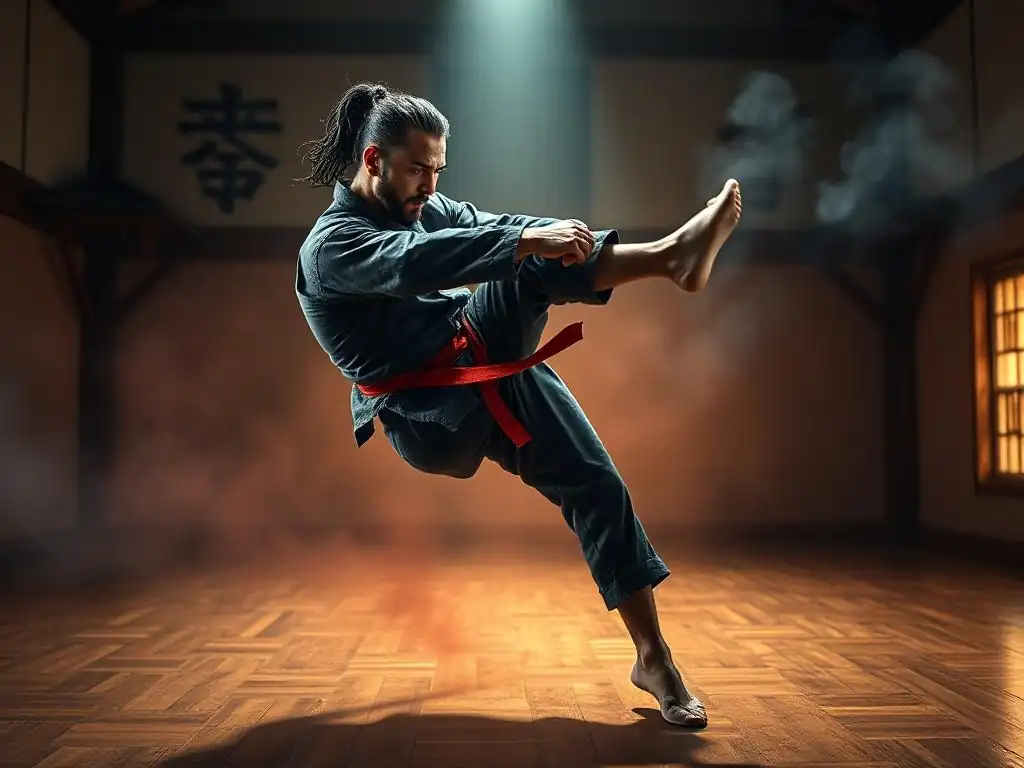
Welcome to Martial Arts Mastery, where tradition meets cutting-edge technique. Ever wondered how a seemingly smaller martial artist can generate devastating power? Prepare to unlock the secrets behind explosive strike body sequencing. This isn't just about raw strength; it's about harnessing the kinetic chain for maximum impact. Intrigued? Dive in and discover how to revolutionize your striking power!
- The Foundation: Ground Reaction Force and Stability
-
Frequently Asked Questions
- What is "body sequencing" in the context of explosive strikes?
- Why is body sequencing important for martial arts strikes?
- How does the kinetic chain relate to explosive strikes?
- What are some common mistakes that hinder effective body sequencing?
- How can I improve my body sequencing for more explosive strikes?
- Final Reflection: Harnessing the Power Within
- Ignite Your Power: Transform Your Strikes Today!
The Foundation: Ground Reaction Force and Stability
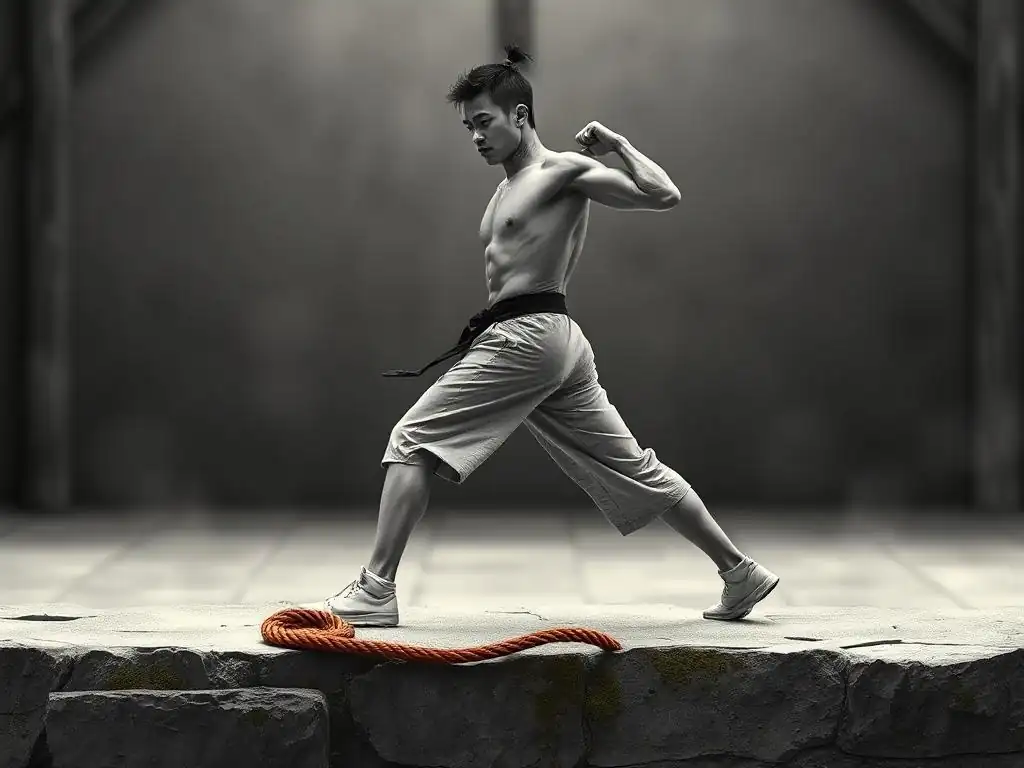
The journey of generating an explosive strike doesn't begin with the fist or foot, but with the connection to the earth itself. Understanding and effectively utilizing ground reaction force is the cornerstone of powerful and efficient body sequencing in martial arts. This fundamental interaction provides the initial impulse that propagates upward through the body, culminating in devastating impact. Without a stable base and the ability to channel this foundational energy, even the most refined upper body techniques will lack significant power.
Harnessing Ground Reaction Force for Enhanced Strikes
Ground reaction force (GRF) is the force exerted by the ground on a body in contact with it. According to Newton's third law, for every action, there is an equal and opposite reaction. When a martial artist pushes against the ground during a stance change, pivot, or weight shift, the ground pushes back with an equal force.
This force is the initial energy source that drives powerful movements like punches and kicks. Consider a boxer pivoting for a cross; they are actively pushing into the ground with their rear foot, and the resulting GRF is what helps drive the hip rotation and subsequent power generation.
Effectively harnessing GRF is crucial for optimizing explosive strike body sequencing. It's not just about standing firmly; it's about dynamically interacting with the ground. Studies in sports biomechanics show that vertical GRF during powerful leg movements like jumping can exceed body weight by several times.
While striking involves horizontal and rotational forces as well, the principle is the same: pushing into the ground generates the force that travels up the kinetic chain. Training exercises focused on lower body strength and explosiveness, such as squats and calf raises, directly enhance the ability to generate higher GRF, providing a stronger foundation for powerful strikes. A martial artist who can maximize this initial push has a significant advantage in generating maximum power.
Core Engagement: The Anchor for Powerful Sequencing
The core muscles (abdominals, obliques, lower back, and hips) serve as the crucial link and stabilizer between the lower body's generated force and the upper body's execution of the strike. They act as a rigid anchor, preventing energy leaks that would occur if the torso were unstable or weak.
When the lower body generates GRF and initiates momentum, a strong, engaged core efficiently transfers this force upward. Think of the core as the central hub of the kinetic chain; it receives the energy from below, stabilizes the body during rotation, and allows the energy to flow unimpeded to the shoulders, arms, and hands.
Proper core engagement is not just about having strong abs; it's about coordinated activation. During an explosive strike body sequencing, the core muscles contract synergistically to stabilize the spine and pelvis while simultaneously facilitating rotation. For instance, in a karate forward stance punch ( oi-zuki), the core stabilizes the torso while the hips rotate, allowing the force from the pushing back leg to transfer effectively through the body. A weak or disengaged core can lead to significant power loss, as the force generated by the lower body dissipates before reaching the target. Training methods like planks, Russian twists, and medicine ball throws are vital for building the strength and stability necessary for efficient power transfer in explosive strike body sequencing.
Lower Body Mechanics: Generating Initial Momentum
The lower body – the legs and hips – is responsible for initiating the primary momentum and contributing significantly to the power of an explosive strike. This involves precise coordination of pushing, pivoting, and weight transfer.
The initial drive comes from pushing off the ground, as discussed with GRF, but the mechanics of the joints (ankles, knees, hips) dictate how efficiently this force is translated into motion. For example, in a Muay Thai roundhouse kick, the supporting leg pivots dynamically, while the kicking leg generates force through hip flexion and knee extension, all powered by the initial push from the ground.
Effective lower body mechanics ensure that the energy generated from the ground is directed correctly and efficiently into the subsequent body segments. This involves proper stance width, weight distribution, and timely joint actions. A common error in explosive strike body sequencing is failing to fully utilize the hips and legs, relying too much on upper body strength.
Research suggests that the lower body and core can contribute up to 50% or more of the total force in a powerful punch or kick. Mastering lower body mechanics through drills focusing on footwork, pivots, lunges, and stance transitions is therefore paramount for building the foundational power necessary for truly explosive strikes.
Frequently Asked Questions
What is "body sequencing" in the context of explosive strikes?
Body sequencing refers to the coordinated and sequential activation of different muscle groups in your body to generate maximum power. This process starts from the ground up and transfers energy efficiently through the kinetic chain.
Why is body sequencing important for martial arts strikes?
Proper body sequencing is crucial because it allows you to harness the power of your entire body, not just your arms, in a strike. This leads to significantly increased power and reduced risk of injury.
How does the kinetic chain relate to explosive strikes?
The kinetic chain is the system of interconnected joints and muscles that work together to produce movement. Explosive strikes rely on the kinetic chain to transfer energy efficiently from the legs, through the core, and finally to the striking limb.
What are some common mistakes that hinder effective body sequencing?
Common mistakes include leading with the arm, failing to engage the core, and neglecting the lower body. These errors can result in a loss of power and poor balance.
How can I improve my body sequencing for more explosive strikes?
Focus on drills that emphasize ground reaction force, core engagement, and proper weight transfer. Consistent practice and feedback from a qualified instructor are essential for improvement.
Final Reflection: Harnessing the Power Within
The exploration of the kinetic chain and its application to explosive strikes reveals that true power isn't just about brute strength, but rather the precise orchestration of movement. Understanding and implementing proper body sequencing is not merely a technique; it's a fundamental principle that unlocks untapped potential within each of us. This principle transcends the realm of martial arts and athletic performance, offering valuable insights into efficiency and power generation in all aspects of life.
The concept of the kinetic chain has profoundly influenced how we understand movement, shifting the focus from isolated muscle groups to interconnected systems. This article serves as a reminder that our bodies are intricate networks, and optimizing their function requires a holistic approach. The chain is no stronger than its weakest link.
This adage rings true in the context of the kinetic chain, highlighting the importance of addressing imbalances and weaknesses to maximize overall performance and prevent injury.
Now, consider how you can apply the principles of body sequencing to your own endeavors. Whether you're striving for athletic excellence, pursuing a creative passion, or simply seeking to move with greater ease and efficiency, remember that the key lies in understanding and harnessing the power within. Embrace the interconnectedness of your body, cultivate awareness of your movements, and unlock your own potential for explosive action.
Ignite Your Power: Transform Your Strikes Today!
Thank you for exploring the power of the kinetic chain! You've now unlocked the secrets to generating explosive force in your strikes. Ready to put this knowledge into action and experience the difference?
Here’s how to continue your journey:
- Practice the drill: Dedicate 15 minutes each day to mastering the kinetic chain drill outlined in the article, focusing on smooth sequencing and power generation. Feel the difference as you connect each body segment!
- Share your experience: Post a short video of yourself practicing the drill on social media using #MartialArtsMastery and tag us! Let's build a community of powerful movers.
- Explore related content: Visit MartialArtsMastery.org and delve into articles on flexibility, core strength, and advanced striking techniques to further optimize your performance.
Which element of the kinetic chain will you focus on perfecting first, and how do you plan to integrate it into your sparring or forms practice?