
Shaolin Hand Techniques: Fists, Palms, Claws, and Fingers of Fury

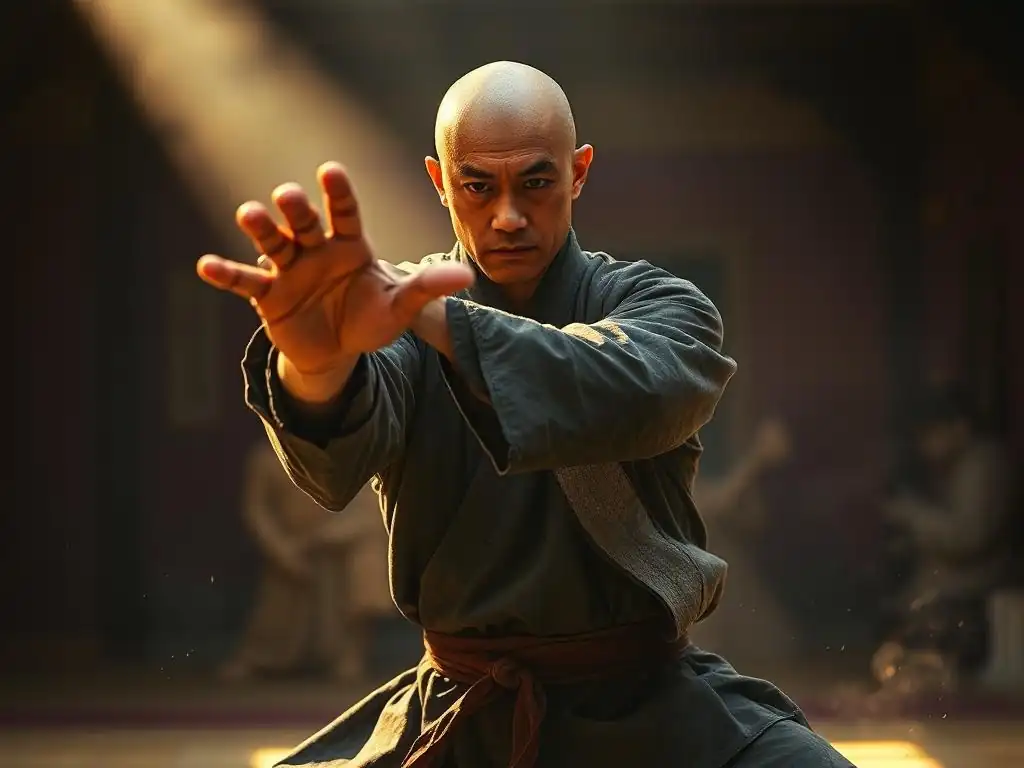
Welcome to Martial Arts Mastery, your gateway to the world's most captivating fighting arts!
Delve into the rich tapestry of martial traditions and discover the secrets behind legendary techniques. Ever wondered about the devastating power behind seemingly simple movements? In this article, we'll unlock the mysteries of Shaolin hand techniques training, exploring the fists, palms, claws, and fingers that have made Shaolin monks renowned warriors for centuries. Prepare to uncover the history, philosophy, and practical application of these potent skills. Are you ready to master the art?
- Introduction to Shaolin Hand Techniques Training
- Mastering Shaolin Fists: Power and Precision
- Shaolin Palm Techniques: Versatility and Control
- The Ferocious Shaolin Claw: Grappling and Striking
- Shaolin Finger Techniques: Precision Strikes and Pressure Points
- Advanced Shaolin Hand Forms and Combinations
- Shaolin Hand Technique Training: Drills and Exercises
- Common Mistakes in Shaolin Hand Technique Training and How to Avoid Them
- Conclusion: The Legacy of Shaolin Hand Techniques
-
Frequently Asked Questions
- What are the primary categories of Shaolin hand techniques?
- How does Shaolin hand technique training incorporate philosophical principles?
- What are some key benefits of practicing Shaolin hand techniques for self-defense?
- How does the historical context of Shaolin influence current training methodologies?
- What is the role of conditioning in mastering Shaolin hand techniques?
- Final Reflection: The Enduring Legacy of Shaolin Hand
- Unleash Your Inner Shaolin: Begin Your Transformation!
Introduction to Shaolin Hand Techniques Training
The Importance of Hand Techniques in Shaolin Kung Fu
In the vast system of Shaolin Kung Fu, while kicks and sweeps certainly play their part, the foundation of close-quarters combat and rapid-fire offense often rests squarely on the mastery of hand techniques. Unlike the long-range power of a kick, hand strikes offer speed, versatility, and precision for targeting vulnerable areas at close range.
Developing proficient Shaolin hand techniques training is paramount for any practitioner seeking to understand the core principles of Shaolin combat. The hands are not just tools for striking; they are also used for blocking, parrying, seizing, and controlling an opponent, making their comprehensive training essential for effective self-defense.
The emphasis on hand techniques is deeply rooted in the history and practical application of Shaolin Kung Fu. Historically, monks faced diverse threats, often in confined spaces, where powerful kicks might be less practical. Rapid, accurate hand strikes could quickly neutralize an opponent or create openings.
Furthermore, the intricate forms (套路 - Tàolù) that define much of Shaolin training are replete with complex sequences of hand movements, demanding meticulous attention to detail, power generation, and body mechanics. Therefore, dedicated Shaolin hand techniques training is not merely about learning to punch; it's about cultivating coordinated power, timing, and strategic application through the body's most immediate weapons.
Origins and Evolution of Shaolin Hand Forms
The origins of Shaolin hand forms are intertwined with the legendary history of the Shaolin Temple itself, situated on Mount Song in China's Henan province. While stories of Bodhidharma introducing physical training are debated, the development of structured martial arts within the temple walls over centuries is well-documented. Early forms likely evolved from practical self-defense needs, combining basic strikes, blocks, and movements observed from nature or refined through combat experience. Over time, these techniques were codified into specific sequences or "forms," designed not only for combat readiness but also for physical conditioning and moving meditation.
The evolution of Shaolin hand techniques and their forms was a continuous process, influenced by various masters, historical periods, and the integration of different martial principles. Forms like Xiao Hong Quan (Small Red Fist) and Da Hong Quan (Big Red Fist) are considered foundational, emphasizing basic stances and powerful fist techniques.
Later developments saw the incorporation of a wider array of hand strikes, including open-hand palms, grappling claws, and precise finger strikes, often inspired by animal movements or philosophical concepts. This rich history means that modern Shaolin hand techniques training draws from centuries of refinement, embodying a complex system of offense, defense, and internal development.
Mastering Shaolin Fists: Power and Precision
The Basic Shaolin Fist: Grip and Structure
The fundamental Shaolin fist is more than just clenching your fingers; it's a specific structure designed for maximum impact and minimal self-injury. To form it correctly, one must first curl the fingers tightly into the palm, ensuring the fingertips press firmly against the fleshy pad below the knuckles. The thumb then wraps around the outside of the index and middle fingers, securing the structure.
The wrist must be kept straight and locked in line with the forearm during impact, preventing bending which can lead to sprains or breaks. This precise grip and alignment are critical for effective Shaolin hand techniques training focused on striking power.
This seemingly simple structure is crucial because it aligns the bones of the hand and forearm into a solid column. When striking, the force is channeled directly through the metacarpals and carpals into the wrist and arm, distributing the impact safely. Without this tight structure and straight wrist, the force of a strike can cause the wrist to collapse or the smaller bones in the hand to fracture. Masters of Shaolin Kung Fu emphasize that building a strong, correctly formed fist is the very first step in Shaolin hand techniques training, laying the groundwork for powerful and sustainable striking.
Common Shaolin Fist Strikes: Jab, Cross, Uppercut
While the names might sound familiar from Western boxing, Shaolin Kung Fu incorporates similar principles with distinct body mechanics. The "Jab" (often a straight punch from the lead hand) in Shaolin emphasizes speed and penetration, often extending from a stable stance like the Bow Stance (弓步 - Gōngbù). The power comes from the rapid extension of the arm coupled with hip rotation. Shaolin hand techniques training includes countless repetitions of the straight punch to develop speed, accuracy, and the ability to strike quickly and retract.
The "Cross" (a powerful straight punch from the rear hand) utilizes significant torque generated from the rotation of the hips and torso, transferring body weight into the strike. It's a power punch, often used to follow up a jab or break through an opponent's guard. The "Uppercut" (an upward punch targeting the chin or solar plexus) uses power generated from the legs driving upwards and the torso rotation. In Shaolin, these strikes are integrated into complex sequences, often combined with footwork and defensive movements, highlighting the comprehensive nature of Shaolin hand techniques training beyond isolated strikes.
Training Drills for Developing Shaolin Fist Power
Developing true power in Shaolin fist techniques requires rigorous and consistent training. One classic drill involves striking sandbags of varying densities. Beginners start with softer bags filled with sand or beans, focusing on proper form and alignment. As strength and conditioning improve, they progress to harder bags filled with gravel or even iron shot. This gradual process, often involving hundreds or even thousands of strikes daily, conditions the bones, tendons, and muscles of the hand and wrist, a core component of Shaolin hand techniques training.
Another traditional method is striking the Makiwara, a padded post designed to build impact tolerance and root power. The practitioner strikes the Makiwara repeatedly, focusing on channeling energy from the ground up through the stance, hips, and into the fist. This drill not only strengthens the striking surface but also teaches the practitioner to connect their entire body to the punch. Alongside impact training, exercises like push-ups on the knuckles, gripping exercises (like squeezing rocks or specialized grippers), and weight training for the shoulders and back are crucial for building the supporting musculature needed for powerful Shaolin hand techniques.
Shaolin Palm Techniques: Versatility and Control
Understanding the Open Hand in Shaolin Kung Fu
While the fist is designed for concentrated impact on small areas, the open hand in Shaolin Kung Fu offers a remarkable range of applications, emphasizing versatility and control. The palm, fingers, and knife-edge of the hand can be used for striking, but also for pushing, shoving, blocking, parrying, seizing, locking, and manipulating an opponent's limbs or body. This makes open-hand techniques indispensable in close-quarters combat, allowing practitioners to adapt quickly to changing situations. Shaolin hand techniques training incorporates extensive work with the open hand, recognizing its importance in both offense and defense.
The open hand allows for softer, more fluid movements that can disrupt an opponent's balance or energy flow without necessarily causing blunt force trauma. Techniques like the "Pushing Palm" (推掌 - Tuīzhǎng) are used to create distance, break an opponent's posture, or even deliver internal force. The ability to transition seamlessly between using a closed fist and an open hand is a hallmark of advanced Shaolin practice, requiring refined motor control and a deep understanding of body mechanics. This duality is a key aspect of comprehensive Shaolin hand techniques training.
Different Shaolin Palm Strikes: Iron Palm, Slapping Palm
The "Iron Palm" (铁掌 - Tiězhǎng) is perhaps the most famous Shaolin palm technique, renowned for its devastating power developed through intense conditioning. This involves striking hard surfaces (initially sand, then gravel, peas, beans, and eventually iron shot) with the palm, often the heel of the palm, over many years. Coupled with specialized herbal liniments (like Dit Da Jow), this training aims to strengthen the bones and tissues of the hand, enabling the delivery of powerful, concussive strikes capable of causing internal injury. Mastering Iron Palm is a long-term goal in dedicated Shaolin hand techniques training.
The "Slapping Palm" (拍掌 - Pāizhǎng) or various forms of it, might seem less powerful than the Iron Palm, but it serves different tactical purposes. It can be used for rapid, successive strikes to sensitive areas like the ears (causing disorientation), the face (disrupting vision), or soft tissue. It can also be used to parry incoming strikes with less risk of jamming fingers than a block with a fist.
The open hand allows for a larger surface area for blocking and redirecting force. Shaolin hand techniques training incorporates drills for both the powerful, focused impact of Iron Palm and the rapid, versatile applications of the Slapping Palm.
Applications of Shaolin Palm Techniques in Combat
Shaolin palm techniques are highly effective in a variety of combat scenarios, particularly at close range. The Pushing Palm can be used defensively to ward off an attacker or offensively to break their guard and create an opening. A sudden push to the chest or shoulder can significantly disrupt an opponent's balance, leaving them vulnerable. This emphasizes that Shaolin hand techniques training involves not just striking, but also control and manipulation.
Beyond pushing, palm strikes can target vital areas with significant force. The heel of the palm can deliver a powerful strike to the nose, jaw, or solar plexus. The edge of the hand (knife-hand or "chop") can target the neck, collarbone, or limbs. The ability to use the open hand for both forceful strikes and subtle controls makes it incredibly versatile. In practical application, Shaolin practitioners fluidly transition between fist strikes and palm techniques, using the open hand for blocks, parries, and follow-up attacks, showcasing the depth of Shaolin hand techniques training.
The Ferocious Shaolin Claw: Grappling and Striking
The Tiger Claw: History and Application
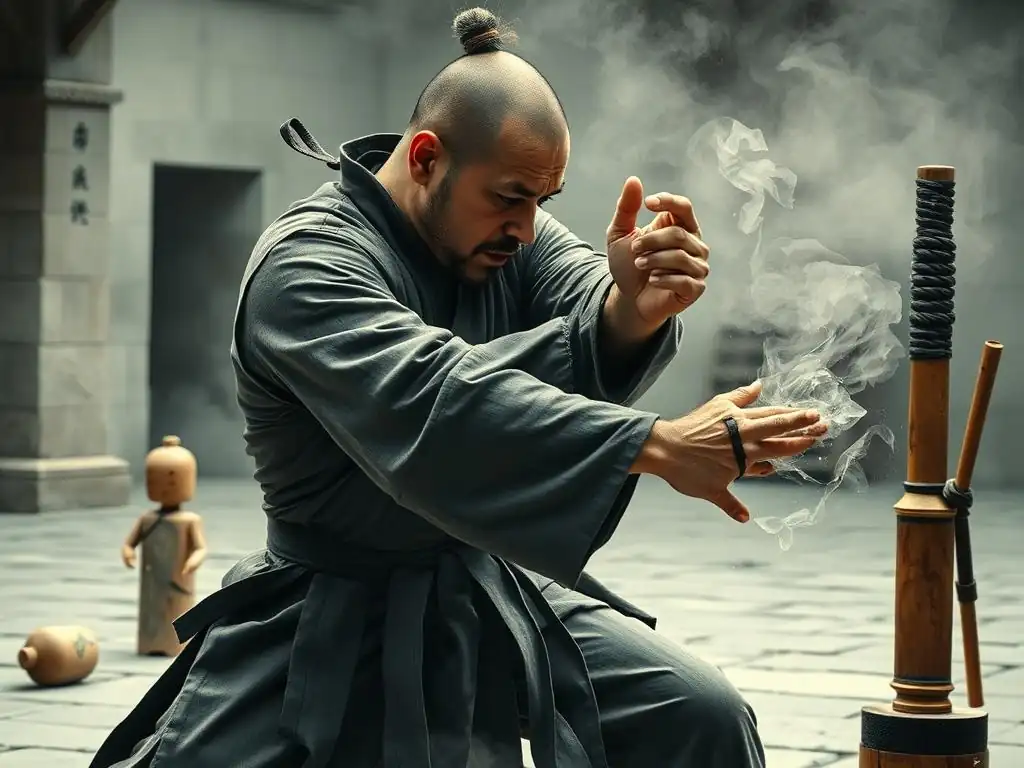
The Tiger Claw (虎爪 - Hǔzhǎo) is one of the most iconic and visually distinct Shaolin hand techniques, originating from the imitation of animal movements, specifically the tiger's powerful paws and claws. This technique involves holding the hand in a semi-cupped shape with fingers bent and slightly separated, and the thumb tucked firmly against the palm. The power is generated through the entire arm and shoulder, driving the "claws" forward.
Historically, it was used to tear at flesh, seize limbs, or attack vulnerable points like the throat or eyes. It represents a blend of striking and grappling principles within Shaolin hand techniques training.
In application, the Tiger Claw is used for striking vital points with the fingertips or knuckles, raking across soft tissue, or gripping and tearing. A strike with the base of the palm combined with a simultaneous raking action of the fingers can be devastating.
It can also be used to seize an opponent's wrist or arm, controlling their movement or setting them up for a joint lock or throw. The strength required to execute the Tiger Claw effectively comes from rigorous conditioning of the fingers, hands, and forearms, making specific drills for developing claw strength a vital part of Shaolin hand techniques training.
Leopard Fist: Speed and Agility in Hand Combat
The Leopard Fist (豹拳 - Bàoquán), often associated with the Leopard style of Kung Fu but integrated into Shaolin, is a striking technique that utilizes the knuckles of the index and middle fingers (sometimes all four knuckles) as the primary striking surface. Unlike the full fist which strikes with the flat knuckles, the Leopard Fist presents a smaller, harder point of contact, designed for speed and penetrating force. It is particularly effective for targeting specific, smaller areas like vital points or temple strikes. Shaolin hand techniques training incorporates the Leopard Fist for its emphasis on rapid, focused strikes.
The technique relies on speed and precision rather than brute force, though power is still generated from body mechanics. Strikes are typically short, sharp, and delivered in rapid succession. The hand forms a fist, but the impact comes from the prominent knuckles. This requires careful conditioning to avoid injury. The Leopard Fist can be used to strike nerves, joints, or other vulnerable points. Its integration into Shaolin forms provides practitioners with a fast, agile striking option that complements the power of the full fist and the versatility of the palm, adding another dimension to Shaolin hand techniques training.
Drills for Developing Shaolin Claw Strength and Precision
Developing the strength and precision required for Shaolin claw techniques like the Tiger Claw involves specific conditioning exercises. One common drill is "gripping sand" or small rocks. The practitioner repeatedly plunges their hands into a bucket of sand or rocks and squeezes tightly, simulating the gripping action of the claw. This builds strength in the fingers, hands, and forearms. As strength increases, the material can be changed to something harder or smaller.
Another crucial drill involves striking specific targets with the fingertips or knuckles, often on padded surfaces initially, gradually progressing to harder surfaces as conditioning allows. This builds impact tolerance and precision. Hanging from a bar using only the fingertips is another exercise to increase finger strength. These drills are essential components of Shaolin hand techniques training, focusing on building the unique muscular control and resilience needed for effective claw techniques. Without this dedicated conditioning, attempting to use these techniques could result in serious injury.
Shaolin Finger Techniques: Precision Strikes and Pressure Points
Utilizing Finger Strikes in Shaolin Kung Fu
Shaolin Kung Fu includes techniques that utilize individual or multiple fingers for striking. These techniques are typically aimed at small, vulnerable targets where a fist or palm strike might be less effective or precise. Fingers can be used to poke, jab, or press, targeting eyes, throat, temples, or specific nerve points. The effectiveness of finger strikes relies heavily on accuracy and conditioning, as the fingers are relatively fragile compared to the fist or palm. Shaolin hand techniques training for fingers requires meticulous practice and gradual strengthening.
Techniques might involve using two fingers (like a "sword finger" - 剑指 - Jiànzhǐ) for jabbing, or the tips of all four fingers held together. These strikes are often delivered with speed and precision, aiming to incapacitate or distract an opponent quickly. While less emphasized in some modern interpretations of Shaolin due to safety concerns in sparring, finger strikes remain a part of traditional forms and self-defense applications, highlighting the comprehensive nature of traditional Shaolin hand techniques training.
Shaolin One-Finger Zen: Focus and Power
The Shaolin One-Finger Zen (一指禅 - Yīzhǐchán) is a famous, often-demonstrated technique that exemplifies the culmination of internal focus and external power delivered through a single point. While sometimes associated with seemingly miraculous feats like pushing over heavy objects or leaving indentations in walls, the core principle involves generating significant force and channeling it with intense concentration through the index finger (or sometimes the thumb). This is not just physical strength but requires significant Qi (氣) cultivation and mental discipline.
Training for One-Finger Zen is a long and arduous process involving specific conditioning exercises for the finger and forearm, coupled with deep breathing and meditative practices to cultivate internal energy. Practitioners might strike progressively harder surfaces with the fingertip, applying herbal liniments to aid recovery and strengthen the bone. It represents an advanced level of Shaolin hand techniques training, demonstrating the ability to focus immense power into a single, precise point of contact.
Vital Point Striking with Shaolin Finger Techniques: Dim Mak
Shaolin finger techniques are often associated with the concept of striking vital points (穴位 - Xuéwèi), sometimes referred to in martial arts contexts as "Dim Mak" (点脉 - Diǎnmài) or "Death Touch," although the latter term is often sensationalized. Vital point striking targets specific points on the body, often related to acupuncture points or nerve clusters, with the aim of causing pain, disorientation, paralysis, or even more severe effects by disrupting the body's energy flow or nervous system. Shaolin hand techniques training includes knowledge of these points for both striking and healing.
Finger techniques are ideal for vital point striking due to their ability to target small, precise areas. A sudden jab to a nerve point on the neck or temple with a conditioned finger can have significant immediate effects.
While the full extent and effects of Dim Mak are often debated and shrouded in mystique, the principle of targeting vulnerable points for maximum effect with minimal force is a practical application of anatomy and leverage. Shaolin practitioners study anatomy and pressure points to understand how to apply their finger techniques effectively, adding a layer of strategic knowledge to their Shaolin hand techniques training.
Advanced Shaolin Hand Forms and Combinations
Integrating Fists, Palms, Claws, and Fingers in Shaolin Forms
Advanced Shaolin hand forms are complex choreographies that seamlessly integrate the diverse array of hand techniques – fists, palms, claws, and fingers – into fluid, dynamic sequences. These forms are not just for show; they serve as moving textbooks, teaching practitioners how to transition rapidly and powerfully between different types of strikes, blocks, and controls. Mastering a form requires not only memorizing the movements but also understanding the underlying combat applications of each technique and the transitions between them. This integration is the ultimate goal of comprehensive Shaolin hand techniques training.
For example, a sequence might involve a powerful straight fist punch (utilizing body rotation), immediately followed by a rapid Tiger Claw to the face, transitioning into a Pushing Palm to create distance, and finishing with a precise finger jab to a vital point. The form teaches the practitioner the timing, body mechanics, and intent behind these combinations. Practicing these forms repeatedly builds muscle memory, improves coordination, and develops the ability to apply a wide range of hand techniques spontaneously in a combat situation, demonstrating the depth of Shaolin hand techniques training.
Luo Han Quan: Analyzing Hand Technique Application
Luo Han Quan (罗汉拳 - Luóhàn Quán), or Eighteen Arhat Boxing, is a classic and widely practiced Shaolin form renowned for its rich variety of hand techniques. It is considered a foundational form for developing versatile hand skills. Analyzing Luo Han Quan reveals a sophisticated interplay between different hand applications. The form features numerous variations of fist strikes (straight punches, hooks, uppercuts), powerful palm strikes (pushing palms, chopping palms), seizing and tearing techniques (resembling claw applications), and even some finger strikes targeting vulnerable areas.
Within Luo Han Quan, practitioners learn how to generate power from low, stable stances for fist strikes, transition to softer, more fluid movements for palm applications, and utilize explosive force for seizing techniques. The form emphasizes coordinated body movement, ensuring that power is generated from the core and legs, not just the arms. Studying Luo Han Quan provides a practical blueprint for integrating the different facets of Shaolin hand techniques training into a cohesive and effective fighting system.
Developing Fluidity and Power in Shaolin Hand Technique Combinations
Developing fluidity and power in Shaolin hand technique combinations is a key aspect of advanced training. Fluidity means moving seamlessly between techniques without hesitation or stiffness, allowing for rapid, unpredictable attacks and defenses. Power means ensuring that each technique, regardless of type (fist, palm, claw, finger), is delivered with maximum potential force generated from proper body mechanics. Achieving this requires focused Shaolin hand techniques training drills.
Drills often involve practicing combinations repeatedly, first slowly to ensure correct form, then gradually increasing speed and power. Shadowboxing, focusing on explosive transitions and full-body engagement, is crucial. Partner drills, where one person provides targets (like pads or focus mitts) for specific combinations, help develop timing, distance, and accuracy. The goal is for the practitioner to be able to unleash a barrage of varied hand techniques – a fist, followed by a palm, then a claw – as a single, powerful, and continuous action, a testament to dedicated Shaolin hand techniques training.
Shaolin Hand Technique Training: Drills and Exercises
Foundational Stances for Shaolin Hand Techniques
Effective Shaolin hand techniques training is inextricably linked to strong, stable stances. Stances provide the base of support, allowing practitioners to generate power from the ground up, maintain balance, and transition smoothly between techniques. The Horse Stance (马步 - Mǎbù) is fundamental, building leg strength and providing a solid foundation for powerful straight punches and palm strikes. Spending significant time in a deep Horse Stance while practicing hand movements is a core Shaolin exercise.
The Bow Stance (弓步 - Gōngbù) is used for forward-moving strikes, allowing the practitioner to channel forward momentum into punches and pushes. The Cat Stance (猫步 - Māobù) is lighter, allowing for quick retreats or transitions, and is often used before explosive forward movements or for defensive hand techniques. Proper Shaolin hand techniques training emphasizes the connection between the hands and the stance, ensuring that power is rooted and body weight is correctly distributed for each movement. Without a solid stance, hand techniques lose much of their power and stability.
Partner Drills for Practicing Shaolin Hand Strikes
Partner drills are essential for applying Shaolin hand techniques in a dynamic context and developing practical combat skills. Simple drills involve one partner holding a focus mitt or pad while the other practices specific strikes – straight punches, palm heels, claw rakes, etc. This helps with distance judgment, targeting accuracy, and developing power against a moving target. Feedback from the partner on technique and impact is invaluable in Shaolin hand techniques training.
More complex partner drills might involve one person attacking with pre-determined strikes while the other practices blocking and counter-attacking with hand techniques. For example, a partner throws a straight punch, and the practitioner practices a parry with an open hand followed by a palm strike counter. These drills build reaction time, defensive reflexes, and the ability to apply techniques under pressure. Light, controlled sparring focusing specifically on hand techniques further refines timing and application, making partner work a critical component of Shaolin hand techniques training.
Conditioning the Hands for Shaolin Kung Fu: Iron Palm Training
Conditioning the hands is a hallmark of rigorous Shaolin hand techniques training, most famously exemplified by Iron Palm. This involves a systematic process of repeatedly striking increasingly harder surfaces to strengthen the bones, tendons, and ligaments of the hand. The process typically begins with striking bags filled with soft material like sand or beans, performing hundreds or thousands of strikes per day. As the hands become conditioned, the striking surface is changed to gravel, then small stones, and eventually iron shot or even hard wood or brick.
This training is not just about building calluses; it's about stimulating bone density and tissue resilience. It must be done gradually to avoid permanent injury. After each training session, practitioners traditionally apply herbal liniments (like Dit Da Jow) to reduce swelling, bruising, and promote healing, preventing stagnation of blood and energy. Iron Palm is a long-term commitment, often taking years to develop significant power and resilience, requiring immense discipline and patience as part of Shaolin hand techniques training.
Common Mistakes in Shaolin Hand Technique Training and How to Avoid Them
Proper Alignment and Body Mechanics
One of the most common mistakes in Shaolin hand techniques training is failing to maintain proper alignment and body mechanics. This includes bending the wrist upon impact, which can lead to sprains or fractures and significantly reduces power. The wrist must be straight and locked. Another error is failing to engage the hips and core; power in Shaolin strikes comes from the entire body, not just the arm. A punch or palm strike should utilize rotation from the hips and torque from the torso.
To avoid these mistakes, practitioners must constantly check their form, ideally with guidance from a qualified instructor. Slow, deliberate practice, focusing solely on body mechanics before adding speed or power, is crucial. Using mirrors or video recording can help identify alignment issues. Consistent attention to detail in every repetition, ensuring the wrist is straight, the shoulders are relaxed yet engaged, and the hips rotate fully, is vital for effective and safe Shaolin hand techniques training.
Avoiding Injury During Shaolin Hand Technique Practice
Injuries are a risk in any physical training, and Shaolin hand techniques training, especially conditioning, is no exception. Common injuries include sprains, bruises, fractures, and tendonitis. A major cause is attempting to progress too quickly in conditioning drills (like Iron Palm) or striking hard surfaces before the hands are adequately prepared. Overuse and poor technique also contribute significantly to injury.
To avoid injury, practitioners must follow a structured training regimen that includes proper warm-up and cool-down. Conditioning should be gradual, increasing the intensity or hardness of the striking surface incrementally over months and years. Listening to the body is paramount; pain is a signal to stop or reduce intensity, not push through it relentlessly. Using appropriate protective gear during partner drills (like gloves or pads) and ensuring partners are controlled and responsible also minimizes risk, making safe practice integral to Shaolin hand techniques training.
Maintaining Focus and Discipline in Shaolin Training
Shaolin hand techniques training, like all aspects of Kung Fu, demands significant focus and discipline. A common mistake is practicing mindlessly, going through the motions without concentration on technique, breath, or intent. This leads to sloppy form, reduced power, and a lack of true understanding of the movements' applications. Another error is inconsistency; sporadic practice hinders progress and makes it difficult to build the necessary strength, speed, and muscle memory.
Maintaining focus requires being present in the moment during training, paying attention to the details of each movement, and visualizing the application. Setting regular training times and sticking to them builds discipline. Approaching training with patience, understanding that mastery takes years of consistent effort, is essential. Avoiding distractions during practice (like phones) and cultivating a focused mindset are as important as the physical drills for successful Shaolin hand techniques training.
Conclusion: The Legacy of Shaolin Hand Techniques
The Enduring Relevance of Shaolin Hand Techniques in Modern Martial Arts
The principles underlying Shaolin hand techniques remain highly relevant in modern martial arts and combat sports. The emphasis on generating power from the core and lower body, the importance of proper skeletal alignment for effective and safe striking, and the value of conditioning are universal truths in striking arts. Techniques like the straight punch, palm strike, and even principles of seizing or controlling limbs find counterparts in various systems, from boxing and Muay Thai to Krav Maga and modern self-defense methodologies. Shaolin hand techniques training provides a deep well of knowledge regarding efficient and powerful striking.
Furthermore, the conditioning methods developed within Shaolin, particularly for the hands, highlight the importance of physical resilience in martial arts. While extreme Iron Palm might not be common outside traditional circles, the idea of progressively conditioning the striking surfaces is a principle applied in various disciplines. The strategic use of different hand shapes (fist vs. palm vs. fingers) for varied targets and purposes is a sophisticated approach that transcends stylistic boundaries, demonstrating the lasting impact of Shaolin hand techniques training.
Further Exploration of Shaolin Kung Fu and Hand Technique Mastery
Mastering Shaolin hand techniques is a lifelong journey, requiring dedication, patience, and consistent practice. For those interested in delving deeper, finding a qualified instructor with a legitimate lineage is invaluable. Training under experienced guidance ensures proper technique, prevents injury, and provides insight into the cultural and philosophical context of the art. Studying the traditional forms, understanding their applications, and engaging in rigorous physical conditioning are all part of this path.
Exploring specific forms known for their hand techniques, such as Xiao Hong Quan, Da Hong Quan, or Luo Han Quan, can provide a structured approach to learning. Complementary training in Shaolin stances, footwork, and body conditioning enhances the effectiveness of hand techniques. Ultimately, Shaolin hand techniques training is not just about physical prowess; it's about cultivating mental focus, discipline, and a deeper understanding of the body's potential and limitations. The legacy of these techniques continues to inspire practitioners worldwide.
Frequently Asked Questions
What are the primary categories of Shaolin hand techniques?
Shaolin hand techniques are broadly categorized into fists, palms, claws, and fingers, each with distinct applications and training methodologies. These techniques are essential for both offensive and defensive maneuvers.
How does Shaolin hand technique training incorporate philosophical principles?
Shaolin training emphasizes Zen Buddhism and Chan philosophy, integrating mindfulness and discipline. This mental fortitude is considered as important as physical prowess for mastering hand techniques.
What are some key benefits of practicing Shaolin hand techniques for self-defense?
Shaolin hand techniques offer practical self-defense strategies by focusing on precision, speed, and power. They are designed to neutralize threats effectively, utilizing the body's natural mechanics.
How does the historical context of Shaolin influence current training methodologies?
The historical roots of Shaolin, with its origins in the Shaolin Monastery, shape modern training. The traditions of centuries-old training methods are still respected and incorporated into contemporary practices.
What is the role of conditioning in mastering Shaolin hand techniques?
Proper conditioning is crucial for developing the strength and resilience needed to execute Shaolin hand techniques effectively. This includes exercises for both physical and mental endurance.
Final Reflection: The Enduring Legacy of Shaolin Hand
The exploration of Shaolin hand techniques, from the iron fist to the subtle palm, reveals more than just fighting skills; it unveils a profound philosophy of discipline and self-mastery. This journey into the heart of Shaolin training is particularly relevant today, as we seek grounding and focus in an increasingly chaotic world. The principles of control, precision, and inner strength, cultivated through these ancient practices, offer a powerful antidote to the distractions and anxieties of modern life.
The influence of Shaolin Kung Fu extends far beyond the dojo, shaping our understanding of physical and mental resilience. Witnessing the dedication and artistry inherent in these techniques underscores the importance of perseverance and the pursuit of excellence in all aspects of life. The best fighter is never angry,
a Shaolin proverb reminds us, highlighting the crucial connection between emotional control and physical prowess, a lesson that resonates deeply in our daily interactions.
Now, take a moment to consider the lessons gleaned from the Shaolin tradition. How can you incorporate the principles of discipline, focus, and inner strength into your own life? Embrace the challenge of self-improvement, cultivate your inner warrior, and discover the transformative power of mindful action. Let the spirit of Shaolin guide you towards a path of balance, resilience, and unwavering determination.
Unleash Your Inner Shaolin: Begin Your Transformation!
Thank you for exploring the powerful hand techniques of Shaolin Kung Fu with us. We hope this journey into the fists, palms, claws, and fingers of fury has ignited your passion for martial arts and self-discovery. Now, it's time to translate this knowledge into action.
Here are a few ways to start:
- Commit to practicing one new Shaolin hand technique for at least 15 minutes each day this week. Feel the power flowing through you!
- Share this article with fellow martial arts enthusiasts and spark a discussion about your favorite Shaolin hand forms.
- Research and experiment with the practical applications of a specific technique in your daily life – even something as simple as improving your grip or posture.
Ready to begin your Shaolin journey and experience the power within?