
Exploring Kumi Tachi Beyond Basics: Advanced Paired Sword Forms in Aikido

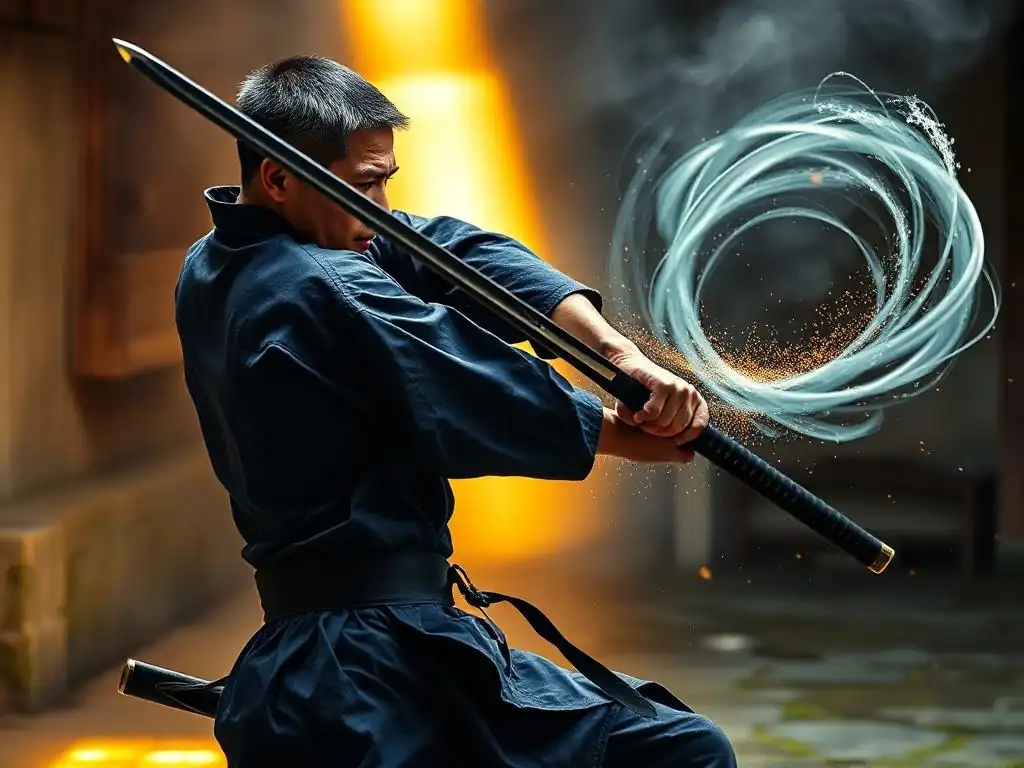
Welcome to Martial Arts Mastery, where we delve into the rich tapestry of combat traditions worldwide. Ever wondered how the fluid grace of Aikido seamlessly integrates with the power of the sword? Prepare to embark on a journey beyond the fundamentals as we explore the fascinating world of Aikido paired sword techniques. This detailed analysis uncovers the advanced Kumi Tachi forms, revealing the strategic depth and practical applications hidden within these captivating sequences. Discover the secrets that await!
- Introduction to Advanced Aikido Paired Sword Techniques (Kumi Tachi)
- Prerequisites for Advanced Kumi Tachi Training
- Advanced Kumi Tachi Forms: A Detailed Exploration
- Integrating Kumi Tachi into Aikido Practice
- Safety Considerations for Advanced Aikido Sword Training
- The Philosophical Underpinnings of Aikido Sword Arts
- Conclusion: The Path to Mastery in Aikido Paired Sword Techniques
-
Frequently Asked Questions
- What is Kumi Tachi in the context of Aikido?
- How does advanced Kumi Tachi differ from beginner-level practice?
- Why is Kumi Tachi considered important in Aikido training?
- Does Kumi Tachi training directly translate to self-defense applications?
- Where can I find more in-depth information on advanced Aikido Kumi Tachi techniques?
- Final Reflection: The Enduring Dance of Steel
- Unleash Your Kumi Tachi Potential!
Introduction to Advanced Aikido Paired Sword Techniques (Kumi Tachi)
Exploring the depths of Aikido often leads practitioners to its weapon arts, particularly the study of the sword, known as aiki-ken. While basic solo exercises ( suburi) and initial paired forms ( kumi tachi ichi) lay the groundwork, true understanding emerges from delving into more complex Aikido paired sword techniques. These advanced forms, collectively referred to as kumi tachi, are not merely choreographed sequences but dynamic dialogues between partners, embodying the core principles of Aikido. They offer profound insights into timing, distance, centering, and the harmonious resolution of conflict, applying Aikido's unique philosophy to armed engagement.
Defining Kumi Tachi: Beyond Basic Sword Forms
Kumi Tachi, meaning "meeting sword" or "joining swords," specifically refers to the paired sword exercises developed within Aikido, primarily derived from Morihiro Saito Sensei's Iwama tradition, which preserved the founder Morihei Ueshiba's weapon teachings. While basic forms like Kumi Tachi Ichi introduce fundamental attacks and defenses, advanced Kumi Tachi encompasses a series of progressively complex scenarios.
These forms move beyond simple blocking and striking, incorporating elements like subtle deflections, entries, evasions, and counters that mirror Aikido's empty-hand techniques ( tai jutsu). They are distinct from the kashima shin-ryu forms Ueshiba O-Sensei also studied, being specifically adapted to express Aikido's principles.
Unlike historical sword dueling forms focused purely on victory or defeat, Aikido's Kumi Tachi emphasizes mutual learning and the integration of aiki principles. The goal is not necessarily to "win" the exchange but to understand the dynamic of attack and defense, to blend with the opponent's energy, and to find a resolution that ideally neutralizes aggression without unnecessary harm.
This perspective transforms the practice from a mere physical drill into a moving meditation on conflict resolution, using the sword as a tool to refine sensitivity and awareness. The advanced Aikido paired sword techniques challenge practitioners to maintain their center, read their partner's intentions, and apply sophisticated timing.
The Significance of Paired Sword Practice in Aikido
The practice of kumi tachi holds immense significance in Aikido training, acting as a vital complement to empty-hand techniques. The sword, being an extension of the body, demands precision, commitment, and an acute awareness of distance ( ma'ai). Training with a partner using wooden swords ( bokken) forces practitioners to confront the reality of a committed attack in a way that empty-hand practice sometimes cannot initially convey. A missed block or a poorly timed entry with a bokken is immediately apparent, providing clear feedback that accelerates learning. This direct feedback loop helps to sharpen reflexes and improve spatial awareness.
Furthermore, Kumi Tachi illuminates the underlying principles of Aikido's movements. Techniques like irimi (entering) and tenkan (turning) become clearer when applied with a weapon, as the need to evade a cut and enter safely is starkly evident. The concept of aiki, blending with and redirecting energy, is physically manifested when one learns to receive a powerful cut and turn it aside with minimal force.
Practicing these advanced Aikido paired sword techniques helps practitioners internalize these principles, making their empty-hand techniques more powerful, precise, and effective. It's a process of using the weapon to understand the body, and using the body to understand the weapon.
Importance of Understanding Aikido Principles in Kumi Tachi
Successfully executing kumi tachi, especially the more advanced forms, relies heavily on a deep understanding and application of core Aikido principles. Simply mimicking the physical movements is insufficient; the practitioner must imbue the forms with aiki. This means maintaining a stable center ( hara), extending ki (unified mind-body energy), and blending with the partner's movement rather than opposing it. The principle of musubi, or connection, is vital, ensuring that the practitioner remains linked to their partner's movement and intent throughout the exchange. Without these underlying principles, Kumi Tachi devolves into a rigid, potentially dangerous, and ultimately ineffective sword dance.
Applying principles like irimi and tenkan within the rapid exchanges of advanced Aikido paired sword techniques requires sensitivity and timing. Instead of meeting force with force, practitioners learn to enter into the attack or turn away from the line of force while maintaining control. The subtle shifts in weight, the angle of the bokken, and the direction of movement are all dictated by these core principles.
Understanding ma'ai, the critical distance between partners, is paramount; being too close or too far renders techniques ineffective. Kumi Tachi thus serves as a dynamic laboratory for testing and refining one's grasp of Aikido's fundamental concepts in a challenging, interactive environment.
Prerequisites for Advanced Kumi Tachi Training
Embarking on the journey into advanced Aikido paired sword techniques requires a solid foundation built upon fundamental solo and paired practices. Attempting complex forms without mastering the basics is akin to trying to run before learning to walk; it is inefficient, potentially unsafe, and hinders true progress. A practitioner must first develop a degree of comfort and competence with the weapon itself and understand how their own body moves in relation to it and a partner's attack. This preparatory phase ensures that students can focus on the nuances of the advanced forms rather than struggling with basic mechanics.
Mastering Basic Aikido Sword Movements (Suburi)
Mastery of basic suburi, or solo sword cuts and thrusts, is the absolute bedrock for advanced kumi tachi. There are typically seven fundamental suburi cuts in Aikido: shomen uchi (vertical cut), yokomen uchi (side-head cut), and five variations of thrusts and horizontal cuts.
These solo exercises develop proper grip ( tsuka sawari), cutting angle ( hasuji), body posture ( shisei), and the unified movement of the sword and body ( ichijo). Practicing suburi thousands of times is not just about physical conditioning; it's about forging a connection between the practitioner's center and the tip of the bokken, ensuring that cuts are delivered with power, precision, and intent, originating from the hips and hara.
Without crisp, powerful, and centered basic cuts, advanced Aikido paired sword techniques become sloppy and ineffective. For example, a weak or off-center shomen uchi in Kumi Tachi Ni will not create the necessary opening or pressure on the partner. Similarly, a hesitant or misdirected thrust in Kumi Tachi Yon will fail to set up the subsequent disarming technique. Suburi also builds the physical conditioning necessary to maintain focus and control during the dynamic, often repetitive practice of paired forms. It teaches patience, perseverance, and the importance of consistent, mindful repetition – qualities essential for mastering any complex skill.
Understanding Aikido Body Mechanics (Tai Sabaki) for Sword Work
Effective kumi tachi is inextricably linked to proficient tai sabaki, or body movement. While empty-hand tai sabaki focuses on evading grabs and strikes, tai sabaki for sword work is about evading cuts and thrusts, which travel along a different plane and often cover more distance. Techniques like irimi (entering), tenkan (turning), hiraki ashi (opening step), and tsugi ashi (following step) must be adapted to maintain a safe distance from the partner's blade while simultaneously positioning oneself for a counter or blend. This requires precise footwork and hip rotation to shift the body off the line of attack.
For instance, in many Aikido paired sword techniques, evading a shomen uchi cut requires a sharp irimi step diagonally forward and to the side, moving inside the line of the cut while raising one's own bokken to block or deflect. Conversely, evading a thrust might necessitate a tenkan turn to pivot out of the way. The ability to execute these movements smoothly, powerfully, and without hesitation is crucial.
Poor tai sabaki in kumi tachi will result in being hit, being off-balance, or being unable to execute the subsequent technique effectively. It's the physical language that allows the practitioner to communicate and interact safely and effectively within the form.
Developing a Strong Foundation in Kumi Tachi Ichi
Kumi Tachi Ichi, the first paired sword form, serves as the gateway to all subsequent advanced Aikido paired sword techniques. It introduces the fundamental interaction between attacker ( uchi tachi) and defender ( uke tachi) based on a simple shomen uchi attack. Practicing Kumi Tachi Ichi thoroughly teaches crucial concepts like maintaining ma'ai, receiving a committed attack with calmness, blending with the incoming energy, and executing a basic counter-cut or block. It establishes the rhythm and flow of partnered sword practice and instills the importance of mutual respect and trust between partners.
Before moving to Kumi Tachi Ni or beyond, practitioners should be able to perform Kumi Tachi Ichi smoothly, powerfully, and with a clear understanding of its underlying purpose. This means executing cuts with good hasuji, maintaining a stable center throughout the movement, and ensuring that the timing of the block/deflection and counter-cut is precise. Rushing through Kumi Tachi Ichi will leave gaps in fundamental understanding that will inevitably surface and hinder progress in more complex forms. Mastery here provides the necessary foundation for navigating the increased speed, complexity, and strategic depth of advanced Aikido paired sword techniques.
Advanced Kumi Tachi Forms: A Detailed Exploration
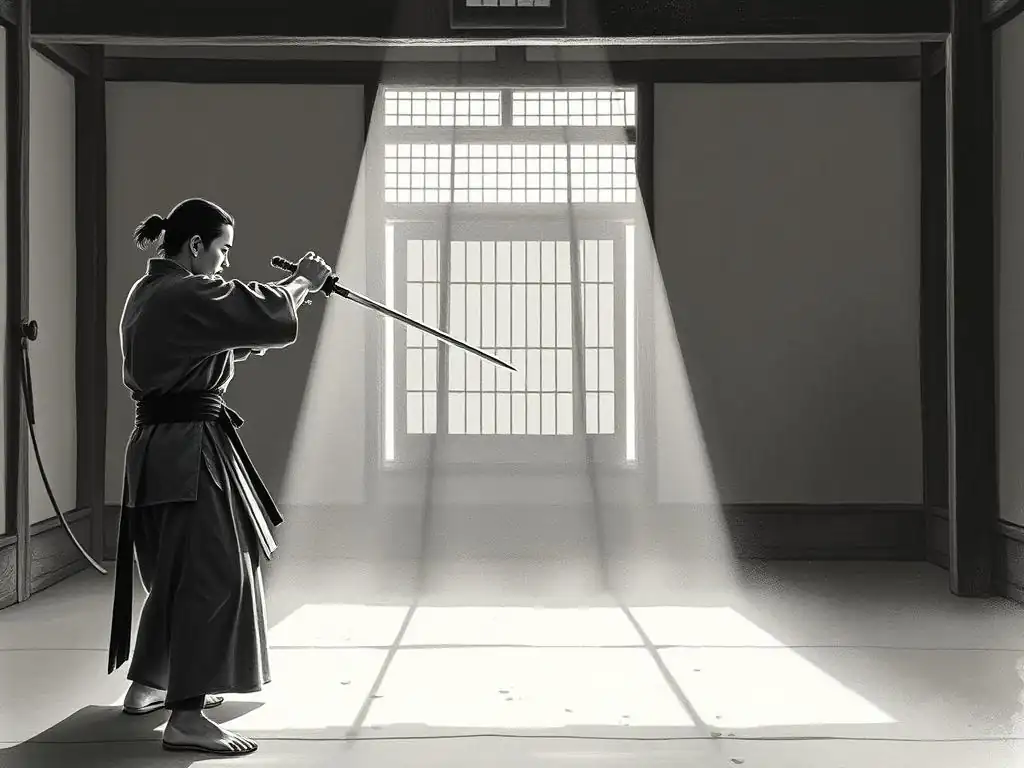
Moving beyond the foundational Kumi Tachi Ichi, the subsequent forms introduce increasingly complex scenarios, forcing practitioners to refine their timing, distance, body mechanics, and application of aiki principles. Kumi Tachi Ni, San, Yon, Go, and others (depending on the specific lineage) build upon the basics, presenting varied attacks, defenses, and counter-techniques that mirror the challenges faced in empty-hand Aikido. These advanced Aikido paired sword techniques demand higher levels of sensitivity, control, and the ability to adapt to a partner's energy.
Kumi Tachi Ni: Analysis and Application
Kumi Tachi Ni introduces a new dynamic, often involving a follow-up attack or a more complex entry than the simple block-and-cut of Kumi Tachi Ichi. A common variation begins with uchi tachi attacking shomen uchi. Uke tachi evades and counters with a yokomen uchi. Uchi tachi must then defend against this counter, often by stepping back or turning, and potentially launching a third attack. This form emphasizes sequential attacks and defenses, requiring both partners to react and adapt rapidly while maintaining their center and connection. It moves away from single-exchange scenarios towards continuous interaction.
Practicing Kumi Tachi Ni effectively requires precise timing and the ability to read the partner's intention not just for the initial attack, but for subsequent movements. The transition between receiving the first attack, executing the counter, and then defending against the partner's reaction must be seamless. This form particularly highlights the principle of zanshin, or remaining awareness and readiness, as the exchange doesn't end after the initial counter. It trains practitioners to stay connected and prepared for the next action, a crucial skill in both sword work and empty-hand techniques.
Key Movements and Techniques in Kumi Tachi Ni
Kumi Tachi Ni typically features the shomen uchi attack by uchi tachi as the starting point. Uke tachi often employs an irimi or tenkan movement combined with a block or deflection to receive the attack, such as a high block ( jodan uke). The key technique for uke tachi is the subsequent counter-attack, frequently a yokomen uchi delivered as they simultaneously evade the initial cut.
This counter must be timed precisely as the partner's blade passes, entering into the space created by their movement. For uchi tachi, the critical movement is defending against this yokomen uchi counter, which might involve a quick step back ( hiki ashi) and a block ( gedan uke or chudan uke) or a turning evasion.
The interaction in Kumi Tachi Ni is characterized by a rapid exchange, often described in three counts: 1) uchi tachi attacks, 2) uke tachi evades/blocks and counters, 3) uchi tachi defends against the counter. The footwork is more complex than in Kumi Tachi Ichi, requiring smooth transitions between forward, backward, and potentially diagonal steps. The angle of the bokken during blocks and cuts is paramount; a slight deviation can result in being hit or failing to set up the subsequent technique. Focus must be maintained on the partner's center and the tip of their blade throughout the sequence.
Applying Aikido Principles: Aiki-Ken Integration
Kumi Tachi Ni is a prime example of aiki-ken, the integration of Aikido principles into sword practice. The initial evasion by uke tachi against the shomen uchi is a direct application of irimi or tenkan, moving off the line of attack. The counter yokomen uchi is delivered not just with physical force, but by extending ki from the hara, unified with the body's movement.
For uchi tachi, defending against the yokomen counter involves blending with the incoming energy – absorbing or deflecting it rather than rigidly opposing it. This might involve a soft block that guides the partner's blade away or a subtle shift in position.
The concept of ma'ai is constantly tested in Kumi Tachi Ni. As the distance changes rapidly during the sequence of attacks and defenses, both partners must adjust their position and timing instinctively. The principle of musubi (connection) is vital; partners must remain connected to each other's movement and intention, allowing them to flow through the form together. Practicing this form repeatedly helps to internalize these principles, making the movements less about conscious thought and more about intuitive response rooted in aiki. It teaches the body to react harmoniously under pressure.
Common Mistakes and How to Correct Them in Kumi Tachi Ni
Several common mistakes impede progress in Kumi Tachi Ni. One is poor timing on uke tachi's part, either countering too early (getting hit by the initial attack) or too late (missing the opportunity to counter effectively). Another is using arm strength alone for cuts and blocks instead of engaging the whole body and hara. For uchi tachi, a frequent error is dropping zanshin after the initial attack, making them unprepared for uke tachi's counter. Both partners might also fail to maintain proper ma'ai, ending up too close or too far at critical points in the sequence.
Correction involves focused, repetitive practice with a patient partner and guidance from an instructor. To improve timing, partners can practice the form slowly, breaking it down into segments and focusing on the precise moment of transition. Using the hara for power is corrected through conscious effort to initiate movements from the core, as practiced in suburi.
Maintaining zanshin requires mental discipline and continuous awareness, often reinforced by pausing at the end of the form to ensure readiness. Addressing ma'ai issues involves practicing entering and exiting distances deliberately, feeling the optimal range for each technique. Video recording can also help identify postural and distance errors.
Kumi Tachi San often introduces more complex footwork and potentially different attack vectors compared to the first two forms. While variations exist across dojos, a common structure involves uchi tachi attacking with a thrust ( tsuki) or a diagonal cut ( kesa giri), forcing uke tachi to employ a different kind of evasion and counter. This form tests the practitioner's ability to transition between linear and circular movements and apply principles like entering shihonage (four-direction throw) or kotegaeshi (wrist return) type movements with the sword. It adds another layer of strategic complexity to the Aikido paired sword techniques.
This form challenges practitioners to adapt their response based on the specific nature of the attack. A thrust, for example, requires a very different evasion and counter than a vertical or diagonal cut. Kumi Tachi San often involves more subtle deflections or redirects rather than outright blocks, embodying the principle of blending with the opponent's energy. It also might incorporate techniques that lead into sword-based pins or controls, hinting at the connection between aiki-ken and aiki-jo (staff) techniques, and ultimately, empty-hand controls.
Strategic Considerations in Kumi Tachi San
Kumi Tachi San often presents strategic problems that require more sophisticated solutions than previous forms. If uchi tachi attacks with a tsuki (thrust), uke tachi cannot simply block head-on; this is dangerous with a real sword and ineffective in Aikido. Instead, uke tachi must evade the line of the thrust using tai sabaki, perhaps stepping to the side with hiraki ashi while simultaneously deflecting the thrust downwards or upwards with their bokken.
The counter-attack then comes from an angle, often targeting the side of the head or body. This demands strategic positioning to be off the line of attack but still within striking distance.
Another strategic element can be the introduction of feints or changes in rhythm. While basic forms are often practiced with a steady tempo, Kumi Tachi San might be performed with variations in speed or intention, requiring uke tachi to read subtle cues. The choice of evasion (e.g., stepping left vs. right, using irimi vs. tenkan) becomes a strategic decision based on the partner's specific attack and one's own desired counter-position. This form teaches practitioners to think several steps ahead, considering not just the immediate attack but the potential follow-up or the best position for their own technique.
Footwork and Timing Drills for Kumi Tachi San
Given the potentially more complex attacks (like thrusts) and evasions in Kumi Tachi San, specific footwork and timing drills are essential. Practicing stepping off the line of a simulated thrust, focusing purely on the tai sabaki without the sword technique, can help isolate and refine the body movement. Drills focusing on combining a specific step (e.g., hiraki ashi) with a subtle sword deflection are also beneficial. Partners can practice the form at extremely slow speeds, pausing at each point of contact or transition to ensure perfect timing and positioning.
- [ ] Drill 1: Practice uke tachi's evasion against a slow tsuki attack, focusing only on footwork and body rotation.
- [ ] Drill 2: Combine the evasion step with the minimal deflection of the bokken, ensuring the deflection guides the partner's blade safely past.
- [ ] Drill 3: Perform the entire Kumi Tachi San sequence at 1/4 speed, emphasizing smooth transitions between movements.
- [ ] Drill 4: Practice the sequence emphasizing the timing of the counter-attack, ensuring it lands after the evasion is complete but before the partner can recover.
Variations and Adaptations of Kumi Tachi San
As with many traditional forms, variations of Kumi Tachi San exist across different Aikido lineages or even within the same lineage depending on the instructor's emphasis. Some versions might start with a different attack, such as a diagonal kesa giri. Others might incorporate a more pronounced turning movement ( tenkan) for evasion.
The counter-technique might also vary, perhaps leading into a control rather than a cut. For example, after evading a thrust and deflecting, uke tachi might step in and use their bokken to pin the partner's sword arm against their body, a technique that has clear parallels in empty-hand Aikido.
Understanding these variations is important for practitioners who train in different dojos or explore different teaching styles. While the specific choreography might differ, the underlying principles of evading, blending, and countering remain consistent. Students should focus on grasping the core strategic problem the form is designed to solve and how Aikido principles are applied, rather than getting fixated on a single "correct" sequence of movements. This adaptability is a key aspect of advanced training in Aikido paired sword techniques.
Kumi Tachi Yon often introduces the critical element of disarming or controlling the opponent's weapon. This form moves beyond simply exchanging cuts and blocks to scenarios where one partner seeks to neutralize the other's ability to attack with the sword. It might involve techniques like stepping in to control the partner's wrists or forearms with one's own bokken, or using leverage to force them to drop their weapon. This form directly translates to empty-hand disarming techniques against weapons, making it a crucial link between aiki-ken and tai jutsu.
This form requires a significant level of trust and control between partners, as the techniques often involve close proximity and direct interaction with the partner's weapon and body. It emphasizes the principle of seme (pressure) and the ability to enter safely into a potentially dangerous space. Kumi Tachi Yon often features techniques that resemble empty-hand Aikido throws or joint locks, but applied through the medium of the sword. It highlights how the same underlying body mechanics and principles are used regardless of whether a weapon is involved.
Disarming Techniques and Counter-Attacks in Kumi Tachi Yon
The core of Kumi Tachi Yon often lies in its disarming or control techniques. A common scenario might see uchi tachi attack with a shomen uchi. Uke tachi evades with an irimi step and blocks or deflects the cut. Instead of immediately counter-cutting, uke tachi continues the entry, using their bokken to press down on uchi tachi's wrists or forearms, forcing them off balance and potentially causing them to release their grip. Another variation might involve uke tachi sliding their bokken along uchi tachi's blade to gain control of their hands.
Counter-attacks within Kumi Tachi Yon are often defensive counters or controls rather than outright cuts aimed at striking the partner. The goal shifts from "hitting" the partner to neutralizing their weapon. The timing for these techniques is extremely fine; uke tachi must enter and establish control precisely as uchi tachi's attack reaches its furthest extension or is slightly off-balance from the initial evasion. This requires acute sensitivity to the partner's energy and balance. The ability to transition smoothly from receiving an attack to entering for a control is paramount.
The Role of Ki in Advanced Aikido Sword Training
The concept of Ki (unified mind-body energy) is particularly evident and essential in advanced Aikido paired sword techniques like Kumi Tachi Yon. Disarming techniques rely less on brute physical strength and more on focused, directed energy originating from the hara. When applying pressure to a partner's wrists with the bokken to force a disarm, the effectiveness comes from extending ki through the sword, connected to one's center, rather than simply pushing with the arms. This focused intent and energy projection can disrupt the partner's balance and resolve their resistance.
Maintaining strong Ki also allows practitioners to remain calm and centered under the pressure of a simulated weapon attack. In Kumi Tachi Yon, where partners are in close proximity with weapons, fear or tension can lead to stiffness and ineffective technique. By focusing on extending Ki, practitioners can maintain a relaxed yet powerful state, allowing them to react intuitively and apply techniques smoothly. This form teaches that the power behind the movement comes not from muscle alone, but from the integration of mind, body, and spirit, projected through the bokken.
Training with a Partner: Safety and Communication
Training Kumi Tachi Yon demands the highest levels of safety awareness and communication between partners. Because techniques involve close contact and direct interaction with the partner's weapon and body, accidental impacts are more likely if control is lost. Partners must agree on the level of intensity and speed, starting very slowly and gradually increasing only when both are comfortable and proficient. Clear verbal cues, such as indicating readiness or signaling a need to stop, are crucial.
- [ ] Use appropriate safety equipment (e.g., padded gloves, head protection if permitted).
- [ ] Maintain a firm but not overly tense grip on the bokken.
- [ ] Execute techniques with control, focusing on the process of the disarm/control rather than the result (forcing the partner to drop the sword).
- [ ] Communicate clearly before and during the practice of the form.
- [ ] Regularly check in with your partner to ensure comfort and safety.
Developing trust is paramount. Both partners must trust that the other will execute techniques with control and respect their safety. This mutual responsibility is a core tenet of Aikido training and is amplified when practicing advanced Aikido paired sword techniques that involve close-quarter interactions.
Integrating Kumi Tachi into Aikido Practice
The true value of practicing kumi tachi lies in its integration back into empty-hand Aikido. The weapon arts in Aikido are not separate disciplines but rather tools to deepen the understanding of Aikido's fundamental principles. The lessons learned with the bokken regarding timing, distance, centering, and the connection with a partner are directly applicable to tai jutsu. Practicing kumi tachi provides a unique perspective on receiving attacks and moving in relation to an opponent, which enhances the effectiveness of empty-hand techniques.
Bridging the Gap: From Paired Sword to Empty Hand Techniques
Kumi Tachi provides a tangible link between the abstract principles of Aikido and their practical application. For example, the evasion and entry used by uke tachi in Kumi Tachi Ichi or Ni against a shomen uchi attack is the same fundamental movement used to evade a punch or a grab to the head in empty-hand Aikido.
The feeling of blending with the partner's energy as their sword cut passes by teaches the body how to receive and redirect force, a skill directly transferable to handling a powerful strike or grab. The control techniques in Kumi Tachi Yon mirror empty-hand disarms against weapons or even joint controls.
Instructors often demonstrate the direct correlation by performing a kumi tachi sequence and then immediately showing how the same body movement and principle apply to an empty-hand technique. This helps students see that they are not learning two separate martial arts but rather exploring the same art through different mediums. The precision required in kumi tachi due to the presence of a weapon translates into more precise and efficient body movements in tai jutsu. The weapon acts as a strict teacher, quickly highlighting inefficiencies in movement or timing that might be less apparent in empty-hand practice.
Enhancing Aikido Principles Through Sword Practice
Practicing Aikido paired sword techniques enhances fundamental Aikido principles in several ways. Ma'ai (distance) becomes an immediate and critical concern when practicing with a bokken, forcing practitioners to develop a keen sense of safe and effective range. Timing is sharpened as the speed of a sword cut demands a rapid yet controlled response.
Centering and stability are constantly challenged, as maintaining balance while moving and interacting with a partner's weapon is essential for safety and effectiveness. The concept of seme (pressure) is physically manifested as one partner advances or threatens with the sword, teaching the other partner how to remain calm and responsive under pressure.
Furthermore, kumi tachi reinforces the principle of ichijo (unified body). Every cut, block, or evasion must originate from the hara and involve the coordinated movement of the entire body, not just the arms. This holistic movement is a cornerstone of powerful and stable Aikido techniques. The commitment required to deliver a proper sword cut or receive one without flinching helps build courage and resolve, mental qualities that are also vital in empty-hand self-defense situations.
Using Kumi Tachi to Improve Timing, Distance, and Awareness
The dynamic nature of kumi tachi is an excellent training ground for improving timing, distance, and awareness – three critical components of effective Aikido. The speed of a sword cut is much faster than most empty-hand attacks, forcing practitioners to react and move with greater urgency and precision. This speeds up their reaction time and improves their ability to read their partner's intention early. Judging the correct distance ( ma'ai) is immediately reinforced; being too far means the technique won't reach, while being too close is dangerous.
Constant awareness ( zanshin) is essential throughout kumi tachi sequences, as techniques often flow rapidly from one movement to the next. This trains practitioners to maintain a state of readiness and perceive everything happening around them, not just the immediate interaction with the partner's sword. This heightened awareness translates directly to empty-hand practice, allowing practitioners to be more sensitive to their partner's movements, anticipate their intentions, and react appropriately. The repetitive, focused practice of Aikido paired sword techniques hones these crucial skills through direct, physical experience.
Safety Considerations for Advanced Aikido Sword Training
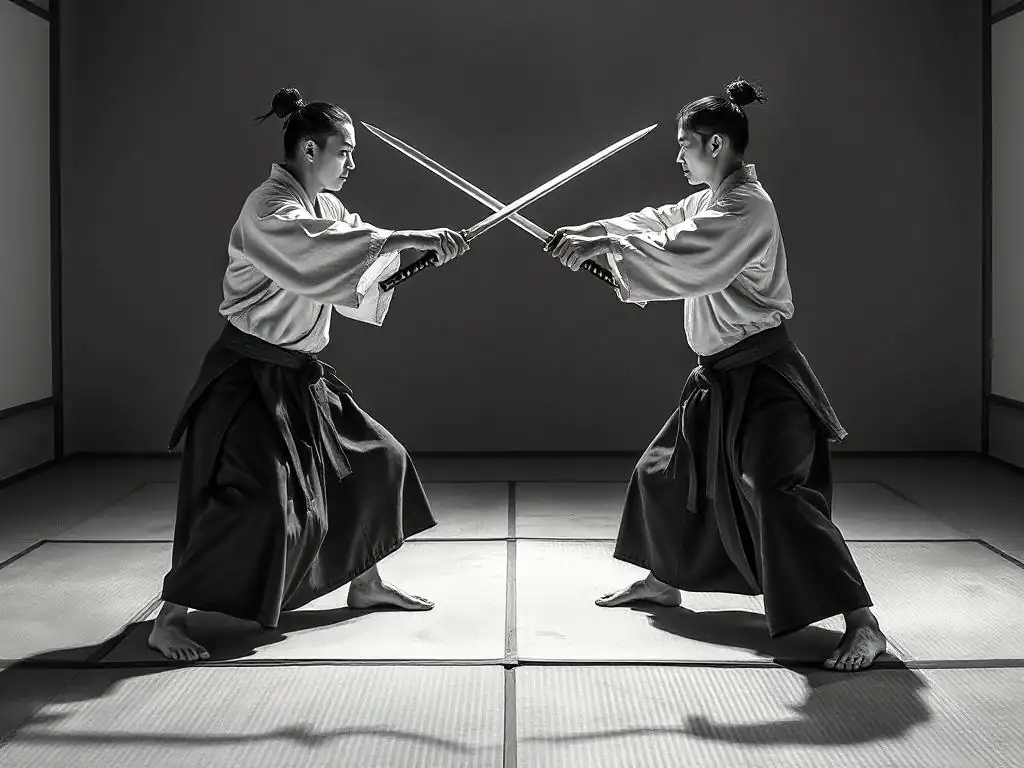
While immensely beneficial, the practice of Aikido paired sword techniques carries inherent risks, particularly at advanced levels where speed and complexity increase. Prioritizing safety is paramount to prevent injuries and ensure a positive learning environment. This involves not only using appropriate equipment but also cultivating a mindful approach to training that emphasizes control, communication, and mutual respect between partners. Safety is not an afterthought; it is an integral part of the practice itself.
Proper Equipment and Training Environment
The primary piece of equipment for kumi tachi is the bokken, a wooden sword. It is crucial to use a well-maintained bokken made from durable wood, free of cracks or splinters. While some dojos permit the use of lighter bokken for beginners or speed drills, advanced kumi tachi often benefits from a standard weight bokken that simulates the feel of a real sword. Training should take place in a spacious area with a safe surface, free of obstacles. Adequate lighting is also important.
Depending on the intensity and specific techniques being practiced, additional safety gear may be necessary. Some dojos require practitioners to wear protective gear, such as padded gloves, headgear, or even chest protectors, especially when practicing forms involving close contact, thrusts, or disarming techniques where accidental impacts are more probable. Using a padded target ( suburi-to or similar) for solo power practice away from partners is also advisable. Ensure the training space allows for full range of motion without colliding with walls or other practitioners.
Partner Communication and Control
Effective communication is the cornerstone of safe kumi tachi practice. Before starting a form, partners should agree on the speed and intensity of the practice. Beginners should always start very slowly, walking through the movements to understand the sequence and timing. As proficiency increases, speed can be gradually added, but never at the expense of control. Both partners have a responsibility to ensure the other's safety. This means executing cuts and thrusts with control, stopping if something feels unsafe, and being sensitive to the partner's reactions.
Verbal cues can be helpful, such as saying "ready" before starting or calling out "stop" if there is a problem. Non-verbal communication, like maintaining eye contact and being attuned to the partner's body language, is equally important. If a technique feels uncomfortable or potentially injurious to either partner, it should be immediately stopped and reviewed. The goal is mutual learning and improvement, not overpowering the partner or executing the technique perfectly at the risk of injury. Respect for the partner's safety is a reflection of respect for the art itself.
Avoiding Injuries: Warm-up and Cool-down Techniques for Sword Work
Proper physical preparation is essential to prevent injuries during kumi tachi practice. A thorough warm-up should precede any sword training session. This should include dynamic stretching focusing on the shoulders, wrists, elbows, hips, knees, and ankles – all joints heavily involved in sword movements. Gentle swings and rotations with the bokken or a lighter stick can help prepare the specific muscles used in cutting and blocking. Good posture and alignment should be established during the warm-up.
Common injuries in sword training can include strains in the shoulders, wrists, or back, as well as impact injuries from accidental contact. Maintaining proper form, originating power from the hara rather than solely the arms, reduces strain on the upper body. Practicing safe falling techniques ( ukemi) is also beneficial, as some forms may involve movements that lead to loss of balance.
After training, a cool-down involving static stretching helps improve flexibility and reduce muscle soreness. Listening to your body and not pushing through pain is crucial; persistent discomfort should be evaluated by a qualified professional. Consistent, mindful practice with attention to body mechanics is the best long-term injury prevention strategy for Aikido paired sword techniques.
The Philosophical Underpinnings of Aikido Sword Arts
Beyond the physical techniques, the practice of kumi tachi is deeply intertwined with the philosophical principles of Aikido. O-Sensei Morihei Ueshiba saw the weapon arts not just as methods of combat but as pathways to understanding the nature of conflict and harmony. The sword, a symbol of power and destruction, is used in Aikido training to cultivate sensitivity, control, and the ability to transform aggression. Engaging in Aikido paired sword techniques is a form of moving Zen, a way to refine the spirit and understand the fundamental principles of the universe as expressed through movement and interaction.
Connecting Kumi Tachi to Aikido's Core Values
Kumi Tachi directly embodies many of Aikido's core values. The principle of non-resistance or blending is paramount; instead of meeting an attack head-on, practitioners learn to move with and redirect the incoming force. Harmony ( ai) is sought in the interaction, aiming for a resolution that benefits both partners' learning, rather than one partner dominating the other. The concept of masakatsu agatsu (true victory is self-victory) is highly relevant; the challenge in kumi tachi is not overcoming the partner, but overcoming one's own fear, tension, and ego to execute the technique with purity and presence.
Respect is fundamental, demonstrated through bowing before and after practicing with a partner and handling the bokken with care. The sword itself is treated with reverence, not as a mere tool but as an extension of one's spirit. The practice teaches humility, as errors and imperfections are immediately revealed by the partner's response or lack thereof. These philosophical connections elevate kumi tachi from a set of physical drills to a profound method of self-cultivation, using Aikido paired sword techniques as a mirror to examine one's own state of mind and body.
Understanding the Concept of "Ki" in Sword Movement
As mentioned earlier, the concept of Ki is vital in aiki-ken. It is the source of power that allows for effective techniques without relying solely on muscular strength. In sword movements, Ki is projected through the bokken, giving cuts weight and presence and enabling subtle deflections or controls. Practicing with Ki involves unifying the mind, breath, and body, focusing energy from the hara outwards through the tip of the sword. This presence can be felt by the partner, influencing their movement and response.
Developing the ability to extend Ki through the sword transforms the practice. A cut delivered with Ki feels different from a cut made purely with arm strength; it feels heavier, more committed, and carries a sense of intent. Deflecting a partner's blade with Ki is not a physical block but a redirection of energy.
This internal power is what allows a smaller practitioner to effectively handle the committed attack of a larger one. Kumi tachi provides a clear feedback mechanism for understanding Ki; ineffective techniques often point to a lack of unified energy and presence, prompting the practitioner to focus inward and reconnect with their center.
The Importance of Respect and Humility in Aikido Sword Training
Respect ( rei) and humility are cornerstones of traditional martial arts training, and they are particularly emphasized in kumi tachi. The practice begins and ends with formal bows to the partner and the bokken, acknowledging the shared journey and the sacred nature of the training. Treating the partner with respect means practicing with care, control, and a genuine desire for mutual improvement, not competition. It means being sensitive to their safety and capabilities.
Humility is essential because the sword quickly reveals one's weaknesses – poor timing, lack of control, tension, or ego. Every mistake is an opportunity to learn, and approaching the practice with humility allows one to accept feedback and work on imperfections. There is no room for arrogance when practicing with a weapon; overconfidence or lack of focus can lead to injury. The advanced Aikido paired sword techniques challenge practitioners in ways that demand patience, perseverance, and the humble recognition that mastery is a lifelong path. The bokken serves as a constant reminder of the need for discipline and respect.
Conclusion: The Path to Mastery in Aikido Paired Sword Techniques
Mastery in Aikido paired sword techniques, or kumi tachi, is not a destination but a continuous journey of physical, mental, and spiritual refinement. It requires dedication, consistent practice, and a deep commitment to understanding the underlying principles of Aikido. The advanced forms challenge practitioners to move beyond choreography, integrating sophisticated body mechanics, timing, and the powerful projection of ki. Through this rigorous training, the bokken becomes more than just a wooden sword; it becomes a tool for self-discovery and a path to deeper understanding of Aikido itself.
Continuous Learning and Refinement in Kumi Tachi
The pursuit of mastery in kumi tachi involves continuous learning and refinement. Even after years of practice, there are always nuances to explore – subtle shifts in weight, variations in timing, deeper levels of connection with the partner. This means practicing the forms repeatedly, not mindlessly, but with focused attention on specific details: improving the hasuji of a cut, refining the timing of an evasion, enhancing the extension of ki. Working with different partners, each with their unique energy and timing, also provides invaluable learning opportunities.
Seeking guidance from experienced instructors is crucial for identifying subtle errors and gaining deeper insights into the forms' applications and philosophical significance. Attending seminars and workshops focused on aiki-ken can expose practitioners to different perspectives and variations, enriching their understanding. The path of refinement involves constantly challenging oneself, pushing beyond comfort zones, and maintaining a beginner's mind – open, eager, and ready to learn from every interaction. The journey through advanced Aikido paired sword techniques is one of perpetual growth.
The Benefits of Advanced Aikido Sword Practice
Engaging in advanced Aikido paired sword techniques offers numerous benefits that extend far beyond the dojo. Physically, it improves coordination, balance, strength, and stamina. Mentally, it sharpens focus, concentration, and reaction time. It cultivates a calm mind under pressure and enhances spatial awareness. On a deeper level, it fosters patience, perseverance, humility, and respect. The insights gained into timing, distance, and blending directly enhance empty-hand Aikido techniques, making practitioners more effective and responsive.
Ultimately, the practice of kumi tachi is a powerful method for integrating the physical and philosophical aspects of Aikido. It teaches practitioners to move with intention, connect with their center, and harmonize with the energy of others, even in the context of simulated conflict. The skills and principles learned through the study of Aikido paired sword techniques are not limited to martial applications; they are applicable to navigating the challenges and interactions of daily life, fostering a more centered, aware, and harmonious way of being.
Frequently Asked Questions
What is Kumi Tachi in the context of Aikido?
Kumi Tachi refers to paired sword techniques in Aikido. It involves two practitioners working together, each wielding a bokken (wooden sword), to practice offensive and defensive movements. These techniques are often more complex than basic forms.
How does advanced Kumi Tachi differ from beginner-level practice?
Advanced Kumi Tachi goes beyond basic strikes and blocks, focusing on subtle movements, ma-ai (combative distance), and deeper understanding of ki flow. It incorporates more intricate sequences and variations.
Why is Kumi Tachi considered important in Aikido training?
Kumi Tachi helps students develop timing, spatial awareness, and connection with a partner. It also reinforces the principles of Aikido, such as blending and redirecting energy, in a dynamic, weapon-based context.
Does Kumi Tachi training directly translate to self-defense applications?
While not a direct replacement for unarmed self-defense, Kumi Tachi enhances body awareness, reaction time, and understanding of angles of attack. These skills can indirectly improve self-defense capabilities in various situations.
Where can I find more in-depth information on advanced Aikido Kumi Tachi techniques?
MartialArtsMastery.org offers resources including historical overviews, training tips, and profiles of legendary practitioners. Explore content broken down into distinct martial arts disciplines to further your understanding.
Final Reflection: The Enduring Dance of Steel
The exploration of Kumi Tachi, beyond the fundamental forms, reveals a depth of understanding that resonates profoundly even today. Aikido paired sword techniques, far from being mere historical relics, offer a tangible pathway to cultivating connection, precision, and a heightened awareness of space and intent. Their continued practice underscores the enduring relevance of Aikido's principles in a world increasingly disconnected from physical and mindful engagement.
The influence of Kumi Tachi extends beyond the dojo, shaping our understanding of conflict resolution and harmonious interaction. This practice has personally deepened my appreciation for the subtle nuances of communication and the power of yielding to overcome. The sword is a means, not an end. It is a tool for cultivating the spirit and harmonizing with the universe.
This quote, often attributed to Aikido's founder, Morihei Ueshiba, perfectly encapsulates the deeper meaning embedded within these advanced paired sword forms.
Now, as you step away from this exploration of Aikido paired sword techniques, consider how the principles of connection, precision, and mindful awareness can be applied to your own life. Embrace the challenge of refining your own "sword," whether it be your communication skills, your ability to navigate complex situations, or your commitment to personal growth. Let the enduring dance of steel inspire you to move with grace, intention, and a deep respect for the interconnectedness of all things.
Unleash Your Kumi Tachi Potential!
Thanks for diving deep into the world of advanced Kumi Tachi! Hopefully, you've gained some new insights into refining your paired sword techniques. Now, let's put that knowledge into action and elevate your Aikido practice.
- Master the Art of Flow: Dedicate this week to perfecting a single, challenging Kumi Tachi form, focusing on seamless transitions and harmonious energy.
- Share Your Insight: Discuss your favorite Kumi Tachi form or a training tip you found helpful in the comments below.
- Explore the philosophical meaning behind each of your movements for Kumi Tachi
What new level of harmony can you find within your practice of Kumi Tachi?