
The Dynamics of Hapkido Projection Throws: Sending Opponents Soaring

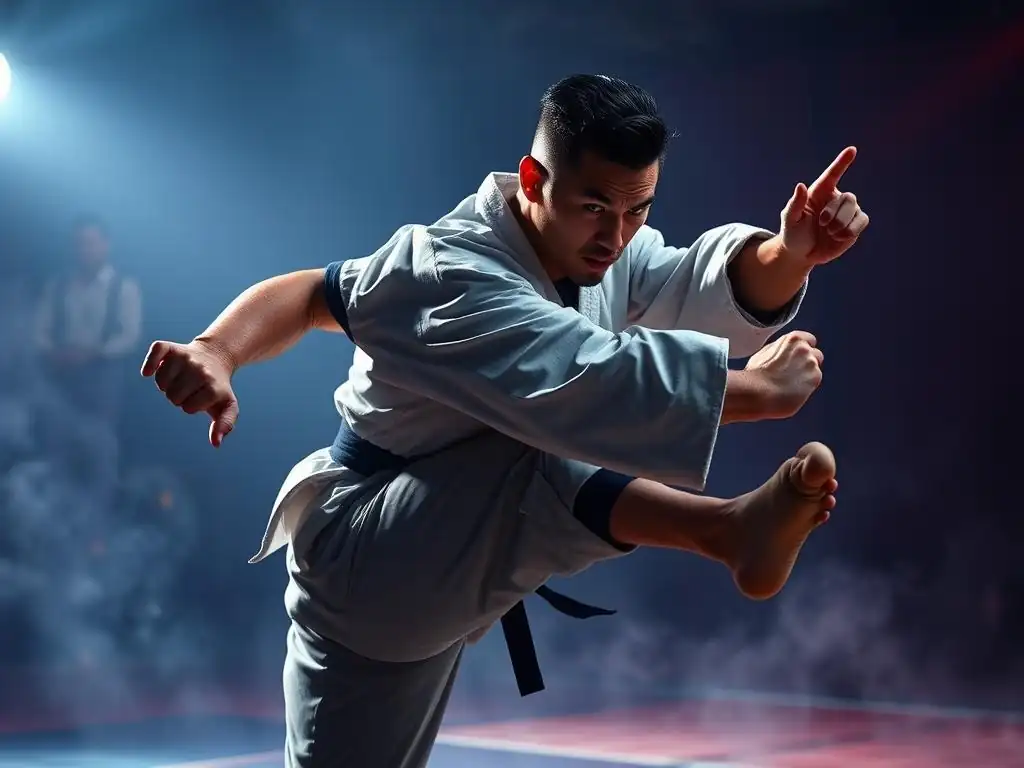
Welcome to Martial Arts Mastery, where we delve into the rich tapestry of global combat traditions! Ever wondered how a seemingly effortless movement can send an opponent tumbling through the air? In this article, we unravel the secrets behind Hapkido projection throw techniques, exploring the biomechanics, strategy, and finesse that make them so effective. Discover how these powerful maneuvers, rooted in ancient principles, can transform your understanding of leverage and control. Intrigued? Let's explore the dynamics!
- Mastering the Art of Hapkido Throwing: Training Drills and Exercises
-
Frequently Asked Questions
- What is the core principle behind Hapkido projection throw techniques?
- How do Hapkido projection throws differ from those in Judo or Aikido?
- What are some common examples of Hapkido projection throws?
- How important is proper footwork in executing Hapkido projection throws effectively?
- What are some key safety considerations when practicing Hapkido projection throws?
- Final Reflection: The Art of Controlled Flight
- Unleash Your Inner Throwing Power!
Mastering the Art of Hapkido Throwing: Training Drills and Exercises
Training drills form the bedrock of developing proficiency in any martial art, and Hapkido projection throw techniques are no exception. While theoretical understanding is vital, the ability to execute throws effectively under dynamic conditions comes only through consistent, structured practice. This section explores essential drills and exercises designed to build the necessary skills, strength, and timing for powerful and precise Hapkido throws. Effective training integrates both partner-based and solo methods to address different aspects of the technique, from interactive timing to fundamental body mechanics.
A well-rounded training regimen for Hapkido projection throw techniques must encompass a variety of drills that challenge practitioners in different ways. This includes exercises focused on breaking an opponent's balance, timing entries, developing explosive power, and refining the intricate movements involved in each specific throw. By systematically working through these drills, students can internalize the complex dynamics of Hapkido throwing, moving from conscious effort to fluid, instinctive execution. The goal is not just to learn a technique, but to embody it.
Essential Drills for Developing Hapkido Throwing Proficiency
Developing the ability to execute effective Hapkido projection throw techniques relies heavily on interactive practice. Partner drills are indispensable because they introduce the unpredictable element of a resisting opponent. These exercises allow practitioners to experience and react to real-time balance shifts, resistance, and timing cues that are impossible to replicate in solo training. They build sensitivity, coordination, and the practical application of theoretical principles like leverage and momentum against a live, moving target.
Beyond simply practicing the full throw repeatedly, essential partner drills break down the technique into its core components. This allows students to isolate and perfect specific phases, such as the entry, the off-balancing action (kuzushi), and the final drive through the throw. For example, uchikomi (entry practice) involves repeatedly entering for a throw without completing it, focusing purely on footwork, grip, and body positioning relative to the partner. This high-repetition approach is crucial for building the muscle memory required for swift and accurate entries, significantly improving the effectiveness of Hapkido projection throw techniques.
Partner Drills for Improving Balance Breaking and Timing
Mastering balance breaking, or kuzushi, is arguably the most critical element in executing successful Hapkido projection throw techniques. Drills specifically targeting this skill involve partners providing varying levels of resistance while the thrower practices disrupting their base using pushes, pulls, angles, and rotational forces. A common drill involves one partner standing firm while the other uses grips and body weight shifts to make them take a step or lose their posture, without attempting a full throw. This hones the thrower's sensitivity to their partner's balance point and teaches them how to exploit moments of instability.
Timing drills build upon the foundation of balance breaking by adding the dynamic element of movement. In these exercises, partners might walk or move unpredictably, and the thrower must initiate their Hapkido projection throw technique the instant they perceive an opening – perhaps when the partner shifts weight, takes a step, or reacts to a feint. This teaches practitioners to recognize and capitalize on fleeting opportunities, turning an opponent's movement against them. Practicing throws from various angles and against different types of movement patterns further refines this crucial timing, making the projection techniques more effective in spontaneous situations.
Resistance Training for Enhanced Hapkido Throwing Power
While technique is paramount, sufficient physical power is necessary to execute Hapkido projection throw techniques against larger or stronger opponents. Resistance training, in the context of throwing, isn't just about lifting weights; it's about developing the specific strength and explosiveness needed for the pulling, lifting, and driving actions inherent in throws. Partner resistance drills involve one person actively resisting the thrower's movements, forcing the thrower to use more force and better body mechanics to overcome the opposition. This builds functional strength directly applicable to grappling scenarios.
Specific exercises can be adapted to simulate the forces involved in Hapkido throws. For instance, using resistance bands anchored low can mimic the pulling action needed for hip throws, while bands anchored high can simulate the downward pull for throws like osoto gari (major outer reaping, adapted in Hapkido).
Partner-assisted drills, where a partner provides gentle resistance while the thrower practices the lifting phase of a technique like seoi nage (shoulder throw), help build the required leg and back strength. Integrating these forms of resistance training systematically can noticeably increase the power behind one's Hapkido projection throw techniques, making them more difficult for an opponent to resist or recover from.
Solo Exercises to Refine Hapkido Projection Throw Technique
While partner practice is essential for timing and reaction, solo exercises play a crucial role in refining the fundamental mechanics of Hapkido projection throw techniques. Practicing alone allows for high-repetition work without the constraints of a partner's availability or fatigue. It provides an opportunity to focus intently on one's own body mechanics, footwork, posture, and the precise sequence of movements required for each throw. This repetitive solo work builds muscle memory and internalizes the technique, making it smoother and more efficient when performed with a partner.
Solo training also enables practitioners to visualize the technique from start to finish, mentally rehearsing the entry, off-balancing, and execution phases. This mental aspect is vital for improving coordination and flow. By breaking down complex Hapkido projection throw techniques into smaller, manageable steps and practicing them individually, students can identify and correct flaws in their form without the pressure of a live interaction. This focused, deliberate practice is a cornerstone of developing technical mastery.
Shadow Throwing for Visualization and Muscle Memory
Shadow throwing, or performing the movements of a throw without a partner, is a foundational solo exercise for refining Hapkido projection throw techniques. The practitioner visualizes an opponent and executes the footwork, body turns, and arm movements precisely as they would during a real throw. This practice emphasizes proper posture, balance, and the coordinated timing of the body's segments. It's an excellent way to build muscle memory for entries and transitions, ensuring that the body moves efficiently and powerfully when the opportunity arises.
Beyond just going through the motions, effective shadow throwing involves detailed visualization. The practitioner should imagine the opponent's weight, resistance, and reaction, adjusting their movements accordingly. Practicing throws from different angles and imagined scenarios (e.g., opponent pushing, pulling, or sidestepping) further enhances adaptability. Regularly incorporating shadow throwing into a training routine significantly improves the fluidity and precision of Hapkido projection throw techniques, making the physical execution feel more natural and less forced.
Using Training Dummies to Practice Hapkido Throwing
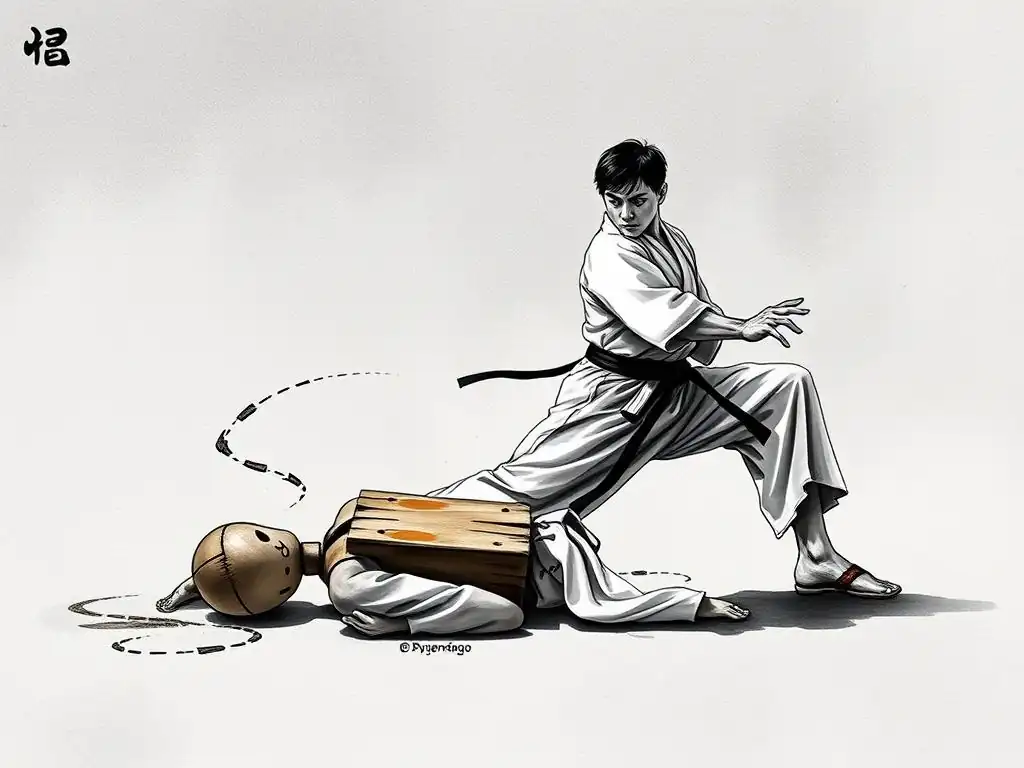
Training dummies, such as grappling dummies or judo dummies, provide a tangible object for practicing Hapkido projection throw techniques in a solo or semi-solo context. Unlike shadow throwing, the dummy provides weight and resistance, allowing practitioners to work on the physical aspects of lifting, pulling, and driving through the throw. This is particularly useful for developing the specific strength and body mechanics needed to manipulate another person's weight and center of gravity.
Practicing with a dummy allows for repetitive execution of throws like hip throws, shoulder throws, and even some sacrifice throws, focusing on getting under the opponent's weight and completing the projection. While a dummy doesn't react or resist dynamically like a human partner, it offers consistent feedback regarding grip, angle, and the force required to lift and move a dead weight. Using dummies in conjunction with partner drills provides a comprehensive approach, allowing practitioners to build both the physical power and the technical precision necessary for effective Hapkido projection throw techniques.
Frequently Asked Questions
What is the core principle behind Hapkido projection throw techniques?
The core principle involves using an opponent's momentum and balance against them. Hapkido emphasizes circular movements and redirection to unbalance the attacker and facilitate the throw.
How do Hapkido projection throws differ from those in Judo or Aikido?
While sharing similarities, Hapkido projection throws often incorporate striking techniques and joint locks before or during the throw. This creates more opportunities to exploit vulnerabilities.
What are some common examples of Hapkido projection throws?
Examples include Bae Chigi (hip throw), Hwae Chigi (wheel throw), and various shoulder throws and leg sweeps. These throws utilize leverage and body mechanics.
How important is proper footwork in executing Hapkido projection throws effectively?
Proper footwork is crucial for generating power and maintaining balance during the throw. It also allows for effective positioning to control the opponent's movement.
What are some key safety considerations when practicing Hapkido projection throws?
Practice in a safe environment with mats and qualified instructors. Focus on proper technique and controlled execution to minimize the risk of injury for both the thrower and the receiver.
Final Reflection: The Art of Controlled Flight
The intricate mechanics and strategic applications of Hapkido projection throws, as explored in this article, are not merely historical techniques; they represent a powerful embodiment of leverage, balance, and the redirection of force, principles that resonate far beyond the dojang. In a world increasingly defined by conflict and imbalance, understanding these dynamics offers a unique perspective on navigating challenges with grace and control.
The study of Hapkido projection throws has profoundly impacted my understanding of movement and strategy, highlighting the importance of adapting to an opponent's energy rather than directly confronting it. This principle extends beyond physical combat, informing how we approach negotiations, resolve conflicts, and even manage our own internal struggles. The best fighter is never angry,
as Master Choi Yong-Sool is often quoted, reminding us that true strength lies in composure and calculated action, not brute force.
Now, consider how you can apply these principles of leverage and redirection in your own life. Are there situations where you can use an opponent's momentum to your advantage, turning a challenge into an opportunity? Embrace the art of controlled flight, not just in the dojang, but in every aspect of your journey, and discover the power of yielding to conquer.
Unleash Your Inner Throwing Power!
Thank you for delving into the art of Hapkido projection throws! Now that you've grasped the dynamics, it's time to put knowledge into action and elevate your training.
Here are some immediate steps you can take:
- Dedicate your next training session solely to perfecting ONE projection throw. Focus on precise footwork and body mechanics.
- Explore the historical lineage of Hapkido and share a lesser-known fact with your training partners to spark engaging discussions.
- Experiment with adapting projection throws to unconventional environments – think open spaces versus confined areas – and journal your insights.
Ready to take your Hapkido throws to the next level? What specific throwing technique will you focus on mastering this week?