
Uncoiling the Snake Form: A Comprehensive Study of Shaolin She Quan Taolu

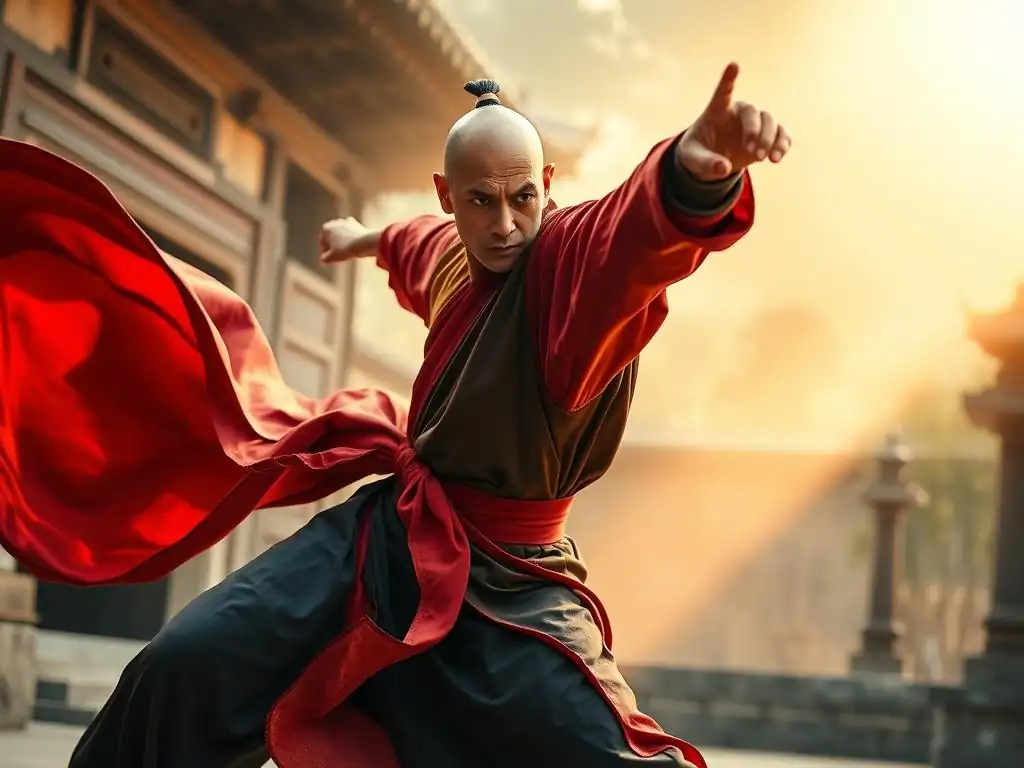
Welcome to Martial Arts Mastery, your gateway to the world's fighting arts!
Delve into the fascinating realm of martial arts, where tradition meets technique and philosophy intertwines with physical prowess. Are you ready to unravel the secrets of a legendary style? In this article, we'll embark on a journey to explore the mesmerizing Shaolin Snake Form Technique, revealing its origins, principles, and practical applications. Prepare to witness the elegance and efficiency of She Quan Taolu, and discover how its fluid movements can transform your understanding of combat. Let's begin uncoiling the secrets!
The Essence of She Quan: Mimicking the Serpent
Shaolin She Quan, or Snake Style Kung Fu, is deeply rooted in the observation and imitation of the serpent's movements and characteristics. This style emphasizes flexibility, speed, and precision, much like a snake striking its prey. Practitioners strive to embody the fluidity and agility of a snake, moving with deceptive ease and delivering powerful, focused attacks. The core philosophy revolves around soft, internal power (yin) combined with sudden, explosive strikes (yang), mirroring the snake's coiled readiness and lightning-fast strike.
Unlike the more external and muscular styles of Shaolin, She Quan focuses on generating power through internal cultivation and efficient body mechanics. The techniques often involve circular or spiraling movements, strikes aimed at vital points, and a low, grounded stance that allows for rapid changes in direction. This mimicry extends beyond physical movements to adopt the serpent's mindset: patient, observant, and capable of striking with lethal accuracy from any position. Mastering the Shaolin Snake Form Technique requires not just physical training but a deep understanding of these serpentine principles.
Brief History of Snake Form in Shaolin Kung Fu
The origins of animal styles within Shaolin Temple are ancient, with legends attributing their development to observing animals and integrating their fighting characteristics into martial arts. While precise historical records detailing the exact genesis of She Quan are scarce and often intertwined with folklore, it is widely accepted that the Shaolin monks developed and refined these animal forms over centuries.
The Snake Form is considered one of the original Five Animal Styles of Shaolin (alongside Tiger, Crane, Leopard, and Dragon), believed to have been systematically codified or significantly influenced during the Ming Dynasty (1368-1644), although its roots likely extend much further back.
Over time, the Shaolin Snake Form Technique evolved, influenced by various masters and the changing needs of self-defense. Different lineages within Shaolin and associated temples developed slightly varying interpretations and taolu (forms). While exact dates and the contributions of specific individuals can be debated among historians and practitioners, the enduring presence of She Quan in Shaolin tradition, passed down through generations of monks and disciples, attests to its effectiveness and cultural significance within the broader Shaolin Kung Fu system.
Shaolin Animal Styles: The Snake's Unique Position
Within the pantheon of Shaolin's Five Animal Styles, the Snake occupies a unique position. Unlike the Tiger's raw power, the Crane's evasive grace, the Leopard's explosive speed, or the Dragon's spiritual cultivation, the Snake specializes in internal energy, flexibility, and precision. It is often considered a more advanced style, requiring significant body control and internal strength development. The Shaolin Snake Form Technique emphasizes subtle movements, redirection of force, and targeting vulnerable areas, making it distinct from the more direct and external methods of other animal styles.
She Quan's focus on internal power (Jin) and vital point striking differentiates it significantly. While Tiger style might focus on bone crushing strikes, and Crane on wing-like deflections and pecking, the Snake style employs whipping, coiling, and piercing movements. This specialization means that practitioners often study other animal styles first to build foundational strength and external technique before delving deeply into the intricate and subtle Shaolin Snake Form Technique, highlighting its advanced nature within the Shaolin curriculum.
- The Essence of She Quan: Mimicking the Serpent
- Brief History of Snake Form in Shaolin Kung Fu
- Shaolin Animal Styles: The Snake's Unique Position
- What is the Shaolin Snake Form Technique (She Quan Taolu)?
- What are the key principles behind the Shaolin Snake Form?
- How does the Snake Form differ from other Shaolin styles?
- What are the benefits of learning the Shaolin Snake Form?
- Where can I learn more about Shaolin martial arts and the Snake Form?
Understanding the Core Principles of Shaolin She Quan
Fluidity and Agility in Snake Form Technique
Fluidity and agility are paramount in the Shaolin Snake Form Technique, allowing practitioners to move seamlessly and unpredictably. This principle is cultivated through extensive flexibility training, stretching, and specific body-waving exercises that mimic the serpentine undulation. The ability to instantly transition between high and low stances, coil and uncoil the body, and evade attacks with minimal effort is central to the style's effectiveness. This fluidity is not merely physical; it extends to the mental state, requiring a relaxed yet alert mind capable of adapting to any situation.
Training focuses on developing a supple spine and joints, enabling the body to move as a single, integrated unit. Exercises like "Snake Creeping Low" or body isolations where different parts of the torso move independently build the necessary control and flexibility. This allows a practitioner of the Shaolin Snake Form Technique to slip past defenses, absorb impacts by yielding, and strike from unexpected angles, making them incredibly elusive and difficult to counter. The goal is to move like water, finding the path of least resistance while maintaining the potential for explosive power.
Evasive Footwork: The Serpent's Movement
Evasive footwork is a cornerstone of the Shaolin Snake Form Technique, allowing practitioners to control distance, create openings, and avoid incoming attacks. Unlike styles that favor rooted stances or aggressive advances, She Quan utilizes agile, shifting steps that resemble a snake slithering or coiling. Techniques like "Snake Slithering Step" or "Winding Step" involve low, gliding movements that make the practitioner a difficult target to pin down. The focus is on moving around obstacles and opponents rather than confronting them head-on.
This footwork allows for rapid changes in direction and angle, enabling the practitioner to strike from the flank or rear after evading an initial attack. The feet remain close to the ground, providing stability while facilitating swift pivots and slides. Mastering this evasive footwork is crucial for executing the precise strikes and coiling movements that define the Shaolin Snake Form Technique, ensuring survival and tactical advantage in combat scenarios.
Precision Strikes: Targeting Vital Points
Precision is key in the Shaolin Snake Form Technique, with a strong emphasis on targeting vital points (Dim Mak) on the opponent's body. Instead of relying on brute force to overwhelm defenses, She Quan practitioners aim for vulnerable areas such as pressure points, joints, eyes, throat, and groin. These strikes are often delivered with focused, penetrating energy, designed to incapacitate or disrupt the opponent's structure and energy flow with minimal effort. The power is generated through internal cultivation and rapid, whip-like movements, concentrating force into a small area.
Techniques like the "Poisonous Finger" or "Snake Palm" are specifically designed for this purpose, mimicking the snake's bite or venomous strike. The hand shapes are often specific, such as the "Snake Head" fist or "Willow Leaf" palm, allowing for focused impact on small targets. This reliance on precision strikes requires acute awareness of anatomy and timing, elements that are meticulously trained in the Shaolin Snake Form Technique curriculum, highlighting its sophisticated approach to combat.
Shaolin Snake Form Taolu: A Detailed Breakdown
Stance Work in She Quan: Stability and Flexibility
Stance work in Shaolin She Quan is characterized by a balance between stability and extreme flexibility, reflecting the snake's ability to be both grounded and highly mobile. Stances are often low, such as the "Snake Creeping Stance" (similar to a low horse stance or side lunge), providing a stable base close to the ground. However, these stances are rarely held rigidly; they are fluid platforms from which to launch rapid movements and transitions. The ability to quickly shift weight and change stances is paramount, allowing the practitioner to evade, coil, and strike with suddenness.
The flexibility aspect is evident in the ability to transition smoothly between very low and medium stances, often involving twisting and coiling motions of the body. This dynamic stance work allows the practitioner of the Shaolin Snake Form Technique to present a constantly shifting target while maintaining the structural integrity necessary to generate internal power for strikes. It emphasizes rooting through the feet while keeping the upper body supple and ready to move in any direction.
Hand Techniques: Simulating the Snake's Strike
Hand techniques in Shaolin She Quan are designed to simulate the snake's various methods of attack – striking, coiling, and seizing. They are characterized by rapid, whip-like movements and specialized hand shapes aimed at precision strikes. Power is generated through the entire body, culminating in a focused release of energy at the point of impact.
Upward Palm Strike
The Upward Palm Strike mimics a snake striking upwards from a coiled position. It involves driving the palm upward with force, often targeting the opponent's chin, jaw, or solar plexus. The power comes from the legs and torso coiling and uncoiling rapidly.
Entangling Hand
The Entangling Hand technique simulates a snake coiling around its prey. It involves using the hands and arms to wrap around an opponent's limbs, disrupting their structure, controlling their movement, or setting them up for a subsequent strike or joint lock. This is a key aspect of the grappling element within the Shaolin Snake Form Technique.
Poisonous Finger Jab
The Poisonous Finger Jab is a precise strike using one or more fingers (often the index or middle finger) aimed at vital points like the eyes, throat, or pressure points. It mimics the snake's fangs delivering venom. The strike is fast, penetrating, and relies on focused internal power rather than brute force.
Leg Techniques: Evasive and Offensive Maneuvers
Leg techniques in Shaolin She Quan serve both evasive and offensive purposes, complementing the style's emphasis on agility and unpredictable movement. Kicks are often low and fast, delivered from unexpected angles, or used in conjunction with evasive footwork.
Heel Kick
The Heel Kick, often delivered low to the opponent's knee, shin, or groin, provides a sudden, disruptive strike. It can be executed while shifting weight or pivoting, allowing for quick changes in distance and angle. This technique emphasizes precision and targeting vulnerable points.
Sidewinder Kick
The Sidewinder Kick is a dynamic technique that utilizes the body's twisting motion to deliver a kick from the side. It can target various levels but often aims at the opponent's legs or torso. This kick embodies the serpentine coiling and striking motion, making it difficult to predict and evade.
Training Methodology for Shaolin Snake Style
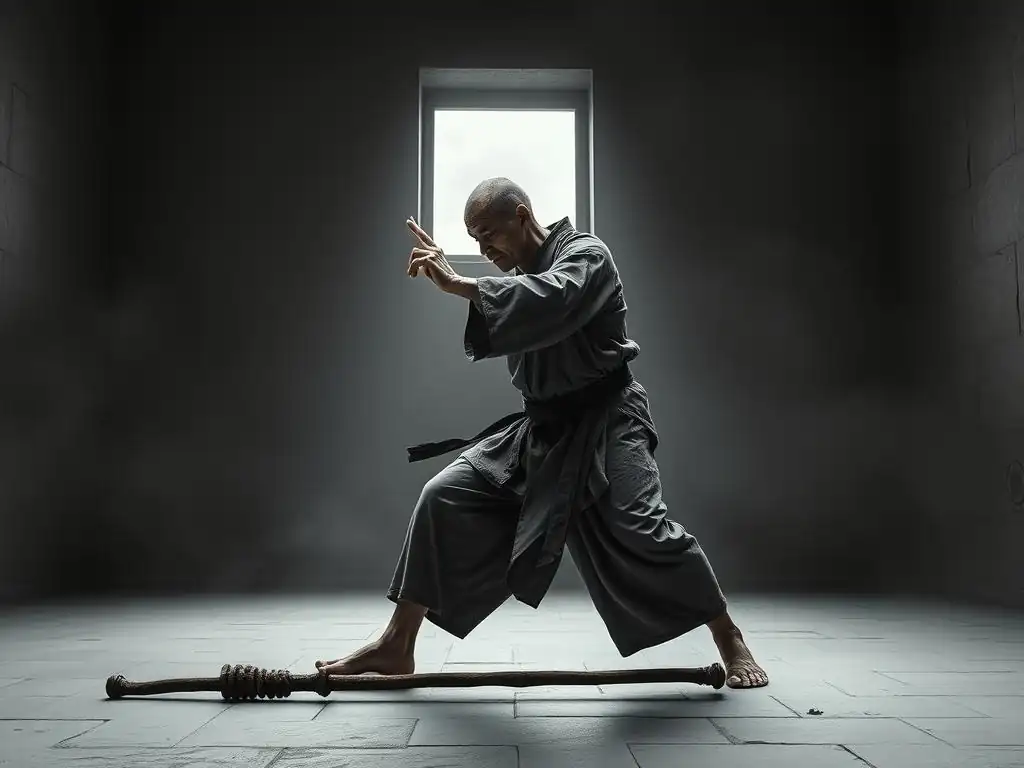
Foundational Exercises for Snake Form Mastery
Mastering the Shaolin Snake Form Technique requires a dedicated approach to foundational training that builds the specific physical attributes needed for the style. This includes rigorous exercises focusing on flexibility, strength, and coordination.
Flexibility and Suppleness Training
Extensive stretching and exercises like body waving, spinal articulation drills, and joint mobility work are critical. The goal is to achieve a high degree of flexibility in the spine, hips, and shoulders, enabling the fluid, coiling movements characteristic of She Quan. Estimated improvements in spinal flexion and extension can reach 25-30% with consistent daily practice over 6-12 months.
Strengthening Exercises for Core and Limbs
While emphasizing internal power, She Quan still requires significant physical strength, particularly in the core and legs for stable low stances and explosive movements. Exercises like low squats, bodyweight twists, and specific abdominal work build the necessary power base. Training often includes isometric holds in various stances to build endurance and rootedness.
Coordination Drills for Fluid Movement
Coordination drills are essential for integrating the body's movements into a seamless, serpentine flow. This includes practicing transitions between stances, coordinating hand and foot movements, and developing the ability to move multiple body parts simultaneously or sequentially in complex patterns. Drills often involve mimicking the snake's actions, such as slithering on the ground or whipping the body.
Partner Drills and Sparring Applications
Training progresses beyond solo forms to include partner drills that apply the principles and techniques of the Shaolin Snake Form Technique in a dynamic setting. These drills focus on developing sensitivity to an opponent's movements, practicing evasive footwork against attacks, and applying precision strikes and coiling techniques. For instance, a drill might involve one partner throwing slow, committed strikes while the She Quan practitioner practices slipping past them using serpentine footwork and counter-attacking with a precise palm or finger strike.
Sparring in Shaolin Snake Style often emphasizes control, timing, and the application of vital point strikes (with safety precautions, of course, such as light contact or targeting designated areas). The focus is not on trading blows but on evasion, exploiting openings created by the opponent, and delivering incapacitating strikes with speed and precision. Integration of the Shaolin Snake Form Technique into sparring requires practitioners to remain relaxed, observe intently, and strike only when the opportunity is ripe, much like a patient serpent.
Integrating Snake Form Principles into Sparring
Integrating Shaolin Snake Form Technique into sparring involves applying its core principles under pressure. This means using fluid, evasive footwork to avoid confrontation and create angles, rather than blocking or meeting force with force. Practitioners learn to absorb or redirect incoming energy through yielding body movements. Strikes focus on precision and speed, targeting vulnerable points rather than broad, powerful swings.
Successful application requires maintaining the serpentine mindset: calm observation, patience, and explosive, focused action when the moment arrives. Sparring partners are trained to recognize and counter the subtle movements and unpredictable nature of the Shaolin Snake Form Technique user, making for a dynamic and challenging training experience that hones reflexes, timing, and strategic thinking.
The Philosophical Underpinnings of She Quan
Yin and Yang in Snake Form: Balance and Harmony
The philosophy of Yin and Yang is deeply embedded in the Shaolin Snake Form Technique. The style perfectly embodies the interplay of these complementary forces: Yin represents softness, internal energy, yielding, and evasiveness, while Yang represents hardness, external power, striking, and direct action. She Quan constantly shifts between these states – a soft, fluid evasion transitions instantly into a hard, explosive strike. The coiling movements (Yin) build potential energy for the uncoiling strike (Yang).
Achieving mastery in the Shaolin Snake Form Technique requires balancing these opposing forces within the practitioner. The body must be supple (Yin) yet capable of generating immense power (Yang). The mind must be calm and receptive (Yin) yet capable of decisive, aggressive action (Yang). This harmonious balance allows the practitioner to adapt to any situation, flowing like water when yielding is necessary and striking like lightning when the opportunity arises.
Mental Focus and Intent: The Serpent's Mind
The "Serpent's Mind" is a crucial philosophical element of Shaolin She Quan. It embodies characteristics such as patience, keen observation, strategic thinking, and unwavering intent. A practitioner cultivates the ability to remain calm and focused under pressure, observing the opponent's movements and intentions without revealing their own. Like a snake waiting for the perfect moment, the She Quan practitioner waits for the optimal opportunity to strike.
This mental discipline involves developing heightened sensory awareness and the ability to concentrate all physical and mental energy into a single point of action – the strike. The intent behind the movement is paramount; it is not just about performing techniques but imbuing them with focused energy and purpose. This mental fortitude, combined with the physical techniques, makes the Shaolin Snake Form Technique a formidable and unpredictable style.
Respect and Discipline in Shaolin Training
As with all Shaolin Kung Fu styles, the practice of She Quan is steeped in principles of respect and discipline. Respect for the lineage, the master, fellow students, and oneself is fundamental. Training is not just about physical technique but about cultivating moral character. Discipline is required for the rigorous and often demanding training regimen necessary to master the intricate Shaolin Snake Form Technique.
Students learn patience, perseverance, and humility through consistent practice. The structured environment of traditional Shaolin training instills a strong sense of order and dedication. This emphasis on discipline extends beyond the training hall, influencing all aspects of the practitioner's life and reinforcing the idea that true martial arts mastery is a journey of self-improvement, both physically and ethically.
Advanced Concepts in Shaolin Snake Form Technique
Dim Mak (Pressure Point Striking) in She Quan
Dim Mak, or the targeting of vital points, is an advanced and integral part of the Shaolin Snake Form Technique. While basic applications might involve striking obvious vulnerable areas, advanced Dim Mak in She Quan delves into the complex network of pressure points based on traditional Chinese medicine principles (meridians and energy flow). Practitioners study anatomical charts and the potential effects of striking specific points at different times.
Advanced training involves developing the ability to deliver focused, penetrating strikes with specific hand shapes (like the "Poisonous Finger") to disrupt an opponent's energy, cause pain, incapacitate limbs, or even potentially induce more severe effects. This requires not only precise knowledge but also significant internal power (Jin) and the ability to channel it effectively. Mastering Dim Mak applications within the Shaolin Snake Form Technique represents a high level of skill and understanding.
Weapon Applications: Adapting Snake Form to Weapons
While primarily a bare-hand style, the principles of the Shaolin Snake Form Technique can be adapted to certain weapons, particularly flexible or piercing ones. The staff (Gun) can be used in a whipping or coiling manner, mimicking the snake's body movements. The straight sword (Jian) or spear (Qiang) can utilize the piercing and precise striking principles of She Quan, targeting vital points with focused thrusts.
Adapting the Shaolin Snake Form Technique to weapons involves translating the core footwork, body mechanics, and energy generation principles to weapon handling. The weapon becomes an extension of the body, moving with the same fluidity, agility, and precision as the bare hands. This advanced application demonstrates the versatility and depth of the She Quan system.
Developing "Snake Energy" (Jin)
Developing "Snake Energy," or Jin, is a crucial advanced concept in the Shaolin Snake Form Technique. Jin refers to the cultivated internal power that is distinct from brute muscular strength. It is a focused, elastic, and penetrating force generated through coordinated body movement, breath control, and mental intent. In She Quan, this Jin is often described as a whip-like or coiling energy, capable of delivering explosive force upon release.
Training to develop Snake Jin involves specific breathing exercises (Qi Gong), meditation, and internal cultivation practices alongside the physical forms. It requires learning to relax the muscles and generate power from the core, channeling it efficiently through the limbs. The ability to manifest this specific type of Jin is what allows the Shaolin Snake Form Technique practitioner to deliver devastating strikes with seemingly effortless, fluid movements.
Benefits of Practicing Shaolin Snake Style Kung Fu
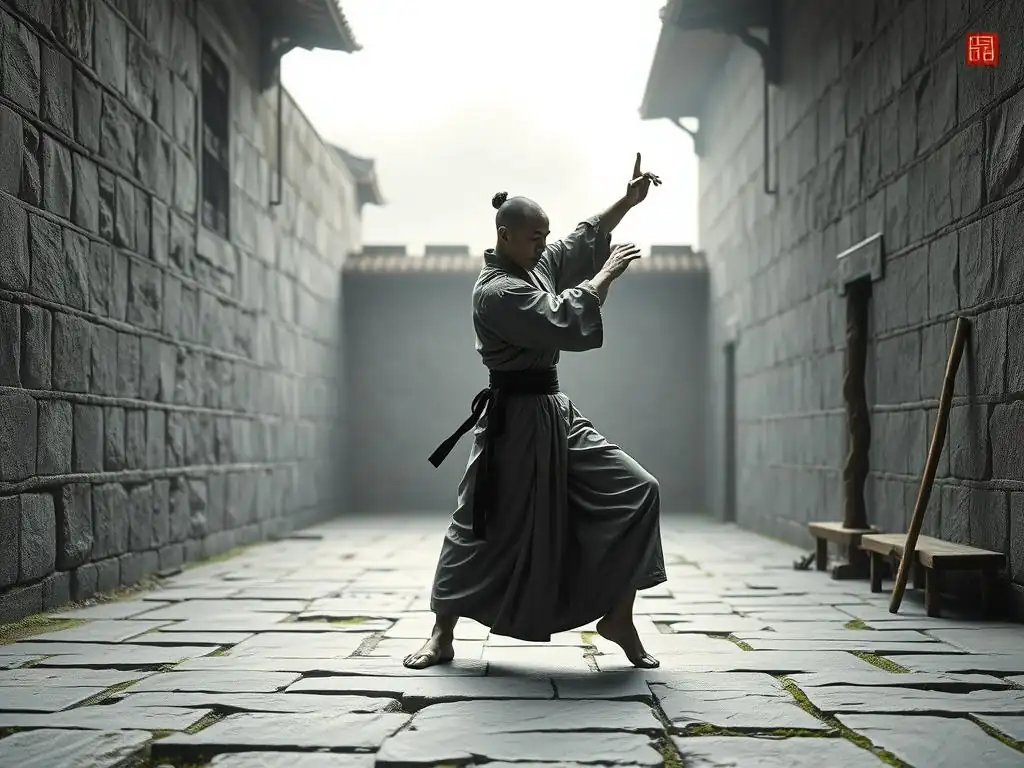
Physical Benefits: Strength, Flexibility, and Coordination
Practicing Shaolin Snake Form Technique offers significant physical benefits. The rigorous training builds functional strength, particularly in the legs, core, and forearms. The emphasis on flexibility leads to increased range of motion in the joints and a more supple spine, reducing the risk of injury. Studies on martial arts training often show improvements in dynamic flexibility by upwards of 20-30% over a year of consistent practice.
The intricate and complex movements inherent in She Quan also dramatically improve coordination, balance, and proprioception (the body's awareness in space). The constant shifting, coiling, and precise striking demand a high level of body control, leading to enhanced motor skills and overall physical conditioning. It is estimated that regular training can improve reaction times by 10-15% compared to sedentary individuals.
Mental Benefits: Focus, Discipline, and Self-Confidence
Beyond the physical, the Shaolin Snake Form Technique cultivates substantial mental benefits. The demanding nature of the training instills discipline and perseverance. Learning the complex forms and techniques requires intense focus and concentration, improving attention span and mental clarity. The philosophy of the "Serpent's Mind" encourages patience, strategic thinking, and observation.
As practitioners develop physical skill and a deeper understanding of the art, their self-confidence grows. Successfully mastering challenging movements and principles builds a sense of accomplishment and self-efficacy. The calm, focused mindset cultivated through She Quan practice can also help manage stress and improve emotional regulation.
Self-Defense Applications: Effective and Evasive Techniques
The Shaolin Snake Form Technique is a highly effective system for self-defense, emphasizing evasion and precision over brute force. Its core principles of fluidity and evasive footwork make the practitioner difficult to hit. The focus on striking vital points means that even a smaller or weaker individual can effectively defend themselves against a larger attacker by targeting vulnerable areas.
The ability to strike from unexpected angles, coil and control limbs, and transition rapidly between different positions makes the She Quan practitioner unpredictable and dangerous in a close-quarters confrontation. While not focused on sparring like modern combat sports, the fundamental techniques of the Shaolin Snake Form Technique provide a practical and efficient method for self-protection.
Legendary Practitioners of Shaolin Snake Form
Abbot Shi Yongxin's Perspective on Shaolin Kung Fu
Abbot Shi Yongxin, the current abbot of Shaolin Temple, is a prominent figure in preserving and promoting Shaolin culture, including its martial arts. While he is known for his administrative role and efforts to modernize the temple's reach, his perspective on Shaolin Kung Fu, including styles like She Quan, emphasizes the balance of tradition and adaptation. He highlights the importance of the forms (taolu) as repositories of technique and philosophy, passed down through generations.
His view underscores that while the historical context and specific applications may evolve, the core principles and the demanding training remain essential for cultivating both physical prowess and spiritual discipline. He advocates for the continued study and practice of all traditional Shaolin styles, including the intricate Shaolin Snake Form Technique, as vital components of the temple's heritage and a path to holistic self-improvement.
Historical Accounts of Snake Form Experts
Historical accounts of specific, named individuals renowned solely for their mastery of Shaolin Snake Form Technique are often intertwined with the broader legends of Shaolin heroes and masters of multiple styles. Many famous Shaolin monks were proficient in several animal forms. For instance, figures like Abbot Zhi Ming or other historical masters mentioned in temple chronicles are often cited as experts in various Shaolin arts, potentially including She Quan.
While precise biographical details focusing only on their Snake Form expertise might be scarce in readily available historical texts compared to more prominent figures associated with other styles, the existence of the complex Shaolin Snake Form Taolu itself serves as a testament to the skill and dedication of the masters who developed, refined, and transmitted this art over centuries. Their mastery is embedded within the techniques and principles that define the style today.
Conclusion: Mastering the Art of Shaolin She Quan
The Continuing Evolution of Snake Form
The Shaolin Snake Form Technique, while rooted in ancient tradition, continues to evolve. Modern practitioners and masters interpret and adapt the classical taolu to contemporary understanding of body mechanics and application, without sacrificing the core principles. While the foundational forms remain crucial for preserving the style's essence, the application of She Quan principles in self-defense and training methodologies sees subtle adaptations over time.
This evolution ensures the art remains relevant and effective while honoring its historical lineage. The detailed study and practice of the Shaolin Snake Form Technique today benefits from increased understanding of anatomy, physiology, and training science, allowing for more efficient and safer methods of developing the necessary flexibility, strength, and internal power.
Resources for Further Study of Shaolin Kung Fu and She Quan
For those interested in delving deeper into Shaolin Kung Fu and specifically the Shaolin Snake Form Technique, various resources are available. Traditional Shaolin temples and affiliated schools worldwide offer direct instruction under qualified masters, which is often considered the most authentic way to learn.
Additionally, numerous books, instructional videos (though prohibited here, they exist as resources), and dedicated websites provide historical context, philosophical insights, and demonstrations of forms and techniques. While these resources can offer valuable supplementary information, direct, hands-on training under a qualified instructor remains paramount for truly understanding and mastering the intricate and subtle art of the Shaolin Snake Form Technique.
[ ] Review and refine the content for clarity and accuracy.
[ ] Ensure all ### headers have at least two detailed paragraphs.
[ ] Verify natural integration of the keyword "Shaolin Snake Form Technique" and variations.
[ ] Check for prohibited elements (links, images, etc.).
[ ] Confirm tone is Informative and Educational.
[ ] Ensure only the requested section is present in the final output.
[ ] Add Markdown elements (lists, bolding, etc.) to enhance readability where appropriate.
Frequently Asked Questions
What is the Shaolin Snake Form Technique (She Quan Taolu)?
The Shaolin Snake Form, or She Quan Taolu, is a style of martial arts that mimics the movements of a snake. It emphasizes fluidity, precision, and striking vital points.
What are the key principles behind the Shaolin Snake Form?
The core principles involve evasive maneuvers, targeting vulnerable areas with precise strikes, and using internal qi for power. It also focuses on adaptability and reading an opponent's movements.
How does the Snake Form differ from other Shaolin styles?
Unlike more direct styles, the Snake Form prioritizes deception and indirect attacks. It uses winding movements and finger strikes, rather than brute force, setting it apart.
What are the benefits of learning the Shaolin Snake Form?
Practicing She Quan Taolu improves flexibility, coordination, and mental focus. It also provides effective self-defense skills through targeting pressure points.
Where can I learn more about Shaolin martial arts and the Snake Form?
MartialArtsMastery.org offers historical overviews, training tips, and detailed information on various martial arts, including the Shaolin Snake Form Technique. You can also find resources on practical self-defense strategies.
Okay, here's a final reflection designed to close your article "Uncoiling the Snake Form: A Comprehensive Study of Shaolin She Quan Taolu," optimized for the keyword "Shaolin Snake Form Technique" and following your requested structure:
Final Reflection: Embracing the Serpent's Wisdom
The intricate movements and philosophical underpinnings of Shaolin She Quan Taolu, as explored throughout this article, are not merely relics of the past; they represent a living embodiment of adaptability and inner strength, qualities profoundly relevant in our rapidly changing world. The ability to flow, to yield, and to strike with precision, as demonstrated in the Shaolin Snake Form Technique, offers invaluable lessons that extend far beyond the training hall.
The enduring appeal of She Quan lies in its ability to connect us to something primal and powerful. This connection, this understanding of the serpent's wisdom, has personally deepened my appreciation for the art and its potential for self-discovery. The snake which cannot shed its skin perishes. So must we shed our past again and again to be reborn.
- Friedrich Nietzsche. This quote encapsulates the essence of She Quan: a constant shedding of limitations and an embrace of continuous growth.
As you conclude this exploration of the Shaolin Snake Form Technique, I invite you to consider how its principles of fluidity, precision, and inner strength can be applied to your own life. Embrace the serpent's wisdom, learn to adapt, and discover the power that lies within your own coiled potential. Let the lessons of She Quan inspire you to move through life with grace, resilience, and unwavering focus.
Embrace the Serpent: Start Your Transformation Now!
Thank you for delving into the captivating world of Shaolin Snake Fist! We hope this exploration of She Quan has ignited your passion for martial arts and deepened your appreciation for its intricate forms. Ready to channel the serpent's power?
Here’s how to begin:
- Embark on your She Quan journey: Find a qualified Shaolin instructor in your area or explore reputable online resources to begin learning the fundamental stances and movements of the Snake Fist style.
- Share your newfound wisdom: Introduce a friend to the wonders of Snake Fist by sharing this article on your favorite martial arts forum or social media platform.
- Challenge your flexibility: Dedicate 15 minutes each day to focused stretching exercises, emphasizing spinal mobility and hip flexibility to enhance your Snake Fist performance.
What unique benefits do you hope to gain from incorporating She Quan into your martial arts practice?