
"The Unity of Chan and Fist": How Meditation Fuels Martial Prowess

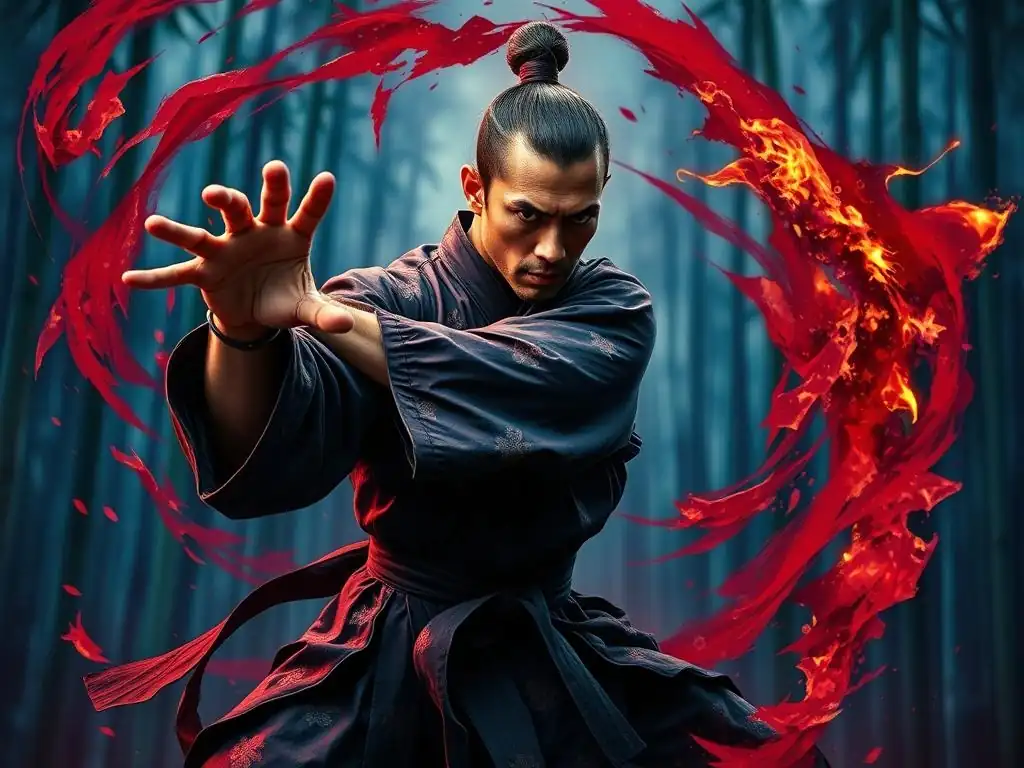
Welcome to Martial Arts Mastery, where the disciplined body meets the focused mind. Explore the intricate tapestry of global martial arts, from historical roots to modern techniques. This month, delve into " The Unity of Chan and Fist," where we uncover how Chan meditation boosts martial skill, revealing the profound connection between inner peace and explosive power. Curious to learn how stillness can amplify your strength? Read on to discover the secrets...
- The Unity of Mind and Fist: How Meditation Fuels Martial Prowess
- Introduction: Meditation as a Cornerstone of Martial Arts
- Understanding Meditation for Martial Artists
- How Meditation Boosts Martial Skill: The Tangible Benefits
- Practical Applications: Integrating Meditation into Your Martial Arts Training
- Specific Techniques: Meditation Methods for Martial Arts Enhancement
- Case Studies: Martial Arts Masters and the Power of Meditation
- Overcoming Challenges: Common Obstacles in Integrating Meditation and Martial Arts
- Conclusion: The Enduring Legacy of Meditation in Martial Arts Mastery
-
Frequently Asked Questions
- What is the connection between Chan meditation and martial arts, according to MartialArtsMastery.org?
- How can Chan meditation specifically boost martial skill?
- Does MartialArtsMastery.org focus on specific martial arts styles that benefit most from Chan meditation?
- What kind of training tips related to Chan meditation does MartialArtsMastery.org offer to martial artists?
- How does understanding the philosophical underpinnings of Chan, as detailed on MartialArtsMastery.org, impact self-defense strategies?
- Final Reflection: The Harmonious Path of Mind and Body
- Unlock Your Inner Warrior: Integrate Meditation & Martial Arts!
The Unity of Mind and Fist: How Meditation Fuels Martial Prowess
Introduction: Meditation as a Cornerstone of Martial Arts
Exploring the Historical Roots of Meditation and Martial Arts in Asia
The deep connection between meditation and martial arts in Asia is woven into the very fabric of their histories, particularly evident in traditions originating from regions like China and Japan. This relationship isn't a modern addition but an ancient synergy, with practices designed to cultivate inner calm and mental discipline developing alongside methods of physical combat. Consider the historical accounts of the Shaolin Temple in China, often cited as a cradle of both Chan Buddhism (a form of meditation) and sophisticated martial arts.
Monks there engaged in rigorous meditation practices not only for spiritual enlightenment but also to build the mental resilience, focus, and body control necessary for their demanding physical training and, historically, for self-defense. This historical context clearly demonstrates how meditation was not merely a parallel activity but a foundational element integrated into the daily lives and martial development of practitioners.
This historical integration highlights a pragmatic understanding that peak physical performance in martial arts requires an equally disciplined mind. The quietude and focus cultivated through meditation provided a mental state conducive to learning complex forms, executing precise techniques, and remaining composed under pressure.
Early martial traditions recognized that brute strength or speed alone was insufficient; true mastery demanded mental clarity, emotional control, and a profound awareness of one's body and surroundings. The philosophical underpinnings shared between meditation and martial arts, such as the pursuit of harmony, balance, and presence, further cemented this bond, illustrating how practices like Chan meditation boosts martial skill by addressing the practitioner as a whole, not just the physical fighter.
The Intertwined Philosophies: Mindfulness and Martial Arts Mastery
At the heart of both mindfulness meditation and advanced martial arts lies a shared philosophical pursuit: the cultivation of present moment awareness and a state of dynamic stillness. Philosophies like Chan (Zen in Japan) Buddhism emphasize the concept of mushin (無心), or "no mind," a state where the mind is clear, unburdened by thought or emotion, and capable of spontaneous, appropriate action.
This state is not one of emptiness, but rather of heightened awareness and responsiveness, free from hesitation or preconceived notions – precisely the mental state sought by experienced martial artists during sparring or self-defense situations. The discipline of meditation trains the mind to let go of distracting thoughts and anxieties, fostering this state of alert tranquility.
Furthermore, concepts like wu wei (無為) from Taoism, often translated as "non-action" or "effortless action," resonate deeply with the principle of efficiency and adaptability in martial arts. It's not about doing nothing, but about acting in harmony with the natural flow of events and energy, applying force only when and where necessary, without resistance. Meditation practices, by calming the internal chatter and increasing sensitivity to internal and external states, help practitioners align with this principle.
By cultivating a mindful awareness of their own body's movements, their opponent's intentions, and the surrounding environment, martial artists can respond more intuitively and effectively. This philosophical synergy underscores how practices like Chan meditation boosts martial skill by refining not just physical technique, but the underlying mental and energetic approach to combat.
Understanding Meditation for Martial Artists
What is Meditation? A Beginner's Guide for Martial Arts Practitioners
For a martial artist, meditation can be understood not as a purely spiritual or passive activity, but as a practical mental training discipline aimed at improving focus, awareness, and emotional control. At its core, meditation often involves directing one's attention to a single point, such as the breath, bodily sensations, or a mantra, and gently redirecting the mind back whenever it wanders. This simple act, practiced consistently, is akin to training a muscle; it strengthens the capacity for sustained concentration, reduces mental clutter, and increases self-awareness.
Think of it as drilling a mental technique, much like you drill physical stances or strikes, to build proficiency and resilience. It's a conscious effort to quiet the external noise and the internal dialogue to better perceive reality as it is.
Common beginner meditation techniques relevant to martial artists include focused attention meditation, where you concentrate on the feeling of air entering and leaving your nostrils or the rise and fall of your abdomen, and open monitoring meditation, where you broadly observe whatever arises in your awareness – thoughts, sounds, sensations – without getting caught up in them. Even just five to ten minutes daily can begin to build this mental capacity. The goal isn't to stop thinking entirely, which is impossible, but to become aware of thoughts without being controlled by them.
This ability to observe mental states without immediate reaction is invaluable in a dynamic martial arts context, where split-second decisions and emotional regulation are paramount. Understanding this fundamental aspect of meditation is the first step in seeing how regular practice, including forms like Chan meditation boosts martial skill in tangible ways.
Key Principles of Meditation Relevant to Martial Arts
Several core principles cultivated through meditation directly translate to enhanced martial arts performance. One fundamental principle is non-judgment. During meditation, you observe thoughts and sensations without labeling them as "good" or "bad." This fosters an acceptance of present reality.
In martial arts, this translates to observing an opponent's movements or your own performance without immediate emotional reaction or self-criticism, allowing for clearer analysis and response. Another key principle is patience and consistency. Meditation results are cumulative; small, regular sessions build significant mental strength over time. This mirrors martial arts training, where consistent drilling over years leads to mastery far beyond sporadic intense efforts.
Discipline and effort are also crucial meditative principles. While the state of mind sought might be effortless, the practice itself requires discipline to sit consistently and apply the technique. This reinforces the discipline required for repetitive physical training, conditioning, and adherence to form in martial arts. Finally, awareness – both internal and external – is perhaps the most directly applicable principle.
Meditation sharpens the ability to notice subtle bodily sensations (internal awareness) and environmental cues (external awareness). This heightened sensitivity is vital for feeling your own structure and alignment, perceiving an opponent's weight distribution or subtle shifts, and anticipating actions. These foundational principles illustrate how dedicated practice, including methods derived from Chan meditation, boosts martial skill by developing essential mental attributes alongside physical prowess.
The Importance of Presence in Combat and Training
Being fully present in the moment is a critical, often elusive, state for martial artists, and it is precisely what meditation cultivates. In training, presence means focusing entirely on the technique being practiced, the feedback from your body, and the instructions from your teacher, rather than being distracted by thoughts of the past (mistakes made) or the future (upcoming challenges). This focused attention allows for deeper learning, more effective repetition, and a greater understanding of subtle nuances in movement and power generation. Without presence, training can become rote and inefficient, leading to slower progress and ingrained errors.
In combat or sparring, presence is even more vital. It means reacting to what is happening now, not what you expect to happen or what just happened. A mind wandering in the past or future is slow to react, prone to hesitation, and easily surprised. A mind fully present is alert, receptive, and capable of instantaneous, appropriate responses.
This state of 'flow' or 'being in the zone,' often experienced by high-level athletes and martial artists, is a direct result of profound presence. Meditation trains the mind to anchor itself in the present moment, whether through focusing on the breath, bodily sensations, or the immediate environment. This mental discipline is a significant way that practices like Chan meditation boosts martial skill by ensuring the practitioner's full cognitive and physical resources are available when they are needed most.
How Meditation Boosts Martial Skill: The Tangible Benefits
Enhanced Focus and Concentration for Precise Movements
One of the most immediate and practical benefits of meditation for martial artists is the significant enhancement of focus and concentration. Martial arts techniques often require intricate coordination, precise angles, and controlled force application. Whether executing a complex joint lock, maintaining a stable low stance, or striking a small target area, sustained attention to detail is crucial. Meditation, particularly focused attention practices, trains the mind to resist distractions and stay centered on a chosen object (like the breath). This mental discipline directly translates to the ability to concentrate intensely on the physical task at hand during training or combat.
For example, consider the focus required in a precise striking drill, aiming to hit a specific point on a target pad with maximum efficiency. A wandering mind might lead to sloppy form, incorrect targeting, or wasted energy.
A mind trained through meditation is better equipped to maintain unwavering attention on the mechanics of the strike, the alignment of the body, and the intended point of impact. This enhanced ability to concentrate allows for more effective practice, faster skill acquisition, and greater precision in execution, proving how improved focus through practices like Chan meditation boosts martial skill by refining the practitioner's technical application.
Improved Reaction Time: Cultivating a Calm Mind Under Pressure
Reaction time in martial arts isn't solely about physical speed; it's heavily influenced by mental processing speed and emotional state. Under pressure – whether in sparring, competition, or a self-defense situation – fear, anxiety, or anger can trigger the 'fight or flight' response, leading to tunnel vision, muscle tension, and impaired cognitive function, all of which slow down appropriate reaction. Meditation cultivates a calm, stable mind capable of observing stressful situations without being overwhelmed by the emotional response.
By training the mind to remain present and non-reactive to internal states like fear, meditation allows the practitioner to perceive external stimuli (an opponent's movement, a sudden threat) more clearly and process that information more efficiently. Instead of freezing or reacting instinctively but inappropriately, the calm mind can access trained responses and choose the most effective action.
While physiological reaction time might be slightly improved, the significant gain is in the appropriate and timely decision-making under duress. This ability to maintain mental clarity and respond effectively under pressure is a key way that consistent meditation practice, including methods like Chan meditation, boosts martial skill and survivability.
Increased Body Awareness: Connecting Mind and Body for Optimal Performance
Martial arts mastery requires an intimate understanding of one's own body – its structure, alignment, balance, and how energy flows through it. This deep internal awareness, often referred to as proprioception or kinesthetic sense, is significantly enhanced by meditation practices, particularly those involving body scans or mindful movement. By systematically bringing attention to different parts of the body, noticing sensations without judgment, practitioners become more attuned to their physical state, identifying tension, imbalances, or subtle discomforts.
This heightened body awareness allows for more efficient movement, better balance, and improved power generation. A martial artist with strong body awareness can feel when their posture is slightly off, adjust their weight distribution instinctively, and generate power from their core and hips more effectively. They can also recognize signs of fatigue or injury sooner.
This internal sensitivity cultivated through practices like mindfulness meditation directly translates to smoother transitions between techniques, more stable stances, and a deeper understanding of their own physical capabilities and limitations. This internal connection is a vital component in how practices derived from Chan meditation boosts martial skill from the inside out.
Emotional Regulation: Maintaining Composure in Stressful Situations
Martial arts training and application inevitably involve stressful situations that can trigger strong emotions: fear before sparring, frustration when struggling with a technique, anger during a heated exchange, or anxiety in a self-defense scenario. Unchecked, these emotions can severely impair performance, leading to poor decisions, reckless actions, or paralysis. Meditation provides tools to recognize, understand, and manage these emotional responses.
Through practices like observing thoughts and emotions without judgment, meditators learn that they are not their emotions; emotions are temporary states that arise and pass. This creates a mental space between the emotional trigger and the reaction. In a stressful martial arts context, this means being able to feel fear or anger without letting it dictate your actions.
Instead of lashing out impulsively or freezing in panic, the practitioner can acknowledge the emotion and choose a trained, strategic response. This capacity for emotional regulation is crucial for maintaining composure, making sound tactical decisions, and preventing escalation in conflict. The ability to remain calm and centered, a hallmark of meditative practice, is a powerful way that training the mind, perhaps through Chan meditation, boosts martial skill by enhancing mental resilience.
Practical Applications: Integrating Meditation into Your Martial Arts Training
Daily Meditation Practices for Martial Artists
Integrating meditation into a busy training schedule doesn't require hours of sitting; even short, consistent daily practice can yield significant benefits. Martial artists can begin with just 5-10 minutes of seated meditation each morning to set a calm and focused tone for the day, or in the evening to process the day's experiences and prepare for rest. A simple practice involves sitting comfortably, closing the eyes, and focusing attention on the breath entering and leaving the body. When the mind wanders, as it inevitably will, gently guide it back to the breath without judgment.
Another practical approach is to incorporate meditation directly around training sessions. A brief 5-minute seated meditation before training can help clear the mind, set intentions, and bring focus to the upcoming practice. Similarly, a short meditation after training can aid in recovery, allow for mindful reflection on the session, and integrate the physical and mental work performed.
Consistency is key, even more so than duration. Making meditation a non-negotiable part of your daily routine, like stretching or conditioning, is a practical way that dedicated effort, much like in martial arts training, helps ensure that practices like Chan meditation boosts martial skill effectively over time.
Mindfulness Exercises for Enhancing Combat Awareness
Beyond formal seated meditation, mindfulness can be integrated directly into martial arts training to enhance combat awareness. One simple exercise is mindful walking, which can be adapted to practicing stances or footwork. Instead of rushing through movements, pay conscious attention to the sensations in your feet, legs, and core; feel the weight shifting, the contact with the ground, and the balance. This increases body awareness and grounding.
During technique practice, whether performing forms (Kata/Poomsae) or drilling strikes/blocks, practice mindful execution. Focus intently on the feeling of the movement, the muscle engagement, the breath coordination, and the intended outcome of the technique. This deepens the learning process and improves precision.
In partner drills or light sparring, practice mindful observation: pay attention to your partner's breathing, subtle shifts in weight, or eye movements without immediately labeling or reacting. This trains the ability to perceive relevant cues more accurately and respond with greater presence. These practical exercises demonstrate how applying principles akin to Chan meditation boosts martial skill by making training itself a form of moving meditation.
Using Meditation to Overcome Fear and Anxiety in Sparring and Self-Defense
Fear and anxiety are natural responses in sparring or potential self-defense situations, but meditation offers powerful tools to manage them. Before sparring, take a few moments to sit or stand quietly, focusing on your breath. Acknowledge any feelings of nervousness without resistance. Remind yourself that fear is just a sensation, and you can choose how to respond to it. During breaks in sparring, return to mindful breathing to regain composure and clarity.
In a self-defense scenario, while formal meditation isn't possible, the mental training it provides becomes invaluable. The ability to stay present, even amidst intense stress, allows for clearer assessment of the threat and access to trained responses. If faced with a sudden threat, the trained mind can utilize a quick grounding technique, like focusing intensely on the feeling of the feet on the ground or taking one deep, stabilizing breath.
Visualization meditation can also be used beforehand to mentally rehearse handling stressful situations calmly and effectively. By building mental resilience through consistent practice, including techniques derived from Chan meditation, boosts martial skill by preparing the practitioner to face fear with courage and clarity.
Specific Techniques: Meditation Methods for Martial Arts Enhancement
Seated Meditation: Cultivating Stillness and Mental Clarity for Improved Technique
Seated meditation, often the first technique taught to beginners, involves sitting in a stable posture (such as cross-legged or on a chair) and focusing the mind, commonly on the breath. This practice cultivates stillness, not just physically, but mentally. By training the ability to remain still and focused despite distractions, practitioners develop mental clarity and discipline. This mental stillness is essential for mastering complex martial arts techniques that require concentration, patience, and the ability to break down movements into precise components.
The mental discipline built through seated meditation directly supports the rigorous process of learning and refining martial techniques. It improves the ability to receive and process instruction, to focus on subtle corrections, and to engage in the deliberate, often repetitive practice necessary for muscle memory and technical perfection.
Just as a sculptor requires a steady hand and clear vision, a martial artist requires a steady mind and clear focus, qualities significantly enhanced by consistent seated practice. This foundational discipline is a core reason why dedicated practice, rooted in traditions like Chan meditation, boosts martial skill by building a strong mental base for physical execution.
Movement Meditation: Enhancing Body Awareness and Coordination
While seated meditation cultivates internal stillness, movement meditation bridges this inner awareness with dynamic physical action. Practices like Tai Chi, Qigong, or even mindful execution of martial arts forms (Kata, Poomsae) serve as forms of movement meditation. In these practices, attention is placed on the sensations of the body moving through space, the coordination of breath and movement, the flow of energy, and maintaining balance and structure.
Engaging in movement meditation enhances body awareness in motion, improves balance, flexibility, and coordination. It teaches the practitioner to move efficiently and powerfully while remaining relaxed and centered – key principles in many martial arts. By bringing mindful attention to each transition, each weight shift, and each extension, the practitioner deepens their understanding of body mechanics and energy flow. This integration of mind and body in motion is a powerful way that practices encompassing movement meditation, drawing inspiration from traditions like Chan meditation, boosts martial skill by making the physical techniques themselves expressions of mindful presence and fluid energy.
Visualization Meditation: Enhancing Combat Strategy and Reflexes
Visualization meditation involves creating vivid mental images of oneself performing actions or navigating scenarios. For martial artists, this can be a powerful tool for enhancing strategy, refining technique, and even improving reaction speed. By mentally rehearsing techniques perfectly, visualizing successful execution, and imagining responding effectively to various attacks, the practitioner engages neural pathways similar to those used in actual physical performance.
This technique can be used to internalize complex forms, practice sparring strategies against different opponents, or mentally prepare for high-pressure situations. Athletes and martial artists often use visualization to improve performance; mentally practicing a technique repeatedly can improve accuracy and speed when physically performed.
Furthermore, visualizing reacting calmly and effectively to sudden stimuli can help program quicker, more appropriate responses in real-time. This mental rehearsal, a form of applied meditation, is a strategic approach to training that showcases how focused visualization, drawing from principles found in various meditative practices including those related to Chan meditation, boosts martial skill by honing the mind's readiness for action.
Case Studies: Martial Arts Masters and the Power of Meditation
Morihei Ueshiba: Aikido Founder's Spiritual Foundation
Morihei Ueshiba (1883-1969), the founder of Aikido, is a prime example of a martial arts master whose art was deeply rooted in spiritual and meditative principles. While not strictly a practitioner of traditional Chan meditation in the Shaolin sense, his path was profoundly influenced by spiritual studies, particularly his involvement with the Omoto-kyo religion, which emphasized harmony, divine energy, and the interconnectedness of all things. Ueshiba's martial development evolved from classical Jujutsu and swordsmanship into Aikido, which he described not merely as a fighting system but as Aiki, the way of harmonizing energy, and a path to spiritual refinement.
His philosophy centered on concepts like masakatsu agatsu (正勝吾勝), meaning "true victory is self-victory," emphasizing overcoming one's own ego, fear, and aggression rather than defeating an opponent. He sought to resolve conflict through blending and harmonizing with an attacker's energy, leading to techniques that redirect force rather than opposing it head-on.
This approach stemmed directly from his spiritual insights and meditative practices, which aimed at purifying the mind, achieving unity with the universe ( Takemusu Aiki), and manifesting divine energy ( Ki). His life and teachings demonstrate how a deep spiritual and meditative foundation can elevate martial arts from mere combat to a profound path of personal and universal harmony.
Analyzing the Role of Meditation in His Training and Philosophy
Ueshiba's meditative and spiritual practices directly informed both the physical execution and the underlying philosophy of Aikido. His emphasis on centering, relaxed movement, and extending Ki (life energy) are all concepts with parallels in various meditative and internal energy cultivation practices.
The Aikido principle of maintaining a strong, centered core ( hara) mirrors the focus on the lower abdomen often emphasized in seated meditation practices as a center of stability and energy. His ability to respond to multiple attackers simultaneously, often described as almost prescient, can be attributed to a state of heightened awareness and presence cultivated through years of rigorous physical and spiritual training.
Furthermore, the ethical dimension of Aikido, which seeks to protect both the practitioner and the attacker, reflects Ueshiba's spiritual belief in the sanctity of life and the possibility of resolving conflict through reconciliation rather than destruction. This non-aggressive, yet highly effective, approach is a direct manifestation of a mind trained to transcend ego and fear, qualities fostered through deep introspection and meditative discipline.
His philosophy and techniques serve as a powerful testament to how a comprehensive approach integrating physical training with mental and spiritual cultivation, akin to the principles found in Chan meditation, boosts martial skill to an exceptional level, transforming combat into a path of enlightenment.
Overcoming Challenges: Common Obstacles in Integrating Meditation and Martial Arts
Addressing Common Difficulties in Meditation Practice
Integrating meditation into a martial arts routine can present several common challenges. One frequent obstacle is the "monkey mind" – the difficulty in quieting incessant thoughts and distractions. Beginners often feel frustrated that they can't stop thinking. It's important to understand that meditation isn't about emptying the mind, but about training the ability to notice thoughts without getting carried away by them and gently returning focus. Patience and a non-judgmental attitude are key; every time you notice your mind has wandered and bring it back, you are successfully performing the core practice.
Another difficulty is physical discomfort, especially when new to sitting still for periods. Finding a comfortable posture, whether on a cushion, bench, or chair, is crucial. Starting with shorter durations (5-10 minutes) and gradually increasing the time as comfort and focus improve is more effective than forcing oneself into long, uncomfortable sessions.
Lack of perceived progress can also be demotivating; unlike physical gains which can sometimes be measured (e.g., faster time, heavier lift), the benefits of meditation can feel subtle initially. Trusting the process and recognizing small shifts in awareness or reactions over time is important. These practical approaches help ensure that the effort to integrate meditation, such as practices related to Chan meditation, boosts martial skill without unnecessary frustration.
Tips for Maintaining Consistency and Motivation
Maintaining consistency in meditation practice, especially when balancing it with demanding martial arts training, requires deliberate strategies. One effective tip is to link meditation to an existing habit or part of your training routine. For instance, make it a rule to meditate for 10 minutes immediately before or after your martial arts class, or before your morning conditioning. This anchors the new habit to an established one, making it harder to skip.
Setting realistic goals is also important. Aiming for 5-10 minutes daily is much more sustainable than trying to do 30-60 minutes right away. Consistency in short sessions is far more beneficial than infrequent long sessions. Finding a meditation buddy or joining a local group or online community can provide support and accountability.
Tracking your practice using a simple journal or app can also offer a visual reminder of your commitment and progress, boosting motivation. Remembering why you are meditating – to enhance your martial arts skills, improve focus, manage stress, and deepen your practice – can serve as a powerful internal motivator. These practical tips help ensure that the integration of meditation techniques, including those inspired by Chan meditation, boosts martial skill through sustained effort.
Conclusion: The Enduring Legacy of Meditation in Martial Arts Mastery
The Synergistic Relationship Between Mental and Physical Discipline
The journey of martial arts mastery is fundamentally one of holistic development, encompassing not just physical prowess but also profound mental and emotional discipline. As explored throughout this article, meditation is not a separate, optional add-on, but a practice deeply interwoven with the core principles and effectiveness of martial arts. The mental fortitude, heightened awareness, emotional regulation, and refined focus cultivated through meditation directly enhance every physical technique, every strategic decision, and every interaction in training and combat.
This synergistic relationship means that progress in one area fuels progress in the other. The discipline required for consistent physical training supports the discipline needed for regular meditation, and the mental clarity gained from meditation improves the quality and efficiency of physical practice. Together, they create a powerful feedback loop, leading to deeper understanding, greater skill, and a more integrated sense of self. The legacy of this unity, stretching back centuries in traditions that understood how practices like Chan meditation boosts martial skill, remains profoundly relevant today.
Continuing the Tradition: Embracing Meditation for Lifelong Martial Arts Growth
Embracing meditation is a way for modern martial artists to connect with the ancient roots of their disciplines and unlock deeper levels of mastery. It is a commitment to training the mind with the same dedication applied to training the body. For those seeking not just physical competence but true excellence and a deeper understanding of their art, incorporating meditation is a vital step. It offers a path to greater presence, resilience, and inner calm, qualities that distinguish a true master.
As a lifelong practice, meditation continues to offer benefits long after physical peak might be reached, providing clarity, perspective, and inner peace that enrich one's martial path and life beyond. Whether through seated practice, mindful movement, or visualization, the integration of meditative principles into martial arts training is a powerful way to honor tradition and foster continuous growth. By understanding how dedicated practice, including methods inspired by Chan meditation, boosts martial skill, practitioners can embark on a more complete and rewarding journey towards martial arts mastery.
Frequently Asked Questions
What is the connection between Chan meditation and martial arts, according to MartialArtsMastery.org?
Chan meditation, as discussed on MartialArtsMastery.org, provides a mental and spiritual foundation that enhances focus, discipline, and awareness, all of which are crucial for optimal martial arts performance. It allows practitioners to access a deeper understanding of themselves and their movements.
How can Chan meditation specifically boost martial skill?
Chan meditation helps improve mental clarity and focus, allowing martial artists to react faster and make better decisions in combat. It also cultivates a sense of calmness under pressure, which is essential for executing techniques effectively.
Does MartialArtsMastery.org focus on specific martial arts styles that benefit most from Chan meditation?
While applicable to many styles, MartialArtsMastery.org might showcase styles like Shaolin Kung Fu or Tai Chi, where Chan meditation has a historically strong connection. The core principles of mindfulness and awareness are valuable across disciplines.
MartialArtsMastery.org may suggest techniques like mindfulness of breath, body scan meditations, and walking meditation integrated into daily training. They will also emphasize the importance of consistency and patience in developing a meditative practice.
How does understanding the philosophical underpinnings of Chan, as detailed on MartialArtsMastery.org, impact self-defense strategies?
Understanding the philosophical aspects of Chan fosters self-awareness and emotional regulation, crucial for de-escalating conflicts and making sound judgments in self-defense situations. It promotes a mindset of non-violence as a first resort.
Final Reflection: The Harmonious Path of Mind and Body
The exploration of Chan and its profound impact on martial arts reveals a truth that resonates deeply even today: true power stems not just from physical strength, but from the cultivation of inner peace and mental clarity. The synergy between Chan meditation and martial prowess is not merely a historical anecdote, but a testament to the holistic approach to self-improvement that remains profoundly relevant in our fast-paced, often chaotic world.
The influence of this philosophy extends far beyond the dojo, shaping our understanding of resilience, focus, and the interconnectedness of mind and body. This journey into the unity of Chan and Fist has personally reinforced the importance of mindfulness in all aspects of life, reminding me that true mastery lies in the harmonious integration of inner and outer strength. The mind is the master of everything.
- Bodhidharma This quote encapsulates the essence of Chan's influence, highlighting the pivotal role of mental discipline in achieving excellence, whether in martial arts or any other pursuit.
Now, consider how you can apply these principles in your own life. Embrace the power of mindful practice, whether through meditation, focused breathing, or simply being present in each moment. Allow the stillness of Chan to fuel your own "martial prowess," whatever form that may take. Strive for the harmonious balance between inner peace and outward action, and discover the transformative potential that lies within you.
Unlock Your Inner Warrior: Integrate Meditation & Martial Arts!
Thank you for exploring the powerful synergy between Chan meditation and martial arts! We hope this article has illuminated how mindfulness can amplify your physical practice and cultivate inner strength. Now, take the next step in your journey.
- Immediately dedicate 10 minutes each day to mindful breathing exercises, focusing on your posture and the rhythm of your breath to enhance your presence and focus. This is your core foundation.
- Share this article with a fellow martial artist who you think would benefit from incorporating meditation into their training. Let's build a stronger community!
- Consider exploring different styles of meditation beyond Chan, like Vipassana or Zazen, to discover the practices that best resonate with your martial arts discipline.
What specific meditation technique will you try first to elevate your martial arts practice?