
Hapkido Crescent Kicks and Axe Kicks: Unconventional Angles for Surprise Attacks

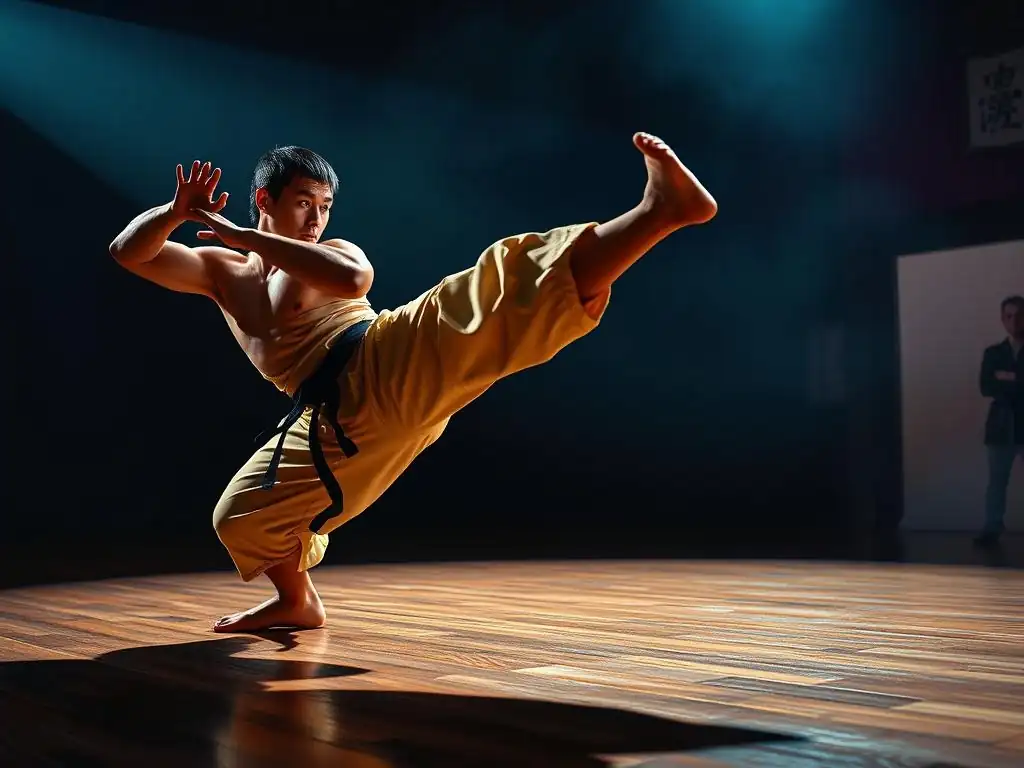
Welcome to Martial Arts Mastery, your gateway to unlocking the secrets of combat traditions worldwide.
Ever felt limited by traditional kicks? Dive into our exploration of Hapkido crescent kicks and axe kicks – unconventional techniques designed to surprise and overwhelm. Discover how these unique angles can add a devastating dimension to your fighting style. Intrigued? Read on to master the art of the unexpected!
- Mastering Surprise Attacks in Hapkido: The Crescent and Axe Kick Advantage
- The Hapkido Crescent Kick: A Circular Path to Disruption
- The Hapkido Axe Kick: A Decisive Downward Strike
- Crescent Kick vs. Axe Kick in Hapkido: A Comparative Analysis
- Integrating Hapkido Crescent and Axe Kicks into Your Training Regimen
- Advanced Hapkido Kicking Strategies: Combining Crescent and Axe Kicks
- The Element of Surprise: Maximizing the Effectiveness of Unconventional Hapkido Kicks
- Conclusion: Elevating Your Hapkido Game with Crescent and Axe Kicks
-
Frequently Asked Questions
- What makes Hapkido's crescent and axe kicks unique compared to other martial arts kicks?
- How effective are crescent and axe kicks in a real-world self-defense situation?
- What are some common mistakes beginners make when learning Hapkido crescent and axe kicks?
- What are the primary benefits of incorporating crescent and axe kicks into a Hapkido practice?
- Where can I learn more about advanced Hapkido techniques beyond crescent and axe kicks?
- Final Reflection: Mastering the Unpredictable
- Unleash Your Kicking Potential: Begin Your Hapkido Journey Today!
Mastering Surprise Attacks in Hapkido: The Crescent and Axe Kick Advantage
The Importance of Unconventional Kicks in Hapkido Self-Defense
Hapkido is renowned for its diverse range of techniques, seamlessly blending striking, joint locks, throws, and falls. While foundational kicks like the front kick, side kick, and roundhouse kick form the bedrock of striking, the inclusion of unconventional angles and trajectories significantly enhances a practitioner's self-defense capabilities.
Kicks such as the crescent kick and axe kick offer unique lines of attack that can bypass standard blocks and guards, creating opportunities for surprise and disruption in a dynamic confrontation. These techniques are not merely flashy moves; they are strategic tools designed to exploit openings and create distance or follow-up opportunities in real-world scenarios.
The effectiveness of Hapkido crescent axe kicks lies in their ability to deliver power from unexpected directions. Unlike linear or horizontal attacks, the arcing or downward path of these kicks makes them harder to anticipate and defend against, especially for an untrained aggressor or an opponent focused on more conventional attacks. By integrating these less common kicks, a Hapkido practitioner can introduce an element of unpredictability into their repertoire, keeping an assailant off balance and increasing the likelihood of successfully neutralizing a threat. This strategic diversity is a hallmark of Hapkido's pragmatic approach to self-defense.
Hapkido's Emphasis on Practical Application of Kicks
Hapkido's philosophy heavily emphasizes practical, effective self-defense. Kicking techniques, including the Hapkido crescent axe kicks, are taught not just for sport or demonstration, but for their utility in real-life situations. This means training focuses on generating power in close quarters, maintaining balance after execution, and seamlessly transitioning into follow-up techniques, whether another strike, a joint lock, or a throw. The goal is to end a confrontation quickly and decisively, and these unconventional kicks provide potent options for achieving that objective.
Training in Hapkido involves rigorous drills that simulate common self-defense scenarios, encouraging practitioners to apply kicks against static and moving targets, often integrating them with hand strikes or defensive maneuvers. For instance, a training exercise might involve defending against a grab, creating space with a palm strike, and following up with an outward crescent kick to the head or shoulder to disrupt balance before securing a joint lock. This emphasis on practical application ensures that when faced with danger, the Hapkido crescent and axe kicks are not just theoretical knowledge but ingrained responses ready for deployment.
The Hapkido Crescent Kick: A Circular Path to Disruption
What is a Crescent Kick in Hapkido? Defining the Technique
The crescent kick in Hapkido is characterized by its sweeping, circular motion, tracing an arc through the air. The kick is typically delivered with the sole or the instep of the foot.
There are two main variations: the inward crescent kick, which arcs inward across the body towards the center line, and the outward crescent kick, which arcs outward away from the body's center line. Unlike a roundhouse kick which focuses on hitting with the ball of the foot or the shin and often travels horizontally or slightly upwards, the crescent kick emphasizes the sweeping motion, using the momentum of the leg swinging through the arc.
This distinct trajectory makes the crescent kick highly effective for attacking from angles that are difficult to block with conventional guards. In Hapkido, the crescent kick is utilized not only for striking vulnerable targets like the head or collarbone but also as a defensive maneuver to block incoming attacks, particularly kicks, by sweeping them away with the sole of the foot. Its versatility as both an offensive weapon and a defensive shield underscores its value in the Hapkido curriculum, offering practitioners a dynamic tool for managing distance and disrupting an opponent's offense.
The Inward Crescent Kick: Targetting the Head and Neck
The inward crescent kick is a powerful technique that swings the leg in an arc across the front of the body, often aimed at the opponent's head or neck area. The kick starts with the leg moving from the outside and sweeping inward. This motion can be surprisingly fast and deceptive, as it doesn't follow the more common linear or outward paths.
The target area is typically the side of the head, the temple, or the neck, aiming to cause significant impact or disorientation. The striking surface is usually the sole or the side of the foot, leveraging the full momentum of the swinging leg.
Because the inward crescent kick comes from an unusual angle, an opponent relying on standard frontal blocks may find themselves completely exposed. For example, in a sparring scenario, an opponent might be guarding against a roundhouse kick or a punch to the body. A well-timed inward crescent kick, perhaps initiated after a feint or a step to the side, can bypass their guard entirely and connect with the head. Hapkido training emphasizes using the body's core rotation to generate maximum power in this sweeping motion, ensuring that even a glancing blow can be highly disruptive.
The Outward Crescent Kick: Disrupting Balance and Creating Openings
The outward crescent kick follows an arc away from the body's centerline, moving from the inside outwards. This kick is frequently used to strike the opponent's head or shoulder, or defensively to parry or sweep away an incoming attack. When used offensively, it can target areas like the temple, the side of the jaw, or the collarbone. The outward motion can be initiated from various stances and often pairs well with footwork that shifts the practitioner's angle relative to their opponent.
Beyond striking, the outward crescent kick is invaluable for disrupting an opponent's balance or guard. A well-placed outward crescent kick to the shoulder or arm can knock it out of the way, creating an immediate opening for a follow-up strike or a transition to grappling.
Consider a situation where an opponent is advancing with their guard high; an outward crescent kick aimed just inside their lead arm can sweep it aside, leaving their head vulnerable. Hapkido training emphasizes controlling the trajectory and power of this kick, allowing practitioners to use it effectively for both offense and defense, making it a versatile component of the Hapkido crescent axe kicks repertoire.
Training Drills for Effective Crescent Kick Execution in Hapkido
Developing proficiency in Hapkido crescent kicks requires dedicated and specific training drills. Initial drills often involve practicing the motion slowly against the air or a stationary target like a heavy bag or kicking shield, focusing on achieving the correct circular path and generating power through hip rotation. Practitioners work on maintaining balance throughout the kick and recovering quickly to a stable stance. This foundational work ensures the correct mechanics are ingrained before adding speed and resistance.
More advanced drills incorporate movement, timing, and partner interaction. Examples include:
- Target Specificity: Kicking drills against focus mitts held at varying heights and angles, simulating head and shoulder targets.
- Defensive Application: Partner drills where one person throws a kick (like a roundhouse), and the other uses an outward crescent kick to parry or sweep it away.
- Combination Drills: Integrating crescent kicks into sequences with other strikes or movements, such as a jab-cross-outward crescent kick combination.
- Movement Integration: Practicing crescent kicks while advancing, retreating, or circling, ensuring the kick can be deployed effectively from dynamic positions.
These drills, practiced consistently, build the necessary flexibility, strength, balance, and timing to execute Hapkido crescent kicks effectively in self-defense situations.
The Hapkido Axe Kick: A Decisive Downward Strike
Defining the Axe Kick in Hapkido: Power and Precision
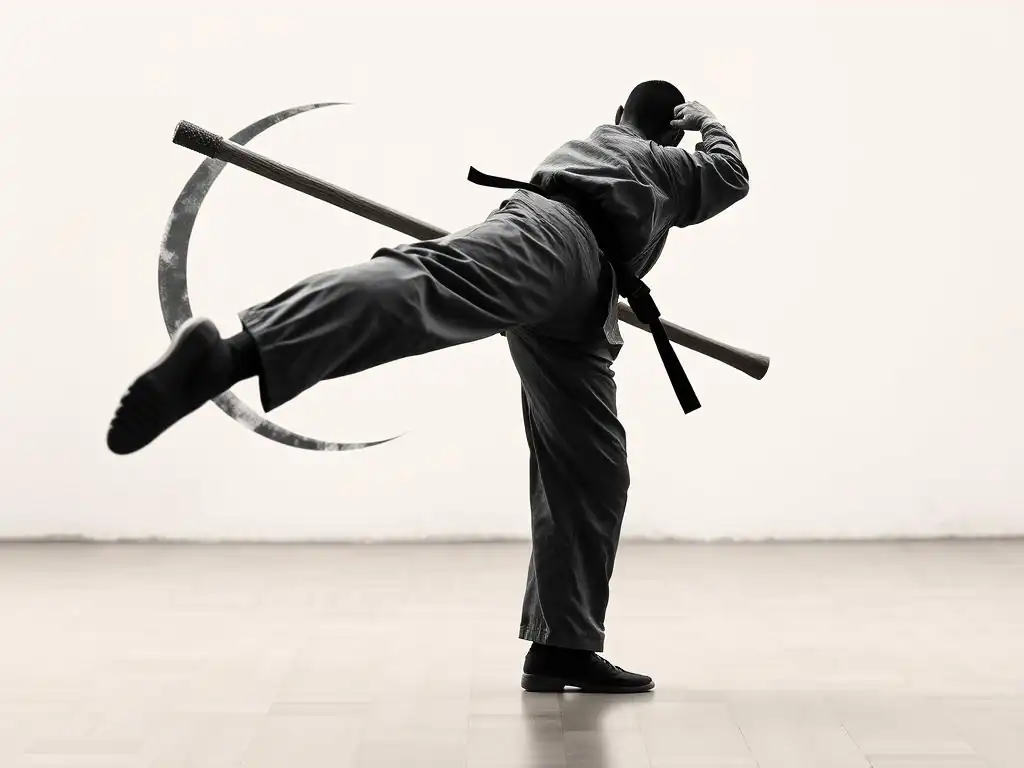
The axe kick in Hapkido is a distinctive vertical or arcing downward strike, delivered with the heel, ball of the foot, or even the sole. It gets its name from the chopping motion, similar to swinging an axe. The kick typically begins with the leg lifting high, often straight up or with a slight arc, and then driving downwards onto the target. This technique leverages gravity and the full weight of the leg and body to generate significant downward force, making it a powerful tool for breaking guards and impacting vulnerable areas from above.
Unlike the sweeping motion of the crescent kick, the axe kick focuses on linear downward power. The trajectory makes it particularly effective against opponents who have a high guard or are leaning forward. It can bypass conventional blocks by coming down from above, striking targets like the crown of the head, the collarbone, or the shoulder. Precision is key with the axe kick, as the timing and angle must be correct to land effectively and avoid losing balance, especially if the kick is blocked or missed.
Targetting Vulnerable Points with the Hapkido Axe Kick: Head, Shoulders, and Collarbone
The Hapkido axe kick is designed to exploit specific vulnerable points on an opponent's body, primarily targeting the head, shoulders, and collarbone area. A direct strike to the top of the head can cause severe disorientation or unconsciousness. Targeting the collarbone with the heel or ball of the foot can potentially break it, immediately incapacitating an opponent's ability to use their arm effectively or maintain a guard. Strikes to the shoulder can disrupt balance, cause pain, and open up opportunities for follow-up techniques.
The downward angle of the axe kick makes these targets particularly susceptible. An opponent might successfully block horizontal or upward strikes, but defending against a powerful downward force requires a different type of block or evasion. For example, an opponent with a tight guard might be vulnerable to an axe kick coming down on the top of their head or striking their collarbone from above, forcing their guard down. Hapkido training emphasizes accuracy in delivering the axe kick, ensuring that practitioners can reliably hit these small, but critical, targets under pressure.
Generating Power and Momentum in the Hapkido Axe Kick
Generating maximum power in the Hapkido axe kick relies on several key principles: flexibility, height, and downward acceleration. First, significant flexibility in the hamstrings and hips is necessary to lift the leg high enough to create a steep downward angle. Training includes extensive stretching routines to achieve this range of motion. Second, lifting the leg as high as possible before the downward strike increases the distance over which gravity can accelerate the leg, adding to the kick's force.
Third, and critically, the power comes from the controlled downward snap or drive of the leg and hip, not just letting the leg fall. Practitioners are taught to use their core muscles and hip flexors to forcefully drive the heel or foot down onto the target. Imagine driving a nail with a hammer – the power comes from the downward momentum and force applied at impact. Drills focusing on snapping the leg down onto padded targets or even the ground (with caution) help develop this crucial downward power generation for the Hapkido axe kick.
Integrating the Axe Kick into Hapkido Sparring and Self-Defense Scenarios
Successfully integrating the Hapkido axe kick into sparring and self-defense requires tactical awareness and practice. It is often used as a surprise attack or as a counter-attack when an opponent is off-balance or has a high guard. For instance, if an opponent steps forward aggressively or is leaning in, a quick axe kick can capitalize on their forward momentum and exposed head or shoulder. It can also be used as a follow-up after a feint or a different strike that draws the opponent's guard up.
In self-defense scenarios, the axe kick can be particularly effective against an aggressor who is closing distance quickly. A well-timed axe kick to the head or collarbone can immediately neutralize the threat or create enough distance and disorientation to escape or transition to other techniques. Hapkido sparring provides a safe environment to practice the timing, distance, and setup for the axe kick, allowing practitioners to understand when and how to deploy this powerful downward strike effectively against a moving, resisting opponent. The combination of Hapkido crescent axe kicks offers a formidable array of angles.
Crescent Kick vs. Axe Kick in Hapkido: A Comparative Analysis
Range and Targeting Differences: Choosing the Right Kick
While both the Hapkido crescent kick and axe kick offer unconventional angles, they differ significantly in their effective range and preferred targets. The crescent kick, with its sweeping motion, generally operates effectively at medium to slightly longer ranges, depending on the practitioner's leg length and flexibility. It is excellent for targeting the sides of the head, neck, or shoulders, and also serves well as a defensive parry against incoming kicks. Its circular path makes it useful for attacking around an opponent's guard.
The axe kick, conversely, is most potent when delivered from a closer range where the leg can be lifted high and driven straight down onto the target. Its primary targets are the top of the head, the collarbone, and the shoulders – areas vulnerable to downward force. While it can be delivered from slightly further away with an arcing motion, the straight-down version from closer range maximizes gravity and downward momentum. Choosing between these Hapkido crescent axe kicks depends heavily on the distance to the opponent and the specific target of opportunity.
Speed and Power Considerations for Hapkido Practitioners
Both crescent and axe kicks in Hapkido require a blend of speed and power, but the emphasis differs slightly. The crescent kick relies heavily on the speed and momentum of the sweeping leg motion to generate force. A fast, whip-like action is often more effective than a slow, powerful swing for the crescent kick, especially when used for quick disruption or hitting a moving target. Flexibility also plays a key role in the speed and height of the crescent kick.
The axe kick, while benefiting from speed in the setup (lifting the leg), derives its primary power from the downward acceleration and the force applied at impact. The sheer weight and downward drive of the leg, enhanced by core engagement, create its devastating power. While speed is important for surprise and landing the kick before it can be blocked, the defining characteristic of a powerful axe kick is the force delivered vertically downwards. Hapkido training focuses on developing both the speed for the crescent kick and the raw power for the axe kick through specific conditioning and technique drills.
Situational Awareness: Adapting Your Kicking Strategy
Mastering Hapkido crescent axe kicks is not just about executing the techniques; it's about knowing when and why to use them. Situational awareness is paramount. Factors like the distance to the opponent, their stance, their guard, their movement, and the environment (e.g., slippery floor, obstacles) all influence which kick is appropriate. For instance, if an opponent is protecting their body with a low guard, a crescent kick to the head might be the optimal choice. If they have a high guard, an axe kick targeting the top of their head or collarbone could be more effective.
Furthermore, the practitioner's own position and balance are critical considerations. An axe kick requires significant balance, especially if it misses or is blocked, potentially leaving the practitioner vulnerable. A crescent kick might be easier to recover from if off-balance. Hapkido training instills the ability to quickly assess the situation and adapt the kicking strategy on the fly, perhaps using a crescent kick to create an opening and then following up with a different technique, or using an axe kick to break through a stubborn defense. This dynamic decision-making is a core element of practical Hapkido application.
Integrating Hapkido Crescent and Axe Kicks into Your Training Regimen
Footwork Drills for Seamless Transitions
Effective execution of Hapkido crescent and axe kicks is intrinsically linked to proficient footwork. These kicks often require specific steps or adjustments to create the right angle, distance, or momentum. Training should include drills that practice transitioning into and out of these kicks smoothly. Examples include stepping offline before an outward crescent kick, or taking a small shuffle step forward to close distance before an axe kick.
Drills like shadow kicking while moving around the training area, practicing kicks after specific defensive maneuvers (like a sidestep or block), or integrating kicks into complex footwork patterns help practitioners deploy Hapkido crescent axe kicks without telegraphing their intentions. For instance, practicing stepping forward and throwing a jab, then immediately following with an axe kick, helps build the muscle memory for combination attacks involving these kicks. Seamless footwork ensures the kicks are delivered with maximum power and minimal vulnerability.
Partner Exercises for Accuracy and Timing
Partner drills are essential for developing the accuracy and timing required for Hapkido crescent and axe kicks. Using focus mitts or kicking shields, a partner can provide a moving, realistic target at varying heights and angles. This allows the practitioner to practice hitting specific points (e.g., the corner of a mitt representing the temple for a crescent kick, or the top center representing the crown of the head for an axe kick).
Drills can progress to include defensive reactions from the partner, such as attempting to block or evade, forcing the practitioner to adjust their timing or angle. For example, a drill might involve the partner holding a mitt for an axe kick, but sometimes moving it slightly, requiring the practitioner to adjust their aim mid-kick. Another drill could involve the partner throwing a simulated punch, and the practitioner practicing a defensive sidestep followed by an outward crescent kick. These interactive drills are vital for bridging the gap between solo practice and live application of Hapkido crescent axe kicks.
Conditioning Exercises to Enhance Kicking Power and Flexibility for Hapkido
Developing the power and flexibility necessary for effective Hapkido crescent and axe kicks requires targeted physical conditioning. Flexibility is crucial for lifting the leg high and achieving the necessary range of motion, particularly for the axe kick's height and the crescent kick's wide arc. Regular stretching routines focusing on the hamstrings, hip flexors, and groin are indispensable. Dynamic stretches before training and static stretches after are both important.
Strength and power conditioning should focus on the legs, core, and hips. Exercises like squats, lunges, calf raises, and plyometric drills (like jump squats) build leg strength. Core exercises such as planks, crunches, and twists enhance stability and the ability to generate rotational power for kicks. Hip flexor exercises strengthen the muscles responsible for lifting the leg quickly and powerfully. Integrating exercises like weighted leg raises or resistance band kicking drills can specifically target the muscles used in executing Hapkido crescent axe kicks, increasing both speed and impact force.
Advanced Hapkido Kicking Strategies: Combining Crescent and Axe Kicks
Setting Up Surprise Attacks with Feints and Distractions
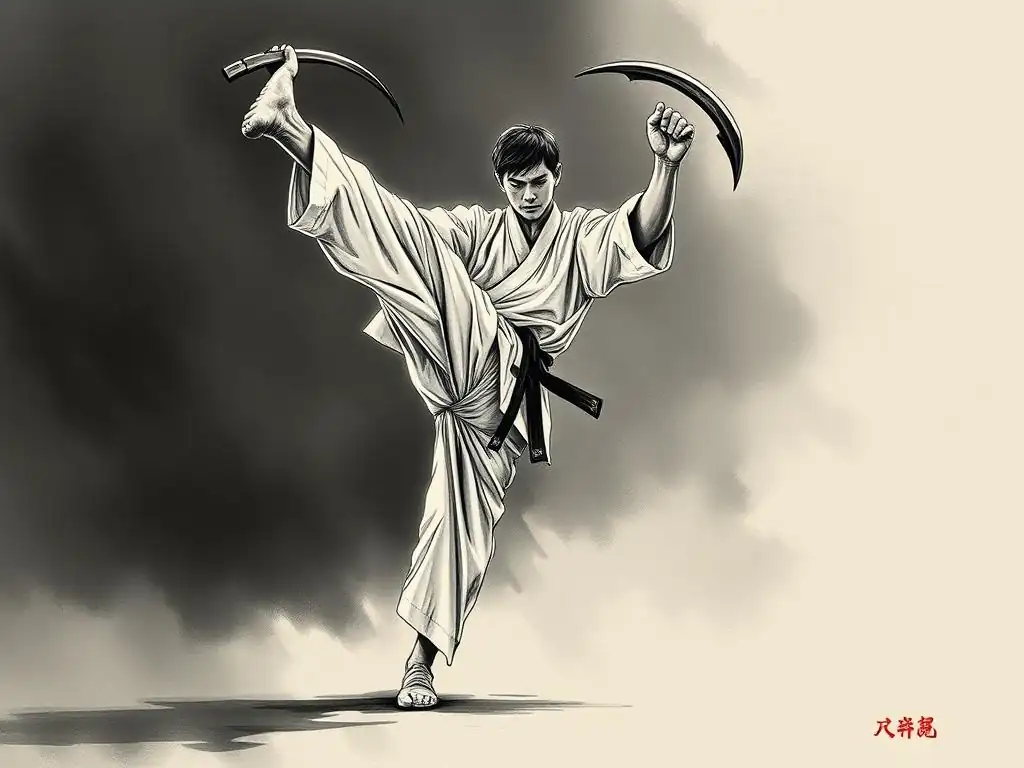
The true power of Hapkido crescent and axe kicks often lies in their element of surprise. Advanced practitioners learn to set up these unconventional attacks using feints and distractions. A feint is a deceptive movement designed to draw a specific reaction from the opponent. For example, a low feint towards the leg might cause the opponent to drop their guard, creating an opening for a high crescent kick to the head. Similarly, a feinted hand strike towards the face could cause the opponent to raise their hands, leaving their collarbone vulnerable to an axe kick.
Distractions can also be used. A quick step to the side, a verbal command, or even a glance in a different direction can momentarily divert an opponent's attention, providing a split-second opportunity to launch a crescent or axe kick from an unexpected angle. Hapkido training at advanced levels incorporates drills that specifically focus on integrating feints and distractions before executing Hapkido crescent axe kicks, developing the practitioner's ability to manipulate their opponent's reactions and create openings for these potent techniques.
Creating Combinations for Maximum Impact
Combining Hapkido crescent and axe kicks with other strikes and techniques significantly increases their effectiveness and the likelihood of overwhelming an opponent. These kicks should rarely be used in isolation in a real confrontation. Instead, they serve as part of a larger sequence designed to achieve a specific outcome, whether it's knocking the opponent off balance, creating an opening for a follow-up, or ending the confrontation decisively.
Effective combinations might involve using a hand strike to draw the opponent's guard, followed immediately by a crescent kick. Or, using an axe kick to break through a high guard, and then transitioning into a close-range elbow strike or a joint lock as the opponent recoils. Another example could be using an outward crescent kick to sweep an incoming kick and immediately following up with an axe kick as the opponent attempts to regain balance. Practicing these fluid transitions between Hapkido crescent axe kicks and other techniques is crucial for developing a dynamic and effective self-defense system.
Utilizing Kicks to Control Distance and Maintain Dominance in Hapkido
Beyond simply striking, Hapkido crescent and axe kicks can be strategically used to control the distance between practitioners and their opponents and maintain a dominant position. An outward crescent kick, for instance, can be used defensively to push an opponent away or sweep their leg, creating distance. An axe kick, while primarily offensive, can also be used to drive an opponent backward if they attempt to close distance aggressively.
By effectively deploying Hapkido crescent axe kicks, a practitioner can dictate the flow of the engagement, preventing the opponent from establishing their preferred range or technique. If an opponent favors close-range grappling, keeping them at bay with well-timed crescent kicks can frustrate their strategy. If they rely on linear attacks, using the angularity of these kicks can disrupt their rhythm. Mastery involves not just hitting the target, but using the kick's motion and impact to manage the spatial relationship and maintain tactical superiority.
The Element of Surprise: Maximizing the Effectiveness of Unconventional Hapkido Kicks
Reading Your Opponent and Exploiting Weaknesses
Maximizing the element of surprise with Hapkido crescent and axe kicks requires the ability to read your opponent. This involves observing their stance, guard, habits, and reactions. Does they always block high? Do they tend to lean forward when attacking? Do they favor one leg over the other? Identifying these tendencies allows the practitioner to anticipate their movements and select the most effective unconventional kick to exploit a discovered weakness.
For instance, if an opponent consistently drops their lead hand after throwing a punch, this might be the moment to launch a quick inward crescent kick to the exposed side of the head. If they maintain a tight, high guard against body shots, an axe kick to the collarbone could be devastating. Hapkido training emphasizes developing this observational skill, teaching practitioners to look for tells and openings that make Hapkido crescent axe kicks particularly effective. It's not just about having the tools, but about knowing exactly when and where to apply them for maximum impact.
Timing and Deception in Hapkido Combat
Timing and deception are the cornerstones of surprise attacks in Hapkido. A perfectly executed crescent or axe kick delivered at the wrong moment will be ineffective. Timing involves launching the kick when the opponent is most vulnerable – perhaps when they are shifting weight, recovering from their own attack, or momentarily distracted. This requires anticipating their actions and striking during a transition or a lull in their defense.
Deception involves making the opponent believe you are doing one thing while preparing to do another. This can be achieved through subtle movements, feints, or changing the rhythm of your attacks. For example, starting a movement that looks like a roundhouse kick but transitioning it into an axe kick, or initiating a crescent kick after a series of hand strikes. By mastering timing and deception, Hapkido practitioners can ensure that their Hapkido crescent axe kicks land cleanly and with full power before the opponent has time to react or defend effectively.
Developing a Dynamic Kicking Style for Unpredictability
To truly harness the power of surprise, a Hapkido practitioner must develop a dynamic kicking style that incorporates a variety of techniques, including Hapkido crescent axe kicks, delivered from multiple angles and with varying speeds. Becoming predictable makes it easy for an opponent to anticipate and defend against attacks. If an opponent knows you always follow a jab with a roundhouse, they can prepare for it.
By contrast, an unpredictable fighter might follow a jab with an axe kick, or use a crescent kick as a counter-attack rather than an opening move. Regularly switching between linear, circular, and downward kicks, varying the timing, and integrating them seamlessly with hand strikes and footwork keeps the opponent guessing. This dynamism, cultivated through diverse training and sparring, is what makes unconventional kicks like the Hapkido crescent and axe kicks such valuable assets in a self-defense situation.
Conclusion: Elevating Your Hapkido Game with Crescent and Axe Kicks
Frequently Asked Questions
What makes Hapkido's crescent and axe kicks unique compared to other martial arts kicks?
Hapkido's crescent and axe kicks often emphasize unconventional angles and are designed for surprise attacks. They prioritize disorientation and opening up an opponent's defenses rather than direct knockout power, adding a layer of tactical complexity.
How effective are crescent and axe kicks in a real-world self-defense situation?
These kicks can be highly effective if used correctly, as they target vulnerable areas like the head and collarbone. Their unexpected trajectories make them difficult to anticipate, giving the practitioner a crucial advantage in a self-defense scenario.
What are some common mistakes beginners make when learning Hapkido crescent and axe kicks?
Common mistakes include insufficient flexibility, poor balance, and telegraphing the kick. Focusing on proper form and controlled movements is crucial to avoid injury and maximize effectiveness.
What are the primary benefits of incorporating crescent and axe kicks into a Hapkido practice?
Incorporating these kicks enhances overall kicking versatility and expands the practitioner's arsenal of techniques. They also promote improved balance, coordination, and strategic thinking during combat.
Where can I learn more about advanced Hapkido techniques beyond crescent and axe kicks?
MartialArtsMastery.org offers a wealth of information on various Hapkido techniques. Explore the website's sections on training tips, history, and practical self-defense strategies to deepen your understanding of this martial art.
Final Reflection: Mastering the Unpredictable
The exploration of Hapkido's crescent and axe kicks, particularly their application as surprise attacks, highlights a crucial element often overlooked in martial arts training: the power of unconventional angles and unexpected techniques. This isn't just about mastering the physical execution of these kicks, but understanding how to disrupt an opponent's expectations and create openings where none seem to exist. The principles discussed resonate deeply in today's dynamic world, where adaptability and innovative thinking are paramount in any competitive field.
The enduring appeal of Hapkido lies not only in its practicality for self-defense, but also in its philosophy of flowing movement and strategic thinking. This article, I hope, has sparked a renewed appreciation for the art's depth and the potential for creative application of its techniques. The best fighter is never angry.
- Morihei Ueshiba, founder of Aikido. This quote, though from a different martial art, underscores the importance of maintaining composure and strategic thinking even in the face of aggression, qualities that are essential when employing unconventional techniques like the Hapkido crescent and axe kicks.
Now, consider how the principles of surprise and unconventional angles apply beyond the dojang. How can you incorporate unexpected approaches into your own life, whether in your career, relationships, or personal growth? Embrace the spirit of Hapkido's crescent and axe kicks: challenge the predictable, seek out new perspectives, and discover the power of the unexpected. The ability to adapt and surprise is a valuable asset in any arena, and the lessons learned from mastering these techniques can empower you to navigate life's challenges with greater confidence and creativity.
Unleash Your Kicking Potential: Begin Your Hapkido Journey Today!
Thank you for diving into the world of unconventional kicking angles with us! We hope you've gained valuable insights into how Hapkido's crescent and axe kicks can add a surprising dimension to your martial arts arsenal. Now, it's time to put that knowledge into action!
- Immediately begin practicing the entry for both the crescent and axe kicks using the solo drills described in the article. Focus on building proper form and flexibility.
- Share this article with fellow martial artists or your dojang partners to spark discussion and collaborative training on unexpected attack vectors.
- Explore other styles! Research similar unique kicks in arts like Taekwondo or Capoeira, and compare their effectiveness in different combat scenarios.
What's one surprising detail you learned about the mechanics of these kicks, and how will you incorporate it into your training this week?