
The FigureEight Drill: A Universal Exercise for Staffs, Swords, and Chain Whips

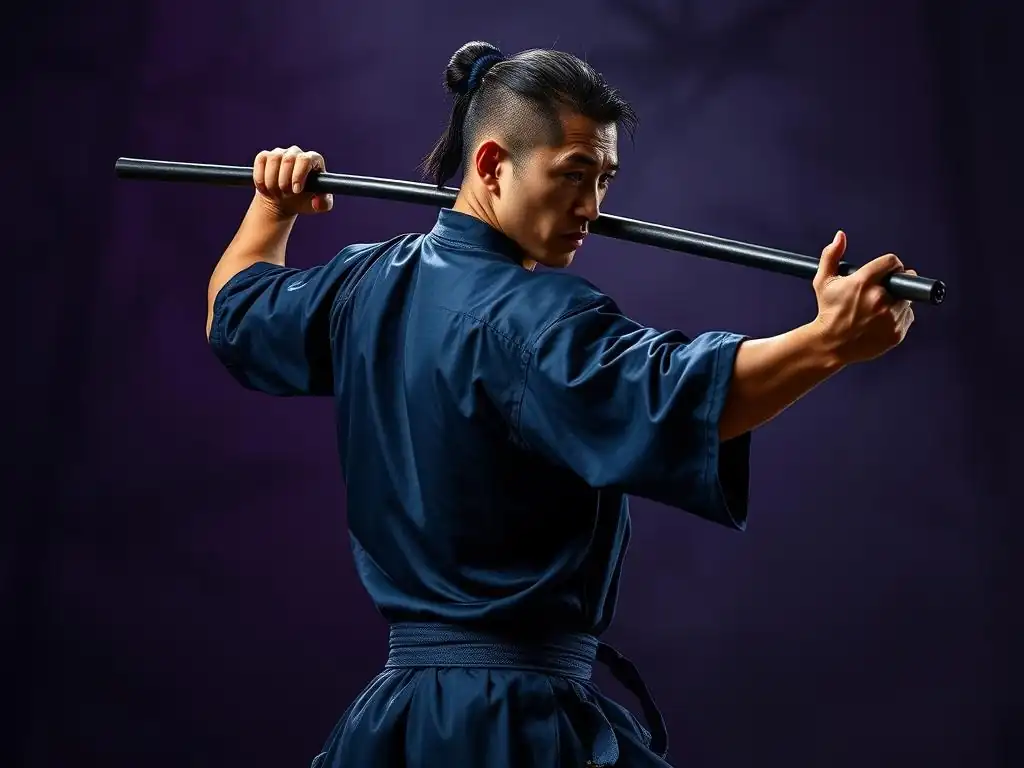
Welcome to Martial Arts Mastery, your gateway to the world's fighting traditions! Delve into the rich history, intricate techniques, and profound philosophy behind martial arts disciplines. Are you ready to unlock the secrets of weapon mastery? This article explores the Figure Eight Drill, a deceptively simple exercise with profound implications for staff, sword, and even chain whip proficiency. Discover how this foundational movement builds coordination, speed, and control – and why it's a cornerstone of countless training regimens. Intrigued? Read on to master the Figure Eight Drill and elevate your martial arts journey!
- Introduction to the Figure Eight Drill in Martial Arts Weapon Training
- The Figure Eight Staff Drill: Building Core Strength and Coordination
- Adapting the Figure Eight for Swords: Enhancing Agility and Precision
- The Figure Eight with Chain Whips: Developing Fluidity and Accuracy
- Benefits of the Figure Eight Drill for All Martial Arts Weapons
- Common Mistakes to Avoid During Figure Eight Weapon Drills
- Integrating the Figure Eight Drill into Your Martial Arts Training Regimen
- Conclusion: The Figure Eight Drill as a Cornerstone of Martial Arts Weapon Mastery
-
Frequently Asked Questions
- What is the primary benefit of practicing the figure eight staff drill?
- Can the figure eight drill be adapted for weapons other than a staff?
- How does the figure eight drill contribute to self-defense?
- What are some common mistakes to avoid when learning the figure eight staff drill?
- How does understanding the history of martial arts enhance the effectiveness of drills like the figure eight?
- Final Reflection: Mastering Movement and Flow
- Unleash Your Inner Flow: Master the Figure Eight!
Introduction to the Figure Eight Drill in Martial Arts Weapon Training
The figure eight drill stands as a cornerstone exercise across numerous martial arts disciplines, particularly those involving weapons. Its fundamental motion, tracing the shape of an '8' or infinity symbol, is not merely a simple pattern but a sophisticated movement that develops crucial skills applicable to a wide array of martial arts tools. From the solid impact weapons like staffs and bo, to the sharp edges of swords, and the unpredictable dynamics of flexible weapons such as chain whips, the underlying principles of the figure eight motion provide a universal foundation for weapon control, power generation, and fluidity.
This drill is often among the first taught to students beginning their journey with traditional weapons. Its deceptive simplicity belies the deep layers of body mechanics, timing, and spatial awareness it cultivates. Mastery of the basic figure eight pattern lays the groundwork for more complex forms and techniques, enabling practitioners to transition smoothly between offensive and defensive maneuvers, control the weapon's trajectory with precision, and harness momentum effectively. It is a foundational building block, essential for anyone aspiring to achieve proficiency in martial arts weaponry.
Mastering Weapon Control with the Figure Eight Pattern
Effective weapon control is paramount in any martial art, and the figure eight pattern is a primary method for developing this critical skill. The continuous, cyclical motion requires the practitioner to maintain a consistent grip and apply subtle adjustments of force and angle throughout the movement. This constant feedback loop between the body and the weapon helps build proprioception – the sense of the relative position of one's own parts of the body and strength of effort being employed in movement.
For instance, a beginner might start with a large, slow figure eight, focusing solely on maintaining the path of the weapon tip. Over time, with practice often measured in hundreds or thousands of repetitions per training session, the movement becomes smaller, faster, and more controlled.
A student might spend 20-30 minutes in a single session dedicated just to refining the figure eight, noticing how small changes in wrist angle or shoulder rotation drastically affect the weapon's arc and speed. This iterative process of refinement is how the figure eight drill directly translates to superior control, enabling precise strikes or blocks in dynamic combat scenarios.
Why the Figure Eight is Fundamental for Martial Arts Weaponry
The fundamental nature of the figure eight drill stems from its embodiment of core physical principles applicable to weapon manipulation. It teaches how to generate power not just from the arms, but from the core and hips, channeling that energy outwards through the weapon. The continuous motion also helps maintain momentum, allowing for rapid changes in direction or successive strikes without losing power.
Consider the physics: the figure eight involves changing the weapon's direction through two opposing loops. This requires deceleration and acceleration, teaching the practitioner how to manage centrifugal force. A typical training session might involve performing 100 repetitions of the figure eight in one direction, then 100 in the other, focusing on smooth transitions at the apex of each loop.
This repetitive training hardens the necessary muscle memory and joint conditioning, particularly in the wrists, elbows, and shoulders, which are under significant strain, especially with heavier weapons. The figure eight pattern mirrors many natural movements used in cutting, striking, and blocking, making it an intuitive yet powerful training method.
The Figure Eight Staff Drill: Building Core Strength and Coordination
The figure eight staff drill, often a staple in disciplines like Bojutsu or Filipino Martial Arts (FMA) systems like Eskrima or Kali, is a highly effective exercise for developing foundational staff handling skills. It focuses on generating power through controlled rotation and building endurance in the shoulders, back, and core.
The length and weight of a typical staff, which can range from 1.5 meters (approximately 5 feet) to over 2 meters (approximately 6.5 feet) and weigh between 1 to 3 kilograms (about 2.2 to 6.6 pounds) depending on the material and size, provide significant resistance, making the figure eight a demanding physical exercise.
Regular practice of the figure eight staff drill significantly enhances bilateral coordination. Because the pattern involves both sides of the body and often transitions between hands or grip positions, it forces the left and right sides to work in concert. A common training goal might be to perform the drill for a sustained period, perhaps 5 minutes without stopping, maintaining a consistent speed and pattern. Achieving this requires not just physical strength but also mental focus and refined motor control. The rhythmic nature of the drill can also serve as a meditative practice, synchronizing breath with movement.
Proper Stance and Grip for the Figure Eight Staff Exercise
A stable and balanced stance is crucial for performing the figure eight staff exercise effectively and safely. A common starting point is a natural fighting stance or a slightly wider horse stance ( kiba dachi in Japanese). The feet should be roughly shoulder-width apart, with knees slightly bent, allowing for flexibility and quick adjustments. The core should be engaged, and the spine relatively upright, avoiding excessive leaning which can strain the back and reduce power generation.
The grip on the staff varies depending on the specific style and the desired effect, but for the basic figure eight, a balanced grip near the center or slightly off-center is typical. The hands are usually spaced apart, perhaps 30-60 cm (1-2 feet), allowing for leverage and control. The grip should be firm but not overly tight, which can lead to fatigue and restrict fluid movement. The knuckles are often aligned along the staff, providing a strong connection. Practicing the drill with different hand placements teaches versatility and prepares the practitioner for varied techniques.
Step-by-Step Guide to Performing the Figure Eight Staff Drill
Performing the basic figure eight staff drill involves a continuous, flowing motion. Here is a simplified breakdown:
- Starting Position: Assume a balanced stance, holding the staff horizontally or vertically in front of you, hands spaced apart.
- Initiate the First Loop (e.g., Right Side): Lower one end of the staff (e.g., the right end) downwards and across your body towards the opposite side (left foot). As it reaches the lowest point near your left foot, begin to bring it upwards and across your body again, towards your right shoulder. This completes the first half of the '8'.
- Transition and Initiate the Second Loop (e.g., Left Side): As the staff reaches the height of your right shoulder, it transitions across your center line. Now, lower the other end of the staff (the left end) downwards and across your body towards your right foot.
- Complete the Second Loop: As the left end reaches the lowest point near your right foot, bring it upwards and across your body towards your left shoulder.
- Connect and Repeat: As the staff reaches the height of your left shoulder, it transitions across your center line again, returning to a position similar to the start of step 2, ready to initiate the first loop on the right side again.
- [x] Assume balanced stance with proper grip.
- [ ] Initiate downward arc on one side.
- [ ] Sweep across body to low point.
- [ ] Bring weapon upwards across body to high point.
- [ ] Transition across center.
- [ ] Initiate downward arc on the other side.
- [ ] Sweep across body to low point.
- [ ] Bring weapon upwards across body to high point.
- [ ] Transition across center and repeat.
Focus on keeping the motion smooth and controlled, using rotational power from the hips and core, not just the arms. Aim for a consistent speed and a visible figure eight pattern traced by the ends of the staff. Beginners might achieve only 10-20 clean repetitions before needing a break, while experienced practitioners can maintain the drill for hundreds of repetitions or several minutes continuously.
Advanced Figure Eight Staff Techniques: Incorporating Wraps and Transitions
Beyond the basic continuous loop, the figure eight staff drill can be advanced by incorporating wraps, strikes, and transitions. A common advancement is adding a wrist wrap or arm wrap at the apex of the figure eight motion. For example, as the staff comes up towards the shoulder, the practitioner might allow the staff to wrap around their forearm or wrist before continuing the motion. This adds complexity and trains control in close quarters.
Another advanced technique involves integrating strikes or blocks into the figure eight pattern. Instead of a continuous flow, the practitioner might pause the motion momentarily to execute a specific strike (e.g., a horizontal strike or a downward thrust) before resuming the figure eight. This trains the ability to fluidly move between continuous motion and targeted attacks, a crucial skill in application. Transitions between different grips (e.g., moving from a two-handed grip to a one-handed spin while maintaining the figure eight) or between different stances also elevate the drill, building greater versatility and adaptability in staff handling.
Adapting the Figure Eight for Swords: Enhancing Agility and Precision
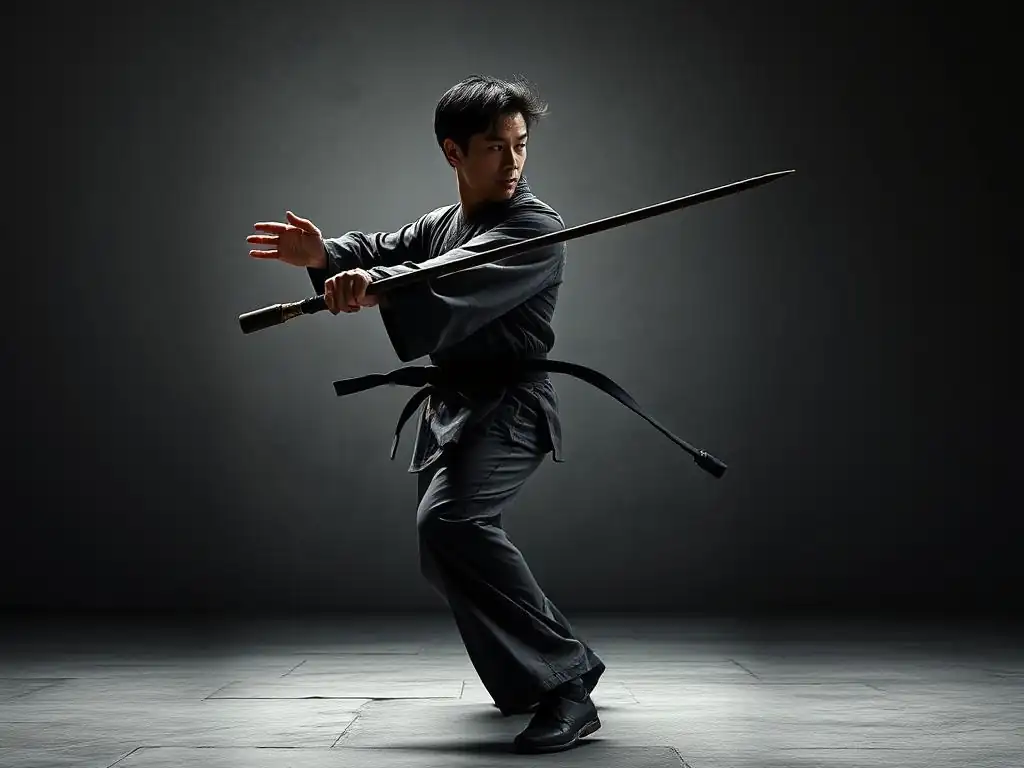
Adapting the figure eight drill for swords introduces unique considerations, primarily focusing on edge alignment, agility, and precision. Unlike a staff, a sword's effectiveness relies heavily on its cutting edge. Therefore, the figure eight motion must ensure the blade is properly oriented throughout the movement to represent realistic cuts or blocks. The weight distribution of a sword, with the majority of the mass in the blade, also differs significantly from a staff, demanding finer motor control and wrist strength.
The figure eight sword drill (often referred to as suburi or cutting practice in Japanese swordsmanship like Kendo or Kenjutsu, where similar diagonal cutting patterns are fundamental) trains the specific muscles and joint mechanics required for powerful, controlled cuts. While a staff figure eight might focus on momentum and flow, the sword version emphasizes stopping power and edge control at specific points in the arc. Practitioners might focus on making a slight 'stop' or emphasis at the theoretical point of impact, ensuring the edge is perfectly aligned ( hasuji) to simulate cutting through a target.
Figure Eight Sword Drill: Focusing on Edge Alignment
Edge alignment ( hasuji) is paramount when practicing the figure eight sword drill. As the blade moves through the '8' pattern, the practitioner must consciously control the angle of the blade face. For a diagonal cutting motion, the edge should ideally lead the movement, presenting a clean cutting surface at the point of impact. Incorrect edge alignment can result in a glancing blow rather than a clean cut, or worse, damage to the blade itself if practicing against a target.
Training involves visualizing the path of the edge and feeling how subtle adjustments in the wrists and grip affect the blade's orientation. Many sword styles use specific grips ( tenouchi) designed to facilitate this precise control. During practice, which might involve hundreds of repetitions per session, the sound the blade makes cutting through the air ( kaze-kiru in Japanese, meaning 'wind cutting') can indicate proper speed and edge alignment – a clean, sharp 'swish' is desired, not a dull 'whoosh'. This auditory feedback, combined with visual checks (often using the reflection on the blade or a training partner observing), helps refine edge control within the figure eight motion.
Sword Handling Drills: Integrating the Figure Eight for Offensive and Defensive Maneuvers
The figure eight pattern in sword training isn't just an exercise in itself; it's a foundation for integrating offensive and defensive maneuvers. The two loops of the figure eight represent fundamental diagonal cuts (often from shoulder to opposite hip or vice versa) which are common attack vectors in sword combat. By practicing the continuous figure eight, practitioners develop the ability to throw rapid, successive diagonal cuts.
Furthermore, the arcs of the figure eight can be adapted into defensive blocks or parries. The upward and downward movements can intercept incoming strikes, deflecting them away from the body. Integrating the figure eight means being able to transition seamlessly from a defensive parry using one arc of the '8' into an offensive cut using the other arc.
A drill might involve a partner simulating incoming attacks, and the practitioner using figure eight motions to block or evade, immediately following with a counter-attack implied by the continuation of the pattern. This reactive figure eight training builds adaptability and speed in real-time exchanges.
Figure Eight with Katana vs. Broadsword: Adapting to Different Blade Styles
While the fundamental figure eight motion is applicable to both Katana and Broadsword, the execution adapts to the specific characteristics of each weapon. A Japanese Katana is typically single-edged (though some variations exist), curved, and designed for powerful, precise cuts. The figure eight with a Katana emphasizes the drawing or slicing motion ( hikigiri) and maintaining the correct cutting angle throughout the arc. The curved blade naturally facilitates diagonal cuts, and the drill focuses on maximizing the cutting potential of the curve.
A European Broadsword, often double-edged and straighter or with a less pronounced curve, is designed for both cutting and thrusting, and can be used to strike with either edge or the flat. The figure eight with a broadsword might incorporate wider arcs and potentially more emphasis on the percussive impact of the cut, or transitions into thrusting motions.
The balance point can also differ, affecting how momentum is managed. Practitioners learn to feel the distinct weight and balance of each blade type and adjust their grip and body mechanics accordingly while performing the figure eight, recognizing that a technique effective with one might need modification for the other.
The Figure Eight with Chain Whips: Developing Fluidity and Accuracy
Employing the figure eight with a chain whip (like the Chinese nine-section whip or similar flexible weapons) presents a unique set of challenges and benefits. Unlike rigid weapons, the chain whip has no inherent structure; its form is dictated entirely by the practitioner's movement and the forces applied. The figure eight motion is critical for generating and maintaining the necessary momentum to keep the chain whip extended and controlled, preventing it from collapsing or becoming entangled.
Mastering the figure eight with a chain whip requires developing a high degree of sensitivity to the weapon's movement. The practitioner must learn to "feel" the chain as it travels through the air, using subtle wrist and arm movements to guide its path. The sound of the chain whip snapping or whistling as it cuts through the air is another important feedback mechanism, indicating speed and extension. This type of figure eight training develops exceptional hand-eye coordination and spatial awareness, as the weapon can strike the practitioner if not controlled precisely.
Understanding Chain Whip Dynamics in the Figure Eight Motion
The dynamics of the chain whip in the figure eight motion are governed by centrifugal force and momentum. The practitioner initiates the movement, often starting with a circular motion that evolves into the '8'. The continuous loops build momentum, causing the chain to extend outwards. The challenge lies in controlling this momentum and guiding the flexible chain along the desired path.
The figure eight pattern helps regulate the chain's speed and trajectory. By smoothly transitioning between the two loops, the practitioner avoids abrupt stops or changes in direction that could cause the chain to lose tension and become unwieldy. The weight of the chain and any attached darts or weights at the end contribute to the momentum, requiring significant, sustained effort to maintain the pattern. A single figure eight session might focus on maintaining a consistent 'snap' at the points where the chain reverses direction, indicating maximum velocity at those critical moments.
Chain Whip Drills: Figure Eight Variations for Enhanced Control
Basic chain whip figure eight drills often start with a simple vertical or horizontal '8' pattern performed in front of the body. As control improves, variations are introduced to enhance specific skills:
- Overhead Figure Eight: Performing the pattern above the head, requiring different shoulder mechanics and control.
- Under Leg/Around Body Figure Eight: Weaving the chain around limbs or the torso, drastically increasing the complexity and requiring advanced body-weapon coordination.
- Targeted Figure Eight: Aiming the 'snap' of the chain at specific points in space, simulating strikes.
- Multi-plane Figure Eight: Combining vertical, horizontal, and diagonal '8' patterns seamlessly.
These variations, often practiced for durations ranging from a few minutes up to 10-15 minutes continuously in a dedicated session, build incredible dexterity, timing, and the ability to control a highly dynamic weapon in complex scenarios. They teach the practitioner to anticipate the chain's movement and make micro-adjustments based on feel and sound.
Safety Considerations When Practicing the Figure Eight with Chain Whips
Safety is paramount when practicing the figure eight with chain whips due to the weapon's unpredictable nature if mishandled. The most significant risk is hitting oneself, particularly the head, face, or limbs. Therefore, starting slowly and gradually increasing speed is essential. Practicing in an open space free from obstacles and other people is non-negotiable.
Wearing protective gear, such as head protection (like a fencing mask) or thick clothing, especially in the initial stages of learning, is highly recommended. Checking the condition of the chain whip before practice – ensuring all links are secure and any weights are firmly attached – is also crucial. Beginners might use a length of rope or a lighter practice chain before moving to a standard weighted weapon.
A typical nine-section chain whip might weigh between 0.5 to 1.5 kilograms (about 1.1 to 3.3 pounds) and extend several feet, generating significant force at the end. Understanding the potential range and impact of the weapon is key to safe practice.
"Control is not about stopping the weapon, but about guiding its energy." - A common principle in flexible weapon training.
Benefits of the Figure Eight Drill for All Martial Arts Weapons
Regardless of whether you wield a staff, sword, chain whip, or even nunchaku or other weapons, the figure eight drill offers a suite of universal benefits. It transcends specific weapon types to build fundamental physical and mental attributes essential for weapon mastery. The repetitive, dynamic nature of the drill engages multiple muscle groups, improves coordination, and hones focus.
One of the key universal benefits is the development of a strong connection between the practitioner and their weapon. Through the thousands of repetitions performed during dedicated training, the weapon begins to feel like an extension of the body. This intimate connection allows for intuitive control and more effective application of techniques. A practitioner who has spent hundreds of hours on figure eight drills across various weapons will often demonstrate a higher level of comfort and natural handling compared to someone who has not.
Improved Hand-Eye Coordination Through Figure Eight Practice
The figure eight drill is a superb exercise for enhancing hand-eye coordination. The practitioner must constantly track the movement of the weapon's tip or ends, guiding its path through a precise pattern while simultaneously managing the forces generated. This requires the eyes to lead, informing the hands and body how to adjust.
In a typical training session, a student might perform 50-100 repetitions of the figure eight with a staff, then switch to a sword for another 50-100 repetitions, and perhaps finish with 20-30 repetitions with a chain whip. This switching between weapons, while maintaining the same underlying figure eight motion, forces rapid adaptation and refines the neural pathways connecting visual input to motor output. This heightened coordination directly translates to improved accuracy in striking and greater efficiency in defensive movements.
Increased Weapon Speed and Dexterity with the Figure Eight
Speed and dexterity are critical components of effective weapon use. The figure eight drill, particularly when practiced at increasing tempos, is highly effective in developing both. The continuous, flowing motion trains the body to move the weapon efficiently, minimizing wasted energy and maximizing velocity.
As practitioners become more comfortable with the basic pattern, they naturally increase their speed. This isn't just about moving the weapon faster; it's about executing the turns and transitions more quickly and smoothly. This process builds explosive power in the wrists and forearms, as well as rotational speed in the shoulders and core. Regular practice, perhaps dedicating 15-20 minutes daily solely to figure eight variations at varying speeds, can lead to noticeable improvements in weapon speed and the ability to perform complex maneuvers with greater agility.
Enhancing Body Mechanics and Balance Using the Figure Eight Drill
Effective weapon handling is deeply intertwined with proper body mechanics and balance. The figure eight drill, even the stationary version, requires the practitioner to maintain a stable base while the upper body and weapon are in dynamic motion. This trains the core muscles to act as a stabilizing force, transferring power efficiently from the lower body upwards.
Performing the figure eight in different stances (e.g., a low horse stance, a forward-leaning bow stance, or while stepping) further challenges balance and reinforces the connection between the weapon's movement and the entire body's posture. Maintaining a consistent figure eight pattern while executing footwork or changes in stance, a common progression in training, requires significant proprioception and control. This holistic engagement of the body ensures that weapon techniques are not isolated arm movements but integrated actions powered by a balanced and stable structure.
Common Mistakes to Avoid During Figure Eight Weapon Drills
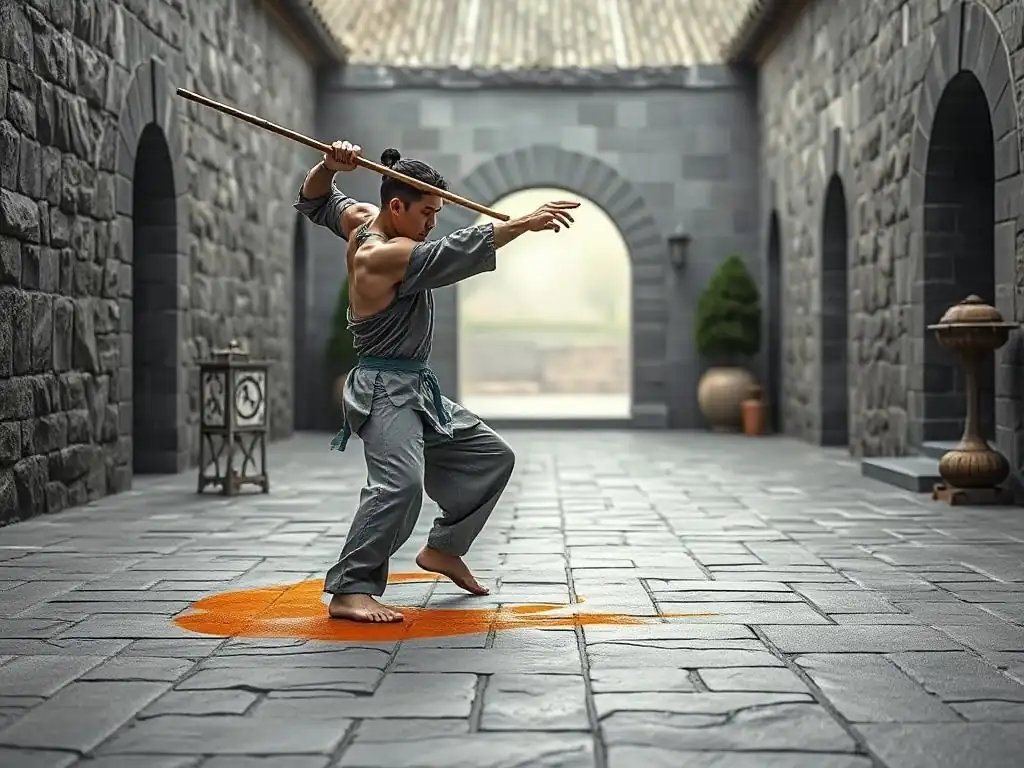
While seemingly simple, the figure eight drill is often performed incorrectly, limiting its effectiveness and potentially leading to injury. Recognizing and correcting common mistakes is vital for progression. These errors often stem from focusing only on the weapon's movement rather than the entire body's involvement, or attempting to increase speed before mastering control.
One frequent error is using excessive muscular force from the arms and shoulders, leading to tension and fatigue. The power in a proper figure eight should originate from rotational movement in the hips and core, with the arms and wrists acting primarily as guides and transmitters of that power. Another mistake is neglecting the non-dominant side; practitioners often favor one direction or loop, resulting in uneven development and coordination. Dedicated, balanced practice on both sides is crucial.
Maintaining Proper Form and Posture During the Figure Eight
Maintaining proper form and posture throughout the figure eight drill is essential for safety, efficiency, and maximizing benefits. A slumped back, locked knees, or stiff shoulders impede the natural flow of energy and restrict the weapon's movement. The stance should be rooted but flexible, allowing for subtle weight shifts and adjustments.
Paying attention to the details of the grip is also part of maintaining proper form. A grip that is too tight leads to forearm fatigue (sometimes called "death grip"), while a grip that is too loose results in poor control. The optimal grip allows for necessary wrist articulation while maintaining secure control of the weapon. Instructors often emphasize keeping the shoulders relaxed and the elbows slightly bent, avoiding a rigid posture that inhibits fluid, circular motion. Regular self-correction or feedback from a training partner is invaluable here.
Controlling Weapon Trajectory and Preventing Accidental Strikes
Controlling the weapon's trajectory is a core outcome of the figure eight drill, but poor control can lead to accidental strikes. This is particularly dangerous with swords and chain whips. Mistakes include allowing the weapon to wobble off-plane, performing loops that are too wide or too narrow, or failing to maintain consistent tension in flexible weapons.
To prevent accidental strikes, especially when starting, practice slowly and deliberately. Visualize the exact path the weapon should follow. With a staff or sword, ensure the tip or edge stays on the intended '8' path. With a chain whip, focus on maintaining constant tension to keep the chain extended. Beginners should practice in a large, empty space, ideally wearing protective gear if using potentially dangerous weapons. Gradually increasing speed only comes after the pattern is clean and controlled at slower speeds. Recording oneself can also help identify trajectory errors.
Progression and Gradual Increase in Speed and Complexity
Attempting to perform the figure eight drill too quickly or adding complex variations too soon is a common mistake that hinders learning and increases risk. Mastery of the figure eight is a process of gradual progression. The initial focus should be on executing the basic pattern smoothly and accurately at a slow, controlled pace.
Once the basic pattern is consistent and comfortable, the practitioner can gradually increase speed. This should be done incrementally, perhaps increasing the tempo by 10% each week, only if the form remains clean. After achieving speed with the basic pattern, variations such as incorporating footwork, stance changes, wraps, or simulated strikes can be introduced.
This layered approach ensures that fundamental control is established before adding complexity, preventing the development of bad habits and maximizing the training benefit. A typical progression might involve spending weeks or months perfecting the basic stationary figure eight with a single weapon before moving to faster speeds or variations.
Integrating the Figure Eight Drill into Your Martial Arts Training Regimen
The figure eight drill should not be an isolated exercise but an integral part of a comprehensive martial arts weapon training regimen. Its versatility allows it to be incorporated into various phases of training, from warm-ups to technical practice and even conditioning. Consistent, dedicated practice is key to unlocking its full benefits.
Many martial arts schools dedicate specific portions of their weapon classes to foundational drills like the figure eight. A typical class structure might include 10-15 minutes of warm-up, followed by 20-30 minutes focusing on fundamental weapon drills like the figure eight staff drill or sword figure eight, then moving on to forms, partner drills, and application. Integrating the figure eight throughout the week, perhaps with short daily sessions of 5-10 minutes focused purely on the pattern, can accelerate proficiency significantly.
Warm-up Exercises Before Practicing the Figure Eight
Proper warm-up is crucial before practicing dynamic weapon drills like the figure eight, especially with weapons that involve significant joint rotation and muscle engagement. The shoulders, elbows, wrists, and core are heavily utilized. A warm-up should include light cardio to increase blood flow, followed by dynamic stretches targeting these areas.
Examples of suitable warm-up exercises include arm circles (forward and backward), wrist rotations, torso twists, and light staff or broomstick rotations to gently mobilize the shoulder and wrist joints. Spending 5-10 minutes on these exercises prepares the body for the demands of the figure eight, reducing the risk of strains or injuries. For instance, performing 20 repetitions of forward and backward arm circles, followed by 20 wrist rotations in each direction, can make a significant difference in joint readiness.
Combining the Figure Eight with Other Weapon Drills
The figure eight drill serves as an excellent transition or conditioning exercise when combined with other weapon drills. After practicing static strikes or blocks, performing the figure eight can help restore fluidity and loosen up the muscles. It can also be used as a link between different techniques.
For example, a training sequence might involve practicing a specific sword cut (e.g., a diagonal downward cut), then immediately transitioning into a few repetitions of the figure eight sword drill to maintain flow, before practicing a different technique like a thrust or a horizontal cut. With a staff, one might practice blocking drills and then flow into the figure eight staff drill to work on continuous motion. This integration reinforces the concept of seamless transitions between individual techniques and continuous movement patterns.
The Figure Eight as a Foundation for Advanced Weapon Techniques
The fundamental skills developed through consistent figure eight practice – control, speed, dexterity, and body-weapon connection – form the bedrock for learning more advanced weapon techniques and forms. Complex forms in systems like Bojutsu, Kenjutsu, or various Kung Fu styles often chain together movements that are essentially sophisticated variations or combinations of basic patterns like the figure eight.
Techniques such as rapid multiple strikes, deflecting incoming attacks while simultaneously counter-attacking, or executing intricate weapon manipulations require the precise control and fluid motion cultivated by the figure eight. A practitioner who has mastered the figure eight staff drill will find it significantly easier to learn a complex bo form involving wraps, spins, and strikes, as the underlying body mechanics and weapon control are already developed. The figure eight isn't just a drill; it's a prerequisite for higher-level weapon proficiency.
Conclusion: The Figure Eight Drill as a Cornerstone of Martial Arts Weapon Mastery
The figure eight drill, in its various forms for staff, sword, chain whip, and other martial arts weapons, is far more than a simple repetitive exercise. It is a foundational practice that cultivates essential attributes for weapon mastery: precise control, fluid speed, enhanced dexterity, improved coordination, and a deep connection between the practitioner and their tool. Its universal applicability across different weapon types underscores its fundamental importance in weapon training methodologies worldwide.
From the initial awkward attempts of a beginner to the effortless flow of an experienced master, the figure eight serves as a constant benchmark for progress and a continuous method for refinement. It builds physical conditioning, muscle memory, and spatial awareness in a way few other single drills can. Dedicated practice of the figure eight staff drill, sword figure eight, or chain whip figure eight is an investment that pays dividends across the entire spectrum of weapon techniques.
The Enduring Value of the Figure Eight for Weapon Proficiency
The enduring value of the figure eight drill lies in its ability to isolate and develop core weapon handling mechanics. In an age where martial arts training can sometimes focus heavily on complex forms or sport-specific applications, the figure eight remains a vital link to the fundamental principles of using a weapon effectively. It strips away complexity and focuses on the pure physics and body dynamics of controlling an object in motion.
For centuries, martial artists have utilized variations of this pattern, recognizing its efficacy in building the necessary foundation. Whether preparing for historical combat simulations, self-defense scenarios, or competitive demonstrations, the control and fluidity gained from figure eight practice are indispensable. It teaches patience, discipline, and the importance of perfecting the basics, ensuring that power and speed are built upon a solid foundation of control.
Further Resources for Mastering Martial Arts Weaponry
To delve deeper into the figure eight drill and broader martial arts weaponry, numerous resources exist, ranging from traditional dojos and kwoons offering in-person instruction to books and instructional materials detailing specific weapon systems. Seeking guidance from experienced instructors is invaluable for correcting form and receiving personalized feedback.
Exploring the historical context of weapons like the staff, sword, and chain whip can also enhance understanding of how drills like the figure eight evolved and their intended application. Many martial arts organizations and historical fencing groups offer workshops and seminars specifically focused on weapon handling fundamentals. Consistent, dedicated practice, combined with informed instruction and a willingness to refine the basics, is the true path to mastering the figure eight and, by extension, achieving proficiency with martial arts weapons.
Frequently Asked Questions
What is the primary benefit of practicing the figure eight staff drill?
The figure eight staff drill primarily improves weapon manipulation and coordination, leading to greater control and fluidity in your movements with various weapons. It also enhances spatial awareness.
Can the figure eight drill be adapted for weapons other than a staff?
Yes, the figure eight drill is adaptable for various weapons. It is frequently used with swords and chain whips, helping practitioners develop similar skills in weapon handling.
How does the figure eight drill contribute to self-defense?
The drill enhances weapon control, which is crucial for effective self-defense. It also improves reaction time and precision, allowing for quicker and more accurate responses in real-world situations.
What are some common mistakes to avoid when learning the figure eight staff drill?
Common mistakes include gripping the staff too tightly, resulting in stiff movements, and not maintaining a consistent rhythm, leading to uneven and less effective practice. Focus on smooth transitions.
How does understanding the history of martial arts enhance the effectiveness of drills like the figure eight?
Knowing the historical context provides insight into the purpose and evolution of the drill. This understanding helps practitioners appreciate the underlying principles and apply the technique with greater intention and effectiveness.
Final Reflection: Mastering Movement and Flow
The exploration of the Figure Eight Drill, across diverse martial arts weapons, reveals its enduring value as a foundational exercise. Its universality speaks volumes about the principles of movement and control that transcend specific disciplines. From the staff to the sword and even the chain whip, the Figure Eight Drill provides a pathway to understanding balance, coordination, and the efficient use of energy, making it as relevant today as it was centuries ago.
This drill's influence extends beyond the physical realm, shaping our understanding of fluidity and adaptability. The continuous, unbroken motion of the Figure Eight mirrors the constant flow of life itself, teaching us to navigate challenges with grace and resilience. The journey of a thousand miles begins with a single step.
This ancient wisdom resonates deeply with the Figure Eight Drill, reminding us that mastery is achieved through consistent practice and a dedication to the fundamentals.
Now, consider how you can apply the principles of the Figure Eight Drill to your own life. Embrace the fluidity of movement, the importance of balance, and the power of continuous practice. Whether you wield a staff, a sword, or simply navigate the complexities of daily life, let the Figure Eight Drill inspire you to find your flow, cultivate your control, and move forward with unwavering grace.
Unleash Your Inner Flow: Master the Figure Eight!
Thanks for diving into the art of the Figure Eight drill! You've now unlocked a versatile exercise applicable across various martial arts disciplines. Ready to take your training to the next level?
Here's how to put your newfound knowledge into action:
- Commit to practicing the Figure Eight drill for at least 15 minutes, three times a week, focusing on smoothness and control with your chosen weapon.
- Experiment with different weapons or tools, adapting the drill to challenge your coordination and spatial awareness.
- Share a video of your Figure Eight progress on social media using #MartialArtsMastery and tag us!
What unexpected benefits did you discover while practicing the Figure Eight, and how did it impact your weapon control?