
Selecting Your Ideal Spear: A Guide to Length, Weight, and Balance

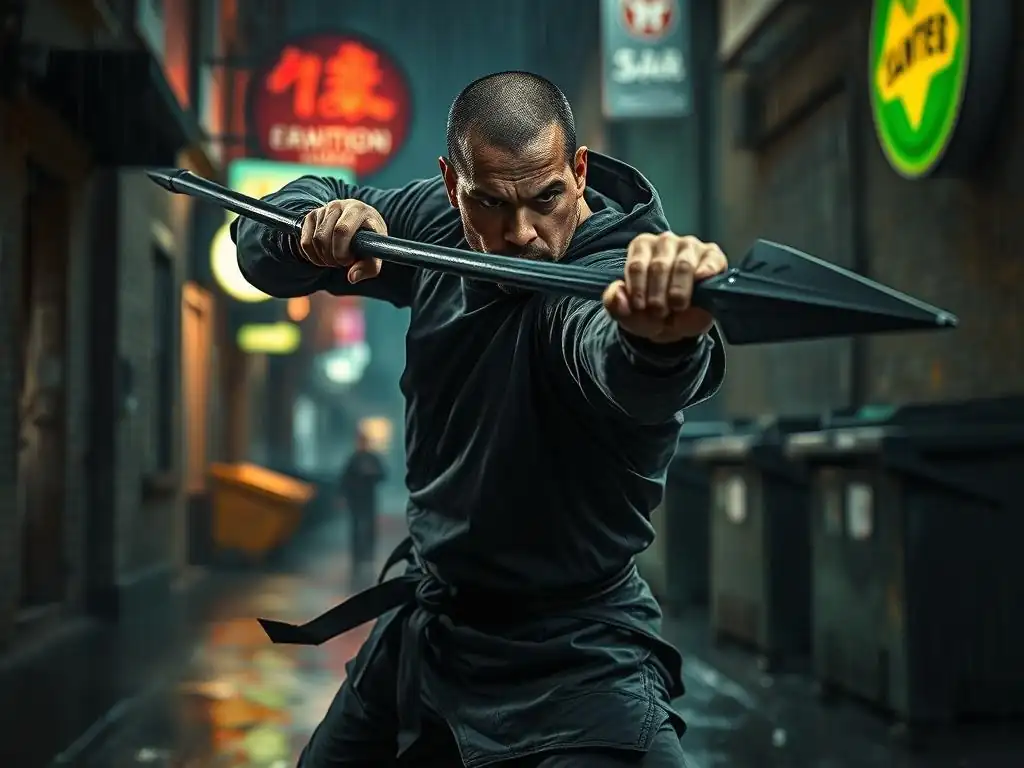
Welcome to Martial Arts Mastery, where we delve into the profound depths of combat traditions worldwide. Ever wondered if the length of your spear could be the difference between victory and defeat? In this detailed study, we explore the crucial considerations for selecting the ideal spear for self-defense, examining length, weight, and balance to unlock its devastating potential. Prepare to discover the secrets that transform a simple weapon into an extension of your martial arts prowess.
- Selecting Your Ideal Spear: A Guide to Length, Weight, and Balance for Martial Arts Mastery
- Introduction: Mastering the Spear in Martial Arts
- Understanding Spear Length for Combat Applications
- The Importance of Spear Weight in Martial Arts Training
- Finding the Perfect Spear Balance Point: Enhancing Control and Precision
- Spear Length for Combat: Practical Considerations and Techniques
- Choosing the Right Spear for Different Martial Arts Styles
- Maintaining and Caring for Your Spear: Ensuring Longevity and Performance
- Conclusion: Finding Your Perfect Spear and Mastering its Use
-
Frequently Asked Questions
- What is the ideal spear length for self-defense according to MartialArtsMastery.org?
- How does spear weight affect its usability in a self-defense situation?
- What role does balance play in selecting a spear for self-defense?
- Does MartialArtsMastery.org recommend specific spear materials for self-defense?
- Are there any specific training tips MartialArtsMastery.org provides for using a spear in self-defense?
- Final Reflection: Mastering the Art of the Spear
- Wield Your Potential: Embark on Your Spear Journey!
Selecting Your Ideal Spear: A Guide to Length, Weight, and Balance for Martial Arts Mastery
Introduction: Mastering the Spear in Martial Arts
The Spear: A Timeless Weapon in Martial Arts Traditions
The spear stands as one of humanity's oldest and most universally adopted weapons, its history deeply intertwined with the development of martial arts across the globe. From the formidable Qiang of Chinese Kung Fu, revered as the "King of All Weapons," to the versatile Yari of Japanese Sojutsu and the robust pikes and lances of European traditions, the spear has been a cornerstone of combat for millennia. Its simple yet effective design – a shaft topped with a pointed head – allowed for incredible reach and piercing power, making it dominant on battlefields and crucial in duels.
Beyond its military applications, the spear evolved within civilian martial arts schools, adapted for training, self-defense, and intricate forms. Its inherent length and ability to control distance demanded a unique blend of strength, precision, and fluid body mechanics. Mastering the spear requires not just physical prowess but a deep understanding of leverage, timing, and spatial awareness, skills honed through dedicated practice and passed down through generations of practitioners.
Why Spear Length, Weight, and Balance Matter for Effective Combat
The effectiveness of a spear is not solely determined by the skill of the wielder but also significantly by the physical characteristics of the weapon itself. The length dictates your reach and ability to control distance, the weight influences your speed and power, and the balance point governs your control and precision in manipulation. These three factors are inextricably linked and must be carefully considered when selecting a spear for training or practical application, including assessing the optimal spear length for selfdefense scenarios.
Choosing a spear with inappropriate length, weight, or balance can hinder technique development, lead to fatigue or injury, and ultimately compromise combat effectiveness. A spear that is too long might be unwieldy in close quarters, while one too short sacrifices reach. A spear that is too heavy will exhaust the practitioner quickly, whereas one too light may lack sufficient force. Similarly, an poorly balanced spear feels awkward and unpredictable, making intricate movements difficult. Therefore, understanding these dynamics is fundamental to unlocking the spear's full potential.
Understanding Spear Length for Combat Applications
Determining the Optimal Spear Length for Your Height and Reach
Selecting the correct spear length is paramount for effective use. While there are no absolute rules, a common guideline in many traditions suggests a spear should reach to the practitioner's eyebrow, or slightly above their head, when standing upright with the butt end on the ground. For instance, a practitioner who is 5 feet 8 inches tall might find a spear between 6.5 to 7.5 feet (approximately 2 to 2.3 meters) to be a comfortable starting point. This range allows for sufficient reach while still being manageable for basic manipulations.
However, personal preference, arm length, and the specific style practiced also play significant roles. A practitioner with longer arms might comfortably handle a slightly longer spear. Conversely, someone focusing on rapid, close-in techniques might prefer a shorter weapon. Experimentation is key; what feels balanced and controllable for one person at a certain height might not for another, highlighting the personal nature of finding the ideal spear length for selfdefense or combat.
Spear Length and its Impact on Reach and Maneuverability
The most direct impact of spear length is on reach. A longer spear allows a practitioner to engage an opponent from a greater distance, providing a significant tactical advantage by keeping danger further away. This extended reach is particularly valuable in open spaces or against opponents armed with shorter weapons. For example, a 9-foot spear can maintain a safe zone several feet wider than a 6-foot spear, dictating the terms of engagement.
Conversely, the longer a spear is, the less maneuverable it becomes, especially in confined environments or when attempting rapid changes of direction. Navigating tight spaces, parrying fast attacks at close range, or performing complex spinning techniques can be significantly more challenging with an excessively long spear. This trade-off between reach and maneuverability is a critical consideration when evaluating spear length for selfdefense, as defensive situations can arise in unpredictable and often restricted locations.
The Advantage of Longer Spears in Open Combat Scenarios
In historical open-field combat, longer spears, often exceeding 10 or even 15 feet (3 to 4.5+ meters), were highly advantageous. They allowed formations to present a formidable hedge of points, keeping cavalry at bay and disrupting enemy ranks before they could close to sword or axe range. A single long spear could control a significant area, allowing the wielder to dictate the distance of the engagement.
In martial arts sparring or forms simulating open combat, the advantage of a longer spear lies in its ability to dominate the spatial dynamic. A practitioner using a longer spear can launch thrusts from a distance where their opponent cannot retaliate, forcing the opponent to either retreat or attempt a dangerous rush to close the gap. This control over distance is a fundamental principle of polearm combat, enabling powerful, linear attacks while minimizing the risk of being struck.
Considerations for Shorter Spears: Agility and Close-Quarters Combat
While longer spears dominate distance, shorter spears excel in agility and effectiveness in close-quarters combat. Spears in the 5 to 6.5-foot (1.5 to 2 meter) range, sometimes referred to as short spears or even long staffs depending on the head, are far more manageable in tight spaces like hallways, crowded rooms, or dense vegetation – common scenarios when considering spear length for selfdefense. Their reduced length allows for quicker manipulation, faster parries, and rapid, repetitive thrusts.
Shorter spears also facilitate techniques that involve using the butt end of the weapon or transitioning quickly between offensive and defensive actions at close range. They are less prone to getting snagged or requiring large arcs that can be blocked easily in confined areas. While sacrificing the long-range dominance of their longer counterparts, shorter spears offer increased versatility and speed, making them highly effective in scenarios where space is limited.
The Importance of Spear Weight in Martial Arts Training
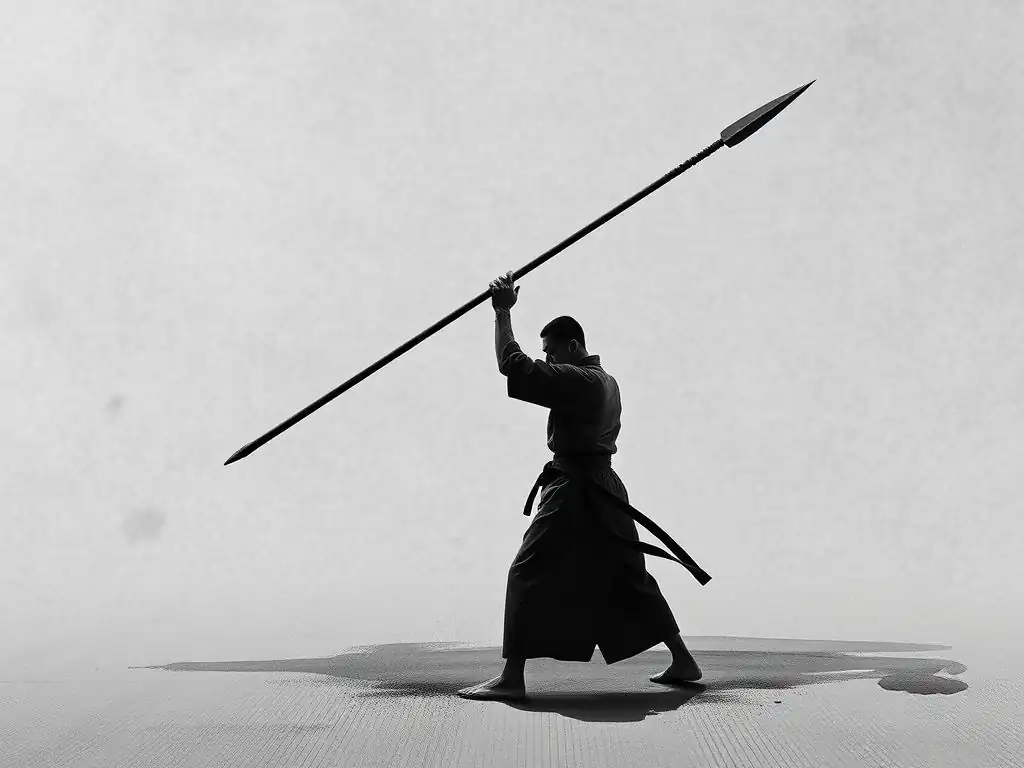
How Spear Weight Affects Speed, Power, and Endurance
The weight of a spear has a direct impact on how it can be wielded. A heavier spear carries more momentum, translating into potentially more powerful thrusts and sweeping attacks. However, this increased power comes at the cost of speed; accelerating and changing the direction of a heavier object requires significantly more effort and time. Performing rapid sequences of strikes or intricate manipulations becomes much more challenging with a heavy spear.
Furthermore, wielding a heavy spear demands greater muscular strength and endurance. Prolonged training sessions or dynamic sparring with a heavy weapon will lead to fatigue much faster than with a lighter one. This fatigue can compromise technique, reduce speed, and increase the risk of injury. The interplay between weight, speed, power, and endurance is a critical factor in selecting a spear that matches a practitioner's physical capabilities and training goals.
Choosing the Right Spear Weight for Your Strength Level
Selecting a spear weight appropriate for your current strength level is crucial for effective and safe training. Beginners should typically start with a lighter spear to focus on learning proper technique, body mechanics, and developing fluidity without being overwhelmed by the weapon's mass. A spear that feels too heavy will force the practitioner to compensate with poor posture or strained movements, building bad habits.
As strength and experience grow, a practitioner can gradually move to a heavier spear if their style or goals require it. The 'right' weight is one that allows you to perform techniques with reasonable speed and control for the duration of your training session without excessive strain. For a typical wooden training spear of 7-8 feet, weights might range from 1.5 kg (lighter, often bamboo or thin wood) to 3 kg or more (heavier wood like oak or ash), with metal spears often being heavier still.
Lightweight Spears: Advantages for Beginners and Speed-Focused Styles
Lightweight spears offer significant advantages, particularly for beginners and practitioners of styles that emphasize speed, agility, and complex forms. A lighter spear is easier to control, allowing new students to focus on learning the fundamental movements, footwork, and body coordination without the added burden of managing a heavy object. This facilitates faster progress in acquiring the basic skills.
In performance-oriented styles or those emphasizing rapid, continuous strikes, lightweight spears are often preferred. For example, modern Wushu spears are typically made of flexible, lightweight materials like waxwood or fiberglass, allowing for extremely fast manipulations, vibrations, and dynamic movements that would be impossible with a heavy weapon. A lightweight spear allows for quicker recovery between techniques and sustained activity over longer periods.
Heavy Spears: Developing Strength and Delivering Powerful Strikes
Heavy spears are valuable training tools for developing specific strength and are favored in traditional styles that prioritize powerful, committed strikes. Wielding a heavier spear builds core strength, grip strength, and the muscles of the shoulders, back, and legs, essential for generating force through the weapon. Training with a heavy spear can be seen as a form of strength and conditioning, preparing the body for the demands of powerful polearm usage.
In combat applications, a heavy spear, when propelled by a strong practitioner, can deliver devastating thrusts and sweeping blows with significant kinetic energy. Styles like some traditional Kung Fu systems or Sojutsu might utilize heavier, more rigid spears designed to penetrate armor or break through defenses. While slower than lightweight spears, the power generated by a heavy spear can be decisive in a single, well-executed technique.
Finding the Perfect Spear Balance Point: Enhancing Control and Precision
What is Spear Balance and Why is it Crucial?
The balance point of a spear is the spot along the shaft where the weapon will rest horizontally without tipping. It represents the average distribution of the spear's weight. This characteristic is crucial because it significantly affects how the spear feels in the hands and how easily it can be manipulated. A spear balanced closer to the tip feels heavier at the point and lighter at the butt, while one balanced closer to the butt feels lighter at the tip and heavier at the butt.
Proper balance enhances control, precision, and the ability to execute techniques smoothly. It influences how quickly you can change the spear's direction, recover from a strike, or perform intricate movements like circles, figure-eights, or rapid parries. A well-balanced spear feels like an extension of the body, allowing the practitioner to wield it with minimal unnecessary effort, which is vital for effective spear length for selfdefense applications where reactions must be swift and precise.
Front-Balanced Spears: Power and Impact
A spear is considered front-balanced when its balance point is located relatively far forward, closer to the spearhead. This weight distribution naturally lends itself to techniques that emphasize forward momentum, such as powerful thrusts and直线 (straight line) attacks. The weight concentrated towards the tip increases the kinetic energy delivered upon impact, making thrusts particularly potent.
However, a front-balanced spear can feel "tip-heavy," making it more difficult to control the butt end and requiring greater effort for techniques that involve rapid changes of direction or complex manipulations behind the balance point. Recovering from a missed thrust or parrying an attack directed at the practitioner's body might require more strength and slower adjustments compared to a differently balanced spear.
Center-Balanced Spears: Versatility and Control
A spear with its balance point near the geometric center of the shaft offers a good compromise between power and control. This type of balance provides a relatively even feel, making the spear versatile for a wide range of techniques, including thrusts, sweeps, blocks, and intricate hand changes. Many general-purpose training spears aim for a near-center balance.
With a center-balanced spear, the practitioner can more easily manage both ends of the weapon. Rapid transitions between using the tip and the butt, performing circular movements, and recovering quickly from techniques are often facilitated by this balance. It allows for a balanced application of force and control, making it suitable for styles that require a broad repertoire of spear techniques and adaptable spear length for selfdefense applications in varied situations.
Rear-Balanced Spears: Speed and Finesse
A spear is rear-balanced when its balance point is located closer to the butt end of the shaft. This configuration makes the tip feel relatively lightweight and easy to move, allowing for extremely fast manipulations, intricate handwork, and rapid changes in direction. While sacrificing some of the raw forward momentum of a front-balanced spear, a rear-balanced spear excels in speed and finesse.
Styles that feature complex forms, rapid spinning techniques, or emphasize deflections and quick counter-attacks often favor rear-balanced spears. The ease with which the tip can be whipped around allows for impressive displays of speed and control. While perhaps delivering slightly less impactful linear thrusts than a front-balanced spear of the same weight, the speed and ability to rapidly chain techniques can be highly effective in its own right.
Spear Length for Combat: Practical Considerations and Techniques
Spear Length and Stance: Optimizing Your Defensive Posture
The chosen spear length significantly influences the optimal stance and distance a practitioner must maintain relative to an opponent. A longer spear necessitates maintaining a greater distance to effectively utilize its reach advantage. This often requires a stance that allows for powerful forward movements (thrusts) and wide defensive postures to cover the body with the weapon. For example, a long spear might be held with a wider grip and a lower, more stable stance to manage its length and the forces involved in parrying or striking.
Conversely, a shorter spear allows for closer engagement distances and permits more upright or agile stances. The practitioner can stay closer to their opponent, relying on quicker footwork and rapid hand movements to employ the weapon. When considering spear length for selfdefense, the environment often dictates the feasible distance, and thus influences the appropriate stance – a long spear might require a more constrained stance in a narrow space, potentially limiting its effectiveness compared to a shorter weapon better suited to the environment.
Spear Length and Footwork: Maintaining Balance and Mobility
Effective footwork is paramount when wielding a spear, regardless of its length, but the specific movements are heavily influenced by the weapon's dimensions. A longer spear requires footwork that covers significant ground to close or maintain distance while keeping the weapon aligned and controlled. Large sliding steps, lunges, and deliberate transitions are common to manage the spear's arc and leverage. Rapid lateral movements or intricate foot patterns can be more challenging with a very long spear.
A shorter spear allows for quicker, more agile footwork. The practitioner can utilize smaller steps, pivots, and faster changes of direction to maneuver around an opponent. This increased mobility makes shorter spears well-suited for dynamic sparring and adapting to unpredictable movements. Mastering footwork appropriate for the spear length is essential for maintaining balance, generating power, and ensuring the weapon is always positioned effectively for offense or defense, crucial skills for employing spear length for selfdefense.
Effective Combat Techniques Based on Spear Length
Different spear lengths lend themselves to different primary techniques. Longer spears are masters of the thrust ( ci in Chinese, tsuki in Japanese). Their reach allows for powerful, penetrating thrusts from a distance, keeping the wielder relatively safe. Sweeping attacks ( sao in Chinese) and wide parries are also effective with a long spear, using its length to control a large area.
Shorter spears, while still capable of thrusts, often excel at rapid, repetitive thrusting attacks. Techniques like the "rain of blows" or using the spear in tighter circular patterns are more feasible. They are also better suited for using the butt end ( ding in Chinese) for strikes or blocks at close range. The choice of techniques is intricately linked to the spear's dimensions, and a practitioner's skill involves selecting techniques that maximize the advantage of their specific spear length for combat or spear length for selfdefense purposes.
Choosing the Right Spear for Different Martial Arts Styles
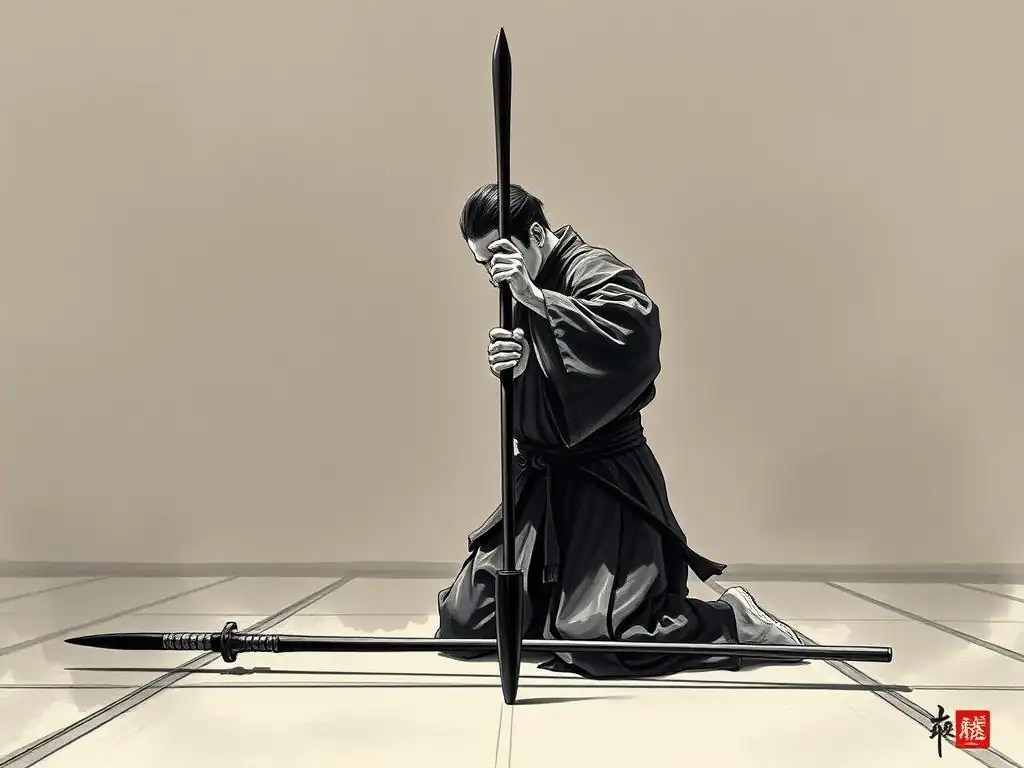
Spear Selection for Shaolin Kung Fu
In traditional Shaolin Kung Fu, the spear ( Qiang) is highly revered. Shaolin spear forms often emphasize speed, power, and fluidity, with techniques ranging from long-range thrusts to rapid circular movements and agile footwork. A typical Shaolin spear might be around 7 to 8 feet (approx. 2.1 to 2.4 meters) long, made of waxwood or ash, which provides a good balance of flexibility and strength.
Shaolin spears often have a moderate balance point, allowing for both powerful thrusts and quick manipulations. The flexibility of waxwood is sometimes utilized in specific techniques where the shaft is made to vibrate. Practitioners select a spear length that allows them to perform the dynamic forms characteristic of Shaolin with control and speed, ensuring the weapon feels like a natural extension of their body.
Spear Selection for Wushu
Modern Wushu spear ( Qiang) is known for its dynamic, acrobatic, and visually impressive forms. Wushu spears are typically lighter and significantly more flexible than traditional spears, often made of thin waxwood or fiberglass. Lengths can vary but are generally chosen to allow for rapid spinning, whipping, and complex manipulations.
The balance point in Wushu spears is often slightly forward of center, but the overall lightness makes complex movements very fast. The extreme flexibility of the shaft is a key feature, utilized for techniques like the "spear vibration" ( dou qiang). The selection criteria prioritize speed, flexibility, and the ability to execute intricate performance techniques over the raw power or rigidity sought in combat-oriented styles.
Spear Selection for Japanese Sojutsu
Japanese Sojutsu, the art of the spear ( Yari), encompasses a wide variety of spear types and lengths depending on the school and historical period. Yari could range from relatively short battlefield weapons (around 6-8 feet, 1.8-2.4 meters) to very long pikes (exceeding 15 feet, 4.5 meters). The focus is typically on powerful thrusting, parrying, and battlefield applications, often emphasizing rigidity and durability.
Sojutsu spears are generally less flexible than Chinese waxwood spears and often have a balance point that supports strong linear thrusts. The specific length and head shape (e.g., straight blade, cross blade jumonji yari) are often dictated by the particular school or tradition practiced. Selection focuses on a weapon that facilitates strong, stable thrusts and leverages the spear's reach and piercing capability for direct, efficient combat.
Maintaining and Caring for Your Spear: Ensuring Longevity and Performance
Proper Cleaning and Storage Techniques
Proper maintenance is essential to keep your spear in optimal condition for both training and potential use, including preserving the characteristics like spear length for selfdefense. After each training session, especially if the spear has been handled with sweaty hands or used outdoors, wipe down the shaft with a clean, dry cloth. If the spearhead is metal, ensure it is clean and lightly oiled to prevent rust. Use a rust-preventative oil specifically designed for metal weapons.
Storage is equally important. Wooden shafts can warp if stored improperly. Store your spear vertically in a rack or horizontally on supports to prevent it from bowing. Avoid storing it in areas with extreme temperature fluctuations or high humidity, such as basements or garages, as this can damage the wood.
Here is a quick maintenance checklist:
- [ ] Wipe down shaft after use
- [ ] Clean and oil metal spearhead
- [ ] Check for moisture/dirt build-up
- [ ] Store spear vertically or horizontally
- [ ] Avoid extreme temperatures and humidity
Identifying and Addressing Potential Problems
Regularly inspect your spear for signs of wear or damage. For wooden spears, check for cracks, splinters, or signs of rot, particularly near the head and butt. Look for looseness where the head is attached to the shaft; this is a critical point of failure. For metal spears, check for bends in the shaft or head, rust, or damage to the tip.
Minor issues like small splinters can often be carefully sanded down. A slightly loose head might be temporarily secured, but significant looseness or cracks often require professional repair or replacement of the shaft to ensure safety. Ignoring problems can lead to the spear breaking during use, potentially causing serious injury. Addressing issues promptly ensures the spear remains safe and performs reliably.
Spear Maintenance for Optimal Performance in Combat and Training
A well-maintained spear is a reliable spear. Cracks, looseness, or warping can negatively impact the weapon's balance, feel, and structural integrity. A warped shaft can make techniques unpredictable, while a loose head is not only dangerous but compromises the power of a thrust. Regular maintenance ensures that the spear retains the characteristics – length, weight, and balance – that were carefully considered upon selection.
For practitioners relying on their spear for training or considering its potential for spear length for selfdefense, knowing the weapon is in top condition provides confidence. A spear that is clean, structurally sound, and free from defects performs as expected, allowing the practitioner to focus entirely on their technique and the situation at hand without worrying about the weapon's reliability.
Conclusion: Finding Your Perfect Spear and Mastering its Use
The Journey to Spear Mastery: A Continuous Process of Learning and Refinement
Selecting the ideal spear based on length, weight, and balance is a crucial first step, but it is merely the beginning of the journey towards mastery. True proficiency with the spear comes through dedicated, consistent practice. Hours spent on fundamental drills, forms, and partner exercises are necessary to develop the strength, coordination, timing, and spatial awareness required to wield the weapon effectively.
The process of mastery is one of continuous learning and refinement. As your physical capabilities improve and your understanding of spear dynamics deepens, your preferences for length, weight, or balance might evolve. What felt right as a beginner may change as you become more advanced. Embrace this evolution and remain open to experimenting with different spears as your skills develop.
Investing in Quality: Prioritizing Craftsmanship and Materials
While budget is always a consideration, investing in a quality spear made from appropriate materials by skilled craftsmen is highly recommended. The material of the shaft (e.g., waxwood, ash, oak, bamboo, fiberglass) significantly impacts the spear's weight, flexibility, and durability. The quality of the spearhead attachment is critical for safety and performance.
A well-made spear will have consistent weight distribution, a predictable balance point, and the structural integrity to withstand rigorous training. While it might cost more initially, a quality spear will often last longer, perform better, and be safer than a cheaply made alternative. Prioritizing craftsmanship ensures you have a reliable tool that supports your training and potential need for effective spear length for selfdefense.
Further Resources for Spear Training and Combat Techniques
This guide provides foundational knowledge for selecting your spear. To truly master its use, further study is essential. Seek out qualified instructors in traditional or contemporary martial arts styles that feature spear training. Study historical texts and modern instructional materials focusing on spear techniques, footwork, body mechanics, and combat applications. Engage in partner drills and sparring under supervision to develop practical skills. The path to spear mastery is rich and rewarding, requiring dedication to both understanding the weapon and honing your personal skill set.
Frequently Asked Questions
What is the ideal spear length for self-defense according to MartialArtsMastery.org?
While personal preference plays a role, a spear length roughly equivalent to your height plus the length of your extended arm is generally recommended for self-defense. This provides a good balance between reach and maneuverability.
How does spear weight affect its usability in a self-defense situation?
A spear that is too heavy will be difficult to wield and tire you out quickly, hindering your ability to defend yourself. Conversely, a spear that's too light may lack the necessary impact force.
What role does balance play in selecting a spear for self-defense?
A well-balanced spear allows for quicker transitions between offensive and defensive maneuvers. A spear that is heavily weighted at one end will be unwieldy and slow to control.
Does MartialArtsMastery.org recommend specific spear materials for self-defense?
MartialArtsMastery.org generally suggests durable materials like hardwood shafts with steel or high-carbon steel spearheads for self-defense spears. These materials offer a good combination of strength and resilience.
Are there any specific training tips MartialArtsMastery.org provides for using a spear in self-defense?
Training should focus on stances, thrusting techniques, parrying, and footwork. Practicing these fundamentals will help you effectively utilize the spear's reach and power in a self-defense scenario.
Final Reflection: Mastering the Art of the Spear
The journey to selecting the ideal spear, as we've explored, is far more than a simple matter of choosing a weapon; it's about understanding balance, control, and the extension of oneself. This pursuit of mastery, of finding the perfect spear length for self-defense, resonates deeply in a world where personal safety and empowerment are increasingly valued. The principles of balance and precision we've discussed translate far beyond the training ground, informing our approach to challenges in all aspects of life.
The impact of understanding the spear, even in a modern context, is profound. It connects us to a lineage of warriors and hunters, reminding us of the primal instincts that still reside within. This connection to our past, to the ingenuity and resilience of our ancestors, is a powerful source of strength and inspiration. The spear is a symbol of strength, courage, and the will to protect. It is a reminder that we are capable of defending ourselves and those we care about.
This sentiment echoes through history, reminding us that the pursuit of skill and self-reliance is timeless.
Now, consider the lessons learned in this guide. The careful consideration of length, weight, and balance; the understanding of your own body and its capabilities. Let these principles extend beyond the selection of a spear. How can you apply this same meticulous attention to detail, this same dedication to balance and control, to other areas of your life? Embrace the spirit of the warrior, not in aggression, but in the pursuit of mastery, self-reliance, and the unwavering commitment to protecting what matters most.
Wield Your Potential: Embark on Your Spear Journey!
Thank you for exploring the art of the spear with us. We hope you've found valuable insights into choosing the right weapon for your martial arts practice. Now, it's time to put that knowledge into action and deepen your connection to this ancient art.
- Visit a local martial arts supply store and test out a variety of spears firsthand to discover your personal preference for length, weight, and balance.
- Share this article with fellow martial artists or your training group to spark a discussion about spear techniques and equipment.
- Research the historical significance of the spear in your chosen martial art style to gain a deeper appreciation for its role.
What specific aspect of spear handling are you most eager to master, and how will you integrate your new spear into your training regimen?