
Caring for Your Blade: Essential Katana Maintenance for Longevity


Welcome to Martial Arts Mastery, where we delve into the heart of combat traditions! Ever wondered how to preserve the razor-sharp edge and historical integrity of your katana? This time, we're focusing on just that. Discover essential Katana maintenance tips for beginners that will not only extend the life of your blade but also deepen your connection to this iconic weapon. Intrigued? Continue reading to unlock the secrets of proper care and ensure your katana remains a testament to artistry and skill.
- Introduction to Katana Care: Why Maintenance Matters
- Essential Tools for Katana Maintenance: A Beginner's Kit
- Step-by-Step Guide to Katana Cleaning
- Oiling Your Katana: Protecting the Steel
- Katana Handle (Tsuka) Maintenance: Preserving the Grip
- Katana Saya (Scabbard) Maintenance: Protecting the Blade When Sheathed
- Long-Term Katana Storage: Preventing Rust and Damage
- Katana Maintenance Frequency: How Often Should You Clean Your Blade?
- Katana Maintenance: Common Problems and Solutions
- Conclusion: Mastering Katana Maintenance for a Lifetime of Appreciation
- Frequently Asked Questions
- Final Reflection: Honing the Edge of Tradition
- Rediscover the Art of the Blade: Sharpen Your Journey!
Introduction to Katana Care: Why Maintenance Matters
Preserving the Legacy: The Importance of Katana Maintenance
The katana, a symbol of samurai heritage and martial prowess, is more than just a weapon; it is a work of art and a piece of history. Proper katana maintenance is not merely about keeping the blade shiny; it is a critical practice that ensures the longevity and structural integrity of the sword. Neglecting maintenance can lead to irreversible damage, such as rust, which can significantly devalue the blade and compromise its functionality and safety.
Historically, samurai viewed their swords as extensions of themselves and maintained them with meticulous care, often daily, recognizing that a well-maintained blade was essential for survival and honor. This tradition of diligent care continues today among collectors and practitioners who understand the intrinsic value and historical significance of these blades.
Maintaining a katana is an act of respect for the craftsmanship, history, and tradition embodied in the sword. A properly cared-for blade retains its original beauty, sharpness, and strength, allowing it to be passed down through generations. For beginners, learning the fundamentals of katana maintenance is the first step in responsible ownership.
These essential katana maintenance tips beginners should master are crucial for preventing the most common forms of damage, particularly rust, which can begin forming within hours or days in humid environments if the blade is not properly protected. Understanding the materials, such as the high-carbon steel of the blade (often tamahagane or similar alloys) and the natural components of the handle and scabbard, highlights why specific maintenance procedures are necessary to counteract environmental factors like moisture and acidity from handling.
Katana Maintenance for Beginners: A Step-by-Step Guide
Starting with katana maintenance can seem daunting, but it boils down to a few fundamental steps performed regularly. For beginners, the process should be approached methodically, focusing on cleanliness and protection. The primary goal is to keep the polished steel surface free from moisture, oils from skin, and environmental contaminants that accelerate corrosion.
A basic maintenance routine involves disassembling the sword safely, cleaning the blade to remove old oil and debris, inspecting it for any signs of damage, and then applying a fresh protective layer of oil before reassembling and storing it properly. This cycle, when performed correctly, forms the backbone of effective katana care.
Learning these essential katana maintenance tips beginners can implement immediately is vital. It starts with understanding the 'why' behind each step – why is oil used? Why is uchiko powder necessary? Why is handling the blade directly discouraged? Each action in the maintenance process serves a specific purpose rooted in centuries of practice. This guide aims to break down the process into manageable steps, explaining the tools needed and the proper techniques, empowering new katana owners to confidently care for their valuable blades and ensure they remain in excellent condition for years to come.
Essential Tools for Katana Maintenance: A Beginner's Kit
The Complete Katana Cleaning Kit: What You'll Need
A proper katana cleaning kit is indispensable for effective maintenance. For beginners, a standard kit provides all the necessary tools to perform routine cleaning and inspection.
A typical, comprehensive kit usually contains several key items: uchiko powder in a small ball or pouch, which is a fine abrasive powder used for polishing and oil removal; a mekugi-nuki, a small brass or bamboo hammer used to remove the mekugi (bamboo pegs) that secure the handle; sheets of high-quality, lint-free rice paper or similar soft cloth for wiping the blade; a bottle of choji oil, a traditional blend of mineral oil and clove oil used for rust prevention; and an oil application cloth or pad. Some kits may also include a small brush for applying oil or cleaning crevices, and perhaps cotton balls or swabs.
Having these tools readily available streamlines the maintenance process and ensures that each step can be performed correctly. Attempting to clean a katana without the right tools can lead to improper cleaning, potential damage, or ineffective rust prevention. For example, using standard cloth or paper towels can leave lint on the blade, which traps moisture and can lead to rust.
Similarly, using inappropriate oils can damage the polish or fail to provide adequate protection. Investing in a quality beginner's katana maintenance kit, typically costing between $30 and $60 USD, is a small price to pay for protecting an asset that could be worth hundreds or thousands of dollars.
Detailed Look: Uchiko Powder, Mekugi-Nuki, and Choji Oil
Uchiko powder is a cornerstone of traditional katana maintenance. It is made from the fine stone powder left over from the sword polishing process, often derived from hazuya or jizuya stones. When gently patted onto the blade and then wiped off, it acts as a mild abrasive to help lift old oil, remove fingerprints, and slightly polish the steel surface, bringing out its luster.
The key is to use it sparingly and wipe gently to avoid scratching the delicate polish. Historically, the quality and source of uchiko powder were significant, with master swordsmiths using specific powders for different stages of polishing.
The mekugi-nuki is a simple yet crucial tool. It is used to carefully tap out the mekugi, the bamboo pegs that pass through the tsuka (handle) and the tang (nakago) of the blade, securing the handle to the sword. Removing the mekugi allows the tsuka to be safely detached from the nakago, which is necessary for a thorough cleaning and inspection of the entire blade, including the tang. Most mekugi-nuki are made of brass or bamboo to ensure they are softer than the mekugi themselves, preventing damage to the pegs during removal.
Choji oil is the traditional protective oil used on katana blades. It is typically a mixture of light mineral oil (around 99%) and clove oil (around 1%). The mineral oil provides a protective barrier against moisture, while the small amount of clove oil gives it a pleasant aroma and may have some mild anti-corrosive properties, though its primary role today is often considered traditional and aromatic.
Historically, different blends or types of oils may have been used depending on regional availability and the swordsmith's preference, but choji oil has become the standard for modern katana maintenance tips beginners learn. It should be applied as a very thin layer; too much oil can attract dust and debris.
Step-by-Step Guide to Katana Cleaning
Disassembly and Inspection: Preparing Your Katana for Cleaning
Before any cleaning begins, the katana must be safely disassembled. This process starts with placing the sword on a clean, flat surface, preferably covered with a soft cloth to prevent scratches. Using the mekugi-nuki, gently tap out the mekugi from the tsuka. There are usually one or two pegs.
Once the mekugi are removed, grip the tsuka firmly and hold the saya (scabbard) with the other hand. With the blade pointing downwards, carefully slide the tsuka off the nakago (tang). It might require a gentle rocking motion, but force should never be used. Be extremely careful as the blade is now exposed and potentially very sharp.
With the tsuka removed, you can now inspect the nakago. The tang is intentionally left unpolished to show the history of the blade through its patina (rust layer). Do not attempt to clean or polish the nakago unless specifically instructed by a professional swordsmith.
Inspect the blade itself, the tsuba (handguard), seppa (spacers), and habaki (blade collar) for any signs of looseness, damage, or rust. This initial inspection is a critical step in katana maintenance for beginners, allowing you to identify potential issues before they worsen. Note the condition of the tsuka and saya as well, checking for cracks or looseness.
Cleaning the Blade: Removing Old Oil and Debris
Once disassembled and inspected, the blade is ready for cleaning. The goal is to remove the old choji oil, fingerprints, and any surface contaminants. Lay the blade flat on your clean, soft surface. Take a sheet of rice paper or a soft cloth and gently wipe the blade from the habaki towards the tip (kissaki), following the curvature of the blade. Use fresh sections of the paper or cloth as needed until all visible oil and debris are removed. Be extremely careful not to cut yourself on the sharp edge.
After the initial wipe-down, apply a small amount of uchiko powder to the blade. Gently pat the uchiko ball against the flat surfaces of the blade, distributing a light dusting of powder. Then, using a fresh sheet of rice paper or cloth, gently wipe the powder off the blade, again moving from the habaki towards the kissaki. This process helps lift stubborn residues and provides a final light polish.
Repeat the uchiko application and wiping process if necessary, but remember that too much uchiko or too much pressure can be detrimental to the polish. Continue wiping with clean paper until no powder residue remains and the blade feels clean and dry. This step is fundamental for effective katana maintenance tips beginners need to master.
Inspecting the Blade for Rust or Damage: Early Detection is Key
With the blade clean and free of oil, it's the ideal time for a thorough inspection. Hold the blade carefully by the nakago (tang) or habaki (blade collar), avoiding touching the polished surface with your bare hands. Examine the blade under good lighting, holding it at various angles to catch reflections off the surface. Look closely for any discoloration, spots, or pitting, which are signs of rust. Rust can appear as reddish-brown spots or patches. Even the smallest speck of rust should be addressed promptly, as it can spread quickly.
Beyond rust, inspect the blade for scratches, nicks (hadori), or any other damage along the edge or surface. Check the tip (kissaki) for chips. Also, examine the area around the habaki and the length of the tang (nakago) for any issues. Early detection of rust or damage is crucial in katana maintenance.
Addressing a tiny rust spot is significantly easier and less damaging than dealing with extensive corrosion. If you find rust, note its location and severity; we will cover addressing rust later. For any significant damage like nicks or bends, professional assessment by a qualified swordsmith is highly recommended.
Oiling Your Katana: Protecting the Steel

Choosing the Right Oil for Your Katana: Choji Oil and its Properties
Selecting the correct oil is paramount for protecting a katana blade from rust. The universally recommended oil for traditional Japanese swords is choji oil. As mentioned, it's typically a light mineral oil base with a small percentage of clove oil. This specific blend is favored because it is non-acidic, provides excellent coverage, and does not gum up or become rancid over time, unlike some vegetable-based oils. The light viscosity of mineral oil allows it to spread thinly and evenly across the polished steel surface, forming a barrier that repels moisture.
While choji oil is the standard, it's important to use a reputable source to ensure quality. Avoid using common household oils, gun oils, or synthetic lubricants, as these can contain additives or have properties that are harmful to the delicate polish and steel composition of a katana.
Some modern alternatives like certain types of pure mineral oil (food-grade or pharmaceutical grade) can be used, but traditional choji oil remains the preferred choice due to its proven track record and compatibility with the metal. For beginners learning katana maintenance tips beginners should follow, sticking to high-quality choji oil is the safest and most effective option for rust prevention.
Applying Oil to the Blade: A Proper Technique Guide
Applying choji oil correctly ensures maximum protection without leaving excessive residue. After the blade has been thoroughly cleaned and inspected, place a few drops of choji oil onto a clean, lint-free application cloth or pad. A small amount is sufficient; you only need to create a very thin, even film across the entire surface. Start near the habaki and gently wipe the oil along the length of the blade towards the kissaki, following the curvature. Use a smooth, consistent motion.
Ensure that the entire polished surface, including the mune (spine) and the area around the kissaki, is covered with a thin layer of oil. It's crucial to avoid leaving pools or thick spots of oil, as these can attract dust and make future cleaning more difficult. Use a fresh section of the cloth or a second clean cloth to gently buff the blade, spreading the oil evenly and removing any excess.
The final result should be a blade that looks slightly moist or has a faint sheen, not one that is dripping or looks greasy. This careful application is a key part of effective katana maintenance tips beginners often need guidance on.
Avoiding Common Oiling Mistakes: Katana Maintenance Dos and Don'ts
Several common mistakes can undermine your efforts in katana maintenance. A major one is using too much oil. Excess oil is not only wasteful but also attracts dust and can seep into the saya, potentially causing damage over time. Another mistake is applying oil with dirty or lint-shedding materials, which can leave particles on the blade that trap moisture and promote rust. Always use clean, dedicated cloths or rice paper designed for sword maintenance.
- DO ensure the blade is completely dry and clean before applying oil.
- DON'T touch the polished blade surface with bare fingers after cleaning and oiling, as skin oils are acidic and promote rust.
- DO apply a very thin, even layer of high-quality choji oil.
- DON'T use household oils, cooking oils, or general-purpose lubricants.
- DO use a clean, lint-free cloth or paper specifically for oil application.
- DON'T leave pools or thick spots of oil on the blade.
- DO wipe excess oil off gently.
- DON'T neglect to oil the mune (spine) and area around the habaki and kissaki.
Following these simple dos and don'ts will significantly improve the effectiveness of your katana maintenance efforts and help prevent the most common issues, particularly rust formation.
Katana Handle (Tsuka) Maintenance: Preserving the Grip
Cleaning and Inspecting the Tsuka: Identifying Potential Issues
While the blade receives the most attention, the tsuka, or handle, also requires regular maintenance. The tsuka is typically constructed from wood, wrapped with rayskin (samegawa), and then tightly wrapped with silk or cotton cord (tsuka-ito). Over time, the tsuka-ito can become dirty from handling, absorb sweat and oils, and even loosen.
The rayskin underneath can also accumulate grime. Cleaning the tsuka involves gently wiping down the tsuka-ito and the fuchi (collar) and kashira (pommel) fittings with a clean, dry cloth. For more stubborn dirt on the tsuka-ito, a slightly damp cloth (barely moist, not wet) can be used, but it is essential to let it dry completely afterwards and avoid soaking the cord or wood.
Inspecting the tsuka is crucial for identifying potential structural issues. Look for signs of looseness in the tsuka-ito wrap; if it feels loose or shifts easily, it may indicate a problem that needs professional attention. Check the rayskin panels for cracks or damage. Inspect the fuchi and kashira to ensure they are seated properly and not loose.
Most importantly, check the mekugi-ana (holes for the pegs) in the wood and rayskin for any signs of stress or cracking. A loose tsuka or damaged mekugi-ana can be dangerous if the blade is used, as it compromises the secure connection between the blade and handle. Regular inspection during your katana maintenance routine allows you to catch these issues early.
Replacing the Tsuka-Ito: When and How (Consult a Professional)
The tsuka-ito wrap is subject to wear and tear, especially if the sword is frequently handled or used for practice (suburi). Signs that the tsuka-ito may need replacing include significant fraying, breakage of strands, excessive looseness that cannot be retightened, or simply a desire to refresh the aesthetic of the handle.
A well-executed tsuka-maki (handle wrapping) is a complex art form, requiring skill and knowledge of traditional patterns and tensioning techniques. Attempting to rewrap a tsuka without proper training and tools is likely to result in a loose, uneven, or incorrect wrap, which is both aesthetically unpleasing and potentially unsafe.
Therefore, if your tsuka-ito needs replacing, it is strongly recommended to consult a professional tsuka-maki artist or a reputable swordsmith service. They have the expertise to safely remove the old wrap, inspect the underlying wood core and rayskin, and apply a new wrap with the correct tension and pattern. This ensures the handle is secure, comfortable, and durable. While DIY guides exist, for valuable or functional swords, professional rewrapping is an investment in the sword's integrity and safety. This is one of the katana maintenance tips beginners are advised to delegate to experts.
Katana Saya (Scabbard) Maintenance: Protecting the Blade When Sheathed
Cleaning the Saya: Removing Dust and Debris
The saya, or scabbard, is the katana's protective home when not in use. Its interior surface, traditionally lacquered wood, must be kept clean to prevent scratching the blade or harboring debris that can promote rust. Dust and small particles can enter the saya over time.
To clean the interior, gently tap the open end of the saya downwards to dislodge any loose debris. A soft, lint-free cloth or a specialized saya cleaner tool (essentially a long, flexible rod with a cleaning end) can be used to carefully wipe out the inside. Avoid inserting anything hard or abrasive that could scratch the interior lacquer.
The exterior of the saya, often lacquered wood, also requires cleaning. Dust and fingerprints can be wiped away with a soft, dry cloth. For more persistent marks, a slightly damp cloth followed immediately by a dry one can be used, similar to cleaning the tsuka exterior. Avoid using chemical cleaners or solvents, as these can damage the lacquer finish. Regular exterior cleaning prevents grime build-up and keeps the saya looking its best, complementing the well-maintained blade within.
Inspecting the Saya for Damage: Maintaining a Snug Fit
The saya plays a vital role in protecting the blade, and its condition directly impacts the blade's safety and preservation. Inspect the saya regularly for any cracks, splits, or damage to the lacquer finish. Pay close attention to the koiguchi (mouth of the scabbard) and the kojiri (end cap). Cracks in the wood or lacquer can allow moisture and debris to enter, creating a hazardous environment for the blade.
Crucially, check that the saya provides a snug fit for the blade. When the blade is sheathed, it should fit securely, held in place primarily by the friction between the habaki and the koiguchi. If the fit is too loose, the blade can rattle around inside the saya, potentially causing scratches to the polish. If the fit is too tight, forcing the blade in and out can also cause damage.
A proper fit ensures the blade is held securely and protected. If the saya is damaged or the fit is no longer snug, consult a professional swordsmith or saya maker for repair or replacement. Maintaining a functional saya is as important as maintaining the blade itself in overall katana maintenance.
Long-Term Katana Storage: Preventing Rust and Damage
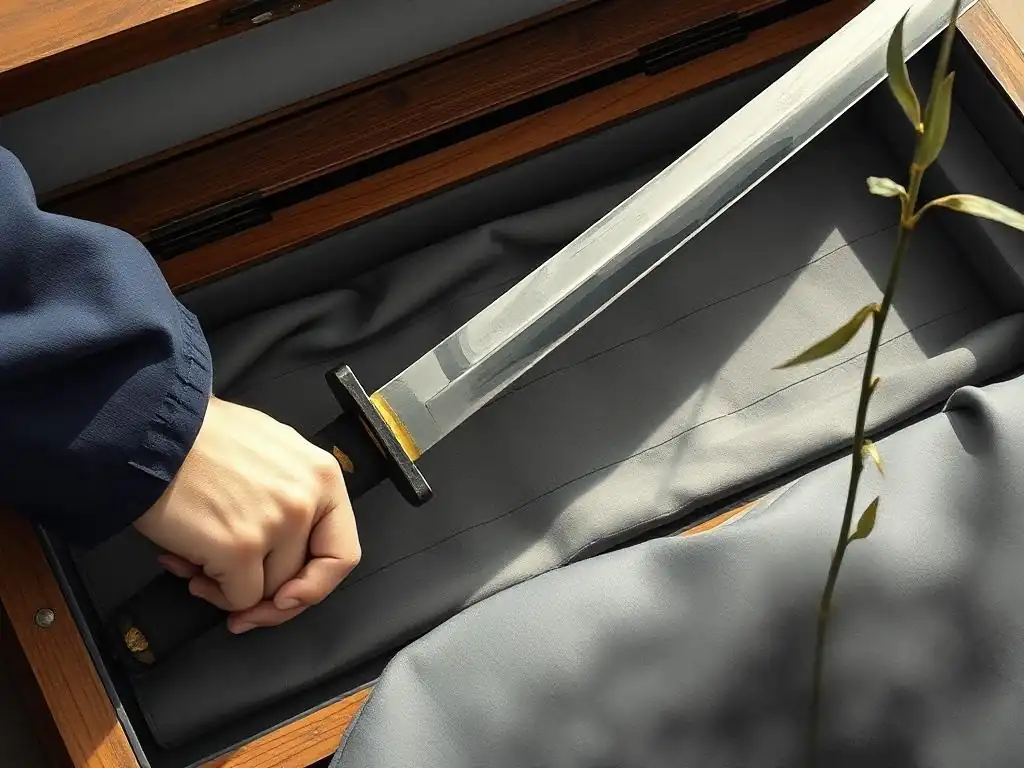
Proper Storage Environment: Controlling Humidity and Temperature
Storing a katana correctly is crucial for long-term preservation, especially in environments with fluctuating humidity and temperature. The ideal storage environment is stable, with relatively low humidity (ideally between 40% and 60%) and consistent temperature. High humidity is the primary enemy of polished steel, significantly accelerating the formation of rust. Extreme temperature changes can cause expansion and contraction in the various materials of the sword and saya, potentially leading to loosening or cracking.
Avoid storing a katana in basements, attics, garages, or near exterior walls where humidity and temperature fluctuations are most pronounced. Direct sunlight should also be avoided as it can cause finishes to fade or warp. A climate-controlled room inside your home is the best location. Consider using a hygrometer to monitor humidity levels and a dehumidifier or desiccant packets (like silica gel, placed near but not touching the sword or saya) if necessary to maintain a stable, dry environment. Proper environmental control is a fundamental aspect of long-term katana maintenance tips beginners need to understand for preservation.
Preparing Your Katana for Long-Term Storage: A Detailed Checklist
Before placing your katana into long-term storage (e.g., for several months or longer), it requires thorough preparation to ensure it remains protected.
- Clean the blade meticulously: Perform a complete disassembly, cleaning, and inspection as described earlier. Ensure every trace of old oil, fingerprints, and debris is removed.
- Apply a fresh, even layer of choji oil: Ensure the protective oil coating is complete and free of gaps or excess.
- Inspect the saya: Make sure the saya is clean inside and out and free from damage that could compromise its protective function.
- Consider extra protection: For very humid climates or extremely long storage, some collectors place the sheathed sword within a breathable sword bag (traditionally made of silk or cotton) and then perhaps within a wooden sword box (shirasaya or similar storage box). Avoid airtight containers, which can trap moisture.
- Store horizontally: Store the sheathed katana horizontally in a rack or box. Storing vertically, especially point down, can put undue stress on the saya and koiguchi.
- Add desiccants (optional but recommended): Place silica gel packets or other appropriate desiccants near the sword storage location, ensuring they do not directly contact the sword or saya. Monitor and replace desiccants as needed.
- Periodic Checks: Even in long-term storage, it is wise to check on the sword every few months (e.g., every 3-6 months), remove it from the saya, inspect the blade, and reapply oil if necessary.
By following this checklist, you significantly reduce the risk of rust and damage during periods when the katana is not actively being handled or displayed, ensuring its condition for the future.
Katana Maintenance Frequency: How Often Should You Clean Your Blade?
Factors Affecting Cleaning Frequency: Usage, Environment, and Storage
The ideal frequency for katana maintenance varies depending on several factors. The most significant is how often the sword is handled or used. If you handle your katana frequently, even just for display or appreciation, the oils from your skin can transfer to the blade and promote rust. In this case, cleaning and re-oiling every time after handling is the safest practice. If the sword is rarely handled and kept sheathed, the frequency can be less.
The environment where the sword is stored is another major factor. In humid climates (like coastal areas or regions with high summer humidity), the risk of rust is much higher. Swords stored in such environments require more frequent checks and maintenance, perhaps monthly or even more often during peak humidity seasons.
In very dry climates, rust is less of a concern, but the wood components (tsuka and saya) could potentially dry out, though this is less common than rust issues. How the sword is stored also matters; a sword stored in a properly controlled environment within a protective saya and bag will require less frequent maintenance than one left exposed.
Establishing a Katana Maintenance Schedule: Examples for Display and Practice
Based on these factors, here are some general guidelines for establishing a katana maintenance schedule:
- After Every Handling: If you remove the blade from the saya and handle the polished surface (even with gloves, though direct handling is generally avoided), clean and re-oil it immediately afterward. This is the golden rule for preventing fingerprints from causing rust.
- For Swords on Display (handled rarely): Inspect and clean the blade every 3 to 6 months. In very humid environments, check monthly.
- For Swords Used for Practice (e.g., tameshigiri, suburi): Clean the blade immediately after each use. Cutting targets introduces moisture and debris, which must be removed promptly.
- For Swords in Long-Term Storage: Check and re-oil every 6 to 12 months, assuming the storage environment is stable and controlled. In less ideal storage, check every 3 months.
These are just general guidelines. It's better to err on the side of more frequent checks, especially when you are new to katana maintenance tips beginners are advised to follow. Regularly observing your blade will teach you how quickly it might be affected by your specific environment and handling habits.
Katana Maintenance: Common Problems and Solutions
Addressing Rust Spots: Removing Surface Corrosion
Rust is the most common and feared problem in katana maintenance. If you discover a small rust spot (usually superficial reddish-brown discoloration), it can often be removed with careful attention. First, ensure the blade is clean and dry. Apply a few drops of choji oil directly onto the rust spot. Then, using a clean, soft cloth or cotton ball, gently rub the area in the direction of the blade's polish lines. The choji oil helps to lift the rust. You may need to use multiple clean cloths or cotton balls and repeat the process.
For slightly more stubborn spots, some sources recommend using the uchiko powder process specifically on the spot, applying a small amount and gently rubbing with rice paper. However, this requires extreme care to avoid scratching the surrounding polish. If the rust is extensive or appears to be pitting into the steel (small craters), it is beyond basic user maintenance.
Attempting to remove deep rust yourself can cause significant damage. In such cases, the blade requires professional polishing by a qualified swordsmith who has the skills and tools to carefully remove the rust while preserving the blade's geometry and artistic features. This is one of the critical katana maintenance tips beginners must adhere to: know when to seek professional help.
Dealing with Scratches: Polishing Techniques (Professional Advice Recommended)
Scratches on a katana blade's polished surface can occur from improper handling, cleaning with abrasive materials, or contact with hard objects. Minor surface scratches might be slightly reduced by the regular application of uchiko powder and choji oil over time, as the uchiko provides a very gentle abrasive and polishing effect. However, this is a slow process and will not remove significant scratches.
Removing noticeable scratches requires professional sword polishing, a highly specialized and time-consuming craft performed by trained swordsmiths or polishers (togishi). They use a series of progressively finer abrasive stones to carefully remove a minute layer of steel from the entire blade surface, restoring the polish. This process is expensive and reduces the amount of steel on the blade, which can impact its historical integrity if done excessively.
Therefore, preventing scratches through careful handling and proper saya maintenance is far preferable to needing to remove them. If your blade has scratches that bother you, consult a professional for an assessment and quote, but understand that this is not a routine part of user-level katana maintenance tips beginners perform.
Repairing a Loose Tsuba (Handguard): Simple Fixes
A loose tsuba (handguard) is a relatively common issue that can often be addressed with basic user maintenance. The tsuba, along with the seppa (spacers) and habaki (blade collar), is secured by the pressure applied when the tsuka is fitted onto the nakago and the mekugi are inserted. If the tsuba rattles or shifts slightly when the sword is assembled, it usually means there isn't enough pressure holding it in place.
The simplest fix involves ensuring that the seppa are correctly positioned on either side of the tsuba and that the habaki is properly seated against the blade's shoulder (machi). Sometimes, adding a thin, custom-fitted paper or leather washer (often called a "shim" or "seppa") on either side of the tsuba, between it and the existing metal seppa, can take up the slack and create enough pressure when the handle is reassembled to hold the tsuba firmly in place. These shims must have the correct shape to fit around the nakago.
If the tsuba is still loose after ensuring proper assembly and potentially adding shims, or if the issue seems more complex (e.g., damaged nakago or habaki), it may require assessment by a swordsmith. This is a practical example of katana maintenance tips beginners can attempt for a specific issue.
Conclusion: Mastering Katana Maintenance for a Lifetime of Appreciation
The Rewards of Diligent Katana Care: Longevity and Beauty
Mastering the art of katana maintenance is a rewarding endeavor that ensures the longevity and enduring beauty of your sword. A well-maintained katana, free from rust and damage, retains its historical integrity, its functional sharpness (if applicable), and its aesthetic appeal. The highly polished surface of a Japanese sword is designed to reveal the intricate patterns within the steel, such as the hamon (temper line) and the hada (grain pattern), which are highlights of the smith's artistry. Neglecting maintenance allows rust to obscure these features and degrade the steel itself.
By dedicating time to regular cleaning, oiling, and inspection, you actively participate in preserving a piece of cultural heritage. The process itself can become a meditative practice, fostering a deeper connection with the sword and the traditions it represents. The investment of time and effort in diligent katana maintenance pays dividends by protecting a valuable asset and ensuring that it can be appreciated and potentially passed down for generations to come, a testament to both the original craftsmanship and your commitment to its care.
Further Resources for Katana Enthusiasts: Reputable Swordsmiths and Historical Societies
For those seeking to deepen their knowledge or requiring professional assistance with their katana, several resources are available. Reputable swordsmiths (togishi for polishing, sayashi for scabbards, tsuka-shi for handles) are the ultimate authorities on sword care and repair. Organizations like the Society for the Preservation of Japanese Art Swords (NBTHK) or national sword associations in various countries provide educational resources, certification for swords and smiths, and can often recommend qualified professionals.
Historical societies and museums with collections of Japanese swords can also be valuable sources of information, offering insights into historical construction, materials, and maintenance practices. Online forums and communities dedicated to Japanese swords can connect enthusiasts, but it is crucial to vet information carefully and rely on advice from experienced collectors or recognized experts, especially when dealing with potentially damaging maintenance issues. Continuing to learn and seek expert guidance is an essential part of responsible katana ownership beyond the basic katana maintenance tips beginners start with.
Frequently Asked Questions
What is the most important aspect of katana maintenance for a beginner?
The most important aspect is regular cleaning after each use. This prevents rust formation and preserves the blade's integrity.
How often should I perform a full katana maintenance routine?
A full maintenance routine, including oiling, should be performed at least every few months, even if the katana is not used frequently. This keeps the blade protected from environmental factors.
What type of oil is best for maintaining a katana blade?
Specifically designed sword oil (such as choji oil) is recommended. Avoid using household oils, as they can be acidic and damage the blade over time.
How do I properly store my katana to prevent damage?
Store the katana horizontally in a dry, cool place away from direct sunlight. Ensure the blade is oiled and protected before storage.
What should I do if I notice rust on my katana blade?
Address rust immediately with specialized rust removal products designed for katana blades. If the rust is extensive, seek professional help to avoid damaging the sword.
Final Reflection: Honing the Edge of Tradition
The meticulous care detailed throughout this article isn't merely about preserving steel; it's about preserving a legacy. The practice of katana maintenance is a tangible link to centuries of Japanese craftsmanship and warrior spirit, a connection that resonates even more profoundly in our modern, often disconnected world. By embracing these techniques, we not only extend the life of our blades but also honor the history they represent.
The katana, beyond its function as a weapon, embodies discipline, respect, and dedication. This understanding transforms the act of maintenance from a chore into a ritual, a moment of quiet reflection and connection with the past. The sword is the soul of the samurai. To neglect it is to neglect one's own spirit.
This sentiment underscores the profound relationship between the warrior and their blade, a relationship that transcends mere ownership and enters the realm of spiritual significance.
Now, as you embark on your own journey of katana ownership and care, consider the deeper meaning behind each stroke of the cloth, each application of oil. Let the practice of katana maintenance become a mindful exercise, a reminder of the values of patience, precision, and respect. Embrace the responsibility and the privilege of preserving this piece of history, and allow its enduring spirit to sharpen not only your blade but also your own character.
Rediscover the Art of the Blade: Sharpen Your Journey!
Thank you for delving into the world of katana maintenance. We hope you now feel equipped to preserve your blade's beauty and functionality for years to come. Ready to take your understanding to the next level?
Here are a few actionable steps you can take right away:
- Commit to a monthly katana cleaning and oiling schedule. Consistency is key to preventing rust and damage.
- Explore different types of uchiko powder and choji oil to find the perfect match for your blade and climate. Experiment and see what works best!
- Share your favorite katana maintenance tips and tricks in the comments below – let's learn from each other!
What unique challenges have you faced in caring for your katana, and what ingenious solutions did you discover?