
How to Choose Your First Capoeira Berimbau: A Comprehensive Buyer's Guide


Welcome to Martial Arts Mastery, where we delve into the heart and soul of combat traditions worldwide. Ever wondered about the soul of Capoeira, that mesmerizing Brazilian art form? Then you've come to the right place! This guide will untangle the mysteries and help you find the perfect instrument. Intrigued? Prepare to unravel the secrets in our comprehensive Capoeira berimbau buying guide and discover how to select the instrument that resonates with your unique journey. Let's begin!
- Choosing Your First Berimbau: A Buyer's Guide
- Introduction: The Berimbau in Capoeira
- Berimbau Anatomy and Components
- Factors to Consider Before Buying
- Where to Buy a Berimbau
- Berimbau Maintenance and Care
- Conclusion: Your Berimbau Journey
-
Frequently Asked Questions
- What is a berimbau, and why is it important in Capoeira?
- What are the key components of a berimbau, and how do they affect its sound?
- What types of berimbaus are available, and which is best for a beginner?
- Where can I buy a berimbau, and what is a reasonable price range?
- What should I look for when inspecting a berimbau before buying it?
- Final Reflection: The Resonance of Choice
- Ignite Your Rhythm: Begin Your Berimbau Journey Today!
Choosing Your First Berimbau: A Buyer's Guide
Introduction: The Berimbau in Capoeira
The Berimbau's Role in the Roda
The berimbau is arguably the most iconic instrument in Capoeira, serving as the soul and conductor of the roda. It dictates the rhythm, speed, and energy of the game being played. A roda cannot truly begin without the berimbau setting the tempo and calling the players. Its distinct sound, produced by striking a string stretched over a gourd resonator with a stick and modifying the pitch with a stone or coin, creates the unique musical landscape of Capoeira. Understanding this central role is the first step in any Capoeira berimbau buying guide.
More than just a musical instrument, the berimbau is seen by many as the voice of the Mestre or the spirit of Capoeira itself. Different rhythms played on the berimbau, known as toques, signal specific game types, movements, and even warnings within the roda. For instance, the Toque de Angola calls for a slower, more strategic game low to the ground, while the Toque de São Bento Grande indicates a faster, more acrobatic exchange. The berimbau player, or berimbauzeiro, is responsible for maintaining the energy and flow, making their instrument choice critical.
Choosing the Right Berimbau for Beginners
For newcomers to Capoeira or those looking to acquire their first instrument, selecting the right berimbau can feel overwhelming. A good starting point is to understand that berimbaus come in different sizes and tones, traditionally categorized as Gunga (largest, lowest tone), Médio (medium size, mid-range tone), and Viola (smallest, highest tone). While a Capoeira berimbau buying guide often details the nuances of each, a beginner might benefit from starting with a Médio, as it offers a versatile range suitable for learning basic rhythms and techniques before specializing in a specific tone or Capoeira style.
The initial choice should prioritize playability and a reasonable sound quality over professional-grade perfection. An affordable, well-constructed beginner berimbau allows you to focus on learning the fundamental skills of holding, striking, and manipulating the instrument without the frustration of poor sound or difficult handling. Look for a berimbau that feels balanced in your hand and produces clear, distinct notes when played correctly. Consulting with your Mestre or instructor is invaluable; they can often recommend local artisans or reliable sources for purchasing a Capoeira berimbau suitable for a beginner.
Berimbau Anatomy and Components
The Verga (Wooden Bow): Selecting the Right Wood
The verga is the curved wooden staff that forms the bow of the berimbau, providing the tension for the string and contributing significantly to the instrument's tone and resonance. The type of wood used is paramount. Traditional and preferred woods include Biriba (scientific name: Eschweilera ovata), known for its flexibility, strength, and excellent resonant properties, making it ideal for creating a vibrant sound. Other woods like Pau Brasil (Brazilwood) were historically used but are now protected due to scarcity, while woods like Guatambú or even bamboo are sometimes used in more accessible or beginner instruments.
The quality of the wood directly impacts the berimbau's durability and sound. A good verga should be flexible enough to be strung without cracking but stiff enough to maintain tension and resonate properly. The grain should be relatively straight, and the wood should be well-seasoned to prevent warping. When considering a Capoeira berimbau buying guide, pay close attention to the wood type and the craftsmanship of the verga, as it's the foundation of the instrument. A poorly made verga can result in a flat sound or even break under tension.
Common Wood Types for Berimbaus
Biriba wood is the most traditional and highly regarded choice for vergas. Its natural flexibility and resonant qualities are unmatched, allowing for a wide range of tonal expression. A high-quality Biriba verga will spring back readily when tension is released and produce a clear, bright sound when played. Many experienced players and instrument makers consider Biriba the standard against which other woods are measured.
Other woods are used, often due to availability or cost. Bamboo, for example, is light and flexible but may not produce as rich or sustained a tone as Biriba. Hardwoods like Ipê or Jatobá might be used but can be less flexible and heavier, potentially affecting playability. While these alternatives can work, especially for practice instruments, a serious student or performer will likely seek a berimbau with a Biriba verga for its superior sound characteristics. Checking the wood type is a crucial step in any Capoeira berimbau buying guide.
Verga Length and Sound
The length of the verga is a primary determinant of the berimbau's tone and classification (Gunga, Médio, Viola). A longer verga, typically ranging from 140 cm to 160 cm (approx. 4.6 to 5.2 feet), produces a lower, deeper tone characteristic of the Gunga. This size requires more string tension to achieve the desired pitch.
Conversely, shorter vergas, around 110 cm to 130 cm (approx. 3.6 to 4.3 feet), result in a higher-pitched instrument, suitable for the Viola. The Médio falls in between, with vergas typically 120 cm to 145 cm (approx. 3.9 to 4.8 feet). The length also affects the instrument's physical size and handling; a longer verga might feel unwieldy for a smaller person, while a shorter one might feel too small for a taller player. This ergonomic aspect is vital when using a Capoeira berimbau buying guide.
The Cabaca (Gourd): Size, Shape, and Resonance
The cabaca is a dried, hollowed-out gourd (specifically Lagenaria siceraria) attached near the base of the verga, acting as the instrument's resonator. The size and shape of the cabaca are critical to the berimbau's volume, sustain, and overall timbre. A well-chosen cabaca amplifies the sound produced by the vibrating string, giving the berimbau its characteristic voice. The opening of the cabaca is typically placed against the player's stomach or chest, and slight adjustments in its position can alter the tone and volume.
The quality of the cabaca is also important. It should be fully dried, hard, and free of cracks or weak spots that could dampen the sound or cause it to break. The interior should be clean and smooth. Some artisans treat the interior with varnish or other substances to enhance resonance, though traditionalists often prefer a natural finish. When evaluating a berimbau as part of your Capoeira berimbau buying guide process, inspect the cabaca carefully for its integrity and how it complements the verga.
Cabaca Size and Tone
Generally, a larger cabaca produces a deeper, fuller sound with more sustain, making it suitable for the Gunga. These can have diameters ranging from 25-30 cm (approx. 10-12 inches). A medium-sized cabaca, perhaps 20-25 cm (approx. 8-10 inches) in diameter, provides a balanced resonance for the Médio, offering a good mix of depth and clarity.
Smaller cabacas, typically 15-20 cm (approx. 6-8 inches), are used for the Viola, contributing to its higher, sharper tone. The ratio between the size of the cabaca and the length of the verga is also important; they should be matched appropriately to achieve optimal resonance and balance. A mismatch can result in a weak or unbalanced sound, even if the individual components are of good quality.
Cabaca Shapes and Sound Qualities
While the size is primary, the shape of the cabaca also plays a role. Gourds come in various natural forms, from more spherical to elongated or pear-shaped. A more spherical cabaca tends to produce a rounder, more resonant sound with good sustain.
More elongated or irregularly shaped gourds might produce different tonal characteristics, sometimes described as sharper or more focused. The thickness of the gourd wall also matters; thinner walls can be more resonant but also more fragile, while thicker walls might be more durable but less vibrant. Experienced berimbau makers carefully select gourds based on these characteristics to match the verga and achieve the desired sound for each instrument type.
The Caxixi (Rattle)
The caxixi is a small, closed rattle, usually made of woven straw or wicker, containing seeds, beans, or small pebbles. It is held in the same hand as the baqueta (striking stick) and played rhythmically alongside the berimbau string. The sound of the caxixi provides a percussive layer, adding texture and drive to the berimbau's melody. A good caxixi produces a crisp, clear shaking sound that cuts through the berimbau's tone.
The quality of a caxixi depends on the tightness of the weave, the material used, and the type and amount of filling. A tightly woven caxixi will be durable and produce a consistent sound. The filling material affects the timbre; small, hard seeds create a sharper sound, while larger beans might produce a softer rattle. While less complex than the verga or cabaca, the caxixi is an integral part of the berimbau ensemble and should be considered when looking at a complete Capoeira berimbau buying guide.
The Baqueta (Striking Stick)
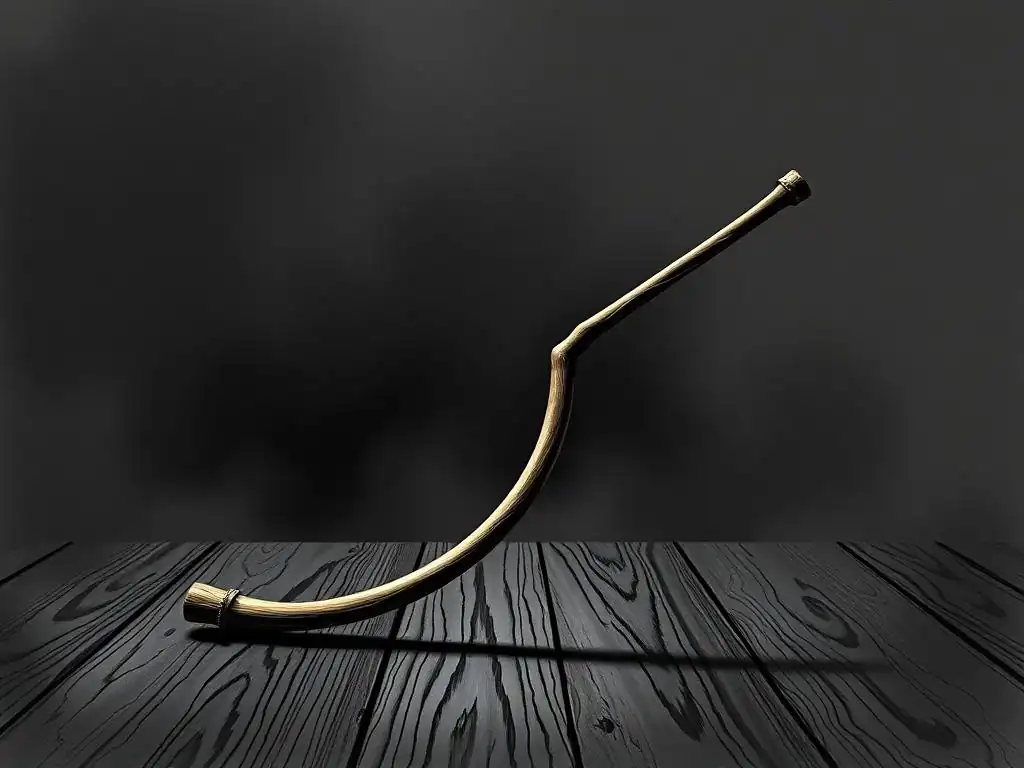
The baqueta is a small, thin wooden stick used to strike the berimbau string. It is typically made from a relatively hard wood like Biriba, bamboo, or other suitable materials. The length and thickness of the baqueta can vary slightly depending on player preference and the size of the berimbau, but it's generally around 30-40 cm (approx. 12-16 inches) long and about 0.5-1 cm (approx. 0.2-0.4 inches) in diameter.
The baqueta's material and tip shape influence the attack and clarity of the sound when hitting the wire. A harder wood produces a sharper, more defined note. The tip can be left natural or slightly rounded. Some players prefer a lighter baqueta for speed, while others prefer a slightly heavier one for more volume. While often overlooked in basic guides, considering the baqueta's quality is part of a thorough Capoeira berimbau buying guide.
The Dobrão (Stone or Coin)
The dobrão, also known as pedra (stone) or ficha (coin), is a flat, heavy disc held against the string to change its pitch. By pressing the dobrão against the string at different points along the verga, the player shortens the vibrating length of the string, producing higher notes. Traditionally, a smooth, flat river stone was used, hence "pedra".
Today, large, heavy coins (like old Brazilian Cruzero coins) or specially made metal discs are common. The key is that it must be heavy enough to press the string firmly against the verga and have a smooth edge to avoid damaging the string. A good dobrão allows for clear pitch changes and is comfortable to hold and manipulate alongside the caxixi and baqueta. Its weight and size should feel balanced for the player's hand.
Factors to Consider Before Buying
Capoeira Style and Musical Needs
The specific style of Capoeira you practice or are interested in significantly influences the type of berimbau you should choose. Different styles emphasize different rhythms and musical arrangements. For instance, Capoeira Angola typically features a slower, more complex musical structure often led by the Gunga, with the Médio and Viola providing accompaniment. A Gunga with a deep, resonant tone is often preferred in Angola rodas.
Capoeira Regional and Contemporânea, on the other hand, often utilize faster, more dynamic rhythms, with the Médio frequently taking a leading role, supported by the Viola for higher melodies and the Gunga for the foundational pulse. If your style emphasizes fast, energetic games, a responsive Médio or Viola might be a better first choice. Understanding your style's musical demands is a crucial step in any comprehensive Capoeira berimbau buying guide.
Berimbau Selection Based on Style (Angola, Regional, Contemporânea)
For Capoeira Angola, a Gunga is often considered the primary instrument. Look for a berimbau with a long verga (150-160 cm) and a large cabaca for that characteristic deep, commanding sound. The tone should be rich and sustained. While a beginner in Angola might start with a Médio to learn general technique, a Gunga is essential for leading the bateria in this style.
In Capoeira Regional and Contemporânea, the Médio is arguably the most versatile instrument for a beginner. Its mid-range tone allows you to play a wide variety of rhythms used in these styles. A Médio verga (120-145 cm) and a medium cabaca offer a good balance of pitch and volume suitable for both practice and playing in the roda.
If you focus on faster rhythms and soloing, a Viola (shortest verga, smallest cabaca) might be appealing later, but the Médio is a solid starting point for most players in these styles. This stylistic consideration is vital for a practical Capoeira berimbau buying guide.
Matching Berimbau to Musical Preferences
Beyond style, consider your personal musical preferences. Do you naturally gravitate towards lower, foundational rhythms, or do you prefer playing higher melodies and variations? While your style dictates the traditional roles of each berimbau type, your preference can influence which instrument you feel most connected to.
If you enjoy providing the rhythmic backbone and feel the pulse of the roda, a Gunga might resonate with you, even if you play a style where the Médio is more common for beginners. If you are drawn to intricate melodies and dynamic variations, you might find yourself happier with a Viola or a Médio capable of producing clear high notes. Trying out different instruments if possible is the best way to understand their feel and sound before making a purchase decision based on your Capoeira berimbau buying guide research.
Budget Considerations
The cost of a Capoeira berimbau can vary significantly, ranging from very affordable beginner instruments to expensive, master-crafted pieces. Establishing a budget beforehand is essential. Beginner berimbaus made with common woods or bamboo might cost anywhere from \$50 to \$150 USD, often available online or through larger suppliers. These are good for getting started and learning the basics without a large initial investment.
Mid-range berimbaus, possibly made with better quality wood or by more experienced artisans, could fall between \$150 and \$300 USD. Professional-grade instruments, often handmade by renowned luthiers (instrument makers) or Mestres using select materials like high-quality Biriba and perfectly matched cabacas, can easily exceed \$300 USD and go up to \$500 USD or more. Your budget will significantly shape your options when using a Capoeira berimbau buying guide.
Entry-Level Berimbaus
Entry-level berimbaus are designed to be accessible and functional for new players. They often use more readily available wood types or simpler construction methods. While they may not possess the deep resonance or complex tonal qualities of high-end instruments, a good entry-level berimbau should still be playable, hold tension reasonably well, and produce a clear enough sound for practice.
- Pros: Affordable, good for learning fundamentals, less worry about damage.
- Cons: May lack resonance and sustain, potentially less durable, sound quality might be limited.
When looking at entry-level options in a Capoeira berimbau buying guide, focus on basic build quality – check that the verga is straight, the cabaca is intact, and the string mechanism is secure.
Investing in a Higher-Quality Berimbau
Investing in a higher-quality berimbau, especially one made by a respected artisan, can be a rewarding experience. These instruments typically feature premium materials like select Biriba wood and carefully chosen cabacas, resulting in superior sound quality, resonance, and sustain. They are often more durable and finely tuned.
- Pros: Excellent sound quality, improved resonance and sustain, greater durability, often aesthetically pleasing, supports traditional craftsmanship.
- Cons: Higher cost, may require more careful handling and maintenance.
A higher-quality berimbau is often recommended once a player has committed to Capoeira and playing the instrument, or if they are performing regularly. The difference in sound can be inspiring and significantly enhance your playing experience in the roda.
Berimbau Size and Ergonomics
Beyond the verga length determining the tone (Gunga, Médio, Viola), the overall size and feel of the berimbau in your hands are crucial for comfortable and effective playing. A berimbau that is too long or too short for your height and arm length can be awkward to hold and manipulate, potentially hindering your technique.
Consider how the instrument rests against your body and how easily you can reach the string with the baqueta while holding the dobrão and caxixi. This ergonomic fit is highly personal and sometimes best assessed by physically holding different berimbaus, if possible, as part of your Capoeira berimbau buying guide process.
Berimbau Length and Player Height
While there are no strict rules, a general guideline suggests matching the berimbau length to your height for comfortable play. Taller individuals might find a longer verga (like a Gunga or a long Médio) more comfortable, as it rests lower on their body, allowing for a natural arm position.
Shorter individuals might prefer shorter vergas (like a Viola or a shorter Médio) that don't extend too far below their waist when held. The goal is to find a length that allows you to hold the instrument securely with the cabaca against your abdomen or chest while having a comfortable range of motion with your striking hand.
Grip and Playability
The thickness and shape of the verga where you grip it are also important for comfort and playability. Some vergas are thicker at the base and taper towards the top, while others have a more consistent diameter. The wood should feel smooth and natural in your hand.
The positioning and size of the loop or rope used to attach the cabaca should also be considered, as it can affect the balance and how the instrument sits against your body. Ultimately, the berimbau should feel like an extension of yourself, allowing you to focus on the music rather than struggling with the instrument's physical form. This tactile aspect is often best evaluated in person when using a Capoeira berimbau buying guide.
Where to Buy a Berimbau
Finding a reliable source for purchasing a Capoeira berimbau is as important as understanding the instrument's components. Several options exist, each with its pros and cons regarding quality, cost, and authenticity.
Purchasing from Mestres/Teachers
Buying directly from your Mestre or a Mestre you trust is often considered the ideal route, especially for beginners. Mestres usually have connections with skilled artisans or make instruments themselves. They understand the nuances of what makes a good berimbau for their style and can help you choose an instrument suitable for your level and needs.
- Pros: High likelihood of good quality and authenticity, personalized advice, supports the Capoeira community, instruments may be pre-tested or recommended by experienced players.
- Cons: Limited selection compared to larger vendors, prices might be fixed, availability depends on the Mestre's network.
This method offers the most direct connection to the Capoeira tradition and is highly recommended if feasible as part of your Capoeira berimbau buying guide journey.
Buying from Specialized Vendors
There are vendors, both online and in physical stores (often associated with martial arts or world music shops), that specialize in Capoeira instruments. These vendors typically offer a wider selection of berimbaus from various makers and at different price points.
- Pros: Wider selection of sizes, styles, and price ranges, potentially more options for comparing different instruments side-by-side.
- Cons: Quality can vary significantly between instruments from different makers, less personalized advice compared to a Mestre, may require more personal knowledge to assess quality.
When buying from specialized vendors, it's crucial to ask detailed questions about the wood type, cabaca source, and the maker's reputation. Use your Capoeira berimbau buying guide knowledge to evaluate the instrument.
Online Retailers
Numerous online retailers sell Capoeira berimbaus, ranging from large marketplaces to dedicated Capoeira supply stores. This option offers convenience and potentially competitive pricing.
- Pros: Convenience, wide variety of options available from different regions, ability to compare prices easily.
- Cons: Cannot physically inspect the instrument before buying, quality can be highly variable, shipping fragile items like cabacas can be risky, relies heavily on product descriptions and photos.
When buying online, look for retailers with good reviews, clear return policies, and detailed product descriptions that specify materials used. Requesting additional photos or even a sound sample can be helpful when using this approach for your Capoeira berimbau buying guide purchase.
Key Considerations When Buying
Regardless of where you buy, keep the following in mind:
- Inspect the Verga: Look for straight grain, no cracks, and appropriate flexibility.
- Check the Cabaca: Ensure it is dry, hard, intact, and has a clean interior.
- Examine the String: Is it a proper berimbau wire (often piano wire)? Is it securely attached?
- Assess Overall Craftsmanship: Does the instrument feel sturdy and well-assembled? Are the components matched appropriately?
- Ask Questions: Don't hesitate to inquire about the materials, maker, and recommended care.
Berimbau Maintenance and Care
Proper maintenance is essential to keep your berimbau in good condition and ensure it continues to produce its best sound. A well-cared-for instrument can last for many years. Incorporating maintenance into your routine is as important as using a Capoeira berimbau buying guide to select it.
Proper Storage
The most critical aspect of berimbau care is proper storage. Never store the berimbau strung. The constant tension on the verga can cause it to lose its curve, warp, or even break over time. After each use, loosen the string completely.
Store the berimbau in a cool, dry place away from direct sunlight or extreme temperature changes, which can damage the wood and gourd. Many players store the components disassembled or loosely tied together to keep them organized. Avoid leaning a strung berimbau against a wall for extended periods, as this can also lead to warping.
Verga Care
The wooden verga can benefit from occasional conditioning, especially in dry climates, to prevent it from drying out and cracking. A light application of natural oil, such as linseed oil or tung oil, wiped on and then thoroughly buffed off, can help nourish the wood. Do this sparingly, perhaps once or twice a year, as too much oil can make the wood feel greasy or attract dirt.
Regularly inspect the verga for any signs of stress, cracks, or insect damage. If you notice the verga starting to lose its natural curve even when unstrung, it might be reaching the end of its lifespan.
Cabaca Cleaning and Preservation
The cabaca is fragile and susceptible to moisture and physical damage. Avoid getting the cabaca wet. If it becomes dusty, gently wipe it clean with a dry cloth. Some people lightly sand or polish the exterior, but avoid any treatments that could seal the pores and affect resonance unless specifically recommended by a luthier.
Protect the cabaca from impacts. Dropping the berimbau or hitting the cabaca against hard surfaces can easily crack or break it. Store it somewhere it won't be crushed or knocked over.
Replacing Strings and Components
The berimbau string (arame) will eventually break from fatigue. It's important to know how to replace it. Berimbau strings are typically made from steel wire, often recycled from old car tires, though piano wire is also used. Learn the correct method for attaching the new wire securely to both ends of the verga.
Other components, like the cabaca loop, the string loop at the top of the verga, or even the cabaca itself, may need replacement over time due to wear or damage. Having spare parts or knowing where to source them is helpful. Regular inspection of all components ensures your berimbau remains safe and playable.
Conclusion: Your Berimbau Journey
The Berimbau as a Capoeira Tool
Acquiring your first berimbau is a significant step in your Capoeira journey. It's more than just buying an instrument; it's connecting with the heart and history of the art form. Your berimbau will become your partner in learning the rhythms, understanding the music, and participating fully in the roda. Using this Capoeira berimbau buying guide has hopefully equipped you with the knowledge to make an informed choice that resonates with you and your practice.
Embrace the process of learning to play. It requires patience and dedication, just like learning the movements of Capoeira itself. Your berimbau is a tool for musical expression, for communication within the roda, and for deepening your understanding of Capoeira's rich cultural heritage.
Continued Learning
Choosing your first berimbau is just the beginning. Continue to learn about the different rhythms ( toques), their meanings, and how to play them with feeling and precision. Listen to experienced berimbauzeiros and practice regularly.
As you advance, you might explore different types of berimbaus (Gunga, Médio, Viola) or even commission a custom-made instrument. The journey with the berimbau is one of continuous learning, musical exploration, and connection to the vibrant spirit of Capoeira. May your first purchase, guided by this Capoeira berimbau buying guide, be the start of a beautiful musical adventure.
Frequently Asked Questions
What is a berimbau, and why is it important in Capoeira?
The berimbau is a single-string percussion instrument crucial to Capoeira. It dictates the rhythm and style of the game, influencing the movements and interactions between players. It's essentially the musical heart of Capoeira.
What are the key components of a berimbau, and how do they affect its sound?
A berimbau consists of the verga (wooden bow), cabaça (gourd resonator), pedra or dobrão (stone or coin), baqueta (striking stick), and caxixi (rattle). The size and shape of the cabaça significantly impacts the volume and tone. The verga's wood type and tension also play a vital role.
What types of berimbaus are available, and which is best for a beginner?
There are three main types: Gunga (bass), Medio (middle), and Viola (high). For beginners, a Medio berimbau is generally recommended due to its versatility and ease of learning. It provides a good balance for mastering basic rhythms.
Where can I buy a berimbau, and what is a reasonable price range?
Berimbaus can be purchased online from specialty martial arts stores, Brazilian musical instrument retailers, or directly from artisans. Expect to pay anywhere from $50 to $200+ depending on the quality of materials and craftsmanship.
What should I look for when inspecting a berimbau before buying it?
Check the verga for cracks or weaknesses, ensuring it's made from durable wood. The cabaça should be firm and free of holes, and properly attached. Examine the overall construction for quality and listen to the sound it produces.
Final Reflection: The Resonance of Choice
The journey of selecting a berimbau, as we've explored, is more than just a transaction; it's an initiation into the heart of Capoeira. Understanding the nuances of each component, from the cabaça to the baqueta, empowers the practitioner to connect more deeply with the music and movement. This guide, we hope, provides the knowledge necessary to make an informed decision, setting the stage for a richer, more authentic Capoeira experience.
The berimbau's influence extends far beyond the roda; it's a symbol of resistance, resilience, and cultural heritage. Its haunting sound evokes a history of struggle and triumph, reminding us of the power of art to transcend oppression. The choice of your first berimbau is therefore a significant step, a commitment to honoring this legacy. Capoeira is more than just a fight; it's a dance, a game, a conversation, a history lesson, and a way of life.
- Mestre Bimba
Now, armed with this knowledge, consider the berimbau not just as an instrument, but as a partner in your Capoeira journey. Listen to its voice, feel its vibrations, and allow it to guide you. Embrace the challenge, celebrate the progress, and let the rhythm of the berimbau resonate within you, inspiring you to move, to learn, and to connect with the vibrant community of Capoeira practitioners around the world.
Ignite Your Rhythm: Begin Your Berimbau Journey Today!
Thank you for exploring the art of Capoeira and discovering how to choose the perfect berimbau! Now that you're armed with the knowledge, it's time to take the next step and connect with this incredible instrument.
Here's how to get started:
- Find a local Capoeira school or instructor and schedule your first introductory lesson. This is the most impactful way to learn the basics and receive guidance on selecting your first berimbau.
- Explore online Capoeira communities and forums to connect with experienced practitioners and ask specific questions about berimbaus.
- Consider attending a Capoeira roda (jam session) even if you don't play yet! Immerse yourself in the music and energy – you might even get a chance to try different berimbaus.
Ready to feel the vibrant pulse of Capoeira flowing through you? What resonates most with you about playing the berimbau?