
BJJ Side Control Explained: Mastering the Art of ChesttoChest Dominance

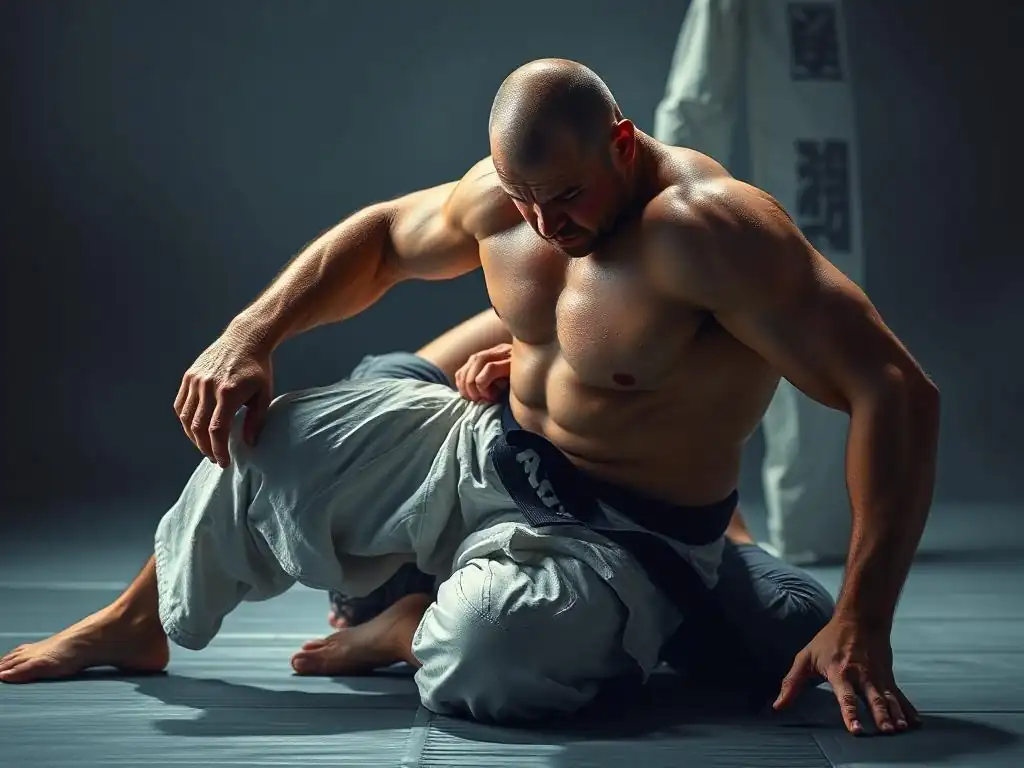
Welcome to Martial Arts Mastery, where the pursuit of excellence in combat arts begins!
Unlock the secrets to dominating your opponent with our in-depth exploration of BJJ side control techniques. This isn't just about pinning; it's about understanding the leverage, control, and submissions that transform this position into a game-changing advantage. Ready to master the art of chest-to-chest dominance? Dive in and discover how to elevate your Brazilian Jiu-Jitsu game!
- Understanding the Fundamentals of BJJ Side Control
- Achieving Dominant Side Control Positioning in BJJ
- Advanced BJJ Side Control Techniques and Transitions
- Escapes from BJJ Side Control: A Comprehensive Guide
- Troubleshooting Common Problems in BJJ Side Control
- Drills to Improve Your BJJ Side Control Game
- BJJ Side Control: Common Mistakes to Avoid
- Side Control Variations: Adapting to Different Body Types and Styles
- Mastering Chest-to-Chest Pressure in BJJ Side Control
- BJJ Side Control: Beyond the Basics - Advanced Concepts
- The Role of Side Control in a BJJ Competition Setting
- Frequently Asked Questions
- Final Reflection: Embracing the Power of Control
- Master Side Control: Claim Your Dominance Now!
Understanding the Fundamentals of BJJ Side Control
What is Side Control in Brazilian Jiu-Jitsu?
Side control, known in Portuguese as lateral, is a dominant grappling position in Brazilian Jiu-Jitsu where one practitioner is positioned perpendicular to their opponent, typically with their chest pressing against the opponent's chest or side. The dominant player is on top, controlling the opponent who is usually flat on their back or side.
This position prevents the bottom person from easily turning towards the top player or creating space to escape, making it a cornerstone of effective ground control. It is a fundamental position taught early in BJJ training, serving as a platform for maintaining dominance, transitioning to other positions like mount or knee-on-belly, and initiating various submission attempts.
Achieving and maintaining BJJ side control techniques are crucial skills for any grappler. It's not just about being on top; it's about nullifying the opponent's movements, distributing your weight effectively, and controlling key points like the hips and shoulders. A well-established side control can drain an opponent's energy, frustrate their escape attempts, and open up opportunities for finishing techniques. Unlike dynamic guard positions, side control emphasizes static pressure and control, requiring patience and precise body mechanics.
The Importance of Side Control in BJJ
Side control is paramount in Brazilian Jiu-Jitsu due to its strategic value in both competition and self-defense. In a competitive setting, maintaining side control for a specified period typically earns points (often 2 points in IBJJF rules, similar to knee-on-belly and mount), contributing directly to victory. More importantly, it is a stable platform that significantly reduces the bottom player's offensive options while maximizing the top player's opportunities for transitions to higher-scoring positions or submission finishes. Escaping a skilled opponent's side control is physically demanding and technically challenging, often requiring significant energy expenditure from the bottom player.
Beyond scoring, side control is a position of safety and control. The top player's weight and positioning make it difficult for the bottom player to strike effectively (relevant in self-defense or MMA), and the proximity allows for tight control that prevents scrambles or sudden explosive movements. Mastering BJJ side control techniques provides a strong foundation for controlling the flow of a match or a real-life encounter on the ground. It's often considered a crucial step after passing the guard and before achieving the most dominant position, the mount.
Key Principles for Effective Side Control
Effective BJJ side control hinges on several core principles, primarily pressure, control, and base. Pressure involves using your body weight to make the opponent uncomfortable, flatten them out, and limit their ability to move. This isn't just about being heavy; it's about applying directed pressure through your chest, shoulder, and hips. A common method is chest-to-chest pressure, where your sternum is pressing directly down onto their sternum, making it hard for them to breathe or bridge. Another form involves shoulder pressure into their jaw or neck, which is highly discomforting and helps control their head movement.
Control focuses on nullifying the opponent's ability to escape or create space. This is achieved by controlling their hips and shoulders, preventing them from turning in or shrimping away. Common grips include the "scarf hold" (kuzure kesa gatame), the "near-side underhook, far-side overhook" (staple side control), or the "reverse scarf hold" (usiro kesa gatame). Maintaining a wide, stable base is equally critical.
Your legs should be spread, providing balance and preventing the opponent from rolling you over. If your base is narrow or your weight is too far forward or back, you become susceptible to sweeps and reversals. These principles combine to create a suffocating, dominant position that is hard for the bottom player to escape.
Achieving Dominant Side Control Positioning in BJJ
Establishing Side Control from Guard Passing
Establishing BJJ side control techniques often occurs immediately after successfully passing an opponent's guard. As you clear their legs and hip line, your immediate goal is to settle into a stable side control position before they have a chance to recompose their guard or initiate an escape. The transition from guard pass to side control requires speed and precision.
As your hips hit the mat on the opponent's side, you must simultaneously secure grips and apply pressure. A common strategy is to immediately secure a near-side underhook and a far-side crossface (shoulder pressure into their jaw/neck) to flatten them and prevent them from turning into you.
The transition isn't complete until you have settled your weight and established control over their upper and lower body. Your chest should be heavy, your hips low, and your base wide. Avoid pausing in a transitional state where your weight is unsupported, as this is when the bottom player is most likely to exploit a moment of instability to escape.
For example, after a leg drag pass, you typically end up with your hips on one side of their body. You must quickly slide your hips close to theirs, secure the underhook and crossface, and spread your base to solidify the position, preventing them from shrimping away or bridging into you.
Maintaining Side Control Pressure and Control
Maintaining dominant BJJ side control techniques requires constant pressure and active control, not passive holding. Your weight should be distributed effectively to maximize discomfort for the opponent while minimizing your own energy expenditure. This often involves shifting your weight slightly depending on the opponent's movements. If they try to bridge, increase chest pressure and widen your base. If they try to shrimp away, follow their hips and maintain the connection. The goal is to stay glued to them, giving them no space to breathe or maneuver.
Effective pressure is not just static; it can be dynamic. Using shoulder pressure into the jaw or neck, or shifting weight slightly onto their ribs, can make the position significantly more uncomfortable and sap their will to resist. Control is maintained through grips (like the underhook and crossface, or controlling the far arm) and body positioning (keeping your hips low and close to theirs).
For instance, securing a strong underhook not only helps prevent them from turning in but also gives you leverage for transitions. Controlling the far arm near their hip prevents them from posting and creating space for a shrimp escape. Constant vigilance and subtle adjustments are key to maintaining this dominant position against a resisting opponent.
Controlling the Hips and Shoulders in Side Control
Controlling the opponent's hips and shoulders is fundamental to effective BJJ side control techniques. The hips are the engine of most escapes, particularly the shrimp (hip escape). If the bottom player can get their hips away from you, they can create space to recover guard or turn to their knees.
To counter this, your hips should stay low and close to theirs, often with a leg or knee blocking their hip line (like in headquarters side control or a slightly adjusted standard side control). Gripping their far hip or gi pants can also help anchor yourself and prevent their hip movement.
Simultaneously, controlling the shoulders is vital for preventing them from turning into you or bridging effectively. The crossface (using your shoulder to drive into their jaw or neck) is a primary method for controlling the upper body. It forces their head away from you, making it difficult for them to turn and face you, which is the first step in many escapes.
A strong underhook on the near side complements the crossface by controlling their shoulder and providing leverage. With the hips and shoulders effectively controlled, the bottom player is flattened out and their ability to initiate most escapes or counter-attacks is severely limited.
Advanced BJJ Side Control Techniques and Transitions
The Knee-on-Belly Transition from Side Control
The knee-on-belly transition is a dynamic and highly effective BJJ side control technique that allows the top player to increase pressure, score points, and open up new submission opportunities. From a stable side control, the transition involves lifting your near-side knee and placing it onto the opponent's stomach or chest, while extending your other leg for base.
This concentrates your weight onto a smaller area, creating significant pressure and discomfort. It's crucial to maintain control, often by gripping the opponent's far collar or arm, and keeping your balance by extending your other leg and potentially using a hand on the mat.
This position is worth 2 points in IBJJF competition and is a common stepping stone to the mount. The opponent's reaction to the pressure often creates openings. If they push your knee, you can transition to mount. If they turn away, you can take their back. If they flatten out, you can maintain knee-on-belly or transition back to a different side control variation or even attack submissions like armbars or chokes directly from this position. Mastering the balance and pressure application is key; a poorly executed knee-on-belly can lead to being easily swept by the opponent.
The Mount Transition from Side Control
Transitioning to mount from side control is a primary goal for many grapplers, as mount is the most dominant position and is worth 4 points in IBJJF competition. One common method involves using the knee-on-belly as an intermediate step.
From side control, establish knee-on-belly, and if the opponent defends by pushing the knee or bridging, you can often capitalize by swinging your non-knee-on-belly leg over their body and settling into mount. Another direct transition from side control is the "hip switch" mount, where you switch your hips and slide your near-side knee across their belly and chest to achieve the mount position.
Successful mount transitions from BJJ side control techniques require timing, control, and awareness of the opponent's reactions. As you transition, maintain control of their arms to prevent them from blocking your hips or escaping. For instance, securing an arm trap from side control before transitioning makes achieving mount much easier. The moment of transition is vulnerable, so ensuring your weight is heavy and your movements are deliberate prevents the opponent from exploiting the brief window of instability to escape or sweep you.
Submissions from Side Control: Arm Locks, Chokes, and More
BJJ side control techniques offer a wide array of submission opportunities. While some submissions are initiated directly from side control, others are set up by transitions or by exploiting the opponent's defensive reactions. Common categories of submissions from this position include arm locks, chokes, and shoulder locks. The control offered by side control allows the top player to isolate limbs or apply pressure to the neck, making it a high-percentage position for finishing the fight.
Developing proficiency in multiple submission types from side control makes you a more dangerous grappler. If an opponent is skilled at defending one type of attack, you can easily transition to another without losing your dominant position. This interconnectedness of BJJ side control techniques and submissions is what makes the position so powerful.
Armbar Submissions from Side Control
The armbar is a classic submission available from BJJ side control. One common setup is the near-side armbar, where you isolate the opponent's arm closest to you. From side control, you can secure the arm, transition your body over it, and extend it to apply the armbar. Another variation involves transitioning to a position like modified scarf hold (kuzure kesa gatame) or even knee-on-belly to isolate an arm before moving into the armbar position.
For example, from standard side control with an underhook, you can often isolate the opponent's far arm by pinning it with your chest or arm, then step over their head with your leg while maintaining control of the arm, transitioning directly into a traditional armbar position. The key is maintaining tight control throughout the setup and transition to prevent the opponent from pulling their arm free or escaping.
Choke Submissions from Side Control
Chokes are also highly effective from BJJ side control techniques. The crossface often sets up opportunities for collar chokes or even arm triangle chokes. With a strong crossface, you can often slide your crossfacing arm deeper under the opponent's neck to initiate an arm triangle, then pass to the other side or settle into a tight side control variation to finish. Another common choke is the paper cutter choke, which uses the opponent's gi collar.
To execute a paper cutter choke from side control, you typically secure a deep grip on the opponent's far collar with your near hand, then use your other hand to grab the opponent's near collar (or wrist) and drive it across their neck while applying pressure with your first grip. The pressure from your chest and the angle of side control make these chokes particularly potent.
Other Submission Options
Beyond armbars and chokes, other submissions are viable from BJJ side control techniques. Shoulder locks like the Americana (keylock) and the Kimura are frequently attacked, especially when the opponent is trying to frame against your neck or push your hips away. The Americana is typically applied to the near arm when it's trapped or extended, while the Kimura can be attacked on either the near or far arm, often as the opponent reaches or frames.
Furthermore, transitions can open up other submissions. For instance, transitioning towards mount or knee-on-belly can create opportunities for arm triangles, while the opponent turning away can lead to back takes and subsequent rear naked choke attempts. Side control is less about having one signature submission and more about using the position's control to set up a variety of finishing techniques based on the opponent's reactions.
Escapes from BJJ Side Control: A Comprehensive Guide
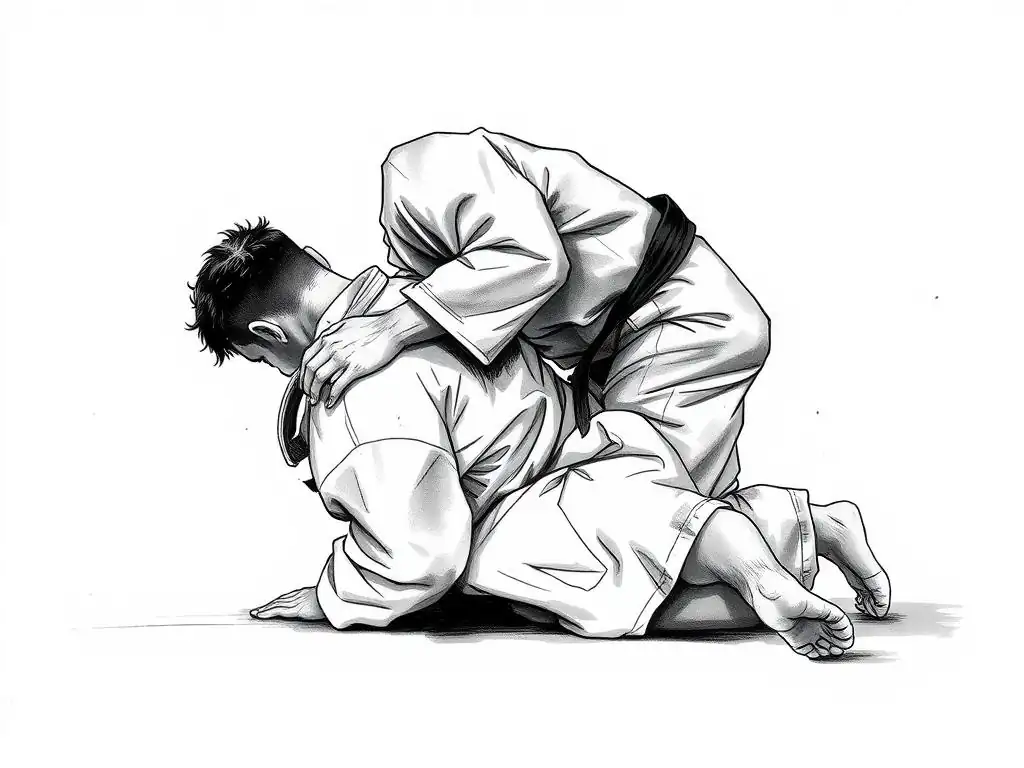
Common Side Control Escape Strategies
Escaping BJJ side control techniques is one of the most crucial defensive skills in grappling. The primary goal of most escapes is to create space and regain a more favorable position, typically guard. Common strategies revolve around controlling the opponent's posture, creating space with your arms and legs (framing), and using hip movement (shrimping or bridging). A fundamental principle is to prevent the opponent from securing a dominant crossface or underhook, which are key to their control.
One common initial defense is to create frames with your arms – usually one hand near their neck/jaw and the other across their hip – to prevent them from flattening you completely and to create a small pocket of space. Simultaneously, you need to protect your neck and arms from submission attacks. Understanding these common strategies is the first step; executing them effectively under pressure requires drilling and precise timing.
Bridging and Shrimping Techniques for Side Control Escape
Bridging and shrimping (hip escaping) are foundational movements for escaping BJJ side control techniques. The bridge involves lifting your hips off the ground by driving off your feet and head (or upper back). This can momentarily disrupt the top player's base and balance, creating an opportunity to turn or shrimp. A common bridge escape involves bridging forcefully towards the opponent's head while simultaneously attempting to turn into them or slide your arm under their neck to create space.
Shrimping, or hip escaping, is the movement of sliding your hips away from the opponent while keeping your shoulders relatively stationary. This is essential for creating the space needed to bring your knees back between you and the opponent to recover guard.
From side control, you often bridge to lighten the opponent's weight, then immediately shrimp your hips away, trying to get your knee onto the opponent's hip or into their armpit. Combining bridging and shrimping is key; a strong bridge creates the initial space, and a quick shrimp capitalizes on it to regain distance and establish a frame or knee shield.
Creating Space and Regaining Guard from Side Control
The ultimate goal of most BJJ side control techniques is to regain guard. This is achieved by effectively using frames, bridging, and shrimping to create enough space to get your knees back between you and the opponent. Once space is created, typically through a successful shrimp, you need to bring your leg or knee into the gap to establish a frame or a knee shield. This prevents the opponent from closing the distance again and re-establishing tight side control.
For example, after a bridge and shrimp, you might get your near knee onto the opponent's hip. From there, you can use your other leg to push off the ground and continue shrimping, bringing your far leg through to join the near knee, establishing a closed guard, or setting up an open guard with hooks. Another common method is the "elbow escape," where you use your elbow to create space near their hip or chest, followed by a shrimp to bring your knee through. Consistently creating and utilizing space is the hallmark of effective side control escapes.
Troubleshooting Common Problems in BJJ Side Control
Dealing with Strong Frames and Defenses
A common challenge in maintaining BJJ side control techniques is dealing with an opponent who establishes strong frames with their arms and legs. These frames (often an arm across your neck/jaw and another across your hip) create distance and prevent you from applying effective chest-to-chest pressure. When facing strong frames, simply trying to muscle through them is often ineffective and exhausting. Instead, focus on neutralizing the frames.
One approach is to use your grips and weight distribution to collapse the frames. For instance, if they have a frame across your neck, use your crossface and underhook to drive their shoulder down and flatten their upper body, making the frame less effective. If they have a frame across your hip, use your leg or knee to block their arm or pin it to the mat, then adjust your hips to remove the space the frame created.
Another tactic is to transition to a different side control variation (like reverse scarf hold or even knee-on-belly) that bypasses their current framing structure. The key is to address the frame specifically rather than just trying to ignore it.
Preventing Opponent from Turning In
A significant problem in BJJ side control techniques is when the opponent successfully turns in to face you. This is often the first step in guard recovery or even some sweep attempts. Preventing this requires active control of their upper body and head. The crossface is your primary tool here; by driving your shoulder into their jaw or neck, you force their head away from you, making it physically difficult for them to turn their shoulders and hips to face you.
Maintaining a strong underhook on the near side is equally important. The underhook controls their shoulder and prevents them from creating the angle needed to turn in. If they start to turn, increase the pressure of your crossface and pull up slightly on the underhook to flatten them back out.
Your hips should also be low and close to theirs, blocking their ability to pivot. If they manage to turn onto their side, you must immediately adjust your position, potentially transitioning to a 'headquarters' type side control or even moving towards their back to prevent them from completing the turn and recovering guard.
Maintaining Control Against Explosive Movements
Opponents will often use explosive movements like bridging or sudden shrimping bursts to escape BJJ side control techniques. Maintaining control against these bursts requires a solid base and the ability to react quickly. Your base should be wide, with your legs spread and hips low. This makes it harder for them to lift or roll you with a bridge. If they bridge, increase your chest pressure and potentially post a hand on the mat on the side they are bridging towards to maintain balance.
Against explosive shrimping, you must follow their hips instantly. As they create space, slide your hips forward to close it down. Your grips (underhook, crossface, or gi grips) are crucial for keeping them connected to you during these movements.
For example, a tight underhook allows you to pull them back towards you if they try to shrimp away. It's less about resisting their force with pure strength and more about having a stable structure and reacting quickly to nullify their movement before it gains momentum. Anticipation, based on their subtle body language, also plays a role in preventing their explosive attempts.
Drills to Improve Your BJJ Side Control Game
Solo Drills for Side Control Maintenance
Improving BJJ side control techniques doesn't always require a partner. Solo drills can help refine body mechanics, weight distribution, and transitions. One simple solo drill is practicing the side control posture and base. Lie on your side as if you were in side control on an imaginary opponent. Practice shifting your weight from your chest to your hips, extending your base leg, and bringing your knees in and out as if adjusting to an opponent's movements.
Another useful solo drill is practicing transitions like knee-on-belly or stepping over into mount. From your imaginary side control, practice lifting your knee onto an imaginary belly, extending your other leg for balance, and then swinging it over to an imaginary mount. While these drills lack the resistance of a partner, they help build muscle memory for the required movements and body positions, making you more efficient when you drill with a partner.
Partner Drills for Side Control Transitions and Submissions
Partner drills are essential for developing effective BJJ side control techniques under resistance. A fundamental partner drill is "Side Control Maintenance," where one partner starts in side control and the other tries various standard escapes (bridging, shrimping, framing). The top player focuses solely on maintaining the position, adjusting pressure, base, and grips without attempting submissions or transitions. This builds the crucial skill of staying connected and heavy.
Another effective drill is focusing on transitions. Start in side control, and the top player works on transitioning to knee-on-belly, mount, or back to a different side control variation, while the bottom player offers light to moderate resistance focused only on preventing the transition, not escaping entirely. Similarly, dedicate rounds to drilling specific submission entries from side control, having the bottom partner offer realistic defensive reactions that the top player must work through to secure the finish.
Drilling Side Control Escapes
Just as important as drilling BJJ side control techniques is drilling the escapes. Partner drills for escapes involve one partner starting in a solid side control, and the bottom partner focusing solely on executing specific escape techniques (e.g., bridge and shrimp escape, elbow escape, turning in escape). The top player provides realistic pressure and control but allows the bottom player to work the escape, perhaps offering increasing levels of resistance as the bottom player improves.
A common escape drill is "Situational Side Control Escapes," where the bottom player attempts to escape, and if they succeed in regaining guard, the drill resets with the same person starting on the bottom in side control. If the top player successfully maintains control or transitions to a dominant position like mount for a set time, the roles might switch. This reinforces the importance of successful guard recovery as the immediate goal of escaping side control.
BJJ Side Control: Common Mistakes to Avoid
Losing Position Due to Poor Weight Distribution
One of the most frequent errors in BJJ side control techniques is improper weight distribution. New practitioners often feel like they need to be incredibly heavy, but they distribute their weight poorly, either too far forward (making them susceptible to being rolled forward or backward) or too far back (making them easy to shrimp away from). Effective side control isn't just about being heavy; it's about applying weight strategically.
Avoid having your weight supported primarily by your arms or knees on the mat; your weight should be primarily on your opponent's body. This requires keeping your hips low and your chest heavy. If your hips are too high, the opponent can easily shrimp underneath you. If your weight is too far forward, they can bridge and roll you over their head. Practice feeling where your weight is resting and constantly adjusting to keep it centered and heavy on your opponent's core.
Neglecting Hip Control
Neglecting hip control is a critical error in BJJ side control techniques that quickly leads to losing the position. The opponent's hips are their primary tool for creating space and initiating escapes like the shrimp or turning in. If you allow their hips to move freely, they will inevitably create the angle and space needed to recover guard or sweep you.
Ensure your hips are low and close to your opponent's hips. Use your legs and knees to block their hip movement. For instance, placing your near knee near their hip or even slightly underneath them (depending on the side control variation) can prevent them from shrimping effectively. Gripping their far hip or belt can also help anchor your position and control their lower body. Always be aware of where their hips are and what they are trying to do with them.
Telegraphing Your Submissions
While BJJ side control techniques offer many submission opportunities, telegraphing your intentions makes it easy for the opponent to defend. If you pause, adjust your grips obviously, or shift your weight dramatically just before attempting a submission, your opponent will see it coming and can preemptively defend or escape.
Develop the ability to transition smoothly and set up submissions from subtle changes in pressure or grips. Practice chaining attacks together; if your initial submission attempt is defended, immediately transition to another technique or back to solid control. For example, if you attempt an armbar and they defend by pulling their arm in, transition immediately to a choke or a shoulder lock using the grips you already have or can easily acquire. Maintain your dominant position throughout the process; losing side control to attempt a low-percentage submission is a poor trade-off.
Side Control Variations: Adapting to Different Body Types and Styles
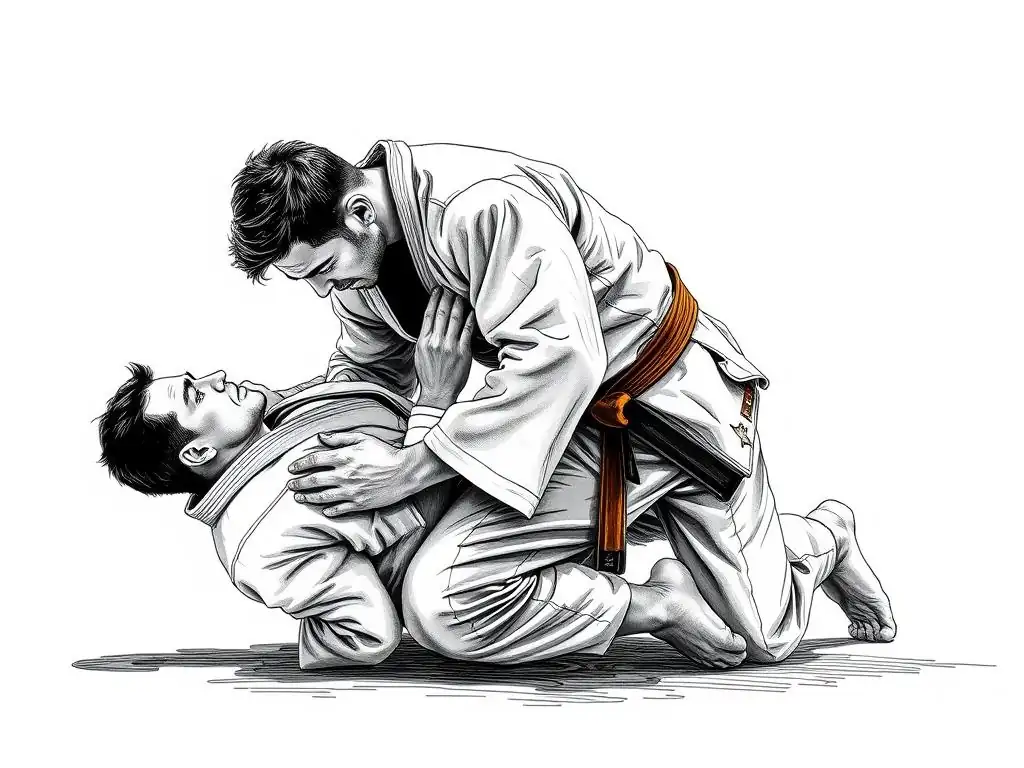
Adapting Side Control for Smaller Grapplers
Smaller grapplers maintaining BJJ side control techniques against larger opponents often face challenges with raw strength and weight. For smaller individuals, relying solely on heavy static pressure might not be as effective. Instead, focus on agility, precise weight distribution, and using leverage to your advantage.
Smaller grapplers may find variations like the "knee-on-belly" or "reverse scarf hold" (ushiro kesa gatame) particularly useful. Knee-on-belly allows you to concentrate your weight onto a single point, which can be very uncomfortable even for a larger opponent and provides mobility for transitions. Reverse scarf hold controls the head and arm effectively and makes it difficult for the larger opponent to use their strength to bridge or turn into you. Focus on denying space, controlling the head and hips, and being ready to transition quickly rather than trying to hold a static heavy position.
Larger grapplers often have the advantage of natural weight and strength when applying BJJ side control techniques. However, they must be mindful of not becoming too reliant on brute force, which can lead to losing position against more technical or agile opponents. Larger grapplers can effectively use heavy chest-to-chest pressure and variations like the "scarf hold" (kesa gatame) or traditional side control with strong crossface and underhook.
The key for larger grapplers is to use their weight intelligently, applying it strategically to crush the opponent's ability to move. However, they must also maintain a wide, stable base to prevent being swept by smaller, faster opponents who exploit gaps. Ensuring hip control is still paramount; raw weight alone won't stop a determined shrimp escape. Larger practitioners should also be aware of their own energy expenditure and aim for efficient pressure that doesn't rely on constant maximal force.
Adapting to Different Guard Styles
Your approach to establishing and maintaining BJJ side control techniques will also need to adapt based on the type of guard you are passing and the opponent's guard style. Passing a dynamic open guard like De La Riva or lasso often results in ending up in a standard side control or potentially a loose side control needing immediate tightening. Passing a pressure guard like knee shield or half guard might lead you directly into a tighter side control or even headquarters position.
Against opponents who favor specific guards, anticipate where you will likely land after the pass and have a plan for immediately securing dominant BJJ side control techniques. For instance, if you know an opponent excels at recovering guard from side control by shrimping, prioritize hip control and maintaining a low base immediately upon passing. If they favor turning in, focus on securing a deep crossface and underhook as you settle into side control. Adaptation is key to successful guard passing and subsequent side control establishment.
Mastering Chest-to-Chest Pressure in BJJ Side Control
Maximizing Pressure for Control and Submissions
Mastering chest-to-chest pressure is arguably the most important aspect of effective BJJ side control techniques. This pressure isn't just passive weight; it's active engagement of your core and upper body to drive your sternum down onto the opponent's chest. The goal is to make it difficult for them to breathe deeply, flatten them out, and remove space between your bodies. This suffocating pressure significantly limits their ability to bridge, shrimp, or create frames.
To maximize this pressure, keep your hips low and close to the opponent. Avoid posting excessively on your hands; ideally, your hands are controlling grips (underhook, crossface, gi grips), and your weight is supported by your connection to the opponent and your base on the mat. Think of your chest as a heavy blanket pressing down. This constant, uncomfortable pressure wears the opponent down, both physically and mentally, making their escape attempts less effective and opening up opportunities for submissions as they focus on surviving the pressure.
Using Your Bodyweight Effectively in Side Control
Effective BJJ side control techniques rely on using your bodyweight efficiently, not just being heavy. This means understanding how to distribute your weight to create maximum pressure on the opponent while maintaining your own balance and stability. Your core should be engaged, and your weight should be directed downwards through your chest and hips onto the opponent. Avoid having your weight held up by your arms or resting entirely on your knees.
Consider the angle of your body relative to the opponent. Being perpendicular is standard, but subtle shifts in angle can increase pressure on specific points, like their ribs or diaphragm. Your base (where your legs are on the mat) provides the foundation for your weight distribution. A wide, low base prevents you from being easily swept and allows you to shift your weight fluidly as the opponent moves. Using your skeletal structure to support your weight, rather than relying solely on muscular strength, allows you to maintain pressure for longer periods without tiring yourself out.
The Importance of Proper Posture
Proper posture in BJJ side control techniques is crucial for maintaining stability, applying pressure, and preventing escapes. Your back should be relatively straight, and your head up (not looking down at the opponent's belt), allowing you to maintain a strong, connected core. Slouching or having poor posture makes your weight distribution less effective and makes you more vulnerable to being lifted or rolled.
Your head position is also important. Keeping your head on the side of the crossface helps maintain pressure and connection. Avoid letting your head drop or look away, as this can compromise your posture and make it easier for the opponent to create space or escape. Good posture ensures that your weight is directed effectively onto the opponent and that your base remains stable, forming a cohesive unit that is difficult for the bottom player to disrupt.
BJJ Side Control: Beyond the Basics - Advanced Concepts
Using Side Control to Set Up Other Attacks
Advanced BJJ side control techniques go beyond simply holding the position or attacking the most obvious submissions. Skilled practitioners use side control as a strategic platform to set up a wide range of attacks, often by eliciting specific defensive reactions from the opponent. For example, applying heavy chest pressure might cause the opponent to push with their arms, creating openings for armlocks or transitions to knee-on-belly.
Feinting submissions or transitions is another advanced concept. You might initiate a movement towards mount or a paper cutter choke, not necessarily intending to finish it immediately, but to force the opponent to react in a way that opens up a different, higher-percentage attack. Side control becomes a dynamic phase of the match where you probe the opponent's defenses and use their reactions to your advantage, constantly threatening multiple outcomes.
Combining Side Control with Other Positions
Side control rarely exists in isolation in a live grappling exchange. Advanced BJJ side control techniques involve fluidly combining side control with other dominant positions. This means being comfortable transitioning between side control variations (e.g., from standard to reverse scarf hold, or to headquarters), and also transitioning effectively to and from knee-on-belly, mount, and even north-south.
The ability to seamlessly move between these positions keeps the opponent constantly defending and guessing. If they defend your mount attempt, you can easily transition back to a dominant side control. If they escape side control to half guard, you can immediately work to pass half guard back to side control or mount. This interconnectedness of positions, with side control serving as a central hub, is a hallmark of high-level grappling.
The Psychology of Side Control
Beyond the physical techniques, there's a significant psychological component to effective BJJ side control techniques. Being stuck in a tight, suffocating side control is physically draining and mentally frustrating for the bottom player. The constant pressure and inability to escape can lead to panic, fatigue, and poor decision-making, making them more susceptible to mistakes and submissions.
As the top player, maintaining composure, applying consistent pressure, and patiently working for openings can break the opponent's will. Conversely, feeling trapped and unable to move can make the bottom player rush their escape attempts, often leaving themselves vulnerable. Understanding this psychological battle allows the top player to use pressure and control not just to set up submissions, but to wear down the opponent's resistance and exploit their mental state.
The Role of Side Control in a BJJ Competition Setting
Scoring Points from Side Control
In most BJJ competition rule sets, including the widely used IBJJF rules, establishing and maintaining BJJ side control techniques is a scoring position. Typically, holding a stable side control for a few seconds (often counted after the referee acknowledges the position) is worth 2 points. This is the same point value awarded for knee-on-belly and taking the back, and half the value of achieving mount (4 points).
While not the highest-scoring position, securing side control is a reliable way to accumulate points after a successful guard pass (which itself doesn't always score immediately, but the subsequent control does). Consistently reaching and holding side control can build a point lead, especially if combined with transitions to knee-on-belly or mount. Even if you don't secure a submission, controlling the match from side control can lead to a win by points.
Preventing Sweeps and Submissions from Side Control
In a competitive setting, maintaining BJJ side control techniques is not just about offense; it's also about defense. A stable side control minimizes the opponent's offensive options. While they can attempt escapes, their ability to sweep you or initiate submissions from a flat side control is significantly reduced compared to positions like guard or half guard.
Preventing the opponent from sweeping you or submitting you from side control relies on the fundamental principles: maintaining a strong base, applying pressure, and controlling their hips and shoulders. Being aware of common escape entries (like the bridge and roll) and defending them proactively is crucial. A competitor who can consistently shut down escape attempts from side control forces their opponent to expend significant energy and frustration, often leading to mistakes that can be capitalized upon.
Using Side Control to Control the Pace of the Match
BJJ side control techniques are an excellent tool for controlling the pace and flow of a competitive match. Once established, side control allows the top player to dictate the action. They can choose to apply crushing pressure, patiently wait for openings, transition to higher-scoring positions, or attack submissions. The bottom player is largely reactive, forced to defend and attempt escapes.
Maintaining side control allows you to conserve energy while forcing your opponent to work hard to escape. This is particularly useful in longer matches or when facing an opponent with high energy. By controlling the position, you control the narrative of the fight, wearing down your opponent and creating opportunities on your terms. It's a position of strategic advantage that allows a skilled competitor to manage the clock, build a point lead, and exhaust their opponent en route to victory.
Frequently Asked Questions
What is BJJ Side Control and why is it important?
BJJ Side Control is a dominant positional control in Brazilian Jiu-Jitsu where you pin your opponent to the mat on their side. It's important because it allows you to control your opponent's movement, attack with submissions, and advance to even more dominant positions.
What are some common BJJ Side Control techniques?
Common techniques include knee-on-belly, north-south control, and transitioning to submissions like armbars and kimuras. These techniques allow you to maintain control and apply pressure.
How do I escape from BJJ Side Control?
Escaping often involves creating space using hip escapes (shrimping) and regaining guard. Effective bridging and framing can also help create the necessary space to escape.
What are some effective ways to maintain BJJ Side Control?
Maintaining side control requires consistent pressure and preventing your opponent from bridging or turning. Using crossfaces and underhooks effectively limits their mobility.
What are some common mistakes beginners make in BJJ Side Control?
Beginners often fail to maintain consistent pressure or allow their opponent too much space to escape. Proper weight distribution and control of the opponent's hips are crucial.
Final Reflection: Embracing the Power of Control
The techniques explored in this article, detailing the intricacies of BJJ side control, are not merely a collection of maneuvers; they represent a pathway to understanding and embodying control, both on and off the mat. In a world often characterized by chaos and uncertainty, the ability to establish and maintain a dominant position, even in a simulated struggle, offers a profound sense of empowerment and strategic thinking that extends far beyond the realm of Brazilian Jiu-Jitsu.
The journey of mastering side control is a microcosm of life itself, demanding patience, precision, and a constant adaptation to changing circumstances. This relentless pursuit of improvement, this dedication to refining one's technique, resonates deeply with the human desire for growth and self-mastery. The art of Jiu-Jitsu is the art of expressing the human soul.
- Rickson Gracie. This quote encapsulates the profound connection between physical technique and the development of inner strength and resilience.
Now, as you step off the mat, consider how the principles of side control – maintaining pressure, controlling movement, and anticipating your opponent's reactions – can be applied to the challenges you face in your daily life. Embrace the power of control, not to dominate others, but to master yourself, navigate complexities with grace, and ultimately, achieve your full potential.
Master Side Control: Claim Your Dominance Now!
Thank you for exploring the intricate world of BJJ side control with us. We hope you've gained valuable insights into achieving chest-to-chest dominance on the mat. Now, let's put that knowledge into action!
- Immediately begin integrating these techniques into your next sparring session, focusing on maintaining chest-to-chest contact.
- Film yourself drilling the side control escape prevention techniques outlined, and analyze your positioning. Share the video with your coach for feedback.
- Research lesser-known submissions from side control, such as the paper cutter choke, to surprise your training partners.
What's one specific adjustment you'll make to your side control game this week to improve your chest-to-chest pressure?