Chain or Belt as a Weapon: Responding Effectively to Unexpected Flexible Weapon Attacks
💥 Master unexpected attacks with our guide to flexible weapon defense techniques. Learn how to effectively counter chains and belts, enhancing your…
Read article

Real-world threats rarely follow a script, which is why mastering common attack scenarios and their defensive responses is the cornerstone of practical self-defense. This isn’t about flashy techniques—it’s about recognizing patterns (from grabs and strikes to weapon threats) and deploying calm, decisive counter-moves under pressure. You’ll learn how to read pre-assault cues, escape common holds, and adapt your martial arts training to chaotic, unpredictable situations. By studying realistic case studies and scenario-based drills, you’ll build the muscle memory and situational awareness needed to turn fear into action. Whether it’s a surprise bear hug, a sucker punch, or an attempted choke, these insights help you bridge the gap between technique and survival, ensuring your art works when it matters most.

💥 Master unexpected attacks with our guide to flexible weapon defense techniques. Learn how to effectively counter chains and belts, enhancing your…
Read article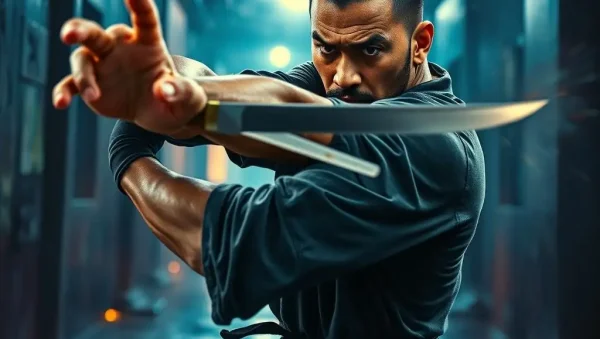
🔪 Master the nuances of "knife attack defense strategies" by understanding the critical differences between slashing and stabbing. This article reveals how…
Read article
💥 Master the art of deescalation bar fight survival. Learn essential defense and escape strategies for crowded, volatile venues, drawing on global…
Read article
😱 Learn crucial self-defense chemical assault techniques for immediate, life-preserving responses. MartialArtsMastery.org equips you with vital skills to neutralize acid and chemical…
Read article
💪 Master the double leg takedown defense and maintain your footing. Learn essential sprawl techniques from MartialArtsMastery.org to stay dominant under pressure,…
Read article
🛡️ Master proactive defense! Learn vital strategies to prevent vehicle carjacking survival, empowering you with the knowledge and techniques to protect yourself…
Read article
💥 Transform a brutal attack into empowerment. Discover how "From Victim to Victor" leverages advanced self-defense punch reaction training, turning a vicious…
Read articleWhen you train in martial arts for real-world protection, the ultimate goal is to bridge the gap between the dojo and the street. This subcategory focuses on the most frequent physical threats you are likely to encounter—from sudden grabs and sucker punches to armed confrontations and multiple attackers. Rather than teaching isolated techniques, we break down complete attack patterns and provide logical, repeatable defensive responses. This practical approach ensures that your training translates into immediate, effective action under stress, boosting both your confidence and your survival instincts in dangerous situations.
The most common assault begins without verbal warning. A sucker punch, or a rapid flurry, is designed to end a fight before you can react. In this section, you will learn how to recognize pre-attack indicators like weight shifts, clenched fists, and a stiffened posture. We emphasize the importance of maintaining a protective guard and a mobile stance, teaching you how to create immediate distance or close the gap to neutralize the threat.
Our defensive responses focus on quick head movement, high guards, and simultaneous counter-strikes to vital targets like the eyes, throat, or groin. You’ll also explore practical drills that simulate a sudden blitz from a blind spot. By repeatedly practicing these scenarios, your muscle memory will take over, allowing you to slip, block, and counter without conscious thought. This knowledge is essential for turning a potential knockout into a decisive defensive win.
Assailants often use grabs to control or drag a victim. From wrist grabs to full bear hugs and headlocks, these scenarios are common in domestic disputes and abduction attempts. This block teaches you the principles of balance breaking, leverage, and targeting vulnerable pressure points to escape from various grips. You will learn that strength is rarely the answer; instead, technique and timing allow a smaller person to defeat a larger attacker.
We cover both front and rear attacks, including how to bring your weight down to counter a headlock and how to use your elbows and knees when trapped in a bear hug. Each response is structured to be simple and high-percentage under duress. You’ll also see how to transition directly from a defensive escape into a counter-attack or a safe disengagement, ensuring you never stay in a clinch longer than necessary.
Facing a blade is a terrifying reality, and the correct response is not to disarm, but to protect your vital areas and create space. This section prioritizes situational awareness and proactive evasion over heroic disarms. You will learn the "fence" position to keep distance, how to use a jacket or bag as an improvised shield, and the angle to move that keeps vital organs away from the weapon’s path.
Defensive responses focus on controlling the weapon hand when contact is unavoidable, using gross motor movements rather than fine motor skills. We explain how to identify common knife attack arcs, such as ice-pick and slashing patterns, and how to apply a 2-on-1 control to redirect the blade. While we include basic disarming drills, the overarching philosophy is that escaping with minimal injury is the ultimate victory. You will leave with a clear action plan for a highly stressful, life-threatening encounter.
Real-world violence rarely occurs one-on-one, and ending up on the ground is a probable outcome. This subcategory covers the strategic complexities of positioning, mobility, and immediate recovery when outnumbered. You will discover how to keep all attackers in your peripheral vision, use one assailant as a shield against others, and rapidly transition from standing defense to a safe stand-up position if knocked down.
For ground defense, we focus on the "guard" position but with an emphasis on creating a frame and kicking to regain your feet, not on ground submission. We address the crucial tactic of using a wall to reduce the number of accessible angles. Drills include practicing against two or three people, teaching you to never become stationary and to strike aggressively to create an escape lane. This knowledge is vital for anyone who understands that survival often depends on your ability to disengage, not to "win" a fight.
Even with perfect physical technique, your mind must be prepared for the shock of an attack. This section explores the adrenal stress response—including tunnel vision, increased heart rate, and auditory exclusion—and how it affects your motor skills. We provide practical methods for controlling your breathing and using "combat breathing" to lower your heart rate, which is critical for maintaining clarity and coordination.
You will learn a decision-making hierarchy for self-defense: avoid, escape, de-escalate, and physically defend. This framework helps you make the correct choice under pressure rather than freezing. We also discuss the legal and ethical aftermath of a defensive encounter, helping you understand when force is legally justified. By training your mind to expect the chaos, you transform fear from a paralyzing force into a heightened state of awareness and readiness.
The absolute priority is to get your hands up to protect your chin and temples while moving your head off the line of attack. Do not attempt to block with a single hand; instead, use a high guard and immediately pivot or step back. Your goal is to survive the initial blast and create enough distance to assess and respond.
First, drop your weight suddenly and bend at the waist to break the attacker’s grip. Then, use your elbows to strike their ribs or groin, and stomp down hard on their instep. Focus on manipulating the pinky fingers to peel the grip open, as leverage overcomes raw strength. Once free, immediately turn to face the threat.
Absolute last resort. Your only goal should be to get out of the weapon's range and escape. If you cannot run, use anything as a barrier—a chair, a backpack, even a rolled-up magazine—and target the attacker's eyes or groin to create a moment to flee. Disarming requires precise specialty training and carries high risk.
Never fight them. Your only strategy is to stay on your feet, keep your hands high, and constantly move so all attackers stay in front of you. Focus on breaking an angle to a doorway or open space to escape. Strike only to create an opening, and never attempt to grapple or go to the ground.
Yes, by simulating high-stress environments in training. Practice sparring with contact, use loud noise and flashing lights, and physically execute techniques while fatigued. This builds inoculates you to the fear response. Deep breathing and visualization techniques also help control the adrenal response, allowing you to think and move clearly.