Using Everyday Objects for Self-Defense (Improvised Weapons)
When a threat arises unexpectedly, you may not have a dedicated weapon or the space to execute complex martial arts forms. This subcategory of Self-Defense & Practical Application on Martial Arts Mastery focuses on transforming common items—pens, keys, umbrellas, books, belts, and even your smartphone—into effective tools for escape and protection. By understanding leverage, target areas, and environmental awareness, you can turn passive objects into active deterrents.
🖊️ Everyday Carry Essentials: Pens, Keys, and Flashlights
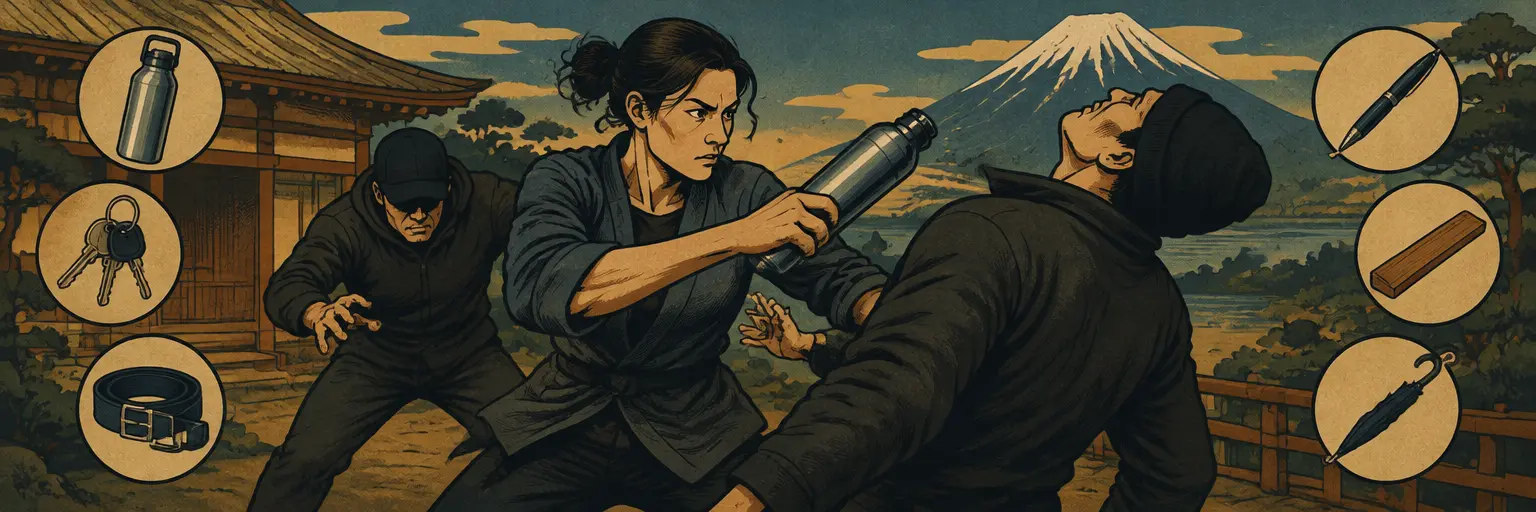
Your pocket holds hidden power. A sturdy pen can be gripped like an ice pick for a rapid thrust to an attacker’s eyes, throat, or temple. Keys can be extended between fingers as a striking tool, while a high-lumen flashlight can temporarily blind an assailant, creating a crucial two-second window to run. The key is not just holding these items, but practicing gripping them under stress so muscle memory takes over.
Avoid relying on fragile items like plastic combs or flimsy keychains. Instead, prioritize metal-bodied pens, house keys (not car fobs), and tactical flashlights with serrated edges. Training drills should include drawing the item from a pocket or bag without looking, then targeting the soft tissue areas. Remember, the goal is disruption, not prolonged combat—use the surprise to break contact and seek safety immediately.
🧥 Clothing and Accessories: Belts, Scarves, and Jackets
Your attire is a versatile defensive arsenal. A belt can be whipped or used to create distance; wrap it around your fist for a weighted strike or use the buckle for a slashing motion. A scarf or tie can block a knife slash or be used as a quick restraint on an attacker’s arm, while a heavy jacket can be thrown over the head to obscure vision and disorient. These tools are especially useful in close-quarters where swinging room is limited.
Practice deploying these items from your actual wardrobe. For example, learn to slip off a belt in under two seconds without tangling, or how to snap a wet towel-style strike with a scarf. The unpredictable nature of fabric tools can unbalance an attacker both physically and psychologically. Integrate these drills into your regular warm-up, moving from static holds to fluid redirections against a padded mitt or partner.
🍶 Environmental Tools: Chairs, Books, and Bags
Your immediate environment is your best ally. A backpack or purse swung in an arc can deflect a weapon or smash into a face. A heavy hardcover book can be a shield for your forearms or a bludgeon for the temple. A chair can be held as a barrier between you and an attacker, while a water bottle or coffee mug can be thrown as a distraction before you sprint away. Look for items with weight, mass, or sharp edges.
Train in varied, cluttered spaces—not just a clean dojo. Set up chairs, tables, and backpacks to practice retrieval and immediate use without fumbling. For instance, ankle-tap a chair into an attacker’s shin to break their balance, then follow with a kick or a book strike. The mental shift from “I have nothing” to “I have everything around me” is transformative for personal security and situational confidence.
🛠️ Tools from Work and Hobby: Hammers, Flashlights, and Umbrellas
Professionals and hobbyists often carry specialized gear that doubles as defensive hardware. A hammer or wrench from a toolbox is a formidable impact weapon, but even a long umbrella can be used to jab, hook, or block. A retractable box cutter or a screwdriver are last-resort options, but they require careful legal consideration and practice. Use these tools primarily for creating space—a wide sweep of an umbrella can keep a dog or attacker at bay while you retreat.
If your job involves tools, practice transitioning from “tool in hand” to “weapon in defense” seamlessly. For example, a carpenter can slide a chisel from a pocket or use a level as a shield. Martial artists should drill with mock tools (rubber or foam replicas) before live practice. Always check local laws regarding concealed and improvised weapon legality; your training must align with responsible self-defense ethics and statutes.
📱 Digital and Mobile Defenses: Phones, Cords, and Glasses
Your smartphone is not just for calling—it can be a blinding light in an attacker’s face, a hard projectile when thrown, or even a recording device for evidence. A charging cord can be used to lash or, in extreme cases, to apply a vascular neck restraint—though this requires expert supervision to avoid injury. Prescription glasses can be broken for a sharp edge, but that should be a desperate final option. The primary use of these items is to create delay and information.
Practice a “phone defense” sequence: instantly turn on the flashlight, flash a bright screen into the eyes, then use the phone’s edge to strike the nose or hand. In training, shield your own eyes and use a partner’s arm to block. Beyond physical use, your phone is your lifeline—pre-dial emergency numbers and have a loudspeaker app ready. Remember, the best use of digital tools is to document, distract, and escape, not to engage in a brawl.
Frequently Asked Questions
Are improvised weapons legal for self-defense?
Legality varies by jurisdiction. Many places permit force when protecting yourself, but carrying items solely as weapons (like a lead-filled sock) can be illegal. Using an everyday object—a pen or key—is generally viewed as a last-resort option. However, check your local laws regarding concealed weapons and escalation of force. When possible, use the minimum force necessary to escape, and always call authorities afterward.
What are the most effective targets for an improvised weapon?
Target soft, vulnerable areas: the eyes, throat, groin, knees, and temple. Jabs to the eyes with a blunt object can cause involuntary blinking and tearing, disrupting vision. Strikes to the front of the throat can trigger a gag reflex or airway spasm. Knees are unstable joints—a hard kick or a low swing with a bag can buckle an attacker. Avoid armored zones like the skull or chest, which may absorb your strike.
How can I train with improvised items safely at home?
Use foam or cardboard replicas for partner drills. For example, a pool noodle can substitute for a belt, and a rolled poster board can mimic a pen. Practice slow-motion techniques until your movement is smooth, then gradually increase speed. Attach a heavy bag to simulate an attacker; hit it with a heavy book wrapped in a towel. Always have a qualified instructor supervise to ensure you do not develop dangerous muscle memory.
Can a person win a fight with a simple umbrella against a knife?
An umbrella is not a reliable counter to a knife, but it can create distance. Hold it with both hands like a staff, jabbing the tip toward the attacker’s face and striking wrists and hands. Use the canopy to block slashes if possible. The goal is not to “win” but to make the attacker miss, allowing you to flee. If forced into close contact, drop the umbrella and transition to a strong structural kick or run.
What should I do immediately after using an improvised weapon?
Once you have escaped and reached safety, call emergency services. Do not tamper with the improvised item—it may be evidence. Seek medical attention even if wounds seem minor, as adrenaline can mask pain. Write down every detail of the event, including what you used, as your memory may fade. Cooperate with police, but politely decline to discuss details without legal counsel, especially if severe harm was inflicted.