
The Influence of Individual Martial Skill on Small Unit Tactics in History

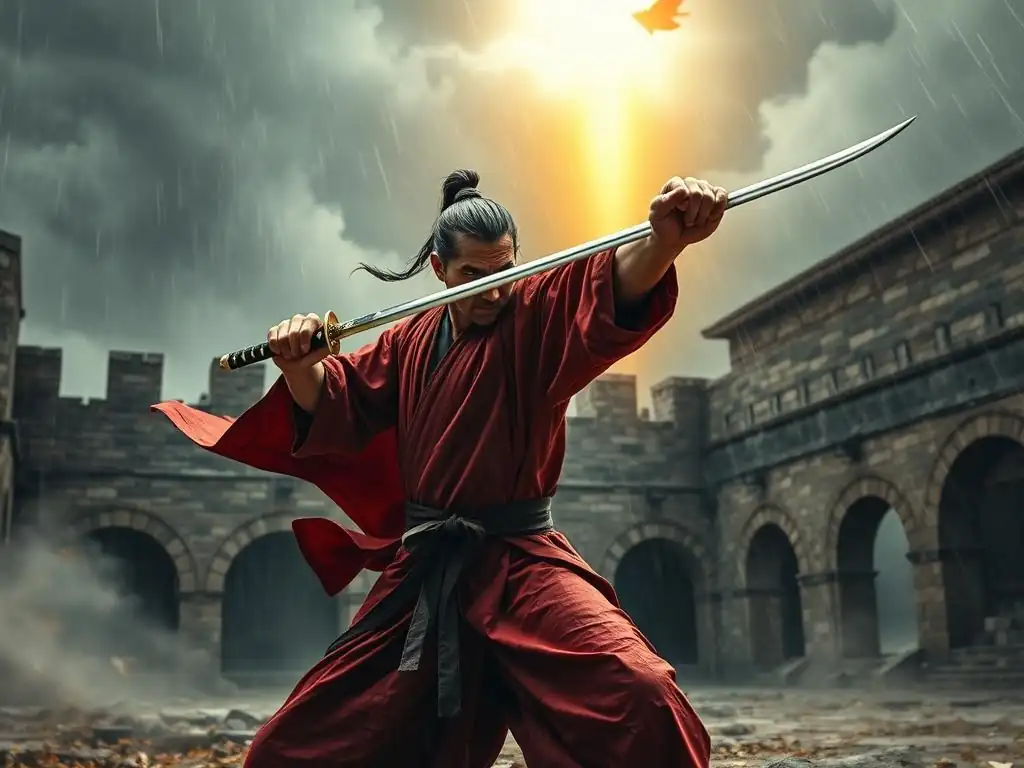
Welcome to Martial Arts Mastery, where the ancient traditions and modern applications of combat converge. Delve into the fascinating interplay between individual prowess and strategic military thinking as we explore the profound influence of martial skill tactical history. Discover how masters of combat shaped battlefields, influenced unit tactics, and redefined the very nature of warfare. Eager to unravel the connection between individual mastery and historical military success? The journey begins now...
- Introduction: Martial Skill, Military History, and Tactical Evolution
- Ancient Warfare: The Impact of Martial Proficiency on Early Combat Formations
- Medieval Warfare: Individual Martial Arts and the Rise of Knightly Combat
- Renaissance and Early Modern Warfare: The Decline of Individual Combat Dominance?
- Eastern Martial Traditions and Their Influence on Military Tactics
- 18th and 19th Century: Martial Skill in Limited Close Combat Scenarios
- 20th and 21st Century: Modern Military Tactics and the Relevance of Martial Skill
- Case Studies: Martial Skill Shaping Tactical Outcomes
- Conclusion: The Legacy of Martial Skill in Military Tactical History
-
Frequently Asked Questions
- How has individual martial skill impacted the success of small unit tactics historically?
- What specific historical examples demonstrate the influence of individual martial skill on small unit tactics?
- How does the emphasis on individual skill in martial arts training translate into improved small unit tactical performance?
- What are some limitations of relying solely on individual martial skill in modern small unit tactics?
- How can modern military training incorporate elements of traditional martial arts to enhance small unit effectiveness?
- Final Reflection: The Enduring Legacy of Martial Skill
- Unleash Your Tactical Potential!
Introduction: Martial Skill, Military History, and Tactical Evolution
Understanding the Interplay Between Individual Combat Prowess and Unit Tactics
Throughout the vast tapestry of military history, a fundamental dynamic has existed between the individual warrior's ability and the collective effectiveness of the fighting unit. This interplay is not merely theoretical; it has profoundly shaped tactical approaches, from the close-knit formations of antiquity to the specialized teams of modern warfare.
The question of how personal martial skill tactical history has influenced unit cohesion, maneuver, and success is central to understanding the evolution of warfare. While large-scale strategic decisions often dominate historical accounts, the outcome of battles frequently hinged on the capability of small groups of soldiers operating in concert, where individual proficiency could amplify or diminish collective strength.
The effectiveness of a small unit – be it a squad, a century, or a warband – is a complex equation involving leadership, training, equipment, morale, and certainly, the individual martial skill of its members. A unit composed of highly skilled combatants, even if slightly outnumbered, might possess a tactical edge in specific scenarios like flanking maneuvers, holding a critical point, or executing complex close-quarters actions.
Conversely, a unit lacking individual proficiency might crumble under pressure despite superior numbers or positioning. This relationship highlights that military success is not solely about grand strategy or technological advantage, but also about the foundational combat capabilities of the individuals who make up the fighting force.
Defining Martial Skill in a Historical Military Context
Defining "martial skill" in a historical military context goes beyond mere physical prowess. It encompasses a blend of technical proficiency with weapons, understanding of tactics appropriate to the era, physical conditioning, discipline, and psychological fortitude. For a Roman legionary, it meant mastery of the gladius and scutum, the ability to march long distances, and the unwavering discipline to hold rank in the face of a charge. For a medieval knight, it involved expert horsemanship, skill with lance and sword, and the training to fight effectively in armor, often alongside companions-at-arms.
This historical definition of martial skill is inherently tied to the specific demands and technologies of the time. Archery skill was paramount in eras dominated by missile weapons, while wrestling and grappling skills were vital in the close confines of a shield wall or a ship's deck.
Furthermore, martial skill included the ability to assess a combat situation rapidly, make split-second decisions, and execute techniques under extreme stress. It was the synthesis of these diverse attributes that allowed individual warriors to survive and contribute effectively to their unit's mission, thereby leaving their mark on the martial skill tactical history of warfare.
The Scope of This Article: Small Unit Tactics and Individual Ability
This article explores the historical thread connecting individual martial skill to the tactical applications of small units across various epochs and cultures. We will examine how different historical military structures and combat environments either emphasized or de-emphasized the role of personal fighting ability. The focus is specifically on small unit tactics – actions involving groups ranging from a handful of specialists to perhaps a few dozen soldiers – and how the individual ability of those soldiers influenced the unit's performance in specific tactical engagements, rather than focusing on army-level strategy.
Our journey through martial skill tactical history will span from the disciplined formations of ancient Greece and Rome, through the individually focused combat of medieval knights, the massed ranks of the gunpowder era, to the specialized close-quarters combat of modern forces. By examining examples from different military traditions and historical periods, we aim to illustrate the persistent, albeit evolving, importance of individual martial proficiency in the execution of effective small unit tactics on the battlefield.
Ancient Warfare: The Impact of Martial Proficiency on Early Combat Formations
Greek Hoplites: Individual Skill Within the Phalanx Formation
The Greek phalanx, a dense formation of hoplite soldiers typically eight ranks deep or more, is often cited as the epitome of collective warfare where the individual seemed subsumed by the mass. However, while the strength of the phalanx lay in its cohesion and the collective push of shields and spears, the martial skill of individual hoplites was far from irrelevant.
Each hoplite was an independent citizen-soldier, often providing his own expensive panoply of bronze armor, shield (aspis), spear (dory), and sword (xiphos). Their training, while perhaps less standardized than later Roman legions, involved wrestling, running, and individual weapon practice.
Within the phalanx, the front ranks, particularly the first, were positions of extreme danger and required significant individual courage and skill to withstand the initial shock of impact and engage in close-quarters fighting. The ability of a hoplite to maintain his position, effectively use his spear and shield against an opponent directly in front, and prevent breaks in the line was paramount.
If a single man faltered due to lack of skill or nerve, it could create a weak point that the enemy could exploit, potentially causing a ripple effect of panic and collapse within the formation. Thus, while the formation was collective, its integrity relied heavily on the individual martial skill and discipline of hundreds of men acting as one.
Roman Legionaries: Discipline, Standardized Training, and Martial Effectiveness
The Roman Legionary is renowned for his discipline, standardized training, and effectiveness, representing a significant evolution in the application of martial skill tactical history. Unlike the often part-time Greek hoplites, Roman soldiers were professionals who underwent rigorous, standardized training (exercitus) from the moment of enlistment. This training wasn't just marching and formation drill; it involved intensive physical conditioning and weapon mastery. Recruits trained with wooden swords (rudis) and wicker shields, often twice the weight of their actual equipment, practicing cuts, thrusts, and defensive blocks against a training post (palus).
This standardized, high level of individual proficiency directly translated into the tactical flexibility of the legion. Roman units could perform complex maneuvers like rotating ranks, withdrawing and reinforcing lines, or forming defensive testudos with a precision unmatched by many contemporaries.
The ability of each legionary to fight effectively with his gladius in the close-quarters chaos after the pila volley, coupled with the discipline to maintain formation even when under pressure, made the Roman legion a formidable tactical force. The Punic Wars, for example, saw Roman legions, despite sometimes facing superior Carthaginian numbers or cavalry, prevail through their disciplined application of individual and small-unit tactics, heavily reliant on the high martial skill cultivated through relentless training.
The Role of Individual Swordsmanship in Ancient Battles
While spears and massed formations dominated many ancient battlefields, individual swordsmanship played a crucial, often decisive, role in the moments of closest combat. Once formations collided or broke, or in smaller skirmishes and duels, personal skill with a sword could determine survival and victory. The Roman gladius, the Greek xiphos, the Celtic spatha, or the Egyptian khopesh were not just tools; their effective use required significant training and martial skill.
In the chaotic melee that often followed the initial clash of lines, individual duels and small-group fights broke out across the battlefield. A soldier's ability to defend himself and effectively strike down opponents in this environment was critical. For instance, during a rout, skilled swordsmen could cover the retreat of their comrades or, conversely, pursue and cut down fleeing enemies.
In smaller engagements like ambushes or raiding parties, where formation fighting was less applicable, the individual martial skill of each warrior became even more pronounced, directly impacting the unit's ability to achieve its objective or survive a confrontation. This aspect of martial skill tactical history underscores that even within rigid structures, the personal fighting ability of the soldier remained a vital component of battlefield effectiveness.
Medieval Warfare: Individual Martial Arts and the Rise of Knightly Combat
Knightly Orders: Martial Skill as a Core Element of Military Doctrine
During the Medieval period, particularly from the High Middle Ages onwards, martial skill became not just a soldier's requirement but a defining characteristic of the aristocratic warrior class – the knights. Knightly orders, such as the Knights Templar, Hospitaller, and Teutonic Knights, institutionalized martial skill as a core element of their military doctrine and identity. These were not simply feudal levies; they were professional, highly trained fighting monks who dedicated their lives to combat and religious service. Their training was extensive, covering horsemanship, lancing, swordsmanship, mace fighting, and often unarmed combat, all performed in full armor.
The tactical role of these knightly orders often involved operating as elite shock troops or heavy cavalry wings in larger armies, but they also frequently fought as independent small units, particularly in the Crusader states or the Baltic crusades. Their effectiveness in these small unit actions – whether holding a pass, leading a charge, or defending a castle – was directly attributable to the exceptionally high level of individual martial skill possessed by each knight.
A small contingent of fifty Templar knights, for example, could represent a far more potent tactical force than a much larger number of less-trained infantry, capable of executing complex maneuvers and sustaining combat due to their personal proficiency and discipline honed by years of dedicated martial practice.
The Influence of Tournaments on Battlefield Tactics
While often viewed as sporting events, medieval tournaments, especially the mêlée (a mock battle between two teams of knights), served as crucial training grounds that directly influenced battlefield tactics and individual martial skill. Tournaments allowed knights to practice combat scenarios in a controlled environment, honing their skills with various weapons, developing teamwork with their companions, and learning how to fight effectively in groups under conditions simulating the chaos and physical demands of battle. These events fostered a culture of continuous improvement in martial skill.
The lessons learned in the mêlée – coordinating charges, supporting fallen comrades, navigating group combat, and understanding the strengths and weaknesses of different weapons against armored opponents – were directly applicable to the battlefield. Knights developed a tactical understanding of how to operate as a coherent small unit, using signals, maintaining formation (even loosely), and leveraging their individual prowess for collective advantage.
While not without their dangers, tournaments contributed significantly to the overall level of martial skill within the knightly class, indirectly shaping the tactical capabilities of the elite small units they formed in times of war and adding a unique chapter to martial skill tactical history.
Weapon Mastery and its Tactical Implications in Medieval Warfare
Medieval warfare saw the proliferation of a wide array of specialized weapons, and mastery of these weapons by individuals had significant tactical implications for small units. While the sword remained a noble weapon, the effectiveness of weapons like the warhammer, poleaxe, and mace against increasingly sophisticated plate armor became paramount.
A small unit of men-at-arms proficient with polearms could effectively counter a mounted charge or break through an infantry block. Archery, particularly with the English longbow, was another area where high individual martial skill translated into tactical dominance, with units of skilled archers capable of inflicting devastating volleys at range before the enemy closed.
Furthermore, the rise of formalized European martial arts systems, often recorded in fight books (Fechtbücher) from the late medieval and Renaissance periods, demonstrates a sophisticated understanding of individual combat across multiple weapons and unarmed techniques. Masters taught complex footwork, guards, strikes, and grappling techniques applicable to duels and small-scale encounters.
While the direct application of every technique from a Fechtbuch in a mass battle was impossible, the underlying principles of timing, distance, leverage, and weapon handling were vital. Small units composed of individuals trained in these systems possessed a higher degree of personal combat effectiveness, making them more reliable in skirmishes, patrols, and the messy, unscripted moments of close combat that characterized much of medieval warfare, thus enriching the martial skill tactical history.
Renaissance and Early Modern Warfare: The Decline of Individual Combat Dominance?
The Rise of Gunpowder and its Effect on Close Quarters Combat
The advent and increasing prevalence of gunpowder weapons – initially arquebuses and later muskets – marked a significant turning point in martial skill tactical history. These weapons allowed relatively untrained individuals to inflict damage at a distance, fundamentally altering the dynamics of the battlefield and seemingly diminishing the overwhelming dominance previously held by warriors with highly developed personal martial skill in close combat. Massed volleys of shot became the primary means of breaking enemy formations, shifting the focus from individual duels to collective firepower.
This technological shift meant that while individual skill with a sword or polearm was still necessary for the inevitable close-quarters clashes, the initial impact and often the decisive factor in engagements became the coordinated fire of trained (though not necessarily individually skilled in the traditional martial sense) infantry units. The tactical emphasis moved towards drilling soldiers to load and fire efficiently in ranks, absorb casualties, and maintain formation under fire.
The ability to stand shoulder-to-shoulder and deliver synchronized volleys became more tactically important than the individual's capacity to defeat an opponent in single combat, leading some historians to argue for a decline in the tactical relevance of personal martial skill.
Pikemen, Musketeers, and the Diminishing Role of Individual Skill
The typical early modern battle formation often featured a core of pikemen providing defense against cavalry and a screen for musketeers, who delivered ranged fire. In this system, the tactical effectiveness of both pikemen and musketeers relied heavily on unit cohesion and discipline rather than individual martial skill in personal combat. Pikemen needed to maintain a solid, bristling hedge of points, requiring physical endurance and the discipline to hold the line, but less emphasis was placed on intricate personal technique with the pike beyond basic handling and thrusting.
Musketeers required training in loading sequences and drill to fire in volleys, a process that was slow and complex. Their primary contribution was collective firepower. While a musketeer might carry a sword or dagger for self-defense if the enemy closed, their primary weapon and tactical role were entirely dependent on the group.
The individual's martial skill in personal combat was largely secondary to their ability to function as a cog in the larger machine of the firing line or the pike block. This period represents a phase in martial skill tactical history where the scale and technology of warfare favored the mass and the drilled unit over the individually proficient warrior.
Blending Traditional Martial Arts with Evolving Military Strategies: Bayonet Tactics
Despite the rise of gunpowder, close combat did not disappear. The invention and widespread adoption of the bayonet – initially the plug bayonet, later the socket bayonet – re-integrated a form of close-quarters weapon into the primary firearm, creating the musket-and-bayonet. This development necessitated a return to training soldiers in linear charge tactics and close-quarters fighting, albeit in a simplified and standardized manner compared to earlier martial arts. Bayonet drill became a fundamental part of infantry training, emphasizing thrusting, parrying, and movement in formation.
While bayonet fighting was a far cry from the intricate systems of medieval or Renaissance martial arts, it represented a pragmatic blending of traditional close-combat principles with the realities of the firearm-dominated battlefield. A successful bayonet charge required not only courage and discipline but also a degree of individual proficiency in handling the weapon effectively against a resisting opponent.
Units whose soldiers possessed better training and martial skill in bayonet tactics were more likely to break enemy lines in a charge or hold their ground when charged, demonstrating that even in the age of gunpowder, a baseline level of individual combat effectiveness remained a necessary component of effective small unit tactics, adding a distinct chapter to martial skill tactical history.
Eastern Martial Traditions and Their Influence on Military Tactics
Samurai Warfare: Bushido, Kenjutsu, and Tactical Formations
In feudal Japan, the samurai class embodied the integration of profound individual martial skill with military tactics. Governed by the code of Bushido, which emphasized loyalty, honor, and martial prowess, samurai were trained from a young age in a wide array of martial arts, including horsemanship (bajutsu), archery (kyujutsu), and especially swordsmanship (kenjutsu). Mastery of the katana and other weapons was not just a personal pursuit but a fundamental requirement for their role as the military elite.
Samurai often fought in small, flexible units led by a retainer or the samurai lord himself. Their tactical effectiveness relied heavily on the high individual martial skill of each member, enabling them to execute complex maneuvers, engage in rapid skirmishes, perform devastating charges (often preceded by archery), and engage in fierce close-quarters combat.
Famous duels and individual feats of bravery were celebrated, but their tactical importance lay in their ability to inspire troops, demoralize enemies, or break critical points in the opposing force. The rigorous training in kenjutsu and other arts ensured that a small group of samurai could punch far above its weight class in terms of tactical impact, making their approach a significant part of martial skill tactical history.
Ninja Tactics: Espionage, Assassination, and Unconventional Warfare
While often romanticized, the historical shinobi or ninja were specialists in espionage, sabotage, and unconventional warfare, and their operations relied almost entirely on individual martial skill and specialized training within small, often clandestine units. Unlike the battlefield formations of samurai, ninja tactics focused on infiltration, information gathering, disruption, and targeted action. Their training encompassed a wide range of skills beyond conventional combat, including stealth (shinobi-iri), disguise (henso), climbing (toki), and the use of specialized tools and weapons (like shuriken or kunai).
In tactical terms, a ninja unit might consist of just a few individuals tasked with a specific mission – scouting enemy fortifications, assassinating a key leader, or sowing confusion behind enemy lines. The success of these missions was entirely dependent on the individual martial skill and specialized abilities of the operatives.
Their proficiency in unarmed combat (tai-jutsu), weapon use in confined spaces, and the ability to move undetected allowed these small groups to operate effectively in environments where conventional military units could not. The ninja provide a fascinating example in martial skill tactical history where highly specialized individual skills were the absolute cornerstone of small unit effectiveness in asymmetric warfare.
Southeast Asian Martial Arts and Their Impact on Guerrilla Warfare: Silat in Indonesian Resistance
Across Southeast Asia, various martial arts traditions, such as Silat (found in Indonesia, Malaysia, Brunei, Singapore, and Thailand) and Krabi-Krabong (Thailand), have historically played a significant role in military contexts, particularly in small-unit actions and guerrilla warfare. Silat, with its diverse regional styles, emphasizes fluid movement, joint locks, throws, and weapon use (like the kris dagger or sarong). These arts were not only practiced for personal defense but were integral to the training of warriors and resistance fighters.
During periods of resistance against colonial powers, small units of fighters trained in arts like Silat proved remarkably effective in ambush tactics, close-quarters engagements in difficult terrain (like jungles), and hit-and-run raids. Their martial skill allowed them to fight effectively in confined or irregular spaces where linear European tactics faltered.
A small group of fighters proficient in Silat could utilize the environment, engage the enemy at extremely close range, and disappear quickly. This reliance on individual and small-group combat proficiency in asymmetric warfare scenarios highlights how traditional martial skill tactical history remained relevant and potent long after the rise of firearms, particularly in regions where terrain and circumstances favored such approaches.
18th and 19th Century: Martial Skill in Limited Close Combat Scenarios
Bayonet Fighting: The Persistence of Close Quarters Combat Training
Even as linear tactics and firepower dominated the battlefields of the 18th and 19th centuries, the bayonet ensured that close-quarters combat remained a reality, requiring a persistent emphasis on a specific type of martial skill. Infantry drill manuals from this era dedicated significant sections to bayonet exercises, teaching soldiers how to fix bayonets, charge in formation, and engage in hand-to-hand combat with the affixed blade. This wasn't the nuanced, multi-weapon training of earlier eras, but a standardized, often brutal approach focused on forward thrusting and rudimentary parries suitable for massed ranks.
While the bayonet charge's psychological impact was often as important as its physical effect, its success still depended on the soldiers' willingness and ability to close with the enemy and use the bayonet effectively. Units that maintained discipline during the charge and whose soldiers possessed the physical conditioning and basic martial skill with the bayonet were more likely to break the opposing line.
The training might have been simplified, but the requirement for individual soldiers to be capable of engaging in deadly close combat persisted, securing the bayonet's place in martial skill tactical history during the age of the musket.
Naval warfare in the age of sail provided a unique environment where individual martial skill retained significant tactical importance: boarding actions. When one ship grappled another, the ensuing fight on deck was a chaotic, close-quarters melee where formations were impossible and personal combat ability was paramount. Sailors and marines, armed with cutlasses, axes, pistols, and knives, engaged in brutal hand-to-hand fighting to gain control of the enemy vessel.
In such confined and irregular spaces, the ability of individuals and small boarding parties to fight effectively with edged weapons and in grappling range directly determined the success or failure of the boarding. While marines might provide some initial volleys, the battle for the deck quickly devolved into a series of desperate individual and small-group struggles.
Officers and experienced sailors with superior martial skill in swordsmanship or other close-combat techniques could cut a path through defenders, rally their comrades, and secure key areas of the ship. This environment stands out in martial skill tactical history as one where personal fighting prowess remained a primary factor in small-unit success.
The Importance of Hand-to-Hand Combat in Colonial Warfare
Colonial warfare across the 18th and 19th centuries often involved fighting in diverse and difficult terrains – jungles, mountains, forests – against opponents who frequently employed irregular tactics. In these environments, linear formations were often impractical, and engagements could quickly dissolve into confused skirmishes and hand-to-hand fighting. European soldiers, trained primarily for pitched battles in open fields, frequently found themselves in situations where individual martial skill and adaptability were crucial for survival and success.
Against indigenous forces often highly skilled in using local weapons and terrain, European soldiers had to rely on bayonets, swords, and their own physical capabilities in close combat. Small patrols, scouting parties, or detached units operating in isolation frequently faced ambushes that necessitated immediate, personal combat responses. The ability of these soldiers to defend themselves and fight effectively in close quarters, often without the support of massed firepower, became vital. This aspect of martial skill tactical history demonstrates how different operational environments could re-emphasize the importance of individual fighting ability, even in an era increasingly dominated by firearms.
20th and 21st Century: Modern Military Tactics and the Relevance of Martial Skill
Close Quarters Combat (CQC) and Special Operations Forces
The 20th century, dominated by industrial-scale warfare, might seem to further diminish the role of individual martial skill. However, the rise of specialized units and the nature of modern conflicts, particularly urban warfare and counter-terrorism, have brought close quarters combat (CQC) back to the forefront of tactical training. Special Operations Forces (SOF) units worldwide – like the US Navy SEALs, British SAS, or Russian Spetsnaz – place an extremely high premium on individual and small-unit proficiency in CQC.
SOF missions often involve operating in confined spaces such as buildings, ships, or aircraft, where firearms use is complicated by proximity to hostages or non-combatants, and where engagements happen at extremely short ranges, often measured in feet or even inches. In these scenarios, the ability to quickly and decisively neutralize threats using a combination of firearms and unarmed combat, sometimes transitioning between the two, is critical.
This requires a high level of individual martial skill, encompassing weapon manipulation in tight spaces, rapid target acquisition, and proficiency in hand-to-hand techniques for control, restraint, or lethal force when firearms are not feasible or appropriate. The intense focus on CQC within SOF highlights a modern evolution in martial skill tactical history, adapting traditional principles to contemporary operational demands.
The Integration of Martial Arts into Modern Military Training Programs
Reflecting the renewed importance of CQC and hand-to-hand combat in modern asymmetric warfare, many contemporary military forces have integrated formal martial arts training into their standard or specialized training programs. This goes beyond basic pugilism or bayonet drill. Programs often draw techniques from a variety of disciplines, focusing on practical, effective methods for dealing with unarmed or armed opponents at very close range, controlling individuals, or fighting to retain one's weapon.
The US Army's Modern Army Combatives Program (MACP), for instance, is based heavily on Brazilian Jiu-Jitsu but incorporates elements from other arts, emphasizing grappling, positional control, and finishing techniques. The goal is not to create sport fighters but to provide soldiers with the martial skill needed to survive and dominate in close combat situations, whether defending themselves, subduing an enemy, or fighting their way back to a weapon.
This institutionalization of martial arts training across various branches and nations underscores the recognition that, even in the age of drones and cyber warfare, the capacity for individual soldiers to prevail in direct physical confrontation remains a vital component of small unit effectiveness, marking a significant trend in recent martial skill tactical history.
Krav Maga, Systema, and Other Modern Martial Arts Systems in Military Use
Several modern martial arts systems have been specifically developed or adopted for military and law enforcement applications, emphasizing practicality, efficiency, and effectiveness under stress. Krav Maga, developed in Israel, is perhaps one of the most well-known, focusing on real-world situations, emphasizing instinctive movements, and incorporating techniques for dealing with armed threats. Its direct, no-nonsense approach makes it highly suitable for rapid military training.
Another example is Systema, a Russian martial art emphasizing breathing, relaxation, and continuous movement, adapted for the high-stress environment of combat. These systems provide soldiers with a structured framework for developing the necessary martial skill to handle unexpected close-quarters threats, disarm opponents, or fight effectively when separated from their primary weapon.
The adoption of such systems reflects a tactical necessity: small units operating in complex environments frequently encounter situations where individual martial skill in hand-to-hand combat or weapon retention is the deciding factor between mission success and failure, or even survival. This adaptation of martial arts for military purposes is a defining feature of modern martial skill tactical history.
Case Studies: Martial Skill Shaping Tactical Outcomes
The Battle of Rorke's Drift: Martial Skill vs. Numerical Superiority
The Battle of Rorke's Drift (1879) provides a compelling, albeit specific, example where the individual martial skill and discipline of a small defending force contributed significantly to repelling a numerically vastly superior enemy. Approximately 150 British and colonial troops defended a mission station against an estimated 3,000 to 4,000 Zulu warriors. While factors like defensive fortifications (made of mealie bags and biscuit boxes) and disciplined rifle fire were crucial, the battle frequently devolved into desperate hand-to-hand fighting as Zulus breached the perimeter.
In these close-quarters melees, the individual martial skill of the defenders, particularly their training with the bayonet and their sheer tenacity in close combat, was critical. Accounts describe vicious fighting over barricades and inside buildings, where soldiers used their bayonets and rifle butts with brutal effectiveness against the Zulus' traditional weapons (assegai spears and knobkerries).
The ability of small groups of defenders to hold their ground, fight back-to-back, and utilize their training in close combat prevented the Zulu warriors from overwhelming them despite the massive disparity in numbers. This engagement highlights how individual fighting prowess, combined with discipline and a strong defensive position, could allow a small unit to achieve an extraordinary tactical outcome against overwhelming odds, marking a notable instance in martial skill tactical history.
Gurkha Regiments: Hand-to-Hand Combat Prowess and Military Effectiveness
The Gurkha soldiers from Nepal, serving in the British and Indian armies for over 200 years, are renowned for their bravery, ferocity, and exceptional martial skill, particularly in hand-to-hand combat with their signature weapon, the Kukri knife. Gurkha units have consistently demonstrated remarkable effectiveness in small-unit actions across various conflicts, from the trenches of World War I to the mountains of Afghanistan. Their rigorous training includes not only modern military tactics but also a deep-seated cultural tradition of martial prowess and proficiency with the Kukri.
In numerous instances throughout martial skill tactical history, Gurkha patrols or small units have successfully engaged and defeated larger enemy forces in close-quarters engagements, often utilizing surprise and their formidable hand-to-hand combat skills. Their ability to close with the enemy and fight effectively with the Kukri in dense terrain or chaotic situations has given them a distinct tactical advantage in specific scenarios.
The reputation and proven capability of Gurkha soldiers in hand-to-hand combat serve as a powerful testament to how a high level of individual and unit-wide martial skill in close combat can translate into unique tactical effectiveness and a fearsome reputation on the battlefield.
Lessons Learned: The Enduring Value of Individual Martial Ability
These case studies, among many others throughout martial skill tactical history, offer crucial lessons. They demonstrate that while technology, numbers, and grand strategy are vital, the fundamental fighting ability of the individual soldier and the small unit remains a critical variable in the equation of warfare. Rorke's Drift shows how individual tenacity and basic close-combat training can blunt a numerically superior force. The Gurkhas illustrate how specialized, high-level martial skill can provide a consistent tactical edge in specific environments and types of engagements.
The enduring value lies in the understanding that battles and conflicts ultimately come down to human beings in confrontation. Whether wielding a sword, a bayonet, or engaging in modern CQC, the warrior's physical capability, mental fortitude, and practical fighting skill are indispensable. Military forces that neglect the development of this foundational martial skill risk producing soldiers who are less adaptable, less resilient, and less effective when the fight inevitably becomes personal and close-range. These historical examples underscore that proficiency in individual combat is not an anachronism but a persistent necessity for effective small unit tactics across the ages.
Conclusion: The Legacy of Martial Skill in Military Tactical History
Summarizing the Key Influences of Martial Skill on Small Unit Tactics
Our journey through martial skill tactical history reveals a consistent, albeit evolving, influence of individual combat prowess on the effectiveness of small military units. From the integrity of the ancient phalanx resting on the hoplite's shield and spear work, to the Roman legionary's standardized weapon mastery enabling tactical flexibility, to the medieval knight's personal skill defining elite unit capability, individual martial ability has been a foundational element. Even as gunpowder shifted the focus to massed fire, close combat persisted in bayonet charges and naval boardings, requiring a baseline of individual skill.
In the modern era, the demands of special operations and asymmetric warfare have renewed the emphasis on sophisticated individual martial skill in close quarters. Across diverse cultures and time periods – from Samurai swordsmanship enabling flexible tactics to the Gurkha's Kukri prowess in jungle warfare – the pattern holds: units composed of individuals with higher levels of martial skill are often more resilient, adaptable, and capable of achieving tactical objectives in complex or challenging situations. The collective strength of a small unit is, to a significant extent, a function of the individual capabilities of its members.
The Evolving Relationship Between Individual Combat Prowess and Military Strategy
The relationship between individual combat prowess and military strategy has not been static. In periods dominated by individual combat (like much of the ancient and medieval eras), strategy often involved maneuvering forces to create favorable conditions for individual and small-group engagements, such as flanking movements to break formations and create melees. The rise of gunpowder shifted strategy towards optimizing firepower delivery through formation and volume, seemingly reducing the strategic importance of individual skill, except in niche roles like dueling or specific close-action scenarios.
However, modern military strategy, particularly concerning special operations and counter-insurgency, has seen a resurgence in the tactical and even strategic value of highly skilled individuals operating in small units. The ability of a small, highly trained team to conduct surgical strikes, gather intelligence, or train partner forces can have strategic implications far beyond their numbers. This evolution in martial skill tactical history demonstrates a cyclical pattern where technological and strategic shifts alter how individual skill is leveraged, but rarely eliminate its necessity entirely.
The Future of Martial Arts in Military Training and Warfare
Looking ahead, the role of martial arts and individual martial skill in military training appears secure, particularly for units likely to engage in close-quarters combat, operate in urban environments, or conduct special missions. Future warfare may involve advanced technology like robotics and cyber capabilities, but the need for soldiers to operate effectively in direct human-to-human confrontation, especially in complex and unpredictable scenarios, is unlikely to disappear. Urban density, the proliferation of small arms, and the reality of close-range engagements in asymmetric conflicts ensure this.
Military training will likely continue to integrate practical, combat-relevant martial arts techniques, focusing on weapon retention, control tactics, and lethal force options at close range. The emphasis will remain on functional martial skill that complements firearms training and enhances survivability and effectiveness in the most dangerous tactical environments. Thus, the legacy of martial skill tactical history continues, adapting ancient principles of personal combat to the challenges of the modern battlefield, ensuring that the warrior's individual capability remains a vital component of military success.
Frequently Asked Questions
How has individual martial skill impacted the success of small unit tactics historically?
Individual martial skill has often been a decisive factor, allowing smaller, highly trained units to overcome larger, less skilled forces. Tactical flexibility and adaptability are also enhanced when individuals possess a high degree of personal combat prowess.
What specific historical examples demonstrate the influence of individual martial skill on small unit tactics?
Examples include the Roman legionaries, whose superior swordsmanship and discipline allowed them to dominate battlefields. Also, consider the elite samurai of feudal Japan, who employed masterful weapon skills in small unit engagements.
How does the emphasis on individual skill in martial arts training translate into improved small unit tactical performance?
Training emphasizing individual skill enhances reaction time, situational awareness, and the ability to adapt to unexpected circumstances. This contributes to better decision-making and execution within a small unit context.
What are some limitations of relying solely on individual martial skill in modern small unit tactics?
Modern warfare relies heavily on technology and firepower. While individual martial skill remains valuable, it cannot fully compensate for a lack of advanced weaponry, strategic planning, or coordinated teamwork.
How can modern military training incorporate elements of traditional martial arts to enhance small unit effectiveness?
Integrating martial arts principles like close-quarters combat, weapon proficiency, and mental discipline can improve soldiers' overall combat readiness. Focusing on realistic scenarios and stress inoculation is also crucial.
Final Reflection: The Enduring Legacy of Martial Skill
The exploration of martial skill's impact on small unit tactics throughout history reveals a truth that resonates even today: individual proficiency remains a critical, often underestimated, component of battlefield success. While technology and large-scale strategy dominate modern warfare discussions, the fundamental ability of individual soldiers to effectively execute maneuvers and adapt to unpredictable circumstances continues to be a decisive factor.
The study of martial skill's influence underscores its profound and lasting impact on military doctrine and cultural perceptions of warfare. This understanding is not merely academic; it's a crucial reminder that the human element, honed through rigorous training and discipline, is the bedrock upon which tactical innovation is built. Victory loves preparation,
as the saying goes, and in the context of martial skill, preparation translates to the individual's capacity to react decisively and effectively under pressure.
As we conclude this journey through martial skill's tactical history, I invite you to consider its implications for your own life. Whether you are a student of history, a military professional, or simply someone seeking to understand the dynamics of human conflict, remember that the principles of discipline, adaptability, and unwavering commitment to excellence are not confined to the battlefield. Embrace these qualities, cultivate your own skills, and strive to become a more capable and resilient individual, ready to face the challenges that lie ahead.
Unleash Your Tactical Potential!
Thanks for diving into the fascinating world of martial skill and its impact on small unit tactics. Now that you understand its historical significance, it's time to apply that knowledge and deepen your understanding.
Here are some ways to take your journey further:
- Apply what you have learned by visualizing how individual martial skills are still applicable in modern contexts, such as self-defense or law enforcement scenarios. Consider how your training might adapt to different situations.
- Delve deeper into specific historical conflicts. Research lesser-known battles where individual martial prowess significantly impacted the outcome.
- Share this article with fellow martial arts enthusiasts or military history buffs. Spark a discussion on how these historical lessons can inform contemporary training methods.
How will you integrate these insights into your training regimen or your understanding of military strategy?