
Pankration: The Brutal AllPower Combat Sport of Ancient Greece

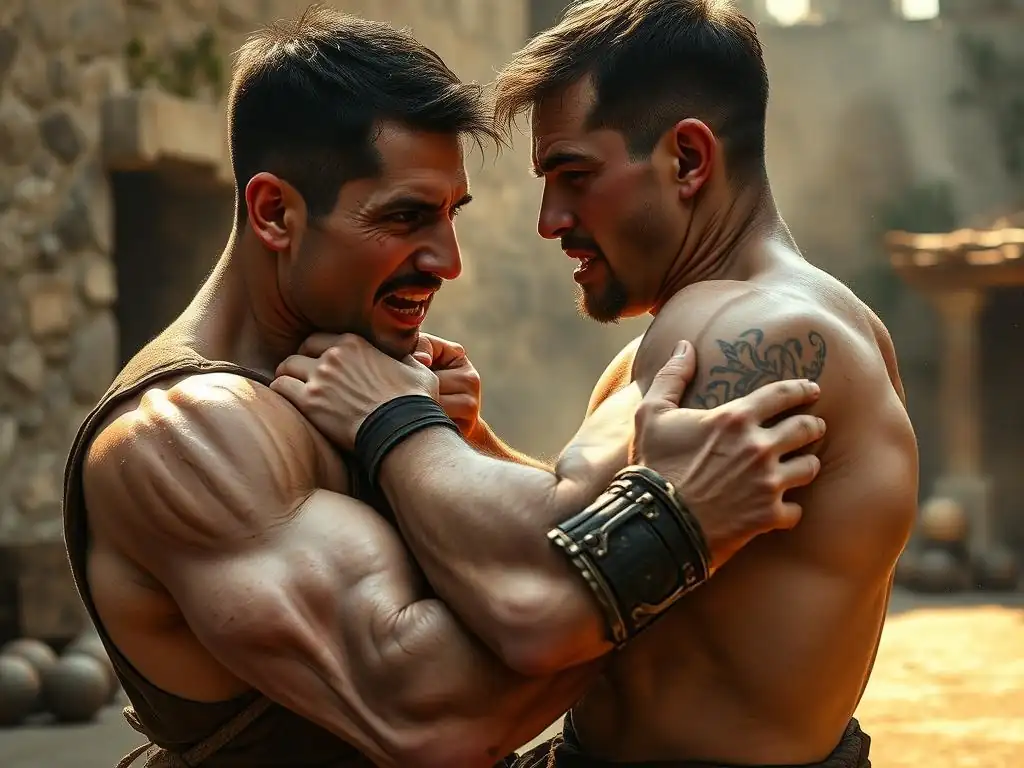
Welcome to Martial Arts Mastery, where we delve into the rich tapestry of combat traditions from around the world. Ever wondered how warriors of the past honed their skills for survival and dominance? Prepare to journey back in time and uncover the secrets of Ancient Greek Pankration training methods. This article explores the brutal, all-powerful combat sport that shaped legends and influenced martial arts for centuries. Discover the techniques, the philosophy, and the sheer intensity that defined this ancient discipline. Are you ready to unravel the mysteries of Pankration?
- Pankration Training Methods: Mastering the Art of Submission and Striking
-
Frequently Asked Questions
- What exactly is Pankration, as discussed by MartialArtsMastery.org?
- What kind of historical overview of Pankration does MartialArtsMastery.org provide?
- Does MartialArtsMastery.org offer any information on the training methods used in Ancient Greek Pankration?
- Besides history, does MartialArtsMastery.org offer practical self-defense strategies based on Pankration?
- Does MartialArtsMastery.org profile any legendary Pankration practitioners from ancient times?
- Final Reflection: Echoes of Ancient Strength
- Unleash Your Inner Warrior: Embrace the Pankration Spirit!
Pankration Training Methods: Mastering the Art of Submission and Striking
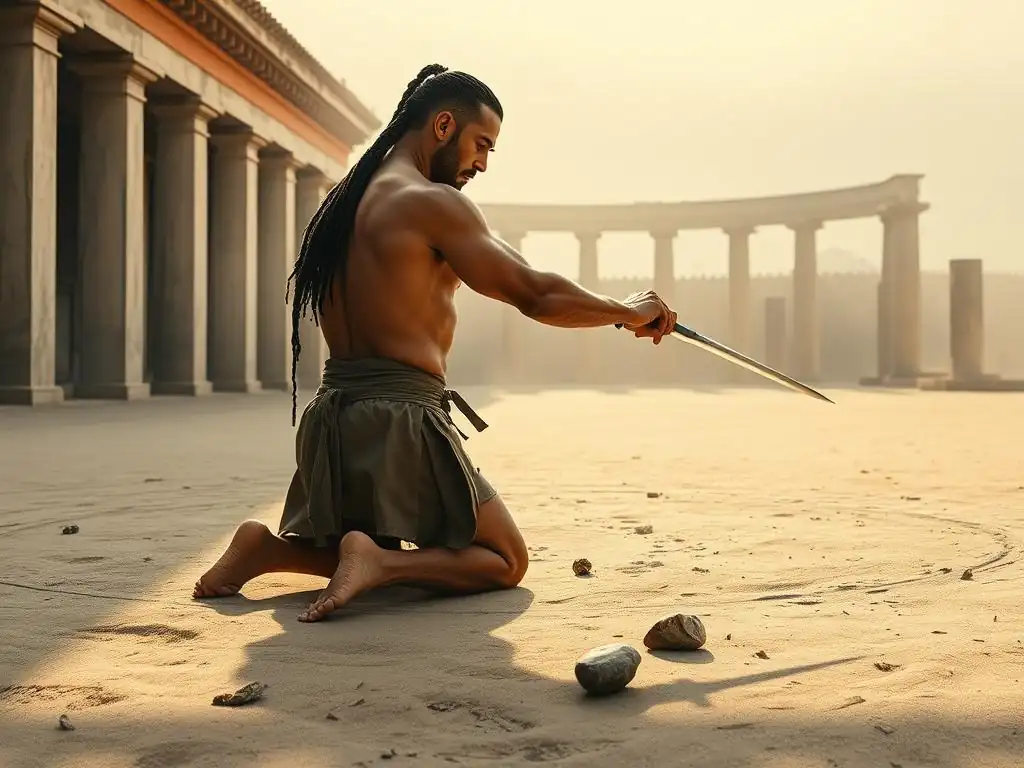
Ancient Greek Pankration Training Methods: A Comprehensive Overview
The preparation for competing in Pankration was rigorous and multifaceted, reflecting the demands of a sport that combined striking and grappling. Ancient Greek Pankration training methods focused on developing both physical prowess and strategic thinking. Athletes, known as pankratiasts, would spend years honing their skills under the guidance of trainers called paidotribai or gymnastai. Training typically took place in the palaestra, a wrestling school, and the gymnasium, a larger complex for physical exercise. These facilities were equipped with areas for wrestling, boxing, and general conditioning, providing the ideal environment to practice the diverse techniques required for Pankration.
A typical training regimen incorporated elements from boxing ( pyx) and wrestling ( pale), but integrated them into a seamless whole. Unlike specialized athletes, pankratiasts needed to be equally adept at delivering powerful strikes and executing complex submission holds. Training involved sparring sessions that simulated competition scenarios, focusing on transitioning between striking exchanges and grappling sequences.
Roadwork and strength conditioning were also crucial components, building the endurance and raw power necessary for bouts that could last for extended periods, sometimes even hours, until one competitor yielded. The effectiveness of these ancient Greek Pankration training methods is evident in the legendary endurance and skill displayed by champions at the Olympic and other Panhellenic Games.
Striking Techniques in Pankration: Punches, Kicks, and Elbows
While often highlighted for its grappling, Pankration incorporated a wide array of striking techniques. Unlike boxing, which primarily used fists (often wrapped in himantes, leather thongs), Pankration allowed strikes with almost any part of the body. Punches were certainly used, but often as setups for clinches or to create openings. Kicks were a distinguishing feature, with practitioners using high kicks to the head, low kicks to the legs, and even kicks to the body. The famous image of a pankratiast delivering a kick to the head is iconic of the sport's dynamic nature.
Beyond standard punches and kicks, pankratiasts also utilized elbows and knees, particularly in close quarters or within the clinch. These strikes could be devastating at short range, aiming to incapacitate an opponent or force them into a vulnerable position for a takedown or submission. The variety of permitted strikes meant that a pankratiast needed to be versatile, capable of defending against and delivering attacks from multiple angles and distances. Mastering these striking techniques was a vital part of the ancient Greek Pankration training methods, ensuring athletes were well-rounded competitors capable of fighting effectively both standing and on the ground.
Grappling and Submission Holds: The Art of Clinch Fighting in Pankration
Grappling was arguably the defining characteristic of Pankration, distinguishing it from boxing and traditional wrestling. The ability to control an opponent in the clinch and on the ground was paramount. Training heavily emphasized takedowns, throws, and ground fighting. Once on the ground, the fight continued, with positions like side control, mount, and back control likely being explored by experienced practitioners, though specific names for these positions as we know them today are not recorded. The goal was to secure a dominant position from which submission holds could be applied or forceful strikes delivered.
Submission holds were a critical element, designed to force an opponent into submission through pain or incapacitation. Joint locks, particularly on the arms and legs, were common, as were chokes and neck cranks. The infamous story of Arrichion of Phigalia, who won his Olympic match by submitting his opponent even as he himself died from a broken neck, underscores the severity and effectiveness of these techniques. Mastering the transition from standing to the ground, maintaining control, and applying decisive submission holds were central tenets of the ancient Greek Pankration training methods.
Clinch Entries, Leg Locks, and Neck Cranks: Essential Pankration Techniques
Entering the clinch effectively was a key strategy in Pankration, allowing a fighter to neutralize an opponent's striking and transition to grappling. Techniques for achieving the clinch likely involved closing distance, using strikes to create openings, or executing wrestling-style ties. Once in the clinch, fighters could work for throws, trips, or transition to ground fighting. Specific grappling techniques included variations of arm locks, such as the khelona (tortoise) technique, which involved controlling the opponent's arm.
Leg locks were also prominent, with accounts describing techniques that attacked the ankle and knee joints. Sostratus of Sicyon, known as Akrokhersites (The Fingertip Man), was famed for his ability to dislocate opponents' ankles by grabbing their toes, highlighting the specialized and brutal nature of these submissions. Neck cranks and chokes, applied both standing and on the ground, aimed to restrict airflow or create intense pain to secure a victory. These specific and often brutal techniques were practiced extensively as part of the ancient Greek Pankration training methods, pushing athletes to their physical and mental limits.
Frequently Asked Questions
What exactly is Pankration, as discussed by MartialArtsMastery.org?
Pankration was an ancient Greek combat sport combining elements of boxing and wrestling. It was known for its brutality and lack of rules, making it a true "all-power" competition.
What kind of historical overview of Pankration does MartialArtsMastery.org provide?
The site delves into Pankration's origins, tracing its development from ancient mythology to its inclusion in the Olympic Games. It explores its cultural significance and role in ancient Greek society.
Does MartialArtsMastery.org offer any information on the training methods used in Ancient Greek Pankration?
Yes, the website explores historical training techniques, albeit reconstructed due to limited surviving documentation. It covers possible methods for developing strength, speed, and grappling skills, as well as mental fortitude.
Besides history, does MartialArtsMastery.org offer practical self-defense strategies based on Pankration?
While not explicitly modern self-defense techniques, the website explores the underlying principles of Pankration. These principles, such as aggressive grappling and striking, can inform modern self-defense training.
Does MartialArtsMastery.org profile any legendary Pankration practitioners from ancient times?
The site likely features accounts of famous Pankratiasts from the Olympic Games and other historical sources. These profiles would highlight their achievements, fighting styles, and contributions to the sport's legacy.
Final Reflection: Echoes of Ancient Strength
The exploration of Ancient Greek Pankration, particularly its training methods, reveals more than just historical fighting techniques; it underscores the enduring human pursuit of physical and mental mastery. The discipline, resilience, and sheer willpower demanded by Pankration resonate even today, reminding us of the potential within ourselves to overcome seemingly insurmountable challenges.
The legacy of Pankration extends beyond the arena, influencing our understanding of athleticism, combat sports, and even the very concept of human limits. The dedication required to master Pankration serves as a powerful reminder that true strength lies not just in physical prowess, but in the unwavering commitment to self-improvement. The ultimate measure of a man is not where he stands in moments of comfort and convenience, but where he stands at times of challenge and controversy.
- Martin Luther King, Jr. This quote encapsulates the spirit of Pankration, where individuals pushed their boundaries in the face of immense adversity.
As we reflect on the brutal beauty and rigorous training of Ancient Greek Pankration, let us consider how we can apply its principles to our own lives. Embrace the discipline, cultivate resilience, and strive for mastery in your own pursuits. The spirit of the Pankratiast lives on, urging you to unlock your inner strength and face the world with unwavering determination.
Unleash Your Inner Warrior: Embrace the Pankration Spirit!
Thank you for diving into the world of Pankration and exploring its powerful legacy. We hope you've gained a deeper appreciation for this ancient martial art and its enduring impact on combat sports. Now, it's time to channel that inspiration into action!
- Commit to researching a modern martial art that incorporates elements of Pankration, such as Mixed Martial Arts (MMA), and see if there is a local gym that you could visit.
- Delve deeper into the history of Pankration:explore documentaries, books, or even fictional accounts inspired by the sport to enrich your understanding.
- Share this article with friends and family who are interested in martial arts or ancient history to spark conversations and spread the knowledge.
What aspect of Pankration resonated with you the most, and how will you apply its principles to your own life or training?