
Advanced Baguazhang: The Intricate Interplay of Footwork and Hand Techniques

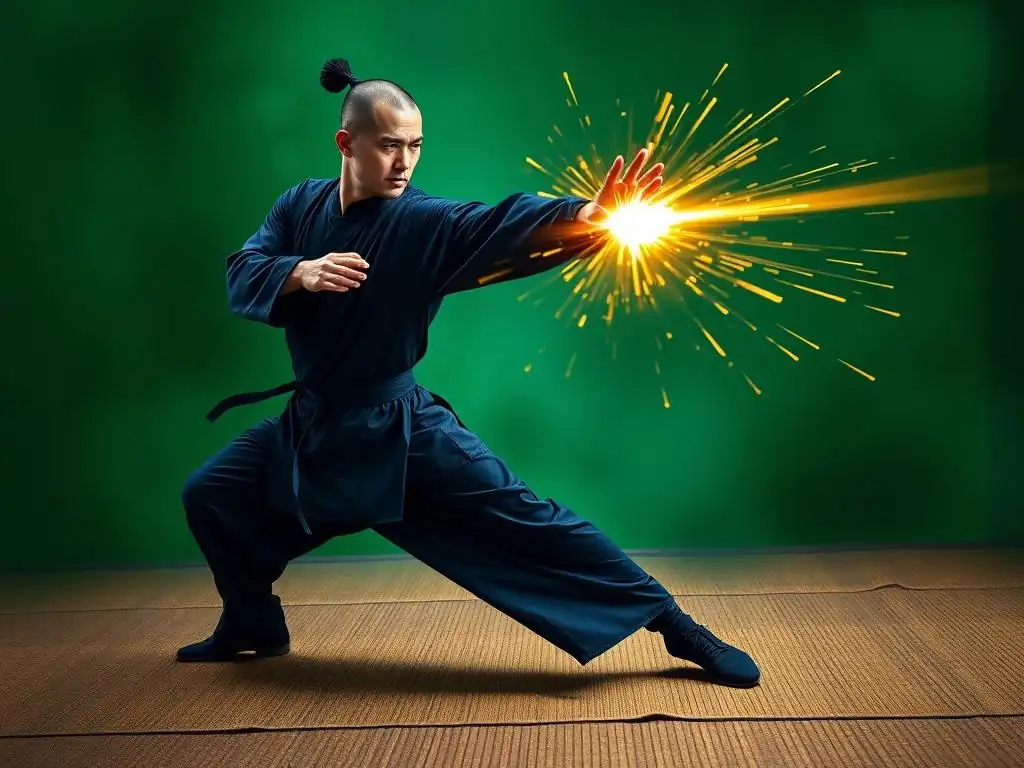
Welcome to Martial Arts Mastery, where we delve into the profound depths of combat traditions! Are you ready to unlock the secrets of circular power? This article explores the captivating synergy of Baguazhang footwork and hand techniques, revealing how these elements intertwine to create a truly unique and devastating martial art. Discover the intricate strategies and training methods that define this powerful style, and prepare to embark on a journey that will reshape your understanding of movement and combat. Intrigued? Dive in and begin your exploration!
- Foundations of Advanced Baguazhang Training
- Mastering Strategic Evasion: Advanced Baguazhang Footwork
- Refining Spiral Power: Advanced Baguazhang Hand Techniques
-
The Synergy of Footwork and Hand Techniques in Combat Application
- Coordinating Footwork and Hand Techniques for Continuous Circular Offense
- Defensive Applications: Using Footwork and Hand Techniques for Evasion and Counter-Attack
- Developing Fluidity and Adaptability in Baguazhang Movement
- Drills for Enhancing Coordination and Timing Between Footwork and Hand Techniques
-
Advanced Training Methodologies for Enhanced Skill
- Solo Form Practice for Refining Technique, Coordination, and Internal Energy Flow
- Partner Drills for Developing Sensitivity, Responsiveness, and Combat Timing
- Sparring Strategies: Applying Baguazhang Footwork and Hand Techniques in Dynamic Scenarios
- The Role of Qigong and Meditation in Cultivating Internal Power and Mental Focus
- Common Errors and Corrective Strategies in Baguazhang Training
- Historical Lineage and Evolution of Baguazhang Techniques
- Conclusion: The Path to Continued Baguazhang Development
-
Frequently Asked Questions
- How crucial is footwork in Baguazhang compared to other martial arts?
- What are some of the core principles underlying Baguazhang hand techniques?
- How does the historical development of Baguazhang influence its footwork and hand techniques?
- What are some common training methods used to develop proficiency in Baguazhang footwork and hand techniques?
- How effective is Baguazhang for self-defense in modern contexts, considering its emphasis on intricate movements?
- Final Reflection: Embracing the Dance of Change
- Unleash Your Inner Baguazhang Master!
Foundations of Advanced Baguazhang Training
Understanding the I Ching Principles in Baguazhang
Advanced Baguazhang training delves deeply into the philosophical underpinnings that guide its movements and strategies, notably drawing from the ancient Chinese text, the I Ching, or Book of Changes. The eight trigrams (Ba Gua) that give the art its name represent fundamental forces of nature and cosmic principles (Heaven, Earth, Fire, Water, Mountain, Lake, Wind, Thunder). In Baguazhang, these principles are not merely symbolic; they are embodied in the eight basic palm changes (Eight Mother Palms) and the circular stepping patterns.
For instance, the Qian trigram (Heaven) might inspire expansive, upward movements, while the Kun trigram (Earth) suggests rooted, grounded postures. Understanding this connection provides practitioners with a deeper insight into the energetic flow and strategic intent behind each technique, moving beyond mere physical execution to internal cultivation and strategic adaptability.
This integration of I Ching principles informs the core concept of constant change and transformation within Baguazhang. The circular stepping allows practitioners to continuously shift their position and angle relative to an opponent, embodying the principle of dynamic change. The palm changes, similarly, are designed to transition fluidly from one technique to another, adapting to the opponent's actions and exploiting openings.
A master practitioner doesn't just perform a sequence of movements; they embody the principles of the trigrams, allowing their body and mind to respond spontaneously and effectively to any situation, much like nature responds to changing conditions. This theoretical foundation is crucial for unlocking the true potential of Baguazhang footwork hand techniques in advanced practice.
The Interdependence of Footwork and Hand Techniques for Circular Offense and Defense
In Baguazhang, the effectiveness of any technique, whether offensive or defensive, hinges entirely on the symbiotic relationship between its unique footwork and corresponding hand techniques. Unlike many linear martial arts, Baguazhang operates primarily on a circular plane. The signature circle walking provides the mobile platform from which all actions are launched and defended.
This constant movement allows the practitioner to evade direct confrontation, control distance, and attack from angles where the opponent is weakest or least prepared. The hand techniques are then deployed in coordination with this evasive and positioning footwork, enabling strikes, joint locks, throws, and deflections to be executed with maximum leverage and effect, often catching an opponent off guard.
This interdependence is vital for developing "spiral power" (Jin) and executing effective Baguazhang footwork hand techniques. The power generated in Baguazhang doesn't come solely from muscular force but from the coordinated spiraling movement of the entire body, originating from the core and expressed through the limbs. The footwork creates the necessary torque and momentum, while the hand techniques channel this energy into precise actions.
For example, a simple palm strike gains devastating power when combined with a sudden step off the line and a coiling-uncoiling motion through the waist and shoulder. Defensively, evasive footwork allows the practitioner to redirect or absorb incoming force while simultaneously setting up a counter-attack with a fluid hand transition, demonstrating the seamless blend required for mastery.
Mastering Strategic Evasion: Advanced Baguazhang Footwork
The Significance of Circle Walking as a Foundation for Tactical Maneuvering
Circle walking, or Zou Zhang, is not merely a warm-up or a basic exercise in Baguazhang; it is the fundamental matrix upon which all advanced techniques are built. At its core, it is a moving meditation that cultivates internal energy, develops rootedness, and trains the practitioner to maintain a calm center while in constant motion. However, its tactical significance is paramount.
By continuously circling an opponent, the Bagua practitioner denies them a static target, making it difficult to land linear attacks. This constant lateral movement also creates opportunities to move to the opponent's blind spots or angles where their structure is compromised, setting the stage for effective strikes or joint controls.
Advanced practitioners understand that circle walking is not just walking in a circle; it involves subtle shifts in weight distribution, posture, and intention. The depth and speed of the circle can vary, adapting to the tactical situation. A tight, fast circle might be used for close-quarters evasion or entry, while a wider, slower circle could be used for controlling distance or observing the opponent.
Mastery of circle walking allows the practitioner to seamlessly transition into other footwork patterns, such as hook steps, crossing steps, or retreating steps, all while maintaining balance and readiness. This continuous, fluid movement is the bedrock upon which all effective Baguazhang footwork hand techniques are founded.
Advanced Footwork Drills for Evasive Movement and Angled Attacks
Moving beyond basic circle walking, advanced Baguazhang training incorporates a variety of specific footwork drills designed to enhance evasive capabilities and facilitate attacks from unexpected angles. Drills like the "Hook Step" ( Gou Bu) involve hooking one foot behind the other while pivoting, allowing for rapid changes in direction and creating opportunities to get behind an opponent.
The "Crossing Step" ( Kou Bu) involves stepping across the body, often used to close distance while simultaneously shifting the angle of attack. Another critical drill is the "Pushing Step" ( Tui Bu) or "Mud Walking Step," which focuses on maintaining low, rooted movement and generating power from the legs and waist while advancing or retreating.
These drills are not practiced in isolation but are integrated into dynamic sequences that mimic combat scenarios. For instance, a drill might involve circling, executing a hook step to evade an imagined attack, and immediately following with a crossing step to enter and attack from the side.
The focus is on developing seamless transitions between steps, maintaining balance, and ensuring that the body's structure remains aligned to generate power. Practitioners spend countless hours refining these steps, often practicing for years to achieve the effortless fluidity and strategic precision necessary to effectively apply Baguazhang footwork hand techniques in a dynamic confrontation.
Developing Seamless Transitions Between Evasion and Counter-Strikes
The true art of Baguazhang lies in its ability to transition instantaneously from defensive evasion to offensive counter-attack. This seamless flow is achieved through dedicated training that links specific footwork patterns directly with corresponding hand techniques. The moment evasive footwork creates an opening or shifts the practitioner to a superior angle, a hand technique is launched, often simultaneously with the final step of the evasion.
This prevents the opponent from recovering or adjusting their defense. For example, a sidestepping evasion might flow directly into a palm strike targeting the opponent's flank, or a retreating step might be accompanied by a deflecting palm that transitions into a throw.
Training methods emphasize this fluidity. Drills often involve a partner simulating attacks while the practitioner practices evading using various footwork patterns and immediately countering. The focus is on eliminating hesitation and developing reflexive responses. This requires not only physical conditioning and technical precision but also mental agility. The practitioner must be able to read the opponent's intent and react instantly, choosing the appropriate footwork-hand technique combination without conscious thought. Achieving this level of seamless transition is a hallmark of advanced Baguazhang footwork hand techniques application.
Integrating Body Mechanics for Power Generation and Balance in Footwork
Effective Baguazhang footwork is deeply intertwined with the body's internal mechanics to generate power and maintain unwavering balance. The low, rooted stances and continuous circular movement require significant leg strength and core stability. Power is generated not just from stepping but from the coordinated spiraling motion of the entire body, starting from the feet gripping the ground, moving up through the legs, waist, and torso, and culminating in the hands.
This integrated body power, known as Jin, allows even seemingly soft movements to carry considerable force. For instance, a subtle shift in weight combined with a twist of the waist during a step can add significant power to a subsequent palm strike.
Maintaining balance while constantly moving in a circle and changing directions is crucial. Baguazhang training emphasizes keeping the body centered and the weight distributed appropriately through the feet. The spine remains erect but relaxed, allowing the body to coil and uncoil efficiently.
Specific exercises, such as "mud walking" with subtle internal adjustments, train the practitioner to maintain stability on uneven ground or when subjected to external force. This profound integration of body mechanics with footwork ensures that the practitioner is always rooted, balanced, and capable of generating explosive power or executing complex Baguazhang footwork hand techniques at any point in their movement.
Refining Spiral Power: Advanced Baguazhang Hand Techniques
Exploring the Eight Mother Palms and Their Energetic Manifestations
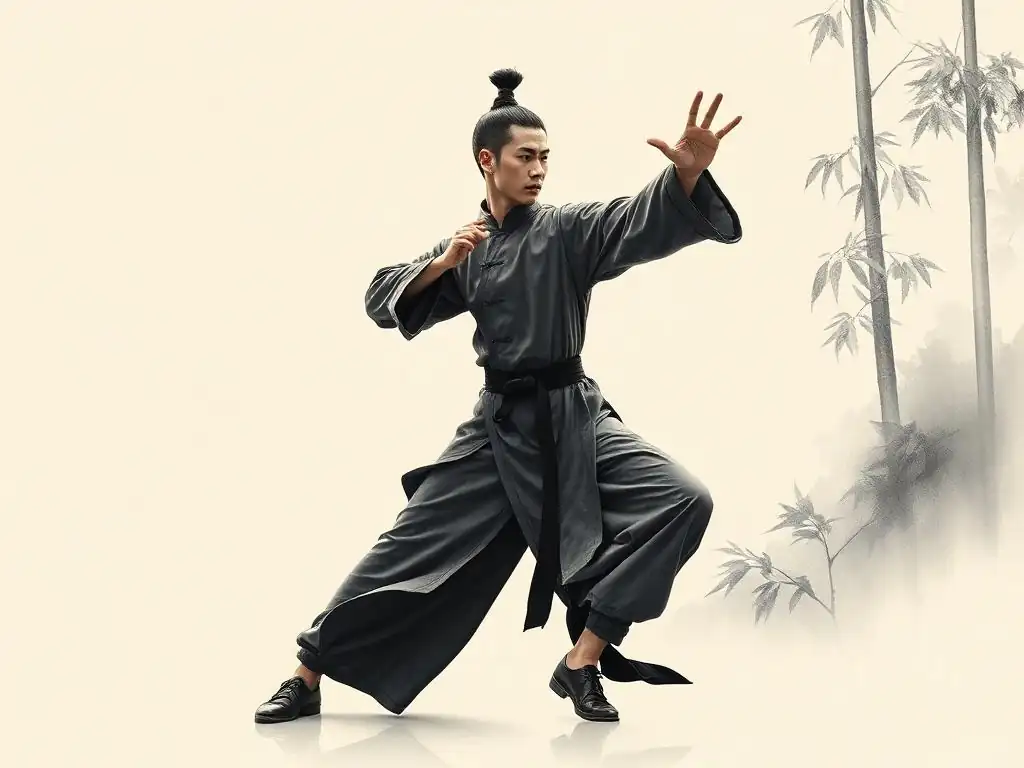
The core of Baguazhang's offensive and defensive repertoire lies within the Eight Mother Palms ( Ba Mu Zhang). These are fundamental hand shapes and corresponding energetic applications that serve as the basis for all other techniques. Each palm embodies a distinct principle and method of applying force: for example, the Single Change Palm (Dan Huan Zhang) is often associated with outward expansion and changing direction, while the Double Change Palm (Shuang Huan Zhang) involves more complex coiling and striking motions.
Other palms include the Back Palm, Pushing Palm, Chopping Palm, Covering Palm, Penetrating Palm, and Lifting Palm. These are not static positions but dynamic methods of interacting with an opponent.
Advanced training involves understanding the energetic manifestation ( Jin) associated with each palm. This goes beyond the physical shape of the hand or the direction of the strike. It involves cultivating specific internal forces – like penetrating force, splitting force, or coiling force – and expressing them through the palm movements.
For instance, the Penetrating Palm aims to deliver force deep into the opponent's body, bypassing surface tension. This requires precise alignment of the body, coordination with footwork, and the internal cultivation of the specific Jin. Masters can often switch between these energetic manifestations within a single palm change, adapting to the opponent's structure and movement, showcasing the depth of Baguazhang footwork hand techniques.
Advanced Palm Changes for Redirecting Force and Exploiting Weaknesses
Beyond the basic Eight Mother Palms, Baguazhang features a vast array of sophisticated "palm changes" ( Zhang Bian) – sequences of hand techniques linked together with footwork transitions. These changes are the art's primary method for engaging an opponent, redirecting incoming force, and exploiting structural weaknesses.
A key principle is "leading the incoming force," where instead of meeting force with force, the practitioner uses circular footwork and subtle hand movements to guide the opponent's attack past them, disrupting their balance and opening them up for a counter. For example, a simple parry might transition into a circling palm that redirects the opponent's arm while simultaneously stepping to their side.
These advanced palm changes are highly fluid and adaptive. They are not fixed sequences but principles of movement and application. An advanced practitioner doesn't just learn forms; they learn how to change effectively.
This involves understanding leverage, joint mechanics, and the opponent's center of gravity. By combining evasive Baguazhang footwork hand techniques, a practitioner can use a yielding palm to absorb or redirect an attack, then instantly transition into a coiling palm to control a limb or a penetrating palm to strike a vital point. The ability to seamlessly flow through these changes, always maintaining connection and control, is a hallmark of high-level Baguazhang skill.
Developing Sensitivity to Opponent's Intent Through Hand Techniques
A critical aspect of advanced Baguazhang hand techniques is the development of sensitivity, often referred to as "listening force" ( Ting Jin). This is the ability to sense an opponent's intention, direction of force, and structural weaknesses through physical contact, primarily with the hands and arms. While sparring or practicing push hands ( Tui Shou), practitioners learn to feel the subtle cues in an opponent's movement and tension before they fully commit to an action. This allows for pre-emptive evasion or redirection using Baguazhang footwork hand techniques, rather than simply reacting after an attack has been launched.
Training methods for developing sensitivity include various forms of partner drills, such as single and double hand pushing exercises, where practitioners maintain contact and feel for imbalances or openings. The goal is to become so attuned to the opponent's energy that their intentions are felt as if they were one's own. This heightened tactile awareness, combined with visual and intuitive cues, allows the Bagua practitioner to anticipate movements and respond with precisely timed footwork and hand techniques, often dissolving the opponent's attack before it fully materializes and turning their force against them.
Integrating Spiraling Energy (Jin) for Penetrating Strikes and Joint Locks
The unique power generated in Baguazhang, known as Jin (often translated as 'refined force' or 'internal power'), is distinct from brute muscular strength. It is characterized by a spiraling, coiling, and uncoiling motion that integrates the entire body. This spiraling energy is fundamental to both penetrating strikes and effective joint locks.
For a penetrating strike, like a palm strike or a fist strike, the power is generated through the rotation of the waist and torso, channeled through the spiraling movement of the arm, and delivered with a focused intention that aims through the target, not just at the surface. This results in strikes that can cause deep internal damage.
Similarly, joint locks and throws in Baguazhang utilize this spiraling Jin in conjunction with precise Baguazhang footwork hand techniques. Instead of relying solely on leverage from external force, the practitioner uses their body's spiraling motion to disrupt the opponent's structure and apply pressure to joints.
A coiling motion of the arm and torso, supported by rooted footwork, can create immense pressure on a wrist or elbow joint, leading to a lock or break. This application of Jin allows smaller practitioners to effectively control and overcome larger opponents, highlighting the internal nature and sophisticated body mechanics inherent in advanced Baguazhang practice.
The Synergy of Footwork and Hand Techniques in Combat Application
Coordinating Footwork and Hand Techniques for Continuous Circular Offense
In a dynamic combat scenario, Baguazhang's effectiveness stems from the seamless coordination of Baguazhang footwork hand techniques to maintain continuous circular offense. The goal is to constantly move around the opponent, attacking from different angles while denying them a stable target. This involves using circle walking and various stepping methods (hook steps, crossing steps, etc.) to shift position, combined with rapid, flowing palm changes and strikes. As one technique finishes or is defended, the footwork immediately repositions the practitioner for the next attack, creating a relentless, swirling pressure.
For instance, a practitioner might use a crossing step to enter the opponent's space, simultaneously delivering a palm strike to the side of the head. If the strike is blocked, the footwork continues the circular motion, perhaps transitioning into a hook step to get behind the opponent, while the hands flow into a limb control or a strike to the back.
This constant movement and chaining of techniques, always supported by strategic footwork, prevents the opponent from establishing a solid defense or launching a sustained counter-attack. The synergy ensures that every movement, whether primarily footwork or hand technique, serves the overall objective of controlling the engagement through circular motion.
Defensive Applications: Using Footwork and Hand Techniques for Evasion and Counter-Attack
While known for its offense, Baguazhang footwork hand techniques are equally potent in defense, primarily through evasion and redirection leading to counter-attack. The fundamental defensive strategy is to avoid being hit by not being where the opponent's attack is aimed. This is achieved through sophisticated footwork – stepping offline, circling away, or retreating just out of range – rather than static blocking. As the practitioner evades, their hand techniques are used to guide, deflect, or neutralize the incoming force with minimal contact, maintaining sensitivity and control.
For example, if an opponent throws a punch, the Bagua practitioner might use a subtle sidestep (footwork) combined with a yielding palm (hand technique) to guide the punch past their body. Crucially, this defensive action immediately transitions into a counter-attack. As the opponent's balance is disrupted by their committed attack being redirected, the practitioner uses their continued circular movement to gain an advantageous angle and launch a strike or control technique. This simultaneous evasion and counter-preparation, facilitated by the integrated Baguazhang footwork hand techniques, makes Baguazhang a highly efficient defensive art that turns the opponent's aggression against them.
Developing Fluidity and Adaptability in Baguazhang Movement
Mastery of Baguazhang footwork hand techniques requires developing exceptional fluidity and adaptability. Unlike arts that rely on fixed stances and pre-set combinations, Baguazhang emphasizes continuous, flowing movement that can instantly adapt to the unpredictable nature of combat. This fluidity allows the practitioner to change direction, speed, and technique instantaneously based on the opponent's actions. Training focuses on dissolving stiffness and tension, allowing the body to move as a unified, flexible unit.
Adaptability is cultivated through varied partner drills and free-form practice. Practitioners learn not just what techniques to use, but how to modify them on the fly. If a palm strike is blocked, it might instantly become a push, a pull, or transition into a joint lock, all while the footwork continues to circle and seek a new angle. This high degree of adaptability ensures that the Bagua practitioner is not limited by rigid techniques but can respond effectively to any situation, making their Baguazhang footwork hand techniques highly versatile in real-world applications.
Drills for Enhancing Coordination and Timing Between Footwork and Hand Techniques
Achieving the required synergy between Baguazhang footwork hand techniques demands specific training drills focused on coordination and timing. Solo forms (like the Eight Mother Palms form or various lineage-specific forms) are foundational, training the practitioner to link steps and hand movements in a fluid sequence while cultivating internal energy. However, partner drills are essential for developing timing and responsiveness to an external stimulus.
Examples of coordination drills include:
- Follow-Step Drills: Partners move in a circle, with one leading and the other following closely, practicing maintaining distance and relative position.
- Reaction Drills: One partner performs a simple action (e.g., a step or a hand motion), and the other responds instantaneously with a specific footwork-hand technique combination.
- Applying Palm Changes on the Circle: Practicing executing specific palm changes while continuously circling a partner, focusing on coordinating the hand movement with the precise timing of the steps.
- Push Hands with Movement: Engaging in push hands while allowing for dynamic footwork, forcing practitioners to maintain balance and sensitivity while constantly shifting position and applying Baguazhang footwork hand techniques. These drills, practiced diligently, build the reflexes and intuitive connection needed for advanced application.
Advanced Training Methodologies for Enhanced Skill
Solo Form Practice for Refining Technique, Coordination, and Internal Energy Flow
Solo form practice is an indispensable component of advanced Baguazhang training. Forms, whether the foundational Eight Mother Palms or more complex lineage-specific sequences, serve as moving libraries of techniques and principles. Practicing forms alone allows the practitioner to focus intently on the precise execution of each movement – the angle of the step, the shape of the hand, the coordination of the body's spiral, and the flow of internal energy ( Qi). This solitary practice refines the physical mechanics of Baguazhang footwork hand techniques without the distraction of an opponent.
Beyond physical technique, solo forms cultivate internal energy flow. The circular stepping and spiraling movements are designed to circulate Qi throughout the body, strengthening the internal organs and developing the intrinsic power ( Jin) characteristic of Baguazhang. Dedicated solo practice, often involving hundreds or even thousands of repetitions of forms and individual movements, builds deep muscle memory and internal connection. Many practitioners dedicate significant time, often an hour or more daily, to this solo refinement, understanding it as the bedrock upon which all effective partner work and application are built.
Partner Drills for Developing Sensitivity, Responsiveness, and Combat Timing
While solo forms build the foundation, partner drills are crucial for developing the practical application of Baguazhang footwork hand techniques. These drills move beyond static techniques to dynamic interaction. They focus on developing sensitivity to an opponent's force and intention, improving reaction time, and refining combat timing – knowing when and how to apply a technique. Partner work allows practitioners to test their Baguazhang footwork hand techniques against live resistance and unpredictable movement.
Drills range from structured exercises like push hands ( Tui Shou) and sticking hands ( Lian Shou) that focus on maintaining contact and feeling energy, to more free-form applications of specific palm changes or defensive maneuvers. For example, a drill might involve one partner attacking with a specific type of force while the other practices yielding footwork and redirecting hand techniques.
Another could focus on entering techniques from different angles, requiring precise timing between the step and the hand action. Consistent partner training, under the guidance of an experienced instructor, is vital for translating solo practice into applicable combat skill.
Sparring Strategies: Applying Baguazhang Footwork and Hand Techniques in Dynamic Scenarios
Applying Baguazhang footwork hand techniques effectively in sparring requires transitioning from structured drills to a more fluid, less predictable environment. Sparring provides the opportunity to test principles and techniques against a resisting, adapting opponent. The primary Baguazhang strategy in sparring is to use continuous circular movement to control the distance and angle, avoiding direct linear exchanges. Practitioners constantly seek to get to the opponent's side or rear, attacking their blind spots or disrupting their balance.
Advanced Bagua sparring emphasizes using subtle movements and changes to create opportunities. This might involve feinting with footwork to draw a reaction, using evasive steps to make the opponent overcommit, or employing fluid hand changes to disrupt their guard and create an opening. The focus is on maintaining balance and structure while moving, and generating power from the integrated body mechanics for strikes or control techniques. Effective Bagua sparring is less about overwhelming force and more about strategic positioning, timing, and the seamless integration of Baguazhang footwork hand techniques to control the fight.
The Role of Qigong and Meditation in Cultivating Internal Power and Mental Focus
Beyond physical techniques, advanced Baguazhang training incorporates Qigong ( Qi Gong) and meditation to cultivate internal power and mental focus. Qigong exercises, often performed in conjunction with circle walking or specific standing postures ( Zhan Zhuang), help to build internal energy ( Qi) and develop sensitivity to its flow within the body. This internal cultivation is essential for generating the unique spiraling Jin power used in Baguazhang techniques. Practices like the "Nine Palaces" stepping drill, often performed slowly with deep intention, are forms of moving Qigong that enhance both physical mechanics and internal energy circulation.
Meditation, whether seated or integrated into movement practice, develops mental clarity, calmness, and focus. A calm mind is essential for reading an opponent's intentions, reacting instinctively, and maintaining composure under pressure. Meditation also helps in cultivating Yi (intent or mind-power), which is used to guide the flow of Qi and direct Jin. The integration of Qigong and meditation provides the internal foundation that elevates Baguazhang from a purely physical art to a sophisticated practice of mind, body, and energy, profoundly enhancing the application of Baguazhang footwork hand techniques.
Common Errors and Corrective Strategies in Baguazhang Training
Addressing Common Footwork Errors: Stance, Balance, and Transition Issues
Beginners and even intermediate practitioners often encounter common errors in Baguazhang footwork that hinder their progress and effectiveness. Issues with stance are prevalent; stances may be too high, too low, or lack the rooted connection to the ground. This compromises balance and the ability to generate power from the legs and waist. Corrective strategies involve dedicated Zhan Zhuang (standing post) practice to build leg strength and rootedness, and slow, deliberate circle walking focusing on keeping the weight centered and the steps even and grounded, often practicing "mud walking" drills.
Balance issues frequently arise during changes in direction or speed. Losing balance while circling or transitioning between steps makes the practitioner vulnerable. This is often linked to poor body alignment or improper weight distribution. Correction involves focusing on maintaining the spine erect and relaxed, keeping the head suspended as if pulled by a string, and ensuring the hips remain level.
Drills that involve sudden changes in direction or speed, practiced slowly at first, help to build dynamic balance. Seamless transitions between steps are critical for fluidity; jerky or hesitant transitions indicate a lack of coordination. Practicing linking basic steps together smoothly, initially without hand techniques, helps refine the flow, which is vital for integrated Baguazhang footwork hand techniques.
Correcting Hand Technique Flaws: Posture, Alignment, and Power Generation Problems
Flaws in Baguazhang hand techniques can diminish their effectiveness in redirecting force, striking, or controlling. Common errors include incorrect hand shape, improper arm posture (e.g., locked joints or excessive tension), and misalignment of the hand and arm with the rest of the body's structure. These issues prevent the efficient channeling of Jin and reduce the power and penetrative ability of strikes. Corrective methods involve meticulous solo form practice, focusing on the precise angles and shapes of the hands and arms in each movement, often using mirrors or video feedback.
Power generation problems in hand techniques are typically linked to a failure to integrate the entire body. If power comes only from the arm or shoulder, it will be weak and easily blocked. Correction requires focusing on initiating movement from the waist and coordinating it with the stepping and spiraling action of the torso.
Partner drills, such as push hands with an emphasis on body connection, help practitioners feel when their power is disconnected. Specific exercises that train the coiling and uncoiling of the waist and spine, synchronized with arm movements, are crucial for developing effective Baguazhang footwork hand techniques that utilize internal power.
Overcoming Coordination Challenges: Developing Timing and Flow
The most significant challenge in Baguazhang is often coordinating the footwork and hand techniques into a single, fluid action. Beginners tend to move their feet, stop, then move their hands, creating pauses that can be exploited by an opponent. Lack of timing means techniques are deployed too early or too late to be effective. Developing seamless coordination requires extensive practice linking specific steps with corresponding hand movements.
Drills specifically designed to synchronize movement, such as "step-and-strike" exercises performed rhythmically, are essential. Practicing palm changes while maintaining continuous circle walking forces the practitioner to coordinate the upper and lower body. Partner drills focusing on simultaneous evasion and counter-attack help refine timing under pressure. The key is consistent, deliberate practice, initially focusing on accuracy and coordination at slow speeds, gradually increasing speed and intensity as proficiency grows. This dedicated effort is necessary to achieve the effortless flow characteristic of advanced Baguazhang footwork hand techniques.
Seeking Guidance from Qualified Instructors for Personalized Feedback
While solo practice and partner drills are vital, overcoming common errors and advancing in Baguazhang training is significantly aided by seeking guidance from qualified instructors. An experienced teacher can identify subtle flaws in posture, movement, or internal mechanics that a student might not perceive on their own. They can provide personalized feedback, offer specific corrective exercises tailored to the student's needs, and ensure that the student is practicing correctly to avoid developing bad habits.
A qualified instructor understands the principles underlying Baguazhang footwork hand techniques and can explain why certain movements are performed in a particular way, not just how. They can guide the student in cultivating internal energy, developing sensitivity, and integrating mind, body, and spirit into the practice. Learning from a reputable lineage helps ensure the integrity of the techniques and principles being taught. While resources like books and videos can supplement training, the nuanced, hands-on correction and guidance provided by a skilled teacher are invaluable for achieving true mastery in Baguazhang.
Historical Lineage and Evolution of Baguazhang Techniques
The Development of Baguazhang Footwork and Hand Techniques Throughout History
Baguazhang is a relatively young martial art compared to styles like Shaolin Kung Fu, with its origins typically traced back to the 19th century and its founder, Dong Haichuan (董海川). Dong reportedly synthesized existing circular walking practices with various martial arts techniques he encountered. The emphasis on continuous circle walking as the primary method of movement and the integration of palm changes as the core hand techniques were revolutionary.
Early Baguazhang footwork centered around the single circle walk, with variations developing later. Hand techniques were initially diverse, likely incorporating elements from other styles Dong had studied, but were unified under the principles of the Eight Trigrams and the concept of spiraling power.
As Dong Haichuan taught, his senior students, such as Yin Fu, Cheng Tinghua, and Liang Zhenpu, developed their own interpretations and branches of Baguazhang, each with distinct characteristics in footwork patterns, palm changes, and body mechanics. For instance, Yin Fu's style is often characterized by faster, higher steps and quick, sharp palm changes, while Cheng Tinghua's branch is known for lower stances, heavier steps, and powerful, connected palm techniques. Despite these variations, the core principles of circular movement and integrated Baguazhang footwork hand techniques remain central to all authentic lineages, reflecting the art's foundational structure established by Dong Haichuan.
Notable Masters and Their Unique Contributions to the Art
Following Dong Haichuan, several generations of masters have significantly shaped the evolution and dissemination of Baguazhang. Cheng Tinghua's lineage is perhaps the most widespread today, known for its practical application and robust techniques. His students, such as Zhang Zhankui (who also founded Xingyiquan branches) and Liu Bin, further refined the style. Yin Fu's lineage is known for its close-quarters fighting and emphasis on swift, elusive movement, passed down through masters like Ma Gui. Liang Zhenpu's lineage maintained a focus on foundational principles and powerful, integrated movements.
Later masters like Sun Lutang (founder of Sun Style Taijiquan, Xingyiquan, and Baguazhang) synthesized Baguazhang with other internal arts, creating a style known for its agile footwork and compact, flowing hand techniques. Gao Yisheng developed Gao Style Baguazhang, known for its linear and circular elements and distinctive palm changes. Each master, while honoring the core principles of Baguazhang footwork hand techniques, added their unique understanding and refinement, enriching the art and ensuring its continuity across different schools and regions. Studying the contributions of these masters provides valuable insight into the diverse applications and interpretations of Baguazhang.
Maintaining the Integrity of Traditional Baguazhang Principles
In the modern era, maintaining the integrity of traditional Baguazhang principles is a crucial concern. With the art's increasing popularity, there is a risk of techniques becoming diluted or losing their internal essence. Traditional Baguazhang emphasizes not just the physical movements of footwork and hand techniques but also the cultivation of internal energy ( Qi), mind-intent ( Yi), and spiraling power ( Jin). Without these internal components, Bagua becomes a superficial, less effective external style.
Preserving integrity involves rigorous adherence to traditional training methods, including extensive solo form practice, dedicated internal cultivation exercises (Qigong, Zhan Zhuang), and structured partner drills that build sensitivity and understanding of internal mechanics. It also necessitates learning from qualified instructors who are part of established lineages and who emphasize the internal aspects alongside the external techniques. While adaptations may occur, they should ideally deepen, rather than diminish, the core principles of circular movement, integrated body power, and the seamless synergy of Baguazhang footwork hand techniques that define the art.
Conclusion: The Path to Continued Baguazhang Development
Emphasizing the Importance of Consistent Practice, Refinement, and Exploration
The journey towards mastery in Baguazhang is a lifelong endeavor that requires unwavering commitment to consistent practice, continuous refinement, and ongoing exploration. Simply learning the forms and basic techniques is only the beginning. True development comes from dedicating significant time daily to solo practice, meticulously refining each step and hand movement, and deepening the connection between internal energy and external application. This diligent repetition builds the essential physical and internal foundation.
Refinement involves constantly seeking to improve the quality of movement – making it more fluid, more powerful, and more efficient. This often means slowing down the practice to focus on subtle internal connections or working with a teacher to correct ingrained errors. Exploration involves delving deeper into the principles, testing different applications of Baguazhang footwork hand techniques, and understanding how the art adapts to various situations. This mindset of continuous learning and improvement is what distinguishes the dedicated practitioner and allows them to truly embody the transformative nature of Baguazhang.
Integrating Ethical Conduct and Personal Cultivation with Martial Skill
Traditional Baguazhang training extends beyond mere combat skill; it is a path of personal cultivation. Ethical conduct and the development of virtuous character are considered inseparable from martial development. The principles embedded in the I Ching, which inform Baguazhang, encourage harmony, balance, and adaptability not just in movement but in life. A practitioner is expected to develop patience, perseverance, humility, and respect – for their teacher, their training partners, and the art itself.
Cultivating these qualities enhances the martial skill. A calm, focused mind, developed through meditation and ethical practice, is better able to read an opponent and respond effectively. Humility allows a practitioner to learn from mistakes and criticism. Perseverance is essential for the demanding physical and mental training. Integrating ethical conduct ensures that the powerful skills developed through Baguazhang footwork hand techniques are used responsibly and for positive purposes, aligning the martial artist's actions with the philosophical depth of the art.
Resources for Further Exploration: Lineage Societies, Workshops, and Texts
For those serious about advanced Baguazhang development, seeking out reliable resources is crucial. The most valuable resource is typically a qualified instructor within a recognized lineage. Lineage societies and associations dedicated to preserving specific branches of Baguazhang often provide directories of certified teachers and schools. Attending workshops and seminars led by experienced masters from different lineages can offer diverse perspectives and insights into specific Baguazhang footwork hand techniques and training methodologies.
Additionally, classical and contemporary texts on Baguazhang can provide historical context, theoretical understanding, and detailed descriptions of forms and principles. While texts cannot replace hands-on instruction, they can deepen a practitioner's understanding of the art's history, philosophy, and technical details. Engaging with these resources, while prioritizing direct instruction, supports a well-rounded and profound exploration of the intricate world of Baguazhang.
Frequently Asked Questions
How crucial is footwork in Baguazhang compared to other martial arts?
Footwork is absolutely foundational to Baguazhang. Unlike some other styles, it's not just about movement, but about generating power and creating openings. The circular stepping is unique and essential.
What are some of the core principles underlying Baguazhang hand techniques?
Baguazhang hand techniques emphasize circular and spiraling motions, leveraging qi and whole-body power. They often involve evasion, redirection, and simultaneous attack and defense, making them highly effective.
How does the historical development of Baguazhang influence its footwork and hand techniques?
Baguazhang's origins in Daoist philosophy and the I Ching are deeply reflected in its circular movements and constantly changing patterns. This translates into adaptive and unpredictable techniques in both footwork and hands.
What are some common training methods used to develop proficiency in Baguazhang footwork and hand techniques?
Training typically involves practicing basic circle walking, followed by drills that integrate footwork with specific hand techniques. Partner work is also crucial for developing timing and responsiveness.
How effective is Baguazhang for self-defense in modern contexts, considering its emphasis on intricate movements?
While it requires diligent training, Baguazhang's unpredictable angles and simultaneous attack/defense can be highly effective. Its emphasis on body mechanics and qi circulation allows for powerful strikes even against larger opponents.
Final Reflection: Embracing the Dance of Change
The intricate dance of Baguazhang, as we've explored, is more than just a martial art; it's a living embodiment of change and adaptation. The seamless integration of footwork and hand techniques is not merely a physical skill, but a profound metaphor for navigating the complexities of life itself. In a world constantly shifting beneath our feet, the principles of Baguazhang offer a powerful framework for maintaining balance and finding strength in fluidity.
This ancient art continues to resonate deeply, influencing not only martial artists but also those seeking a deeper understanding of movement, mindfulness, and inner harmony. The continuous circling, the evasive steps, and the ever-changing hand positions mirror the challenges we face daily, reminding us to be adaptable and resilient. The soft overcomes the hard, and the yielding overcomes the strong.
This Taoist principle, so central to Baguazhang, offers a timeless lesson in finding strength through flexibility and wisdom through yielding.
Now, as you step away from this exploration of Baguazhang, I invite you to consider how its principles might inform your own journey. Embrace the dance of change, cultivate fluidity in your actions, and find strength in your ability to adapt. Let the intricate interplay of footwork and hand techniques serve as a constant reminder that true power lies not in rigidity, but in the graceful and intelligent embrace of the ever-flowing present.
Unleash Your Inner Baguazhang Master!
Thank you for exploring the fascinating world of Baguazhang with us! We hope you’ve gained valuable insights into the intricate dance between footwork and hand techniques. Now, it's time to put that knowledge into action.
Here's how you can continue your journey:
- Commit to practicing the basic circle walking technique daily. Even 15 minutes can significantly improve your coordination and grounding.
- Explore related martial arts forms, like Tai Chi or Xing Yi Quan, to deepen your understanding of internal energy and movement principles.
- Share your insights and challenges with the Martial Arts Mastery community in the comments section below – let's learn and grow together!
What's one small adjustment you can make today to improve your Baguazhang practice?