
The Mind of the HEMA Duelist: Psychological Warfare in Dagger & Grappling


Welcome to Martial Arts Mastery, your gateway to the world's fighting arts!
Delve into the fascinating realm where physical prowess meets mental fortitude. In this article, we explore the mind of the HEMA duelist, uncovering the psychological strategies employed in dagger and grappling combat. But what truly separates a victor from the vanquished in a tense HEMA duel? Prepare to discover the subtle yet powerful techniques that can tip the scales in your favor...and perhaps rethink everything you thought you knew about historical fencing.
- Introduction to Psychological Strategies in HEMA Dagger & Grappling
- Understanding the Psychological Landscape of a HEMA Duel
- Psychological Tactics in HEMA Dagger Fighting
- Mental Strategies in HEMA Grappling
- Specific Psychological Warfare Techniques for HEMA Duelists
- Developing Mental Resilience for HEMA Combat
- Case Studies: Psychological Warfare in Historical HEMA Accounts
- Ethical Considerations in HEMA Psychological Warfare
- Training Drills for Integrating Psychological Strategies into HEMA
- Conclusion: Mastering the Mental Game in HEMA Dagger & Grappling
-
Frequently Asked Questions
- What is psychological warfare and why is it important in HEMA duels?
- Can you give an example of a psychological strategy a HEMA duelist might use?
- How can a HEMA duelist prepare themselves mentally for the psychological aspects of a duel?
- Are there any ethical considerations when using psychological strategies in HEMA duels?
- How does understanding historical context improve psychological warfare in HEMA?
- Final Reflection: Mastering the Mental Game
- Unleash Your Inner Duelist: Sharpen Your Mental Edge!
Introduction to Psychological Strategies in HEMA Dagger & Grappling
The Importance of Mental Fortitude in Historical European Martial Arts (HEMA)
While the physical techniques of thrusts, cuts, parries, and grappling exchanges form the visible layer of Historical European Martial Arts (HEMA), the true mastery often resides within the practitioner's mind. Mental fortitude is not merely an advantage; it is a fundamental requirement for navigating the chaotic and high-stakes environment of a HEMA encounter, especially in the close confines of dagger and grappling combat. A duelist's ability to remain calm under pressure, make split-second decisions, and adapt to unexpected situations directly impacts their survival and success. This mental resilience underpins all physical execution.
The psychological strategies employed in a HEMA duel can turn the tide even when faced with a physically superior opponent. Understanding and leveraging psychological principles allows a duelist to disrupt their opponent's focus, exploit their anxieties, and control the narrative of the fight before a single blow is exchanged. Developing robust HEMA duel psychological strategies is therefore as critical as honing physical technique, transforming mere movement into effective, decisive action.
Setting the Stage: Understanding the HEMA Dagger & Grappling Context
Dagger and grappling in HEMA manuscripts, such as Fiore dei Liberi's Fior di Battaglia or the works within the Liechtenauer tradition, represent some of the most intimate and dangerous forms of combat. Engagements happen at extremely close range, often within arm's reach, where mistakes are immediately and severely punished. This proximity amplifies the psychological pressure, as the threat is constant and immediate, demanding not only technical proficiency but also unwavering mental control.
In this close-quarters domain, the psychological battle begins long before physical contact. It involves assessing the opponent, managing one's own fear, and understanding how to impose one's will through posture, gaze, and initial movements. The goal of HEMA duel psychological strategies in this context is to create an opening, break the opponent's guard (physical or mental), and gain a decisive advantage in a situation where space and time are minimal.
Understanding the Psychological Landscape of a HEMA Duel
Reading Your Opponent: Decoding Body Language and Tells
Effective HEMA duel psychological strategies heavily rely on accurately reading your opponent. Body language provides a wealth of information about their intentions, emotional state, and physical condition. Subtle shifts in weight can indicate an impending step or lunge. Tension in the shoulders or hands might reveal nervousness or readiness to explode into action. Observing their gaze can hint at their intended target or if they are distracted. Becoming adept at recognizing these 'tells' allows a duelist to anticipate actions and react preemptively.
This ability to read body language is honed through extensive sparring and observation. For instance, a common tell might be a slight dip of the shoulder before a thrust, or a tightening of the jaw indicating stress. In the close range of dagger and grappling, these signals are magnified. A skilled practitioner can use these observations to bait reactions, avoid traps, or identify moments of vulnerability, providing a crucial edge in the fast-paced exchange.
Pre-Duel Posturing: Establishing Dominance and Imposing Your Will
The moments leading up to the initiation of combat are fertile ground for psychological warfare. Pre-duel posturing isn't just about assuming a guard; it's about projecting confidence, readiness, and an air of control. Standing tall, maintaining eye contact, and exhibiting calm, focused movements can be intimidating and subtly undermine an opponent's confidence. Conversely, appearing hesitant, fidgety, or unfocused can invite aggression.
Historical texts often describe the importance of a strong, stable guard ( posta in Fiore's system). These guards are not just defensive postures; they are declarations of intent and capability. Adopting a powerful stance like Posta Longa with a dagger, even momentarily, can project reach and threat, influencing how the opponent approaches. This initial psychological skirmish sets the tone for the engagement, aiming to make the opponent react to your presence rather than act on their own initiative.
The Role of Fear and Anxiety in HEMA Combat Performance
Fear and anxiety are natural responses to the inherent danger of HEMA combat, particularly when dealing with sharp weapons or the immediate threat of being controlled and submitted in grappling. However, uncontrolled fear can be paralyzing, leading to hesitation, tunnel vision, and a degradation of physical performance. A duelist's ability to manage these emotions is paramount to executing HEMA duel psychological strategies effectively.
Understanding how fear affects both oneself and an opponent is key. Symptoms like increased heart rate, trembling, or erratic movements can be observed. While you must learn to channel your own adrenaline into focused energy, you can also look for signs of debilitating fear in your opponent. An opponent gripped by fear might become overly defensive, predictable, or make rash decisions, creating opportunities for a composed practitioner to exploit.
Psychological Tactics in HEMA Dagger Fighting
Aggressive Offense as a Psychological Weapon: Overwhelming Your Opponent
In dagger fighting, where ranges are minimal and defenses can be quickly bypassed, a relentless and intelligent offense can be a potent psychological weapon. Launching a series of well-timed, aggressive attacks can overwhelm an opponent, denying them the space and time to think or mount their own offense. This pressure can induce panic, leading to defensive errors or predictable reactions that can then be exploited.
Consider a scenario where a duelist presses forward with controlled, rapid thrusts and parries. Even if not all attacks land, the sheer volume and speed can force the opponent into a purely reactive state. They become so focused on blocking and avoiding immediate danger that their ability to plan or execute complex counter-strategies diminishes significantly. This isn't mindless aggression, but rather a calculated application of pressure designed to dismantle the opponent's mental processing speed.
Deceptive Movements and Feints: Manipulating Expectations
Deception is a cornerstone of HEMA duel psychological strategies in dagger fighting. Feints, false attacks, and misleading body movements are used to manipulate the opponent's expectations and reactions. A feint to the chest might be intended to draw a specific parry, opening a line to the face or arm. A step in one direction might be a setup for a sudden change of angle or a transition into grappling.
These deceptive tactics work by exploiting the opponent's natural defensive reflexes and their desire to read your intentions. By presenting false information – a movement that looks like a thrust but isn't committed, or a guard that suggests one intention while preparing another – you can induce them to commit to a defensive action that leaves them vulnerable elsewhere. The effectiveness of a feint is measured not by its physical execution, but by its psychological impact – how convincingly it draws the desired reaction.
Controlling Distance: Psychological Advantages of Range Management in Dagger
Managing distance in dagger combat is not purely a physical technique; it carries significant psychological weight. The ability to control the range, forcing the opponent to fight where you are most comfortable and they are least, creates a psychological advantage. Maintaining a specific distance can frustrate an opponent, making them feel either too far to attack effectively or trapped too close to maneuver.
For example, consistently staying just outside their comfortable striking distance might provoke them into lunging or rushing forward, potentially overextending and creating an opening. Conversely, closing distance rapidly and unexpectedly can shock an opponent and force them into an immediate, often less thought-out, defensive posture or clinch. Mastery of range allows you to dictate the rhythm and nature of the engagement, imposing your will on the opponent's perception of the fight.
Mental Strategies in HEMA Grappling
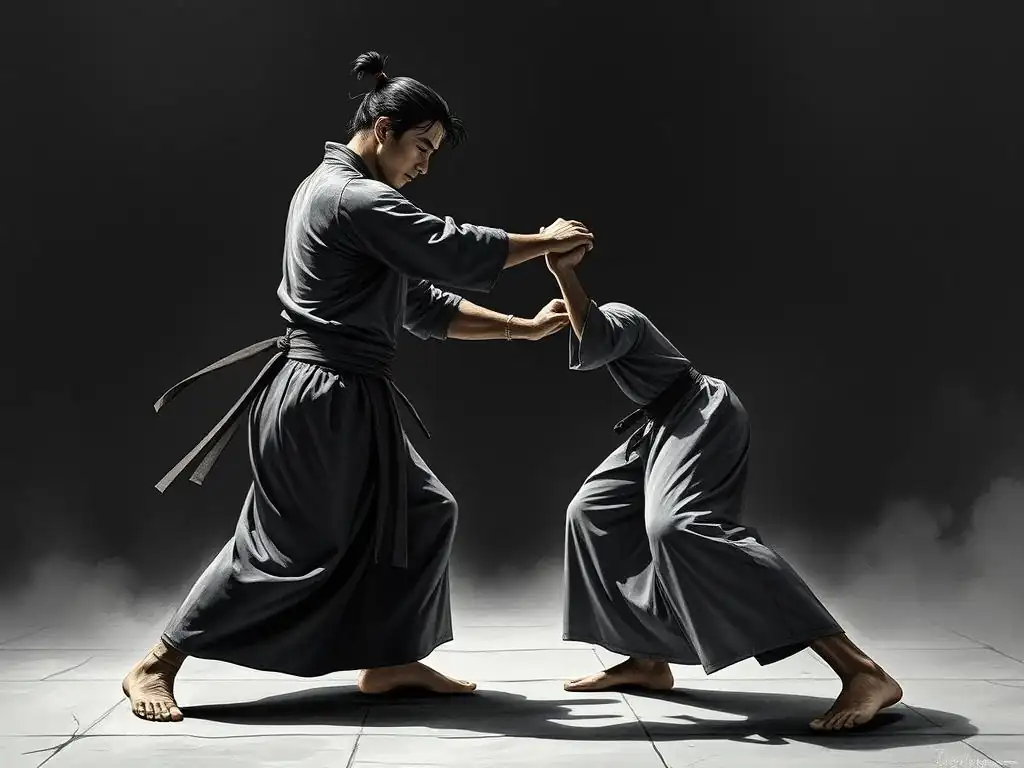
Dominance through Positioning: Asserting Control in the Clinch
In HEMA grappling, establishing dominant positioning is as much a psychological victory as it is a physical one. Once in a clinch or on the ground, securing a superior position – such as gaining an underhook, achieving a cross-face, or getting to side control – immediately shifts the psychological dynamic. The person in the dominant position feels more secure and capable of applying force or transitioning to a submission, while the person in the inferior position often feels trapped, vulnerable, and under pressure.
This feeling of being controlled can be mentally debilitating. The dominant grappler can use their position not just to apply physical pressure, but to wear down the opponent's mental resistance. Every adjustment, every shift of weight, reinforces the message of control. For example, maintaining a heavy cross-face from side control constantly disrupts the opponent's breathing and orientation, contributing to mental fatigue alongside physical strain.
Pressure and Pain Compliance: Exploiting Psychological Weaknesses
Grappling techniques often involve applying pressure to joints, muscles, or even the throat. While the ultimate goal might be a submission, the application of pressure and pain serves a significant psychological function. Minor discomfort or the threat of increasing pain can induce an opponent to react, open up defenses, or even verbally yield. This exploitation of pain compliance is a direct application of HEMA duel psychological strategies.
Consider a wrist lock or a finger lock applied during a grapple. Even if not fully locked out, the potential for severe pain or injury forces a decision. The opponent must assess whether the current discomfort is worth resisting, or if yielding is the more prudent option. Skilled grapplers understand how to apply just enough pressure to create a psychological dilemma, using the fear of escalating pain to gain control or force a desired reaction, such as loosening a grip or changing posture.
Breaking Your Opponent's Spirit: Submissions and the Mental Game
The ultimate objective in many grappling exchanges is achieving a submission – a lock, choke, or throw that incapacitates or forces the opponent to yield. Submissions are the physical manifestation of dominance, but their power is deeply psychological. Being caught in a submission holds the immediate threat of injury or unconsciousness, creating intense psychological pressure.
Successfully applying submissions repeatedly in training or competition demonstrates a practitioner's ability to control the opponent completely, which can significantly impact their future confidence. Conversely, being repeatedly submitted can break an opponent's spirit, making them hesitant, overly defensive, or quick to yield in subsequent encounters. The mental game around submissions involves recognizing when an opponent is mentally weakening, pressing the advantage, and projecting an air of inevitability once a lock is applied.
Specific Psychological Warfare Techniques for HEMA Duelists
Verbal Deception and Taunting: Disrupting Focus and Confidence
While perhaps less emphasized in formal duel scenarios compared to street combat, historical accounts and interpretations suggest that verbal elements could play a role. Subtle verbal cues, or even outright taunting, can be used to disrupt an opponent's focus or undermine their confidence. A well-timed question, a comment on their stance, or even just confident exclamations ( Ha!, Guard!) can break their concentration or make them second-guess their actions.
In a modern HEMA sparring context, this might manifest as a quick, unexpected comment during a lull or a confident call of your own action. The goal isn't necessarily to be rude, but to inject an external stimulus that forces the opponent's mind away from their planned sequence or their internal state of focus. This is a delicate tactic, as it can also backfire if the opponent is unaffected or becomes angered and more determined.
Exploiting Known Weaknesses: Targeting Fears and Insecurities
If a duelist has prior knowledge of their opponent – perhaps from observing them in training or previous encounters – they can tailor their HEMA duel psychological strategies to exploit known weaknesses. This might involve targeting a physical vulnerability they tend to protect, or, on a deeper level, leveraging a known fear or insecurity. For example, if an opponent is known to be highly susceptible to feints, increasing the frequency and complexity of feints can induce significant mental stress and hesitation.
Similarly, if an opponent shows discomfort with close-quarters grappling, a skilled practitioner might aggressively seek the clinch, knowing that forcing the fight into this uncomfortable zone will erode the opponent's confidence and decision-making ability. This requires observation, memory, and the strategic application of techniques to specifically target these observed vulnerabilities, making the psychological pressure highly personal and effective.
The Art of the Stare-Down: Pre-Engagement Psychological Intimidation
Before the physical combat begins, the pre-fight 'stare-down' is a classic example of psychological intimidation. Maintaining direct, unwavering eye contact signals confidence, determination, and a lack of fear. It's a non-verbal challenge that can make an opponent feel scrutinized, uncomfortable, and assessed. Averting gaze or showing hesitation with the eyes can be interpreted as a lack of confidence or readiness.
While perhaps less formalized in historical contexts than in modern sports, the principle remains. Projecting an aura of calm intensity through the eyes and facial expression communicates a powerful psychological message: "I am ready, I am focused, and I am not intimidated." This subtle but potent act can plant seeds of doubt in the opponent's mind before the first motion is made, setting the stage for the physical exchange.
Developing Mental Resilience for HEMA Combat
Visualization Techniques: Mental Rehearsal for Success
Developing mental resilience is crucial for mastering HEMA duel psychological strategies. Visualization is a powerful technique for this. Practitioners can spend time mentally rehearsing various combat scenarios – seeing themselves successfully executing techniques, maintaining composure under pressure, and overcoming challenges. This mental practice builds familiarity with stressful situations and reinforces positive outcomes.
Visualize specific exchanges: imagine an opponent attempting a thrust, see yourself calmly parrying, and then visualize your successful counter-attack. Practice visualizing managing fear – feel the initial anxiety, but then see yourself taking a deep breath, refocusing, and proceeding with clarity. This mental rehearsal prepares the mind for the realities of combat, reducing the shock of unexpected events and building confidence in one's ability to perform under duress.
Mindfulness and Focus: Staying Present in the Heat of Battle
Mindfulness, the practice of staying present and aware of one's internal state and external environment without judgment, is invaluable for HEMA combat. In the heat of a duel, it's easy for the mind to race – dwelling on past mistakes, anticipating future dangers, or getting distracted by pain or fatigue. Mindfulness helps a duelist remain grounded in the now, focusing only on the immediate threat and the available options.
Practicing mindfulness off the training floor, through meditation or simple awareness exercises, translates directly to improved focus during sparring. It allows the practitioner to observe their opponent's movements clearly, notice subtle openings, and react based on the present reality rather than panicked thoughts. This heightened state of present awareness is key to executing complex HEMA duel psychological strategies and physical techniques effectively under pressure.
Managing Fear and Anxiety: Techniques for Maintaining Composure
Actively managing fear and anxiety is perhaps the most critical aspect of mental resilience in HEMA. Techniques such as controlled breathing exercises can significantly lower heart rate and calm the nervous system. Learning to recognize the physical sensations of fear (e.g., rapid breathing, muscle tension) without allowing them to dictate actions is a vital skill.
Another technique involves reframing fear not as a negative emotion, but as a source of energy and heightened awareness. Acknowledging the fear ("Okay, I feel nervous") and then directing that energy towards focused action ("Now, what is my opponent doing?") can transform a potentially debilitating state into a functional one. Regular exposure to controlled stress, such as demanding sparring scenarios, also helps desensitize the practitioner and build confidence in their ability to cope.
Case Studies: Psychological Warfare in Historical HEMA Accounts
Fiore dei Liberi's Plays: Using Provocation to Draw Attacks
The Fior di Battaglia by Fiore dei Liberi (early 15th century) provides numerous examples of techniques that involve psychological elements. Fiore often describes 'plays' that begin by presenting a certain posture or initiating a movement designed to provoke a specific response from the opponent. For instance, some dagger plays involve presenting the dagger in a seemingly vulnerable way to invite an attack, which is then parried and countered.
One example might involve standing in a seemingly passive guard like Posta di Finestra (Window Guard) but subtly shifting weight or hand position to tempt the opponent into a thrust. Fiore's instructions detail not just the physical mechanics but imply the timing and intent behind these actions – they are designed to manipulate the opponent's decision-making by creating an apparent opportunity that is, in fact, a trap. This is a clear historical instance of applying HEMA duel psychological strategies.
The Use of "Wind" in Liechtenauer's System: Mental Control and Timing
The concept of Indes (at the instant) and the understanding of "Wind" ( Windungen - winding or changing direction) within the Liechtenauer tradition (mid-14th century onwards) also contain significant psychological components. While often discussed in terms of physical timing and leverage, the ability to act Indes requires incredible mental presence and the capacity to read the opponent's intention and physical commitment precisely as they are happening.
Liechtenauer's principles emphasize acting during the opponent's action, when they are committed and vulnerable. This necessitates not just physical speed but the mental acuity to perceive the exact moment of opportunity ( Indes). Furthermore, the concept of "Wind" implies the ability to fluidly change tactics or direction based on the opponent's reaction – a process that requires mental adaptability and the willingness to abandon a planned action for a more opportune one. These concepts underscore the historical importance of mental control and timing in HEMA.
Ethical Considerations in HEMA Psychological Warfare
Maintaining Sportsmanship and Respect
While HEMA duel psychological strategies are a valid part of combat, it is crucial, especially in a modern sporting context, to maintain high standards of sportsmanship and respect for one's opponent. The goal is to test skills and learn, not to genuinely harm or psychologically damage another person. Tactics should remain within the bounds of fair play and mutual respect.
This means employing psychological tactics like feints or pressure within the agreed-upon rules and spirit of the practice. Taunting should be avoided or used with extreme caution and only in consensual contexts, as it can easily cross the line into disrespect. The focus should always be on the strategic application of psychological principles to enhance the martial test, not on personal attacks or unnecessary cruelty.
Avoiding Unnecessary Aggression and Intimidation
Aggression in HEMA can be a tactic, as discussed, but unnecessary or uncontrolled aggression and intimidation are generally counterproductive and unethical. Trying to physically intimidate an opponent outside of the strategic use of posture or pressure is not in the spirit of HEMA as a martial art. The aim of HEMA duel psychological strategies is subtle manipulation and disruption, not brute force physical or mental bullying.
A skilled practitioner relies on precision and timing, not simply overwhelming force or a terrifying demeanor. While a composed, confident presence is valuable, resorting to excessive shouting, overly aggressive body language outside of technique, or attempts to physically dominate through non-martial means detracts from the skill and history of HEMA.
The Balance Between Strategy and Fair Play in HEMA Dueling
Navigating the ethical landscape of psychological tactics requires finding a balance between employing strategic advantages and upholding fair play. This balance is often defined by the specific context – a friendly sparring match has different implicit rules than a tournament fight, which in turn differs from historical assumptions about actual combat.
- Consider the intent: Is the tactic intended to create a genuine martial opening, or simply to distress the opponent?
- Consider the impact: Does the tactic exploit a martial weakness, or a personal vulnerability unrelated to HEMA skill?
- Consider the context: Are these tactics acceptable within the specific HEMA group's culture or tournament rules?
Ultimately, the application of HEMA duel psychological strategies should enhance the depth of the martial exchange, reflecting the complexity of historical combat, while remaining rooted in the principles of respect and honorable conduct that are central to many martial arts traditions.
Training Drills for Integrating Psychological Strategies into HEMA
Partner Drills for Reading Body Language
Specific partner drills can be designed to improve the ability to read an opponent's body language.
- Observation Drill: Partners stand at guardia distance. One partner slowly initiates a movement (e.g., shifting weight, slightly turning hips, subtle hand movement) without committing to an attack. The other partner's task is solely to identify and verbally call out the movement observed.
- Intention Drill: Partners stand ready. One partner decides on one of three simple actions (e.g., step forward, step back, feint a thrust). The other partner watches their body language and tries to guess the intended action before it is fully committed. This can be done with increasing speed.
- Reaction Drill: One partner performs a specific feint or deceptive movement. The other partner practices recognizing it and resisting the urge to react incorrectly, instead waiting for the real attack or opportunity.
Sparring Scenarios with Psychological Challenges
Sparring provides the most realistic environment to practice HEMA duel psychological strategies.
- Pressure Sparring: Agree to focus on maintaining constant, intelligent pressure (as opposed to just trading blows). One partner's goal is to overwhelm the other with controlled aggression and see how they react mentally. Switch roles.
- Deception Sparring: Agree to incorporate a set number of feints or deceptive movements within a round. The emphasis is not just on landing hits, but on successfully baiting the opponent's reactions.
- Limited Action Sparring: Restrict physical techniques (e.g., only thrusts allowed). This forces practitioners to rely more heavily on reading, timing, and psychological positioning to create openings, as physical options are limited.
Mental Toughness Exercises for HEMA Practitioners
Developing mental resilience requires dedicated exercises.
- Stress Inoculation: Gradually introduce controlled stressors into training. This could be sparring while fatigued, sparring with an opponent who uses specific, challenging tactics, or performing techniques while under mild physical discomfort (e.g., holding a difficult stance for an extended time).
- Reflective Practice: After sparring, spend time reflecting on the mental aspects.
- Did I feel fear or anxiety? When?
- How did it affect my performance?
- What psychological tactics did my opponent use? Were they effective?
- How did I manage my focus?
- Controlled Breathing Practice: Integrate short sessions of focused, deep breathing exercises (e.g., box breathing) before and after sparring sessions to practice calming the nervous system under arousal.
[ ] Practice reading opponent's weight shifts in observation drills.
[ ] Successfully identify opponent's intended action in intention drills 7/10 times.
[ ] Execute at least 3 effective feints per sparring round.
[ ] Maintain calm breathing for 1 minute after a stressful sparring session.
Conclusion: Mastering the Mental Game in HEMA Dagger & Grappling
The Ongoing Evolution of Psychological Strategies in HEMA
The study and practice of HEMA duel psychological strategies are not static. As practitioners delve deeper into historical sources and test principles through modern application in training and competition, the understanding of the mental game continues to evolve. Modern insights from sports psychology and neuroscience can be integrated with historical teachings to provide a richer, more nuanced approach to the psychological aspects of combat.
The HEMA community's collective experience in tournaments, workshops, and study groups constantly refines the understanding of what psychological tactics are most effective in a modern context, how opponents react under different pressures, and how individuals can best build their mental resilience. This ongoing exploration ensures that the mental dimension of HEMA remains a dynamic and integral part of the art's development.
Further Resources for Developing Your Mental Game in HEMA
Developing a strong mental game in HEMA requires dedicated study and practice, much like physical techniques. While historical manuscripts provide the foundation for HEMA duel psychological strategies through their description of intent, timing, and provocation, supplementing this with modern resources on sports psychology, mindfulness, and fear management can be highly beneficial.
Engaging with experienced practitioners who emphasize the mental aspects of the art is also invaluable, as they can provide guidance and insights gleaned from years of experience. Consistent, mindful practice, coupled with a willingness to analyze and improve one's mental performance, is key to mastering the psychological landscape of HEMA dagger and grappling.
Frequently Asked Questions
What is psychological warfare and why is it important in HEMA duels?
Psychological warfare involves using mental tactics to gain an advantage over your opponent. In HEMA duels, where split-second decisions are critical, it can disrupt their focus and lead to mistakes. It is about gaining an edge.
Can you give an example of a psychological strategy a HEMA duelist might use?
One strategy is controlled aggression, feigning a relentless attack to pressure the opponent into a defensive posture. Another is feigned weakness, lulling the opponent into a false sense of security. This can create openings for attacks.
How can a HEMA duelist prepare themselves mentally for the psychological aspects of a duel?
Mental preparation involves practicing focus and mindfulness, visualizing different scenarios, and developing resilience to pressure. Stress management techniques are also key. Learning to control your emotional responses is important.
Are there any ethical considerations when using psychological strategies in HEMA duels?
While psychological tactics are part of the game, unsportsmanlike conduct, such as insults or intentional distractions, should be avoided. The focus should be on outsmarting, not disrespecting the opponent.
How does understanding historical context improve psychological warfare in HEMA?
Studying historical duels and treatises reveals common strategies and mindsets used by past masters. Understanding these patterns allows you to anticipate your opponent's moves and tailor your psychological approach accordingly.
Okay, here's a final reflection designed to close your article "The Mind of the HEMA Duelist: Psychological Warfare in Dagger & Grappling," optimized for the keyword "HEMA duel psychological strategies" and following the structure you provided:
Final Reflection: Mastering the Mental Game
The exploration of psychological strategies in HEMA dagger and grappling, as we've seen, isn't just an academic exercise; it's a critical component of modern competitive success. Understanding and employing these techniques can be the difference between victory and defeat, transforming a skilled fighter into a truly formidable opponent.
This journey into the mental landscape of the HEMA duel has underscored the profound impact of psychology on physical performance. It's a reminder that our minds are not merely passive observers but active participants in every bout, shaping our reactions, influencing our decisions, and ultimately, determining our fate. The mind is everything. What you think you become.
- Buddha. This quote resonates deeply with the HEMA experience, highlighting the power of mental fortitude in overcoming adversity and achieving mastery.
Now, as you step back onto the training floor, consider the insights we've uncovered. How can you integrate these psychological strategies into your own training and sparring? How can you cultivate a mindset that embraces pressure, anticipates your opponent's moves, and ultimately, allows you to dominate the mental game? The path to becoming a truly complete HEMA duelist lies not just in mastering the physical techniques, but in harnessing the power of your mind.
Unleash Your Inner Duelist: Sharpen Your Mental Edge!
Thanks for diving into the psychological aspects of HEMA dueling! We hope you've gained some valuable insights into how mental fortitude can be just as crucial as physical skill. Now, it's time to put those insights into action.
- Commit to spending 15 minutes visualizing your next sparring session. Focus on maintaining composure under pressure and using calculated distractions.
- Share your biggest takeaway from this article with a training partner. Discuss how you can both incorporate psychological strategies into your sparring.
- Explore resources on mindfulness and emotional regulation specifically tailored for combat sports.
How will you leverage your newfound mental awareness to dominate your next duel?