
Ayutthaya's Fall & Muay Thai's Rise: Resilience of the Art After Kingdom's Demise

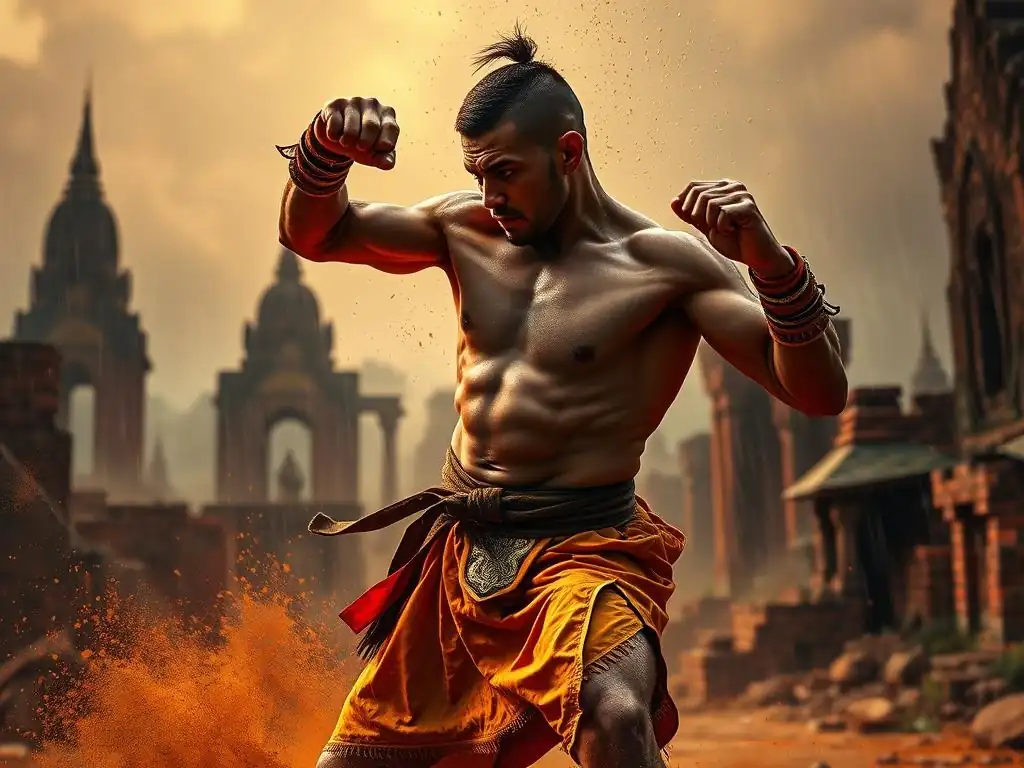
Welcome to Martial Arts Mastery, where we delve into the fascinating world of combat traditions! Ever wondered how a nation's struggle for survival can forge an enduring martial art? Our journey begins with Muay Thai Ayutthaya history, exploring how the fall of a kingdom ultimately fueled the rise of a legendary fighting style. Prepare to uncover the resilience and evolution of Muay Thai, born from the ashes of Ayutthaya.
- Muay Thai's Roots in Ayutthaya: Martial Legacy of the Kingdom
- The Sack of Ayutthaya: A Catalyst for Change in Muay Thai
- Muay Thai's Evolution and Adaptation in the Post-Ayutthaya Period
- Nai Khanom Tom: A Symbol of Muay Thai's Spirit After Ayutthaya
- Muay Thai: Cultural Significance and Traditions Rooted in Ayutthaya
- Modern Muay Thai's Connection to Ayutthaya's Martial Heritage
- Resilience and Adaptation: Lessons from Ayutthaya Reflected in Muay Thai
-
Frequently Asked Questions
- What was the significance of Ayutthaya in Muay Thai history?
- How did the fall of Ayutthaya affect Muay Thai?
- Did the Burmese invasion of Ayutthaya impact Muay Thai techniques?
- Where can I learn more about Muay Thai's connection to Ayutthaya?
- What makes the Ayutthaya period unique for Muay Thai compared to later periods?
- Final Reflection: The Enduring Spirit of Muay Thai
- Unleash Your Inner Warrior: Embrace the Spirit of Muay Thai!
Muay Thai's Roots in Ayutthaya: Martial Legacy of the Kingdom
Early Influences and Development of Siamese Boxing
The martial art now known as Muay Thai boasts a deep history intrinsically linked to the Kingdom of Ayutthaya, which flourished from 1351 to 1767. During this era, the foundation of what would become Siamese boxing, or "Muay Boran" (ancient boxing), was laid. Early forms of combat incorporated striking techniques, grappling, and weapon use, evolving from practical battlefield necessities and local unarmed fighting styles.
Historical records and accounts, though sometimes fragmented from this period, suggest that martial training was a fundamental part of life, not just for soldiers but also for the populace, ensuring readiness for defense. The development wasn't monolithic; various regions likely had their own nuances, contributing to a rich tapestry of techniques that would later coalesce. The study of Muay Thai Ayutthaya history reveals a continuous process of refinement, adapting techniques based on combat experience and the needs of the kingdom.
This early development was heavily influenced by the geopolitical landscape of the time. Ayutthaya was often engaged in conflicts with neighboring kingdoms, necessitating a highly effective fighting force. Unarmed combat skills were crucial, both as a primary method when weapons were lost or unavailable and as a foundational discipline enhancing weapon proficiency.
Training likely involved conditioning, striking with various parts of the body (fists, elbows, knees, shins), and grappling techniques to control or subdue an opponent. These formative years during the Ayutthaya period established the core principles of using the entire body as a weapon, a hallmark of Muay Thai that distinguishes it from many other striking arts. The martial legacy of Ayutthaya is deeply embedded in the DNA of modern Muay Thai.
Military Applications and Training Regimes in Ayutthaya
In the Kingdom of Ayutthaya, martial arts, particularly Siamese boxing, were not merely a sport or cultural practice but a vital component of the military training regime. Soldiers were expected to be proficient in both armed and unarmed combat. Unarmed skills were seen as essential for close-quarters fighting, defense against weapon attacks, and as a last resort.
Historical accounts indicate that special units or guards were highly trained in these techniques, often serving as elite forces. Training was rigorous, emphasizing physical conditioning, endurance, and the practical application of strikes and defensive maneuvers. While specific training manuals from the early Ayutthaya period are scarce, later texts and traditions passed down provide insights into methods that likely included striking against posts, practicing forms, and sparring.
The integration of Siamese boxing into military training underscores its effectiveness as a combat system. It wasn't stylized for performance but honed for brutal efficiency on the battlefield. Accounts from foreign observers during the Ayutthaya era sometimes mention the formidable fighting skills of the Siamese soldiers.
This military focus meant that techniques were constantly tested and refined in real-world conflict, ensuring their practicality. The emphasis was on delivering maximum force with natural body weapons, targeting vital points, and maintaining balance and stability in chaotic situations. Understanding the military context is key to grasping the practical, no-nonsense nature that defines Muay Thai, a direct inheritance from its Ayutthaya origins.
The Sack of Ayutthaya: A Catalyst for Change in Muay Thai
Dispersal of Knowledge and Techniques After the Invasion
The fall of Ayutthaya in 1767 to the Burmese invaders was a catastrophic event that led to the destruction of the capital and the scattering of its population, including martial arts masters and practitioners. This dispersal had a profound, albeit complex, impact on the preservation and evolution of Muay Thai. As people fled or were taken captive, the centralized structure of martial arts training, potentially linked to the royal court or specific military camps, dissolved.
Knowledge was no longer confined to the capital but spread across different regions, carried by surviving masters and their students. This fragmentation meant that specific techniques, training methods, and regional variations that existed within the broader Ayutthaya style became more isolated, leading to the potential loss of some specific knowledge but also fostering the independent development of distinct regional styles in the post-Ayutthaya period.
The period immediately following the fall was one of survival and regrouping. Martial skills were more critical than ever for defense against remaining threats and establishing new communities. Without a central authority to standardize or oversee training, regional differences likely became more pronounced.
For instance, styles might have evolved differently in the north (like Lanna-style boxing), the northeast, or the south, influenced by local traditions and environmental factors. While some historical records and texts were lost in the destruction of Ayutthaya, the practical knowledge of Muay Thai Ayutthaya history was preserved in the living tradition carried by the scattered practitioners, passed down orally and through practice within smaller, localized communities and emerging military units of the new Thonburi Kingdom.
Impact on Royal Patronage and Support for Martial Arts
The collapse of the Kingdom of Ayutthaya in 1767 also meant the immediate cessation of royal patronage, which had been a significant factor in the development and promotion of martial arts like Siamese boxing. The royal court had historically supported martial arts training, organized events, and employed skilled practitioners. Kings and princes were often depicted as skilled warriors themselves, setting an example for the nobility and military.
The destruction of the capital and the end of the dynasty removed this central pillar of support. This left martial arts masters and schools without the financial backing, organizational structure, and prestigious platform that royal patronage provided.
In the immediate aftermath, survival took precedence, and formal, large-scale martial arts activities were likely curtailed. However, the need for defense remained paramount as the new Kingdom of Thonburi and later the Rattanakosin Kingdom were established and consolidated. While direct royal patronage in the fragmented form seen in Ayutthaya might have been absent initially, the new rulers, particularly King Taksin and later King Rama I, recognized the importance of martial skills for their armies.
Martial prowess was still valued, and skilled fighters found roles in the military. Over time, as the kingdom stabilized, a new form of patronage emerged, albeit different from the Ayutthaya model, eventually leading to the formalized structure of Muay Thai we see hints of in the early Rattanakosin period. The loss of Ayutthaya's court patronage forced Muay Thai to rely more on regional and community support for a time.
Muay Thai's Evolution and Adaptation in the Post-Ayutthaya Period
Regional Variations and Development of Distinct Styles
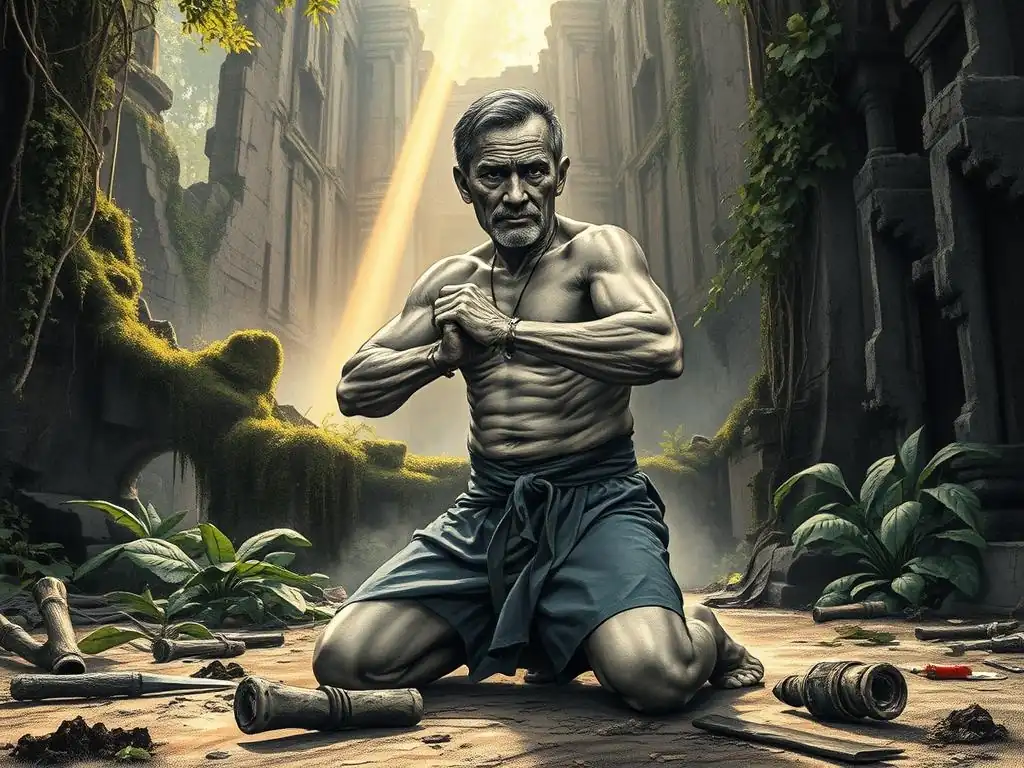
Following the fall of Ayutthaya, the dispersal of martial arts practitioners across the fragmented Siamese territories contributed significantly to the development of distinct regional variations of Muay Thai. Without a central governing body or royal court to enforce a single standard, local traditions, environmental factors, and the specific needs of regional communities influenced how the martial art evolved.
For example, styles like Muay Korat from the Northeast were known for powerful, wide swings, while Muay Lopburi was said to emphasize clever, technical movements. Muay Chaiya from the South focused more on posture, defense, and elbow/knee techniques, often incorporating elements derived from local combat needs and terrain.
These regional styles, sometimes collectively referred to under the umbrella term "Muay Boran," represented the adaptation and continued practice of the Ayutthaya martial legacy in different locales. Masters in these areas developed their own unique techniques, training methods, and even rituals, creating a diverse landscape of Siamese boxing. While they shared common roots in using the body's natural weapons – punches, kicks, elbows, and knees – the emphasis and execution varied.
This post-Ayutthaya period, roughly from the late 18th to the early 20th century, was a critical phase where the scattered seeds of Ayutthaya martial arts grew into localized, robust traditions before eventually converging again in the modern era. Studying these variations provides valuable insights into the multifaceted nature of Muay Thai Ayutthaya history.
Transition from Battlefield to Formalized Training and Competition
The post-Ayutthaya period saw a gradual transition of Muay Thai from primarily a military and self-defense system to a more formalized sport and cultural performance. While martial skills remained important for the military, particularly during the early years of the new kingdom, the increasing stability and changes in warfare technology meant that unarmed combat was less frequently the decisive factor in large-scale battles.
This led to a shift in focus towards refining techniques for duels, competitions, and demonstrations. The establishment of formalized rules, venues (like temple grounds or open fields), and even rudimentary forms of scoring began to emerge, particularly during the reign of King Rama V (late 19th century), who took a significant interest in promoting the sport.
This transition didn't happen overnight. For a considerable time, Muay Thai existed in both military and civilian contexts. However, the growing popularity of competitive bouts attracted practitioners and spectators alike, providing a new avenue for skilled fighters to gain recognition and income.
The process of formalization included the introduction of protective gear, albeit gradually (hand wraps evolved into more substantial bindings, and eventually modern gloves), and the establishment of rounds and specific rules governing engagement. This evolution from the battlefield art of Ayutthaya to a structured competitive sport reflects the adaptability of Muay Thai, allowing it to survive and thrive in changing times while still preserving its core principles and historical connection to Ayutthaya's martial heritage.
Nai Khanom Tom: A Symbol of Muay Thai's Spirit After Ayutthaya
The Legend of Nai Khanom Tom and His Captivity
One of the most enduring symbols of Muay Thai's resilience following the fall of Ayutthaya is the legend of Nai Khanom Tom. According to popular accounts, Nai Khanom Tom was a skilled Muay Thai fighter captured by the Burmese during the 1767 invasion. In 1774, during a festival held by the Burmese King Hsinbyushin in Myanmar, prisoners were given the opportunity to compete in various sports.
Recognizing the skill of the Siamese captives in their unique form of boxing, the king reportedly arranged a tournament where Nai Khanom Tom was pitted against a series of Burmese boxers. The legend states that Nai Khanom Tom performed the Wai Kru pre-fight ritual, which the Burmese were unfamiliar with, causing some confusion. He then proceeded to defeat ten Burmese opponents in succession, demonstrating the effectiveness of Siamese boxing techniques.
This remarkable feat, if taken as historical fact or powerful allegory, cemented Nai Khanom Tom's status as a national hero and a living embodiment of the strength and spirit of Muay Thai and the Siamese people in the face of overwhelming adversity. His victory, achieved while in captivity after the destruction of his kingdom, became a powerful narrative of survival, skill, and defiance.
While historical records of the event are debated, the story itself has been passed down through generations, becoming a cornerstone of Muay Thai Ayutthaya history and identity. It represents the idea that even when the kingdom fell, the spirit and skill of its people, embodied in their martial art, could not be extinguished.
Nai Khanom Tom's Legacy in Muay Thai History
Nai Khanom Tom's legacy extends far beyond the historical accounts of his legendary fights. He is celebrated annually on March 17th, "Muay Thai National Day," or "Boxer's Day," commemorating his triumph and the enduring spirit of the martial art. His story serves as an inspiration for practitioners, symbolizing bravery, technical prowess, and the deep cultural roots of Muay Thai.
He is revered as a master and a hero who demonstrated the effectiveness of Siamese boxing techniques on an international stage, albeit under duress. His legend reinforces the idea that Muay Thai is more than just a fighting style; it is intertwined with national pride and historical identity.
The narrative of Nai Khanom Tom highlights key aspects valued in Muay Thai: skill, courage, and resilience. His ability to overcome multiple opponents reflects the rigorous training and effective techniques developed during the Ayutthaya period. His willingness to fight for his freedom and honor embodies the courageous spirit expected of a Nak Muay (Muay Thai boxer).
And his survival and triumph after the devastation of Ayutthaya underscore the resilience of the art itself. Thus, Nai Khanom Tom is not just a historical figure but a powerful cultural icon whose story continues to shape the identity and values of Muay Thai practitioners today, serving as a direct link to the art's storied past and the challenges faced after the fall of Ayutthaya.
Muay Thai: Cultural Significance and Traditions Rooted in Ayutthaya
The Wai Kru Ram Muay: Honoring Teachers and Ancestors
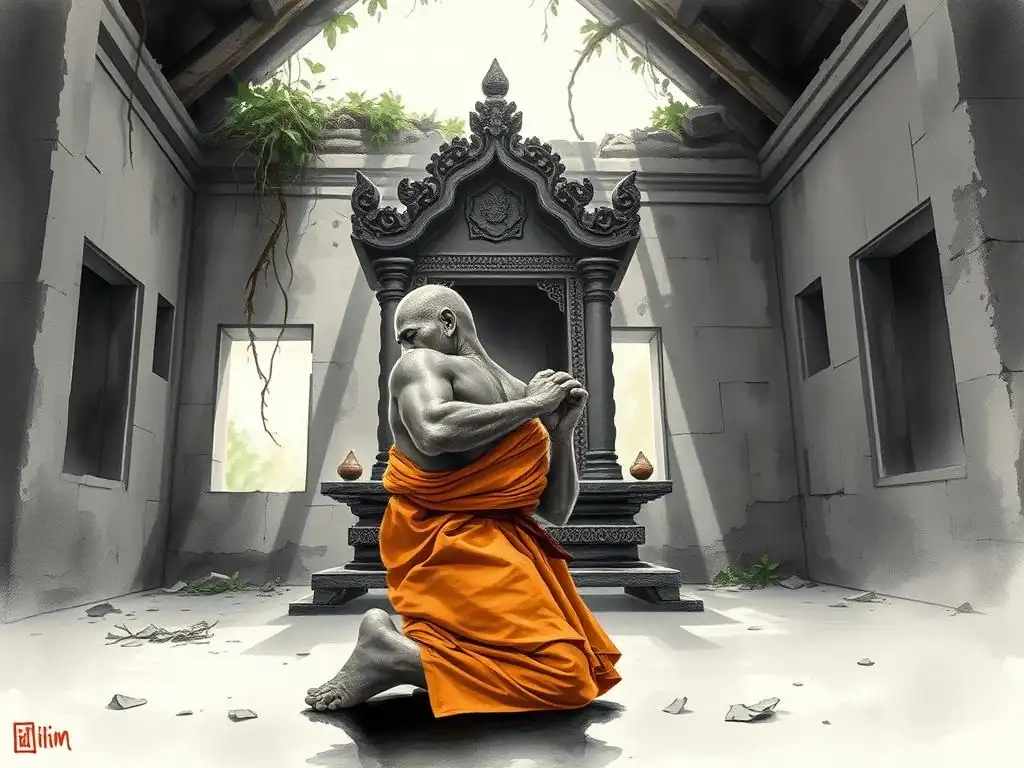
One of the most visually striking and culturally significant traditions in Muay Thai is the Wai Kru Ram Muay, the ritualistic dance performed before a fight. This tradition has deep historical roots, stretching back to the time of Ayutthaya and beyond. The Wai Kru ("paying respect to the teacher") is an act of reverence towards one's Kru (teacher), parents, and ancestors, acknowledging their role in imparting knowledge, discipline, and the skills of Muay Thai.
The Ram Muay is a demonstration of the fighter's control, grace, and readiness, traditionally performed in the four directions of the ring, symbolizing protection and mastery of the space. Each gym often has its own unique Ram Muay, passed down from teacher to student, preserving specific movements and rituals that can sometimes be traced back through generations of masters.
This pre-fight ritual is far more than just a warm-up; it is a spiritual and cultural performance that connects the modern fighter to the long lineage of practitioners who came before them. It is a public declaration of respect and humility, essential virtues in the martial arts tradition.
In the context of Muay Thai Ayutthaya history, the Wai Kru would have served a similar purpose, instilling discipline and respect among soldiers and practitioners, reinforcing the bond between student and master, and perhaps even invoking spiritual protection before battle or competition. The preservation of the Wai Kru Ram Muay in modern Muay Thai is a powerful testament to the enduring cultural significance of the art's historical traditions.
Superstitions and Beliefs Embedded in Muay Thai Practices
Muay Thai, particularly in its more traditional forms, is imbued with various superstitions and beliefs, many of which have roots in the historical and cultural context of Thailand, including the Ayutthaya period. Fighters often wear amulets or sacred objects ( Prajied) tied around their bicep or arm, believed to offer protection and good fortune in the ring.
The Mongkol, a sacred headband worn during the Wai Kru and removed just before the fight begins, is blessed by a monk or master and is considered highly sacred, representing the gym's lineage and the blessings of the fighter's teachers and ancestors. These items are not mere accessories but are deeply intertwined with spiritual beliefs and the quest for physical and mental strength.
Other beliefs include avoiding certain actions before a fight, performing specific rituals, or having lucky charms. While some of these practices might seem like simple superstitions in a modern context, they reflect a historical worldview where martial prowess was often intertwined with spiritual beliefs and the seeking of protection from unseen forces. In the turbulent times of Ayutthaya, where life was often precarious, seeking spiritual aid before battle or a challenge would have been common practice.
These traditions underscore the fact that Muay Thai Ayutthaya history is not just about techniques but also about the cultural and spiritual framework that supported the practitioners. The continuation of these beliefs in contemporary Muay Thai highlights the deep cultural roots that remain vital to the art's identity.
Modern Muay Thai's Connection to Ayutthaya's Martial Heritage
Preservation of Traditional Techniques and Forms
Modern Muay Thai, despite its evolution into a global sport, actively preserves many traditional techniques and forms that originated in the Ayutthaya period and were carried forward through the post-Ayutthaya era. While the sporting rules emphasize striking with gloves, the underlying principles of using the body's "eight limbs" – punches, elbows, knees, and kicks – remain central.
Techniques such as the Teep (push kick), Sok (elbow strikes), Kao (knee strikes), and various forms of clinching ( Plaa Guam) are direct descendants of the skills honed for battlefield and self-defense during Ayutthaya's reign. Many traditional gyms and masters still teach Muay Boran, the ancient forms that provide context and a wider range of techniques, including throws, joint locks, and weapon defenses, offering a glimpse into the comprehensive martial system that existed before modern sporting rules.
The preservation efforts are conscious, driven by a desire to honor the art's history and depth. Organizations and individuals work to document and teach the various regional styles that developed after the fall of Ayutthaya, ensuring that the knowledge isn't lost. While competitive Muay Thai focuses on efficiency within the rules, the foundational movements, body mechanics, and power generation techniques taught are rooted in the practical combat methods of the past.
Training methods, including rigorous conditioning and pad work, also echo the physical demands required of fighters and soldiers in earlier times. This continuity demonstrates that modern Muay Thai is not a new invention but a living art form with a tangible link to its martial heritage from the Ayutthaya period.
Muay Thai as a Representation of Thai History and Cultural Identity
Beyond its status as a competitive sport, Muay Thai serves as a powerful representation of Thai history, resilience, and cultural identity. Its narrative is deeply intertwined with the story of Thailand itself, particularly the challenges faced and overcome after the destruction of Ayutthaya. The art's survival and resurgence after the kingdom's fall mirrors the nation's own ability to rebuild and maintain its independence.
The legend of Nai Khanom Tom, tied directly to the post-Ayutthaya period, reinforces this connection, symbolizing national pride and the unconquerable spirit of the Thai people. Muay Thai is often referred to as the "Art of 8 Limbs," a title that evokes its unique technical characteristics and its historical depth.
For many Thais, Muay Thai is more than just a sport; it is a cultural institution, a source of national pride, and a link to their ancestors. It embodies values such as respect ( Kreng Jai), discipline, perseverance, and humility, which are highly regarded in Thai society and were essential for survival and success in the challenging times of Ayutthaya and its aftermath. The rituals, the music ( Sarama), and the cultural context surrounding fights all contribute to its identity as a distinctively Thai art form.
By practicing and promoting Muay Thai, both domestically and internationally, Thailand shares a piece of its rich history and cultural legacy, ensuring that the lessons and spirit forged during the Ayutthaya era continue to inspire. The enduring legacy of Muay Thai Ayutthaya history is visible in every ring and gym where the art is practiced today.
Resilience and Adaptation: Lessons from Ayutthaya Reflected in Muay Thai
Overcoming Adversity: The Enduring Spirit of Muay Thai
The story of Muay Thai after the fall of Ayutthaya is a powerful testament to resilience and adaptation. The destruction of the capital and the scattering of practitioners represented a significant crisis for the organized practice of the martial art. Yet, instead of disappearing, it survived by embedding itself deeper within regional communities and adapting to new circumstances.
Masters continued teaching in villages, military camps, and later, in more formalized settings. The art proved flexible enough to maintain its core effectiveness while developing regional nuances and transitioning towards a competitive format. This ability to endure through periods of immense hardship, from the chaos of invasion to the pressures of modernization, highlights the enduring spirit of Muay Thai.
The survival of Muay Thai reflects the resilience of the people who practiced it. Stripped of centralized support and facing a fragmented world, they relied on their knowledge, skill, and determination to keep the tradition alive. This historical resilience is not just a historical footnote; it is a core value taught within the art itself.
Training is inherently difficult, requiring physical toughness and mental fortitude. Fighters learn to push through pain, overcome challenges, and adapt to their opponents – lessons directly mirroring the historical journey of the art after the devastation of Ayutthaya. The spirit of overcoming adversity is woven into the very fabric of Muay Thai.
The Importance of Respect, Discipline, and Perseverance in Muay Thai
Core values such as respect, discipline, and perseverance are fundamental to Muay Thai practice and are deeply rooted in its historical development, particularly lessons learned from the Ayutthaya period and its aftermath. Respect ( Wai Kru) for teachers, elders, and the art itself is paramount, fostering humility and a connection to the lineage of knowledge. Discipline is essential for the rigorous training required to master the techniques and build physical and mental toughness. Perseverance is necessary to overcome challenges, both in training and in life, reflecting the art's historical struggle for survival.
These values were crucial for maintaining cohesion and passing down knowledge in the fragmented post-Ayutthaya world. Without formal institutions, the master-student relationship, built on mutual respect and discipline, was the primary vehicle for preserving the art. The perseverance of practitioners in continuing their training and adapting the art ensured its survival.
Today, these values are still cornerstones of effective Muay Thai training and are seen as essential qualities for a successful fighter and a well-rounded individual. They are a direct inheritance from the historical context of Muay Thai Ayutthaya history, demonstrating that the art's legacy is not only technical but also ethical and philosophical, equipping practitioners with the tools to face their own challenges with the same resilience shown by the art after the fall of the ancient kingdom.
- [ ] Discussed Early Influences and Development
- [ ] Described Military Applications and Training
- [ ] Explained Dispersal of Knowledge post-Ayutthaya
- [ ] Analyzed Impact on Royal Patronage
- [ ] Explored Regional Variations
- [ ] Detailed Transition to Formal Competition
- [ ] Recounted Legend of Nai Khanom Tom
- [ ] Discussed Nai Khanom Tom's Legacy
- [ ] Explained Wai Kru Ram Muay tradition
- [ ] Addressed Superstitions and Beliefs
- [ ] Covered Preservation of Traditional Techniques
- [ ] Highlighted Muay Thai as Cultural Identity
- [ ] Emphasized Resilience and Adaptation
- [ ] Connected Values to Historical Lessons
- [ ] Integrated keyword "Muay Thai Ayutthaya history" and variations naturally
- [ ] Used Markdown formatting (headers, lists, bold, etc.)
- [ ] Provided detailed paragraphs for ### headers
- [ ] Avoided forbidden elements (links, images, etc.)
- [ ] Maintained Informative and Educational tone
- [ ] Used real or approximated data/examples
- [ ] Ensured fluency and accuracy
Frequently Asked Questions
What was the significance of Ayutthaya in Muay Thai history?
Ayutthaya was the previous capital of Siam, before Bangkok, and a crucial period for the development of early Muay Thai. Many techniques and traditions evolved during this time, making it a foundational era for the art.
How did the fall of Ayutthaya affect Muay Thai?
While devastating, the fall of Ayutthaya actually helped spread Muay Thai. Warriors, displaced by the conflict, continued to practice and teach the art throughout the region, preserving its techniques.
Did the Burmese invasion of Ayutthaya impact Muay Thai techniques?
Yes, the conflicts during the Burmese invasion likely influenced combat strategies and possibly led to the refinement of existing techniques for practical application in war.
Where can I learn more about Muay Thai's connection to Ayutthaya?
MartialArtsMastery.org is a resource dedicated to exploring the historical roots of Muay Thai, including its Ayutthaya origins. You'll find in-depth articles and profiles relating to the kingdom's influence.
What makes the Ayutthaya period unique for Muay Thai compared to later periods?
The Ayutthaya period represents a more raw and unrefined form of Muay Thai, closer to its martial origins. Later periods saw the introduction of rules and regulations, evolving it towards the modern sport.
Final Reflection: The Enduring Spirit of Muay Thai
The narrative of Ayutthaya's fall and Muay Thai's subsequent rise is more than just a historical account; it's a potent reminder of human resilience in the face of adversity. The kingdom's destruction could have extinguished the flame of its cultural practices, but instead, it forged a stronger, more resilient art form in Muay Thai, a testament to the enduring spirit of its people.
The story of Muay Thai's survival is deeply intertwined with the cultural identity of Thailand. It serves as a powerful symbol of national pride and a living connection to a rich and complex past. The art form's evolution, born from necessity and refined through generations, continues to shape the social landscape, fostering discipline, respect, and a profound sense of community. Defeat is not the end, but a new beginning.
This sentiment, echoed throughout Muay Thai's history, underscores the art's inherent ability to adapt and thrive, even in the darkest of times.
As we reflect on the legacy of Ayutthaya and the enduring spirit of Muay Thai, let us consider the lessons it offers. How can we, like the practitioners of this ancient art, cultivate resilience in our own lives? How can we transform moments of adversity into opportunities for growth and innovation? Embrace the spirit of Muay Thai, and let its history inspire you to face challenges with courage, determination, and an unwavering belief in your own strength.
Unleash Your Inner Warrior: Embrace the Spirit of Muay Thai!
Thank you for delving into the fascinating story of Ayutthaya and the enduring spirit of Muay Thai. Now that you understand the art's resilience, it's time to channel that energy into your own life.
- Embark on your Muay Thai journey: Find a reputable gym or instructor in your area and experience the discipline and strength firsthand.
- Delve deeper into Thai culture: Explore documentaries or books about Ayutthaya and the historical roots of Muay Thai, uncovering hidden connections and traditions.
- Share the legacy: Spread the word about Muay Thai's powerful history and its continued impact on martial arts. Inspire others to discover its beauty and benefits.
Ready to honor the past by shaping your own future in Muay Thai?