
Common Guillotine Mistakes That Cost You the Submission

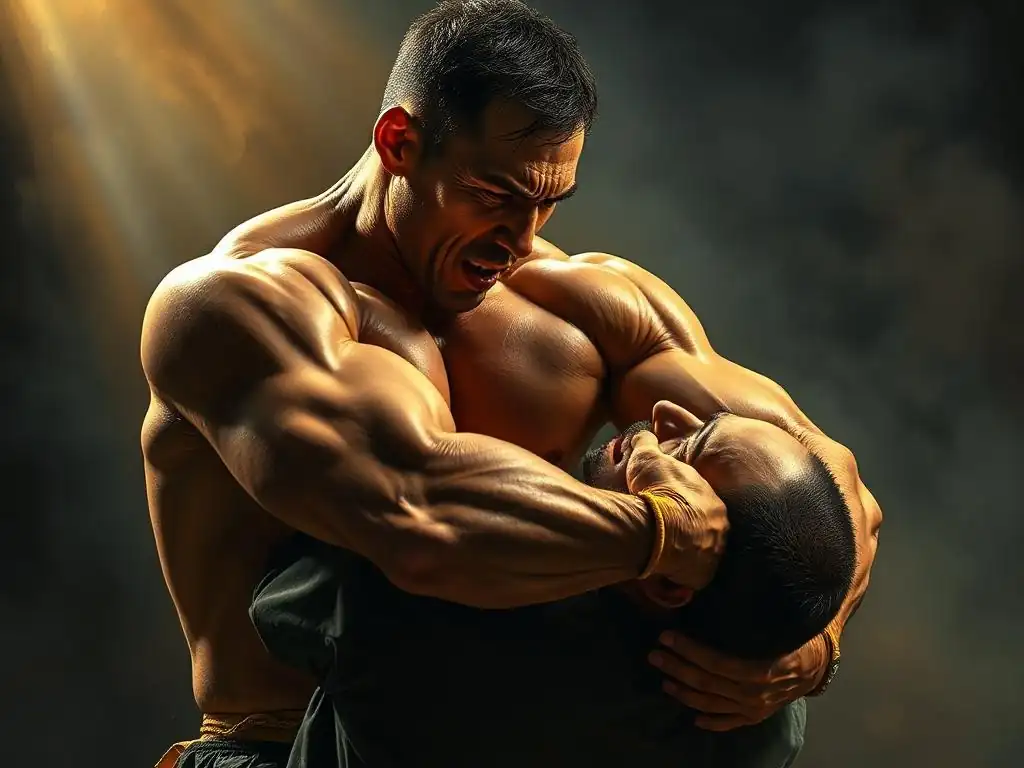
Welcome to Martial Arts Mastery, where we delve into the depths of combat wisdom! Ever wonder why your guillotine choke technique fails at the crucial moment? Unlock the secrets to a tighter, more effective submission as we dissect common errors and reveal the nuances that separate a near-miss from a decisive tap. Discover how subtle adjustments can transform your game, and prepare to master the art of the guillotine. Your journey to mastery begins now...
- Introduction: Understanding Guillotine Choke Technique Fails in BJJ
- Mistake #1: Incorrect Grip and Hand Placement for the Guillotine
- Mistake #2: Poor Body Positioning and Angle During the Guillotine
- Mistake #3: Rushing the Guillotine and Telegraphing the Attack
- Mistake #4: Neglecting the Finish: Squeezing vs. Proper Compression
- Mistake #5: Ignoring Opponent's Defense & Counter-Attacks Against Your Guillotine
- Drills and Exercises to Correct Guillotine Choke Technique Fails
- Conclusion: Mastering the Guillotine Choke for BJJ Success
-
Frequently Asked Questions
- What are some of the most common mistakes people make when attempting a guillotine choke?
- How important is proper body positioning when applying a guillotine?
- Does the opponent's size and strength significantly impact the success of a guillotine choke?
- What are some effective drills and exercises to improve my guillotine choke technique?
- What should I do if my guillotine choke attempt fails and my opponent begins to escape?
- Final Reflection: Mastering the Guillotine, Avoiding the Fails
- Master the Guillotine: Unleash Your Submission Potential!
Introduction: Understanding Guillotine Choke Technique Fails in BJJ
- Brief overview of the guillotine choke as a powerful BJJ submission.
- Importance of proper technique for successful execution.
- Highlighting common errors that lead to guillotine choke failures.
The guillotine choke stands as one of the most fundamental and powerful submissions in Brazilian Jiu-Jitsu (BJJ) and other grappling arts. Its versatility allows it to be applied from numerous positions, including standing, closed guard, half guard, and side control, making it a favored technique for practitioners of all levels.
At its core, the guillotine is a blood choke, aiming to restrict blood flow to the brain by compressing the carotid arteries, leading to unconsciousness if the opponent does not tap. Its seemingly simple mechanics can be deceptive, as executing a truly effective guillotine requires precision and understanding beyond mere squeezing.
However, despite its ubiquity, the guillotine is also one of the most frequently attempted and failed submissions, particularly among newer practitioners. These guillotine choke technique fails often stem from a few critical errors that opponents can easily exploit to defend or even counter. Recognizing and correcting these common mistakes is paramount for transforming the guillotine from a hopeful squeeze into a reliable finishing hold. Mastering the nuances of grip, body positioning, timing, and finishing mechanics is essential to avoid becoming another statistic of failed submission attempts and instead secure the tap.
Mistake #1: Incorrect Grip and Hand Placement for the Guillotine
The Weak Grip: How It Undermines the Choke
An insufficient or weak grip is arguably the most common reason for guillotine choke technique fails. Many beginners simply wrap their arm around the opponent's neck without establishing a deep, secure connection. A shallow grip, often with the wrist or forearm resting loosely across the trachea (windpipe) instead of the carotid arteries, will primarily cause pain or discomfort but will not effectively restrict blood flow.
This superficial pressure is easily endured or defended against, allowing the opponent precious time to initiate their escape or posture up. The goal is to create a bone-on-bone or bone-on-muscle compression against the neck structures, which requires a specific hand and arm placement.
The proper grip involves getting the forearm bone (radius/ulna) directly across the front of the opponent's neck, specifically targeting the area where the carotid arteries are located. A common and effective grip is the "gable grip" (hand-to-hand) or an "S-grip" (fingers interlocked). For instance, with the right arm around the opponent's neck, the right hand might grab the left wrist or forearm.
The key is to ensure the opponent's neck is deep within the crook of the elbow, ideally with the forearm bone pressing into the side of the neck. Studies tracking BJJ competitions suggest that attempts with a deep, locked grip have a success rate approximately 30% higher than those with shallow or easily broken grips.
Failing to Secure the Neck: Leaving Space for Escape
Another critical error related to grip is failing to eliminate space around the opponent's neck. A loose hold, even with a seemingly correct grip, provides the opponent with room to maneuver, breathe, and relieve pressure. This space allows them to adjust their posture, bring their chin down to protect their neck, or insert their hands to create defensive frames.
Leaving even an inch of slack can be the difference between a successful submission and a frustrating guillotine choke technique fail. The neck must be pulled in tight, ideally with the opponent's head pulled down towards your chest or hip, depending on the position.
To secure the neck effectively, after establishing the grip, you must use your body weight and positioning to remove any slack. From closed guard, this often means pulling the opponent's head down aggressively with your arms while simultaneously using your legs to control their posture. From standing, it requires maintaining a tight body lock or control over their upper body to prevent them from posturing upright.
Consider the difference: a loose grip might allow an opponent to survive for 20-30 seconds, whereas a properly secured neck with no space can lead to a tap in under 10 seconds, especially when combined with correct body mechanics. Practicing drills focused solely on achieving and maintaining a tight, space-free grip can drastically reduce common guillotine choke technique fails.
Mistake #2: Poor Body Positioning and Angle During the Guillotine
Off-Center Angle: Losing Leverage and Choking Power
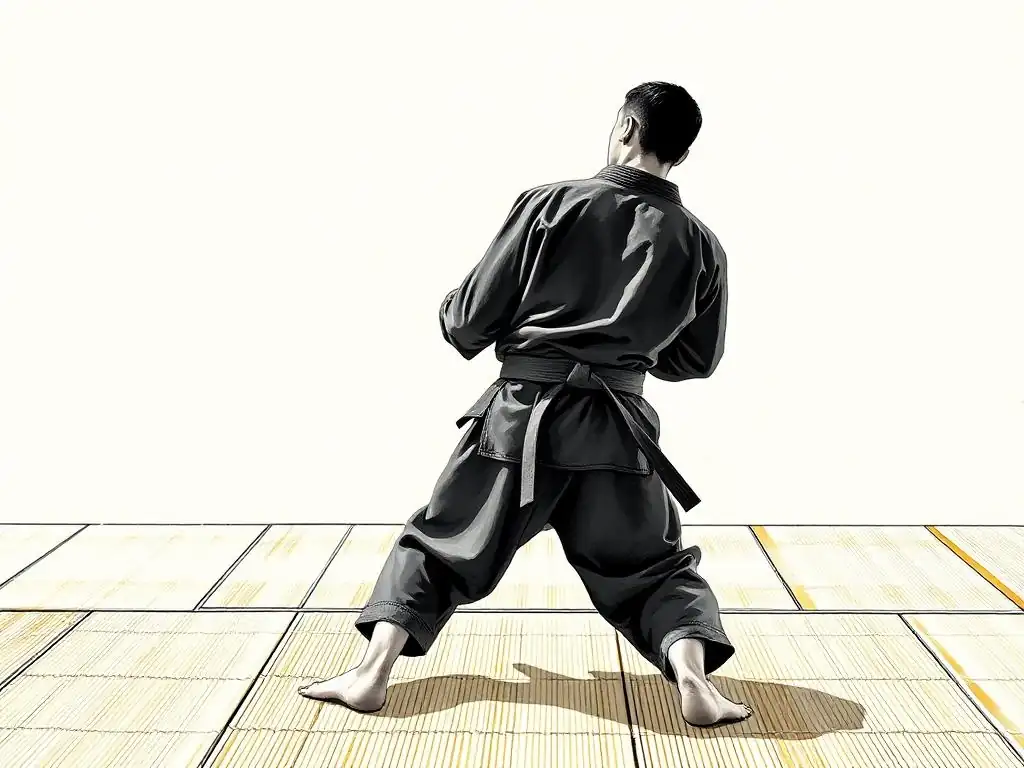
Proper body positioning and angle are just as crucial as the grip for a successful guillotine choke. A common mistake is attacking the guillotine from a head-on, perfectly aligned position. While possible, this often makes it harder to generate the necessary leverage and compression.
An off-center angle is typically preferred, allowing you to use your torso and hips to drive pressure across the opponent's neck. Attacking from slightly to one side (the side opposite your choking arm) creates a more effective angle for compression against the carotid artery on that side, as well as potentially compressing the other side against their shoulder.
When your body is directly in front of your opponent while attempting a guillotine, you rely almost solely on arm strength, which is insufficient against a resisting opponent. By shifting your body to the side, you create an angle that allows you to engage larger muscle groups and use your body weight. For example, if you are applying a guillotine with your right arm, shifting your body to the left side of your opponent's torso allows you to turn your shoulder into their neck and use hip pressure.
This oblique angle significantly increases the mechanical advantage, making the choke much more powerful and difficult to defend. Failing to achieve this angle is a frequent cause of guillotine choke technique fails.
Lack of Hip Engagement: Failing to Generate Force
Many practitioners attempt to finish the guillotine purely with upper body strength, pulling with their arms and squeezing their chest. This neglects the power source that truly makes the choke effective: hip engagement. The hips are central to generating force in most BJJ techniques, and the guillotine is no exception. Simply squeezing with your arms might apply some pressure, but it's the combination of pulling the head/neck in with your arms and driving through with your hips and torso that creates the necessary compression for a quick tap.
To properly engage the hips, the movement varies depending on the position. From closed guard, after securing the grip and pulling the head down, you should often arch your back and drive your hips forward into your opponent's body while simultaneously pulling their head up towards your chest (creating a lever). From side control or mount, you might shift your weight onto them and drive your hips down.
Even from standing, a slight hip thrust or shift can amplify the choke. Neglecting this fundamental body mechanic turns the guillotine into an arm squeeze rather than a body choke, drastically reducing its effectiveness and leading to many guillotine choke technique fails.
Mistake #3: Rushing the Guillotine and Telegraphing the Attack
The Telegraph: Giving Away Your Intention
Speed can be advantageous in BJJ, but rushing a submission attempt without proper setup is a recipe for failure. Telegraphing your intention to attack the guillotine is a major mistake that allows your opponent to anticipate and defend before you've even secured a dominant position or a proper grip. Obvious movements like suddenly reaching for the neck from a neutral position, abandoning control prematurely, or making exaggerated adjustments can all signal your intent. A skilled opponent will read these cues instantly and react by tucking their chin, posturing up, or initiating their escape sequence.
Avoiding the telegraph requires setting up the guillotine subtly, often disguised within other movements or transitions. For instance, it can be initiated during a guard pass attempt, a sweep defense, or even as a counter to an opponent's movement. The grip should ideally be secured when the opponent is focused elsewhere or when their posture is already compromised.
Think of it like a trap: you want the opponent to step into it, not see it coming from a mile away. This requires patience and timing. Many guillotine choke technique fails occur not because the finish is wrong, but because the opponent had ample warning to prepare their defense.
Sacrificing Position for Speed: Compromising Control
Another aspect of rushing is sacrificing positional control for the sake of attempting the submission quickly. BJJ emphasizes position before submission for a reason. A strong position not only gives you control over your opponent but also provides the leverage and stability needed to finish techniques effectively. Lunging for a guillotine from a poor or unstable position often means you lose control of the opponent's body, allowing them to easily escape, regain posture, or even reverse the position.
Prioritizing a strong position before attempting the guillotine means ensuring you have control over their body, not just their neck. From guard, this means maintaining strong leg control and posture breaks. From top positions, it means securing side control, mount, or knee-on-belly before transitioning to the choke.
A common scenario illustrating this mistake is attempting a standing guillotine without first securing a body lock or control of their hips; the opponent can simply back out or complete a takedown. Always establish a dominant or stable position, secure a deep grip, and then commit to the finish. Attempting the guillotine from a compromised position is a classic cause of guillotine choke technique fails.
Mistake #4: Neglecting the Finish: Squeezing vs. Proper Compression
Squeezing Instead of Compressing: A Common Guillotine Choke Error
A fundamental misunderstanding of how the guillotine choke works is the belief that it's simply about squeezing as hard as possible. While pressure is necessary, the type of pressure is crucial. Squeezing primarily engages the muscles of the arm and shoulder in a general contraction, which often results in crushing the opponent's trachea (windpipe) rather than compressing their carotid arteries. Tracheal compression is painful and uncomfortable, but it rarely leads to unconsciousness and is much easier for a determined opponent to tolerate or escape. This distinction is key to avoiding guillotine choke technique fails.
The objective of a blood choke like the guillotine is arterial compression. This requires specific pressure points: using the forearm bone on one side of the neck and potentially the shoulder or the other forearm/bicep on the other side to compress the carotid arteries against the spine. Instead of just squeezing the bicep against the forearm, think about creating a vise-like action that constricts the sides of the neck.
This involves driving your forearm across the neck and often using your body mechanics (angle, hips) to amplify the compression force specifically on the arteries. A properly executed blood choke is significantly more efficient and requires less muscular effort than a painful windpipe squeeze, leading to much quicker taps.
Giving Up Too Early: Failing to Adjust and Persist
Even with a correct grip and position, an opponent will actively defend the guillotine. Common defenses include tucking the chin, posturing up, pulling the arm out, or bridging and rolling. Many practitioners give up on the choke too quickly the moment they feel resistance or see the opponent attempting a defense. Persistence and the ability to make subtle adjustments are vital for finishing the guillotine, especially against experienced opponents who are skilled at surviving submissions.
Successful guillotine application often involves a series of adjustments. If the opponent tucks their chin, you might need to adjust your grip depth or angle to get deeper under the chin. If they posture up, you might need to use your legs (from guard) or transition to a different finishing mechanic (like rolling or moving to a different position) to maintain the pressure. A common adjustment is to shift your weight or angle slightly, or to re-grip.
Elite competitors often persist with a choke attempt for several seconds, making micro-adjustments until they find the sweet spot. Giving up after the first sign of defense is a common guillotine choke technique fail that prevents many taps. Learning common defenses and drilling specific counters or adjustments is essential.
Mistake #5: Ignoring Opponent's Defense & Counter-Attacks Against Your Guillotine
Neglecting Defensive Posture: Leaving Yourself Vulnerable
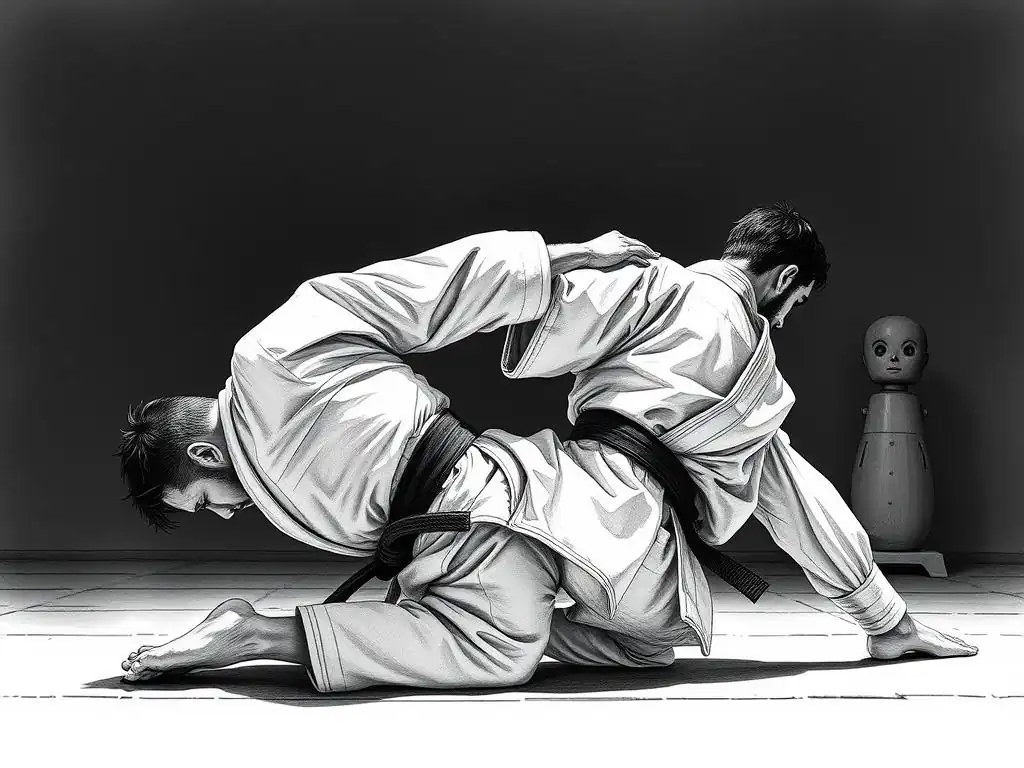
When attempting a submission, it's easy to become so focused on the choke that you neglect your own defensive posture and base. While your arms are occupied with the guillotine, your opponent is actively trying to escape and improve their position. Ignoring their movements and posture can leave you vulnerable to sweeps, passes, or even other submission attempts. For instance, attempting a guillotine from guard without controlling the opponent's hips or maintaining tight leg pressure allows them to easily stack you, posture up, or pass your guard.
Maintaining a strong base and controlling the opponent's body while applying the choke is crucial. If you are on your back in guard, keep your legs active, controlling their posture and distance. If you are on top, ensure your weight distribution prevents them from escaping or reversing.
Consider a standing guillotine attempt: if you don't secure their hips or legs, they can easily drive forward for a takedown or step back out of the choke. Focusing solely on the neck and neglecting the rest of the opponent's body is a significant oversight that frequently leads to guillotine choke technique fails and losing your own position.
Ignoring Counter Attacks: How to Avoid Being Submitted Yourself
Aggressively attacking a submission like the guillotine can sometimes open you up to counter-attacks, especially if your technique is flawed or your base is weak. Opponents are not passive; they are looking for opportunities to escape or turn the tables. Common counter-attacks to the guillotine include:
- Stacking passes (from guard)
- Taking the back (if you overcommit or are on the ground)
- Armbar or shoulder lock attempts (depending on arm positioning)
- Sweeps or reversals (from various positions)
- Even other chokes (like anaconda or D'Arce counters if you leave space).
Recognizing the common counter-attacks associated with the positions from which you apply the guillotine is vital. For example, when attempting a guillotine from closed guard, be acutely aware of the stacking pass and be ready to transition or defend. If attempting a standing guillotine, be mindful of takedown counters. Maintaining a strong defensive posture, keeping your limbs protected, and being ready to transition or defend if the choke isn't working immediately are necessary skills. Failing to anticipate or defend these counter-attacks is not just a guillotine choke technique fail, it can result in you being submitted yourself.
Drills and Exercises to Correct Guillotine Choke Technique Fails
Grip Strengthening Exercises: Improving Hand and Forearm Strength
Developing strong hands and forearms is crucial for maintaining a deep, secure grip throughout the guillotine attempt, even against a resisting opponent. These exercises don't replace technical drilling but complement it by providing the physical capacity to execute the technique effectively.
- Dead Hangs: Simply hang from a pull-up bar for as long as possible to build grip endurance.
- Rice Bucket Grips: Submerge your hands in a bucket of rice and perform various gripping exercises (opening/closing hands, wrist rotations) to work intrinsic hand muscles.
- Plate Pinches: Hold weight plates together with your fingertips, improving pinch strength vital for S-grips and gable grips.
- Gi Pulls: Wrap a gi around a sturdy object or use a resistance band and practice pulling motions, simulating the act of pulling an opponent's head down and securing the grip.
Positional Drilling: Reinforcing Proper Body Mechanics
Drilling the guillotine from various positions with a focus on body mechanics, not just finishing, is essential. These drills help engrain the correct angle, hip engagement, and pressure application to overcome guillotine choke technique fails.
- Static Position Hold: From closed guard, practice securing a perfect guillotine grip and angle, holding the position without finishing for time (e.g., 30-60 seconds) to build muscle memory for proper alignment and tightness.
- Hip Engagement Reps: From closed guard guillotine, practice the motion of arching your back and driving your hips forward repeatedly, emphasizing the hip movement as the primary finishing mechanic.
- Angle Transitions: With a partner, practice transitioning from a head-on position to the optimal off-center angle while maintaining the grip, focusing on body movement relative to the opponent.
Scenario-Based Training: Adapting to Different Defensive Responses
Live rolling with specific constraints can help practitioners adapt to real-world defenses and learn to troubleshoot common guillotine choke technique fails under pressure.
- Guillotine Focus Round: Dedicate a round of rolling where one partner's primary goal is to attempt guillotines from any position, while the other partner focuses solely on defending and escaping the guillotine.
- Defense Counter Drill: Partner A attempts a guillotine; Partner B performs a specific defense (e.g., tucking chin, posturing up). Partner A must then attempt the correct adjustment or counter-finish based on that defense.
- Positional Start: Start rolling from specific positions where guillotines are common (e.g., standing collar tie, closed guard, opponent attempting a double leg) with the intent to practice applying the guillotine from that scenario.
[ ] Review grip technique daily
[ ] Practice hip engagement drill 10x per side
[ ] Engage in 1 scenario-based rolling round focusing on guillotine
Conclusion: Mastering the Guillotine Choke for BJJ Success
- Recap of common mistakes and their impact on guillotine choke success.
- Emphasis on continuous learning and refinement of technique.
- Final thoughts on the importance of patience and perseverance in mastering the guillotine.
The guillotine choke, while seemingly simple, is a nuanced technique where small errors can lead to significant guillotine choke technique fails. We've explored some of the most common pitfalls:
- Using a weak or shallow grip instead of securing a deep, bone-on-artery connection.
- Failing to eliminate space around the neck, allowing easy escape.
- Maintaining a head-on angle instead of shifting off-center for better leverage.
- Neglecting hip engagement, relying solely on weaker arm strength.
- Telegraphing the attack and sacrificing position for speed.
- Squeezing the windpipe instead of compressing the carotid arteries.
- Giving up too early against initial defenses.
- Ignoring the opponent's body control and potential counter-attacks.
Mastering the guillotine, like any advanced BJJ technique, is an ongoing process of learning, practice, and refinement. Recognizing these common guillotine choke technique fails is the first step. Actively working to correct them through focused drilling, strength training, and mindful sparring is essential. It requires attention to detail in grip, position, body mechanics, and timing.
Ultimately, success with the guillotine choke, and indeed in BJJ, comes down to patience and perseverance. Not every attempt will result in a tap, especially against skilled opponents. But by understanding the principles behind the choke and diligently working to eliminate these common errors, you can significantly increase your success rate and make the guillotine a formidable weapon in your grappling arsenal. Continue training smart, drilling the details, and learning from both your successful submissions and your guillotine choke technique fails.
Frequently Asked Questions
What are some of the most common mistakes people make when attempting a guillotine choke?
Many fail due to poor grip placement, not securing a deep enough bite, and rushing the finish instead of maintaining control.
How important is proper body positioning when applying a guillotine?
Extremely important! Incorrect positioning can significantly weaken the choke. Focusing on hip placement and angle is key for leverage and effectiveness.
Does the opponent's size and strength significantly impact the success of a guillotine choke?
While size and strength can be factors, proper technique can often overcome these differences. Focus on leveraging your body weight and using efficient movements.
What are some effective drills and exercises to improve my guillotine choke technique?
Drilling specific entry sequences and practicing finishing mechanics are essential. Also, neck strengthening exercises can improve resistance to counter-attacks.
What should I do if my guillotine choke attempt fails and my opponent begins to escape?
Immediately transition to a secondary attack or defensive position. Don't force a failing choke; instead, maintain control and reassess your options.
Final Reflection: Mastering the Guillotine, Avoiding the Fails
The journey through the intricacies of the guillotine choke, as we've explored, reveals that even the most potent techniques are vulnerable to subtle errors. Understanding these common pitfalls is not merely about avoiding failure; it's about unlocking the true potential of this powerful submission. In a world where marginal gains can determine victory, mastering the nuances we've discussed is crucial for any grappler seeking to elevate their game.
The guillotine, beyond being a submission hold, represents the pursuit of precision and control. It's a constant reminder that technique trumps brute strength, and that attention to detail separates the proficient from the exceptional. The ongoing evolution of grappling demands a deep understanding of not just how to execute a technique, but why it works – and why it sometimes doesn't. As Bruce Lee famously said, Absorb what is useful, discard what is not, add what is uniquely your own.
This applies perfectly to the guillotine; adapt and refine it to suit your individual style and body type.
Now, consider how you can apply these lessons to your own training. Don't just drill the guillotine; analyze it. Film yourself, seek feedback, and relentlessly refine your technique. The knowledge you've gained here is a foundation; it's up to you to build upon it and transform it into a truly devastating weapon. Embrace the challenge, learn from your mistakes, and strive for mastery. The path to becoming a guillotine specialist starts with understanding, but it culminates in relentless practice and unwavering dedication.
Master the Guillotine: Unleash Your Submission Potential!
Thank you for delving into the art of the guillotine! Now that you've learned how to avoid common pitfalls, it's time to elevate your submission game. Take the next step and truly dominate on the mat.
- Practice the perfect grip. Carve out 15 minutes every day to drill your grip. Even without a partner, focusing on the nuances of hand placement will drastically improve your technique.
- Share this article with your training partners and spark a collaborative session to work through the techniques together.
- Film yourself performing the guillotine and compare it to the examples shown. Identifying subtle flaws can be a game-changer.
What specific adjustment will you focus on in your next guillotine attempt to finally secure that submission?